
a prodigies prodigy
the life of John Stuart Mill

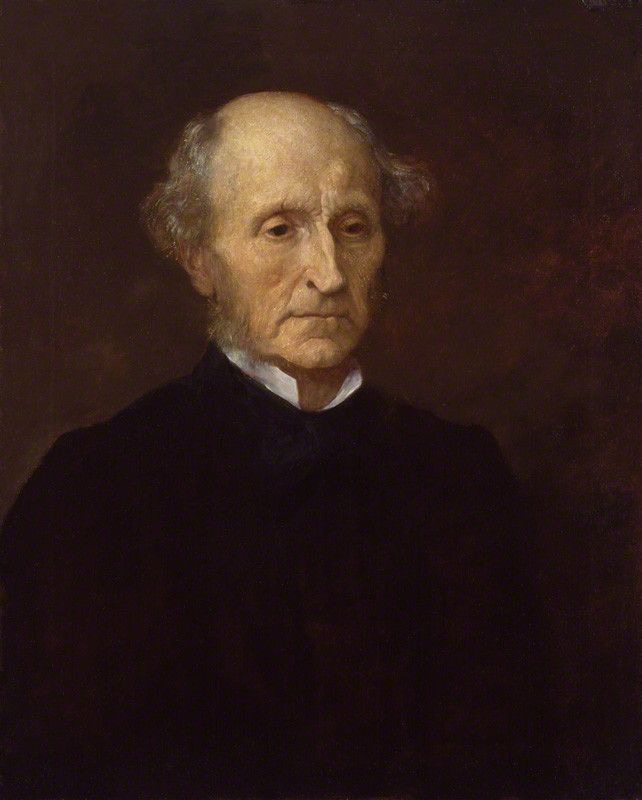
John Stuart Mill was an English prodigy who, in adulthood, shaped the intellectual contours of philosophy, economics, logic, and political science. As a public figure, activist, and member of Parliament, he engaged deeply with the practicalities of governance, diplomacy, and reform. Mill championed representative government, secularism, women’s rights, decentralization, economic freedom, and personal liberty long before these causes found broad acceptance. What now seems conventional was once radical, and Mill’s breadth of thought inspired an array of later thinkers. Central to his intellectual development was a lifelong quest for autonomy, a reaction to the formative pressures exerted upon him.
Born in London on May 20, 1806, John was the son of James Mill, a Scottish intellectual and staunch disciple of Jeremy Bentham. The elder Mill’s relentless pursuit of genius for his son profoundly shaped John’s early life, as did the towering influence of Bentham.
Jeremy Bentham, a polymath and eccentric bachelor, pursued disparate ventures, from a primitive telephone to his infamous prison design, the Panopticon. Ironically, debts incurred promoting the Panopticon nearly landed him in debtor’s prison. A prodigy himself, Bentham read voluminous histories as a toddler and began Latin at three. Though trained in law, he never practiced, devoting his energies instead to radical reform. He advocated for free speech, animal rights, the abolition of slavery, gender equality, and—scandalously—the decriminalization of homosexuality. Dismissed as radicals by both Whigs and Tories, Bentham and his followers exalted reason above custom, inspired by the French philosophes.
Bentham’s empiricist psychology, termed associationism, posited that mental phenomena arose from the association of perceptual elements. This mechanistic view of the mind influenced James Mill and later informed John’s philosophy. Yet, Bentham’s utilitarianism—reducing ethics to the maximization of pleasure—was often criticized as cold and reductive. His request to be mummified upon death added to his eccentricity; his preserved remains now reside at University College London.
Bentham’s simplistic utilitarianism, however, must not be confused with John Stuart Mill’s more nuanced ethical vision, which sought to distinguish between higher and lower pleasures.
James Mill, too, was precocious, earning the patronage of Sir John and Lady Jane Stuart. As tutor to their daughter, James fell in love with her, a passion thwarted by the constraints of class. This experience seeded his deep resentment of England’s rigid social hierarchy. Later, he named his own daughter Wilhelmina after his unfulfilled love. Though he became a Presbyterian minister, his sermons were deemed overly intellectual, and his family faced financial hardship until the publication of The History of India.
James Mill’s life work, however, became the molding of his eldest son. Adhering to a belief in nurture over nature, he sought to shape John into a morally and intellectually perfect man. Yet James retained a Calvinist rigor, despite his nominal radicalism, and clung to traditional views of women’s roles. John recalled his father as a man who “professed the greatest contempt for passionate emotions.” Harriet Barrow, John’s mother, lived a subdued life, rarely challenging her husband. A sibling described their parents’ relationship as one of “two persons, a husband and wife, living as far apart, under the same roof, as the north pole from the south.”
As a teacher, James was exacting, demanding his son reread difficult texts until mastered. To outsiders, he often displayed a harsh demeanor toward his family. One observer recalled:
“The one really disagreeable trait in James Mill’s character, and the thing that has left the most painful memories, was the contemptuous way he allowed himself to speak and behave to his wife and children before visitors. When we read his letters to friends, we see him acting the family man with the utmost propriety, putting wife and children into their due place; but he seemed unable to observe this part in daily intercourse.”
Mill’s education is often portrayed as relentless cramming, yet while his life brimmed with study and intellectual engagement, James Mill understood that true learning required more than rote memorization. The father sought not just knowledge but understanding, guiding his son through dialogue and the company of eminent minds.
“A man who, in his own practice, so vigorously acted up to the principle of losing no time, was likely to adhere to the same rule in the instruction of his pupil. I have no remembrance of the time when I began to learn Greek; I have been told that it was when I was three years old. My earliest recollection on the subject, is that of committing to memory what my father termed vocables, being lists of common Greek words, with their signification in English, which he wrote out for me on cards. Of grammar, until some years later, I learnt no more than the inflections of the nouns and verbs, but, after a course of vocables, proceeded at once to translation…
Much of it consisted in the books I read by myself, and my father’s discourses to me, chiefly during our walks. From 1810 to the end of 1813 we were living in Newington Green, then an almost rustic neighbourhood. My father’s health required considerable and constant exercise, and he walked habitually before breakfast, generally in the green lanes towards Hornsey. In these walks I always accompanied him, and with my earliest recollections of green fields and wild flowers, is mingled that of the account I gave him daily of what I had read the day before. To the best of my remembrance, this was a voluntary rather than a prescribed exercise. I made notes on slips of paper while reading, and from these in the morning walks, I told the story to him; for the books were chiefly histories, of which I read in this manner a great number: Robertson’s histories, Hume, Gibbon; but my greatest delight, then and for long afterwards, was Watson’s Philip the Second and Third.
In these frequent talks about the books I read, he used, as opportunity offered, to give me explanations and ideas respecting civilization, government, morality, mental cultivation, which he required me afterwards to restate to him in my own words. He also made me read, and give him a verbal account of, many books which would not have interested me sufficiently to induce me to read them of myself.”
Raised in a secular household, John later wrote of his father: “Finding, therefore, no halting place in Deism, he remained in a state of perplexity, until, doubtless after many struggles, he yielded to the conviction, that concerning the origin of things nothing whatever can be known. This is the only correct statement of his opinion; for dogmatic atheism he looked upon as absurd.”
From an early age, John aided his father with editing dense manuscripts and official documents, even composing histories of England and Roman governance as a child. By 14, he had mastered most classical works, and by 16, he was well-versed in economics, politics, mathematics, and philosophy. That same year, he joined the East India Company, where he juggled an industrious workload, producing two volumes annually, while pursuing his broader intellectual ambitions. Yet his achievements never inflated his ego—a humility instilled by his father’s stern parenting methods. Reflecting without bitterness in his Autobiography, Mill recalled:
“[My father] completely succeeded in preserving me from the sort of influences he so much dreaded. I was not at all aware that my attainments were anything unusual at my age. If I accidentally had my attention drawn to the fact that some other boy knew less than myself–which happened less often than might be imagined–I concluded, not that I knew much, but that he, for some reason or other, knew little, or that his knowledge was of a different kind from mine. My state of mind was not humility, but neither was it arrogance. I never thought of saying to myself, I am, or I can do, so and so. I neither estimated myself highly nor lowly: I did not estimate myself at all. If I thought anything about myself, it was that I was rather backward in my studies, since I always found myself so, in comparison with what my father expected from me.”
While Mill modestly insisted that his accomplishments stemmed from careful training rather than innate genius, observers like H.R. Bourne marveled at his prodigious memory. Bourne noted:
“Nothing escaped his notice at the time of its occurrence: nothing was forgotten by him afterwards. His friends often found, to their astonishment, that he knew far more about any passages in their lives that he had been made aware of than they could themselves remember; and, whenever that disclosure was made to them, they must have been rejoiced to think, that this memory of his, instead of being, as it might well have been, a dangerous garner of severe judgments and fairly-grounded prejudices, was a magic mirror, in which their follies and foibles were hardly at all reflected, and only kindly reminiscences and generous sympathies found full expression.”
Oxford, with its Anglican oath, was never an option for a skeptic raised in a household hostile to orthodoxy. By his teen years, Mill had outgrown the need for formal education and had begun to question the rigid Benthamite ideals of his mentors. Longing for intellectual independence, he suffered a nervous breakdown at 20. In his Autobiography, he described this bleak period with poignant honesty:
“It was in the autumn of 1826. I was in a dull state of nerves, such as everybody is occasionally liable to; unsusceptible to enjoyment or pleasurable excitement; one of those moods when what is pleasure at other times, becomes insipid or indifferent; the state, I should think, in which converts to Methodism usually are, when smitten by their first ‘conviction of sin.’ In this frame of mind it occurred to me to put the question directly to myself: ‘Suppose that all your objects in life were realized; that all the changes in institutions and opinions which you are looking forward to, could be completely effected at this very instant: would this be a great joy and happiness to you?’ And an irrepressible self-consciousness distinctly answered, ‘No!’ At this my heart sank within me: the whole foundation on which my life was constructed fell down. All my happiness was to have been found in the continual pursuit of this end. The end had ceased to charm, and how could there ever again be any interest in the means? I seemed to have nothing left to live for.
I was reading, accidentally, Marmontel’s Mémoires, and came to the passage which relates his father’s death, the distressed position of the family, and the sudden inspiration by which he, then a mere boy, felt and made them feel that he would be everything to them–would supply the place of all that they had lost. A vivid conception of the scene and its feelings came over me, and I was moved to tears. From this moment my burden grew lighter.”
Dr. A.W. Levi suggests that Mill’s existential crisis stemmed from a deeply repressed yearning to assert independence against his father’s dominating will.
“In reading Marmontel’s account, John, through the veil of identification, could without guilt confront the inevitable reality that his father, in the natural order of things, would one day die, leaving him to assume the role of command... Under the imaginative conditions of literature, absolved of culpable desire, Mill brought to the light of consciousness what had long been laboriously suppressed. In this catharsis, he spontaneously found the resolution to his torment.”
Dr. Peter Glassman interprets this crisis as a necessary transformation: “It compelled him to live with greater authenticity, to recognize and repudiate the loneliness and suffering he had always concealed and stoically endured.” The subsequent decade, though marked by public quietude, proved internally fruitful. His twenties were spent absorbing and reconciling ideas, partly from the uncertainty of youth and partly from fear of censure by elder Utilitarians should he stray too far from orthodoxy. He read voraciously and forged friendships with many leading intellects, among them Thomas Carlyle, to whom he confessed:
“I am often near skepticism, without any coherent theory of human life, vacillating among conflicting beliefs. This unsettled state, though recent and transitory, will yield to firmer convictions forged by broader experience.”
And so it was.
“I feel once more the sense of growth. My knowledge is richer, more grounded in realities than abstractions, and this understanding will grant me greater power to perform the work before me—or to discern the work most worthy of my efforts.”
In 1836, James Mill succumbed to a series of pulmonary afflictions, likely tuberculosis. At thirty, John grieved deeply. His own health faltered, his spirit burdened by the loss of a father who had both molded his intellect and suppressed his individuality. Yet from this mourning emerged a man freer to define his destiny. The passing of the stern patriarch who had given so much—and demanded so much—allowed Mill to assert his own identity.
By 1838, his Essay on Bentham appeared, critiquing the philosopher who famously equated the game of push-pin with the arts of music and poetry. Mill, long constrained by Bentham’s stark utilitarianism, now voiced his misgivings. While he admired Bentham’s audacity in challenging authority, he acknowledged his limitations:
“Bentham’s understanding of human nature was narrow, wholly empirical, and drawn from limited experience. His life, unmarred by adversity or the depths of passion, left him insulated from the trials that deepen understanding. He lived in unbroken health, free from sorrow or weariness, remaining a boy until his final years.”
Two years later, Mill published his essay on Coleridge, continuing his reconciliation of intellect and sentiment. The Romantic poets, particularly Wordsworth and Coleridge, offered him solace from the stark rationalism of his upbringing. Their works awakened in him a newfound appreciation for nature’s beauty and the depth of human emotion, counterbalancing his analytical education. Mill lamented the English tendency to suppress feeling, seeking instead an integration of reason and heart.
Amid these intellectual pursuits, another influence took root. In 1830, Mill met Harriet Taylor, a brilliant and charismatic woman bound in an unhappy marriage. Their mutual affection blossomed into a profound, if unconventional, relationship. To avoid scandal, they refrained from physical intimacy, and Harriet eventually lived apart from her husband. After his death in 1849, she and Mill married two years later.
During their long and purportedly chaste relationship, Mill produced some of his most influential works. His Principles of Political Economy explored not just the creation of wealth but its distribution, marking him as a transitional figure in economic thought. Though his contributions to concepts like comparative advantage, opportunity cost, and innovation remain significant, he is often overlooked in modern economics courses. Unlike his predecessors, Mill recognized the complexities of economic systems and foresaw the unpredictability of outcomes, emphasizing variables such as technological progress. He rejected the dogma of unrestrained growth:
“I am not enamored with a life of perpetual struggle and competition, where trampling and elbowing define progress. Such is but an unpleasant phase of industrial advancement, not the ideal of human existence.”
This sentiment placed him at odds with the emerging doctrines of social Darwinism. While he disagreed with Herbert Spencer, its chief proponent, Mill supported Spencer’s Principles of Philosophy financially, demonstrating his characteristic magnanimity.
Although influenced by David Ricardo, Mill diverged from pure laissez-faire economics, recognizing both the benefits of markets and the risks of collectivism. His nuanced view acknowledged socialism’s ideals while critiquing its practical flaws:
“Socialists often overlook humanity’s natural inertia, its tendency toward passivity and habit. Competition, though imperfect, remains indispensable to progress, and no one can foresee when it might cease to be so.”
Early in his career, Mill asserted:
“Governments should not hinder men from expressing opinions, pursuing trades, or engaging in commerce as they see fit. Beyond preventing force and fraud, interference often does more harm than good.”
Through such reflections, Mill evolved into a thinker who harmonized the rational and the romantic, the individual and the collective, forging a philosophy as broad and complex as the life he lived.
In Principles of Political Economy, Mill weaves his advocacy for women’s suffrage into the broader tapestry of his economic and social theories. Yet even in his seminal work, A System of Logic, ostensibly devoted to epistemological rigor, he found room to champion individual freedoms and public education. At the time, logic in Western thought lingered in the shadow of syllogisms and deductions from axiomatic truths. Mill’s methods, however, fortified the nascent discipline of induction, offering a framework for discerning causality that endures. His “method of agreement,” the first of five, asserts: “if two or more instances of the phenomenon under investigation have only one circumstance in common, the circumstance in which alone all the instances agree is the cause (or effect) of the given phenomenon.”
Mill’s partnership with Harriet was a union of intellect and passion, an antidote to the austere silence of his childhood home, where his mother deferred to James Mill’s intellectual dominance. Harriet, in contrast, actively joined in discourse, becoming not only Mill’s confidante and editor but also his equal. Her death in 1858 devastated him. He mourned her as his life’s saving grace, writing, “Were I but capable of interpreting to the world one half the great thoughts and noble feelings which are buried in her grave, I should be the medium of a greater benefit to it than is ever likely to arise from anything that I can write, unprompted and unassisted by her all but unrivalled wisdom.” Harriet’s daughter, Helen, remained in touch with Mill until his death, but he neither remarried nor sought another romantic bond.
In his widowhood, Mill turned with fervor to questions of liberty and governance. In On Liberty, he championed personal freedoms while proposing mandatory public education and competency tests for suffrage. “Once in every year,” he wrote, “the examination should be renewed, with a gradually extending range of subjects... so as to make the universal acquisition, and what is more, retention, of a certain minimum of general knowledge, virtually compulsory.” Although committed to democratic ideals, Mill harbored an aristocracy of the intellect, writing to Harriet that genius required freedom to thrive: “Persons of genius... are, and are always likely to be, a small minority; but in order to have them, it is necessary to preserve the soil in which they grow.”
Mill’s dedication to women’s rights provoked both ridicule and reverence. In The Subjection of Women, he proclaimed, “The legal subordination of one sex to another is wrong in itself, and now one of the chief hindrances to human improvement.” He dismissed claims of innate female inferiority as products of cultural distortion, writing, “They have always hitherto been kept, as far as regards spontaneous development, in so unnatural a state that their nature cannot but have been greatly distorted and disguised.”
In his final years, Mill settled in Avignon, near Harriet’s grave, where he penned his last reflections on freedom and governance. When he died in 1873, he was buried beside her, their graves becoming a pilgrimage site for admirers. Though associated with Bentham and the radicals, he was, as one biographer put it, “the last great Romantic.” Tributes flowed from those he inspired: “He may have blundered and stumbled in his pursuit of truth; but... honesty of purpose is the only indispensable requisite for the nearest approach towards truth of which each individual is capable.”
Mill was not merely a man of profound thought but also one of profound feeling, a thinker who found his truths through both reason and the heart.