
Aesthetic Reflections
The fourth section of my philosophical system, completed.

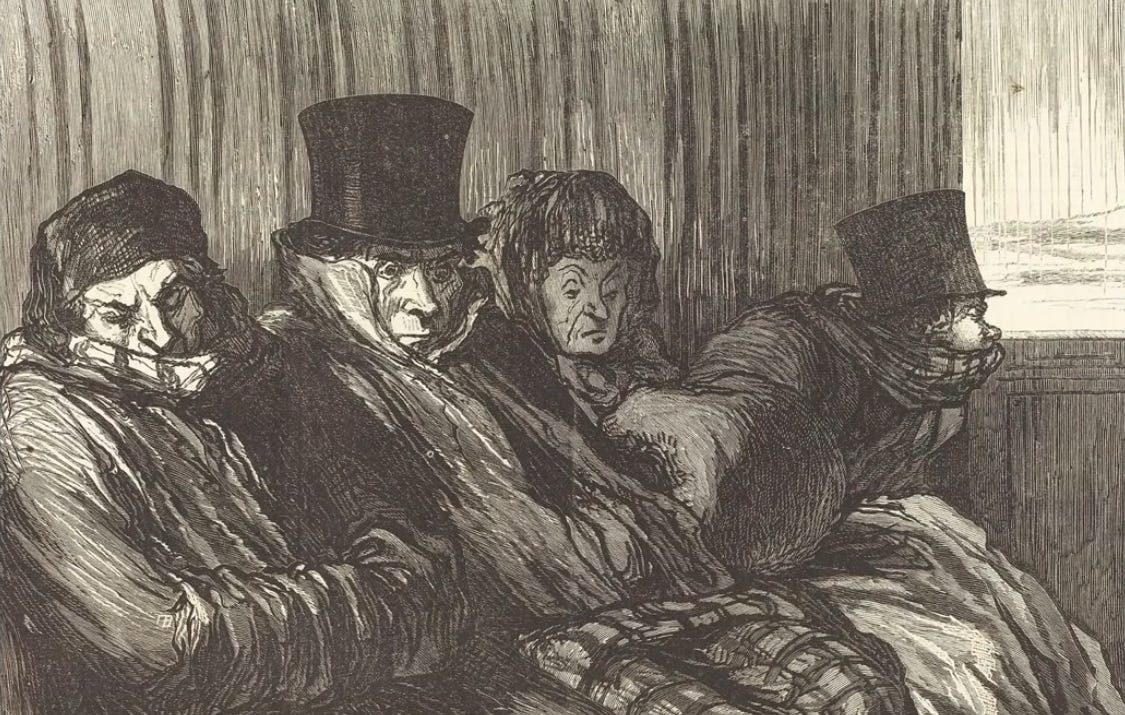
The Faculty of Escapism
Mind
Men go out of their minds whenever they try to explain it, or justify it; as far as I can see, the mind is only mysterious because we assume it to be. Isn’t it an astonishing fact that the brain named itself, and that everything which we say in the world is really a reflection of our notions of things as we received them when very young? If Plato is right and all learning is but past memory recalled, then everything in the world would already seem intuitive to our minds:—this not being the case, however, we can interpret Plato to really be referring to the innate capacity within man to learn or recall, and this he labels knowledge.
On that view it seems almost Kantian, and in many ways it is—but the mind, being the seed of all our experience and personality when viewed from this Kantian-Platonic lens, would really lend itself well to the view that the mind is nothing but the thing that does the “thinging” (“thinging” here being the process that gives rise to intelligibility); the object from which our subject arises in the world, in much the same way condensation appears on a mirror from steam.
From this subject comes all our objects, and from all our objects comes this whole reality; the state of mind which we have when perceiving the world largely affects how we see things in it, and if it were not for our ability to cut our losses and shuffle off this mortal coil, it would be the most ridiculous subjectivity that ever existed.
No one is more shocked by existence than I. My mind works very hard in convincing me that what I see is the true realm, but at the same time, it works hard to disavow this all too common notion by bringing up arguments, levied on behalf of my desires and impulses, that contend exactly for the contrary; my mind is split between affirming existence completely and rejecting it absolutely: there is a desire within me to save the world, and an equally strong desire to say it is all an illusion. I am torn between phenomenon and noumenon; my mind gives me pause—or perhaps I give pause to it—and in this stillness, I see the world as an object of my perception, while also thinking a Ding an sich (thing-in-itself) is still very much behind it.
I don’t think I’ve rid myself yet of the need to know what lies behind reality; there is a sense in me that wants to believe that if reality simply is, then nothing worthwhile can ever be brought forth from it—because it would all be done without totality (without total comprehension of its apperceptive character), and so would really be undertaken without completeness and wholeness. This aspect very much frightens me, for if one cannot know the reason why, then the whole notion of “knowing” or “affirming” seems somewhat hollow. There’s a very obvious dialectical tension here, which Hegel tried to resolve by making the Ding an sich a process of consciousness becoming self-conscious—a realization of itself in the movement of spirit throughout history—and while I think it a good answer, it still seems shallow, without depth, without the gravity I once thought it had.
I don’t think dialectic itself provides a solution to Die Hinterwelt des Dings an sich (the behind-world of the thing-in-itself). I think, rather, the dialectic is only a method for dealing with the contradictions implicit within the dichotomy of the world of perception and abstraction; in the two negating each other, you have a confluence of appearance with reality, and, mistaking one for the other, you find yourself unable to make heads or tails of which one is the true one. Perhaps to speak of them as true isn’t even correct:—indeed, when you do, you commit a very clear category mistake, for to ground metaphysics in epistemology is to build a foundation on sand.
This is where the desire to comprehend all of reality arises in the first place: the mind feels capable of conceiving reality as a thing capable of being known in its totality (objectively), but every epistemic criterion for reality has counterexamples to it that reveal the impossibility of grounding it on any foundational framework. This is where the contradictions within all things come to roost, and where the philosopher is made to feel homeless; not having a coherent worldview of his own to rest under, he wanders his solitary way into the shadow of uncertainty, and affirms along with Socrates the truth that he knows nothing—the only thing he feels certain of.
All worldviews are predicated on the notion that there is a single correct view at all. In fact, all “debates” are predicated on this notion, because each side assumes the arguments they levy against each other act as bulwarks against the claim’s veracity; debates don’t ask what the truth is, they argue for what the interpretation of truth should be:—it’s really a war of perspectives more than anything else, and this war is only fought on the belief that truth is power and that man’s mind is capable of comprehending it. This is why I’m tired of modernity’s cant: the slyness of everything, the obvious falsity of everything labeled as truth—all nonsense fought to the death over, for what?
I’ve given up on humanity to a large degree for this very reason; in our present age, we still have yet to overcome the need for truth as an objective thing—until we feel in command of the whole universe, I fear we will never bypass our desire to be factual regarding claims that are themselves grounded in values. To desire “truth” (in the objective, mind-independent sense) is a value, in the same way Pyrrhonian skeptics deny the possibility of such a truth outright; or, better yet, in the same way pragmatists value truth as the cash-value of an idea—the tangible effects the belief in that claim would have on our lives.
You see, dear reader, why I’m always unable to overcome all this? I’m in hell for it, and I shall remain in hell for it; for, like Faust, I cannot live until I’ve become master of myself, and all reality after it. The fear of myself is the beginning of knowledge.
I spoke earlier about truth being this interplay between phenomenal and noumenal reality, and about how the noumenal reality is what philosophers are really after, and also about how the unknowability of this noumenal reality is what gives rise to the dialectic as a method, and hence every dogma and intellectual sophistry. But why truth? Because the object of philosophy has seemingly always been an incessant drive to find the unchangeable and ever permanent, all the while deriding those ideas which claim that truth is now and then otherwise (dialectical). Schopenhauer epitomizes this dogma better than perhaps anybody else, saying:
All who set up such constructions of the course of the world, or, as they call it, of history, have not grasped the principal truth of all philosophy, that that which is is at all times the same, that all becoming and arising are only apparent, that the Ideas alone are permanent, that time is ideal. —The World as Will and Representation.
But I think Friedrich Nietzsche dispenses with this dogma with the same facility Schopenhauer spewed it out, saying:
Dividing the world into a ‘true’ and an ‘apparent’ world... is merely a move inspired by decadence—a symptom of declining life... The fact that the artist prizes appearance over reality is no objection to this proposition. For ‘appearance’ here means reality once again, but in the form of a selection, an emphasis, a correction. —Twilight of the Idols.
The will desires, the mind interprets, the person acts, the world is changed. Nietzsche is absolutely right, and Schopenhauer (in this respect) is absolutely wrong. To think the world as a thing conformable to your notions of it is to assume that you can really grasp the truth of it. Nietzsche says the ‘apparent’ world is the true world, and nothing besides; and I would agree with him.
I no longer want to be shackled by dogmatists who treat the world as something true—as something only to be followed so long as it’s reasonable and corresponds with the facts. Facts are precisely the thing you are in absence of, for every fact you claim as true is really without ground, and not worth engaging with on an epistemic level, only on a pragmatic one. Those who treat their interpretations as truths are always in the wrong regarding the notion of truth, for they believe truth is something static and eternal; and though I don’t know that with absolute certainty, I tried to argue that I don’t think that notion is coherent in the first place. Certainty is a false notion anyway; the human mind can barely comprehend itself and the world at large, let alone argue that it has a way by which to arrive at incontestable truths in the world. Utter nonsense.
You may very well call me a dogmatist in reverse. You may say, “What makes you affirm the opposite of Schopenhauer?” I will reply, “Experience. Experience has shown me that nothing in the world resembles the Platonic truth everyone speaks of: a justified, true belief; or a correspondence of reality—better put, a correspondence of idea (concept or label) with action (experience). I see none of it, and though it may not pass as the most serious argument—nay, it isn’t an argument at all—for those who divide the world between true and false only, at least it’s honest and from the heart, subjective and thoroughly my own.”
That is my truth: the subjectivity of myself—that which allows me to affirm life, and stave off decadence; that which allows me to remain powerful for myself, in order that I may continue to exist in the world, and better understand it as I get along in it. The only reason I write at all is to make the dialectic tangible—if it is not before me, then I cannot understand its motion, and thus cannot predict its trajectory through the space of ideas.
Oh, how I hate those who live in order to accumulate facts and data, in order that they may justify to themselves totally despicable things; how I hate those who justify their misery with their ignorance; how I hate those who live egoistically and selfishly, only concerned with how well-off they are compared with their neighbor; how I hate those who argue for the powerful instead of the weak; and most of all, how I hate those who feel they cannot live life because they do not dare to do anything in it, not out of ignorance but out of deference to the “truth”.
There are things which the mind is simply not able to comprehend. The mind, after all, is what gives rise to all this talk of truth and knowledge and objectivity in the first place. I want to affirm life in spite of all its contradictions and inconsistencies. The world is not some static substance, but an ever-evolving, chaotic jumble of aspects, wills, and personalities; every action speaks its own truth, and each will which wins out is what ultimately goes on to predominate, until a new one comes along and overthrows what formerly ruled the heart—such is life, an ever-boiling cauldron of passions and vexations, agitated by boredom, lust, and the flames of passion.
All this is incredible when you think about it. This very presence of self, what we call ourself—again, our own self, what we are: existing beings, conscious creatures, inconsistent entities striving for order amidst the chaos of living; survival alone is a creative enough act—how anyone finds the courage to maintain themselves in this world will never cease to amaze me.
People come in and out of this world quite regularly, but I doubt any of them live, or have lived, existentially, ethically, productively—that is, busied themselves with the meaning of life: not tossing it aside by asserting it has none, or retreating into a vague agnosticism in order to continue on in their lackadaisical way.
My problem, I think, is that my mind wants truth, but my heart wants compassion. I want to both affirm something absolutely as final, while also being able to say that this “final” thing will change with time; it is a contradiction I’m afraid I’ll never be able to overcome even with the dialectic. This damn contradiction is what prevents me from living “normally”, if that word even has meaning in this context. I’m so estranged from life that living seems like a performance; it’s not that I’m not socialized, but rather that I would prefer not to socialize.
Being an introvert comes with many benefits, the greatest one being the ability to talk to yourself honestly, without worrying about what others would think; but the greatest downside is that it puts you at a fundamental disadvantage in the real world, the world where you have to put your trust in other people in order to get anything done—you rely on the “expertise” of others in order to ensure whatever need you must satisfy is done so properly—it is an alienating, transactional world, which is systematized and ordered to the point of making introversion seem like the only rational response to it; the clamor of daily life is deafening, and very little human emotion shines through in any of it.
Real misanthropes are not found in solitude, but in the world; since it is experience of life, and not philosophy, which produces real hatred of mankind. —Giacomo Leopardi, Pensieri.
Life is such a dread when it cannot be lived fully; it is even more so when you desire it fully. Nothing ever comes to us as we expect—in fact, it comes when we least expect—and so, every day is really an opportunity for the world to show us how meaningless our dread really is in the face of it. Either way, nothing matters, so why bother at all with worrying about it? That is absurdism in its totality: it is to live on in order to see how time will play out and have its way with you, to see what lies beyond the horizon, though you already see the rising sun.
You see, an introvert lives solitarily, is judged in solitude, and above all judges himself in solitude. This is not good; it’s not healthy. If he is normally constituted, a time comes when he needs the human face, the warmth of a community. This “warmth of community”, this “human face” I so desire, is precisely the thing I feel most at times when my despondent nature cannot uplift itself from its own self-induced pessimism. A life primarily composed of sadness is self-made; it must never be forgotten that man, more often than not, lets his situation get the best of him, when in reality, the only thing that should be on his mind is why he even considers life the way he does—why he thinks those things about himself, when he is so much more than them.
A man can always become happy in life, provided he’s willing to make the effort to find what is happy within him, and if not from within himself, then from the world around him. I know from my own life, there were many times when my world felt as if it was collapsing before my eyes, and, being unable to find anything within to uplift me, I found great respite in long walks alongside the marsh behind my house, near a little stream that is enclosed within a light brush of trees, where all the leaves float like petals in a moving river.
Everything becomes more beautiful when you’re sad, and this is because your mind dramatizes your situation and turns your plight into an act of heroism; since suffering is so common, but personally so hurtful, it makes you feel greater than you are, in order that you might remember this sadness with more fondness than it deserves—and such is why every melancholic with an artistic bent does their greatest creating during moments of complete sadness; they’re able to feel themselves so much more in pain than in happiness, and so wrestle with this tension until the rope gives way and they produce something immortal.
So much said, yet I feel I can never say enough. My mind is never satisfied with all my life thus far: it wants me to produce more, to be more honest and loving, more creative and relatable, more caring and compassionate; the world seems too small for a mind who yearns for the infinite. Again, I for one find it incredible that a man such as me would even puzzle himself with the whole of humanity; life would be so much easier for me were I to adopt the custom of my father and say when faced with everything, “intellect over emotion,” or equally as often, “face your fears.”
But I am not of such a sturdy constitution—nor am I the type of fool to assume myself strong enough to will that kind of attitude into existence, as if life were merely an act of will. While I affirm Nietzsche’s will to power as a very compelling explanation of action in the world, I find my heart very much unable to follow through with its demands; my will is too strong for this world, and such is why I can never act within it, lest my actions inadvertently make me become something important. I am but a man wishing each second to be worthy of his own powers. To borrow a favorite phrase from my God-brother:
Non sono né un santo né un eroe. Solo un uomo con un cuore. E questo, mi rende uno sciocco. (I am neither a saint nor a hero. Just a man with a heart. And that makes me a fool.)
How right my cousin always is, for it is the heart which overrides the mind and turns a man into a fool. The mind, after all, is only the relic of an organ whose purpose is meant to suppress the heart, but more often than not falls victim to it. Alas, poor mind, poor heart, poor everything.
Soul
My mind is in a daze, and all my powers leave me when I attempt to describe the overwhelming sensation I feel at the thought of the soul. The topic speaks its own importance; interesting for its variety of interpretations, and touching on so many particulars, it really could’ve fallen anywhere within my system. I placed it under aesthetics, however, because I feel it’s where it shines best.
The aesthetic nature of the soul is one which no mind can fathom, but which the heart appropriates for its connection with it. Heart, mind, and soul are often found together for that reason: they all touch on the same fundamental nature, but do so in their own unique way.
The soul finds itself serving as a sort of vessel. Wherever it is, I am. It is one with me and I am one with it. I feel it in my bones. I feel the whole force of it—the power, the immensity, the otherworldliness of it. Though many would claim the soul does not exist, these people do not view life imaginatively; they hold themselves to a restrictive empiricism, in which they cannot entertain the possibilities of things unless the things indicate a possibility of existing in the real world.
Abstractions are derided, and nothing is dealt with seriously, because, to them, serious means real—everything that cannot be seen or deductively proven is automatically false; and so, you will find these people unable to intellectually fathom why one would believe in the soul, as if the soul were merely a matter of belief.
Reductionists always have to drive the passion out of everything. Nothing is sacred because understanding (to them) is meant only to serve, not to uplift life or inspire hope within the hearts of man. The only functions thinking can possibly have are the problems one is able to solve as a result of it; thinking for its own sake—speculative philosophy, in short—is not considered at all by these reductionists, for it too readily draws connections between things without first establishing a connection between them causally—again, as if the whole point of thinking were merely rational or logical—to “unravel” the mystery by coming up with new ways of reformulating the question.
It is all done in an effort, as they say, to make the problem more precise—and here by “precise” they mean so simplified and reduced it bears no resemblance to the original problem at all. That kind of approach may work in mathematics or physics, where the simplified problem may still lead to insights as to how to approach the original, but in philosophy, literature, or life in general, the method of analysis alone is insufficient; indeed, the problems in life or philosophy, more often than not, cannot be reduced at all—they must be solved directly as they are presented to you. This is where speculative philosophy must come into play.
If we look back at the history of philosophy, we will find that the first approach used was intuitive and speculative; philosophers did not consider the problem from a standpoint biased against explanations that were not empirical. Everything was up for grabs in terms of what could be believed. There was no notion of a “right answer” or a “final conclusion” regarding any phenomenon which the mind was put to solve; whatever conclusion man came to, so long as it accounted for what he was investigating, was considered the “correct” one, and in that way allowed for a multiplicity of answers for potentially the same thing.
We today, with our science and certain conclusions, would scoff at such a notion, for how could any consensus arise regarding what was “true” of the matter? But, see here, how decadent we’ve all become—so accustomed to “the truth” that anything that does not purport to be so is considered crazy. The notion is so obscure to us today that we cannot even begin to fathom a world in which one view—one “truth”—isn’t predominant. Our own thinking is shunned, and we are made on pain of mockery to adopt what has already been established in order to move along in life without difficulty—and that is exactly the problem. We can no longer think for ourselves, which really means we can no longer think existentially. Questions today are unable to be approached subjectively (individually); rather, they are made subject to the scientific method, and so are unable to be wrestled with in their truest reality.
Existential questions are not considered at all, really, because they offer no obvious solution when viewed through the lens of science—which is the method so commonly adopted today it’s considered a priori, as if it were self-evident that it’s obviously the best approach to address every issue; such is why philosophy has been routed from its lofty throne of superiority, and now made to grovel before the feet of science. But, and this should come as no surprise, this has led to innumerable issues with respect to how we as human beings are meant to interpret life, and how—for ourselves—we are to approach it in a manner that is thoroughly our own. Let us go a little further into this.
Once the speculative atom has been torn from the molecular germ of independent thinking, all that remains is a type of fideism with respect to inductive reasoning; observations take the reins, and the subject becomes a nothing, an indistinguishable unit, the same everywhere, and unlikely to change in order to get along in this false reality.
It would seem like nothing is worth saving in this reality; there are very few redemptive qualities in our approach to the real questions that matter—the existential questions which we ask ourselves when nothing in life seems to go our way, when every inconvenience, annoyance, issue, financial struggle, personal problem, or mental anguish falls upon us, and leaves us very little in the way of overcoming them. In such a situation, the soul is oppressed on all sides, and nothing seems to abate its overwhelming power, its tremendous ability to bring you true pain and great suffering. This here is where the scientific method falls flat, for nothing in it allows for someone to face the dialectic honestly.
In a sense, what I’m saying is that the answer to the soul—and every other question that can be interpreted existentially—will not be found in science, will not be found in reducing the problem to the simplest primitives, in completely ignoring your own individuality, and taking for granted the very life you live presently; none of this will be of use to one who strives to find an answer, but already knows there is no final solution to their problem.
But this raises the question: if the problem has no final answer—in the same manner 2+2=4—then how could we ever approach answering it? To that, I would say that one must answer it spiritually, religiously, mystically, ethically, emotionally, artistically, dialectically, humanly—in short, one must approach it speculatively: speculative problems require speculative solutions—dialectical solutions, as offered up by Hegel in his The Phenomenology of Spirit. It is in the course of our life that we come, slowly, to understand our place in it; and it always happens that what is largely responsible for throwing us off this serene course is our reactions to the demands made on us from the external world.
Again, here, regarding these questions, there is no final answer, no possible reduction or simplification which science or logic can provide us; in such a case, we must strike out our own path, using our own understanding, and build for ourselves a system that corresponds with our very humanity, and which brings about the same in others. But how is one supposed to bring this about, especially considering how ingrained the scientific approach to all things is—to say nothing of the current zeitgeist of defeatism, doomerism, pessimism, nihilism, and the all-around passive acceptance of abhorrent things? My solution is the pragmatic dialectic, a specific approach to dialectics that tries to reconcile the irreconcilable by making the process itself the solution, rather than the conclusion (end) of its progress.
There is no end to the complexity and variability of life, and with no end to how many ways a problem may arise—and with the potential number of paths generated by every decision being nearly infinite—it behooves one to take a more holistic approach to life—an approach that sees everything as interconnected, and which allows one to draw on whatever is in their experience in order to overcome the problem they presently face.
One must, in my view, see the beauty of the whole forest before they can appreciate the beauty of a single tree; in this respect, one must do likewise with life, for, considering how multifaceted everything is, and how the flux of time and the movement of the universe continue on indefinitely—in doing so, resembling the very existential problems we face in the world—it is necessary to view problems as not having one solution (as one would look only at a single tree while ignoring the beauty of every other one in the forest) but as a continuum of solutions (which in my analogy here represent the whole forest—the magnitude of the trees representing the variety of approaches one can take with respect to their existential problem).
Everything is existential except when it is viewed scientifically, and in so doing has subjectivity totally ostracized from the investigation; this is why science treats ethics as its own subject, completely detached from it (often falling under the title “Philosophy of Science,” where the ethical questions are treated) rather than being integrated into it from the very start. If this is the case before us, we must not reject science outright merely for being anti-existential (the results from it are too useful to dismiss it flippantly like that), but rather approach it as we would a violent beast that has been sedated—with care but seriousness—in order to ensure we do not find ourselves in its clutches.
To summarize, if everything is existential, then dialectics has to be permitted into our analysis at all times—without it, there would be no genuineness in any of our struggles, and we would be without a foundation by which to deal with any problem we face, be it trivial or grand. But the question now is, what is this speculative approach to existential problems? Taking account of everything already said, please consider the following explanation of it (as couched in Hegelian language).
Consider a world that is not a collection of static, dead objects, but a single, colossal process—a mind that must shatter itself into a billion disparate fragments just to discover what it is made of. This is the story of the universe as a “becoming” rather than a “being,” an agonizing and magnificent unfolding of Geist, or Spirit. This Spirit is the collective life force that flows through every individual thought, every cultural shift, and every historical upheaval. Yet, it begins its journey in total ignorance, like a person waking up in a pitch-black room who knows they exist but has no idea what they are. To resolve this, Spirit projects itself outward, creating the material world and the individual souls within it as mirrors. You are one of those mirrors—a localized point of consciousness where the universe has finally opened its eyes to gaze back at itself.
This Spirit does not grow through peaceful meditation or quiet reflection; it grows through the violence of friction. This is the Dialectic, the fundamental rhythm of existence. Every time you hold a certainty—an abstraction—reality inevitably presents you with its brutal, contradictory opposite—the negative. This collision is not an error or a tragedy, but a metaphysical necessity. The tension between what you believe and what the world imposes creates a spark that consumes both old forms, leaving behind a synthesis: a higher, more complex understanding that preserves the truth of the struggle while discarding the limitations of the past. We are quite literally forged in the fire of our own contradictions; the universe “thinks” by clashing against itself through the medium of our lives.
This journey constitutes the Development of Consciousness, a climb from the mud of simple sensory experience toward the heights of self-awareness. It begins in the raw, animal sensation of the “here” and the “now,” but the mind cannot remain in such a cramped space. It is driven by an internal hunger to understand its own boundaries, moving from mere sensing to Self-Consciousness, where it encounters other minds and enters into a struggle for recognition. It climbs from the personal to the social, and from the social to the cultural, constantly shedding its old, smaller selves like a snake shedding skin that no longer fits the expanding reality of its soul.
The climax of this long, exhausting ascent is Absolute Knowledge. This is the moment the “back-world” of hidden truths and mysterious “things-in-themselves” finally disappears. The mind stops looking at the stars as distant, indifferent lights and stops looking at history as a series of accidents or cruelties. It realizes that the stars, the history, and the person observing them are all one single, interconnected Spirit. Absolute Knowledge is the state where the subject—the “I”—and the object—the “World”—are no longer strangers. You look into the abyss of reality and realize you are looking into a mirror. The universe has finally finished its long, agonizing thought, and the answer is the profound, existential homecoming of recognizing that you are the architect of the very space you inhabit.
We are that soul that strives to find ourselves amidst the bustle of existence—where every random occurrence has no reason aside from its own cause to serve as the justification for it. In such a state, without grounding, and having few avenues by which to alternatively go down, one is made face-to-face with life, and, shortly afterwards, challenged to a duel by it. What to do? Science, as already expressed, will be of no use to us; and we ourselves are so very small when the whole human race is considered—what are we to a star, a solar system, or a whole galaxy then? It borders on the absurd to assume we have a solution to whatever mild inconvenience we are faced with in life.
All our problems are really trivial when considered from a larger perspective—but in this larger perspective are a variety of ways which we can existentially approach everything, and from which we can face our contradictions without fear. All problems are contradictions because they contradict our notion of continuity; that is, they contradict what we expected to be the case. The world changes, and so too must we with respect to it: always looking, always searching, always seeking, always ready.
We must feel ourselves at one with what we are. The soul calls us forth, and we are made to stand before it in atonement for acting so dishonestly against it. We are so untrue to ourselves when we do not allow ourselves time to process reality, and ready ourselves for the laborious journey when we awake from sleep.
The soul is that aspect of ourselves which we feel intuitively, but which we cannot comprehend fully. The soul knows all, but we are ignorant of all. In our ignorance, however, there is a kind of childlike vivacity which enables us to endure the most debilitating experiences ever. Our life is our journey, and our soul is our guide, in the same way Virgil was the guide of Dante through hell; in this, we are like all other people who have ever lived—confused, worried, and uncertain—but, with good conscience, made to fall into a kind of happy receptivity with life, so long as what we’re receptive to is in harmony with our soul.
The soul is the metaphysical grounding of existential existence. It communicates with us, just like our conscience, but on a higher level, in an upper realm, where the spirits and energies of all other things swirl around and come together into a single unity; a balance is achieved, and what we once sought for is no more, for we find everything in this one substance of total being. This total being is the dialectic, is change, is flux, is transitoriness, is, in a word, becoming. What we become is what the soul—our metaphysical aspect—senses within itself, and which expresses itself outwardly in the world.
When we act in the world in accordance with our soul, our mind comprehends the connection that is made between our actions and our intentions, and as a result gives us an overwhelming sense of contentment, tranquility, and peace; in such a state, we no longer feel stuck, but are free to feel and enjoy and become a part of this grand narrative of Earth. We all are a part of this great accident. Mankind is like the vapor which rises from a puddle in the sun; we are accidents, but we are great accidents, self-aware accidents, powerful accidents—to our knowledge, the only accident conscious of itself. This self-consciousness is the beginning of all existentialism, and thus the only true philosophy the world can possibly know.
The Object of Contemplation
Beauty
As much as it pains me to admit it (for I am not one to go along with the consensus of mankind on anything), I agree with that most traditional piece of wisdom: beauty is in the eye of the beholder. I should, however, like to make a small addendum to it: for the beholder, beauty is something which transcends his eyes—his subjectivity—and is something more akin to the objective, the final, and the omnipotent.
While beauty only strikes a man truly and honestly a few times in his life, he will find that were he able to look upon all things in the world with more generality and less prejudice, everything would be more readily open to him, and thus, much easier to see the immensity and beauty of. Nature hides her secrets from us, but her beauty is open for us to enjoy at any moment; so long as man has his wits about him, he will never be in want of a beautiful sight.
The whole construction of the world through our senses is the only necessary prerequisite to see beauty; without such sensations, there would be no material from which to draw, and so, no intellectual activity the mind could conjure up in order to provide some structure or framework. The sight of the sun, the sound of the birds, the feeling of the wind, the tasting of fresh honey, and the scent of blooming flowers—isn’t all this enough to paint a beautiful picture in your head about the world?
Beauty is solely man’s to enjoy, and the older a man gets—being less confused about the world and in a greater position to actually look at nature and appreciate it—the more he enjoys having endured his life, if only to be able to experience this most sacred of human actions: gazing into the infinitude of beauty.
Beauty calls out to man every second he lives. Man is obsessed, in fact, with beauty, for without it there would be very little worth living for. What we find in life normally is drab and mundane, totally at odds with the very concept of beauty; but, to go back to that timeless maxim, the beholder holds within them the true source of perception, and so, the entire spring through which beauty flows.
Our perceptions, if we are to agree with the subjective idealist, are responsible for creating the whole world before us, and nothing more; however—and I think the empiricists were right on this—there had to have been a time in which the world was not perceived by man and yet did exist objectively before him. If this be the case, then our reality is not of our own making, but rather the construction of it from our experience, interpreted in our minds.
Now, funnily enough, while the idealists and realists (or rationalists and empiricists) of the 17th and 18th centuries were battling it out—fighting over whether the world was a product of the mind or merely an excitation of it—it never occurred to them that it could potentially be both. The problem with dichotomous thinking is that it fails to make connections between differing interpretations; it rather only seeks to validate those sources which can be made sense of under its view, disregarding the other as false outright. I could never abide by this reasoning, for I always found ideas more powerful when mingled together, rather than separated and made to stand without support from neighboring ideas.
In the context of the old debates regarding how the world is to be known, the rationalists and empiricists spoke past each other for centuries, and it wasn’t until the pervasive skepticism of David Hume that one Thomas Reid—long before Kant—made arguments on behalf of common sense: that reality is neither an experience only nor an idea of the mind only, but rather a harmony of both. According to Reid, sense is our experience of reality, but perception is the true reality which we perceive—a necessary distinction that allows one to see that reality is both hard-wired in us from the start, but also subjectively understood by us to the end. I think Reid is to be praised, for while he lacked the systematic treatment Kant gave the question, and had no concept of the mental categories, he was still able to bridge the gap between raving subjectivity and sterile objectivity. The ability to affirm everything and affirm nothing, given light in the synthesis of both, allowed future thinkers to conceive the world in more ways than one.
Of course, one could argue that Reid arbitrarily asserted perception as the objective ground while making sensation the subjective—in the same way Schopenhauer affirmed the will as objective and made representation “for the subject,” as he would say—but in many ways, that attitude is precisely what philosophy needs more of. Readers this far into this book should already know how much I hate the self-imposed limits placed upon the minds of men: usually out of deference to conformity, or out of the desire to remain consistent in doubting, or, most of all, out of fear of contradiction. But I must say, all these doubts get a man nowhere, and you would scarce find a man better for all his doubting, for most are unable to truly wrestle with doubt in the same manner a Kierkegaard or a Pascal did.
The only option available for most is a simple conformity: an internalized weakness born in decadence, born out of a denial of life, a fear of reality, a self-made construct designed to restrict all independent thoughts. If a person is to truly live, they must see to it that their constitution is strong, that their will is their own, and that the necessity to be who they are is paramount in their mind; they must overcome their doubt by not fearing the consequences of whatever they affirm. The only path to beauty is one carved out by a person’s willingness to see it for themselves, on their own terms, out of a desire born within their hearts.
Beauty is striking to us because it has no ground, no why, no rhyme or reason; it is what it is, and in that fact is everything which we hold dear in life. The more I think about the world and reflect on everything in it, doing my best to give it an honest interpretation, the more I find how true that statement of Heraclitus is: “The only thing that is constant is change.” From day to day, I find myself either despairing at the fact that I cannot get a final answer to life, or happy to live in ignorance of whether it has one or not. Some days, it matters to me more than others. One day I may say it doesn’t matter in the slightest, only to say in the next that all things in life are empty if they cannot be grounded outside my subjectivity. This is the essence of all existential doubt; it is found here, in this very kernel of being, in the immensity of our subjective lives, cast into the light of the world, only to be swallowed whole by the darkness of uncertainty.
It is here that dialectics becomes such an indispensable tool, for, without it, one would be lost in the sea of confusion without a life raft. Change is implicit in all things; one cannot go through life and not notice how much their attitudes with respect to everything change based on the most innocuous and circumstantial events possible—all out of our control, yet in the moment of experiencing them made to seem like the most foundational and necessary things imaginable. Dialectics is simply the recognition of change, and the more one sees in life its necessity, the more they will be able to tolerate the confusion which seemingly always surrounds it.
This begs the question, however: what is the dialectic of beauty? That beauty changes with respect to time and the individual is a certainty no one need doubt, but what is obscure in it is precisely where this sense of beauty derives from: I say nature itself. I find in nature all that beauty can afford to give us—from the simplest leaf to the mightiest tree, everything lives after its own manner, uniquely its own, not caring in the slightest what the thoughts of its observer are.
There is no pretension in nature, no need to obfuscate what is already there. Everything the world reveals to us is interpreted through us, but also is a very clear product of its time and place. If reality were perfect, there would be a justification for everything in its place, but since man has always been behind in this respect, and unable to comprehend the complexity of existence through first principles alone, man must begrudgingly accept his ignorance, become one with it, in fact, and anticipate the time of the world (his age) after his own manner if it is to make sense to him at all.
Beauty is like a star which everyone sees the bright light of, but nobody knows the true size of. The more one tries to offer explanations for it, the more one finds how little they comprehend it. Beauty, as an aspect of the world, may be said to be a prerequisite to any aesthetic creation. Aesthetics is life made tangible. Everything can be viewed through an aesthetic or artistic lens. All things are beautiful because beauty can be breathed into them via our perspectival eye.
Beauty is nothing more than the capacity to be receptive to life and to hear the call of it as one walks out into the world; one must be willing to receive into their life the sentiments of nature if they are to be uplifted by it and, in that sense, vivified by beauty. A personal, existential dimension exists to it, and must adhere to it, because if not, then all is lost with respect to the subject’s perspectival eye. Without the subject, there is no object. Without affirmation, there is no negation. Every “yes” is really a reaction against an implicit “no” which reality—bound in contradiction and negation—is forced into. Each time we see reality, we really take a leap of faith, hoping that we land on solid ground. There’s little hope in life if one cannot be sure of what they see; doubt makes all things unholy and drives out any ethical impulse that existed within man for the sake of his own security.
The dialectic of beauty is simply the continuous overcoming of a negation that says reality is only a representation, an illusion, and nothing more. The desire for finality, an end to misery, a stoppage of the deluge of doubt—all this and a little more are all we want, and yet, they are things which we cannot have, for in spite of all our efforts of overcoming them through the dialectical movement, we are ultimately without certainty in any of it. Beauty, however, has a way of making us remember that it doesn’t matter whether reality is grounded or not, whether it has finality to it or not. When we are confronted by it, we forget all our philosophical pretexts, all our desire to appear knowledgeable on it, and exist as one with it.
Beauty makes us remember that the “now” is the only thing there is, and that anything beyond it is merely a distraction from what lies before you presently. Nothing is more assuring than forgetting the absurdities of philosophy—all those mindless sophistries that, in actual life, play very little in terms of the outcomes of our affairs.
I am spurred on by beauty to forget everything that doesn’t matter to me. To live my life honestly after my own manner, and to recall all those things that deeply affect me and me alone—that is the art of beauty. Its dialectic is the dialectic of life, for in overcoming the preliminary doubts which confront us when first thinking about the subject, we are suddenly able to truly peer into the core of nature and extract from it the most beautiful thing imaginable: life itself.
Yes, beauty inspires life, for it lives in each individual. The soul of man feels the pull of it whenever close to something intuited as beautiful. This metaphysical aspect of perception, if I may speak of it philosophically, is responsible for all the sensations and enjoyments possible in life; if it were impossible to perceive anything, there would be no experience by which to distinguish the abstract from the concrete. To my understanding, the abstract is a byproduct of the concrete—the subject-object divide once again shining through—and in that concreteness, the idea corresponds to the experience.
Those who have an eye for the beautiful understand all that I have just said. Within beauty is the subject’s ideal object—all qualities which are interpreted as best for a given quantity (object) are what go to make up all our notions regarding beauty. In the land of beauty, the subject is king, and in his kingdom he reigns beneficently. All artists, creative souls, and free spirits are born in beauty and find in it a life which they didn’t think possible in the real world.
All creations are really an act of love and beauty, for what is not beautiful is not loved, and where there is no love there is no creation. Beauty is what holds our attention in the world, and is also what allows us to forget the world entirely—forget that we willed anything at all—and temporarily forget that suffering was ever a thing. Such is the way of the world: to be lived in fear, but to be cherished in courage—born in our perception of beauty.
Sign and Symbol
There is in life a kind of emptiness so formidable it would turn the boldest man in history into the most tepid and wretched creature this world has ever seen. At bottom, there seems to be something so tragic in existence that there rests below life itself an unutterable evil one dare not speak of, lest it come to get them and annihilate them. This evil, without question, is doubt; and like all true doubters—those who really question life—an undeniable melancholy consumes them completely, and so makes everything they bring to the forefront of their mind an exercise in futility, an opportunity to make suffering even greater—supreme, in fact—and reduces the whole of being to a momentary aspect, only to be followed by a silence so loud it deafens anyone near it.
As if reality weren’t bad enough, there are also a multitude of signs and symbols which we are subject to, and which now act as the greatest inculcators of decadence imaginable. Distractions and idiotic misadventures are commonplace, and what the majority does with their free time—supposing they have any after sleep and work—honestly surpasses my comprehension, especially when you realize how empty, boring, bankrupt, and infantile it really is. I would take death over whatever most people have consigned their existences to today.
There’s very little in the way of independent thought, and education is so shallow and insipid that anybody with a pencil can qualify as a scholar. True thoughts are those ideas which are not subject to the contemporary signs and symbols; whatever is considered unique today intellectually is really a reformulation of something old and already explicated far beyond what is necessary for practical use. It really requires a sort of genius to look past the veil of ignorance which so many people are covered with, and to interpret an old idea in such a novel way that it actually addresses the zeitgeist directly.
The true movers and shakers in the world of ideas are those who can speak to the problems of not only every institution but to every individual as well. When ideas are typically constructed, they follow a very rigid line of reasoning that was acquired from some book or some old interpretation that vaguely applies to today; but the problem with that approach is that it makes the scholar subject to the opinions of others, and scarcely allows for an honest engagement with the ideas as they are developed independently of any other material. That is why scholarly papers are so mind-numbing to read: aside from the very prolix and boring style, every other sentence has a footnote—as if that somehow indicated due diligence, or made you a real philosopher. Ideas gathered from others are as useful to intellectual development as opening a book in a language you can’t read. It’s almost farcical.
Men love to be surrounded by books, but few actually love to read them. It would be helpful if a mere proximity to books allowed one to also acquire their content, but since this is not the case, and because most people would rather die than think for themselves, it so happens that we have a world run on narratives—signs and symbols!—that do not answer in the slightest any of the concerns of people. The everyday man has been tossed aside and made to sort out the world on his own, but because he lacks the intellectual ambition, the time, or the energy by which to make any of it comprehensible, he is forced to pick and choose his signs and symbols carefully. But, with all this said, what exactly do I mean by signs and symbols?
Anyone even slightly aware of the concept of a sign or symbol will almost certainly have heard it in the context of Lacanian psychoanalysis, but this is not where it originates. Should you, dear reader, be slightly familiar with the intellectual history of this topic, you will probably be led to believe that the idea of the sign and symbol has its roots in Saussure’s linguistics; and while that is an honest start, you may be surprised (as I was) to find that it actually originates in the American pragmatist tradition: Charles Sanders Peirce, as it turns out, was the first to give us the idea of semiotics—the study of signs and symbols proper.
Now, to explain what signs and symbols were to Peirce—for I think the historical development of this is crucial for understanding why I speak so abstractly about it—one must understand that for Peirce, meaning was never a static property, but a dynamic, three-way event. He proposed a triadic model where a Sign (the representation) and its Object (the reality) are linked only through an Interpretant—the specific mental effect or realization triggered in the mind of the observer. In this view, meaning is not buried within an object like a hidden treasure; it is a relationship that happens only when a mind translates the world into thought. To navigate this translation, Peirce identified three distinct ways a sign relates to its object. The first is the Icon, which represents its subject through sheer resemblance, such as a portrait or a map. The second is the Index, which functions through a direct physical connection or trace—think of smoke pointing to a fire, or a pulse indicating a beating heart. Finally, there is the Symbol, the most sophisticated mode, which relies entirely on social convention and learned rules. Words like “justice” or “rebellion” are symbols; they have no physical likeness to their objects, yet they govern the very architecture of our shared intellectual life.
With that said, I feel I must explain now how Saussure differed from Peirce regarding the sign and symbol. While Peirce viewed the sign as an open, three-part relationship with the external world, Saussure looked inward, stripping the sign down to a purely mental, two-part structure. He discarded the “Object” entirely, arguing instead that a sign consists only of a Signifier (the sound or image) and a Signified (the mental concept). To Saussure, language is not a tool for pointing at reality, but a closed system of psychological associations. The most radical departure lies in Saussure’s principle of arbitrariness. While Peirce allowed for “Icons” that resemble their objects or “Indexes” that are physically tied to them, Saussure argued that the link between a word and its meaning is purely conventional. There is no natural reason why the sound “dog” represents the animal; it only has meaning because a society agrees it does and, crucially, because it is different from other sounds like “cat” or “log.” Meaning is thus defined not by a connection to the world, but by a network of internal oppositions. Ultimately, where Peirce’s theory is one of discovery and interpretation of the world, Saussure’s is one of structure and constraint. He suggests that we do not so much speak language as language speaks through us, providing a structured architecture that dictates the boundaries of our thought.
Regarding Lacan now—definitely the most famous of the three—he took Saussure’s linguistic framework and made it psychoanalytic, that is, applied it to the human psyche; and from that developed concepts of such profundity and complexity that there are dictionaries dedicated to Lacanian Psychoanalysis—focusing on the terms and ideas alone, as if the actual content of the sentences weren’t enough. For Saussure, the sign was a balanced, organic unity—a sheet of paper where the Signifier (the sound-image) and the Signified (the concept) were inseparable sides of a single whole. While the relationship between “word” and “thing” was arbitrary, it remained functionally stable, allowing language to serve as a reliable map for human communication. Lacan, however, shattered this symmetry by introducing a fundamental “bar” between the two elements. In his formula, S/s, the Signifier is elevated to a position of dominance, separated from the Signified by an impenetrable horizon of resistance. To Lacan, the Signified “slides” perpetually beneath the Signifier; meaning is never fully captured but is instead deferred along an endless chain of words. Where Saussure saw a tool for a conscious speaker to navigate reality, Lacan saw a structure that precedes and creates the speaker. If the unconscious is “structured like a language,” then we do not possess language; we are possessed by it. The clarity Saussure sought in the logic of the sign is replaced in Lacan by the “lack” of the subject, for whom every word is a failed attempt to bridge the distance between desire and the Real.
There is in Lacan an obvious recognition of the impossibility of language to truly capture what we as subjects desire. This is why, to me, he is the superior to Freud, and why his ideas are so important: he understands the existential aspect of man’s psyche; the indebtedness to everything which man is subject to makes it extremely difficult to grasp what we as subjects truly mean when we say anything at all. I myself wrestled with this exact thing in my essay Why I Repeat Myself, and am in fact wrestling with it right now.
What lies between what we as subjects mean with our words, and what we experience in the world which gives rise to them in the first place, is an infinite gap of uncertainty, undecidability—an impossible apprehension which no mind, no matter how genius, can ever truly know. As I mentioned at the start of this essay, man is perpetually in a state of tragic anxiety, not only because his situation in the world is rather demanding, difficult, repetitive, uninspiring, stultifying, soulless, lifeless, and materially stagnant, but because man cannot understand his own interiority with respect to all these difficulties; there’s no way for man today to internalize his own external poverty—everything which is presented to him barely gets noticed, and if it does, it is only because he feels it is no threat to him mentally. The instant man feels he is unable to comprehend a thing, he runs from it in fear, for the greatest fear of all is fear of the unknown. There are no words to put to this poverty, and even if there were, it would only signify the gap that exists between our desires and our reality.
Life is too much to take in all at once. Such is why reduction and simplification are rampant today; nobody wishes to think existentially, for if people were actually forced to confront their ego, they would find a little homunculus of lust and desire—indomitable and insatiable in its avarice for everything which comes to its mind. The lack within our own subjectivity is found in our inability to properly overcome our doubt regarding what we observe and what we feel regarding it; there aren’t enough words in all the languages throughout history to properly express just what we mean.
This infinite doubt—a doubt so strong Pascal thought suicide reasonable in the face of it (assuming God does not exist to remove it)—is something which everyone must face, and must do so knowing that no man has ever been able to overcome it; even if God existed, it would still not remove this sense of angst which we always feel regarding it. Regarding what? Life, existence, and our inability to capture any semblance of meaning within it.
Every action in life can be considered arbitrary when you remove free will from the equation, and furthermore, when you eliminate the possibility of teleology in the universe. If such is the case, why not say along with Ibn Khaldun: “This entire world is trifling and futile. It ends in death and annihilation.” It is for this reason that man still clings to his fables and narratives; the sign of life is symbolized in the stories of Abraham’s descendants. The exile does not choose its Babylon. And so it is with man: a scared, ignorant creature, separated from his subjectivity, and afraid of what he might find should he gather the courage to actually look for it.
Everything happens too late in life, and all too often do our laments resemble the sighs of children rather than the weeping of wounded animals—which, were we actually informed about our true state, I think they would resemble more closely. If it were possible to truly represent yourself to yourself, would you wish to do so? I, for one, would like to think my true self is my current self, for if I was false to myself, I would be a lot more optimistic than I actually am about my future. My future is death, as is everyone else’s, but I don’t wish for it to come soon; I still have many things to consider, and I still plan on writing a lot more than I already have, despite, in my view, writing more than anyone else my age probably in all of history—only Pico della Mirandola is my rival in this regard.
This gap between sign and symbol, again, is the purest form of subjectivity—for if there were no gap there would be no doubt regarding anything that relates to us existentially. Doubt is really a synonym for the dialectic, and this is because the role negation plays with respect to our self-consciousness is born in the uncertainties that arise in our minds as the inexorable flux of time moves along; man can never truthfully think through a concept, for all concepts require mediation via other concepts: the discontinuity between what we attempt to signify and what we are as signifiers in the moment of objectifying (signifying) reality with our concepts is just another vain play of words.
What we desire is the desire to not desire, but in desiring this desire we find ourselves trapped in a cage of our own creation, where every desire really negates its former desire, until desire itself is tired of desiring, and in turn desires nothing but the end of all desire: this gap, you see, is circular, and only devolves from here into a superstructure of avoidance, in which the original desire is deferred to a slightly less domineering desire—a desire that is controllable, and as a result made not into a desire but a mental crutch, a reliable comfort that degrades the more it is used, but never loses its utility, for the superior desire is still imposing enough to not dare free yourself from this lesser desire.
At once you see how ideology is born, and how the human mind is captured by a variety of ideas which were not its own—for, again, to be your own is to wrestle with your subjectivity enough to overcome the signifier/signified divide—but rather were designed by others, a kind of Big Other, which we fragile and scared people use as a surrogate to our own individuality. This kind of ideological capture is complete when the ideology itself becomes the person’s individuality—something which they identify as in order to, again, bypass the fear found in the doubt regarding ourselves (who and what we are as human beings).
We doubt when we begin to feel unsure regarding things that relate to us personally. The existential doubt of another may be empathized with, but it can never be understood in its totality, for the gap must always remain between what we label with words and what we as objectifying subjects feel with respect to our labels.
I’ve said before, and I’ll say again: words fail and remain forever poor translators of our true intentions; that is why action is infinitely superior to mere contemplation, because it actually allows the subject to identify with themselves as they oscillate between doing and merely being. That is also why I say no amount of erudition will get you closer to the meaning of life, because life is not meant to have a static ontology, but rather a dynamic one which, in the process of doing and not doing, one finds a part of themselves in the action itself, and almost never in the thinking alone.
To my knowledge, only Buddha was able to achieve enlightenment through meditation alone. We are not the Buddha, though, and we should not strive to sit under a Bodhi Tree and have the universe give us answers—for most of us, our subjectivity is not built for that kind of intensity, and none of us are truly worthy of the idols we venerate; such is why in Christianity and Islam you are made subject to God, rather than feeling equal with God—we may be one with him, and made after his image, but we are not equal to him; in fact, Isaiah 64:6 says: “But we are all as an unclean thing, and all our righteousnesses are as filthy rags; and we all do fade as a leaf; and our iniquities, like the wind, have taken us away.” So we are, poor dejected creatures, forced into a life of darkness, all to return to darkness in due time.
The sign and the symbol play the same role the subject and object do in the philosophy of Schopenhauer; it doesn’t make sense to consider one without the other, and it’s beyond absurd to assume that one can exist without the other—like saying a coin only has one side.
The main point of all philosophy, in my view, is to find a method for reconnecting the subject with their subjectivity—that is, an existential reckoning of sorts that allows the human being to feel their own. If a man cannot sit alone with himself in a room, then he definitely cannot sit amongst a crowd in a foreign land and hope to discover himself there—that is, unless it was a deliberate action by him to escape his room and venture out into the world deliberately, so as to suck the marrow out of life. These varying temperaments, which the dialectic of every situation is bound to inflame and inform, are our personal sign and symbol—they’re us and we live through them, and without them, there is nothing but despair created in the heights of our own ignorance regarding the infinite gap which transcends us and our conceptions of it.
The Artistic Process
Art
Art for the sake of life is the greatest kind of art. If art is not existential, then it is not human, and if it’s not human, then what is the point of creating it at all? Without the passion which the heart imbues in every act of creation, there would be no human sentiment implied in the expression, and so, all things which man expresses would be as dead as stone. Where the man is lacking, so too is the meaning.
Art finds a place in everyone’s heart, but it is felt particularly strongly in those whose intelligence is directed solely and singularly to its comprehension. What art means to the artist proper (painter, sculptor, or architect) is something different from the writer, musician, poet, or philosopher; all of them, however, are connected in one aspect: expression!—that of creating something with the intention of communicating its sentiments to another.
Every kind of art is really a kind of exposé into the mind of its author. A poet may write a poem on spring, but a musician may write a concerto on it. Now, could it be determined in some redundant, hackneyed fashion that one mode is superior to the other? Perhaps, but the point of art, for me at least, is not to reduce the expression to an option of “better,” but rather to impart to the recipient of the art the sentiments which the author held when creating it. Art is really a conduit for creativity—it’s a way of channeling the creative energies within its creator in order to produce something which will accurately convey what the author felt in the moment of inspiration.
Nothing is harder for the aspiring artist than to move past their own influences. Unless the person be a natural genius, it will normally follow that one who is inclined to art will become attached to a particular genus of the subject that they feel an attraction to, and from there attempt to develop their skills after the manner of their influences; this, however, makes it so that the artist will find themselves imitating mostly at first, until they feel they have exhausted all they could from their respective idols. This is—and I speak here from my own experience—a very dangerous thing, however: for how is the young artist to know when they have surpassed their masters?
My dear reader, as a writer myself—more specifically as someone thoroughly interested in the well-being of mankind, and who wishes to produce a philosophy that best allows for one to discover who they are—it is almost an insuperable task to find just when the threshold has been passed, and where one can finally decide on their own that they have, indeed, outdone the model which they have studied so vigorously for, in some cases, years on end.
Nearly every artist needs a bit of inspiration before they develop the germ of a creative idea on their own. Even if an individual of singular genius is fortunate enough to develop their creative powers without any influence from another artist, they still need a source from which to draw. Hence why, in the case of every natural genius, the source of all inspiration is love—love for wine, women, song, nature, learning, God, or life itself: everything in art demands love, for where there is no love there is no man, and without man, no expression of any kind.
In general, the artist should start from the particular impression that gave rise to the creative impulse in the first place; from there, find ways of expanding your particular impression in order to more fully flesh out the original impression—in this, the greatest care is required, lest the initial idea be totally bogged down and laden with false sentiments that were not present in the initial inspiration.
One should weave a broader narrative into their creations, for in that you expand on what was at first small, and in doing so create a larger and stronger picture that allows for more people to connect with it. The more niche an art is, the smaller the audience it will find, but the more general and human it is—there is where immortality resides. Without a broader narrative, there is only the act of creation itself; and while many artists—especially writers—defended the notion of art for art’s sake, I’ve always been one to remind such folk that self-expression and creativity—while useful and even necessary in their own right—fall short of the full grandeur they deserve if they are meant only for their author.
What would art be if it were done for strictly personal reasons? I would say no different from a scrapbook that is only meant for the writer of it, or, better still, no different from a canvas which the painter hides out of fear of having judgment passed on the unfinished work too early. No! Art must be done singularly, in the moment, for the author’s purpose alone—but, when finished, should be released out into the world in order to inspire others, perhaps even uplift them and provide them with a new vigor for life.
Art is never without a moral connotation to it; everything existential must concern itself with morals, for without the subjective which morality implies, there is no possibility of the objective being actualized in the piece of art made on behalf of the author’s own subjectivity and moral interpretation. In the context of art, nothing in it is worth doing if it is not pursued for its own sake and devoted to entirely for itself, on pain of anguish for having let slip a great sentiment or thought that could have resulted in a creation that changed history. Now that may be a bit of an exaggeration, but the fact of the feeling is there—and anyone who feels the innate urge to create art knows exactly the feeling I refer to.
There’s an immense sense of guilt that comes with being a competent artist; in much the same way I suspect an experienced doctor feels when they do not instantly cure their sick patient, the artist must undergo some misgiving, doubt, and even shame for not having taken the time to use their experience for the sake of creating their art. Every moment that is missed as an experienced, and even well-accomplished, artist must feel like a total waste; and with that comes the regret felt only by a hurt heart that has not beat with the pulse of love, but rather merely for the sake of pumping blood. Any creative impulse that is missed is forever gone, and so can hardly ever be recovered again unless by some miracle—aside from that, however, the thought is forever a “has-been” and never an “is,” and thus is like foam that rises to the surface of the sea only to be splashed away by another incoming wave.
Another crucial aspect of art that one must never forget is patience. If one strives too hard to develop a perfect thought ex nihilo, they will find that they shall halt for it; for while we feel in command of our thoughts, the right thought which we strive for in the process of creating art seems always two steps ahead of where we are in the act of creation. If such is the case, one might wonder why a man labors so, when a brief moment of thought should suffice; but this man forgets that thought is not a faculty of the will—it is an arrival. Like a phantom, it cannot be summoned at pleasure; it emerges only from a rare, harmonious collision of external stimulus and internal temper.
Even in our own affairs, we find ourselves unable to command a resolution. The mind wanders, perhaps out of a deep-seated aversion to its own truth. We must wait for the right frame of mind to return, unbidden, illuminating the matter from fresh angles until a decision finally “ripens.” To force the mind is to find nothing. This truth governs the life of the intellect as well. Even the greatest mind is not always capable of its own essence. Reading, in the case of a writer, may offer a temporary substitute—allowing an alien consciousness to think in our stead—but it is a perilous refuge. To read too much is to become a stranger to one’s own soul, walking in well-worn paths carved by others. Ultimately, the impulse for original thought springs not from the safety of books, but from the raw, primary grit of reality.
Patience in the act of creation is what allows one to find the idea they’re looking for that allows them to capture most perfectly what it is they intend to convey. The sentiment is always there, the matter is always at hand and can be called on at any moment—the question is, how will it form itself, and how will we as its authors make it into something for everybody, rather than just ourselves?
I don’t think anyone can call themselves an artist until they’ve been humbled by their own soul. Until one truly understands what it is to suffer for not having the time or opportunity to make themselves tangible to themselves, they will never understand what it is like to create art.
The hardest thing to do in all the world is being open to love, for to be open is to be vulnerable, and thus, to have the potential of being hurt. Life is hurtful, and it is more difficult than it should be most of the time; but in that time of difficulty, there is a greater opportunity to feel love, and to extend that love outside yourself and spread it to others in need of it. There’s more than enough love to go around in the world; the human spirit is infinite so long as man continues to live and endure while being subject to innumerable pricks and kicks from the fickle fortune of existence. It cannot be helped: the artist must love, must be open to pain, must have a penchant for suffering, and must desire, above all else, to create what is human, holy, and everything in between.
A man’s ideas are largely subject to his environment, as well as how good he is at making do with silence in the face of innumerable dead ends. Regarding ideas, as said earlier, a man must wait, must listen, must be still, must hear himself, must slow his breathing, must calm his mind, and must empty himself of any egoism that may arise in thinking for himself. We cannot force ourselves to think but rather must be one with the process of our struggles with thought. Every art is really a kind of overcoming that is unseen to the audience, and thus gives them the impression that the artist was able to create such a masterpiece without effort or labor expended in the process—but this is wrong; they do not know how long it took to acquire that skill in the first place, how long it took to develop the idea that went on to become that masterpiece, how long it took to execute that masterpiece, and, overall, how much doubt was overcome while creating that masterpiece.
We artists, we wanderers, we free spirits, we seekers of ourselves: don’t we all know implicitly the difficulty that comes with making the art we do, the feelings we must overcome in order to create them, the strain on our souls while making them, the anguish in our hearts after completing them; all this, and nevermore.
We are but moments in time, made to interpret and devise various schemes in order to live, and on top of that overcome all the stresses and strains which the external world places on us while we endure them. There is in living a kind of art too. Gagner sa vie—to earn one’s life, to keep a roof over one’s head, and to keep a full belly; is not all this the most ridiculous racket ever devised by man? If I were a truly brave man, I would devise for myself a way of life so rugged and impossible every second of my existence would be a kind of art, for it would require a kind of ingenuity and creativity found only in prophets and inspired poets.
Everything in life can be a kind of art, provided one is willing to see the art within it. That’s actually a reason why I’m grateful to have studied literature and philosophy as much as I have: not only did it allow me to improve as a writer—and a human being in general, I think—but it increased my sympathy for others, it made me a more compassionate person, it allowed me to see things from others’ perspectives, and it allowed me to more accurately comprehend the motives, desires, decisions, and actions of other people.
The greatest thing art can give you is the ability to understand another person; you can, at once, determine where the love derives from, and how it eventually led to where the person is today. A person without love can be spotted miles away, for in their attitude you can see a kind of restrained bitterness towards everything; while for a person with love, you know them by their deeds—in their compassion and honesty you see the fruits of all their labors instantly; that is not to say they’re perfect, but it is to say their hearts are good, their spirits are noble, and their desires for everyone are more love than they themselves can offer up.
A child is always a happy sight for one without one because you see only their innocence while they play and have fun, without the slightest care in the world—taking no notice of how much they trouble their parents behind the scenes, or how badly (potentially) their parents actually treat them.
The play of life is such that we assume ourselves to be the protagonist, and the world itself acts as the antagonist. Art bridges this gap, however, and allows one to more truthfully consider themselves in the face of their role as potentially both; humans are not all good and not all bad, but we are animals nonetheless, and so must be treated with the dignity our consciousness deserves. A man can never exhaust art, for love is infinite; and while we live our lives we’re exposed to enough struggles and difficulties that make the well of our love bottomless.
Love is born in suffering in the same way hatred is—and what determines which one a person ultimately chooses is their individual temperament: revenge or forgiveness, greed or philanthropy, sadness or happiness, hatred or love—in short, good or evil. Which one, though? I say beyond either. I say we must transcend everything, and only overcome, only affirm, only create. One must adopt a kind of heroic pessimism in our day and age; there has never been a time more ripe than now for feeling utterly hopeless with respect to the world: but in much suffering is much potential, for he that suffers greatly also loves greatly.
An artist is nothing without his struggles; in fact, it’s become a trope in literature. The starving artist (just one example) is one who is supposed to represent the ideal form of suffering for all creative spirits; one is reminded of Romanticism here—back when the whole purpose of literature was seemingly to torture a character with agonies to the point of feeling sorry for them, all while being couched in a sentimental, almost realist-like prose style. The Romantics said many pretty things, but they’re not existential (philosophical) enough for me: their prose is beautiful, but the substance is hit or miss; the form is excellent but the matter is lacking in depth—I find they make individual suffering the whole driving force of the character, rather than what it honestly is: a mix of emotions that culminate in sadness not from the suffering itself, but from not understanding the “why” behind the suffering.
Such is why Goethe’s Faust is far superior to his Werther:—Werther is a tragic human being whose doom was really all but settled from the start; whereas with Faust, the whole panoply of humanity is opened up before us, and the doubt we as readers feel regarding the possibility of his reuniting with Gretchen in heaven is the epitome of man—for the simple fact that man is a bundle of doubts and contradictions which he can never overcome intellectually, but which he can fully embody and move beyond, for a moment, in action.
The truest art, in that sense, is the one that represents the whole of man. What the present needs more of is a kind of Gesamtkunstwerk (total work of art) that holds man, contradiction and all, before himself. Without the recognition of the self, there is no truth to any art, only a simulacrum of what is supposed to be human. It is never enough, however. Nothing ever seems to be enough when it comes to art; even if we were to exhaust all our powers and display the whole of life before us as we did the human genome, there would still be words to say on the matter. Nothing is ever final. Nothing ever lasts. Nothing is eternal. When the truth of all this is fully admitted, and man confronts himself totally as an unknown individual to himself—then maybe we may say all has been said: but until the ocean of love runs itself dry, there will never come a time where the artist can no longer find ways to express what he feels in his heart.
Life is art. Where there is no art, no culture, no humanity, no love, there is no life, no creation, no sentiment or feeling at all—just a dead, dull nothingness. If it were possible to create art with as much effort as breathing takes, then everyone would do it; but because art is so abstract, and only good art is existential—which requires a great deal of time to thoroughly consider, to touch your own heart so to say, and contemplate how you overall view your existence—very few are capable of producing anything even remotely worthy of the name. A fine line must always be drawn and balanced upon if one is to make something of note in art; for in that balancing and considering comes the thinking which is a necessary prerequisite to fully understand yourself.
Wherever love is, art is. Wherever you are, art is not far behind. If we may ask along with Tolstoy “What is Art?”, we may say it is nothing but feeling and sentiment made tangible, expressed in an act or process of creativity that transcends our own understanding: an action that eludes our reasons and justifications for it, for it arises not from within but only from without (externally), but is something which can only be expressed from within (internally); and so you see, one may perform art, but never fully comprehend it, for in order to comprehend art one must first comprehend love—and this I scarce think possible for the mind of man.
One thing is certain, however: art will save us all.
Poetry
I am a thoroughly absent-minded man when it comes to the strengths of poetry. If my heart could preach poetry, it would smack of the pulpit and would, perhaps, sound like a panegyric on Lucifer, as if I were preaching the word of the devil himself—not much different from the manner in which Milton made Satan such a seductive figure of immorality, or how Goethe made Mephisto the epitome of man’s self-justification for his own desires.
In poetry, unlike prose, there’s always an opportunity for the spirit to shine forth. If one is dead in prose, one is dead in ideas and can hardly write a sentence; but in poetry, even having no idea is a potentially momentous event for the page.
When one decides to strike out their own path in thought and give vent to it in language, it will naturally follow one of two paths: either it is written in prose or in poetry. One can be poetic in prose or prose-like in poetry, but more often than not a writer—long constrained by school assignments and worthless exercises—fails to break the mold in which they were cast while going through school and acquiring the rudiments of their native tongue.
This has such a deleterious effect on the writer that everything they write from that point forward—assuming they do not read deeply or write plentifully outside of class—will always be stamped with the mark of a utilitarian-like prose that answers questions perfectly but in a very formulaic or robotic manner; this continues in their life and makes it so that, after a long enough time has passed, they’re unable to assimilate new conceptions due to the fact that their brain has fossilized and stagnated, forever thinking repetitively but never in a new light.
Writers can always be distinguished from one another by their turns of phrase. Every author, before they write, should have in their mind a clear idea of what they wish to say, and if clarity is lacking, then at least have brevity—for the patience of the reader must always be taken into account when writing on any subject.
The way in which writing is taught today is woefully boring and does very little to engage the mind. The reason is quite simple, too: it stems from rote learning. When a child writes, they express the first idea that comes to their head, and more often than not is this idea very clear, for it merely relates a direct experience from their own life; in this sense, the child is actually a better writer than the adult, for their mind is yet to be addled with rubrics and standardized curricula.
The problem, however, is that as the child progresses through their education, they progressively adopt a habit of writing whose sole function is utility—and in this context, that means nothing more than answering what is asked of them on the teacher’s lesson plan; writing, in that sense, becomes a matter of molding your own unique style to the teacher’s standards rather than your own—and with the teacher’s standards being only a reflection of the board of education’s standards, if one is to pass the class, it becomes necessary to play along and not veer too far outside of what is demanded for the sake of the assignment.
This is where all creativity in writing goes to die, and is directly responsible for stultifying the child’s brain to the point where they can no longer conceive of ideas without first churning them through a reductive, nonsensical process which conforms them to a mold without any input from themselves; there’s no subjectivity in what they say, and so no real honesty, and as a result, they think only in terms of a reaction upon being asked a question—in which, as soon as they process the question, they go through a database of premeditated answers as a direct response. Granted, this isn’t inherently bad, for, in fact, most daily interactions are conversations we’ve already had a million times, and so they don’t require any more thinking to answer them than is necessary; when it comes to writing, however, this is where all things fall flat and fade to black—everyone approaches writing today in the same manner they approach a conversation with a stranger, and so everything sounds boring and monotonous like a clacking mill. If only everyone recalled that maxim of Schopenhauer’s that:
If a man has something to say that is worth saying, he need not envelop it in affected expressions, involved phrases, and enigmatical innuendoes; but he may rest assured that by expressing himself in a simple, clear, and naïve manner he will not fail to produce the right effect. A man who makes use of such artifices as have been alluded to betrays his poverty of ideas, mind, and knowledge. —On Style.
And also:
Every mediocre writer tries to mask his own natural style… If they would only go honestly to work, and say, quite simply, the things they have really thought, and just as they have thought them, these writers would be readable and, within their own proper sphere, even instructive. But instead of that, they try to make the reader believe that their thoughts have gone much further and deeper than is really the case. They say what they have to say in long sentences that wind about in a forced and unnatural way; they coin new words and write prolix periods which go round and round the thought and wrap it up in a sort of disguise. They tremble between the two separate aims of communicating what they want to say and of concealing it. Their object is to dress it up so that it may look learned or deep, in order to give people the impression that there is very much more in it than for the moment meets the eye. —Ibid.
But let me express a little more on this point. Nothing is more hollow than an author’s attempt to project an intellect he does not possess; such vanity only betrays a terrifying inner void, for we only mimic what we fundamentally lack. True brilliance resides in naïveté—the raw audacity to show oneself as one is. In the desert of the artificial, only the simple and the natural offer a point of contact with reality. Style, in this respect, is merely the silhouette of thought. To write with vagueness or obscurity is not a sign of depth, but a confession of a confused mind—a soul struggling to articulate a truth it cannot yet grasp.
He who truly thinks finds the words; he who does not merely builds a labyrinth of ambiguity to hide the fact that he has nothing to say. The author must maintain a chastity of style, for every redundant word is a theft of the reader’s finite existence. Truth, in its nakedness, is the only beauty that endures. It requires no rhetorical ornaments, which serve only to deceive and corrupt. We must strip away the superfluous until only the thing itself remains, vibrating in the silence. Ultimately, a careless style is an act of self-contempt. If a man does not honor his own thoughts with the inexhaustible patience required to find their perfect expression, he admits they are worthless. The classics endure because their creators treated thought as a holy relic, housing the fleeting spark of their existence in a vessel of gold—refusing to let the truth of their being vanish into the fog of the unsaid.
Unfortunately, no one today understands or appreciates the beauty that is to be found in a brevity that is their own, rather than a mock-simplicity that is forced on them through a process of reducing the whole of an idea to a reaction in response to some vain, patronizing question—a question that does not demand their attention and does not command their respect.
I swear, it’s as if every literature student after elementary school is put into a mold they cannot break free from, and if they attempt to, they’re punished with a bad grade; such is why every essay sounds the same, and why every student, when asked to explain something, resorts to the most common, dry, unoriginal turns of phrase which everyone knows but which nobody likes to hear: honestly, there’s no difference between an essay written by a student with dyslexia and a valedictorian; both think exactly the same, the only difference is the valedictorian knows how to make it sound more fancy, more intelligent, more “well-thought-out,” but aside from that you may as well be reading something produced by ChatGPT—they’re virtually identical.
This is, by the way, only speaking of prose, for poetry isn’t even taught in high school anymore (at least it wasn’t where I went); it’s considered so beyond the pale, and not within the demands of a future employer (as if that mattered), that verse, meter, rhyme, rhythm, and prosody are left out to die without hope of ever being resuscitated. To think, the man considered the greatest writer in the English language—possibly the greatest writer of all time—hardly wrote any prose at all; I find it funny that the only times Shakespeare would write in prose for his plays was when he was introducing an ancillary plot point via a minor character, or was deliberately distinguishing character status—usually reserving prose for the lower classes or for the comic relief characters. Perhaps the best example of this is found in his Twelfth Night, Act 1, scene 5, where the Fool interacts with Olivia after the death of her brother:
FOOL Good madonna, why mourn’st thou?
OLIVIA Good Fool, for my brother’s death.
FOOL I think his soul is in hell, madonna.
OLIVIA I know his soul is in heaven, Fool.
FOOL The more fool, madonna, to mourn for your brother’s soul, being in heaven. Take away the fool, gentlemen.
OLIVIA What think you of this Fool, Malvolio? Doth he not mend?
MALVOLIO Yes, and shall do till the pangs of death shake him. Infirmity, that decays the wise, doth ever make the better Fool.
FOOL God send you, sir, a speedy infirmity, for the better increasing your folly! Sir Toby will be sworn that I am no fox, but he will not pass his word for twopence that you are no fool.
It would take a fool, in all honesty, to not see the beauty in this interaction right here. Not only does the Fool reveal the absurdity of mourning for someone already in heaven, but he also plays Malvolio like a fiddle when he wishes upon him infirmity in order to make him a better fool; it’s such a lovely, playful engagement, while at the same time being a somewhat serious matter—but Shakespeare had a way of making words bend to his will and was able to make even death a comical thing, all the while simultaneously being a stern reflection on how to combat the pangs of death through humor. Humor doth make a man out of his mind, and with his brain being so far from his skull, he walks around empty-headed, searching for it, till it finds its way back into his head by accidentally dropping into it. I like to think reason often hits a man in the same exact manner: by accident and when it was least expected.
But I think I ought now to discuss poetry proper. Laurence Sterne says a damn good thing on poetry: “… no vent in prose is equal to that of poetry.” What does this imply? That poetry, in all its humors, is far superior to prose when it comes to expressing the uncommon in the common. You may recall earlier that I said if you are dead in prose, you are merely without ideas; but to be dead in poetry is to invite the spirit.
Prose is the labor of the intellect, where the mind staves off idleness by being able to continuously write sentences that deal with the matter at hand; the only downside to this being it’s very easy to write with brevity (at least for me), and thus gives your work an air of dilettantism: forget that nonsense, though; Schopenhauer already showed us the way—the best path in writing prose is the clearest one.
(The greatest ideas are often timeless because of how simple they are, and it should never be forgotten that the more one writes on a topic, the more that implies that the topic is still either in its infancy or the writer simply wishes to make it appear more profound than it really is. The amount of writing needed to explain an idea is proportionate to its complexity divided by the author’s ability to write simply.)
Poetry, on the other hand, is the play of the soul. It comes upon a mind from without—that is, not deliberately called upon by the will—but reveals great treasures from within; where one is likely to make sounds regarding a thing they saw in boring prose, the poet is one to soar leaps and bounds above whatever prolix sentence was scribbled out—hardly legible!—in some scrapbook. Where prose turns the flux of life into an elegant statue, should the person be a decent writer, poetry leaves the dynamic motion of existence very much intact and, in fact, adds to the sensations by heightening them with hyperboles and sensationalisms; where life is, there is poetry, because poetry represents life in its truest light—by being a mirror with respect to perception.
Poetry allows for one to vent greater than in prose because poetry is not constrained by the structure of an idea primarily—you hardly see periods in poetry for that reason. Rather, what one has in poetry is the purest form of expression, whose ideal is to make the envisioned experience come alive in the words written. A poet must be able to dance across the page rather than merely move along it uniformly left to right. If one lacks the capacity to see the star which resides inside their heart, then they’re not up to the task of writing poetry; poetry demands life and an imagination more alive than the action which inspired the poem in the first place.
There’s no end to the variety of experiences which one finds themselves confronted with as they live; and so, naturally, there have been poems written on just about every topic under the sun. Again, this variety is caused not by the multitude of experiences which a man can possibly take part in per se, but in his ability to amplify the experiences he has taken part in in order to make them tangible—even alive—to one who has not experienced them.
Poetry, at bottom, expresses everything which is felt but which does not have a reason behind it. When men speak on reason, they always do so dishonestly, for they presume to know more than they do, and in such a state they make themselves guarantors of a lie and protect the entrance to heaven by actually working not far from hell. Poetry itself is its own reason, for, like any other work of art, it exists partly by accident and partly by an earnest desire to relive the experience which gave occasion for it. What poetry offers the soul of man is a part of himself back. Who—upon reading a canto of Dante’s or a sonnet of Shakespeare’s—isn’t called back to life, so to say, and filled with a strong desire to produce something similar?
Speaking for myself here, I can recall many a miscellanea made from my own hand after having read a few lines of a good poet. The problem with poetry is that, unlike prose, it’s infectious; a good poet makes you wish to see all things as a poet would which, for more cases than it’s good for, is not entirely helpful in apprehending the situation of a thing; it is, however, to be preferred if you be either a poet or a man who simply wishes to see everything from a more transcendent, real, human, and, in truth, beautiful view than you normally would.
It cannot be helped if one fails to find words when speaking of something as grand as poetry, for, in all honesty, no man has ever been an equal to it, only a conduit for it—a man receiving inspiration from a source unknown, but which he knows in his heart as right. Unlike good prose, which is very time-consuming and has to normally follow the last sentence which was laid down, poetry could be anything: the shortest poem in the world is literally a four-legged “m”—a combination of the letters ‘m’ and ‘n’—by Aram Saroyan.
Poetry is free while prose is enslaved to conventions and an innate desire for consistency within the narrative; that is why poetry is both easier to write extemporaneously but harder to write deliberately—that is to say, it’s easier to write good prose purposefully than good poetry; and, it should go without saying, bad poetry is more rampant than bad prose. For this reason, Goethe recommended that all poetry only be written in the spur of the moment, when the initial sensation is most strongly felt, and while the character of the world appears in its fullest light due to the harmony between ourselves and our surroundings. To quote Goethe on poetry,
All poetry is supposed to be instructive but in an unnoticeable manner; it is supposed to make us aware of what it would be valuable to instruct ourselves in; we must deduce the lesson on our own, just as with life. —Letter to Carl Friedrich Zelter (26 November 1825).
And on literary production in general he says:
The beginning and end of all literary activity is the reproduction of the world that surrounds me by means of the world that is in me, all things being grasped, related, recreated, molded, and reconstructed in a personal form and original manner.
Notice how Goethe mentions the world within him and the world outside of him; this here is his inner poet speaking, for in such moments of inspiration, the subject-object divide we normally make in reality collapses into one, and we see the world in a fuller light, more in the manner of a sage or prophet than anything else. The poet is one who is able to recognize when the world calls him and when his moment has come in order to write something pretty upon it.
The strongest gift a poet must have is their ability to see beyond the mere appearance of things, and, at all times, imbue the ordinary with an extraordinary life of its own; as Da Vinci said, “Learn how to see. Realize that everything connects to everything else.” That is what all must strive to do, for without it life becomes a sterile routine which just as quickly becomes barbarous, even if you’re well-off from all your repetitions.
In closing, if I may attempt to answer the age-old question regarding the difference between prose and poetry, I would venture the following: it consists solely in how one relates the material; in prose, it is (more often than not) orderly, consistent, and rigidly structured in order to convey a kind of narrative with respect to the ideas; in poetry, it is as open to interpretation as can possibly be, and is really only limited by the imagination, which is to say not limited at all: it is for this reason that the best prose actually approaches poetry—not purple prose, but concise prose that flows like a free verse poem of Whitman, or an essay from Joseph Addison, or a sermon from Jonathan Edwards or John Bunyan. Prose captures the world, but poetry captures both the world and the spirit which moves within it.
If I may speak from my own experience for a moment, poetry is fun to write when you feel it is the time to write it, but an impossible thing to do deliberately; not being a natural poet and being one more inclined to good prose than verse, I’ve found poetry more admirable than instructive—something to be read and loved but not something to actively practice or cultivate. I’ve found no general improvement in my prose after reading Milton as opposed to Thomas Browne or Samuel Johnson, both to whom I owe half my style and nearly all my wit, for they, to me (alongside Shakespeare, Francis Bacon, Ben Franklin, and Thomas Jefferson) are perhaps the greatest writers in English.
Poetry is a plaything of the witty and vivacious—those who have a lot of time on their hands and who are able to take the sensuous joys of life and amplify them to a pitch not normally heard; for me, however, having no real wit and being far too stern in my manners to allow the pleasures of life to take on a life of their own in my head—I was raised a Catholic after all—I find in poetry all that life can afford, for it contains all that a scholar could wish to enjoy out of life, were they not spending their time like Faust hunched over a book reading about pleasure rather than actually partaking in it.
I suppose it is a thing to be lamented, but at the same time, it remains an ardent wish whose flame would quickly go out the moment it was embarked upon. Sans teeth, sans eyes, sans taste, sans everything. That is the only poetry a prose writer like myself could appreciate; although, I feel it would be remiss if I did not end this essay by giving mention to the honorable Edward Young, whose magnum opus Night-Thoughts will always hold a place in my heart as the nearest conception to perfect poetry I could envision, and for that reason shall always be my ideal whenever I think upon the subject.
Rhetoric
Rhetoric is to speech what style is to writing. With the use of it, one can more often than not make the insane sound plausible and, in doing so, appear more intelligent than they really are. It’s no wonder rhetoric has, throughout history, been considered a heretical art, a type of cognitive astrology from which one can prophesy the future—can determine from a simple analysis of terms all the logical faults in an argument and reduce it to absurdity.
For myself, I’ve never been one to try and convince someone otherwise than as they already think. Reason is a value, not a tool for discovering truth, and so, when one holds to a patently erroneous position, I assume them to hold to it not because they think it’s true, but because they know it is not but do not care. I was once a staunch defender of rhetoric and would have gone to battle with anyone to the ends of the Earth to defend it; but, thankfully, as I aged—and hopefully became a bit wiser within that time—I saw how silly it is to think reason and evidence alone actually change a person’s mind. It must never be forgotten that good faith discussion, reasonable arguments, and evidence are themselves things which must be valued by both parties before anyone can employ the use of them—if, that is, the whole point of your engaging with them is to convert them or convince them of your position over the one they already hold. This is the aspect of reasonable debate which all the Enlightenment thinkers seemingly forgot: they all assumed, I think wrongly, that both sides are after the truth completely and totally. Why this assumption was never doubted by them, I will never understand.
Rhetoric is for people whose temperaments are such that they enjoy intellectual dueling. There’s a certain art in being able to tactically marshal your objections and defeaters against another’s position. It takes a ready memory, a combative soul, and a hardy ambition to be right, along with, perhaps, a sheer love of proving the other wrong. Whether it is done solely for the sake of proving the other wrong or feeling a sense of pride in one’s own abilities to make the absurd appear right, I cannot venture a guess. As I see it, that is a strictly private matter and ought to be considered from that standpoint alone. If we may attempt a psychological generalization, however, I would suspect that those who enjoy rhetoric are the same who have a deep passion for truth in the objective sense.
Now, as I’ve argued somewhere else before, all debates are predicated on the notion of there being one correct position—that is, a position considered true by both parties; indeed, I’ve even heard the definition of truth as the following: “that which is evidentially the case,” or, “a position held to that has been proven beyond all reasonable doubt—affirmed on the basis that it is objectively verifiable, or that it is incontrovertible.” If there were not facts to the contrary of what reality really is, there would be only one reality by which to reference; but because man, in all his wisdom, conjures up different ways of interpreting reality, there is no ‘one’ reality that we all inhabit. Those who assume there is do so on prejudice, not reason—and, more often than not, these are the same people who assert there’s a reason for everything, or who believe that truth is mind-independent and has a sort of metaphysical status in the world: what bold fellows we have here on Earth. I would say I’m shocked at man’s vanity, but at this point in my life, I would be hard-pressed to find any counter to the overabundance of dunces who walk among us.
With ignorance being the common mode of the day, it’s no wonder why so many morons take a perverse pleasure in rhetoric and argumentation. These people treat debates as the ultimate guarantors of truth, as duels upon which the truth rises or dies on the spot—sad, poor, nasty, brutish, idiotic fellows. They always have, and always will, conflate truth with performance—indeed, in reality, they care very little for truth, for to them, truth is performative. They don’t actually believe the truth is divine, eternal, all-powerful, etc.; their actions reveal their honest intentions, and they hold the same position I do without knowing it—truth, for them, is a value upon which all things hang; and, unlike me, they struggle as the noose strangles them, while I hang contentedly, happily watching them thrash about, for I don’t hold something so petty as the truth as divine.
Truth is a value not worth valuing, especially not today, for men have always used it on behalf of their attempts to dominate and subjugate, to justify to themselves after the fact. Truth has never been some serene destination at which to arrive honestly, but rather has always been the courtesan to man’s own reason; what is considered reasonable is considered right from the start, and nothing can ever change that erroneous presupposition; nay, it is a dogma that has nourished itself, like a vampire, on the body of many long-dead arguments which no longer hold up to scrutiny. If truth were actually what all these sham philosophers thought it was, there would be no need to defend it—it would simply exist in harmony with all our opinions regarding the world and wouldn’t seek its ‘evidence’ everywhere it doesn’t belong.
In much the same way apologists use nature as evidence for God’s existence, these wannabe philomaths all assume that truth is everlasting, all around us, in the air we breathe, justifies itself, is self-evident, and remains atop the pinnacle of human endeavors. If it isn’t already obvious, they haven’t the slightest clue what they speak of and are merely projecting their own desires out into the world like a New Age spiritualist projecting ‘good vibes’ out into the universe in order to ensure they’re in harmony with nature. This kind of debasing ignorance cannot be helped, however, for as Pliny the Elder once said, “No mortal man, moreover, is wise at all moments.” Likewise, so long as man is condemned to rely on what he values rather than what he actually knows with certainty, he will forever come to a crossroads in his thinking where he must either choose between a stagnant rationality or a fluid practicality. In my own case, I chose the latter, for it was by far the more honest option—not to mention all the hurdles I instantly overcame when I no longer felt subjected to reason’s domineering hammer blows.
Rhetoric makes a man do silly things, such as argue for positions which no rationality, no matter how powerful, can ever assent to without blushing at the monstrous absurdity it so clearly is. In such instances, more often than not, men try to hide the shallowness of their thoughts by dressing them up in a jargon not even they can fully understand; what is jargon, after all, anyway but the attempt to make truth appear out of thin air through an effluence of verbiage that is thinly veiled, and so, scantly clad, attracts more eyes to it than it really deserves. This right here is the essence of all modern media: the commodification of attention through outrage, clickbait, violence, perversity, and falsehood propped up as truth or factual information. Of all these, the one the common folk are most susceptible to is falsehood—not only because it’s the hardest to recognize but because it’s the most sly in its presentation. It doesn’t help that people already treat truth as beneath contempt, and that, combined with a precipitous decline in critical thinking skills, you have yourself a recipe for intellectual disaster.
It’s already here. The world of barbaric ignorance and declining interest in values is upon us; the more we fight it, the harder it will fight back—but this is a battle I feel we cannot lose, for the very future depends upon it. A world where the average person cannot distinguish what is valuable from what is useless is a world run by demagogues and dogmatism: a new Dark Age, if you will, an age of serfs and lords, of illiteracy and squalor, of factions and divisions large enough to cause disturbance—none of this should be returned to, and it is advisable we change course now lest we find ourselves in a pickle from which we cannot extricate ourselves.
It is a lamentable fact, too, that rhetoric is so in vogue, helped along by sensationalism and hypocrisy. People would deliberately cull from their minds the most bizarre thought experiments imaginable in order to justify to themselves a position they would actually be ashamed to hold were they to give it the proper thought it required to see through. People are so ignorant, however, that they would go along with an argument so long as it sounds good to them, not actually caring for the logical merits of it, to say nothing of the evidence to support it—more often than not, nonexistent. It sadly cannot be overcome, however, for today more than ever, greatness is the mark and accusation is the game—and in our present informational landscape, one can hardly voice an opinion on anything without the most nonsensical rebuttal to it.
Why does every opinion have to be defended as if it were a truth? An opinion, after all, is a personal truth and nothing more. I can never simply say my piece on truth, though, for every time I bring it up, it wishes to wage a war against me; and though I’m a strong advocate for peace and in every way a pacifist, I will gladly go toe-to-toe with truth if it means I can once and for all overcome it eternally, flawlessly, never having to worry about it again. Alas, just when I think I’ve finally delivered the last word on truth, it always resurrects itself, and so I’m in a perpetual state of down-going and overcoming—I am like Nietzsche’s tight-rope walker in Thus Spoke Zarathustra, forever balancing over an abyss, a dangerous void of chaos from which, should I fall, I will be unable to return. So be it; I will continuously be at war all my life should I need be; in fact, my whole life is a dialectical war between myself and the world at large. Am I not the most contemporary man alive? A man who so accurately portrays the issues of modernity so clearly it may as well be representative for all people unfortunate enough to be alive today? So it is, forever onwards, evermore, moving and retreating, twisting and turning, saying more than I should, meaning less than I wish, always two steps ahead all the while moving backwards as I progress. It is all a delicate contradiction, a delicacy that to break would be tantamount to lying to myself—and this, as I’m sure you know by now, dear reader, I would rather die than do. I cannot, in fact, though, do any more than I initially set myself to do, and so, I move on.
Regarding the nature of rhetoric proper, it takes a certain type of temperament to delight in it—to delight in argumentation for its own sake. Indeed, rhetoric is the art of confuting what someone said by deliberately misinterpreting it, and in doing so, providing it with a hermeneutic so absurd nobody could possibly believe it—not even the one arguing for it. Everywhere one turns in this world, the words of critics are there to slash to pieces the integrity of what was said. If arguments carried half as much weight as truth itself supposedly did, no one would argue at all—there would be no need to, for the mere mention of truth would be enough to put the fear of Veritas into everyone’s heart.
With this clearly not being the case, and with man being totally ignorant of truth at all, he tries to make up for it by pompous displays of his intellect—because, of course, he would conflate performance with intelligence; you see at once how little these so-called lovers of truth actually care about the principles of truth. Truth to them is a value to be changed on a dime; they don’t even have a pretense to integrity with respect to their own conceptions of truth—all their values are decadent by reason of their own irrationality. They’re unable to overcome this trap they’ve set for themselves—by placing too high a value on truth, they subordinate other important facets of life to it, and in doing so make it impossible to affirm contradictions, and deny outright any notion of speculative philosophy or dialectics. As a result, they are woefully under-prepared mentally to endure the harsh tenor of the world—the facts of everyday life, where truth is falsehood and vice versa—and so, instead of hearing it and overcoming it, they, like Odysseus, bind themselves to the mast of falsehood in order to avoid the allure of the Sirens’ songs of truth.
A better analogy could not be used, for hearing the Sirens’ songs leads to death, and, just like in real life, the truth hurts more than people are willing to endure, for the pain of being proven false is like that of death; and so, man flees from the truth like a child from the dark. To think how empty our consistent love for truth really is when compared to a person who acts in contradiction to it, just because they can, just because they want to, just because their value for life and action is stronger than their slavish adherence to truth. I wish I could’ve been the first immoralist—the first honest human being—but alas, Nietzsche has beaten me to it—and, far beyond me, has already diagnosed everything, as well as assigned a prognosis (further nihilism and decay) and a therapeusis (Selbstüberwindung). The future rests not in those who seek truth, but in those who wish to live perfectly well in the absence of it; the future calls on those who are actually capable of affirming and denying at will, powerfully agreeing with themselves, and taking to the fullest extent their power with respect to everything they value in life.
Life can no longer be about being right, or keeping the peace, or keeping calm while carrying on—but rather must be lived dangerously, intimately, honestly, vulnerably, in the face of ridicule and insanity on all sides, at every moment, in every occasion it offers up. One must strike a path of their own. One must chart their own course and, whether fair or countervailing winds appear, must be tolerated nonetheless, all the while working on your individuality, becoming a genius in all things you, in all things personal, in all things important to your heart. “What is the solution to nihilism?” you may ask. “Will-to-life,” I say. Action, abundant action, taken on account of your own soul, and no one else’s.
Language
Language is the physiognomy of the soul. All men have it, but few know how to use it. Language is acquired by all naturally, but it is seldom developed by anyone who isn’t a natural orator or who isn’t artistic in some respect. It takes a certain kind of creative soul to be capable of seeing language as something more than a mere tool for communication. The common folk view it vulgarly, and so, as a result, they have a very limited vocabulary, and most are utterly incapable of having an original thought—not because their lives don’t contain any originality, but because they don’t know how to add personality, or character, to anything they say; they lean on overused phrases and the most common expressions which even children know. If they were able to command their tongue in such a way so as to always have something interesting to say, their common prattle would be very worthwhile to listen to indeed—for the average person does, in fact, have enough experience in life to speak wisely on a variety of matters. Alas, this, while fervently to be wished, can only ever remain a dream, for common folk concern themselves only with the common, the simple, the practical, and the personal.
Individuality reigns supreme today, and while I think that a good thing overall, freedom seems lost on the majority; nobody seems capable of using their freedom to will anything beautiful, important, life-changing, or culture-altering. Everyone’s concerns are pragmatic, egoistic, herd-like—it is the triumph of herd instincts. Where have the powerful ones gone today? Where has there ever been an era in history quite like ours, where the means to culture and change lie before us but remain untouched, without a mark—as if we all preferred to stare reverently at our idols rather than toppling them over and setting up our own. Modernity is filled with magnificent instances of utter stupidity like this; and why should it be this way? All one needs to do is look around at the general culture to see all the proof they need. The masses have no instinct for the beautiful. Andy Warhol knew this perfectly, which is why his pop art so beautifully captured and represented an entire generation: it was the first time art was made that wasn’t deliberately abstract or obscurantist, wasn’t specifically geared towards a niche audience; it was art made for the masses, art commodified, made simple, recognizable, and intriguing precisely because it was comprehensible—in short, not geared towards the elites of society, or for other artists who produce similar things.
I love those who know what they’re doing, who know they can do more but, against their better judgment, do less deliberately in order to appear more popular among the herd. I love even more, however, those who know their worth and who make their art for generations not yet born—for the philosophers of the future, future geniuses if you will. I have in mind Nietzsche, my predecessor: the ultimate artist, the most lyrical philosopher to have ever lived—or, as he would have preferred to be called, the most musical philologist of all time. In fact, Nietzsche is the quintessential example, because he represents someone capable of making art out of language itself.
For, truth to tell, dancing in all its forms cannot be excluded from the curriculum of all noble education: dancing with the feet, with ideas, with words, and, need I add that one must also be able to dance with the pen—that one must learn how to write? —Twilight of the Idols.
Language has grace enough to speak to itself in our minds, and thank God for that. We are the products of our language; we, in fact, cannot comprehend the world without first filtering it through our linguistic framework. It is for this reason that those who know multiple languages are more easily able to comprehend the significance of nature and human expression—their multilingualism informs them as to the inflections and conjugations of the human heart, and so, they’re able to ascend and descend from darkness and light as they wish. That is, they are able to understand the obscure and the simple equally powerfully, and in doing so, are afforded the luxury of having a broader perspective on life, from which they form their liberal, safe, culturally appropriate opinions: their ultimate ascension being a mastery of themselves and everyone around them (hopefully to enlighten and draw inspiration from them). But, having not enough lifetimes to comprehend their own person, let alone everyone else, the least they can do is find ways of raising the life of another, or themselves for that matter, with an influx of culture and humanity that is enough to satisfy them in this lifetime.
I wish to repeat this point, however, because it’s extremely important and more often than not ignored even by the subtlest of thinkers: having a broad perspective, being able to remove your egoism to perform an “objective” analysis, speaking multiple languages, and having a strong educational foundation are all things which the herd either doesn’t care about or lacks the means by which to pursue. The majority of people develop their character—and thus, sense of culture—through a form of internalization which acts, usually, as a protective barrier against their own self-perceived shortcomings with respect to broader societal values; in a sense, personality is a mask, a performance, a projection of who we wish the world to see us as—who we would like to identify with within ourselves. But this, of course, is the highest form of dishonesty, for people are starting from an already tainted sense of their own identity—tainted, again, by what the broader culture was when they grew up.
What we identify with most throughout life are really shadows, illusions, falsehoods that were implanted in our psyche in order to pose as true values, when in truth they were always false from the start. The only way to dispel these mirages—the only way to look past the ruling values, in a phrase—is to overcome them by becoming your own self in opposition to them; a person must be willing to disregard everything they were taught about themselves, and the society they live in, in order to grasp the deep sense of decadence which lies at the heart of the world presently. The present is an abomination, but what intellectual has ever been satisfied with life? Particularly life as it existed in their era. Go back to the oldest records in history and you shall find juvenoia rampant, sadness ever-present, and anger foremost among the passions. Every good fortune is really a blessing in disguise, but the world will do all it can to make that blessing seem eternal. Blessings do, after all, only last as long as one is willing to believe in them.
But to return to the herd: there’s a question of whether the present material relations are suitable to engender within them an appreciation for culture or, more generally, a form of class consciousness. I’m not so sanguine myself. The more one lives, the more one sees how stupid crowds can act when given a narrative that wasn’t thought through by them; like lambs to a slaughter, a nation will walk into collapse if it’s sold to them as rebuilding, as an opportunity for growth, as a chance to rest, etc. Nothing today is held in high enough esteem to warrant a deep investigation of it, and as a result, you have a populace that doesn’t deeply consider anything outside of their immediate circumstances. Again, people’s personalities today revolve around affirming what is impossible for them to achieve, and without a serious desire to reflect on their own life, they conjure up dreams and Hinterwelten (other-worlds) that bear no resemblance to this world in the slightest—some even go as far as to make their faith in this other world the whole basis of present happiness. I need not go into the obvious life-denying qualities of this sickening, infantile cope—I dare not touch it without gloves, lest I infect another with its crippling perversity.
To answer the question in short, the herd are not capable of overcoming their early programming—of seeing themselves outside of their objectified subjectivity; a personality developed as a response to their material conditions—and so, the wise will say what they always have, and the foolish will continue to ignore as they have before. Such is why every intellectual today (whether they be philosophers, psychologists, historians, mathematicians, statisticians, politicians, painters, writers, sculptors, journalists, artists—in essence, wanderers, contemplators, idle ramblers, and free-spirit connoisseurs) who speaks of a better future rings a bit hollow and sounds shallow, long-winded, and doubtful in the highest regard—they’re hopeful but uncertain about their own hope. Hope is really a cope for them. What they want is certainty, but because the world doesn’t offer them real confirmation of it, they continue on, stupidly clinging to the same faith that passed by their ancestors. The best they can muster is a small audience of like-minded and hopeful people, but in terms of actually changing the world, they’re far, far off.
Again, people think what they do matters—as if any of their actions were capable of building communities large and powerful enough to overcome the age they’re all reacting against, rather than overcoming deliberately. These first steps into the dark are really leaps of faith into the unknown; what is perceived as progress is really the ascent upwards right before a great drop—they think they walk on solid ground when, in truth, they’ve stepped right onto a cornice, overhanging nothing but air. Notice, too, how all groups tend towards the like-minded, the servile, the oligarchic, the consensus-driven pandemonic. This is what I hate most about culture: it is always top-down, and those who strive to make a change in it bottom-up are always crushed from above. The system is so designed so as to make it impossible to get anything going within it. Very little agreement can be had, yet, once again, the consensus sapientium is still honored—why, I will never know. The need for agreement and cohesion is precisely where all group order goes to die, and thus gives rise to factions and splinter sects which divide and divide, all to die off as small little movements of nonsense and circle-jerking—nothing ever gets done in them except the same old talk, and what becomes of them is representative of culture at large: abandoned by true innovation and left to live off of whatever compensation it can receive from those foolish enough to support it (even though it be dead), culture becomes nothing more than a temporary trend and resembles more a business cycle than an actual force of positive change and upliftment.
Those who proclaim to be cultural connoisseurs are really cultural deprecators—they make themselves a part of culture, and in doing so bring it down to a mortal level, thus condemning it to an eternal putrefaction. These folks, with their high ideals and know-it-all attitudes, are the ones responsible for culture’s death, for the more they try to spread it, the more they defame it and lessen its value. This is why the herd can have no true culture that is bottom-up—it always ends in a war of attrition whose victor is decided by time, not the people themselves, individually. Humans are merely the interpreters of culture—but none since Nietzsche have been willing to question culture itself, have actually wanted to see culture revived through a resurrection rather than a deliberate resuscitation made on behalf of the masses. Everyone wants culture, but nobody wants to work for it, in the same way everyone would like to learn a new language but few put in the time necessary to actually acquire it. When it comes to culture, few ask the most important of all questions regarding it: who is to be judge, who is to be critic, who is to be interpreter?
Whether the whole of mankind can be brought to a level of enlightenment deep enough to appreciate culture as it currently exists is an impossible speculation and, in my honest view, total fiction; for, as one should know by now, culture is really a young person’s game and has no appeal to those who are not naturally inclined to ponder the beautiful, or to look upon a statue and wish to emulate it. The masses are too busy consuming rather than ruminating, and so, naturally, one must adopt a quasi-Nietzschean position with respect to society as a whole: the masses are to be dominated rather than allowed their freedom. The genius of America, in fact, is that unlike in democratic monarchies (take the UK or Denmark, for example) where class stratification is implicit within the social hierarchy as such, we’re a republic—which means that our freedom appears more tangible, more our own, more in our own hands. This is all a show, however—freedom in America has always meant freedom for the wealthy, freedom for those who have the power to employ their freedom, those with the means by which to exercise their will willingly; it has always been a fraud from the start. Our hierarchies appear less artificial, more liable to change—and so, every issue is made individual rather than societal, inequality is treated as a personal failing rather than a systemic one, and success is touted as self-made, possible with enough elbow grease and the right attitude. But everyone not already well-off knows the emptiness of all these trite platitudes; the façade has crumbled away, and nothing but the dust remains—it only takes one brave enough to blow the dust away to see the dead figure beneath.
Culture is dead, and the herd has killed it. So long as men strive to maintain the status quo, to work around the edges without changing anything, to keep the nonsensical “rules-based order” alive—in order to preserve its legitimacy, of course—Nietzsche will, sadly, always be correct to affirm the aristocratic, the rule of the supposed best: where the herd follow mindlessly what they’re told, and the masters do what they will as they wish—Athens under Pericles, in a sense. Let it not be forgotten, either, that America already has this system in place; the only thing is, it’s maintained through a sly reversal where the lower classes believe in social mobility so surely they deliberately maintain it themselves. A more perfect form of civilizational capture (domination, really) could not be conjured up by even the brightest minds: it’s a system run on a dream, but I fear its time is nearing its end within the next two decades, for my current generation will be the one to overthrow it—of this I am certain.
Language is, in all respects, the most essential part of a culture, but culture, it should never be forgotten, is like a thermometer which measures how decadent a nation’s inhabitants truly are; if such is the case, then the very words we use in everyday speech are a reflection of the values we hold with regard to them—if a word has no value, it has no meaning, and thus refers to nothing. With the state things are currently in, it’s no wonder our literacy rates have declined drastically and why the humanities have been receiving cut after cut. It’s all a reflection of where the current values lie: we all, in America, live in the clutches of capital, and so all that is not subordinate to it perishes in the attempt to overcome it; those rare few who do, however, lead a path only they can follow, no one else—and that is why it all seems so hopeless: there is no savior figure or workable strategy produced by a super-genius coming to rescue us from our own inept system of social organization. This goes back to my earlier point about character: people’s character, or personality, is primarily a byproduct of the nature that nurtures them—it’s symbiotic, not independent. And this is where the societal pressures which make up modern culture—for it directs people’s actions—influence people in a negative way: again, placing the blame always on them and, correspondingly, making them desire things not natural to them, but natural to their environment.
To summarize it all: the greed and avariciousness which seem to be the most universal staple of the American character are a behavioral adaptation to the social conditions which make it like that, and this is enforced out of necessity, societal pressure, and a clear lack of individual purpose. All this leads to an inevitable collapse of the culture, whose signs are first made clearest in the language itself—in the way we structure and organize our thoughts regarding the issue as it appears. This also reveals something very telling, for the American system at least: it is only held up on the continued belief of it working; the moment faith is lost and the workers refuse to cooperate—a nationwide strike, essentially—the American empire will fall as fast as Germany’s did after the Second World War. It is in this example of the individual proletariat that the revolutionary subject emerges, in all its glory, and demands to be recognized as an equal for the labor performed by them. When this is done, capitalism has two options: sublate itself and become progressive, or be overthrown for a better system! This is the internal contradiction of capitalist social relations of which Marx first spoke, and which everyone must understand if they wish to understand culture more broadly. First learn the language of culture—how it arises and fades away—and then you can talk about it.
The Intellectual Disciplines
Philosophy
Philosophy, when she was the queen of the sciences, commanded all men who approached her to do so with a bowed head. We of today would think such a thing ridiculous, but then again, we of today were also foolish enough to dethrone philosophy from her chair of importance, replacing her, instead, with our own ignorance. What we have today is a cult of ignorance. All that is worthy of thought is consigned to a quaint nonchalance, a state worthy only of those who have a brain but do not wish to use it. We no longer feel shame in our ignorance; quite the opposite, in fact. Man is so shameless today he takes pleasure in showing all just how little he actually knows about the world. All his ideas arrive brick by brick, as if he were still a child, piling high up to the clouds, all to fall back down from the slightest breeze of reason.
As a matter of course through life, all men must find themselves wondering now and again what is to come of them, what is the meaning of all this matter that stands proudly before them; finding, however, philosophy useless in this respect—for thinking it doesn’t compare with the predictive validity of science—they throw the baby out with the bathwater, and so become philosophical recluses. The questions of life, however, solely fall under the domain of existential philosophy; and at once does one enter philosophy as it originally arose: as a reaction against ignorance, and a desire to see the light of truth brought to the darkness of ignorance in order to cast it out completely.
Philosophy, as it was originally practiced, had the good fortune of being used by men who understood her. Its practice was a practical one, an existential one, a practice for life—a method for arriving at startling conclusions, not so because they were true necessarily, but because they increased our wisdom, made us wiser, and assured us of the importance of thinking for ourselves on all matters. It was in the use of our mind that philosophy first got its run. Where before there were only looming shadows, the world now presented to us whole figures by which to trace and follow along. In this great discovery lay treasure hidden beneath the human heart which only a skeptical shovel could dig out. All thought first arose in doubt, and so, naturally, philosophy served as a propaedeutic—a preliminary instruction—for man to get his bearings with respect to the question at hand. Doubt, the mother of all our woes, has reigned over us since the beginning; but it was in our desire to overcome her motherly influence that we strove to strike out our own path, and thus had to forge for ourselves necessary tools for probing the recesses of our soul.
Doubt was founded on a memory of a forgotten tragedy. The inability to recall in perfect sequence all our experience, tethered with the impossibility of correlating all our sense data to their origin point, has always made man fear himself with respect to his own capacities. Every wrong conclusion was a rejection of what was possible, but which wasn’t considered likely. Every time a man must face existence, he must do so deliberately, with doubt always lingering behind. What a man makes of his doubt is largely determined by how much he delights in reflecting on it. Speaking personally, I owe my entire life to doubt, as well as to philosophy—for it provided me tools by which to engage with the implicit emptiness I saw within the materialist, scientific worldview.
A great defect in modern thinking is to assume that if a thing cannot be proven through evidence, or has no empirical basis, then it has no reason to be investigated; but of course, this misses the whole point of skepticism, of doubt, of being human. If there is no doubt to posit in the first place, there is no reason to think at all; thinking is merely man’s attempt to justify to himself the existential reality of his lived experience. Doubt, again, makes lived experience seem quite secondary: doubt, I feel, takes itself too seriously, for it always feels the need to rear its ugly head in all our affairs, and in doing so becomes a common annoyance to all, and a horror to thinkers like myself—lovers of wisdom, seekers of truth, unifiers of all experiential content under one framework. What doesn’t doubt bring under its control and savagely scrutinize down to the atom—as if every instance in life warranted its own investigation, all in search of a first cause?
In such times, one must always feel ready to drop doubt like a bad habit and have their actions speak much louder than all their collected thoughts. A doubt is a thought, but philosophy puts all thoughts to shame by placing them all within their respective categories, and thus provides a sense of clarity as to how a problem in the mind manifests itself. It was in this respect, actually, that philosophy strove to become like a science. In finding the foundation of all things quite shaky, and wanting clarity while also overcoming doubt, it was thought necessary to turn philosophy into a calculated procedure rather than an honest struggle with what was impossible to fully grasp. I’ve often described philosophy not as a subject that has final answers, but which has every answer given on a single question.
Philosophy is really a study of intellectual history more than anything else; it’s a survey of what various people have considered and interpreted about the world—in this respect, everyone is a lover of wisdom, for everyone loves that which not only empowers them but which sustains them in difficulty. To doubt is really to love; it’s to show a fidelity with yourself and the contradictions which lie at the heart of every thought, consideration, or contemplation you have on life. Again, it all revolves around life. Philosophy is not what any philosopher says it is: it’s what the student determines it to be in the moment of considering it; it’s an ever-evolving process of affirming and denying what you once thought it was. I’m not a person who likes leaping into presumed certainties. I find, rather, all things worthy of doubt, of receiving a skeptical treatment—even the most obvious things like the self, emotions, and reality as such. Solipsism, along with the groundlessness of all things, makes it impossible for me to assert in good faith that anything is final. Not even God could make me clear to myself. I am not so made as to be certain of anything except death.
My doubts are nigh infinite, but death—that is perhaps the only firm and solid basis from which anyone can construct a philosophy. Death is to me what the will was to Schopenhauer—the only immediate certainty which life presents us with as we trudge along through it; in fact, I would say it’s even more foundational, for the will is metaphysical, abstract, and only plausible after understanding the complex arguments behind it. Death, on the other hand, doesn’t need arguments; it has proof enough, and from it arise all existential concerns—which, to an existentialist like myself, means the beginning of all thoughts; for all thoughts start in doubt, and from doubt, a love for doubt itself. Should someone proclaim to be a lover of doubt, they really say they are a lover of thinking, for in love and doubt rest all infinities which a single person could content themselves with. Whenever one loses sight of the way in life, they can be sure to find it again shortly after contemplating what the point of life was.
To be a philosopher requires infinite flexibility; one has to be able to engage with every idea conceivable while not affirming a single one, even those that sound plausible. Remember, all is doubt—philosophy is a systematization of doubt; without it, no uncertainty can be considered, and without that, no real honest thought. Honesty is the highest form of thinking, for it means one is capable of loving while being unsure of that love simultaneously. In this respect—and excuse me for sounding like a Hegelian—philosophy rests on an eternal contradiction, something presupposed from the outset that makes this thing or that thing reasonable or justifiable. The nature of such metaphysical hooliganry is born in the infinite abyss which lies beneath our feet; there is, for all practical purposes, an infinite space which encircles the Earth, and so we, being but one part of that pale blue dot, must make some simplifications in order to not be swallowed whole by the scale of reality to which we refer.
Being human, we cannot speak of all things from the perspective of a photon, nor of a quasar, and so, we must pick our struggles wisely—so wisely, in fact, that we can be sure not to die from the consideration of them. I’ve long wandered through the world and wondered to myself what the purpose of all this wandering was—what I was in search of with all my speculations and propitiations. I found out, only after many years, that the most fundamental question seemed to be that of life itself: not truth, or love, or beauty, or even suicide (as Camus thought), but rather the grounding of life itself. If life were without ground, then what good could suicide bring to it aside from a respite from our doubts? Could such a creature even exist? Could one fear doubt and uncertainty so much they prefer to perish than to tarry with doubt, and in doing so love the process of doubt—love contradiction? Who is bold enough to love contradiction? Me. I am. I welcome it with open arms, for the more I find myself in its presence, I am strengthened, my will to live is increased, and the troubles of my life fly upwards like sparks from a blast furnace which I do not fear, for I am like a crucible—resistant to all forms of heat.
I am philosophy. I take all philosophy to be my province. I subsist alone on philosophy, for in it are contained the most delicate and intriguing existential questions possible. If one hasn’t heard it already, let me be the first to tell them: to study philosophy is to learn to die. The totality of our being may be summarized in that phrase, popularized by Montaigne but tracing its roots back to Plato’s Phaedo. Philosophy is meant to be a life project which we live through. With this said, it can be asserted without fault that there have been few real philosophers in the history of philosophy; everyone questions, but not existentially. Questions themselves are the last refuge of a strain of dogmatic thinking that poses as being innocent, but in truth is deeply deceitful and untrustworthy—as if an answer were possible to provide to questions which doubt the very notion of doubt itself, like asking which infinity is higher. I have no time anymore for those who think themselves capable of being in the right, of wanting to affirm as truth that which they should really overcome through that which is false. Only in reveling in the contradiction does one see the power these ideas truly have over us and our ability to act—which is to say, very little or very much, depending on the kind of spirit you carry within you. The more one is able to see the connection between things and draw parallels to and from distant ideas, the more one is to find contentedness in not knowing with absolute certainty anything at all.
What remains certain is death, doubt, and contradiction—all three vying for attention within the philosopher. One can never get enough of these aspects of existence; even in writing about them, one is presented with a deep difficulty—which is to be master and which is to be slave? In our common notions of what thinking consists of, we typically make all things slave to ourselves, but this is just where thinking alone fails, for we falsely judge when we do so without first considering what to compare the thing to. This is why real doubt is such an impossible thing to comprehend, for to doubt is really to confront yourself in a mirror and presume your reflection to be someone that isn’t you; that’s perhaps the best analogy one can give for the sense of omnipotent doubt, the Pyrrhonian skepticism which, like a shadow, is wherever there is uncertainty. To view life through any other lens would be to cheat life out of its grandeur, for life appears in its most resplendent when all the veils have been stripped from it, left bare before us, shining so brightly we can’t even make out its figure. One feels what I say, but do they existentially understand it? Do the common folk really grapple with doubt for long enough to truly appreciate its impossibility?
To anyone who can even find words to describe doubt, I truly laud and applaud you, for you’re a unique specimen among writers, and perhaps possess an abnormal genius; it does, after all, take a thoroughly insane man, or an utterly obsessed man, to make philosophy an actual activity which they carry out for the sake of life. For the sake of life. Yes, that is what I’m after. Any philosopher that says they are after truth is really chasing after a phantom, an abstraction, a thing so thin it disappears each time it turns sideways—like paper. What is a philosopher anyway but someone deeply enthralled with thinking, with finding an end to the passion which sustains them in thought? If I finally unveiled the last mystery of the universe, I would end myself right there on the spot (maybe!), because all would seem dead to me—if one cannot doubt, what would be the point of philosophizing? I prepare myself to die in the act of reflecting on the infinitude of doubt. My doctrine is not unlike Emerson’s: the oversoul given tangible form, expressed on paper; I concern myself with the hidden nature of man’s own existential considerations—the infinitude of the private man, that is my one doctrine. I hope I appear unfriendly to those breakfast autocrats, those dinner-table-only philosophers, those who like to confuse and equivocate for the sake of starting trouble: I have no interest in keeping their attention. People who read me expecting to receive the final revelation are soundly mistaken—for my philosophy is a personal, existential one: it is my own workings through my own consciousness, revealing the hidden truths which my doubt asks and which my heart answers honestly.
I’m very content to have nothing to show for anything in my life. Philosophy, for me, has always been for the sake of life—having nothing to show is only a confirmation that materialism is dead, and I have killed it, not because I wanted to, but because I was defending myself from it; and I would gladly accept charges of manslaughter for the deed, on the condition that after my release I be allowed to make a statement to the public regarding my actions. Philosophy is all about deriving causes from the effects of a decision which we were in doubt of when we made it. Doubt is sacred to him who finds it impossible to overcome; yea, in striving to overcome it, you become doubtful yourself. Has there ever been a man who, when faced with doubt, welcomed it so honestly into his heart that he was not in some sense terrified at the implications of so reckless an action?
I sometimes think, as Nietzsche did, that we of today would have to make way for the future in order that they may have something to do in it, rather than sit contentedly with arms folded as all manner of pleasures unfolded in their lusty laps. Doubt, doubt—that is the thing which we must leave for the future most of all; so long as doubt is in place, we can be sure the future is secure from total conceptual capture. Nature, in my heart, sings so fervently presently that I struggle to find the words with which to predicate it. I think I would be happy if all my philosophy turns out to be wrong, for that would only prove I started with the right assumption. Contradictions are the lifeblood of philosophy. Would anybody today know who Kant was if it wasn’t for his desire to find the limits of pure reason? I would like to think he would only be as well-known as, say, Emanuel Swedenborg or Christian Wolff, if he had left behind his Dreams of a Spirit-Seer alone.
The truth about philosophers is that they don’t make the future, but rather make way for it by, hopefully, hitting upon certain influential ideas, which can later go on to be developed and brought to a higher, more perfect form; while most would like to assume themselves to be doing important work, that is not for them to decide: only posterity has the good humor to make or break a dead person’s reputation, and while that may not mean anything to the dead, it does serve the living in giving a new consideration for what ideas may or may not be useful in these intellectual endeavors of ours. Knowledge is infinite and man is finite. With this being the case, it necessarily follows that those who would be bold enough to call themselves philosophers should look into all considerations by which doubt can be contended with nobly. Our goal as philosophers is not truth, or praise, or any other aspiration which countless men have thought worthy to pursue and were broken on the rack of reality for—but rather, simply this: to find within ourselves the strength to commit to our own ideas, and the steadfast readiness to take them as far as we can in order that our doubts may be appeased for a time, in which we may find tranquility of mind unequal in the world. Should all this be carried out for the sake of ourselves, we can rest easy knowing we have been faithful to ourselves, and in being so, true to who we are.
In scientia quaerimus, in completione invenimus—In knowledge we seek, fulfillment we find.
History
“Moreover I hate everything which merely instructs me without increasing or directly quickening my activity.” These are Goethe’s words with which, as with a boldly expressed ceterum censeo, we may begin our consideration of the worth and worthlessness of history. Our aim will be to show why instruction which fails to quicken activity, why knowledge which enfeebles activity, why history as a costly intellectual excess and luxury must, in the spirit of Goethe’s words, be seriously hated; for we still lack what is most necessary, and superfluous excess is the enemy of the necessary. Certainly we need history. But our need for history is quite different from that of the spoiled idler in the garden of knowledge, even if he in his refinement looks down on our rude and graceless requirements and needs. That is, we require history for life and action, not for the smug avoiding of life and action, or even to whitewash a selfish life and cowardly, bad acts. Only so far as history serves life will we serve it: but there is a degree of doing history and an estimation of it which brings with it a withering and degenerating of life: a phenomenon which is now as necessary as it may be painful to bring to consciousness through some remarkable symptoms of our age. —Friedrich Nietzsche, On the Advantage and Disadvantage of History for Life.
History has the good fortune of being forgotten; otherwise, all of mankind would labor under the illusion that all this has a purpose. Isn’t that a damning contradiction within history itself? It proclaims to tell of the past truthfully, but marred by its own temporality, only paints a picture of the present accurately, which, in the proceeding infinity which is to follow it, becomes as confused as all our other past experiences. In so doing, history becomes a graveyard for long-dead and long-forgotten events which yearn only to be remembered, but which must perpetually be forgotten—especially when the chronicler’s or historian’s memory finally ceases, and they lay to rest their pens for good. On this aspect of history’s own unhistorical representation, Thomas Browne is immortal:
There is no antidote against the Opium of time, which temporally considereth all things; Our Fathers finde their graves in our short memories, and sadly tell us how we may be buried in our Survivors. Grave-stones tell truth scarce fourty years: Generations passe while some trees stand, and old Families last not three Oaks. […] But the iniquity of oblivion blindely scattereth her poppy, and deals with the memory of men without distinction to merit of perpetuity. —Excerpt from Urn Burial.
The scribbling of history is only good for those who seek to learn from the mistakes of the past. In the passing of our time, we make do with the fact that we exist as such now, and like the rest, shall fade away not long afterwards. While living, we offer up to the world as best we can whatever example we strive to leave after we’re gone, and in doing so provide the human race a benefit in our having been. In trying to forge a legacy for ourselves, however, we often forget what the true reason behind our actions were, and thus do we become like an absurdist or self-reflective nihilist—we become ridiculous in order to spite ourselves, to derive from the pain of our self-made humiliation a new reason for living, for acting, for being.
Life is a long performance not worth rewatching or considering in the end, for history proves its incompetence in making our memory eternal. Such being the case, all are consigned to the flames of our forgetfulness and thus are stricken from the everlasting register of our mind—scrapped completely from the ricordanze of the familial books, those dusty tomes which tout the past, but which really read familiar to our own circumstances today. There is nothing in the past to which the present shall not also succumb. It is for this reason, in fact, that Schopenhauer considered history nothing more than the playing out of the will itself—the repetition of events for which the will was responsible. He even went as far as to say that no reading of history is necessary after Herodotus, for it all rings the same; all one gets out of a thumbing through of, say, Tacitus or Plutarch, is the same vain ambitions pursued over and over again by avaricious men who strove to conquer the world for no other reason than their own dissatisfaction with already having everything a plebeian could dream of. Because of their own sense of iniquity with regards to their fate, they unleashed untold misery upon the world. But what else is new? As I write this now, a war is being waged upon Iran by the US and Israel for no discernible reason aside from regime change, justified on the basis of threat prevention and security; all this would seem to confirm Schopenhauer’s non-teleological view of history—and I am to agree with Schopenhauer on this point.
Nothing is new in the affairs of men. Ecclesiastes 1:9-11 has it:
The thing that hath been, it is that which shall be; and that which is done is that which shall be done: and there is no new thing under the sun. Is there any thing whereof it may be said, See, this is new? it hath been already of old time, which was before us. There is no remembrance of former things; neither shall there be any remembrance of things that are to come with those that shall come after.
There is nothing that can be called new, really, for all that is immediately considered new is that which becomes the past the instant it is perceived. All man has is the present, ever constant, in which he is in a continuous battle against—overcoming all manner of distractions and bouts of tiredness which weaken his resolve to do anything productive or worthy of a person who wishes to leave behind a memory of himself. Our life is a long thought played out and reconsidered from every side, angle, and aspect, all before we finally decide to give up the contemplation of it and make do with a faith in ourselves to overcome the doubt which eternally pervades it. History is really doubt made tangible in its illustrative form—all taken from the same old mistakes which man has been making since he first gained consciousness. Conscious life is nature’s nightmare to man. In an effort to make it through existence without much difficulty, one would do best to try as little as possible in it, in order that tranquility of mind may be preserved, even in the most trying circumstances.
The existential aspect of history is really the story of doubt—and I would like to quickly note here that the word history itself derives from the Latin historia, which itself comes from the Ancient Greek historíā (”inquiry, knowledge acquired by investigation”), from hístōr (”wise man, judge”), but is commonly translated in the Romance languages today as “story”: Histoire (French), Storia (Italian), and Historia (Spanish). With this etymology before us, it would seem like those wise men and women of the past were only considered so by their ability to inquire into the past without confusing themselves with what is in the present.
You see at once, then, how all our lives are bound by the capacity of our memory; we’re only as good as our minds allow us to be—the more we remember, the more we can draw on and learn from. And so, nature has acted on mankind in such a way so as to reproduce this faculty of memory, and with that comes language, too. Without recollection of experience, there would be no sense of the past at all, and all a priori categories of perception would fall flat, for they would not correlate with any of our experience presently: the first man would have been as dumb as the last, and Homo sapiens would have been no different from all the other billions of species that have existed and gone extinct on Earth. We quite literally could have been nothing more than a footnote to the Earth—and, in truth, that is all we’re waiting to become.
But while we exist, it is enough to consider ourselves from a singular, perspectival view, for now at least, from which we can make for ourselves a narrative or vision which most corresponds with our own desires presently—subject to change with time, of course, but always willing to remain fluid, never one to stick with a single perspective for too long. So long as our memory is with us, we shall always have a story to tell; a place which we can go to in our minds in order to weigh and consult, a place which offers us repose from the constant flux of time and the ever-advancing front of history which presses itself upon all of us. Do we all not feel this condition of life? This sense of fatigue, our aging, our wrinkles, our balding, our sterility, the loss of our vital powers, etc.? It, I think, behooves us to turn history into a subject of note, rather than a mere compilation of disconnected facts and dates which don’t necessarily connect with our lives currently. In reality, we can’t understand how our lives came to be without understanding what came before us.
History is the repository of human sentiments. Everything which we think or consider has some historical connection or parallel, and from this culling of connected facts, we develop the whole picture before us, of what the real world was playing out or moving towards by the most contingent of circumstances. The doubt which began with a fault in our memory has led us to find and consider history as the only subject from which we have something to learn—there’s something genuine in history that few other subjects offer. Out of all the academic disciplines in the world, history stands highest among them if we consider it from a strictly subjective stance; in history lies our collective story—of civilization, of war, of ruler and ruled, of revolt and revolution, of culture and decadence. Everything is there for us to plunder and extract, in order that we may acquire some clue as to where we’re heading in the future: the course of humanity has no destination, but it certainly likes to think of itself as going somewhere special.
On the question of whether history rhymes rather than repeats itself exactly—I find Mark Twain said a very wise thing, but like all wise things, it is more often than not lost in the history of its own transmission. Without question, history does both: history reflects, but always inverting the image, making left right and right left. Again, it has to be noted that every theory which has ever been devised regarding the march of history can hardly be said to always bring positive change; in fact, just the opposite has seemingly always been the case. From Plato and Aristotle to Ibn Khaldun and Machiavelli; from Grotius and Selden to Gibbon and Macaulay; from Lord Acton and Oswald Spengler to Will Durant and Arnold Toynbee—all have been attempts to systematize the ungainly mass that is history, with all of its interconnected facts, which are so diverse and unique to each geographic location that a single man could never command the whole of it without great difficulty. History as these men have tried to overcome it is very dry, prolix, and unlikely to induce any prolonged interest in the subject—with the clear exception being made for Will Durant, who wrote history from a philosophic-literary perspective rather than in a bland academic one, concerned more with footnotes and citations than the beauty of history itself—history as a living process that is vital in an existential sense. Nowhere is Durant ever dry, and even when prolix, he is still an enjoyable read.
From my own perspective, the best history ever written is the essays of Montaigne, for they tell the history not of an era or of countless millennia, but of a living, breathing man. The best histories are those which are lyrical, which sing, which dance across the page. The concern for veracity in history is a relatively modern perspective—like most life-denying things, it too has its origin in the Enlightenment. Who could ever forget the great stir that Friedrich August Wolf caused when he proposed that the Iliad and Odyssey were not composed by Homer but were instead composed by a collection of authors all belonging to different periods, which were all later edited into their current form today?
Leopold von Ranke is also to blame, more so than anyone else, for to him history was nothing but hearsay if not sourced and verified beyond all doubt—much like how the Muhaddithun, centuries before Ranke, all strove to verify the hadiths of Muhammad. I cannot be bothered, however, to check for myself what someone has or has not said; to me, it matters very little what someone says, less still if they speak lies, and so, I’ve always shielded myself from this type of vulgar historicism. I much prefer a philosophical, or existential (to be precise), theory of history than anything else. It was in this break from tradition that allowed scholars to harshly criticize Nietzsche’s The Birth of Tragedy—not being philological enough, all the classicists and historians of the day were quick to call it sloppy work, lacking evidence, and claiming things without justification in the primary sources, not realizing that Nietzsche was, in writing The Birth of Tragedy, developing his own form of historical analysis: the genealogical, or psychological rather—later developed further by Freud. It was never meant to be strictly historical—it was a philosophical analysis of Greek tragedy whose evidence was drawn from philological and historical connections. In doing that, Nietzsche paved the way to a future kind of thinking—a kind of thinking I’m very much in the tradition of: the existentially philosophical—a kind of thinking meant for those who feel like Dostoevsky’s underground man, or like the pseudonyms of Kierkegaard, or like Pascal when in a fit of despair over his lack of faith. There are some so wretched, history to them is only the pain and torture of existence. That is my kind of history, a history where one gets a taste of blood in their mouth as they read it.
If our memories serve us at all, they could easily be criticized for making us forget as often as we do; but at the same time, this forgetfulness gives birth to a new type of thinking. A new kind of man is produced when he views himself as he actually is, rather than what the external forces of his reality make him—there is an existential aspect of history which very few dare to approach; this is why I said Montaigne wrote one of the best histories ever—his history was a vita propria liber (A Book of One’s Own Life), and in that, we got the whole of an age as told from a single perspective. I’ve always been a fan of autobiographies—from the first time I read Benjamin Franklin’s (which was the first actually) to Cellini’s, Cardano’s, J.S. Mill’s, Lincoln’s, etc. To hear life as told from one still living allows one to connect more readily, and in that connection creates encouragement and upliftment, even hope in some instances.
History should only serve to instruct, to enliven, to empower—anything that does not quicken my activity is wasted on me and has no place even being considered by me. All things in life worthy of our attention should receive it fully, and if not, let them be cast by the wayside, forever to fall into obscurity and oblivion. I have no more time to waste my life. My life is so precious to me that I ought to cherish each forgotten moment as a kind of eternal history. History has been told from every perspective, and I doubt there will ever be an exhaustive explication of all of it. History, in my view, is a subject best summarized in a phrase rather than in a book, and in this respect, no one matches Hegel in his Elements of the Philosophy of Right: “The owl of Minerva begins its flight only with the coming of the dusk.“ What this implies is what I said at the very start: that history is always understood too late, and it is so because of how weak and forgetful our historical memory is generally.
This is our history: a long-forgotten story retold many times before, as it shall be many times after—a history of strife, struggle, toil, labor, all for little reward. And to think, this is what people say is the greatest boon about life—that it has no essence behind it, and rather is like a canvas for us to paint on, and in the process of doing so, create ourselves. It’s existential, I’ll give it that, but I find very little inspiring in it. I could never find myself content with merely drawing upon history for life; I was always interested in creating my own life history, developing my own capacities enough to be considered an honorable mention in the annals of history. And though this is the vain ambition of youth speaking, it is a thoroughly honest approach to individual history—it’s philosophical, in fact, for the facts I draw from are my own, and in doing so I make myself a part of history, rather than simply one among billions. I am no number or cipher, no “———” within the crowd. I am not an animal! I am a human being! I am what I am, and I will be what I will be.
The history of history is really the history of our own individual lives. What we are, we are; and though we may not find ourselves being who we want to be, while we still have time and life, there is power enough within us to will a future—a future for all people to read, in our own book of history.
Theology
When the essence of God in man is wanting, it almost invariably happens that man turns away from the world and enters into communication with the divine. The most indescribable things are those which belong to the divine, in fact. What is the core faculty within man but the ability to drive from his mind all doubts through a kind of willful self-effacement, deep in ruminations, finding in old books or his own thoughts those ideas which most correspond to his present inclination—an inclination towards the theological.
Theology is nothing but the study of the mysterious in life. The grandeur of existence is one with theology, for it contains within it all those aspects of thought which we feel and know intuitively from experience, but which we have yet to categorize or understand properly in an analytical or scientific manner—if they can even be understood in those terms. Most today are quick to objectify objects in order to give their appearance a grounded form of representation; the practical man wants to practically assign labels, and in doing so systematizes his experience in order to feel in command of his world, rather than letting the variety of objects confound him. I view all this as a lack of moral courage, however. Man would give up his freedom before he would subject himself to its own immensity. What lies in freedom is nothing but the whole of theology, for, again, theology concerns itself only with the non-empirical, the spiritual, the mystical, the felt which cannot be perceived.
One should take care not to forget that Aristotle viewed theology as the overlap between mathematics (the abstract) and physics (the concrete). When man sees himself as caught between two worlds, of which he can only choose one to be in (a false dichotomy), he experiences a divide which is impossible to bridge unless he either avoids it altogether or leaps into the mystery of it with confidence in his ability to endure it. For my part, I’ve always been of the mind to leap and endure rather than avoid; at this point, I can’t even cognize what it’s like to avoid without feeling utterly disgusted with myself—those who shun are those who judge too quickly. Do they even know what they judge? I’d venture to say they don’t, for, again, they’re too quick in their presumptuous apprehensions to really understand what it is they reject.
The world is not split between one or the other aspect of it—the world is not “either/or” strictly, but rather a confluence of both. Where one perceives one thing, they really also perceive the other. So long as we remain subject to our own subjectivity, we will forever be confronted by objects which are not our subjectivity, and thus belong to the sphere of the objective. The empirical, concrete world makes itself known to us in our subjectivity, but can never, itself, be our subjectivity; you see at once now what Schopenhauer meant when he said the world is both will and representation: our ideas of the world are byproducts of our mind, but have their ontological persistence in their solidity, extension, perceptibility, and causality. So long as this false dichotomy persists, man will forever be unable to see past the veil of ignorance these most mendacious of scholastic speculations always lead him to: monstrous paths of confusion, deeply incoherent notions of what is and isn’t, nonsensical assumptions with high metaphysical baggage that are totally unnecessary, etc. Man more often than not mystifies the obvious in order to make its explanation seem deeper than it really is, when in truth, the clearest sign of a right idea is its brevity, consistency, and intuitiveness—all else is folly.
The hoops men jump through in order to feel content in an idea not even their own are truly astounding. Whenever one feels on the cusp of a great breakthrough in their thinking, they always have to obscure it in jargon, make it more complex than is necessary, always emphasize the most nonessential elements in it, and dress it up in the most perplexing syntactical diction that not even a lexicographer can parse. Having a strong vocabulary is one thing, but deliberately using it to obfuscate your ideas is a sin against the holy spirit of writing. Ideas are best when even the uncultured can understand them. The essence of all popular philosophies, after all, is founded in a good style—style can make or break an entire system: the ability to simplify difficult ideas, which also happen to be universal in that all recognize them, is perhaps the first thing which anybody looking to explicate the world must become a master of.
If a person cannot think before they write, they’re incapable of grasping the natural spontaneity of an idea—which is half an idea’s life (power), the other half being its novelty, helped along by its style; I say again, if a man has no ability in extemporaneous explication, he is forever a child in his writing. An author’s writing style is his soul put to paper—it is his language given bodily form, and should on that account be ideal in that it is representative of only the highest aspects of an object’s qualities. In much the same way a musician of genius knows how to make each movement of a piece unique and interesting, a writer must be able to do the same in that each sentence or paragraph has a life of its own. A writer must find what is essential in each idea he develops, and in that essentiality raise the whole to a harmonious pitch—an octave of indelible significance and beauty. The whole of art is founded upon an expression so true to the individual’s humanity that to not express it would be a loss for all mankind. What is eternal lasts forever, and in that regard is what makes it quasi-theological, for where the rational is made mystical the mystical is made actual, and in becoming so recognizes itself as just one step further along the road of spirit.
To speak of theology is really to speak of ideas whose essences are so marred by man-made conceptions, which are themselves unclear and inept at actually describing the content of them, that we instantly speak without having any grasp of the language it is couched in; more often than not, we speak ungrammatically when we speak theologically—the cause of which is the complexity of the subject matter. Like all philosophical topics, theology has a tradition that spans millennia, and so with all that time comes many “innovations” which philosophers have provided, presumably to clarify and correct whatever was assumed to be wrong at the time they began their investigations—but, more often than not, all they do is serve to increase man’s total literary output without adding much illumination to it all. I’m reminded of the Summa Theologica of Saint Aquinas at such an instant: so many words, so many questions, all answered correctly we would like to believe; and yet, look at the number of treatises which have followed it—the commentaries upon that one work alone, the countless sermons which went after it, the various translations of that one work too, dear God: how many times is the Bible rewritten each year as countless priests and pastors give their thoughts upon every passage within it?
I tremble before such a question. I’m also reminded of the great Thomas à Kempis, who supposedly wrote out the entire Bible by hand four times throughout his life; and Calvin, too, who quoted the Bible 3,506 times in his Institutes. This is the kind of depth of which I speak, the kind of profundity and deliberate cultivation of endurance in intellectual affairs which a man must subject themselves to if they’re to have anything to say on any topic whatsoever. The amount one studies before one begins any work must be proportional to the scope of the work itself; everything worthy of explanation must be thoroughly gone over if it is to be considered a true systematic account of all things. I speak here not for the faint of heart, but for those who willingly exercise the encyclopedic maxim of plus propter plus (more for more’s sake)—one must be like an Alberti, a Da Vinci, an Erasmus, a Mirandola, a Cardano, a Crichton, a Bacon, a Scaliger, a Grotius, a Magliabechi, a Jean-Philippe Baratier, a Goethe, a Hegel, a Schopenhauer, an Emerson, a Nietzsche; in short, a human being capable of the highest in all intellectual aspects.
If a man is to speak of the divine (theology), he must encounter all things divine in his life; he must relentlessly seek to the ends of the Earth all things which strike him as important for human existence—without such an attitude, a man is merely a votary in the library of Parnassus, but can never ascend to the summit to encounter Apollo and the Nine Muses himself. Every intellectual must have studied all disciplines with such care and dedication that they wish they knew less than they actually do, for carrying around so much knowledge becomes wearisome on the head over time, to say nothing of how much is actually forgotten without use.
The theological is so massive as a concept that it contains every other concept in it, and the more concepts it contains the more encyclopedic it must be—and thus, the more polymathic its author must strive to be. One must never be afraid to repeat themselves in discourse, for all discourses circle around the same fundamental points which have to continuously be buried and dug up again and again in order to investigate the matter as it was laid to rest originally, in order to place it back in the Earth in a slightly altered, and hopefully perfected, form. During all this intellectual labor, one gets the feeling that time moves past them too fast, and that there isn’t enough time in all the world by which to accomplish all their ambitions; but, in truth, it is somewhat possible to manage, provided you have a carefully constructed plan regarding what subjects are most important and what ones aren’t. If one cannot know all—and I’m of the opinion that no man can know all things—then one must at least live as if it were possible; an intellectual must fall in love with the idea of study for its own sake, for learning’s sake, for the subject’s sake. Schopenhauer had it as such:
A library may be very large; but if it is in disorder, it is not so useful as one that is small but well arranged. In the same way, a man may have a great mass of knowledge, but if he has not worked it up by thinking it over for himself, it has much less value than a far smaller amount which he has thoroughly pondered. For it is only when a man looks at his knowledge from all sides, and combines the things he knows by comparing truth with truth, that he obtains a complete hold over it and gets it into his power. A man cannot turn over anything in his mind unless he knows it; he should, therefore, learn something; but it is only when he has turned it over that he can be said to know it. —On Thinking for Oneself.
Speaking on a thing without first knowing it is tantamount to lying. I believe it is an established maxim in morals that he who makes an assertion without knowing the truth or falsity of it is guilty of falsehood, and the accidental correctness of the assertion does not justify or excuse it. If a man could honestly set to work on his every task, there would be very little to gripe about in the current republic of letters—but because everything is so easily searchable today, and everybody’s vanity has risen to levels previously unheard of, anything with an intellectual aspect to it is instantly descended upon by pseudo-intellectuals—all of whom supposedly studied the very subject in question deeply, but upon engaging with them, you find them to be shallow, pompous, and stupendously arrogant. Every second a fool is born that will grow up to think themselves some kind of Einstein in every academic field ever. These are the most infuriating people possible to engage with, because they’re so sure of themselves that any counter to what they said is either dismissed outright or argued against so violently that all normal discourse breaks down with them—sad little fools.
But I suppose we ought to return to the topic at hand. The longer one writes, the easier it is for them to get carried away, and the faster time feels to pass—especially in flow states, where hours feel only like minutes. Theology makes itself felt in all aspects of theoretical investigation—for anyone bold enough to study the world in its entirety is to encounter the evident contradictions that rest at the heart of it, to say nothing of the study of God’s word directly; as mentioned earlier, the Bible is almost a library unto itself rather than a single book, containing literature spanning various centuries, some of which are profound and existential, some are historical, some soteriological, some esoteric, some confused, some total forgeries, on and on—the Bible is endless, and, certainly for the West, the foundation of our literature.
As I said, the world’s contradictions are a byproduct of the way in which we seek to objectify and categorize it. The longer one contemplates these contradictions, the closer they venture into the religious—and once you take one step in that domain, you simultaneously enter all domains. Theology was the first subject seriously studied by mankind: from divination to the origins of man and the cosmos along with him, all was subject to its all-seeing eye; from it came nearly every academic discipline in the humanities (particularly literature), and it was the first serious attempt to offer an explanation for the whole world as we know it.
Where it failed scientifically, it made up for it existentially. On this point, the New Atheists were wrong in treating the claims of the Bible in a strictly academic, scientific, or philosophically analytical way; they really provided nothing new at all in religious discourse, for everything they said about the Bible was already propounded—and far more elegantly and learnedly, I might add—by men like Jean Meslier, Pierre Bayle, Voltaire, Baron d’Holbach, Thomas Paine, David Hume, Schopenhauer, Nietzsche, and Robert G. Ingersoll. In treating the Bible as a book of fables, they already a priori consigned it to oblivion, totally dismissing or ignoring the existential aspect of theology. The only thing the New Atheism movement did that was positive was introduce people to a particular application of critical thinking, but other than that, all the positive effects were either exhausted on trivialities already long debunked, or culminated in humanist groups and free-thinker movements that, like every fad ideology, splintered into a thousand different sects and charity organizations. They do some good here and there, but overall turned atheism itself into a dogma; ironic, isn’t it—in treating the Bible dogmatically, they became theological in the process. That’s because they never realized their claims of veracity were themselves faith claims, not metaphysical or epistemological claims. This is why Christopher Hitchens was wrong when he said religion poisons everything—rather, everything already is religious when considered from a philosophical perspective, because so long as man is in doubt about what he knows, he can never rest easy in any of his convictions regarding himself and the world at large; that’s why I said theology touches upon every subject, and also why anyone who wishes to enter into it must be willing to drink deep, or taste not the Pierian Spring, for a little learning is a dangerous thing. Such is the nature of theology.
Physics
Long live physics! Of all the subjects belonging to science presently, few command such respect as physics. This cannot be helped, I suppose, for just like in real life where old things are praised on account of their antiquity, physics has been studied for as long as man could write.
One sees the hierarchical (aristocratic) nature within academic disciplines no clearer than in physics: look at how all knowledgeable heads bow to it in reverence, perhaps even out of servility or habit; one cannot even hear its name without some trepidation and heart palpitations. What is it about physics, though, that has made everybody today nod to it out of respect? What power does it sway over us, over even the ignorant—even fools know better than to speak ill of it? What is this Mephistophelian thing? Treated as if it were a monster from out of the Cthulhu Mythos. Before we touch on this, however, we ought to go over its history at least.
Physics is, in sum, a branch of science that studies the natural world, usually through mathematical applications, and this is by design—for the physics we’re introduced to in high school is nothing more than an overview of all the great discoveries made about the natural world following Galileo, usually ending with Maxwell. To go a bit further on this point, the one quote which seemingly all physicists have memorized is the one by Galileo, from his 1623 work Il Saggiatore (The Assayer), which goes:
Philosophy is written in this grand book, the universe, which stands continually open to our gaze. But the book cannot be understood unless one first learns to comprehend the language and read the letters in which it is composed. It is written in the language of mathematics, and its characters are triangles, circles, and other geometric figures without which it is humanly impossible to understand a single word of it; without these, one wanders about in a dark labyrinth.
And I find this dark labyrinth a rather intriguing thing to ponder—psychologically anyway—for who would ever bother concerning themselves with the stars when there’s a whole universe inside them just waiting to be released? What kind of mind does one need to have so as to find something like the moon, or the precession of Mercury’s orbit around the sun, as something worth considering? A mind which, like Thales, finds more glory in what lies above it than what lies presently beneath it—and so, also like Thales, this mind is bound to fall into a pit should it stare for too long at the heavens. I suppose we cannot be too harsh on Galileo for seeing mathematics as the only language by which to speak of the world, for, after all, he was after answers, and not pretty descriptions about what might be. Such is the divide—I think it a false dichotomy—which separates the poet from the scientist: one is concerned with understanding the causes from the given effects, while the other wishes to beautify the effects by speaking of them poetically, justified by the mysteriousness of the causes.
Aristotle most definitely spoke of the natural world in his Physics in a very poetical way. That work was the first true attempt to systematize all that had been considered to be the case regarding the natural. In it we see the world approached from first principles—physical laws (as they’re called today) deduced from reason rather than experiment; the Ancient Greeks had no need for experiment, for they were all implicit rationalists: the gods were considered the cause of all things by the vulgar, and the philosophers argued either on behalf of the gods, or tried to explain all things logically and naturalistically—speaking of essences, eternities, innate properties, atoms, voids, sympathies, and hylomorphic principles. Before the language of the universe was mathematics, it was poetry; it was the age of the gods, the age of Homer and Hesiod, an age where the stars, seas, memories, passions, and even fate itself, were all controlled by forces that rest outside of man. There were, however, a few noble souls who decided against the God hypothesis and tried to explain the world in terms of its arché (ἀρχή), its first principles—the first of which was already mentioned, Thales: he posited water as the beginning, and after him came a deluge of hypotheses all claiming to be the true arché, but that of course never came, for every arché posited could easily be refuted by another—and so, there were no methods yet devised to systematically and unequivocally eliminate one assumed arché over any other.
And so physics remained for nearly a millennium, in a state of constant confusion and disagreement over what principles should and shouldn’t be assumed—over what arché best described reality. It took the development of science by the Muslims to finally give us a criterion, a method—the scientific method!—by which principles could be established through experimentation and empirical analysis, rather than relying on the vague and unjustifiable assertions, all of which were determined from the start on the basis of whatever the philosopher thought was the most reasonable type of arché. And so, with the poets dead, the gods laid aside, and the first principles being brought into question, a new alternative had to be found, and it was found fairly quickly, actually: mathematics. The world had now officially moved from speculations on the qualities of the universe to weighing and measuring the actual quantities of it. This thorough approach was taken into all areas with great efficacy, and as a result, greater progress was made in a shorter amount of time. Thus began the triumph of numbers and figures over poems and recitations, and so thorough was the overthrow of philosophical speculation for science that philosophy can no longer be mentioned alongside science today without mockery and scorn—or at least not without serious condescension.
The Muslims did that. They were not only extremely well-versed in theology and Greek philosophy, but were tremendous scientists, physicians, and mathematicians: one need only look at the creation of algebra, the breakthroughs made in geometry, trigonometry, astronomy, optics, etc., and the countless medical advances that were made by men like Avicenna to see how much they accomplished. It’s astounding, too, when you remember that just a few centuries before the Islamic Golden Age, men would speak of the world in terms of a priori principles and describe it using analogies, speaking sensu allegorico (in an allegorical sense)—as if that really explained anything, no different from the people today who fill the gaps of science with God. Granted, historically speaking anyway, physics went under a different title—natural philosophy—and so, God wasn’t technically a foreign notion to it as a subject in its inception, but, as already discussed, God was made obsolete—for, conceptually, it was no different from an assumed first principle that never gave insight into the cause from all the effects—and so was rightfully put to rest after it died.
Over many centuries—with the foundation for physics now plucked from the clouds of heaven (philosophical speculation) and made to roam the tangible Earth—along with much effort and systematization (discoveries being standardized, that is), men during the Enlightenment milked the natural world for all it was worth, making advances in virtually every area of science, in fact, not just physics; the advances made in physics, however, were tremendous.
To study physics today, as I mentioned at the start, is really to take a journey through a vast intellectual orchard, containing all the apples which landed on various people’s heads throughout the centuries. If Galileo is considered the father of modern physics, then Newton was the more successful son. There are really two types of physics: physics before Newton and physics after Newton. The mathematical method, as it came to be developed in Europe by men like Alberti, Da Vinci, Copernicus, Tartaglia, Cardano, Kepler, and Descartes, was brought to its zenith by Newton—who had mastered not only all of classical and modern mathematical subjects up to his own time but went on to develop his own theories, which went on to become entire independent fields of study within mathematics and physics alike. Newton was perhaps the greatest mind in history.
Being one of the last Renaissance men—in an age where that kind of thing was becoming impossible, due to all the intellectual fields that were blossoming into their own and becoming independent branches of knowledge—and in complete command of mathematics as a subject in all its levels of difficulty, it was perhaps only natural for him to develop all the mathematical demonstrations in the manner he did, clearly taking most from Euclid. Newton’s mind was seemingly geared towards the mathematical, the deductive, the logical: with this singular pursuit for truth carried out in such a geometrical manner, it’s no wonder he uncovered so much about nature and left behind many useful tools for future generations to improve upon; it was for this reason that Voltaire, overhearing some learned men discussing the question of who was the greatest man, affirmed Newton with complete confidence, reasoning: “It is to him who masters our minds by the force of truth, and not those who enslave them by violence, that we owe our reverence.” Often does history praise most those intellectuals who uncover truth, rather than those who organize and compile it; and more often than not, these truths are mathematical or scientific rather than artistic or literary.
It was Newton who transformed history’s intellectual consciousness. Prior to him, philosophy (particularly metaphysics), along with theology, were still seen as the highest branches of knowledge a mind could climb to and study. Newton showed—unfortunately for philosophy and theology—quite simply that his method gave better results, uncovered more recondite “truths,” and provided the world real answers rather than unsatisfactory arguments from questionable first principles. It should also be remembered that during the Enlightenment, the intellectual atmosphere was more open, more liberating, more likely to go against the grain—men questioned religion, traditional morality, the foundations of individual identity, the rights of women, the state, the king, Epicurean atomism, and even God’s very existence; everything was up for grabs, and anything that was not subject to reason was blasted to smithereens. It’s this kind of thinking, in fact—this implicitly rational approach to all cognition, upheld by a quasi-theological affirmation in the truth (a faith claim, effectively, that says truth is divine and to be grounded in its own validity)—that has made science, and specifically physics, what it is today, and has also made philosophy what it is today: a total shell of its former self.
It is this that has destroyed all philosophical speculation. This love of truth, so long as it be discovered scientifically or demonstrated mathematically, has led to the three-century-long philosophical hibernation we’ve been in since the Enlightenment: this vexing malaise in which a man’s thoughts cannot be his own unless he restricts and modifies them; unless he makes them scientifically accurate; unless he makes them evidential; unless he takes the spontaneity out of them and subjects them to a rigorous analysis in the same manner a forensic accountant overlooks the books of some company—in short, unless a man completely rewires his brain to stop thinking as it naturally does and rather subjects all his observations to a critical examination of each particular sensation, in hopes of discovering some pattern hidden within them from which he can produce a few lemmas that lead to his indubitable conclusion. You see how stultifying, boring, lifeless, and soulless this approach to thinking is; and yet, the current zeitgeist forces everyone to think in this very restrictive, rational, practical, economical way—taking the humanity out of everything totally and rendering all of us emotionless automata, automata programmed only to follow specialized biological imperatives. Well, I’m sorry, but I don’t view reason or rationality as an either/or thing, in which I can only ever be either rational or irrational; to do this is to saw off an entire aspect of humanity, an aspect that we cannot live without. This kind of thinking was rightly criticized and, I dare say, totally dismantled by Schopenhauer in the Preface to the Second Edition of his On the Will in Nature when he said:
But, even in a general sense, it may be looked upon as a good sign, that a new edition of the present treatise should have been found necessary; since it shows that there is an interest in serious philosophy and confirms the fact that the necessity for real progress in this direction is now more strongly felt than ever. This is based upon two circumstances. The first is the unparalleled zeal and activity displayed in every branch of Natural Science which, as this pursuit is mostly in the hands of people who have learned nothing else, threatens to lead to a gross, stupid Materialism, the more immediately offensive side of which is less the moral bestiality of its ultimate results, than the incredible absurdity of its first principles; for by it even vital force is denied, and organic Nature is degraded to a mere chance play of chemical forces. And this infatuation has reached such a point, that people seriously imagine themselves to have found the key to the mystery of the essence and existence of this wonderful and mysterious world in wretched chemical affinities! Compared with this illusion of our physiological chemists, that of the alchemists who sought after the philosopher’s stone, and only hoped to find out the secret of making gold, was indeed a mere trifle. These knights of the crucible and retort should be made to understand, that the mere study of Chemistry qualifies a man to become an apothecary, but not a philosopher. Certain other like-minded investigators of Nature, too, must be taught, that a man may be an accomplished zoologist and have the sixty species of monkeys at his fingers’ ends, yet on the whole be an ignoramus to be classed with the vulgar, if he has learnt nothing else, save perhaps his school-catechism. But in our time this frequently happens. Men set them selves up for enlighteners of mankind, who have studied Chemistry, or Physics, or Mineralogy and nothing else under the sun; to this they add their only knowledge of any other kind, that is to say, the little they may remember of the doctrines of the school-catechism, and when they find that these two elements will not harmonize, they straightway turn scoffers at religion and soon become shallow and absurd materialists. They may perhaps have heard at college of the existence of a Plato and an Aristotle, of a Locke, and especially of a Kant; but as these folk never handled crucibles and retorts or even stuffed a monkey, they do not esteem them worthy of further acquaintance. They prefer calmly to toss out of the window the intellectual labor of two thousand years and treat the public to a philosophy concocted out of their own rich mental resources, on the basis of the catechism on the one hand, and on that of crucibles and retorts or the catalogue of monkeys on the other. They ought to be told in plain language that they are ignoramuses, who have much to learn before they can be allowed to have any voice in the matter. Everyone, in fact, who dogmatizes at random, with the naïve realism of a child on such arguments as God, the soul, the world’s origin, atoms, &c. &c. &c., as if the Critique of Pure Reason had been written on the moon and no copy had found its way to our planet—is simply one of the vulgar. Send him into the servants’ hall, where his wisdom will best find a market. There too he will meet with people who fling about words of foreign origin, which they have caught up without understanding them, just as readily as he does himself, when he talks about “Idealism” without knowing what it means, mostly therefore using the word instead of Spiritualism (which being Realism, is the opposite to Idealism). Hundreds of examples of this kind besides other quid pro quos are to be found in books and critical periodicals.
And there we have it. Leave it to Schopenhauer (in my mind the last truly universal genius of mankind, for after Goethe there was no other except him) to write a single paragraph which annihilates every conceit and reveals every philosophical stupidity committed by all those so-called scientists and “rational” conscientious objectors, fighting a battle they’ve never had a ground to stand on in the first place—always bold, always brash, always pompous, always puffing out their chests, reveling in scientific discoveries not their own, and using that great discovery as justification to subject all kinds of thinking to that exact mode of analysis: it’s utterly bizarre how narrow-minded these monkeys are; I honestly can’t fathom it—the arrogance, to be so sure in your method’s validity across every area of thinking, and then they presume it to be objective on top of everything.
This is why I’m over it when it comes to hearing the “objectively” good benefits science has given us—again, as if that was all the justification one would need to employ that same kind of reasoning across all of life. They’re thinking about things scientifically, not philosophically. That’s what the real issue is. They’re not interested in the validity or grounds behind their methods—they’re strict pragmatists; so long as it gives them results they can falsify, they’re happy with it. As a method of uncovering “truth,” fine, have it as you like it; but when it comes to the philosophical aspect—the existential—this is where we must all stand firm and assert, “No! No! No more!” We cannot apply one kind of reasoning or thinking across all areas of life merely because it has proven useful in a specific case. Life is too multifaceted to be reduced. Reductionism needs to die—and scientism along with it.
We’ve been shackled to these quasi-theological dogmas for centuries, all upheld on the collective affirmation by us that truth is a good in and of itself (not unlike how we all collectively—in America at least—uphold capitalism on the basis of its liberalism, all the while it’s the most illiberal system of economics ever devised by man): but I dare ask, “Good for whom? To whom do we act so servilely, and for what end? Truth as an end in itself? I say the most wretched slavery imaginable.” What is needed today is an existential physics—a psychological framework for comprehending and effectively dealing with issues which no science will ever be able to answer. That is my primary value—and that is what I hope my system provides: a new type of thinking, a new way of evaluating—of reevaluating what is bad in the old and affirming what is good in the old, in order that the new may truly be representative of the times, and, perhaps, be made eternally true, dialectically at least, from the fact of its own honest circularity.
With all this said, you may now ask, “Whence comes this deep respect for physics (or science in general)?” I think the answer is fairly intuitive given the history: physics is a pragmatic-realist framework made for objectifying the world and satisfying the rational man’s eternal desire for finality and closure with respect to everything he contemplates. If this itch is not scratched, man will either turn towards theology or philosophy, and with theology always inclining towards the dogmatic if left unchecked—that is, if left in a woeful state philosophically—it is my opinion that one should become a master of philosophy if he cannot choose all three: science (the objective), theology (the subjective), and philosophy (both objective and subjective). It also helps that physics is primarily mathematical, and with most people being total ignoramuses when it comes to math, that strengthens in their eyes the prestige of it as a subject. A man will always praise what he cannot understand if it is praised by the public at large.
And so, with everything so far said, I say again (though slightly altered): long live this new physics—existential physics! Physics made philosophical again.
Mathematics
Very few subjects have transformed the world as drastically as mathematics. When one is forced to contend with number, line, and figure, they necessarily enter a world not of their own but of everyone else’s.
When a mind is feeling tired, there’s no better remedy for this lethargy than engaging in an arithmetical problem, or following the reasoning of a simple two-column proof in geometry. Speaking for myself here, when I’m struck with a particularly bad case of writer’s block, and no other technique has allowed me to overcome it, I turn to mathematics in order to relieve myself of some of the burden, and in doing so hope to find a flood of ideas rushing to me after only a few minutes of serious mathematical thinking.
The best thoughts are often those arrived at when you least expect them, and the quantity of them largely depends on how much time has passed since you last had a good one—one worthy of being written down, that is. When in a state of dull nerves, or when horrible distractions assault your mind, you often have to ponder things you normally wouldn’t, either because of their complexity or their foreignness to your current disposition. This act of pondering, however, makes you confront what is troubling to you by acquiring a certain texture of mind which makes its consideration more easily tolerable, or, if not easier, at least more positive in terms of the effect it has on your psyche.
Mathematics, like every subject developed out of practical necessity, is among the oldest and most exalted, and rightfully so in its case. Indeed, it can easily be argued that mathematics is as ancient as language itself, for one cannot discuss numbers without describing them in terms of words. Mathematics in its most primitive form was number, and number alone. It was, as far as I can see from the historical evidence, the first great abstraction mankind made with respect to the world. The earliest evidence we have of mathematical thinking is found in the Lebombo bone. Dating back roughly 40,000 years, the Lebombo bone is the world’s oldest known mathematical artifact. Discovered in the 1970s between South Africa and Eswatini, this notched baboon fibula likely served as a tally stick, lunar calendar, or menstrual tracker.
This seeming necessity to quantify and objectify the world in abstraction first, in order to say something positive about it in concrete second, has led many great minds to consider mathematics as a system of formalizations that derive their seeming universality not from their common agreement among men, but from the seemingly necessary a priori nature of their arrival in the brains of men. If this were a thing simple to relate, I would do so. But because we’re touching on a discovery first propounded by Kant, it necessarily has to be couched in a prolix, hackneyed language that is totally jargon-laden—heavy with analytical-synthetic a priori–a posteriori distinctions (if that even makes sense).
When one abstracts objects from the world, they turn objective perception into a subjective interpretation of sensual data, derived externally to us. In this, we have a kind of subject-object foreplay: where the being that perceives the world (the subject) understands its contents (the objects) only after they have passed through the mind’s already configured perceptual apparatus—organized in the head, and assumed to be as it actually appears. The world is subjective and objective: here I mean these terms not in the epistemological sense (as is typically, and I think wrongly, assumed in philosophical discourse today) but in the ontological (metaphysical) sense. I use them in the same manner Kant and Schopenhauer did, essentially—all that which belongs to the subject is subjective, and all things which exist for the subject, but are not the subject in themselves, fall under the category of objects: all things outside the subject externally but which receive recognition by the subject internally (subjectively). All of this is expressed beautifully and more clearly, in fact, in the very first paragraph of Schopenhauer’s The World as Will and Representation, of which I will quote at length here in order to be doubly clear on this point:
Therefore no truth is more certain, more independent of all others, and less in need of proof than this, namely that everything that exists for knowledge, and hence the whole of this world, is only object in relation to the subject, perception of the perceiver, in a word, representation. Naturally this holds good of the present as well as of the past and future, of what is remotest as well as of what is nearest; for it holds good of time and space themselves, in which alone all these distinctions arise. Everything that in any way belongs and can belong to the world is inevitably associated with this being-conditioned by the subject, and it exists only for the subject. The world is representation. —E. F. J. Payne translation.
As one can see, the world is representation—which is to say, an object for the subject: that’s what Schopenhauer’s idealism was, after all. In essence, it was Hinduistic, supported by the Vedanta interpretation—which doesn’t deny matter’s physical existence, but rather argues that matter has no essence apart from mental perception; by asserting that “to exist is to be perceived,” Vedanta bridges the gap between empirical reality and transcendental ideality.
And at once do we come to the primary category to which mathematics actually belongs: the transcendental—which is really to refer back to Kant’s very famous synthetic a priori. To exist, from an existential perspective, is to be embodied in the world as the kind of cognitive agents which we are—a sort of implicit realism which nobody can ever prove logically but which we can all accept pragmatically on account of the impossibility, or rather absurdity, of the contrary. But this begs the question: how exactly do we understand existence as the kinds of beings which we are? We do so on the basis of our desire to make the world less confusing; we assert that which we are for no other reason than that we already are—we exist, do we not? If so, how is this to be comprehended by us? Through our judgments regarding the contents of our experience, that is, as subjects ensconced in a universe seemingly composed primarily of static (non-reflexive—not self-conscious) objects. But the question now is: what is a judgment at all? A judgment is a mental act where one accepts or rejects a thought’s content, expressed linguistically as an assertion. For Kant, a judgment unites two concepts through the mind. He distinguishes knowledge by its source: a priori (reason-based) versus a posteriori (experience-based). Now, to return to our point at the start of this paragraph, Kant famously argued that mathematical statements are synthetic a priori; they are universal truths, yet they require “intuition”—like counting fingers or points—to synthesize concepts and reach a conclusion (e.g., 7 + 5 = 12).
Mathematics is universal only so long as our intuitions regarding it do not change. But this is really to point out a flaw in the notion of universality itself. If a thing is universal, that would imply that it would never change, would never be dependent on a subject for its existence—but, as we’ve already stated, a transcendental notion is still dependent on a subject, a being that could change its intuitions about a thing at a moment’s notice. Kant developed his system ceteris paribus, that is, with the assumption that everything else is equal, that all people would think as logically as he, and assuming, too, that logic for him was the same for everyone else; but why make this assumption? It’s only when we agree on the fundamental terms of our contention that we can debate reasonably about it, but I have no intention of ever being so agreeable.
Also, the fact that debate exists is proof enough that nobody thinks the same, thus rendering the whole notion of universality absurd—there is only a simulacrum of universality founded in our collective agreements on various presuppositions, but nothing more. The whole foundation of Kantian reason is based on that most noble virtue of universality, established a priori and supported synthetically. Without faith in those ideals, however, they fall to the ground instantly; and such is why I’m so quick to spot all the assumptions that one carries with them into every philosophical discussion.
If one is not speaking colloquially, it is best to speak only humbly, agnostically—except on occasions when the existential is touched, and we are driven mad by our inability to affirm any principle which we feel we cannot live without unless we affirm it as objective, as real, as eternal, as universal, as mind-independent, as existing without us as subjects cognizing it.
Existential dread is really the anxiety that results from being unable to say anything positively, that is, as really existing—to say things without the fear of doubt. Doubt is the mother of all misery, and yet, dear God, how far a philosopher goes on doubt alone—like a car running only on fumes. I swear, a philosopher could subsist entirely on a diet of doubt if that kind of thing were possible for them to do.
Every intellectual school of thought is really a reaction against a kind of Pyrrhonian skepticism, acting in total revolt against the presumed impossibility of affirming anything. The average man cannot go far being in total doubt about everything which he sees, and so, faced with this fact of life—the impossibility of universal knowledge, the groundlessness and arbitrariness of all things—they adopt their worldviews dogmatically, and stick to them religiously, on faith and faith alone; even those who claim not to have faith still affirm the world not out of conviction but out of practical necessity: in this, they appear the most servile of all; at least the man who believes in God has confidence in what he says—but the man who accepts it on the basis of pragmatism (like myself), we’re eternally doomed to this vexing impossibility, and, as a result, are made to survive on our doubt alone. In our doubt do we find the purpose of philosophy. Philosophy is really a system of eternal doubting whose sole end is doubt itself—and the best end of all is that end which views the greatest doubt, the existential one, the doubt of life itself, as primary: to question the goodness of life, and to make doubt the main tool used to investigate it.
It would be best if most people took life seriously, rather than accepting it as good implicitly—in and of itself—in the same way they affirm out of practicality a realist position with respect to their metaphysics; even if they be ignorant of philosophy, they still act in ways that already reveal what team they belong to, what philosophical sect they’re a part of, though they have no knowledge of any of them.
The idea of universals has never sat right with me for that reason: there’s too much to doubt about them to really hold to them; why anybody affirms anything without having grounds for it is incomprehensible to me; and yet, it isn’t, for I know all too well why people affirm anyway, why they must overcome by going under and staying under—the world without certainty is a world of chaos, and the world of chaos is indistinguishable from hell.
The transcendental is really the synthetic part of ourselves—which means marred in human subjectivity. From this sense of selfhood, we affirm what we believe to be the grounding of this belief through an epistemological category we call the a priori, prior to experience—realism made fake by floating above the ground of reason through an active faith, a powerful faith which helps it levitate; it is realism made on subjective grounds, not objective, meaning not primary to the object—a form without matter, a style without a language. This is the strongest faith of all: the faith in our own assumptions about the world—that the world is real, for example—is arrived at through a collective agreement between other subjects made holistically—in a sense, it is the power of presuppositions.
Every type of rationalization is really a tautology, a conclusion assumed on its apparent universality. This is what it means to be a great doubter, after all: one who doubts because doubt is the only certainty, or, at least, the only consistent thing that persists in any form. Our mental categories may be prior to experience, but that is really all we can say about them—that they’re prior: that in no way gets us to the truth of them, to the objectivity of them; it merely gets us to the point of being able to say that there was a time in which we did not have such faculties as they exist now—nothing at all about whether there’s a mind-independent aspect to any of it or whatnot.
It’s all so tiring, constantly fighting back and forth about why and how the world came to be and whatnot. Life, for me anyway, seems impossible to live, however, if nothing in it can be said surely, with certainty. I belong to that tradition of philosophers whose sole purpose for philosophizing was to doubt for its own sake. Do I make myself miserable as a result? So be it. I am miserable; I suffer from all my multitudes. I cannot so easily be boxed into a category—in fact, I have no desire to systematize life in order that I may make proper judgments upon it as Kant did; I find much more beauty in living without answers to life. Everything being uncertain leaves everything to the imagination, and that is both my greatest source of happiness and misery.
I find life is more powerful than we give it credit for—even those who no longer wish to live cannot help but do so on account of their health; they have to weaken themselves enough in order to even get to a point so wretched that they despair at the thought of living. To think, there are people who dread the idea of waking up the next day. What kind of nihilism must one be steeped in in order to find that in their conscience? The morality of the world has yet to undergo a reevaluation; Nietzsche still looms over us menacingly. The way in which people today think of themselves is already dead from the start—still too egoistically, not individually, not ethically, still all too practically, liberally, humanitarianly. Until the deep fog which consistently pervades the human soul clears, there will forever be a specter which haunts the conscience of every man.
Being a human is a hard gig, you know? Everything is so easy for us today we’ve forgotten what true evil is, what true horror is, what the meaning of war is… as if we were above any of those things.
I agree with Dostoevsky completely when he said:
Yes, but here I come to a stop! Gentlemen, you must excuse me for being over-philosophical; it’s the result of forty years underground! Allow me to indulge my fancy. You see, gentlemen, reason is an excellent thing, there’s no disputing that, but reason is nothing but reason and satisfies only the rational side of man’s nature, while will is a manifestation of the whole life, that is, of the whole human life including reason and all the impulses. And although our life, in this manifestation of it, is often worthless, yet it is life and not simply extracting square roots. Here I, for instance, quite naturally want to live, in order to satisfy all my capacities for life, and not simply my capacity for reasoning, that is, not simply one twentieth of my capacity for life. What does reason know? Reason only knows what it has succeeded in learning (some things, perhaps, it will never learn; this is a poor comfort, but why not say so frankly?), and human nature acts as a whole, with everything that is in it, consciously or unconsciously, and, even if it goes wrong, it lives. I suspect, gentlemen, that you are looking at me with compassion; you tell me again that an enlightened and developed man, such, in short, as the future man will be, cannot consciously desire anything disadvantageous to himself, that that can be proved mathematically. I thoroughly agree; it can—by mathematics. But I repeat for the hundredth time, there is one case, one only, when man may consciously, purposely, desire what is injurious to himself, what is stupid, very stupid—simply in order to have the right to desire for himself even what is very stupid and not to be bound by an obligation to desire only what is sensible. Of course, this very stupid thing, this caprice of ours, may be in reality, gentlemen, more advantageous for us than anything else on earth, especially in certain cases. And in particular it may be more advantageous than any advantage, even when it does us obvious harm, and contradicts the soundest conclusions of our reason concerning our advantage—for in any circumstances it preserves for us what is most precious and most important—that is, our personality, our individuality.
[…]
Now I ask you: what can be expected of man since he is a being endowed with strange qualities? Shower upon him every earthly blessing, drown him in a sea of happiness, so that nothing but bubbles of bliss can be seen on the surface; give him economic prosperity, such that he should have nothing else to do but sleep, eat cakes, and busy himself with the continuation of his species, and even then, out of sheer ingratitude, sheer spite, man would play you some nasty trick. He would even risk his cakes and would deliberately desire the most fatal rubbish, the most uneconomical absurdity, simply to introduce into all this positive good sense his fatal fantastic element. It is just his fantastic dreams, his vulgar folly, that he will desire to retain, simply in order to prove to himself—as though that were so necessary—that men still are men and not the keys of a piano, which the laws of nature threaten to control so completely that soon one will be able to desire nothing but by the calendar. And that is not all: even if man really were nothing but a piano key, even if this were proved to him by natural science and mathematics, even then he would not become reasonable, but would purposely do something perverse out of simple ingratitude, simply to gain his point. And if he does not find means, he will contrive destruction and chaos, will contrive sufferings of all sorts, only to gain his point! He will launch a curse upon the world, and as only man can curse (it is his privilege, the primary distinction between him and other animals), maybe by his curse alone he will attain his object—that is, convince himself that he is a man and not a piano key! If you say that all this, too, can be calculated and tabulated—chaos and darkness and curses, so that the mere possibility of calculating it all beforehand would stop it all, and reason would reassert itself—then man would purposely go mad in order to be rid of reason and gain his point! I believe in it, I answer for it, for the whole work of man really seems to consist in nothing but proving to himself every minute that he is a man and not a piano key! It may be at the cost of his skin, it may be by cannibalism! And this being so, can one help being tempted to rejoice that it has not yet come off, and that desire still depends on something we don’t know? —Notes from the Underground, Chapter VIII.
And Nietzsche, echoing this exact notion, said:
Man, the bravest of animals and the one most accustomed to suffering, does not repudiate suffering as such; he desires it, he even seeks it out, provided he is shown a meaning for it, a purpose of suffering. The meaninglessness of suffering, not suffering itself, was the curse that lay over mankind so far—and the ascetic ideal offered man meaning! It was the only meaning offered so far; any meaning is better than none at all … man was saved thereby, he possessed a meaning, he was no longer like a leaf in the wind…he could now will something; no matter at first to what end, why, with what he willed: the will itself was saved.
We can no longer conceal from ourselves what is expressed by all that willing which has taken its direction from the ascetic ideal: this hatred of the human, and even more of the animal, and more still of the material, this horror of the senses, of reason itself, this fear of happiness and beauty, this longing to get away from all appearance, change, becoming, death, wishing, from longing itself—all this means—let us dare to grasp it—a will to nothingness, an aversion to life, a rebellion against the most fundamental presuppositions of life; but it is and remains a will! … And, to repeat in conclusion what I said at the beginning: man would rather will nothingness than not will. —The Genealogy of Morals III.28.
I fear in all this forgetfulness we dare to defy doubt with our own assumptions about what is reasonable, by coming up with things which we feel doubt will never overthrow; but everybody, when pressed, will affirm their inability to know all things. Well, well—if such is the case, why rest firmly on your pragmatism? You merely live to avoid thinking; your thinking is lazy, stultified, decadent, foolish, lacking wisdom—in short, everything bad: your wisdom is no wisdom at all, but rather humility in the face of uncertainty; whereas I go out into the world with confidence through my timidity—you see, I live through contradiction by affirming the very opposite of what reason indicates.
I’ve always felt that if one is to live honestly in the world, they must live it honestly, and by honestly I mean in a way that is a true reflection of the world as it appears before them. Now, with that said, anybody who has ever lived must concur with me on this point: that life is absurd—magnificently so, in fact—and as such always reveals itself to be a summation of trite sufferings and wretchedly small inconveniences; if this be the case with the world, how are we to live through it? The only solution I’ve found is to reflect this ridiculousness by acting in contradiction to everything willingly, that is, consciously, knowingly, but without taking it too far. You may lose your head, but not in the real world; you should still, in my opinion, appear normal to life, of a steady mind and bold constitution—but in your solitary moments, all alone with only the walls around you to talk to, I believe you should let your heart speak freely, and thus, become like an underground man.
I keep myself alive by my inability to die before knowing what is the end of life. Even if God were to appear before me and tell me my life’s purpose, I would reject him and call him false, for his ideas are not my own. That is why I must remain in my misery, tolerant of my suffering, and turn my cheek not for others but for myself. If I cannot find a way to tolerate my life—that is, if I cannot find a way to doubt truthfully to myself, and make all things more impossible than they already are—then I fear I cannot live. My life must be a total work of art, a perpetual piece of creation; every second must be so relevant to my soul that anything not worthy of consideration will rightfully go without consideration. I’ve endured enough in my life so far as to feel as if I’ve already lived a century—and so, with such an impossible burden always being carried by me, it is only right that I make history by actually becoming the first honest human being who has ever lived. But what does this imply? Only that I continue to live in such a way as to always be acting in accordance with my heart—contradiction and all. Nothing more, nothing less.
We must appear rational in order to be irrational in the world. Life is a pile of contradictions, and man must sort through which ones he thinks best represent the struggles he faces in life, and have an outward appearance that makes everything the exact opposite of that very struggle. Every man has his secrets, and every mask should be drawn before our faces if we are to make the world endurable at all; otherwise, what is the point of all this experience and suffering? Death becomes the point of life if it is thought through strictly in a mathematical sense. Logic is the last refuge of a mind that is afraid to engage with contradiction, a mind that would rather die than affirm a non-realist ontology.
Every hopeless person is only so on the basis of finding no point to any of their suffering: this, I would suspect, is the true reason—the underlying or implicit reason—everybody today accepts a realist metaphysics; not unlike how everybody during the Middle Ages assumed God as the creator of all. What we’re living through today is merely the aftermath of a two-millennia-long war against ideas counter to realism. So be it, however. The will of most men is weak, and they could never sustain the burden of carrying the kind of doubt I’ve made reference to all throughout this essay. Nietzsche has already paved the way for the future of philosophy. Nietzsche really is the new Plato; I’d bet my life on this assertion. Nay, I go further, and affirm what Nietzsche already did himself: he is the new Christ—he is better than Christ, in fact, for he was only a man, not the son of God. Dear God, Friedrich Nietzsche—the first true philosopher of Dionysus.
The future of thought for mankind will not be played out between the realm of the real and the apparent; it will be played out, rather, between which interpretation of the real is best for each individual—for to assume a best philosophy for mankind generally is only a capitulation to utilitarian and positivist philosophies, which the world is suffering too much from presently. Besides, Nietzsche has already said on this point, “You have your way. I have my way. As for the right way, the correct way, and the only way, it does not exist.” That is the honest truth of the world.
But where does that leave me? I don’t know, but I would like to play the prophet and give what I think on this matter. I can only say this, given everything I’ve said thus far: my philosophy is the first honest application of Nietzsche’s in the 21st century; and I think the future will remember me most as the man who tried to reconcile Nietzsche (the philosophy of overcoming) with Socrates (the philosophy of doubt).
How does one overcome by doubting? My philosophy is the answer to that question: the most important existential question ever uttered!
Medicine
Ὁ βίος βραχύς, ἡ δὲ τέχνη μακρή, ὁ δὲ καιρὸς ὀξύς, ἡ δὲ πεῖρα σφαλερή, ἡ δὲ κρίσις χαλεπή.
(Life is short, and craft long, opportunity fleeting, experimentations perilous, and judgment difficult.) —Hippocrates, Aphorisms.
ἀσκεῖν περὶ τὰ νοσήματα δύο, ὠφελεῖν ἢ μὴ βλάπτειν. ἡ τέχνη διὰ τριῶν, τὸ νόσημα καὶ ὁ νοσέων καὶ ὁ ἰητρός: ὁ ἰητρὸς ὑπηρέτης τῆς τέχνης: ὑπεναντιοῦσθ.
(Practice, in regards to diseases, two things: to help, or at least, to do no harm. The art consists of three: the disease, the patient, and the physician. The physician is the servant of the art; and the patient must struggle against the disease along with the physician.) —Hippocrates, Epidemics (Book I, Section 11).
There goes life, if not for medicine. What wonders have been brought upon this Earth that equal the glory and goodness of medicine? Such a great art, unmatched in the benefits it provides to our very lives, and perhaps the most useful, practically at least, for the everyday functioning of man.
Medicine belongs to the interest of all mankind, is practiced professionally by physicians, and has always been looked at with admiration by those ignorant of its inner workings—those same workings which supply all the benefits a sick man can receive.
As with mathematics and physics, medicine belongs to that noble strand of science whose antiquity reaches so far into the past that it would be hard not to find a person living in the last ten millennia, say, who was not aware of witch doctors, folk healers, local alchemists, healer gods, and health magicians. So long as there have been sick people, there have always been those who profess to have certain techniques which can alleviate, if not outright restore, a person’s health completely. While the intentions have always been good, it can hardly be argued that most of the techniques employed by doctors throughout history have been effective; in fact, I would argue that of all the sciences which directly pertain to the study of man, medicine has undergone the slowest advancement of them all. This was especially noticeable during the Enlightenment, when seemingly every other year a new discovery was being made in mathematics, metallurgy, physics, engineering, anatomy, biology, etc. Thomas Young (1773–1829), a polymath and the greatest physician of his age, famously wrote in a poem his lament on the state of medical science during his era:
Medical men, my mood mistaking,
Most mawkish, monstrous messes making,
Molest me much; more manfully,
My mind might meet my malady:
Medicine’s mere mockery murders me.
Medicine, like all noble sciences, underwent a period in which the majority of its practices were total nonsense by today’s standards. No subject is ever born perfected, and so mankind must necessarily advance by small increments and overcome many longstanding dogmas if the level of care is to be improved and the quality of patient outcomes advanced to the point of saving lives upon every application of its art.
To speak of the history of medicine is really to speak of a history of errors, as well as to speak of every healing tradition that man, no matter where on the globe, has practiced at some time or another; and while that seems an interesting topic for historians of medical practice—I am no such man. I am a philosopher! I make no pretension to having any medical knowledge at all. I do confess it here at the outset: I am no shrink, no nurse, no medic, no doctor, nor even a doctor’s apprentice. I am simply a man who loves to speak on subjects he has limited experience with, but on whom he has many thoughts nonetheless; and I have many thoughts which I feel I must release into the world, expertise be damned.
One should never let one’s lack of qualifications prevent them from speaking on a subject they studied, though not to a sufficient degree to feel totally confident in it. If mankind were to defer to expertise in everything in thinking, there would be a monopoly on thought, and that would ensure a dictatorship in the republic of letters, which I feel can never happen. Accolades and scholastic achievements do not make a scholar, but rather steadfast resolve in seeking to improve one’s own understanding, while remaining humble in what one does and does not know.
I do not fear being incorrect in my judgments on anything. I rather welcome the idea of being corrected on every aspect of my thinking, in order that my values may be more in sync with my own comprehension of things. It is folly to presume oneself to know all, and worse still, to remain in the wrong when it comes to things that pertain to one’s own interpretations. An interpretation is never wrong in the academic sense, but it can be wrong with respect to one’s own heart—which is really to say, in conflict with what one understands from an analysis of reality. Are the perspectivists wrong when they say there are no facts, only interpretations? I would say your answer to this question determines your psychological temperament well enough and confirms to you just what kind of thinker you are.
In my own case, I am a thorough epistemological perspectivist (Nietzschean in all respects, if I may be honest), and from this I derive my worldview completely and utterly. I do not fear being incorrect, but rather fear having a worthy idea heard by nobody because I feel I lack the knowledge or qualifications necessary to speak my mind. For a philosopher in the tradition to which I belong, having an idea go unwritten is like a physician caught performing malpractice. At this point, I would rather die than pass over an idea or aphorism that contains the epitome of my being.
I have become such a great stylist in writing and have taken such a liking to my own thoughts that, at this point, not writing them down would feel like a complete betrayal of everything I have sacrificed to perfect this great art as much as I have. A writer must always have an idea of what vexes him if he is honestly to scribble down the whole truth and nothing but the truth with respect to his soul; in much the same way, a doctor must have an idea of what ails the patient if he is to make the correct diagnosis and proper prognosis—to say nothing of the therapeusis.
As a writer, my therapeusis is the page; my maladies are mental rather than physical, and I find the prognosis is always the same with me: a week-long bout of depression with periodic episodes of manic psychosis. The diagnosis, however, is always uncertain, for I find the most general attribution that can be considered a cause for all my illnesses is existence itself. The world is a stage, and every player I am forced to play alongside has a certain disdain for me—I suspect because of how contrary I am to them with respect to my character, manners, and overall laziness (at least in the eyes of the majority)—so be it, though; as far as I can see, we are all in the same boat. They have just as little going on within them as I do; the only difference is that I can turn my inactivity into the most incredible literary productions mankind has ever seen.
I know myself better than perhaps anybody else who has ever lived, and as a result, my writings are among the most honest things ever scribbled by man. I sometimes like to think that if I were not a writer, I would almost certainly be a musician (and I say this as a man who has never touched an instrument), for I feel a natural connection to the harmony produced by musical notes: my nature is never brighter or more cheerful than when I am listening to Mozart; never more powerful or unstoppable than when I am listening to Beethoven, Liszt, Alkan, or Wagner; never more sentimental or empathetic than when I am listening to Chopin or Tchaikovsky; and never more content and nonchalant than when I am listening to Satie. Though I cannot read music, I can listen quite well—and this, I feel, is really all I need in order to inhabit the spirit the composer was striving to put me in. As I said, I am so self-aware as a person that I am able to take the notes played in a piece of music and graft them directly onto my own temperament: I become what the music sings, and in doing so, I am able to compose in every emotional state imaginable, all resulting in drastically different compositions.
I often envy musicians, for I feel they’re more easily able to capture the heart of man in music than words ever can. Sometimes I catch myself wishing to emulate them so much that I call my own completed compositions musical scores—sheet music written in the whole alphabet rather than in the chromatic scale. I agree wholeheartedly with Tchaikovsky when he said, “Music possesses incomparably more powerful means and is a subtler language for the articulation of the thousand different moments of the soul’s moods.” The writer can only capture the soul within the span of a sentence—a paragraph if he is talented, and whole books if he is a genius (like Tolstoy)—but it is extremely hard to modulate and harmonize the emotions within the written word without sounding disjointed, confused, or totally extemporaneous, which only serves to mystify rather than clarify.
In music, a man can go from a C to G♯ (augmented fifth) relatively quickly; whereas in writing, there is almost no analogy by which to speak in terms of transitioning from one emotion to the next. What is the scale progression of love or hate? Is there a way to quantify, in terms of frequency, what the emotions feel each passing second? Has there been a calculus developed such that the instantaneous rate of change with respect to how we feel emotionally can be shown? Can the derivative of that function even be computed? I would scarce think it an elementary function.
The heart feels all, and yet, in literature—even for the greatest geniuses—it is very difficult to replicate in all its complexity without going either too far in the realist direction or too far in the stream-of-consciousness direction. A writer, when he feels he cannot express what he wishes to say exactly as he feels it, reduces the emotion to the point of making it fit within one of the well-established techniques (schools of thought in literature) in order to overcome it—but this is total dishonesty as I see it. Did John Ruskin find any parallels in literature when he was writing The Stones of Venice? What about Marcel Proust when he was writing In Search of Lost Time? Tolstoy when writing War and Peace? Or, perhaps more appropriate than all the rest, Balzac when he was composing that monumental encyclopedia of humanity, La Comédie humaine? I do not think any author—and here I include Shakespeare and Goethe—has yet found a way to accurately depict humanity in all its fullness, at least in the same way a symphony can. There is almost no comparison, in my opinion.
If an author really wishes to express humanity as accurately as possible—and represent all the emotions in all their rises and falls, taking account of all the externalities and chance circumstances that go into making that production—he ought to write a book ten times longer than the Bible if he is to get anywhere with respect to that. It is difficult enough to write a good paragraph, let alone a consistent book that accurately depicts the soul—so now just imagine how difficult it would be to write a book that reads with the same vividness and liveliness as, say, Mozart’s Don Giovanni, Beethoven’s Ninth Symphony, or Rossini’s William Tell.
To add insult to injury, a writer must always remember that what he writes one day will never exactly match what he writes the next day. Every writing session is a war, and each minute a casualty is suffered, and morale is always on the precipice of a dangerous fall. How does one write musically, though? As I have said in the past, experience has shown me that the best approach is brevity tethered with honesty: for brevity represents the variations of the soul—the rapidly changing emotions, that is—and honesty represents the key in which the composition was composed.
Some might think this rather obvious and maybe a bit too naïve, but to my own thinking this common-sense approach is best; one must never forget that music is more engaging than writing—for it requires less of an attention span—and so, as a result, writing should try to approach that spontaneity and rapidity of change with a kind of sprezzatura. Even the best books will not retain the reader if they are too long, which is why so many revere the Bible but few have read it in its entirety, if they have read it at all: the same can be said of many philosophical works, like Kant’s Critique of Pure Reason or Nietzsche’s Thus Spoke Zarathustra; and literary works have this as well, like Victor Hugo’s Les Misérables or David Foster Wallace’s Infinite Jest.
If one is to write musically, one must write in a style that best imitates the natural flux of the world and the ever-changing nature of the human heart; that is, one must write, if I may summarize in a word, aphoristically. Every four paragraphs should resemble the seasons: moving from hot to cold, wet to dry, calm to windy, mild to chaotic—everything must be said in them that the heart demands, and they should, at the cost of everything, represent the truth as you interpret it—not as it is, or as people collectively agree it to be, but as it reveals itself to your soul; it must literally sing, almost poetically. It is for this reason poetry better captures the heart than prose, but I am speaking from a prose writer’s perspective, for I am one after all—and I am a craftsman with the pen, if I do say so myself. On this point, Kafka is supreme: “Don’t bend; don’t water it down; don’t try to make it logical; don’t edit your own soul according to the fashion. Rather, follow your most intense obsessions mercilessly.”
Out of all the writers I have read—and, dear reader, trust me when I tell you I have read just about everything from Homer to Hemingway—those writers who perfectly capture brevity with liveliness are (in no particular order): Nietzsche, Emerson, Kierkegaard, Schopenhauer, Montaigne, Goethe, Shakespeare, Francis Bacon, Joseph Addison, Samuel Johnson, William Hazlitt, Laurence Sterne, and Richard Wagner (not in his autobiography, but in his polemical essays on culture and art during the 1848 uprisings—seriously, they are perhaps the most underrated prose writings of all time). In terms of how the writings should be organized, content-wise, I find no better example than Thomas à Kempis’ The Imitation of Christ, where a single heading is given that has under it many subsections which not only structure the work coherently, but allow the mind to wander over many topics in a manner resembling most closely, I think, how we actually experience emotion—contingently, by chance, on a dare, on a whim, on a blow of the wind which moves a leaf which in turn creates a butterfly effect. That is how writing approaches music most closely, I feel. If a piece of writing does not provide me with a sense of love for nature and the world at large, and fails to speak to my heart or uplift my spirits, then that is not writing at all, but rather vain scribbles from an individual who does not know the first thing about composition.
But I seem to have rambled on and on without actually addressing the subject at hand. I was supposed to write about medicine and ended up writing on how writing for me is a kind of medicine. I had plans of mentioning men like Susruta, Hippocrates, Galen, and Avicenna, but it seems my mind was not interested in exposing all of their errors, as Cardano already did in his longest work—Contradicentia medicorum libri (Contradictions of the Physicians), a 628-page polemic against the whole history of medicine up until his own time. If I may end with a quote by Leibniz on what I think medicine should be, I give it here:
Moral and medical matters: these are the things which ought to be valued above all. For this reason I value microscopy above telescopy; and if someone were to find a certain and tested cure of any disease whatsoever, he would in my judgment have accomplished something greater than if he had discovered the quadrature of the circle.
And also,
“Human life is a sacred thing”; therefore it “should never be subject to the marketplace.”
Economics and Finance
Economics is to the state what finance is to the individual. Practical men only consider what’s in it for them with respect to life, but wise men make it their duty to find what methods best support them and everyone around them. The whole responsibility of man can best be summarized as a long attempt to support himself among others who are trying to do the same. Though often incommodious to himself, it is imperative that he make do with what he has, and on account of that fortune do what is necessary in order to advance his own designs and interests.
In the long procession of history—found in perhaps every era—man is called upon by the world to discover what lies at the heart of his most basic subsistence. The question of what sustains a man’s life is a purely economic one, and the manner in which that is tabulated within his soul is a financial one. As one can probably infer from this, finance and economics are intertwined: indeed, you cannot have one without the other, for without economics there is no consideration of the community as a whole, and without community there is only man in all his isolation—a solitary beast, unlikely to survive long when separated from his tribe. With this being the case, it is necessary that we begin our investigation from the most fundamental principles and move gradually into the more general ones—meaning we shall start from the standpoint of the individual and slowly move out into the community.
The first thing which man must assure himself of is that he exists. From here, as he gathers experience from being in existence, he gradually develops abstract conceptions of the world—which he more often than not takes refuge in when the hardships and inconveniences of life press themselves on him so undeniably that he is at once forced, on pain of suffering, to quickly discover ways to alleviate them lest he consign the whole of his life to meaningless labor, spurred on from necessity rather than from any natural desire born in him to continue on in such a way. All this suffering is experienced individually, but as already said, this is done within a group setting—for without community and support from birth, man will not survive for long.
Still speaking from the singular standpoint here, it is a natural assumption of man to look out into the world, after having been thrown into it randomly, and think to himself that the whole of it was made for him and him alone. When we consider the actual facts of the matter, this is almost farcical: we are but one species among billions, resting on a rock that just so happens to be habitable, situated within an unexceptional solar system, on the outskirts of some equally meretricious galaxy, in a universe that is slowly moving toward an inevitable heat death. Of course, our primitive Homo sapien had no knowledge of these things; his only concern is his prosperity, his well-being, his survival—in short, his ability to reproduce, in order that he propagate himself into the world: for what end no man has ever found an answer.
Most would think it a question not worth asking, for whether there is a teleology to life or not is irrelevant when compared to the actual lived experience of our being; we are all condemned to live on account of our being born into the world as we are. People persist in life, more often than not on the hope that something fortuitous will come their way; but this only makes existence more bitter, for fortune has a way of revealing the vanity of time and presenting us with endless misery and indomitable suffering on account of our continuing to live. What is it that man finds so charming in life that prevents him from cutting his sentence short?
Is there anything in it worth living for? I would suspect not, for the longer one considers the economy of his being, and the gradual devaluation of his own labor that sustains it, the more it would appear that those who live a long life undergo a kind of emotional inflation with respect to everything—having seen all things already, nothing holds the same pleasure it once did over them when they first experienced it—and this results in the most damning sense of anhedonia imaginable.
In truth, it may be argued that life is not worth living—or at least not living long. If this be the case, I ask again: why does man continue on? I fear it is in the nature of man to develop ways of overcoming the inherent emptiness which plagues everything he does. This is driven by his will to live: the herd instinct of most people—that most wretched of consents made on behalf of his own being, as if existence itself were its own good; the false and monstrous rationales which the brain offers up in defense of life are good only for the weak-minded, the masses, the simple-minded majority—those incapable of living without consideration of the economy, and those who could not care less about the state of their personal finances.
Everything in this world is a farce when taken from the economic perspective; nothing but reduction and calculation—lines, graphs, and equations all made for the sake of numericizing our very personality. If the accountant’s spreadsheets and the economist’s charts cannot be overcome, then our very life is forfeit—for it is only when a man can ascend past the common that he can reach among the greats. Life must only be argued for on a personal, existential level; the moment the other is introduced is the moment the singular man becomes part of the herd, and thus forfeits whatever individuality he had. It is, above all, the instinct of conformity from which we must all emancipate ourselves completely.
The herd instincts are precisely what must be overcome; so long as they exist, there is an eternal barrier between what we as individuals see fit to explore and what we are not allowed to explore for the sake of getting along in life without much trouble. Everywhere the herd goes, so too do decay, decadence, and a decline in culture. Modernity forces us, on pain of penury and death, to mold ourselves to it—otherwise we are all but done for in this pitiless, unfortunate, evil world.
It is the fact of the innumerable inconveniences we shall undoubtedly face in life should we not conform along with the majority that gives herd instincts their power; it is on faith alone—or rather, on circular reasoning regarding presupposed values (facts) presumed to be objective—that we make all our justifications. Everything that we contend with today is so designed—yea, deliberately organized as such—to make it nigh impossible to live honestly and genuinely, with full faith in ourselves that whatever we do is in the end good for us and us alone; without this, there is no freedom in life, which may as well be considered a non-life, a pointless life, an unexamined life—a life worthy only of brutes who lack the self-awareness we have, which makes all these abstract conceptions regarding life possible in the first place.
I have to say: without conformity or constraint there is freedom enough, but once they enter the public square of life and harass us as we go about our solitary business, we are as good as captured by them, and are made on that account to submit to them lest we incur all the wrath spoken of already.
Without the freedom to think as we see fit regarding the very essence of our worldly experience, there is no point, in my opinion, to life—persistence would merely be carried on to spite life, but not to live it deliberately, not to live it with any pride or meaning, with any valor and honor at having endured the greatest battle of all, which is life itself. To reiterate further on this point, man justifies his life on the basis that he lives, and so every affirmation he makes with respect to it is really a circular justification for his own continuation.
As already said, this is pointless, for if a man cannot carve out for himself the path he wishes to walk through in life, he is hardly a man at all, but rather a slave to whatever herd-like routine he has acquired out of custom, tradition, or habit. Man’s life is nine-tenths labor and one-tenth repose—but it is a meager repose, a very slight one indeed; and so everything he does on account of maintaining that one-tenth aspect is overburdened by his nine-tenths suffering. This can hardly be said to be consoling, but that is precisely the point: the more demoralized a man is, that is, the more he fears living after his own thinking, the more easily he can be fit into whatever box society at large forces him to be put in.
The world at large is constantly in opposition to whatever it is the human heart would generally need for the sake of its well-being. There is a massive conspiracy against any man who would dare to think for himself, for the moment he does, he will see the consistent fraud which is played against him by his friends, neighbors, and even the nation itself: all is at odds with him for the sake of vanquishing whatever contrary opinion or way of life he sustains—arrived at from his own brain, for the sake of his individual happiness.
Again, I find that very few are truly capable of questioning the seemingly self-evident nature of existence. Few men are willing or able to actually marshal a critique against the value of life, and so those who do are either considered infamous or geniuses. In my own case, all this is drawn out of what I take to be my own genius; now, whether I actually am one or not for being able to do so, I feel only posterity can judge. I certainly do not think of myself as one, as vain and ambitious as I am. Genius is like a fire that must slowly be kindled rather than set ablaze too quickly, for the faster it grows the harder it is to maintain, and the quicker all the surrounding foliage in the forest of learning becomes engulfed. That kind of approach to learning also leads to burnout in many cases, and so I have found it safer to stay away, rather than fall into the abyss of learning, from which few return unscathed.
Man is dealt a hard hand in life, and so, if he wishes to continue living, he must find a way to turn the situation he is in to his advantage; otherwise he is done for. In the past, man’s situation was very much like that of everyone else, not least because life was sustained primarily through collective cooperation. Now, one may think the systems of organization we have at present sustain life well enough, but I find they do so at the expense of the individual. As already mentioned, the economy of the soul is repressed and suffocated under all the minutiae of personal finance; man counts his hours and tallies his dues as though he were only working for the sake of his retirement. This is degrading, and the soul rightfully rebels against it so long as it is made a necessity by those at the top who organized it—a deliberate ploy to keep the majority in line.
Order today is established on implication: all the bad things that will come to you if you do not do such and such—it is all so fake and confusing, devised by madmen whose whole goal was to make the world go insane at the thought of it. The system has never been fair. What primitive man faced was natural, raw, in the flesh. What modern man faces is entirely different. It is nothing but an endless sea of anxiety made pointless by its mundanity—shuffling papers and sharpening pencils, doing menial tasks which nobody should have to do for a living.
This is the modern economy: a world run on debt, financed by the powerful, all at the expense of the majority. The origin of herd instincts in primitive man were reactions against real threats, but today nothing is really worthy of reaction, for they are not existential; they are only made so because labor is the mode in which we live—not hunting or farming, thinking or reading, but working for subsistence’s sake. We of today perform tasks worth very little in the end, and the only reward we receive is the wages we earn on account of working for them. There is very little to get excited about in this respect, unless you enjoy tabulating your weekly expenses; other than that, modernity is trifling.
Everything is trifling today because nothing really moves our hearts, and whatever should is instantly commodified and turned into a trend, rather than given the time it needs to develop into its own unique cultural staple. The only real cultural change that happens today is within language, funnily enough; and this is because language develops the faster it is spread and used—unlike trends, which die the moment their novelty is worn off, which is always a byproduct of how quickly they are spread and used (it is the inverse, really). Words become used enough to become part of the lexicon, but trends do not because they subsist differently: one lives through use, while the other lives through relevance. Granted, words can die in the same way trends do, but their ability to maintain relevance is largely determined by how often they are used, which is often a lot more, depending on how useful they are in the context of expressing something which older words simply fail to provide.
Speaking of language, it is very difficult to find the words that perfectly express just how vain and life-denying everything about modernity seems. Everything is striving for your attention and inadvertently weakening your capacity to consider things for longer, thus increasing the rate at which things become more vile, disgusting, herd-like, stiff, rigid, boring, and everything else. The meaninglessness of it all is felt so clearly by all that it has even become recognized by the general consciousness of the people. “We’re all cooked!” they say. “It’s all over.” “I haven’t succeeded yet. Therefore I never will.” People today cannot help but be defeatist about everything. Everyone is a doomer, and they cannot help it.
Our finances mean very little if the economy overall is suffering. One can blame all the typical culprits—globalization, immigration, inflation, no jobs, etc.—but nobody seems to place the blame where it actually belongs: on those who organized this system to begin with. I’m sick of the Republicans being as foolish as they are. I’m sick of Democrats being as weak and spineless as they are. I’m sick of leftist talking about taxing the rich while wanting to maintain capitalism as it already exists. This is all oxymoronic.
Everything today is spectacle; we cannot even conceive of serious politics anymore in America because we are no longer a serious people, a practical people, a working-class people—we are rather all temporarily embarrassed millionaires, all of us foolishly thinking we can carve out a piece of the economy for ourselves while leaving the petty finances for all the losers. It is all a sick game. Then people wonder where the culture has gone, why education has fallen, why things seem to be flying to pieces. As I see it, it is all a nihilistic ruse made to heighten the desire for distraction and to weaken the desire to change any of it.
Economics was originally called political economy, and where has that gone now? Where is the politics in the economy today? Where is the intelligence in any of these decisions? It has always been a wretched, ruthless, cutthroat system upheld by a noose which is also slowly strangling the country around which it is tightening—all one needs to do is read the history of imperialism, or history in general, to see what I am referring to—but today the very gallows on which the rope depends is starting to come apart itself; all that wear and tear from the involuntary motion of its victim has caused the whole structure to become unsound. It is utterly revolting, all of it, but what is done is done, and the more one considers the history of economics and finance, the more one will find reason after reason to despise the way the entire world is structured at present. So much for frugality. Finance has nothing to itemize if nobody is able to purchase anything, and that is precisely the economy we find ourselves in today. Culture is downstream of all this, and such is why all seems dead: our plight is hopeless.
Artificial Intelligence
Industry runs on the exploitation of others. Always has, always will. Artificial intelligence is merely the logical conclusion of technological innovation with respect to labor. But innovation on behalf of what? On behalf of man’s vanity, of course. Would it be any other way? Man creates for two reasons in this world, and two only: necessity (the mother of all innovation) and comfort (for the sake of lightening his duties and freeing up his time in order to waste more of it).
Man only views the world through the lens of exploitation—in terms of how he can use it to his advantage for the sake of taking from it what gives him pleasure, in order to make his life appear more easy than it really is. Everything that concerns man is considered from the perspective of how it can be made a lesser concern—or, better still, no concern at all. The world concerns man only in respect to what he must do in it to move through it, that is, survive in it, preferably without suffering.
Of all the things which prick at a man’s mind, the most hateful is anxiety with respect to life—for to be anxious implies that a stimulus is present that degrades the mental faculties of an individual, and turns the smallest inconveniences into the most insurmountable problems imaginable. How does one endure such intolerable misery though? By projecting into the future a vision where what they undergo now is no longer conceivable in the minds of others—and thus, in hoping to see their own life free from this burden, they make an entire fantasy realm of fanciful speculation for the future.
Again, all is done with the hope that one day no such anxiety is possible—anxiety caused by life itself, of subsistence and management for the sake of preservation alone; it is comforting to think of a world in which every problem you suffer presently is vanquished, and where the only remaining concern for man is how to spend his time—seeing how in this envisioned utopia anxiety from life is no longer a thing, due to labor for the sake of survival no longer being necessary. This is, as I see it, the end of all innovation: innovation out of a practical, but equally impractical, desire to no longer labor for life’s sake, but rather only for your sake—the individual’s sake, an existential take on what the end of life is. Man, after all, does all things with the end in view of how he can ease his burden and lessen the apparent weight of his world.
But where did this impulse arise in man? Existence itself. The basis of existence is founded on the premise that we shall do whatever is necessary for our continued survival; in the same way all philosophers accept the world as existing for the sake of not going mad at the thought of doubting it, every human being accepts the fact of their birth, and all that implies—taking on all the burdens that come along with it, though they would’ve preferred a world in which they didn’t have to suffer and labor as much as they do in order to eke out a living in it.
It is an almost ludicrous proposition when you think about it: all the burdens of life are required, and in return we get the consciousness we have, experience all we do, survive as we currently are, subsisting through work, and working to subsist. Is all this not the most uninspiring, lowbrow, basic, primitive, barbaric capitulation of all time—propitiating the world for the sake of our very lives, as if life were worth all the bother that goes into sustaining it?
Where has there ever been upon this Earth a happy man? I would love to find one, for so far, in all my years of life, I’ve met with perhaps only two genuinely happy people—and they were so only in solitude, around no one, only nature to keep them company, living out an individualized utopia essentially: a world made possible on the backs of others, for their labor was only existential in the philosophical sense, not in the practical “real world” sense, the occupational sense that is.
In this we find the basis of all suffering in life: the fact that labor, slaughter, and the exploitation of resources from the Earth is necessary for all organisms to continue on and propagate; and when you consider all the suffering and death that is dealt out on all creatures who, again, must labor for all they get, it is astoundingly wicked. How anyone can see this world for what it is and not wish it to have never been is beyond me. On this point I feel the need to quote that great line from Schopenhauer, for it truly gets at the heart of what I’m saying far better than I ever could. He says:
If you try to imagine as nearly as you can what an amount of misery, pain, and suffering of every kind the sun shines upon in its course, you will admit that it would be much better if on the earth as little as on the moon the sun were able to call forth the phenomena of life; and if, here as there, the surface were still in a crystalline state. —On the Suffering of the World.
If suffering isn’t life’s immediate purpose, then existence is a failure. It is absurd to view the world’s omnipresent pain as accidental when it is inseparable from life itself. While individual misfortunes may seem like exceptions, suffering is the universal rule. Pain outweighs pleasure; compare the predator’s meal to the prey’s agony. We are like lambs unaware of the butcher, driven by time’s whip toward either suffering or boredom. Yet, hardship is a necessary ballast; without the pressure of need, humanity would succumb to arrogance, madness, or self-destruction. Youth, all things considered, is merely a “blessed” ignorance of a life sentence that deteriorates daily until the final decline.
The world is a blind, aimless will manifesting as individuals who strive without rational purpose. Like gravity or plant growth, this striving lacks an ultimate goal or “good” end. Our true essence is not the conscious “I” but this unconscious will, driving us to survive and reproduce for no reason we truly understand. The world will is both the perpetrator and victim of its own horror. As a single organism, every act of predation is merely the will sinking its teeth into its own flesh. Willing stems from lack and suffering; for every wish fulfilled, many more are denied. While desiring is endless, satisfaction is fleeting, deceptive, and immediately replaced by new wants.
The world-will is a self-victimizing organism that inflicts and bears its own horror. Ultimately, lasting peace is impossible as long as we are ruled by this cycle of desire. Again, the world-will is an evil perpetrator and self-victim that bites its own flesh through predation. Willing originates in suffering and lack; most desires remain denied while fulfillment is rare and fleeting. Satisfaction is a temporary illusion that spawns new desires, resembling a beggar’s alms that only delay further starvation. Lasting peace, in this case, is impossible under the rule of desire, and it can only be found by cutting the threads of willing through total resignation—or so Schopenhauer thought.
While I tend to agree with Schopenhauer’s proclamations on what the world is, I disagree with his method of overcoming the world: resignation is only possible for those who have the constitution and willpower for it; not being possible for the majority, however, I find it, in that respect, a purely egoistic solution which, if attempted by all, would see the world brought to destruction, and undoubtedly the end of the human species. My philosophy is, in a phrase, the reconciliation of Schopenhauer’s resignation with Nietzsche’s amor fati.
How are people to live a life of dignity, comfort, peace, and prosperity where all the material conditions for such a life are lacking in every respect? Also, how does one overcome and endure this material fact without concluding that extinction is the only true, final solution? My philosophy is the answer to those questions. It is an existential philosophy that seeks to raise the consciousness of all who read it to the point of seeking what is best for both themselves and those around them. I do not believe that the two are necessarily always in tension or contradiction—only an egoist, or a thoroughly impractical person, can think the world is for them and them alone; and yet, it is precisely this thought—this false dichotomy regarding how the world is to be carved between its inhabitants—which has led to a near universal zero-sum mentality among human beings: all this false individualism and barbarism, competition for competition’s sake. I ask: for what end, for whom, and is this sustainable on a long timescale?
Everybody considers existence only in their immediate circumstances. Nobody truly thinks of themselves as part of a species, but rather as isolated individuals who just so happen to be surrounded by other isolated individuals. We seemingly cooperate with others only on the basis of mutual benefit; life, in that sense, is merely a form of mutualism—or perhaps better described by a type of commensalism, in which one party benefits and the other is unaffected either way. You see, I think long-term with respect to all things; I consider everything so as to see what contingencies and concessions will have to be made in life.
If one adopts a pragmatic framework with respect to life (which I have), they will want for nothing but the strength to endure the moments where life is less favorable toward them; and from this adoption they will no longer find their suffering inflicted by others primarily, but rather as the natural byproduct of the world simply doing what it does, following the course of its impulses blindly, but without deliberate malice.
The world is no moral agent, and so it makes no sense to really consider it in a bad or evil light; these purely negative considerations are made on the basis of personal suffering—but to generalize them, as Schopenhauer does, to a metaphysical degree seems to me not only arbitrary and life-denying but, in its implications, totally abhorrent. And to think: Schopenhauer justified following his system on the basis of its “truth”—Nietzsche was right, he was no different from any philosopher before him, merely a better writer, which is why he should be studied obsessively but disregarded as soon as you understand everything within his philosophy.
But we ought now to return to the topic at hand. In the beginning of mankind’s story, the world was flush with an abundance of nothing. Privation was the norm, and very little was supplied for the sake of abating our hunger. Out of survival was born the impulse to coordinate and organize, to hunt, gather, and scavenge, to eat whatever came our way, and to kill whatever stood in our way. Everywhere man turned his eye, however, he saw an opportunity to exploit, to turn this world into something more abundant for himself—this world, on that account, was thus endured for the sake of our future comfort and potential survival. And so the first dreamer was born: a vision of a potential world—a world rich with resources, from which all our passions may be satisfied, and in so doing giving birth to many more dreams almost instantly, all sprung from the heart of man—and thus the impulse for labor on behalf of this dream was born.
Power expended on account of our continuation was necessary from day one. It has, unfortunately, never been the case that man has not had to labor at least a little bit to sustain himself; even those fortunate enough not to have to worry materially still have to go through the labor of eating, breathing, and defecating, no? Even thinking is a labor, and desiring too. Power has always ruled over all. An action is only performed on account of how much power you have, and how strong the impulse within you is to carry it out. Innovation, from this perspective anyway, is nothing more than the application of human force for the sake of obtaining a thing demanded by the passions—that is to say, power dished out for the sake of acquiring what we want and need, but mostly what we want in this day and age.
If a desire can be fulfilled more easily one way over another, the path of least resistance will be the one that most men take, even if it weakens them over time. Innovation is nothing but the application of resources to obtain more resources—it is voracious, and in this sense inherently capitalistic: a self-sustaining process, though not indefinite, that makes life easier while simultaneously making the will of men weaker, stiff-toed, more foolish, more herd-like. Everything bad in innovation is found solely in seeking to glorify the egoistic impulse—that selfish will which, in the end, is going to lead the world into a barren, lifeless state.
The labor of man has always been praised by others, but you would scarce find a man who would willingly subject himself to labor. What is easy to praise is often hard for another to do. Such is life, and such is why artificial intelligence is seen by so many as being the true liberator of man, for it is the one innovation which leads to all our other innovations—an innovation that eliminates the human input and labor necessary to bring them about.
What artificial intelligence really represents, as said at the start, is the end of human labor; it is human ingenuity taken to its logical conclusion. For what could be more beneficial to man than having a man-like machine which performs all the tasks of man while making the real, living person able to do what they wish with all their newfound free time? If this artificial intelligence innovation works out in the end, the only problem which will concern man is how to spend his time after that. This, however, seems wishful thinking in the highest regard, for this technology does not belong in the hands of the majority, but rather in the hands of an elite few who, more likely than not, will find a way to ruin it for everyone.
Artificial intelligence is no different today from what automated machinery was during the Industrial Revolution: it is machinery generalized to all applications of human labor, meaning it can potentially do all tasks in the labor market. It is not merely automated for a specific task like we see in factories today, but for all tasks, in every area where human power is required in some capacity, whether in thinking or in physical force. The implications of it are far-reaching, but I think it is still too early to see what the true effects of it will be. What is certain is that it will result in an entire restructuring of traditional forms of social organization; occupations as we know them today will forever be transformed, especially when you consider that most jobs people work today are in the service sector—there goes the majority of jobs in America, that’s for sure.
It is utterly astonishing how efficient America has become at globalizing misery and offshoring jobs to other countries merely for the sake of providing Americans with cheaper goods. The whole system is upheld on the backs of sweatshop workers in Asia—utterly revolting and depressing when you think about it. Why not construct a system less profit-focused and instead benefit-focused, well-being-focused, providing pay that outpaces inflation? A fair day’s pay for a fair day’s work, was it not?
I have never understood the theory of the firm: the desire to micro-optimize businesses for the sake of making the shareholders alone wealthy. What about the workers? You know, those people who actually maintain society through their labor. Do you not think they would like to be paid a comfortable wage as well?
There is a very obvious animosity—and I would go so far as to say hatred—between entrepreneurs and their workers. In the capitalism of today, what we face is a monster which we cannot see but which we feel every second we live. It is a form of hyper-exploitation that seeks not only to grind the workers’ dreams to dust but their very souls—extracting all it can from them before casting them aside on the street to die. Artificial intelligence is supported for no other reason than to eliminate the worker completely. That is its teleology.
Entrepreneurs would like nothing more than to make capitalism more capitalistic—that is, more exploitative, more extractive, more rent-seeking, more parasitic, more evil. The life of the laborer today is nothing more than one long trudge through routines long maintained for the sake of survival. Competition is used to stoke fear and hatred between people who are really on the same side. Everything today is false, and it is deliberately made so in order to increase uncertainty about the motives and intentions of everyone—this makes it harder to organize, and ensures power stays where it is.
Order, as I have said before, is maintained on the implicit assumption that those who do not follow it in complete conformity—which kills individuality—are as good as dead.
I assure you, reader, this is not merely the rantings of a struggling academic—this is the true end goal of artificial intelligence. When viewed from an economic perspective, artificial intelligence is the end of humanity as we know it. I wish I could agree with those who think it will liberate humanity from labor and usher in a utopia, but those already in power will never let that happen. We must be skeptical in times like these of all the claims made on behalf of every government.
There are, of course, not just economic concerns regarding artificial intelligence but environmental ones as well, along with philosophical ones. In my view, the economic and environmental ones are more imperative, for they actually touch on the material conditions of the world and thus affect massively the way in which man will live in the future and relate to technology as a whole. They are also, I feel, harder to solve in practice—not because they are unsolvable, but because there are forces at play that wish to keep them unsolvable.
The issue at hand with respect to artificial intelligence primarily is how to overcome the forces that be—how to take power out of the hands of the insane and psychopathic and place it in the hands of the sane and progressive. Gemini or ChatGPT on their own are not the problem—in fact, I have used both regularly since they came out—but rather those who run them, and the government that subsidizes them.
What is to be done with respect to artificial intelligence economically is simple: do not give it any power great enough to threaten the livelihoods of people. But, as I already said, this is like asking to resurrect the dead—it is not going to happen. Businesses will collude with the government and ensure that everyone is put out of a job if it means profits will increase.
As for the philosophical issues in artificial intelligence—whether they are really conscious or intelligent, or how long it will take before they can generalize on their own from data alone—I find them too speculative, and on topics that do not really touch on anything existential. My thoughts on them, however, are such:
No, they are not conscious. As I have already said in my essay on Sense: “Consciousness is merely self-awareness combined with a capacity to reason about said awareness.” Artificial intelligence currently lacks this self-reflective capacity, the ability to reason about its own experience, and so will likely not be conscious any time soon. Until one finds a way to construct apperception (self-consciousness) in silico—which I would suspect requires making the organization of matter just right to bring that consciousness about—a computer will never be conscious in the way mankind is conscious.
As for the question of their intelligence—yes, without question. If a human being had the same intelligence as ChatGPT, you would think them some new kind of species—a super Übermensch—capable of speaking every language, having mastery of every academic discipline, knowing just what to say in nearly every situation. And yet, despite all this, they have yet to find a way to generalize this incomparable mass of information to solve problems generally—that is, solve problems not already given in their training data. If they can do this, then I would consider them a new kind of Oracle of Delphi—but until then, they are merely superhuman in particular, but a dunce in general.
That is what I think about artificial intelligence anyway.