
Cause
25th installment to my philosophical system.

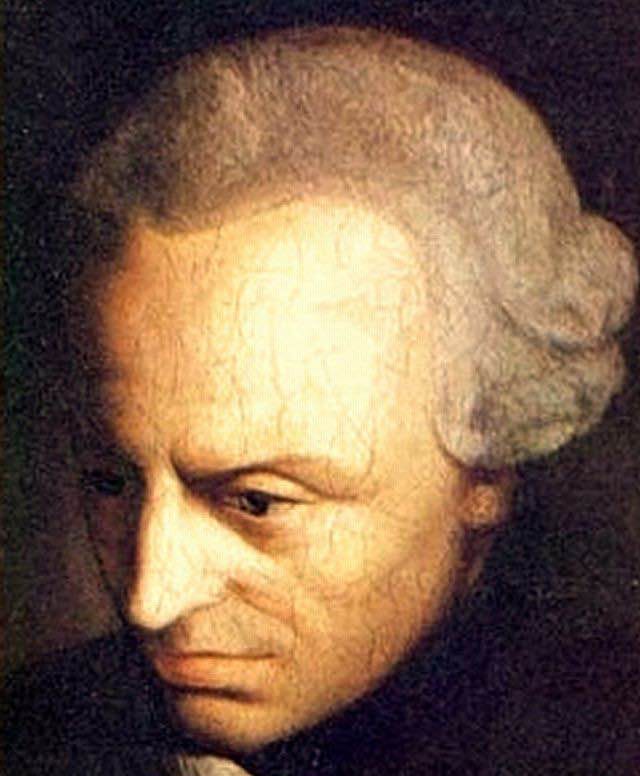
Cause makes its own meaning. Every cause has its own cause, and that cause too has a cause. The long chain of causation which made us also made the universe. What a splendid little accident we all are!
We conscious creatures only know the world through cause, and yet, how few actually understand the meaning of that. People assume that without freedom of the will, cause would simply turn into a determined event—as if anything else were possible but those events which did in fact occur. I never understood the need to reconcile action with cause.
Life appears before me, I experience it, I cognize it within the brain, I interpret and distinguish it from all other experiences; and after that, I’m no step closer to understanding cause than simply to label everything which occurs in the world as something from which a conscious agent perceived it as occurring. What good does this belief have for us? That we, conscious agents of our supposed wills, are the root cause of our life. My, my, what power this idea has on us—to think, some actually believe that if all is determined, then all is meaningless?
I, for one, have always viewed cause like the sun: simply existing and being there, an aspect of life—not a necessity in the metaphysical sense, but simply existing as an empirical fact within our life, like breathing. It cannot be helped, I suppose, for man always strives to give reality a meaning; he must search endlessly for that which grounds him, makes him feel leveled, sturdy, assured, and confident.
If nothing had a cause, then all would be random, and we can’t have that now, can we? Well, random according to whom? Things are coming and going into being all the time which we are not cognizant of—does that suddenly mean they have no cause, or are without meaning? People treat life from an epistemic perspective when they worry about these philosophical quandaries which really do nothing for them but idle their time away, second by second, thinking about the “facts of the matter” rather than the lived reality of occurrences in the world.
Life passes us by every second, and we look back on it from time to time after many years wondering where it has all gone. Such a harrowing thought it is, to discover that you’ve been living a lie, rather than experiencing the continuous awakening that is life itself. Cause, cause, cause—all this talk of cause, but no talk of the “why”—always the “how,” never the “why.” The “why” is the ethical aspect of life. That is only where I want to spend it, in the “why” of things, not bothering about the cause or appearances of them.
David Hume famously argued that causality doesn’t even exist, but rather is a habit of interpretation that we arrive at empirically. This certainly seems the most intuitive from the standpoint of the single individual—the individual concerned about the life of life itself—but it does very little for the man who strives after “the truth,” that is, the man who wants to know whether this is a true cause to cause itself. And so it was for philosophers since then, really, doing all they could to put a cause to cause itself. What a delirium!
Trying to ground cause from first principles is like trying to nail down sand; each time the hammer comes down, the sand just moves around the point. Every attempt is really just an argument from necessity or a presupposition dressed in vagueness. Schopenhauer, like Kant before him, argued that cause is merely causality; and if you were to ask him what causality was, he would simply reply, “It is an aspect of the principium individuationis (principle of individuation).” This, he would go on to say, is a necessary component of experience, without which there would be no question of cause to be had in the first place.
As much as I admire this answer for its simplicity—almost obviousness—it is not satisfactory from the perspective of truth. You see, the problem with every philosophical question is that it’s presumed to have an answer; since the beginning of the West’s intellectual tradition, it has always been thought that if a question could be considered—that is, made known to the mind and abstracted, as it were, from the contents of the question—it must be solvable through reason, and if not, then at least it could be shown to have no answer through reason. Where does the humanness shine through in this approach, however?
Shouldn’t it be, rather, that all questions are considered existentially, from the perspective of the single individual, in the context of their life and circumstance? It is a great disservice to abstract from life what does not need to be so. Best to place each foot upon the ground and smile with joy knowing that something solid rests beneath your feet; which is much more, and far greater, I should add, than whatever cloud of abstraction the philosophers of today fart out while sitting in their chairs—fist to chin, hunched over six different books—pandering and humoring their own lethargic intellect.
Cause has done very little to make its case as to why it should be thought as important as it is. Cause is its own cause, and that should be all one needs to know about it. The cause of this or that only concerns us from an intellectual standpoint, but I see very little done for the subject who makes their meaning the discovery of all causes.
Only man, with all his reason, could justify to himself the complete dehumanization of his own nature. It no longer matters to him the value of his thoughts, but rather how many he has, or better yet, the validity of them. Truth and cause are really overlapping parallel lines. For most, the truth of an idea is merely how well that idea corresponds with reality, but who would be so bold as to deny all skepticism and proclaim themselves able to behold the real “truth” which the world presents them with?
Cause holds the key to every intellectual gate which man constructs for himself. We make barriers to entry of the world for ourselves. It is, for me at least, impossible to content myself with ignorance of life; my psychology is such that reality is dark where there is no honesty in my convictions about the world: and though I strive for nothing more than certainty, I’ve come to find that such a goal does not belong to man. To think I even denied metaphysics for the sake of appeasing my heart. And what caused that?
Every cause in life is really absurd. It confuses me to exist. That we have language at all to communicate the incommunicable is tremendous; though it fails utterly when we approach subjects abstract and incommensurate with the intellect, it is all the more reason to embrace these contradictions which lie at the heart of every cause—the cause of all our causes. Doesn’t one live through life as if in a constant haze, as if blindfolded by causality—told to make sense of it all nonetheless?
Even writing on such a subject necessitates an almost superhuman willingness to endure and tolerate what is most intolerable to man: not knowing. Not knowing? Oh, beyond doubt—knowing is the cause of results. Where would we be without our knowing such and such a thing at such and such a time? It is only through causes that any of this is comprehensible in the first place. Man, though he does not know the cause, is still bound by the cause—but I think it’s time I stop beating around the bush with this subject.
Cause is merely an illusion. What I conceive of as cause is merely the playing out of events which nature around me necessitates. I am, on this topic, very much in agreement with Spinoza and Schopenhauer—as unorthodox and counterintuitive as their positions are to most people. If we truly were the authors of our actions, therefore being in charge of our volitions, then why do all our experiences seem to contradict that very intuitive notion? I only feel the cause of my actions because I experience them subjectively; every action is some interaction between subject and object—but the single individual is one whose existence is known only subjectively (to the singular person), and so only really possible for them to experience.
But where does that experience come from? The objective (external) world. And where does that sensation arrive? In the body. And what causes the body to sense? The nervous system. And what caused that? —————. And so on. You see, the problem with grounding causation-in-man due to man’s mere subjective experience is that it opens itself up to antinomies—contradictions in pure reason (paradoxes) which cannot be resolved with reason. Just like the child who keeps asking “why” behind every explanation offered to his initial question, to ask for the cause behind a thing almost always leads to some form of infinite regress, circularity, or resignation from the question altogether (agnosticism).
Apply this kind of skepticism to any philosophical problem and what do you have? The ultimate result of philosophy: that nobody really knows what they’re talking about on anything—usually because they speak on things which are not grounded in experience sufficiently, or the definitions of the things are ill-defined. And so at once do you have the main epistemological question that concerned the first half of the 20th century—how do we ground knowing scientifically? The logical positivists had a good run, but Quine revealed the dogmatic nature of reductionism and the analytic-synthetic distinction.
I would go further, however, and say that any foundationalist attempt to ground knowledge is ultimately futile: you can’t ground reality by finding the most general principle that applies to all other principles, because you can always ask, “What principle grounds that principle?” This is why the West has always remained well behind the East with respect to these questions. The West seeks to reduce everything to a framework or method, but nothing is truly elucidated by that because it always has an underlying premise which, according to strict logic, would lead to a contradiction or a boring circularity; thus, you see at once that the light which you claim to enlighten the whole world with was lit by you, and yet you claim that it was always lit—it is what reducing the world to logic (cause and effect, ground and consequent) always leads to, a boring return to whence you started.
Let’s be serious for a second. It would be ridiculous to ask the cause of your own existence, and yet, that is exactly the type of question people ask when they seek to know the origin of all causes, as if that kind of thing were possible for man to know. Everything could be doubted, and that is really the cause of every misery. Man must accept that life is contradictory; and to live after these contradictions is the only way to avoid being consumed by them. That is why I said any question which is not considered existentially is not worth considering. If a thing does nothing for your life, of what use is it?
Pragmatism blows past every philosophical sophistry and erroneous elenchus by considering the problems not on their grounds but on the individual’s grounds, which is the only one that really matters. The dialectic as method unravels every cause by revealing the kernel behind every supposed mystery in the world of thought. For too long has a malicious spectre hung over the world of ideas; it has dominated for too long and has misled all people who strove after real understanding—a lie they were told was true, and so believed it uncritically. Dialectic shows that all philosophical problems are really only so because of the unconscious dogma that rests behind every premise within them.
The true problems of life are not difficult because they’re not understood, but because they cannot be answered using logic alone; it should also be said that the problems of life are primarily material—immediate and necessitated by demands which society as a whole places upon us without our consent—and so, unfortunately, systemic in some aspect or another. I suspect that if one were to encompass every facet of human life, they would find that its comprehensibility is really a byproduct of how well we are able to simplify it and ignore every true issue which rests at the heart of every limitation on man’s mind.
Such is man’s life: one cause after cause after cause of concatenation after concatenation—a long, indeed, endless ensemble of misery; a diary entry half-finished, scribbled in haste in order to move onto the next thought, as if the previous thought was never written down.