
Change
32nd installment to my philosophical system.

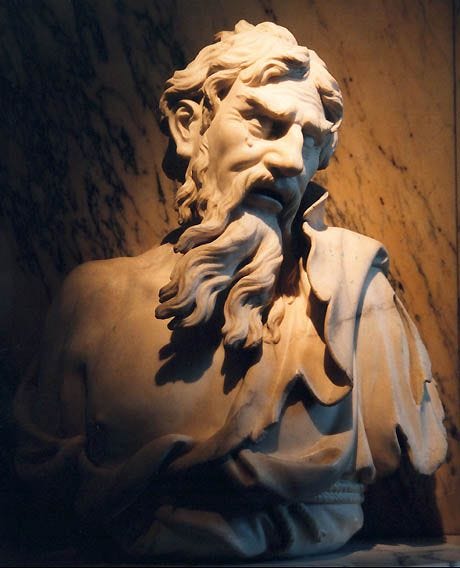
Change is the law of all things. Has there ever been a time in which change was not occurring in the world? I would venture to say no thing has never not changed, for so long as things exist, there will always be an accompanying decay—decay both from within and from without. Change is decay when taken to its final conclusion.
For man, all change is bound in memory and just as quickly fades from existence when he dies as when the world becomes temporarily dark when he blinks—only that blink lasts all eternity. Change, like every abstraction born in the mind from experience, is destined to go out like a flame in the wind when consciousness falls flat in the grave. Reality really resembles more a coffin, or torture rack, than a soothing bed of flowers and petals to rest upon and find repose in, so as to forget the world for a while.
What tantalizing tangibility is experience; does the thought of life, and all its necessitated experiences, not cause pause in the heart of a man scared of life? Tantalizing is really the perfect adjective to use in conjunction with tangibility (at least in this context), for it signifies the tormenting or teasing nature of existence—the tangibility of it—with the sights or promises of things unobtainable; with such an analogy used, is one not reminded of Tantalus himself, from whom we get the word “tantalize”?
Life is a quantity whose tangibility is made manifest in the perceived qualities of it. I find life, like Ionesco, unimaginable, unthinkable, incomprehensible even. Is experience not merely a fine drapery we place over life to forget about it—a beautiful covering which, underneath, hides a very disgusting visage? The old proverb “out of sight, out of mind” is employed every day we live, for everything which we do not care about is put out of our mind by the sights of other things; in that sense, there is never truly an “out of mind,” but rather only a temporary respite from the mind. For there are so many things which grab our attention each day, but which we cannot devote any real time to, that it only makes sense to consider them superficially, not really in their totality—to gaze upon their qualities but never their quantities.
Can man truly escape his own mind? No. He can only distract himself from the crude reality of being by what occupies his present attention—that is, what makes up his experiences and which gives his life some color. I am, perhaps, the most qualified man to have ever lived when questions of life are concerned, for on this topic, I am an expert, and would like to believe no man has ever felt life in all its sufferings, and dreaded life more severely and seriously, than I.
I am, in fact, that man to whom all things in existence appear like mirages, ghosts, phantoms, apparitions, phantasms—whatever you wish to call them. I am that man who distracts himself from the essence of life (actions-for-life) in order to have a simulacrum of life (actions-in-life, but not for-life). This is precisely the misery I speak of: the inability to find change a very compelling concept, not because it does not exist, but because it does exist, and for that reason dooms every thing—especially we organic beings—to a very minuscule part of the universal hierarchy. What suffering I endure every second of existence: doomed to change and never to find any finality.
I search in vain for any meaningfulness that could possibly be conjectured in the process of change, but find only change and impermanence—doesn’t such a life resemble Spinoza’s or Pascal’s? I’m happy to know that there have been other men who have felt the weight of existence crushing, and who have been unable to move past the fact that we human beings cannot correlate all our experiences with a concept that is itself meaningful and which deepens who we are in a very real sense.
We still collectively resemble the Australopithecines which we descended from. There isn’t a clearer sign of our ape ancestry than from our tendency to lament the unknown and to flee from the predator who shall eat us, as if self-preservation were merely a prelude to suffering. I find our morphological similarities more striking than our genetic ones, because our bones bear the weight of our nervous system more than do our cogitations (physically speaking, of course).
It doesn’t make any sense, and that is why it is so insufferable, so intolerable, so absurd and ridiculous: the concept of having to study (which I hate) to get a job (which I hate) just to be able to live (which I hate). In this here epitome of modernity, one finds everything hateful, for there is nothing in it that is glorious, or which has a meaning beyond its own meaning, and so justifies itself in supporting an already miserable existence.
Meaning today is only derived from how we sustain ourselves, in what we do, rather than in who we wish to become. Change, in this existential context, is really only the capacity to conform to what is profitable, for money is the only thing which people assign a supernatural value to—for, as Schopenhauer and Marx already described so long ago, it is the abstract representation of all value, and so becomes the bottomless pit which everyone today flings their hopes and dreams into, as if it were a wishing-well, in order to finally achieve a “decent life,” whatever that means.
The problem with existentialism today is that the humanness of the subject—the single individual—has been completely stripped from it and is replaced by the actions of the subject themselves, as if actions alone were what sustained meaning; in the context of change, this is all meaningless and drops dead the moment someone moves towards it.
Even my own philosophy, I am just now realizing, only accounts for change through contradiction, but merely ascribing contradiction—the dialectic—as the absolute finality of things is itself a sort of cop-out. There is no end to doubt, and in that truth comes the even greater truth: there is no end to seeking. To seek what? For what end? To what purpose? Even pragmatism reveals its flaws by making the goal the truth—the end of all seeking being the continuous progress made on certain goals.
This is lunacy made manifest in the existential individual; there couldn’t be a worse form of being than to treat being as its own end and to make whatever supports existence the contingency when the search for real meaning fails—that is, the performing of things which are actually meaningful but which do not sustain you.
Every lie is predicated on a practical truth: a truth which is not true objectively, but only so given the prejudices which define the age you live in—thanks to the material conditions presently embodied and social structures that are sustained on that very condition. For most people, their thoughts are not their own, because they are forced to think through systems which objectify them in the most meaningless way imaginable, turning an individuality into a number, a cipher, a nothing within a greater sea of nothing—precisely meaningless because it reduces things to ordered systems that ignore the complexity of human desire. It is not that people are stupid, but that they are unable to see what restricts their horizons of thought.
People are awakened to their situation only insofar as they are able to think past the practicalities of their material conditions; the constraints of thought are precisely the constraints of subsistence—the minimum amount of labor power used in order to replenish the energy of the worker, to say nothing of surplus labor.
The end of philosophy will never come because man will always be forced to deal with his condition, even if he no longer had to work to sustain himself. Once again, a great contradiction for modernity, because modernity views (almost) all problems as financial ones rather than what they really are: spiritual or existential ones.
The whole capitalist machine could be ground to a halt in two seconds if everyone suddenly stopped caring about their subsistence and actually demanded change—it is, in fact, on this very systemic basis that capital misery persists at all. Measures have been taken to deliberately weaken the bargaining power of the laborer and to keep him in line through threats of ruining his means of subsistence—hunger alone is what maintains capitalism. This very sinister measure, as a result, has transformed the whole conception of existence; no longer are people really concerned with the arts or humanities, with culture or music, with critical analysis or existentialism, for the simple fact that these are all abstractions and in no way stave off hunger or the elements which one would be subjected to should they lose shelter (that is, should they stop working on principle—for work is a very meaningless thing today—or suddenly become unable to afford their rent or mortgage).
Every bright-eyed idealist is destined to become a hard-nosed realist the moment the lights go out. This is not the end of philosophy, but it is the end of any real creativity in philosophy, for this world at present doesn’t allow for romantics like Nietzsche to really be a thing anymore: the only Zarathustras, or Manfreds, people look up to today are the asset managers, the “innovators” who are controlled by agents and companies, the sports stars and actors who make obscene amounts of money doing nothing but contributing to the collective fantasy, the writers who are themselves controlled by their agents, etc.—every avenue of creativity is trafficked by profit. I don’t even feel the need to mention politics or business, for even the herd are aware of all the deceits and lies implicit within them, the blatantly obvious power dynamics at play, and the flagrant disregard for any moral standard aside from power in all its wretched forms.
My philosophy is, I’m sorry to say, so far the only one in this century to actually be an objective analysis of all the problems that face humanity—while still being subjectively existential. You see, unlike others who claim objectivity, I am actually objective because I also account for my own subjectivity and morality: I am guided by my morality, and by my desire to see the world a better place, not merely a defense of the status quo, or an “objective analysis” which only repeats what we already know.
There’s very little hope in the world at present because there’s very little to be hopeful about. Life is a play whose final act is death, and all the preceding acts are just temporary forays into distraction, confusion, and debilitating sloth. I already said that change is the only constant and that all things, even on an atomic scale, move and vibrate and seek stability from the internal chaos implicit within existence; but all this falls to the ground when we die and means very little while we live—again, because nobody considers their own existence existentially anymore, only pragmatically, only with concern to their individual well-being and not the species’ well-being.
Having kids, for most people anyway, is really only done in order to feel a sense of responsibility for the future, otherwise you become absorbed in egoism and take life out purposefully rather than naturally. There are only so many things which one can do, and so many things which one feels they were born to do, but if one has to consider the whole of their life without having considered it before, they are very likely to buy into whatever makes them feel good rather than what actually is useful to them—again, a practical consideration, not an ethical or personal one, for comfort, like hunger and pain, is the easiest repose of a “busy” mind, concerned for the future and the viability of its continued existence.
It’s easy to tell a fool from a thinker merely by what their insecurities are. People are thought smart today if they make the end of all their actions financial security; the thinker couldn’t care less what the future holds, for he already knows the end of every life is death, and money only holds a temporary purpose (the sustaining of one’s life) and in that sense turns money into a utility, while the “practical man” makes money the purpose. Even Aristotle knew millennia ago that money is never the true purpose of action, because we always earn it for the sake of another good—it is never a good in itself, because nobody likes earning money; they only like what it can allow them to do.
If man didn’t have to work for money (which, by the way, is a relatively recent development that came out of the Industrial Revolution—only revealing the very human, rather than natural, basis for it) he would still be faced with the existential crisis of what to do with his time and energy. Energy is the source of all things, and time is the freedom to pursue those things, whether they be good or evil; if everyone was feeble, or too hungry to concern themselves with life projects, they would live as mere scavengers—hunters and gatherers whose whole existence is staked on the capacity to eat and replenish that energy exhausted in the fight for survival. For most of human history, the concept of a goal outside of mere subsistence would have been confusing, perhaps not even communicable because of how foreign of a concept it is. The questions that concern us moderns are not the same ones that concerned Plato or Aristotle, let alone our Stone Age ancestors.
As humanity advances and our material conditions improve, so too do our consciousnesses, and with that further awakening comes new ideas, or patterns of thought, that provide us with new ways of conceptualizing our present existence. Advancement was only possible because man was capable of abstracting from his lived reality; he was able to envision new ways of solving problems that confronted him, and in doing so built strong foundations from which new thought was made possible. This whole concatenation of events eventually led us to where we are today, but we humans today are fundamentally different in the sense that our problems are beyond what primitive man had to face; our cognitive architecture is not really built to wrestle with the kind of complexity implicit within systemic issues like capitalism (and everything downstream from it). We were forged in a natural selection process which weeded out the weak and left only the fittest.
It is true that every threat to humanity is either external in nature or self-made, but the self-made ones—which make up the majority of problems today, having already conquered most of nature—are nearly impossible to comprehend because they are systematically made by other humans: smart humans who know how to leverage their power to their benefit and who know how to repress and restrain the true passions and desires of others for the sake of maintaining a kind of homogeneous order in which the majority are made to feel at the whims of their oppressors. The change needed today is a change in the social dynamics as such.
The current order is already on its way out, and with that comes the potential to overthrow the status quo—not to maintain it, or to slightly alter it for the sake of conceding to the masses only a little of what is actually demanded, but to actually create lasting change, revolutionary change, in which the capacity to live is no longer predicated on our ability to work or provide value to an uncaring system. A system in which the basic necessities of life (food, water, shelter, clothing, and utilities) are perpetually guaranteed till the end of time; and a system in which everyone can truly pursue what fulfills them without having to sacrifice a third of their day for it—that must be the system of the future. Yes, people must work—mankind has never not had to work for survival—but make it so that we can do so with dignity, with pleasure, with alacrity, with punctuality, with a real desire to work. Until technology advances enough so that we no longer have to work to receive the materials necessary for life—say, like in the movie WALL-E (although, of course, that future is presented as dystopian, which I agree with)—there will always be labor, and toil, and the need to change and transform inert matter into consumable resources. Until that is possible, utopianism will merely be a dream.
Change is the only necessary condition which we know of. Nothing can do without it, and nothing could be made without facing it. What debilitating darkness surrounds all things when taken into consideration by man. Man, the temporary animal, whose nature natural selection has forged and bred in destruction and death over the vast expanses of time—so demure and nonchalant to the universe overall that everything he does is doomed to change and oblivion. But, letting all this be as it may, the human spirit demands that we adapt to this inevitability as well. Contradictions will rise, hypotheses will fall, and so long as the world turns and man is made to accept his condition, he too will have to overcome the changes and contradictions which press him down into the dust, in order that he may rise like a phoenix after everything has passed.