
Definition
13th installment to my philosophical system.

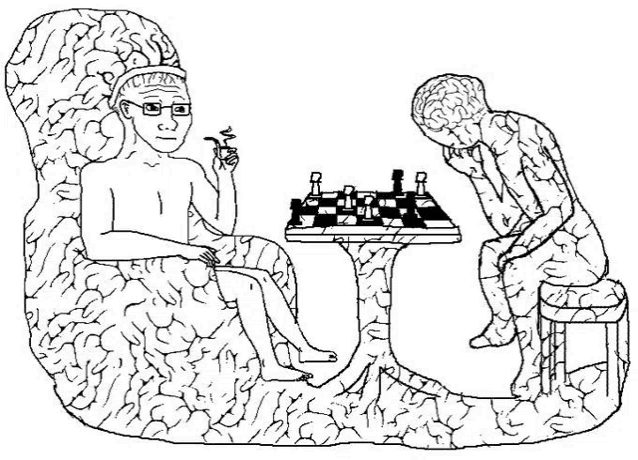
Definitions are a way of avoiding true thinking. The end of thinking is an overlap between the concept and the reality as experienced in the subject; but what definitions do is offer a way of simplifying the real complexity behind every experience, and in turn subjugate all to a mere colloquialism—an agreed-upon meaning behind every conception. Again, definitions provide labels, signs, signifiers, all with the hope of conveying what it is we think about some thing in the world. Reality is understood through definitions. Language itself, which shapes the entire structure of our thought, is merely a compilation of rules which are collectively agreed upon and understood.
What distinguishes a native speaker from a fluent one is the speed and rapidity by which the concepts (the words and their meaning, along with the corresponding grammar) can be called upon in the mind; the native speaker, physiologically, has the advantage by having their entire auditory nervous system primed through continuous use since earliest childhood; in that way, a fluent speaker may be more elegant or learned in a language than a native, but will never have as much ease as a native speaker, unless they deliberately drill themselves in the language until it comes as easily as their native one, which is a process that takes many years, and may even necessitate full immersion in the culture and people of that particular language.
Definitions are born out of necessity, and they make themselves felt every second one is alive. Man, being the kind of creature he is, has always strove to comprehend things in a manner that maximizes utility. In the state of nature, all bow down to power as the end of all things; and so, with knowledge came power, and with that our survival. The ability to categorize was, in that sense, the very first intellectual task man ever undertook. For hundreds of thousands of years, feeling no impulse to abstract beyond what was necessary, man stood in a state of mere language alone—language as the only form of abstraction there was. Man created language as a tool for his use in abstracting reality, and so everyone abstracts reality—even the dumbest of people, who are more likely to embody this abstraction in strange grunts or gesticulations, perhaps even screaming or running away.
It should be noted here, too, that language only arises within and between human beings: without community and social relations, there can never be anything but a motley of idiolects, if anything like a language forms within the individual at all. This is proved by the existence of feral children, who, when found, have no concept of language, and rather resemble animals in the wild—no doubt a result of their lack of enculturation. Genie, the most famous feral child in modern times, had no language whatsoever, but was able to acquire a very rudimentary understanding of English when she was taught it, although with great difficulty.
Nothing we consider as obvious would be possible without our ability to first give these sensations names. Man is not necessarily the rational creature (as Aristotle thought), but the creature who, in groups, develops his rational faculties, which are already in him, but which must be cultivated in the real world through use and experience. It is for this reason I consider language a sacred thing. The fact that I have one, and can use it to express what I feel—and through that overcome my antipathies towards the world—is a blessing no man without one could ever comprehend. To even say the word “comprehend” implies that something is understood within me; there is an apprehension of some empirical reality that compels my mind to correlate my mental state with my lived experience.
All this is given meaning in words: a language, with a structure and a grammar, full of exceptions and confusing rules that not even native speakers are privy to, and which linguists and grammarians have yet to document completely. One may as well say that “definition” and “language” are synonymous. It makes sense, too, when you think about it: for every word in a language has its own definition and use, and with this use comes communication, and from this sympathy and mutual understanding. Language is the greatest child of the human intellect, for from it we encapsulate not only our own individual lives, but the whole of humanity as such.
In the context of logic, definitions are nothing more than prerequisites, things needed prior to real philosophical investigation. And here lies all our confusion and vain audacity—audacity in taking these definitions as something sacred, unchanging, eternal, objective, noumenal, etc. It is all too much with us; acquiring and using, we lay waste our powers in actual thinking, and consign our minds to a stupor of detail and technicality from which no real authenticity can ever be retrieved.
Authenticity is found only in subjectivity. When the single individual dares to think for themself, they think what is from them, within them (in their experience), and not from something they’ve heard, read, or accepted as true from an authority. The truest form of definition, then, is your own definition, drawn from your own nature and experience. That is where every “accepted” definition falls to the ground, and becomes mixed up in a sea of stupidity and varying opinions. The true definition of anything, in a colloquial sense, is that which has become accepted by the wider populace; and in that way, definitions are, by their very nature, subjective, and thus potentials for authentically subjective individuality. The single individual becomes paramount, and must remain so if definition in the world is to remain sacred and useful to them.
Words are prescriptive, not descriptive. They have uses, not set-in-stone definitions. Lexicographers are harmless drudges, who merely evaluate (subjectively) the etymologies and significations of words. Every dictionary is built on a compromise, and so, like language, life too should be approached in a compromising, pragmatic manner: a manner that makes simple living and tranquility an end in itself; everything done in life is half pursued if it is not done for its own sake, with its own furtherance and end in mind.
Words are a reflection of phenomenal reality, not some Platonic idea that is itself some embodiment of everlasting truth. That is why every word has behind it a moral valence, a prescriptive reality, born out of the speaker, and which enters the world as some shiny abstraction that gathers the attention of all who hear it. If it has meaning, that is good. If it has significance, that is great. If it has impact, that is the greatest of all—for that is where revolutionary fervor (the potential for change) shines through, contained within an idea whose time has finally arrived. You see, even words have an ethics behind them; they can be used for good or ill, but the main thing is whether they are useful to the individual or not. The survival of any word really depends on its use value; if it has no use, it will fall into obscurity—used only by antiquarians, until even they are blotted out by death—and then it is only useful to historians and cultural anthropologists.
Let us return to that idea of being useful to the individual, however. Change must first be born from within, subjectively, in the abstract, and made apparent in the concrete. In this subjectivity, the individual becomes the evaluator of what is useful or not. The guarantor of all truth is the individual—this is another reason why truth is subjective fundamentally. If every word had only an objective aspect to it, there would be no linguistic drift, no change in convention, no new language—the first language would have been the last, and no progress on any intellectual front would have taken place; only stagnant conformity to tradition and falsehood would have remained.
To see the truth subjectively is to treat the truth as it really is, subject only to its interpretation. What everyone gets wrong is precisely the value, or significance, they attribute to these mere abstractions. Definitions have always been treated like some abstract entity that has power over us, but this is foolish. The end of all evaluations is the practicality they afford us, to what degree they further our own objectives—everything else is folly. This is why I said earlier that “definition” and “language” are synonymous: language is the structure by which we express the external world, and definition is how we truthify it; definitions are no different from labels subjectively considered, and used with their practicality in mind. Pragmatism’s shadow looms heavily over all of this, does it not? Subjectivity is truth!
Man wishes to believe in that which is beyond him, but cannot bring himself to believe in God—thus, he believes in truth instead, and gratifies his vanity by saying wild things like, “I’m with the truth,” or “Truth is on my side,” or, better still, “Truth commands all.” When he says this, he really means he is in command of truth, or that he subjectively sides with what he already believes; no one has ever captured truth’s attention fully, for she changes consistently like the ocean tides, and recedes back into stupidity just as frequently. The greatest explication of the true meaning of truth is given by Nietzsche:
What then is truth? A movable host of metaphors, metonymies, and anthropomorphisms: in short, a sum of human relations which have been poetically and rhetorically intensified, transferred, and embellished, and which, after long usage, seem to a people to be fixed, canonical, and binding. Truths are illusions which we have forgotten are illusions — they are metaphors that have become worn out and have been drained of sensuous force, coins which have lost their embossing and are now considered as metal and no longer as coins.
[…]
To be truthful means to employ the usual metaphors. Thus, to express it morally, this is the duty to lie according to a fixed convention, to lie with the herd and in a manner binding upon everyone… From the sense that one is obliged to designate one thing as “red,” another as “cold,” and a third as “mute,” there arises a moral impulse in regard to truth. The venerability, reliability, and utility of truth is something which a person demonstrates for himself from the contrast with the liar, whom no one trusts and everyone excludes.
As a “rational” being, he now places his behavior under the control of abstractions. He will no longer tolerate being carried away by sudden impressions, by intuitions. First he universalizes all these impressions into less colorful, cooler concepts, so that he can entrust the guidance of his life and conduct to them. Everything which distinguishes man from the animals depends upon this ability to volatilize perceptual metaphors in a schema, and thus to dissolve an image into a concept. —On Truth and Lying in a Non-Moral Sense.
If it isn’t already clear from this, it will never be made so. Nietzsche, in his poetic, awe-inspiring explication, has given the true nature of truth by effectively agreeing with Schopenhauer: that truth, as a concept, exists only for the subject—just as knowledge does; in fact, what we call knowledge, like everything else, is done from an assumed “objective” stance, when in reality it always stemmed from within the subject originally. This is why I said in my essay Experience that, “Life is truth and truth is subjectivity…” Every evaluation is ethical, and thus subjective—definitions are but the rubber stamps we place on our ideas to give them validity and power.
Truth has no power on its own; only POWER has power, and power can only ever be bestowed by man on himself (on his ideas and conceptions). All of human knowledge is but a directory, a map, a handbook, a chronicle—in short, a history of epic failures and botched attempts to place, within a single tome and under a single, unified conception, the totality of our ideas; every encyclopedia, in that sense, is really only a collection of fossilized evaluations (“facts”) made with respect to what was considered true in the world at that time, eternalized in ink but mortified in its results. All this scavenging for knowledge, now in light of its true essence, resembles more a stamp collector, or better yet an entomologist, who loves nothing more than placing their favorite bugs in a glass case—as if knowledge were merely a thing to be stared at, rather than used for our own empowerment and upliftment.
It all seems absurd from an existentialistic perspective, and in truth, it is! For if knowledge is not made sacred, or valued in the slightest, its future will be left to the whims of the herd, and when have they ever displayed rational judgment in the face of that which they hate? So it is with all evaluations, subject to the whims of their creator (man) and destined for death (along with man) with the passing of time. This is why we must value things passionately, truthfully, with our own subjectivity in mind, and nothing less than the most honest approach to our own existence as such.
In my case, I value knowledge, but gave up becoming a polymath long ago, for our age is replete—indeed overwhelmed—by the sheer quantity of information created and shared every second, far beyond the capabilities of a single man to obtain alone (something which was possible prior to the printing press, but no longer); to say nothing of the vanity and stupidity of our age, so averse to learning of all kinds—disgusted at the thought of wisdom for its own sake, of philomathy (learning and the acquisition of knowledge) for its own sake: how unfortunate indeed. Der Prozess des Lebens ist mein Kampf. (The process of life is my struggle.) And I don’t think I will ever equal the trials and tribulations which I must put up with merely to exist in the world.
With this fact recognized, surely—without question!—this life must be some kind of mistake. It has to be! It must be! I cannot see any other fundamental aspect to life outside of suffering; and at the same time, I feel it contrary to my soul to value those things which I interpret as lies and fallacies for the sake of perpetuating it. I cannot go against what my will tells me: this world is a lie, life is a dream, and the fundamental essence of existence seems to be Śūnyatā—emptiness! And yet, I live! I continue to live, in spite of everything contrary to my well-being—everything opposite to my happiness and purpose. I owe it to the fact that I find within my sufferings a great meaning hidden within them: a great meaning hidden within everything, in fact. That is what it means to be fundamentally subjective, after all: to value those things which pragmatically promote your life, which give your life meaning, which sustain you in the darkest of dark moments. I say again, in spite of my complete agreement with Schopenhauer’s pessimism, I continue to live anyway, happy to be subject to my will, and wanting nothing more than to gratify it as much as I can—which was the same conclusion Nietzsche came to when he broke away from the influence of Schopenhauer! Der Wille zur Macht! The will to power! That is what is needed today—not the continuous barbarity with which we subject ourselves daily when we affirm that which is safe and comfortable, rather than beneficial to our existence. More POWER! No meekness! That is what we must strive towards.