
Democracy
77th installment to my philosophical system.

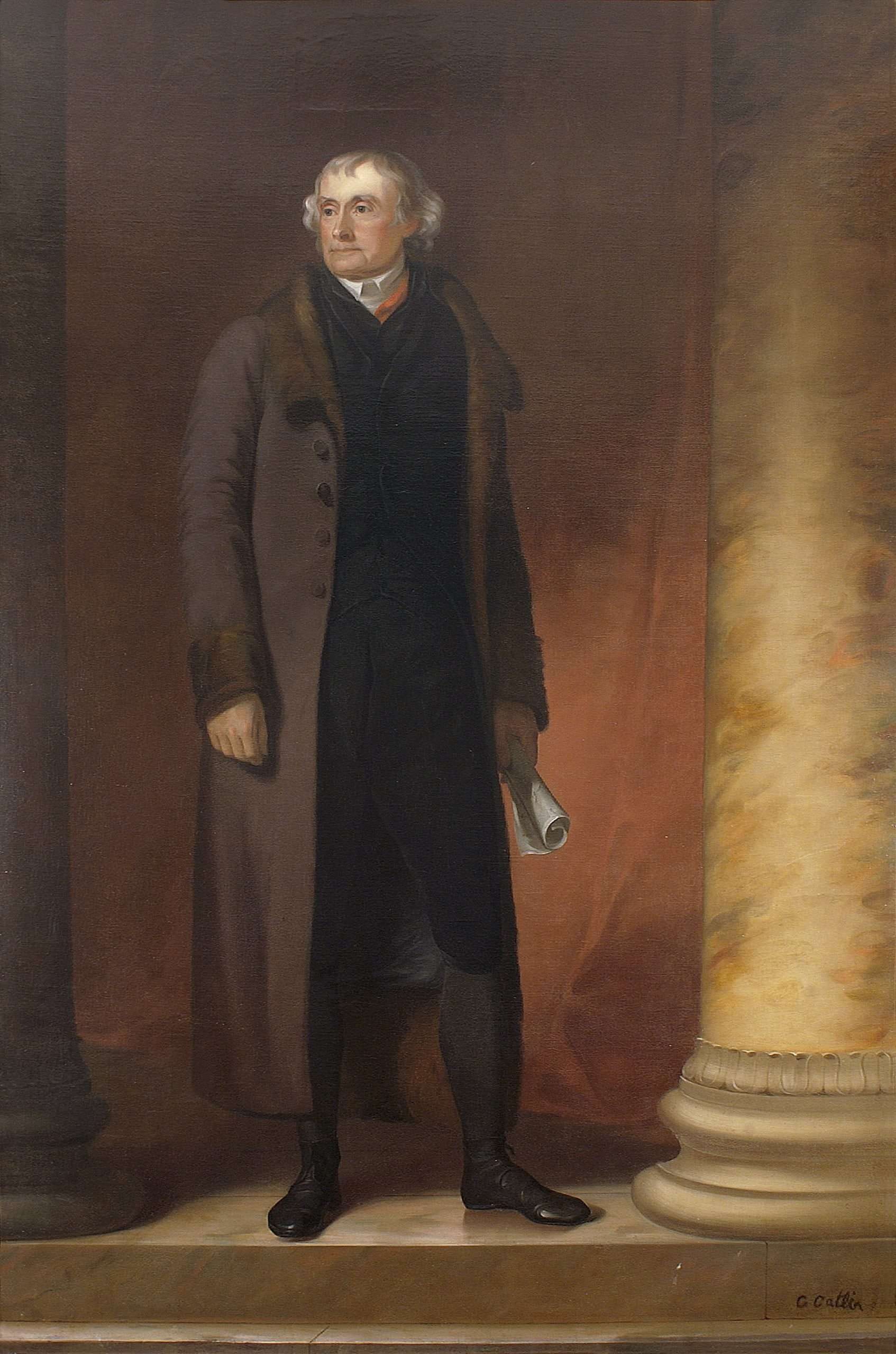
Democracy supposedly places the power in the people, and as a result makes a mockery of what power truly is. Power is not simply will. Power is only the ability to make things happen. And as it turns out, nothing ever happens in democracies, because they don’t do anything at all. To rely on the whims of the people is only good to make changes in the present, but if one wishes to build a stable state long into the future, there must be a correspondingly progressive set of representatives that actually follow through with the wishes of the people.
Democracy is dead, and we have killed it. Not from our own desires to see it before us lifeless, but from the ignorance which pervades every aspect of our thinking regarding the nation as a whole. It was always assumed by the Founding Fathers that the democracy we now cherish would sustain itself through even the worst crises so long as the populace was educated, well-informed, and had an actual stake in the affairs of the nation overall. What we now have, however, is nothing of the sort. Our democracy is really a racket for the rich to pick and choose which representatives they want, rather than the people. The people are so disconnected from their own political spirit that they haven’t the slightest clue which issues affect them beyond the financial; and while this has always been a major issue throughout all capitalist nations, it shouldn’t be the only one—there’s a future beyond capital, and yet everyone feels the need to view their entire life through that one barbarous lens.
I’ve found that the more present a problem is within the lives of everyday people, the more they see all things in their life through the lens of that one issue. People today make their every problem a material one, never a spiritual or moral one—forgetting completely that all problems are moral in their essence, for all evaluations are subjective, and thus necessarily personal. There’s no capacity within the minds of most today to see themselves—internally recognizing themselves, that is—as free enough to enjoy any liberal understanding; what strikes them as revelatory is nothing aside from that which immediately improves their circumstances. What man has a mind for politically is only that which shortens his commute to work, which alleviates some of his debts, which reduces the burden of keeping himself fed, which supplies a strong enough foundation for his future success; and so, as long as democracy offers a man none of these things he will not love his freedom, for he will feel himself imprisoned inside his supposedly democratic system.
That’s why I said at the start that democracy “supposedly” places the power in the hands of the people, but every American living today already knows how untrue that is—for our votes count for very little, and change stemming from them is nonexistent. Like I said, our representatives are captured and controlled by special interest groups and other companies that want the free rein to do whatever they will, and as a result their objectives are always at odds with the people who elected them in the first place. It is a vexing contradiction that, so long as elected officials do the opposite of what their constituents want, will forever remain—and so too shall the animosity which is constantly flung towards the government as a whole. A government is only as good as the people who run it, and so, even if the demands by the people are very obvious and achievable, they will never be worked towards so long as they interfere with the interests of the wealthy.
If a person cannot view their lives outside of a debasing adherence to the system already in place, then they cannot live their lives freely. People today attempt to overcome their condition by working within those conditions, not realizing that those same conditions are what repress them and enslave them in the first place. The morals of America have always been those of industry, self-sacrifice, piety, and individualism; and while arguably good values on their own in the abstract, when it comes to the concrete (the lived realities of most people) these morals do nothing but subjugate the human spirit and hasten man to an untimely death—a death caused by overwork, burdened by the material privations which are foisted onto him by the system overall.
So long as man finds it within his power to overcome through work—a false evaluation he holds onto on account of his belief in the sickly, decaying, life-denying American morality of conscientiousness—he will continuously be made the fool in life by simply having more work handed to him, for indeed the ready workhorse is tired first. Everything in America is geared towards burnout, suppression, disempowerment, subjugation, and capitulation to the most malevolent forces in history—and no amount of democracy or appreciation for Enlightenment values will ever change those material conditions unless the populace as a whole recalls that famous suggestion by Thomas Jefferson: “I hold it that a little rebellion now and then is a good thing, and is as necessary in the political world as storms in the physical.” Freedom lives inside America so long as the populace remembers what it was we were striving to accomplish with our revolution—the complete rejection of the monarchical principle, and the empowerment of the people through the election of representatives on behalf of our collective interest. Should these two things be abolished, let the whole union dissolve with it, and allow anarchy to run rampant in the streets.
I was always under the impression that the point of the United States was to allow the citizens as much freedom as possible without making the cost of drawing breath in a free atmosphere too expensive or harmful to the political body as a whole. The initial conception of government, as the Founding Fathers understood it, was very limited; and we still pay dearly for this conservatism today, for being considered strictly in a moral sense, and with emphasis being placed on freedom above well-being, we have people today actively defending austerity measures even if those same measures cause objective harms in the body politic as a whole.
It’s a vicious death spiral, in which the power to immiserate is placed above that of reducing it—so long as the government has a hand in doing it, that is. So long as people are skeptical of the government, they will see any positive action done by it as an affront to their liberty, and as a result will feel the need to reject it—although I would suggest not telling these same people where Medicare and Social Security come from. There’s been a long indoctrination campaign underway in America to make people hate the government for no other reason than that it’s the government—playing on old tropes and outdated fears going all the way back to the nation’s founding—and all this is done for the sake of limiting the power which the people actually hold, should we be bold enough to admit again that this nation is a democracy.
Having said all I have thus far, let me finally come clean and say it: America at present is not a democracy, but a type of quasi-mixed government (usually labeled a republic) with a bicameral legislature, along with a system of checks and balances established between three branches—the legislative, executive, and judicial. And to think, this system of government—without doubt the greatest ever devised in history—has been made the personal henchman of globalized capital.
There can be no democracy so long as the people are made to see themselves only as cogs within the machine of capital. This fact has other implications which I don’t think even the genius of Alexander Hamilton saw—it took Karl Marx really to see it—and it is this: the subject becomes alienated from all things that pertain to their welfare inside a state so long as their relation to the state is one of master and slave, without recognition or fair compensation for what the subject actually brings to the state on account of their labor and effort.
This is especially bad for a democracy because a democracy can only be legitimated through the people—and so, if the people feel they don’t matter and suffer on account of the policies made by their representatives, then what’s the point of government in the first place? Democracy, as Aristotle noted so long ago, almost always falls into either oligarchy or tyranny, and neither can last long when people feel the organization of the state as such does not supply the necessities. Again, this is an internal contradiction unique to America: we hate the government, and yet the government as an institution is so massive and powerful we can’t see ourselves freed from its influence. I say again, what is the point of government then? I do not know, but I have some ideas—not unique to me, but certainly prescient with respect to the times.
I think it’s important to first acknowledge what it is we’re really dealing with here. America has prided itself on being the freest nation in the world, and yet there is nothing free in America—everything requires money here, and that single constraint alone constitutes the whole political problem under capitalism, as far as I see it. People want the government out of their hair, and yet the policies that are enacted by Congress in conjunction with the president always serve to go against the people, and rather only wish to serve their capitalist overlords.
How do we square this? How is it that a man can live freely if at every turn he must sell himself for the sake of enjoying his liberty? Shouldn’t the government allow freedom to prosper in this instance by reducing how much labor is necessary for the sake of the subject’s freedom? What does history say on this point?
It’s been said that the point of government is not to provide people material comfort but rather the freedom to pursue it, and I would consider this a very noble, very Protestant moral injunction, which typically goes as follows: “you must work hard and sacrifice all things for the sake of your bread.” This was justified through its asceticism, for the laboring man thinks of only one thing, the labor before him, and as a result does not allow the mind to see any perspective outside of the one born in labor.
But if labor is made on behalf of life, and more often than not takes up too much of life, how can anyone participate in the government effectively? They can’t, and this I call the American freedom paradox. Freedom is a nice idea in theory, but is not true in practice—and will never be true in practice so long as only a third of a man’s day belongs to him (the other two-thirds comprised of sleep and work).
The goal of the government, in my American-centric view, is this: to make the pursuit of happiness easier by eliminating outright the financial barriers that are constantly put up as a bulwark against what a man can freely do. There is no freedom so long as a man must work to live. The Protestant work ethic was a moral for its time—and was a good one at that—but what was once seen as strong and unifying is now sickly, life-denying, and anti-human in the extreme.
People forget how much history has to be repeated due to our ignorance with respect to all our mistakes that led to change in the first place. Like morals, the events which lead to historical change are almost always gradual, and the result of a large buildup of resentment over decades—centuries in some cases. The ethos which America comes out of was one of deliberate austerity, frugality, limited tolerance, and immense bigotry and arrogance; unsurprisingly, this motley of stern and ignorant precepts eventually gave rise to the morals of hard work, determination, perseverance, and self-reliance.
What was once seen as a necessity became a value judgment so prevalent we still think in Protestant terms today with respect to labor. In fact, we can’t think out of it, and that’s America’s biggest problem today: its false individualism, which I prefer to call by its true name—egoism.
A man who doesn’t concern himself with his fellow man but only himself is a man who deserves to fail in all his vain, individualistic ambitions. Should an entire nation adopt this man’s attitude, it will surely fall into a barbaric state of competition and needless immiseration on behalf of the majority; and this is exactly what we see today in America, and the government only perpetuates this decadent Protestant ethic of individualism by making it more and more difficult to live at all.
A corrupting moral has commanded the entire American psyche for centuries at this point. The more ingrained a moral evaluation is, the more it will be taken as self-evident by the populace, and the more it will perpetuate throughout history; only a reevaluation of values can change anything at this point.
Look around you in America and tell me what you honestly see. I know what I see. I see the consequences of a long, overplayed collection of values that are beginning to collapse in on themselves. I see nothing but a history of replacement—a systematic overthrowing of all decent, strong, powerful, life-affirming values, and as a result it has given us a characteristic selfishness unmatched in all the world, and an individualism that is anything but singular—rather, it is egoistic, entirely beholden to material interest, and narrowly obsessed with financial gain at the expense of all those less fortunate.
This is the kind of morality which America has: the morals of capitalism, a jungle in a box, a nation full of knaves, fools, ignorant bigots, and moronic moralists. There is no morality outside of labor and self-improvement, and that’s why America has never been able to develop a lasting cultural identity aside from economic materialism, justified (in a very Anglophonic way) on behalf of a pseudoscientific biological determinism.
Every intellectual today feels the need to have scientific evidence behind every claim they make, as if that somehow made their subjective interpretation of the data any more plausible. I hate with a passion any man who justifies his bigotry on behalf of “the data,” as if a few cherry-picked statistics justified the ultimate implications of all their nonsensical beliefs.
Be strong. Become HARD! Impenetrably so. And affirm what is true today and false tomorrow. Let us battle it out in the moral realm, where all propositions really belong, rather than in this sterilized, false Hinterwelt of abstraction—this decadent, liberal, all too accommodating atmosphere of fakery and trickery. Your values against mine. Let’s go, coward!
You see now how sickening, selfish, false, life-denying everything we call a value in America really is. It’s all subterfuge, deliberately laid down for the sake of obfuscation. God, everyone in this wicked country is so fake, so against themselves by buying into this false narrative of individualism: in trying to become individualistic they only enslave themselves to their own egoism, and as a result lose all honest moral intention behind all their actions, and subjugate all their life’s meaning for foolish ends that offer them no happiness and advance them not a step anywhere but in the land of ignorance.
I think it’s very clear from the morals we’ve adopted collectively as a country that we Americans don’t want assistance from the government, and would rather die in miserable poverty so long as we get to keep our pride in rejecting their helping hand.
If the nation were actually rational and wanted to improve overall, we would begin by organizing the powers invested in the government to not only check all negative powers within the union as a whole—those powers which go against the interest of the people, that is—but increase the capacity to support and increase the prosperity for every state in the union.
This will remain impossible, however, so long as the dominating values are still Protestant, life-denying, laborious, useless, and degrading to the spirit of everyone living today. We remain at present captured by values which don’t help anyone but those already at the top; we remain tepid and slow in all our political transactions, and revere stupid abstractions and political ideologies that aren’t worth the paper they’re written on—to say nothing of the actual nature of our “democracy,” hierarchical and uncaring, made deliberately complex to discourage you from questioning it.
Like I said, everything in this country is about as exciting as a book of statutes; no inquisitiveness in anyone, totally captured by capital, and obsessed only with pleasure and temporary escape from the actual misery that is people’s livelihoods.
Take it from Henry David Thoreau:
The mass of men lead lives of quiet desperation. What is called resignation is confirmed desperation. From the desperate city you go into the desperate country, and have to console yourself with the bravery of minks and muskrats. A stereotyped but unconscious despair is concealed even under what are called the games and amusements of mankind. There is no play in them, for this comes after work. But it is a characteristic of wisdom not to do desperate things. —Walden.
Indeed, it was noted by Menander long ago that it is better to be the slave of a good master than to live miserably as a freeman; and this is the conception which most today view their plight through: capital has become such a domineering orienting force, such a powerful narrative by which to understand your life, that any abstraction that doesn’t touch on the material is ultimately derided even if it’s a good notion in theory.
Nothing is sacred anymore because it has all been defamed in the eyes of the populace, and, sadly, the herd can no longer see things that aren’t dangled directly in front of their face. The thing they look for is an abstraction which they have chained themselves to, and yet they still feel it as something tangible, and in the struggle against the invisible they tangle themselves up in their own chains and die from exhaustion.
To see the world as it truly is requires you to look past the mere sustaining of it, but this is impossible for the moral powers of most; already trained to see things in that stupid, materialistic way, their minds are sharpened to a fine point but are only able to cut into a single idea—namely their livelihoods, their material interests, and nothing besides.
People analyze and take apart fact by fact their whole life, and yet are unable to see that it is the way in which they live that is killing them. Their capitulation to the system of decadent morals is precisely the thing stripping them of life, but they will cling to it heartily so long as it continues to provide them a narrative which makes sense of everything for them without much effort on their part.
And so it is with the origins of democracy—the most perfect system of government for capitalism ever devised.
Gentlemen, this is democracy manifest!
Quotes for the reader on Democracy from great minds throughout history:
An assembly was therefore at once called, and after much expression of opinion upon both sides, Cleon, son of Cleaenetus, the same who had carried the former motion of putting the Mitylenians to death, the most violent man at Athens, and at that time by far the most powerful with the commons, came forward again and spoke as follows:
I have often before now been convinced that a democracy is incapable of empire, and never more so than by your present change of mind in the matter of Mitylene. Fears or plots being unknown to you in your daily relations with each other, you feel just the same with regard to your allies, and never reflect that the mistakes into which you may be led by listening to their appeals, or by giving way to your own compassion, are full of danger to yourselves, and bring you no thanks for your weakness from your allies; entirely forgetting that your empire is a despotism and your subjects disaffected conspirators, whose obedience is ensured not by your suicidal concessions, but by the superiority given you by your own strength and not their loyalty. The most alarming feature in the case is the constant change of measures with which we appear to be threatened, and our seeming ignorance of the fact that bad laws which are never changed are better for a city than good ones that have no authority; that unlearned loyalty is more serviceable than quick-witted insubordination; and that ordinary men usually manage public affairs better than their more gifted fellows. The latter are always wanting to appear wiser than the laws, and to overrule every proposition brought forward, thinking that they cannot show their wit in more important matters, and by such behaviour too often ruin their country; while those who mistrust their own cleverness are content to be less learned than the laws, and less able to pick holes in the speech of a good speaker; and being fair judges rather than rival athletes, generally conduct affairs successfully. These we ought to imitate, instead of being led on by cleverness and intellectual rivalry to advise your people against our real opinions. —Thucydides, The History of the Peloponnesian War.
A Democracy is a form of government under which the citizens distribute the offices of state among themselves by lot, whereas under oligarchy there is a property qualification, under aristocracy one of education. By education I mean that education which is laid down by the law; for it is those who have been loyal to the national institutions that hold office under an aristocracy. These are bound to be looked upon as ‘the best men’, and it is from this fact that this form of government has derived its name (’the rule of the best’). Monarchy, as the word implies, is the constitution a in which one man has authority over all. There are two forms of monarchy: kingship, which is limited by prescribed conditions, and ‘tyranny’, which is not limited by anything. —Aristotle, Rhetoric, Book 1, Chapter 8, Translated by W. Rhys Roberts.
It has also been doubted what was and what was not the act of the city; as, for instance, when a democracy arises out of an aristocracy or a tyranny; for some persons then refuse to fulfil their contracts; as if the right to receive the money was in the tyrant and not in the state, and many other things of the same nature; as if any covenant was founded for violence and not for the common good. So in like manner, if anything is done by those who have the management of public affairs where a democracy is established, their actions are to be considered as the actions of the state, as well as in the oligarchy or tyranny. —Ibid., Book 3, Chapter 3.
We ought not to define a democracy as some do, who say simply, that it is a government where the supreme power is lodged in the people; for even in oligarchies the supreme power is in the majority. Nor should they define an oligarchy a government where the supreme power is in the hands of a few: for let us suppose the number of a people to be thirteen hundred, and that of these one thousand were rich, who would not permit the three hundred poor to have any share in the government, although they were free, and their equal in everything else; no one would say, that this government was a democracy. In like manner, if the poor, when few in number, should acquire the power over the rich, though more than themselves, no one would say, that this was an oligarchy; nor this, when the rest who are rich have no share in the administration. We should rather say, that a democracy is when the supreme power is in the hands of the freemen; an oligarchy, when it is in the hands of the rich: it happens indeed that in the one case the many will possess it, in the other the few; because there are many poor and few rich. And if the power of the state was to be distributed according to the size of the citizens, as they say it is in Ethiopia, or according to their beauty, it would be an oligarchy: for the number of those who are large and beautiful is small.
Nor are those things which we have already mentioned alone sufficient to describe these states; for since there are many species both of a democracy and an oligarchy, the matter requires further consideration; as we cannot admit, that if a few persons who are free possess the supreme power over the many who are not free, that this government is a democracy: as in Apollonia, in Ionia, and in Thera: for in each of these cities the honours of the state belong to some few particular families, who first founded the colonies. Nor would the rich, because they are superior in numbers, form a democracy, as formerly at Colophon; for there the majority had large possessions before the Lydian war: but a democracy is a state where the freemen and the poor, being the majority, are invested with the power of the state. An oligarchy is a state where the rich and those of noble families, being few, possess it. —Aristotle, Politics, Book IV, Chapter IV.
The most pure democracy is that which is so called principally from that equality which prevails in it: for this is what the law in that state directs; that the poor shall be in no greater subjection than the rich; nor that the supreme power shall be lodged with either of these, but that both shall share it. For if liberty and equality, as some persons suppose, are chiefly to be found in a democracy, it must be most so by every department of government being alike open to all; but as the people are the majority, and what they vote is law, it follows that such a state must be a democracy. This, then, is one species thereof. Another is, when the magistrates are elected by a certain census; but this should be but small, and every one who was included in it should be eligible, but as soon as he was below it should lose that right. Another sort is, in which every citizen who is not infamous has a share in the government, but where the government is in the laws. Another, where every citizen without exception has this right. Another is like these in other particulars, but there the people govern, and not the law: and this takes place when everything is determined by a majority of votes, and not by a law; which happens when the people are influenced by the demagogues: for where a democracy is governed by stated laws there is no room for them, but men of worth fill the first offices in the state: but where the power is not vested in the laws, there demagogues abound: for there the people rule with kingly power: the whole composing one body; for they are supreme, not as individuals but in their collective capacity. —Ibid.
the whole, those who aim after an equality are the cause of seditions. Equality is twofold, either in number or value. Equality in number is when two things contain the same parts or the same quantity; equality in value is by proportion as two exceeds one, and three two by the same number-thus by proportion four exceeds two, and two one in the same degree, for two is the same part of four that one is of two; that is to say, half. Now, all agree in what is absolutely and simply just; but, as we have already said they dispute concerning proportionate value; for some persons, if they are equal in one respect, think themselves equal in all; others, if they are superior in one thing, think they may claim the superiority in all; from whence chiefly arise two sorts of governments, a democracy and an oligarchy; for nobility and virtue are to be found only amongst a few; the contrary amongst the many; there being in no place a hundred of the first to be met with, but enough of the last everywhere. But to establish a government entirely upon either of these equalities is wrong, and this the example of those so established makes evident, for none of them have been stable; and for this reason, that it is impossible that whatever is wrong at the first and in its principles should not at last meet with a bad end: for which reason in some things an equality of numbers ought to take place, in others an equality in value. However, a democracy is safer and less liable to sedition than an oligarchy; for in this latter it may arise from two causes, for either the few in power may conspire against each other or against the people; but in a democracy only one; namely, against the few who aim at exclusive power; but there is no instance worth speaking of, of a sedition of the people against themselves. Moreover, a government composed of men of moderate fortunes comes much nearer to a democracy than an oligarchy, and is the safest of all such states. —Ibid., Book V, Chapter I.
“And how can a man be happy without them?” “Rather,” said Socrates, “how can a man be happy with things that are the causes of so many misfortunes? For many are daily corrupted because of their beauty; many who presume too much on their own strength are oppressed under the burden of their undertakings. Among the rich, some are lost in luxury, and others fall into the snares of those that wait for their estates. And lastly, the reputation and honours that are acquired in Republics are often the cause of their ruin who possess them.” “Certainly,” said Euthydemus, “if I am in the wrong to praise good fortune, I know not what we ought to ask of the Deity.” “Perhaps, too,” replied Socrates, “you have never considered it, because you think you know it well enough.
“But,” continued he, changing the subject of their discourse, “seeing you are preparing yourself to enter upon the government of our Republic, where the people are master, without doubt you have reflected on the nature of this State, and know what a democracy is?” “You ought to believe I do.” “And do you think it possible,” said Socrates, “to know what a democracy or popular State is without knowing what the people is?” “I do not think I can.” “And what is the people?” said Socrates. “Under that name,” answered Euthydemus, “I mean the poor citizens.” “You know, then, who are the poor?” “I do,” said Euthydemus. “Do you know, too, who are the rich?” “I know that too.” “Tell me, then, who are the rich and who are the poor?” “I take the poor,” answered Euthydemus, “to be those who have not enough to supply their necessary expenses, and the rich to be they who have more than they have occasion for.” “But have you observed,” replied Socrates, “that there are certain persons who, though they have very little, have nevertheless enough, and even lay up some small matter out of it; and, on the contrary, there are others who never have enough how great soever their estates and possessions are?” “You put me in mind,” said Euthydemus, “of something very much to the purpose, for I have seen even some princes so necessitous that they have been compelled to take away their subjects’ estates, and to commit many injustices.” “We must, then,” said Socrates, “place such princes in the rank of the poor, and those who have but small estates, yet manage them well, in the number of the rich.” “I must give consent to all you say,” answered Euthydemus, “for I am too ignorant to contradict you; and I think it will be best for me, from henceforward, to hold my peace, for I am almost ready to confess that I know nothing at all.” —Xenophon, The Memorable Thoughts of Socrates, Book IV, Chapter, II.
And seeing a democracy is by institution, the beginning both of aristocracy and monarchy, we are to consider next, how aristocracy is derived from it. When the particular members of the commonwealth growing weary of attendance at public courts, as dwelling far off, or being attentive to their private businesses, and withal, displeased with the government of the people, assemble themselves to make an aristocracy, there is no more required to the making thereof but putting to the question one by one, the names of such men as it shall consist of, and assenting to their election; and by plurality of vote, to transfer that power, which before the people had, to the number of men so named and chosen. —Thomas Hobbes, The Elements of Law, Part II, Chapter 21.
(16:53) In a democracy, irrational commands are still less to be feared: for it is almost impossible that the majority of a people, especially if it be a large one, should agree in an irrational design: and, moreover, the basis and aim of a democracy is to avoid the desires as irrational, and to bring men as far as possible under the control of reason, so that they may live in peace and harmony: if this basis be removed the whole fabric falls to ruin. —Baruch Spinoza, A Theologico-Political Treatise.
It is not sufficient, in a well-regulated democracy, that the divisions of land be equal; they ought also to be small, as was customary among the Romans. “God forbid,” said Curius to his soldiers, “that a citizen should look upon that as a small piece of land which is sufficient to maintain him.”
As equality of fortunes supports frugality, so the latter maintains the former. These things, though in themselves different, are of such a nature as to be unable to subsist separately: they reciprocally act upon each other: if one withdraws itself from a democracy, the other surely follows it.
True it is, that, when a democracy is founded in commerce, private people may acquire vast riches without a corruption of morals. This is because the spirit of commerce is naturally attended with that of frugality, œconomy, moderation, labour, prudence, tranquility, order, and rule. So long as this spirit subsists, the riches it produces have no bad effect. The mischief is when excessive wealth destroys the spirit of commerce: then it is that the inconveniences of inequality begin to be felt.
In order to support this spirit, commerce should be carried on by the principal citizens: this should be their sole aim and study; this the chief object of the laws: and these very laws, by dividing the estates of individuals in proportion to the increase of commerce, should set every poor citizen so far at his ease, as to be able to work like the rest; and every wealthy citizen in such a mediocrity, as to be obliged to take some pains either in preserving or acquiring a fortune. —Montesquieu, The Spirit of Laws, Book V, Ch. VI.
The Federalist is a valuable work, and Mr. Madison’s part in it as respectable as any other. But his distinction between a republic and a democracy, cannot be justified. A democracy is as really a republic as an oak is a tree, or a temple a building. There are, in strictness of speech and in the soundest technical language, democratical and aristocratical republics, as well as an infinite variety of mixtures of both. —John Adams, Letter to J. H. Tiffany, 31 March, 1819.
Of republics, the varieties are infinite, or at least as numerous as the tunes and changes that can be rung upon a complete set of bells. Of all the varieties, a democracy is the most natural, the most ancient, and the most fundamental and essential. —John Adams, Letter to J. H. Tiffany, 30 April, 1819.
Explanatory: The form of the constitution is determined principally by the question whether these particular powers are exercised directly by the central government and, moreover, whether several of them are united in one authority or are separated: i.e. whether the prince or regent himself administers the laws or whether particular, special courts are established for this purpose and whether the regency also exercises the ecclesiastical power, etc. It is also an important distinction to note whether in a constitution the highest central power of the government has the financial power in its hands without restriction, so that it can levy taxes and spend them quite arbitrarily and whether several authorities are combined in one, e.g. whether the judicial and the military power are united in one official. The form of a constitution is, furthermore, essentially determined through the circumstance whether or not all citizens, in so far as they are citizens, have a part in the government. Such a constitution as permits this general participation is called a Democracy. The degenerate form of a Democracy is called an Ochlocracy or mob rule, when, namely, that part of the people who have no property and are not disposed to deal justly prevent, by violent means, the law-abiding citizens from carrying out the business of the State. Only in the case of simple, uncorrupted ethical principles, and in states of small territorial extent, can a Democracy exist and flourish. Aristocracy is the constitution in which only certain privileged families have the exclusive right to rule. The degenerate form thereof is an Oligarchy, when, namely, the number of families who belong to the governing class is small. Such a condition of affairs is dangerous because in an Oligarchy all particular powers are directly exercised by a council. Monarchy is the constitution in which the government is in the hands of one individual and remains hereditary in his family. In a Hereditary Monarchy conflicts and civil wars, such as are liable to happen in an elective kingdom when a change of the occupancy of the throne takes place, vanish because the ambition of powerful individuals cannot, in that case, lead them to aspire to the throne. Moreover, the entire power of the government is not vested immediately in the Monarch but a portion of it is vested in the special Ministries (Bureaus) [and/]or also in the Estates which, in the name of the king and under his supervision and direction, exercise the power entrusted to them by law. In a Monarchy civil freedom is protected to a greater degree than under other constitutions. The degenerate form of a Monarchy is Despotism, wherein, namely, the ruler directly governs according to his caprice. It is essential in a Monarchy that the government have appropriate powers to hold in check the private interests of the individual but, on the other hand, the rights of the citizens must be protected by law. A Despotic government has indeed absolute power but in such a constitution the rights of the citizen are sacrificed. The Despot has indeed supreme power and can use the forces of his realm arbitrarily; herein lies the greatest danger. The form of government of a people is not merely an external affair. A people can have one form just as well as another. It depends essentially upon the character, manners and customs, degree of culture, its way of life, and the territorial extent [of the nation]. —G. W. F. Hegel, The Philosophical Propadeutic.
In order to protect the liberties of a nation, we must protect the individual. A democracy is a nation of free individuals. The individuals are not to be sacrificed to the nation. The nation exists only for the purpose of guarding and protecting the individuality of men and women. Walt Whitman has told us that: “The whole theory of the universe is directed unerringly to one single individual—namely to You.” And he has also told us that the greatest city—the greatest nation—is “where the citizen is always the head and ideal.” And that “A great city is that which has the greatest men and women, If it be a few ragged huts it is still the greatest city in the whole world.” —Robert G. Ingersoll, Walt Whitman: An Address.
I want to teach the people of the world that a Democracy is honest. I want to teach the people of the world that America is not only capable of self-government, but that it has the self-denial, the courage, the honor, to pay its debts to the last farthing. —Robert G. Ingersoll, The Chicago And New York Gold Speech.
A democracy is more than a form of government; it is primarily a mode of associated living, of conjoint communicated experience. The extension in space of the number of individuals who participate in an interest so that each has to refer his own action to that of others, and to consider the action of others to give point and direction to his own, is equivalent to the breaking down of those barriers of class, race, and national territory which kept men from perceiving the full import of their activity. These more numerous and more varied points of contact denote a greater diversity of stimuli to which an individual has to respond; they consequently put a premium on variation in his action. They secure a liberation of powers which remain suppressed as long as the incitations to action are partial, as they must be in a group which in its exclusiveness shuts out many interests. —John Dewey, Democracy and Education.