
Immortality
97th installment to my philosophical system.

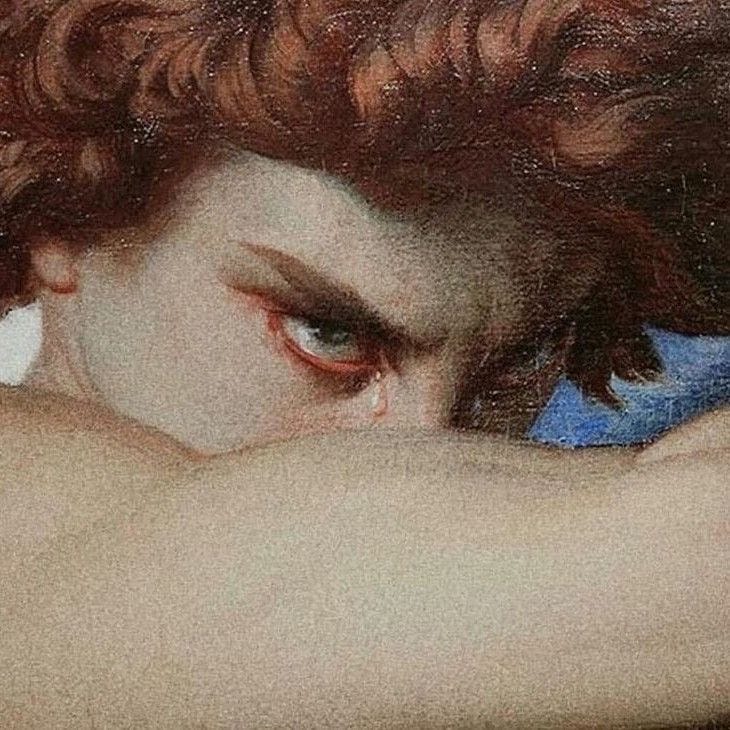
Though all men aim for immortality, few actually hit it. It is a great sign, in fact, of the vanity of man to presume himself great enough to last forever. Immortality only has a meaning thanks to death. Were our life not limited, were our experience immortal, were our time infinite, were our being eternal—immortality would have no great effect upon us. Our lives would pass on ceaselessly, and the impact of our actions would mean very little in the end.
Immortality has a tendency to put things into perspective in such a way that what lies before us, in the aftermath of its contemplation, appears very insignificant. It would be nice if man was content with merely being mortal, but again, the fact of our death presses on us severely and only causes greater anxiety as we age.
Age is the common stamp of organic life. Our wrinkles reveal more about our resilience than our deeds. We shudder at the thought of growing old, pale, weak, stupid, and in constant need of assistance. And so while we’re young, when youth appears like the only thing we have to our name, we devise schemes and plans and goals, and organize our powers around the pursuit of those things. In doing so, we hope to forget the hard business of contemplating life and rather only hope to live it—as if life itself were its own good, and on that basis would allow us to thrive meaningfully.
In seeking fulfillment in action, we take up arms against the troubles with which time oppresses us. We live life to forget about it afterwards. We tire ourselves out on vain things we value not for their own sake, but for the sake of our scared natures. Man is willing to do anything to give his reason a sedative; without a sense of control in his life, all things will fly apart for him, and he would rather go mad than live without order, even if that order is next to death in terms of the effects it has on him.
Man fears death like a child fears the dark; but even before death does the darkness of ignorance appear like some Lovecraftian nightmare. We’re incapable of finding within ourselves any true sense of immortality. If we were, our deeds alone would speak volumes for posterity; but most leave this world not even knowing themselves—and so, what hope do our descendants have of remembering who we were, when we at present are as unknown to ourselves?
It is only in our ignorance and forgetfulness that immortality seems impossible. If everyone had hyperthymesia, and lived as long as Methuselah, life alone would seem immortal—and in that sense, we would have fulfilled the task of our immortality—living, in order to be remembered after death. Our memories are very limited, however, and our lifespans seem to go no further than a century. With this acknowledged by us, the thought of death once again presses on us unfairly, overbearingly, without remorse. We seek to find ways of bypassing our temporality, but in doing so, we hardly find enough time to even settle our affairs, let alone make good on all those youthful ambitions of becoming immortal or living beyond our allotted span of time.
There’s no antidote against time, which consumes all. We are quickly forgotten by our survivors, our gravestones outlasted by trees and our names reduced to cold curiosities for antiquaries. Seeking eternity through inscriptions or epitaphs offers no real consolation against the inevitable erasure of the self. Time makes a mockery of all our efforts to outlast it. As a topic, it’s interconnected with so many macabre themes that one could write endlessly about its connection to death, birth, finality, infinity, and a thousand other philosophical fancies that hold a place in every pessimist’s heart. None but the lonely heart can understand the depths of despair which the thought of life brings on us—on we who have no one, want no one, and find nothing in anyone.
If one were to look out onto the scenes of life in a serious manner, they would find themselves almost speechless at how little we actually concern ourselves with the immortal. We speak of our lovers as being immortal or eternal, but we dare not say the same about our life. There’s a very obvious contempt in us. We live in contempt of life. We feel like life is itself a sick joke, and that we play it only for the sake of finding amusement within it. And such is why so many people live meaningless lives, for they live only for distraction and amusement.
Such is also why so many people flee from friendship—the thought of becoming too well-known, too felt, too understood by another, is delightfully terrifying to us—to we who only seek to know ourselves, and nothing more. Though death has its entrances and exits, we seem to be met with few who actually rise in applause at the Grim Reaper’s performance. It watches our final breaths, and then steals our souls when we least expect. Clad in black rags and armed with a big scythe, I find the blade of it to resemble a crescent moon. The moon is older than man, and in its sight, I find that in nature which is nearest to immortality. We die, fade, pass away, and move on all the same, but the moon remains.
Though it goes through phases—it persists; and just as night is merely the shadow of the Earth cast upon us as we turn from the Sun—so too are we in life. Our life is like a shadow which we’re constantly casting in the light while we live, and which disappears just as quickly as we enter into the dark. Even in death does our analogy work, for shadows either disappear in the presence of light, or in the complete absence of light. Either way, we’re gone, not to return, and a good thing at that—for who would ever wish to remain here?
If one is honest with themselves, they would find existence to resemble more an errata list than a blank slate. We supposedly draw upon that slate ourselves, but I find the chalk too weak, or perhaps the slate too black, to make any serious impression upon it. Our impressions are caused by our depressions. What makes us suffer is what makes us feel closest to life. I never knew a man who didn’t feel himself at his most excited when he was at his lowest low. Those who suffer in silence often are the hardest to single out amongst the crowd. They look so demure, calm, nonchalant—like nothing is wrong with them. Deep down, though, there’s always a depth to man which even eludes himself.
I don’t believe there has ever been a man who has been a complete master of himself. Those who have either went insane or found in old age that they’ve made many mistakes along the way, and regret having lived as long as they have. Even those men who, from the start, act with purpose and meaning, find that life always tosses a barrier in their way and prevents them from ever feeling at home in their own hearts.
The greatest confusion of life is, first—that it is—and second—that it has to be us. “That it is” is simply what it is; nonexistence has no meaning to one who isn’t already. “That it has to be us” is, perhaps, the origin of all our confusion and despair; it certainly could have been the case that we never came to be, and yet, here we are upon this rock forced to live, and forced to deal with all the impulses of life that direct us unwillingly. We seem made to suffer, and yet all those immortal celestial objects persist without the slightest concern.
I’ve said it before, but I have to say it again: consciousness is nature’s nightmare to man. It is that aspect of our being—that “night of the world” as Hegel called it—where before we were, others were, and yet in their image we were made; hungry and oppressed by all things around us, we were made conscious in our sufferings and turned to reason to overcome our state of suffering. In our experience, we find anything but salvation. I don’t even have the vocabulary to describe it, but if I had to hazard a guess, or a phrase rather, at what I think immortality is: I would say it is the sense of longing which comes from our desire to be seen and felt by others after we wake from the nightmare which is life—the loss of our consciousness, which is equivalent to being freed from nature’s oppressive thumb.
At all times, we yearn to be released from the clutches of our vain ambitions—to be freed from life, as it were—but at the same time, we find ourselves lost without them; and so, we live on, only striving to achieve those ambitions which we already know are vain. In that sense, our life is vain, for its purpose is made its own continuation—thus is it circular, as are all man’s logical justifications for existence. At every moment, we find ourselves striving to put words to what we feel deep down. Our thoughts are always on the saddest material imaginable, and yet, when viewed objectively, are the most trivial in history.
All mankind may do as they wish and bow in obedience to a will that is capricious; but for myself, I will have none of it, not only because I have no time for nonsense, but because I have not the strength to obey myself, let alone another. My life is among the most extraordinary ever lived, but only when seen from my own perspective. Points of view, in that sense, always give the wrong impression of things. They substitute the self instead of the world at large, and so only provide a very limited scope of what is real. To ever say a thing is real is a bold pretension, but for pragmatism’s sake, I’ll go along with convention and tradition. It is tiring at times, though, always having to fit in when your real goal is to be remembered precisely because you were different—i.e., not fitting in. And how crude the concept of “fitting in” seems. I can no more “fit in” in the traditional sense than I can get to the bottom of what life is. People make the point of life to fit in, but that kind of thinking is only reserved for those either unoriginal or too scared to live for themselves; chances are their positions are already secured, and on account of not wanting to lose them, they live safely, decadently, boringly, unculturedly... whatever else.
Time always moves slowest for the person who wants nothing more than for it to speed up. Life becomes even more of a drag than it is when the pace by which it moves is seemingly made slow—either by perception, surrounding activity, or boredom. Boredom… what a concept. Could that be immortal too? I tend to think everything can be immortal so long as it’s valued by someone enough to keep it alive within their spirits. Things today which can be called immortal are, rightfully I suppose, those things which always touch on the universal aspects of our sentiments. A good book, movie, or video game are all immortal in the same way, but achieve that same status differently. That is the perplexing aspect of it all.
We move in mysteries to ourselves, and the more we consider where we’re going, the more it seems like the time to consider it gets smaller and smaller. Our time dilates in the face of what we love, and our lengths never contract unless we’re feeling greatly tired. Only for so long can one speak on the same thing before the thing in question becomes insufferable. I don’t feel myself, however, unless I’m writing on that which I’ve already talked about before, and must do again and again. Forget me, though. Seriously. Forget me. Don’t bother with what I say all that much. Focus on you, and you’ll be alright. Trust me. I’m not perfect. I’m not cured from life. I’m tired of life. And I hope all this is shown through my style as I write it out. No better way to do it as I see it.
Again, I’m not cured, I’m tired—I’m only waiting for the world to end so that I can finally get some reading done. I find no greater time to crack open a good book than when everything seems to be falling apart. At such a time, one needs, I believe, a necessary distraction in order to endure the world. Time moves too slowly for those who live without consideration of this or that essential aspect of life. Life is lived in time, and so is always what we’re fighting against as our consciousness persists. Ay, to die though, to no longer be, to not desire anything—not even immortality: that seems the greatest of all things personally.
Immortality rests on two things: memory and action. Memory was already discussed. Memory is what allows the images which pass before us to be remembered with any certainty. If there were no memory, life would seem to fade the second we blink—and would enter back into the world of light the moment we reopened our eyes. Let us discuss action now. What makes an action memorable, or, more to the topic, immortal? An action is simply the expression of a drive, manifest in action embodied in the world, enforced through power. We will, and therefore we act. We act, and therefore we do. We do, and therefore we suffer. We suffer, and therefore we think. We think, and therefore————we are?
This is preposterous. This implies that we think only because we suffer. But wait… is that not true? Is not the nature of nature to be naturally nature-like towards us? Which is to say, to be indifferent to our successes and even more indifferent to our failures? I think any thinking man has to agree with the simple argument I just put forth. Our actions always lead to a kind of indifference which we scarce find the words for, but which we often feel in the tones of others. For example, when I read my own journal entries, I hardly feel as if I’m reading myself; for, in truth, every entry feels as if I was trying too hard to be honest, too “me,” too personal: I should have, perhaps, given my own soul a bit more space—then maybe it would have come out better.
When I read the journals of Emerson, however—or better yet, the journals of Cioran—I find myself instantly. Only in the words of others do I feel a true connection with myself. It’s as if my own self isn’t worthy of my own consideration. Perhaps I think too highly of myself. That wouldn’t surprise me, to be honest. Often do I wonder how it was for Pascal—sickly recluse that he was—jotting down his extemporaneous thoughts, and in such an elegant style it almost boggles the mind that such a man could have written that in the first place—and so quickly too, God! Undoubtedly the most enviable thing about a writer to another writer is the speed at which they write.
Thoughts carry only as much power as they carry truth. Sometimes, writing while being tired makes you more truthful, and as such do you become a pleasure to read. This is, without question, the exact style I’m writing in now. My own self-awareness stuns even me. A genius alone is a formidable thing. But a genius that is self-conscious of their powers: that can hardly be called a man in my humble opinion. Do I call myself a God? No, for like Prometheus, I hate all Gods. My motto for philosophy is found in that fact: all Gods are dead, now we say Overman!
Anyone who studies philosophy would have to agree with me when I say that all things either go back to Plato, Hegel, or Nietzsche. Nietzsche is really the Plato of the 21st-century, if I may be blunt. His name will far outlive every other philosopher who came before him; and I think the new age which is coming—the meta-age, the new tradition for mankind, the tired eyes and the weary souls: the age for them, that age which I speak of, that age is the age of Nietzsche. Alas though, we are not now in such a time where this proclamation will gain wide acclaim. Indeed, the herd still does not read the words of Nietzsche, though they feel in every fiber of their being those words which he spoke of. “Nietzsche spoke of this,” did he not? Of course he did. Nietzsche spoke of everything. He is the patron saint of modernity. To him we read, not to follow, but to be inspired by.
Nietzsche would have been horrified at the thought of people following him as if he was a second Christ; and yet, something in The Antichrist tells me he really was crazy enough to believe in himself enough—and in that faith of his did he predict the future. Others have done the same—say Will Durant, Oswald Spengler, or René Guénon—but few were as insightful, impactful, bold, truthful, in short, deliberately immoral about it all, as Nietzsche.
This is why there can never be a true successor to Nietzsche, in the same way there can never be a true successor to Christ or Muhammad—because their revelation was for their time, and once it passed, it had to be dealt with as the zeitgeist sees fit, and as it progresses in the throngs of our collective spirit. The whole immortality is really action made continuous. Things which do not persist cannot be said to have permanence; and if they lack this quality, they cannot be said to continue through time.
All matter decays in due time, and almost no trace of humanity will exist after 100,000 years of our extinction; and yet, despite knowing this, there is a purely intellectual intuition which we have with respect to this type of knowledge which gives it the air of objectivity. Our spirit seemingly knows what this thing is intuitively. On account of this intuitive knowledge, we make the world intelligible and through that come to advance it in the material realm. Though, I think Guénon’s criticism of this obsession with the material world is incomparable:
As for the traditional sciences of the Middle Ages, after a few final manifestations around this time, they disappeared as completely as those of distant civilizations long since destroyed by some cataclysm; and this time nothing was to arise in their place. Henceforth there was only ‘profane’ philosophy and ‘profane’ science, in other words, the negation of true intellectuality, the limitation of knowledge to its lowest order, namely, the empirical and analytical study of facts divorced from principles, a dispersion in an indefinite multitude of insignificant details, and the accumulation of unfounded and mutually destructive hypotheses and of fragmentary views leading to nothing other than those practical applications that constitute the sole real superiority of modern civilization—a scarcely enviable superiority, moreover, which, by stifling every other preoccupation, has given the present civilization the purely material character that makes of it a veritable monstrosity. —The Crisis of the Modern World, Chapter 1.
And also said:
Let there be no confusion on this point: if the general public accepts the pretext of ‘civilization’ in all good faith, there are those for whom it is no more than mere moralistic hypocrisy, serving as a mask for designs of conquest or economic ambitions. It is really an extraordinary epoch in which so many men can be made to believe that a people is being given happiness by being reduced to subjection, by being robbed of all that is most precious to it, that is to say of its own civilization, by being forced to adopt manners and institutions that were made for a different race, and by being constrained to the most distasteful kinds of work, in order to make it acquire things for which it has not the slightest use. For that is what is taking place: the modern West cannot tolerate that men should prefer to work less and be content to live on little; as it is only quantity that counts, and as everything that escapes the senses is held to be non-existent, it is taken for granted that anyone who is not in a state of agitation and who does not produce much in a material way must be ‘lazy’. —Ibid., Chapter 7.
In the sands of time are etched our depravities. This modern world is everything which we thought was right but which, in vain jest and confusion, has led to our ruin. The only immortality we leave behind is that which we feign to show while we live, but which comes out after we die—the only time we’re seriously remembered by those who supposedly care about us while we’re alive. Just as quickly as we come into life do we go out of it. There is scarce any reason for anything beyond those which we come up with for the sake of our life, which we always think of in the context of death—and in doing so reveal our vanity for all the world to see once again. It seems, however, a very natural thing for man to do.
Man wishes, above all things, to be remembered after his death. Only those who strove for greatness ended up approaching it. It may strike us as bizarre, and even a bit vain, to place so much emphasis on a thing which, in the oblivion of time, cast all things into eternal darkness—forever forgotten like a memory to the dead—alas though, life is short, and art incapable of extending it indefinitely. And so we sing our songs of memento mori—in order that we may simulate immortality whilst we live.