
it's difficult to move through the world with few friends and little wisdom
...

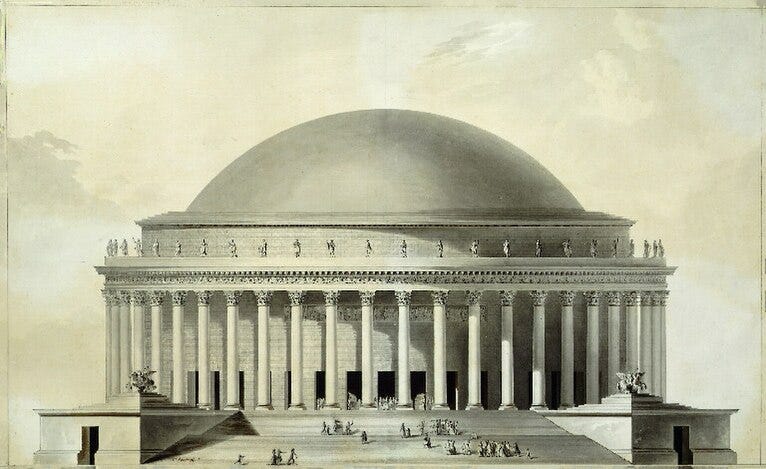
Solitude
Alas! what are you, after all, my written and painted thoughts! Not long ago you were so variegated, young and malicious, so full of thorns and secret spices, that you made me sneeze and laugh--and now? You have already doffed your novelty, and some of you, I fear, are ready to become truths, so immortal do they look, so pathetically honest, so tedious! And was it ever otherwise? What then do we write and paint, we mandarins with Chinese brush, we immortalisers of things which LEND themselves to writing, what are we alone capable of painting? Alas, only that which is just about to fade and begins to lose its odour! Alas, only exhausted and departing storms and belated yellow sentiments! Alas, only birds strayed and fatigued by flight, which now let themselves be captured with the hand--with OUR hand! We immortalize what cannot live and fly much longer, things only which are exhausted and mellow! And it is only for your AFTERNOON, you, my written and painted thoughts, for which alone I have colours, many colours, perhaps, many variegated softenings, and fifty yellows and browns and greens and reds;-- but nobody will divine thereby how ye looked in your morning, you sudden sparks and marvels of my solitude, you, my old, beloved-- EVIL thoughts!
Friedrich Nietzsche, "Beyond Good and Evil/Chapter IX."
In the writings of a recluse one always hears something of the echo of the wilderness, something of the murmuring tones and timid vigilance of solitude; in his strongest words, even in his cry itself, there sounds a new and more dangerous kind of silence, of concealment. He who has sat day and night, from year's end to year's end, alone with his soul in familiar discord and discourse, he who has become a cave-bear, or a treasure- seeker, or a treasure-guardian and dragon in his cave--it may be a labyrinth, but can also be a gold-mine--his ideas themselves eventually acquire a twilight-colour of their own, and an odour, as much of the depth as of the mould, something uncommunicative and repulsive, which blows chilly upon every passerby. The recluse does not believe that a philosopher--supposing that a philosopher has always in the first place been a recluse--ever expressed his actual and ultimate opinions in books: are not books written precisely to hide what is in us?--indeed, he will doubt whether a philosopher CAN have "ultimate and actual" opinions at all; whether behind every cave in him there is not, and must necessarily be, a still deeper cave: an ampler, stranger, richer world beyond the surface, an abyss behind every bottom, beneath every "foundation." Every philosophy is a foreground philosophy--this is a recluse's verdict: "There is something arbitrary in the fact that the PHILOSOPHER came to a stand here, took a retrospect, and looked around; that he HERE laid his spade aside and did not dig any deeper--there is also something suspicious in it." Every philosophy also CONCEALS a philosophy; every opinion is also a LURKING-PLACE, every word is also a MASK.
Friedrich Nietzsche, "Beyond Good and Evil/Chapter IX."
To conserve one's three hundred foregrounds; also one's black spectacles: for there are circumstances when nobody must look into our eyes, still less into our "motives." And to choose for company that roguish and cheerful vice, politeness. And to remain master of one's four virtues, courage, insight, sympathy, and solitude. For solitude is a virtue with us, as a sublime bent and bias to purity, which divines that in the contact of man and man--"in society"--it must be unavoidably impure. All society makes one somehow, somewhere, or sometime--"commonplace."
Friedrich Nietzsche, "Beyond Good and Evil/Chapter IX."
A man who strives after great things, looks upon every one whom he encounters on his way either as a means of advance, or a delay and hindrance--or as a temporary resting-place. His peculiar lofty BOUNTY to his fellow-men is only possible when he attains his elevation and dominates. Impatience, and the consciousness of being always condemned to comedy up to that time--for even strife is a comedy, and conceals the end, as every means does--spoil all intercourse for him; this kind of man is acquainted with solitude, and what is most poisonous in it.
Friedrich Nietzsche, "Beyond Good and Evil/Chapter IX."
The Brahmins, for instance, understood this fact. With the help of a religious organization, they secured to themselves the power of nominating kings for the people, while their sentiments prompted them to keep apart and outside, as men with a higher and super-regal mission. At the same time religion gives inducement and opportunity to some of the subjects to qualify themselves for future ruling and commanding the slowly ascending ranks and classes, in which, through fortunate marriage customs, volitional power and delight in self-control are on the increase. To them religion offers sufficient incentives and temptations to aspire to higher intellectuality, and to experience the sentiments of authoritative self-control, of silence, and of solitude. Asceticism and Puritanism are almost indispensable means of educating and ennobling a race which seeks to rise above its hereditary baseness and work itself upwards to future supremacy.
Friedrich Nietzsche, "Beyond Good and Evil/Chapter III."
Wherever the religious neurosis has appeared on the earth so far, we find it connected with three dangerous prescriptions as to regimen: solitude, fasting, and sexual abstinence--but without its being possible to determine with certainty which is cause and which is effect, or IF any relation at all of cause and effect exists there. This latter doubt is justified by the fact that one of the most regular symptoms among savage as well as among civilized peoples is the most sudden and excessive sensuality, which then with equal suddenness transforms into penitential paroxysms, world-renunciation, and will-renunciation, both symptoms perhaps explainable as disguised epilepsy? But nowhere is it MORE obligatory to put aside explanations around no other type has there grown such a mass of absurdity and superstition, no other type seems to have been more interesting to men and even to philosophers--perhaps it is time to become just a little indifferent here, to learn caution, or, better still, to look AWAY, TO GO AWAY--Yet in the background of the most recent philosophy, that of Schopenhauer, we find almost as the problem in itself, this terrible note of interrogation of the religious crisis and awakening. How is the negation of will POSSIBLE? how is the saint possible?--that seems to have been the very question with which Schopenhauer made a start and became a philosopher.
Friedrich Nietzsche, "Beyond Good and Evil/Chapter III."
Having been at home, or at least guests, in many realms of the spirit, having escaped again and again from the gloomy, agreeable nooks in which preferences and prejudices, youth, origin, the accident of men and books, or even the weariness of travel seemed to confine us, full of malice against the seductions of dependency which he concealed in honours, money, positions, or exaltation of the senses, grateful even for distress and the vicissitudes of illness, because they always free us from some rule, and its "prejudice," grateful to the God, devil, sheep, and worm in us, inquisitive to a fault, investigators to the point of cruelty, with unhesitating fingers for the intangible, with teeth and stomachs for the most indigestible, ready for any business that requires sagacity and acute senses, ready for every adventure, owing to an excess of "free will", with anterior and posterior souls, into the ultimate intentions of which it is difficult to pry, with foregrounds and backgrounds to the end of which no foot may run, hidden ones under the mantles of light, appropriators, although we resemble heirs and spendthrifts, arrangers and collectors from morning till night, misers of our wealth and our full-crammed drawers, economical in learning and forgetting, inventive in scheming, sometimes proud of tables of categories, sometimes pedants, sometimes night-owls of work even in full day, yea, if necessary, even scarecrows--and it is necessary nowadays, that is to say, inasmuch as we are the born, sworn, jealous friends of SOLITUDE, of our own profoundest midnight and midday solitude--such kind of men are we, we free spirits! And perhaps ye are also something of the same kind, ye coming ones? ye NEW philosophers?
Friedrich Nietzsche, "Beyond Good and Evil/Chapter II."
Need I say expressly after all this that they will be free, VERY free spirits, these philosophers of the future--as certainly also they will not be merely free spirits, but something more, higher, greater, and fundamentally different, which does not wish to be misunderstood and mistaken? But while I say this, I feel under OBLIGATION almost as much to them as to ourselves (we free spirits who are their heralds and forerunners), to sweep away from ourselves altogether a stupid old prejudice and misunderstanding, which, like a fog, has too long made the conception of "free spirit" obscure. In every country of Europe, and the same in America, there is at present something which makes an abuse of this name a very narrow, prepossessed, enchained class of spirits, who desire almost the opposite of what our intentions and instincts prompt--not to mention that in respect to the NEW philosophers who are appearing, they must still more be closed windows and bolted doors. Briefly and regrettably, they belong to the LEVELLERS, these wrongly named "free spirits"--as glib-tongued and scribe-fingered slaves of the democratic taste and its "modern ideas" all of them men without solitude, without personal solitude, blunt honest fellows to whom neither courage nor honourable conduct ought to be denied, only, they are not free, and are ludicrously superficial, especially in their innate partiality for seeing the cause of almost ALL human misery and failure in the old forms in which society has hitherto existed--a notion which happily inverts the truth entirely!
Friedrich Nietzsche, "Beyond Good and Evil/Chapter II."
And have people around you who are as a garden--or as music on the waters at eventide, when already the day becomes a memory. Choose the GOOD solitude, the free, wanton, lightsome solitude, which also gives you the right still to remain good in any sense whatsoever! How poisonous, how crafty, how bad, does every long war make one, which cannot be waged openly by means of force! How PERSONAL does a long fear make one, a long watching of enemies, of possible enemies! These pariahs of society, these long-pursued, badly-persecuted ones--also the compulsory recluses, the Spinozas or Giordano Brunos--always become in the end, even under the most intellectual masquerade, and perhaps without being themselves aware of it, refined vengeance-seekers and poison-Brewers (just lay bare the foundation of Spinoza's ethics and theology!), not to speak of the stupidity of moral indignation, which is the unfailing sign in a philosopher that the sense of philosophical humour has left him. The martyrdom of the philosopher, his "sacrifice for the sake of truth," forces into the light whatever of the agitator and actor lurks in him; and if one has hitherto contemplated him only with artistic curiosity, with regard to many a philosopher it is easy to understand the dangerous desire to see him also in his deterioration (deteriorated into a "martyr," into a stage-and- tribune-bawler). Only, that it is necessary with such a desire to be clear WHAT spectacle one will see in any case--merely a satyric play, merely an epilogue farce, merely the continued proof that the long, real tragedy IS AT AN END, supposing that every philosophy has been a long tragedy in its origin.
Friedrich Nietzsche, "Beyond Good and Evil/Chapter II."
POSTHUMOUS FAME.—There is sense in hoping for recognition in a distant future only when we take it for granted that mankind will remain essentially unchanged, and that whatever is great is not for one age only but will be looked upon as great for all time. But this is an error. In all their sentiments and judgments concerning what is good and beautiful mankind have greatly changed; it is mere fantasy to imagine one's self to be a mile ahead, and that the whole of mankind is coming our way. Besides, a scholar who is misjudged may at present reckon with certainty that his discovery will be made by others, and that, at best, it will be allowed to him later on by some historian that he also already knew this or that but was not in a position to secure the recognition of his knowledge. Not to be recognised is always interpreted by posterity as lack of power. In short, one should not so readily speak in favour of haughty solitude. There are, however, exceptional cases; but it is chiefly our faults, weakness, and follies that hinder the recognition of our great qualities.
Friedrich Nietzsche, "Human All-Too-Human."
In all pessimistic religions the act of generation was looked upon as evil in itself. This is by no means the verdict of all mankind, not even of all pessimists. For instance, Empedocles saw in all erotic things nothing shameful, diabolical, or, sinful ; but rather, in the great plain of disaster he saw only one hopeful and redeeming figure, that of Aphrodite ; she appeared to him as a guarantee that the strife should not endure eternally, but that the sceptre should one day be given over to a gentler dæmon. The actual Christian pessimists had, as has been said, an interest in the dominance of a diverse opinion ; for the solitude and spiritual wilderness of their lives they required an ever living enemy, and a generally recognised enemy, through whose fighting and overcoming they could constantly represent themselves to the non-saints as incomprehensible, half - supernatural beings. But when at last this enemy took to flight for ever in consequence of their mode of life and their impaired health, they immediately understood how to populate their interior with new daemons. The rising and falling of the scales of pride and humility sustained their brooding minds as well as the alternations of desire and peace of soul. At that time psychology served not only to cast suspicion upon everything human, but to oppress, to scourge, to crucify ; people wished to find themselves as bad and wicked as possible, they sought anxiety for the salvation of their souls, despair of their own strength.
Friedrich Nietzsche, "Human All-Too-Human."
All that we require, and which can only be given us by the present advance of the single sciences, is a chemistry of the moral, religious, æsthetic ideas and sentiments, as also of those emotions which we experience in ourselves both in the great and in the small phases of social and intellectual intercourse, and even in solitude ; but what if this chemistry should result in the fact that also in this case the most beautiful colours have been obtained from base, even despised materials ? Would many be inclined to pursue such examinations ? Humanity likes to put all questions as to origin and beginning out of its mind ; must one not be almost dehumanised to feel a contrary tendency in one's self?
Friedrich Nietzsche, "Human All-Too-Human."
Solitude encircles and engirdles him, always more threatening, more throttling, more heart-oppressing, that terrible goddess and mater sæva cupidinum—but who knows nowadays what solitude is?
Friedrich Nietzsche, "Human All-Too-Human."
To learn solitude.—Oh ye poor fellows in the large cities of the world's politics, ye young and gifted men, who, tormented by ambition, deem it your duty to give your opinion on every occurrence of the day—something always occurs; who, by thus raising up lust and noise, mistake yourselves for the rolling chariot of history; who, because you always listen, are always on the lookout for the moment when you may put in a word or two, and thereby lose all true productiveness. However desirous you may be of doing great deeds, the deep silence of pregnancy never comes to you! The event of the day sweeps you along like chaff, while you fancy that you are chasing the events—poor fellows! If you wish to pose as heroes on the stage, you must not think of forming the chorus, nay, not even know how the chorus is formed.
Friedrich Nietzsche, "Dawn of the Day/Book 3."
Never resign.—To renounce the world without knowing it, after the fashion of the nun—results in a fruitless, perhaps melancholy solitude, This is entirely unlike the solitude of the thinker’s life contemplative: when he chooses it, he has not the least intention of renouncing ; he would, on the contrary, deem it a renunciation, a melancholy destruction of his own self, were he obliged to continue in the rita practica: he foregoes the latter, because he knows it, because he knows himself. So he jumps into his water, so he gains his cheerfulness.
Friedrich Nietzsche, "Dawn of the Day/Book 5."
Where are the poor in intellect?—Ah, how it sickens me to obtrude my own ideas upon others! How I rejoice in any mood and secret change within myself whereby the thoughts of others carry the day over mine! But from time to time I enjoy even a greater threat: when I am allowed to give away my intellectual house and goods, like the confessor sitting in a corner and anxiously waiting for a distressed one to come and tell the misery of his thoughts, so that hand and heart may again be filled and the troubled soul eased. Not only does he not want any praise; he would like to shun gratitude as well, for it is obtrusive and does not stand in awe of solitude and silence. To live without a name or slightly sneered at; too humble to arouse envy or enmity ; with a head free from fever, a handful of knowledge and a bagful of experience; a physician, so to speak, of the poor in intellect, helping one or the other whose head is bewildered by opinions, without this one really noticing who has helped him! Without any desire of setting himself right in his presence and carrying a victory, he would speak to him in such wise that, after a short, imperceptible hint or contradiction, he may tell himself what is right and proudly walk away! Like an obscure inn which never refuses admittance to a person in need, but which is afterwards forgotten and laughed at!
Friedrich Nietzsche, "Dawn of the Day/Book 5."
On education.—Gradually I have come to see daylight in the general deficiency of our culture and education: nobody learns, nobody strives after, nobody teaches—how to endure solitude.
Friedrich Nietzsche, "Dawn of the Day/Book 5."
Pass by.—Spare him! Leave him in his solitude! Are you, then, bent upon crushing him? He is flawed like a glass into which suddenly some hot liquid was poured,—and he was such a precious glass!
Friedrich Nietzsche, "Dawn of the Day/Book 5."
A cheap mode of life.—The cheapest aid most unsophisticated mode of life is certainly that of the thinker; for, to begin by mentioning the most important feature, he first and foremost stands in need of those very things which others slight and abandon. Secondly: he is easily pleased and does not ask for any expensive spices of pleasure; his task is not arduous, but as it were southern; his days and nights are not wasted by remorse; he moves, eats, drinks and sleeps in proportion as his intellect grows calmer, stronger and clearer ; he rejoices in his body and has no reason to fear it; he does not stand in need of society, unless for the purpose of from time to time more tenderly to embrace his solitude; he finds in the dead compensation for the living and even reparation for friends: that is, in the best who ever lived. Let us consider whether it is the opposite desires and habits that lave made life expensive and consequently arduous, often even unbearable. In another sense, however, the thinker's life is more expensive, for nothing seems good enough for him; and it would indeed be intolerable to be deprived of the best.
Friedrich Nietzsche, "Dawn of the Day/Book 5."
On the sufferer's knowledge.—The condition of invalids who have been long and terribly tormented by their sufferings and whose reason, throughout, has not grown dim, is not without its value in the search after knowledge—quite irrespective of the intellectual benefits which every deep solitude, every sudden and justified freedom from all duties and habits entails. One who severely suffers looks forth from his condition upon the things without with terrible indifference: all those small mendacious spells wherein things usually float when the eye of the healthy looks upon them, have vanished from his view : nay, his own self, stripped of plumage and colour, lies pure before him. Suppose that, up to then, he had lived in some dangerous realm of fancy: this extreme sobering down by pain is the means—and perhaps the only means—of extricating him therefrom. (Possibly this is what befel the founder of Christianity on the cross : for the bitterest of all words, "My God, my God, why hast Thou forsaken me!" if understood in their fullest sense, contain the evidence of a general disappointment and enlightenment respecting the delusion of His life; at the moment of His most intense agony He gained a clear insight into Himself, just as did, in the poet's narrative, the poor dying Don Quixote.)
Friedrich Nietzsche, "Dawn of the Day/Book 2."
Cause of “altruism.”—Broadly speaking, human language has so emphasised and idolised love, for the sole reason that mankind has enjoyed so little of it and never been allowed its fill of this food: which thus became our “ambrosia”’ Let a poet for once show, in the picture of a Utopia, the existence of universal philanthropy: he surely will have to describe a grievous and ridiculous state, the like of which the earth has never seen—everybody worshipped, bored and sighed for, not only by one lover, but by thousands of lovers, nay, by everybody, owing to an indomitable craving, which will then be as fiercely insulted and cursed as selfishness has been by ancient humanity; and the poets of that state, if we grant them leisure for their compositions, will be dreaming of nothing but the blissful, loveless past, the divine selfishness, the solitude, once upon a time still possible on earth, seclusion, unpopularity, odiousness, contempt, and by whatever name we may denote the utter baseness of the animal world wherein we live.
Friedrich Nietzsche, "Dawn of the Day/Book 2."
These three constitutional dangers that threatened Schopenhauer, threaten us all. Each one of us bears a creative solitude within himself, and his consciousness of it forms an exotic aura of strangeness round him. Most men cannot endure it, because they are slothful, as I said, and because their solitude hangs round them a chain of troubles and burdens. No doubt, for the man with this heavy chain, life loses almost everything that one desires from it in youth—joy, safety, honour: his fellow-men pay him his due of—isolation! The wilderness and the cave are about him, wherever he may live. He must look to it that he be not enslaved and oppressed, and become melancholy thereby. And let him surround himself with the pictures of good and brave fighters such as Schopenhauer.
Friedrich Nietzsche, "Schopenhauer as Educator."
The third danger is a moral or intellectual hardening: man breaks the bond that united him to his ideal: he ceases to be fruitful and reproduce himself in this or that province, and becomes an enemy or a parasite of culture. The solitude of his being has become an indivisible, unrelated atom, an icy stone. And one can perish of this solitude as well as of the fear of it, of one's self as well as one's self-sacrifice, of both aspiration and petrifaction: and to live is ever to be in danger.
Friedrich Nietzsche, "Schopenhauer as Educator."
Egotism erects its center in itself: love places it out of itself in the axis of the universal whole. Love aims at unity, egotism at solitude. Love is the citizen ruler of a flourishing republic, egotism is a despot an a devastated creation. Egotism sows for gratitude, love for the ungrateful. Love gives, egotism lends; and love does this before the throne of judicial truth, indifferent if for the enjoyment of the following moment, or with the view to a martyr’s crown—indifferent whether the reward is in this life or in the next.
Friedrich Schiller.
It is the monotony of his own nature that makes solitude intolerable to a man.
Friedrich Schiller.
There is no solitude in nature.
Friedrich Schiller.
It was evident that he revived by fits and starts. He would suddenly come to himself from actual delirium for a few minutes; he would remember and talk with complete consciousness, chiefly in disconnected phrases which he had perhaps thought out and learnt by heart in the long weary hours of his illness, in his bed, in sleepless solitude.
Fyodor Dostoyevsky.
Remember, too, every day, and whenever you can, repeat to yourself, Lord, have mercy on all who appear before Thee today. For every hour and every moment thousands of men leave life on this earth, and their souls appear before God. And how many of them depart in solitude, unknown, sad, dejected that no one mourns for them or even knows whether they have lived or not!
Fyodor Dostoyevsky.
And, therefore, the natural philosophy of Democritus and some others, who did not suppose a mind or reason in the frame of things, but attributed the form thereof able to maintain itself to infinite essays or proofs of Nature, which they term fortune, seemeth to me (as far as I can judge by the recital and fragments which remain unto us) in particularities of physical causes more real and better inquired than that of Aristotle and Plato; whereof both intermingled final causes, the one as a part of theology, and the other as a part of logic, which were the favourite studies respectively of both those persons; not because those final causes are not true and worthy to be inquired, being kept within their own province, but because their excursions into the limits of physical causes hath bred a vastness and solitude in that tract.
Francis Bacon, The Advancement of Learning.
For hence it proceedeth that princes find a solitude in regard of able men to serve them in causes of estate, because there is no education collegiate which is free, where such as were so disposed might give themselves in histories, modern languages, books of policy and civil discourse, and other the like enablements unto service of estate.
Francis Bacon, The Advancement of Learning.
It had been hard for him that spake it to have put more truth and untruth together in few words than in that speech, "Whosoever is delighted in solitude, is either a wild beast or a god:" for it is most true, that a natural and secret hatred and aversation towards society, in any man, hath somewhat of the savage beast; but it is most untrue, that it should have any character at all of the divine nature, except it proceed, not out of a pleasure in solitude, but out of a love and desire to sequester a man's self for a higher conversation: such as is found to have been falsely and feignedly in some of the heathen; as Epimenides, the Candian; Numa, the Roman; Empedocles, the Sicilian; and Apollonius of Tyana; and truly and really in divers of the ancient hermits and holy fathers of the church. But little do men perceive what solitude is, and how far it extendeth; for a crowd is not company, and faces are but a gallery of pictures, and talk but a tinkling cymbal where there is no love. The Latin adage meeteth with it a little: "magna civitas, magna solitudo [A great city, a great desert];" because in a great town friends are scattered, so that there is not that fellowship, for the most part, which is in less neighbourhoods: but we may go farther, and affirm most truly, that it is a mere and miserable solitude to want true friends, without which the world is but wilderness; and even in this sense also of solitude, whosoever in the frame of his nature and affections is unfit for friendship, he taketh it of the beast, and not from humanity.
The Essays of Francis Bacon: The Fifty-Nine Essays, Complete. Adansonia Press, 2018. Of Friendship, pg. 47.
Luther deters men from solitariness; but he does not mean from a sober solitude that rallies our scattered strengths and prepares us against any new encounters from without.
Francis Atterbury.
2494-3.5.94 Scytharum solitudo [The solitude of the Scythians].
“Erasmus Adagia.” Www.let.leidenuniv.nl, 1703, www.let.leidenuniv.nl/Dutch/Latijn/ErasmusAdagia.html.
What then is the chastisement of those who accept it not? To be as they are. Is any discontented with being alone? let him be in solitude. Is any discontented with his parents? let him be a bad son, and lament. Is any discontented with his children? let him be a bad father.--"Throw him into prision!"--What prision?-- Where he is already: for he is there against his will; and wherever a man is against his will, that to him is a prision. Thus Socrates was not in prision, since he was there with his own consent.
“The Internet Classics Archive | the Golden Sayings by Epictetus.” Section 1 Saying XXXII.
The elegance of dress, of motion, and of manners gives a lustre to beauty, and inflames the senses through the imagination. Luxurious entertainments, midnight dances, and licentious spectacles, present at once temptation and opportunity to female frailty. From such dangers the unpolished wives of the barbarians were secured by poverty, solitude, and the painful cares of a domestic life.
Edward Gibbon.
I would paint a portrait which would bring the tears, had I canvas for it, and the scene should be -- solitude, and the figures -- solitude -- and the lights and shades, each a solitude.
Emily Dickinson.
NEW feet within my garden go,
New fingers stir the sod;
A troubadour upon the elm
Betrays the solitude.
New children play upon the green,
New weary sleep below;
And still the pensive spring returns,
And still the punctual snow!
"Poems (Dickinson)/New feet within my garden go."
O! lost to virtue, lost to manly thought, Lost to the noble sallies of the soul! Who think it solitude to be alone.
Edward Young.
We must die alone. To the very verge of the stream our friends may accompany us; they may bend over us, they may cling to us there; but that one long wave from the sea of eternity washes up to the lips, sweeps us from the shore, and we go forth alone! In that untried and utter solitude, then, what can there be for us but the pulsation of that assurance, "I am not alone, because the Father is with me!
Edwin Hubbell Chapin.
A woman may live without a lover, but a lover once admitted, she never goes through life with only one. She is deserted, and cannot bear her anguish and solitude, and hence fills up the void with a second idol.
Edward Bulwer-Lytton.
How many have found solitude, not only, as Cicero calls it, the pabulum of the mind, but the nurse of their genius! How many of the world’s most sacred oracles have been uttered, like those of Dodona, from the silence of deep woods!
Edward Bulwer-Lytton.
In solitude the passions feed upon the heart.
Edward Bulwer-Lytton.
Thy soul shall find itself alone,
Mid dark thoughts of the grey tombstone —
Not one, of all the crowd to pry
Into thine hour of secrecy —
Be silent in thy solitude
Which is not loneliness — for then
The spirits of the dead who stood
In life before thee are again
In death around thee, and their will
Shall then oershadow thee — be still.
The night tho’ clear shall frown —
And the stars shall look not down
From their high thrones in the Heaven,
With light like Hope to mortals given,
But their red orbs, without beam,
To thy weariness shall seem
As a burning & a fever
Which would cling to thee forever
But twill leave thee, as each star
With the dew-drop flies afar —
Now are thoughts thou can’st not banish —
Now are visions ne’er to vanish —
No more, like dew-drop from the grass,
From thy spirit shall they pass —
The breeze — the breath of God — is still —
And the mist upon the hill
Shadowy — shadowy, yet unbroken
Is a symbol & a token —
How it hangs upon the trees!
A mystery of mysteries!
Edger Allen Poe, “Spirits of the Dead.”
A blood-red thing that writhes from out
The scenic solitude!
It writhes! — it writhes! — with mortal pangs
The mimes become its food,
And the angels sob at vermin fangs
In human gore imbued!
Out — out are the lights — out all!
And, over each dying form,
The curtain, a funeral pall,
Comes down with the rush of a storm,
And the seraphs, all haggard and wan,
Uprising, unveiling, affirm
That the play is the tragedy “Man,”
Its hero the Conqueror Worm.
Edger Allen Poe, “The Conqueror Worm.”
These no doubt are exceeding useful, when join'd with an active Life; because the Occasion being presented along with the Reflection, works it into the Soul, & makes it take a deep Impression, but in Solitude they serve to little other Purpose, than to waste the Spirits, the Force of the Mind meeting with no Resistance, but wasting itself in the Air, like our Arm when it misses its Aim. This however I did not learn but by Experience, & till I had already ruin'd my Health, tho' I was not sensible of it.
David Hume, "A kind of history of my life."
I don't speak to a soul. In the morning I hide myself in the wood where it is wild and thick and I don't come out till evening. After you I have not a better friend than solitude. I fight against tears as much as I can, but as yet I am not equal to the struggle." It was the deepest personal sorrow of his life.
Cicero, The Roman Way. W.W. Norton, 2017. Ch V, pg. 63. Letter to Atticus, referring to the death of his daughter, Tullia
Nothing could be pleasanter than this solitude. All is more charming than you can imagine, the shore, the sea view, the hillocks, and everything. But they don't deserve a longer letter- and I have nothing else to say and I am very sleepy.
Cicero, The Roman Way. W.W. Norton, 2017. Ch V, pg. 56. Letter to Atticus
Thus nature has no love for solitude, and always leans, as it were, on some support; and the sweetest support is found in the most intimate friendship.
Cicero.
But solitude is sadness.' 'Yes; it is sadness. Life, however, has worse than that. Deeper than melancholy lies heart-break.
Charlotte Brontë.
To be together is for us to be at once as free as in solitude, as gay as in company. We talk, I believe, all day long: to talk to each other is but a more animated and an audible thinking.
Charlotte Brontë.
After a youth and manhood passed half in unutterable misery and half in dreary solitude, I have for the first time found what I can truly love—I have found you.
Charlotte Brontë.
But two miles more, and then we rest!
Well, there is still an hour of day,
And long the brightness of the West
Will light us on our devious way;
Sit then, awhile, here in this wood—
So total is the solitude,
We safely may delay.
Charlotte Brontë.
If there be a regal solitude, it is a sick-bed. How the patient lords it there; what caprices he acts without control! how kinglike he sways his pillow-tumbling, and tossing, and shifting, and lowering, and thumping, and flatting, and molding it, to the ever-varying requisitions of his throbbing temples.
Charles Lamb.
Stephen Blackpool fall into the loneliest of lives, the life of solitude among a familiar crowd. The stranger in the land who looks into ten thousand faces for some answering look and never finds it, is in cheering society as compared with him who passes ten averted faces daily, that were once the countenances of friends
Charles Dickens.
When the moon shines very brilliantly, a solitude and stillness seem to proceed from her that influence even crowded places full of life.
Charles Dickens.
It has been shrewdly said that, when men abuse us, we should suspect ourselves, and when they praise us, them. It is a rare instance of virtue to despise censure which we do not deserve, and still more rare to despise praise which we do. But the integrity that lives only on opinion would starve without it; and that theatrical kind of virtue which requires publicity for its stage, and an applauding world for an audience, could not be depended on in the secrecy of solitude, or the retirement of a desert.
Charles Caleb Colton.
Multitude, solitude: equal and interchangeable terms for the active and prolific poet.
Charles Baudelaire.
Solitude suits the wounded soul
Weary of all pleasure and bereft of happiness,
Which has nothing more to fear and feels hardened
Against harsh fate by the excess of misfortune.
You who suffer and weep, do not fear
Being alone; it may be that one will laugh at your woes
If you sit near the cheerful reveler,
And the banal crowd is where one prays.
This mountain was once a volcano: time has devastated it,
It is extinct. The days have passed when lava
Flowed down its beautiful slopes like a torrent.
Now clad in immortal beauty,
Alone in the sky, a giant of snow with a solemn aspect,
It is nothing but silence and immobility.
Camille Saint-Saëns, Familiar Rhymes/The Fouji-Yama
If, then, we turn to the nature of divine law, as it has just been defined, we shall find that it is, 1st, universal or common to all men; for we have inferred it from the whole nature of man; 2nd, that it does not require faith in historical narrative or historian. For since this divine natural law is conceived and understood on the sole grounds of human nature, it is as readily conceived to have existed in Adam as in any other man, to exist in one living among his fellow-men as in one passing his days in solitude and seclusion. Farther, no faith in history, however well attested, can bring our minds to a knowledge of God, or fill our souls with the love of him; for love here springs of intuitive knowledge, — knowledge of God derived from common ideas, certain of themselves and mentally understood, whence faith in historical records is not needed to enable us to attain supreme felicity.
Benedictus de Spinoza, "Theologico-Political Treatise 1862/Chapter 4."
Arising in some such way, this instinct drives the genius to carry his work to completion, without thinking of reward or applause or sympathy; to leave all care for his own personal welfare; to make his life one of industrious solitude, and to strain his faculties to the utmost. He thus comes to think more about posterity than about contemporaries; because, while the latter can only lead him astray, posterity forms the majority of the species, and time will gradually bring the discerning few who can appreciate him.
Arthur Schopenhauer, "The Art of Literature/On Genius."
A long period of solitude, whether in prison or in a sick room; quiet, twilight, darkness—these are the things that promote its activity; and under their influence it comes into play of itself. On the other hand, when a great deal of material is presented to our faculties of observation, as happens on a journey, or in the hurly-burly of the world, or, again, in broad daylight, the imagination is idle, and, even though call may be made upon it, refuses to become active, as though it understood that that was not its proper time.
Arthur Schopenhauer, "Studies in Pessimism/Further Psychological Observations."
A man can be himself only so long as he is alone; and if he does not love solitude, he will not love freedom; for it is only when he is alone that he is really free.
Arthur Schopenhauer.
Great men are like eagles, and build their nest on some lofty solitude.
Arthur Schopenhauer.
Solitude will be welcomed or endured or avoided, according as a man's personal value is large or small.
Arthur Schopenhauer.
Nothing is more capable of troubling our reason, and consuming our health, than secret notions of jealousy in solitude.
Aphra Behn, The History of Agnes de Castro, or the Force of Generous Love (1688).
My passionate sense of social justice and social responsibility has always contrasted oddly with my pronounced lack of need for direct contact with other human beings and human communities. I am truly a 'lone traveler' and have never belonged to my country, my home, my friends, or even my immediate family, with my whole heart; in the face of all these ties, I have never lost a sense of distance and a need for solitude…
Albert Einstein.
And with all generous persons maried thus it is, that where the minde and person pleases aptly, there some unaccomplishment of the bodies delight may be better born with, then when the minde hangs off in an unclosing disproportion, though the body be as it ought; for there all corporall delight will soon become unsavoury and contemptible. And the solitarines of man, which God had namely and principally orderd to prevent by mariage, hath no remedy, but lies under a worse condition then the loneliest single life; for in single life the absence and remotenes of a helper might inure him to expect his own comforts out of himselfe, or to seek with hope; but here the continuall sight of his deluded thoughts without cure, must needs be to him, if especially his complexion incline him to melancholy, a daily trouble and paine of losse in som degree like that which Reprobats feel.
John Milton, “The Doctrine & Discipline of Divorce: Book 1.” CHAP. II.
Let but thy wicked men from out thee go,
And all the fools that crowd thee so,
Even thou, who dost thy millions boast,
A village less than Islington wilt grow,
A solitude almost.
Abraham Cowley.
Happy the man, whose wish and care
A few paternal acres bound,
Content to breathe his native air
In his own ground.
Whose herds with milk, whose fields with bread,
Whose flocks supply him with attire;
Whose trees in summer yield him shade,
In winter fire.
Blest, who can unconcern'dly find
Hours, days, and years slide soft away
In health of body, peace of mind,
Quiet by day,
Sound sleep by night; study and ease
Together mixt, sweet recreation,
And innocence, which most does please
With meditation.
Thus let me live, unseen, unknown;
Thus unlamented let me die;
Steal from the world, and not a stone
Tell where I lie.
Alexander Pope, "Poems That Every Child Should Know/Solitude."
Wholesome solitude, the nurse of sense!
Alexander Pope.
Sorrow
O'er my sad fate I sorrow,
To each dewy morrow,
Veiled here from man's sight.
By the many mistaken,
Unknown and forsaken,
Here wing I my flight!
Compassionate spirit!
Let none ever hear it,—
Conceal my affliction,
Conceal thy delight!
THE HUNTER.
To-day I'm rewarded;
Rich booty's afforded
By Fortune so bright.
My servant, the pheasants,
And hares fit for presents,
Takes homeward at night.
Here see I enraptured
In nets the birds captured!—
Long life to the hunter!
Long live his delight!
The Works of J. W. von Goethe/Volume 9/Different Emotions on the Same Spot
Sister of the earliest light,
Type of loveliness in sorrow,
Silver mists thy radiance borrow,
Even as they cross thy sight.
When thou comest to the sky,
In their dusky hollows waken,
Spirits that are sad, forsaken,
Birds that shun the day, and I.
The Works of J. W. von Goethe/Volume 9/To Luna
Stood I idly by thy side,
Sorrow still would sadden me;
But when seas our path divide,
Gladly toil I,—toil for thee!
Now the valley I perceive,
Where together we will go,
And the streamlet watch each eve,
Gliding peacefully below.
Oh, the poplars on yon spot!
Oh, the beech-trees in yon grove!
And behind we'll build a cot.
Where to taste the joys of love!
The Works of J. W. von Goethe/Volume 9/To the Chosen One
Ah! who'll ever those days restore,
Those bright days of early love!
Who'll one hour again concede,
Of that time so fondly cherished!
Silently my wounds I feed,
And with wailing evermore
Sorrow o'er each joy now perished.
Ah! who'll e'er the days restore
Of that time so fondly cherished!
The Works of J. W. von Goethe/Volume 9/First Loss
And yet thou art trailing in sorrow and sadness
The moments that life, as it flies, gave for gladness.
Because by thy love thou'rt remembered no more!
Oh, call back to mind former days and their blisses!
The lips of the second will give as sweet kisses
As any the lips of the first gave before!
The Works of J. W. von Goethe/Volume 9/The Exchange
Thou that from the heavens art,
Every pain and sorrow stlllest,
And the doubly wretched heart
Doubly with refreshment fillest,
I am weary with contending!
The Works of J. W. von Goethe/Volume 9/Wanderer's Night-Song
Dry not up, dry not up,
Tears shed by love everlasting!
Ah! to the eye that half only dried is,
How dreary, how dead the world does appear!
Dry not up, dry not up,
Tears my love unhappy is shedding!
The Works of J. W. von Goethe/Volume 9/Delight of Sorrow
The women sorrow sore,
The maidens far, far more.
The living are no virgins more.
Thus Tilly's troops make war!
The Works of J. W. von Goethe/Volume 9/The Destruction of Magdeburg
Oh, wherefore shouldst thou try
The tears of love to dry?
Nay, let them flow!
For didst thou only know,
How barren and how dead
Seems everything below,
To those who have not tears enough to shed,
Thou'dst rather bid them weep, and seek their comfort so.
The Works of J. W. von Goethe/Volume 9/Sorrow Without Consolation
Fate now allows us,
'Twixt the departing
And the upstarting,
Happy to be;
And at the call of
Memory cherished,
Future and perished
Moments we see.
Seasons of anguish,—
Ah, they must ever
Truth from woe sever,
Love and joy part;
Days still more worthy
Soon will unite us,
Fairer songs light us,
Strength'ning the heart.
We, thus united,
Think of, with gladness,
Rapture and sadness,
Sorrow now flies.
The Works of J. W. von Goethe/Volume 9/On the New Year
I know a flower of beauty rare,
Ah, how I hold it dear!
To seek it I would fain repair,
Were I not prisoned here.
My sorrow sore oppresses me,
For when I was at liberty,
I had it close beside me.
Though from this castle's walls so steep
I cast mine eyes around,
And gaze oft from the lofty keep,
The flower cannot be found.
Whoe'er would bring it to my sight,
Whether a vassal he, or knight,
My dearest friend I'd deem him.
The Works of J. W. von Goethe/Volume 9/The Beauteous Flower
And proclaim to e'en the meanest,
That great Brama hears his cry!
"None is in his eyes the meanest—
He whose limbs are lame and palsied,
He whose soul is wildly riven,
Worn with sorrow, hopeless, helpless,
Be he Brahmin, be he Pariah,
If tow'rd heaven he turns his gaze,
Will perceive, will learn to know it:
Thousand eyes are glowing yonder,
Thousand ears are calmly list'ning,
From which nought below is hid.
The Works of J. W. von Goethe/Volume 9/The Pariah
These things marked the father, Asan Aga,
And in sorrow called he to his children—
"Turn again to me, ye poor deserted;
Hard as steel is now your mother's bosom;
Shut so fast it cannot throb with pity!"
Thus he spoke; and when the lady heard him,
Pale as death she dropped upon the pavement,
And the life fled from her wretched bosom,
As she saw her children turning from her.
The Works of J. W. von Goethe/Volume 9/Death Lament of the Noble Wife of Asan Aga
Let us all, then,
Adore the Father!
The old, the mighty,
Who such a beauteous
Ne'er-fading spouse
Deigns to accord
To perishing mortals!
To us alone
Doth he unite her,
With heavenly bonds,
While he commands her
In joy and sorrow,
As a true spouse
Never try to fly us.
The Works of J. W. von Goethe/Volume 9/My Goddess
Midst the noise of merriment and glee,
'Midst full many a sorrow, many a care,
Charlotte, I remember, we remember thee,
How at evening's hour so fair,
Thou a kindly hand didst reach us,
When thou, in some happy place
Where more fair is Nature's face,
Many a lightly-hidden trace
Of a spirit loved didst teach us.
The Works of J. W. von Goethe/Volume 9/To Charlotte
To thy sorrow thou'rt to-day repelled
By what yesterday obeyed thee.
Can that world by thee be worthy held
Which so oft betrayed thee?
Which 'mid all thy pleasures and thy pains,
Lived in selfish, unconcerned repose?
See, the soul its secret cells regains,
And the heart—makes haste to close.
Thus found I thee, and gladly went to meet thee;
"She's worthy of all love!" I cried,
And prayed that Heaven with purest bliss might greet thee,
Which in thy friend it richly hath supplied.
The Works of J. W. von Goethe/Volume 9/To Charlotte
Weep ye not, ye children dear,
That as yet ye are unborn:
For each sorrow and each tear
Makes the father's heart to mourn.
Patient be a short time to it,
Unproduced, and known to none;
If your father cannot do it,
By your mother 'twill be done.
He who with life makes sport,
Can prosper never;
Who rules himself in nought,
Is a slave ever.
The Works of J. W. von Goethe/Volume 9/Paulo Post Futuri
A thousand flies did I at even slay,
Yet did one wake me at the break of day.
Who serves the public is a sorry beast;
He frets himself; no one thanks him the least.
Wouldst thou nothing useless buy,
Be sure the fairs you go not nigh.
I could no greater sorrow own
Than live in Paradise alone.
The Works of J. W. von Goethe/Volume 9/Proverbs
Clasped in my arms for ever eagerly hold I my mistress,
Ever my panting heart throbs wildly against her dear breast,
And on her knees for ever is leaning my head, while I'm gazing
Now on her sweet smiling mouth, now on her bright sparkling eyes.
"Oh, thou effeminate!" spake one, "and thus, then, thy days thou art spending? "
Ah, they in sorrow are spent. List while I tell thee my tale:
Yes! I have left my only joy in life far behind me,
Twenty long days hath my car borne me away from her sight.
Vetturini defy me, while crafty chamberlains flatter,
And the sly valet de place thinks but of lies and deceit.
If I attempt to escape, the postmaster fastens upon me,
Postboys the upper hand get, custom-house duties enrage.
"Truly, I can't understand thee! thou talkest enigmas! thou seemest
Wrapped in a blissful repose, glad as Rinaldo of yore:"—
Ah, I myself understand full well; 'tis my body that travels,
And 'tis my spirit that rests still in my mistress's arms.
The Works of J. W. von Goethe/Volume 9/Venetian Epigrams
Who never ate his bread in sorrow,
Who never spent the darksome hours
Weeping, and watching for the morrow,—
He knows ye not, ye gloomy Powers.
Johann Wolfgang von Goethe, Wilhelm Meister. Book ii. Chap. xiii.
Die Zukunft decket Schmerzen und Glücke—The future hides in it gladness and sorrow.
Johann Wolfgang von Goethe.
Did I not—but oh! what is man, that he dares so to accuse himself? My dear friend, I promise you I will improve; I will no longer, as has ever been my habit, continue to ruminate on every petty vexation which fortune may dispense; I will enjoy the present, and the past shall be for me the past. No doubt you are right, my best of friends, there would be far less suffering amongst mankind, if men—and God knows why they are so fashioned—did not employ their imaginations so assiduously in recalling the memory of past sorrow, instead of bearing their present lot with equanimity.
The Works of J. W. von Goethe/Volume 6/The Sorrows of Young Werther/Book 1.
But need I confess this to you, my dear friend, who have so often endured the anguish of witnessing my sudden transitions from sorrow to immoderate joy, and from sweet melancholy to violent passions? I treat my poor heart like a sick child, and gratify its every fancy. Do not mention this again: there are people who would censure me for it.
The Works of J. W. von Goethe/Volume 6/The Sorrows of Young Werther/Book 1.
She is to me a sacred being. All passion is still in her presence: I cannot express my sensations when I am near her. I feel as if my soul beat in every nerve of my body. There is a melody which she plays on the piano with angelic skill,—so simple is it, and yet so spiritual! It is her favourite air; and, when she plays the first note, all pain, care, and sorrow disappear from me in a moment.
The Works of J. W. von Goethe/Volume 6/The Sorrows of Young Werther/Book 1.
And what is man—that boasted demigod? Do not his powers fail when he most requires their use? And whether he soar in joy, or sink in sorrow, is not his career in both inevitably arrested? And, whilst he fondly dreams that he is grasping at infinity, does he not feel compelled to return to a consciousness of his cold, monotonous existence?
The Works of J. W. von Goethe/Volume 6/The Sorrows of Young Werther/Book 2.
The old steward hastened to the house immediately upon hearing the news: he embraced his dying friend amid a flood of tears. His eldest boys soon followed him on foot. In speechless sorrow they threw themselves on their knees by the bedside, and kissed his hands and face. The eldest, who was his favourite, hung over him till he expired; and even then he was removed by force. At twelve o'clock Werther breathed his last. The presence of the steward, and the precautions he had adopted, prevented a disturbance; and that night, at the hour of eleven, he caused the body to be interred in the place which Werther had selected for himself. The steward and his sons followed the corpse to the grave. Albert was unable to accompany them. Charlotte's life was despaired of. The body was carried by labourers. No priest attended.
The Works of J. W. von Goethe/Volume 6/The Sorrows of Young Werther/Book 2.
Though thou repent, yet I have still the loss:
The offender's sorrow lends but weak relief
To him that bears the strong offence's cross.
Ah! but those tears are pearl which thy love sheds,
And they are rich and ransom all ill deeds.
"Shakespeare's Sonnets (1883)/Sonnet 34."
Then hate me when thou wilt; if ever, now;
Now, while the world is bent my deeds to cross,
Join with the spite of fortune, make me bow,
And do not drop in for an after-loss:
Ah! do not, when my heart hath 'scap'd this sorrow,
Come in the rearward of a conquer'd woe;
Give not a windy night a rainy morrow,
To linger out a purpos'd overthrow.
"Shakespeare's Sonnets (1883)/Sonnet 90."
That you were once unkind befriends me now,
And for that sorrow which I then did feel
Needs must I under my transgression bow,
Unless my nerves were brass or hammer'd steel.
For if you were by my unkindness shaken
As I by yours, you've pass'd a hell of time,
And I, a tyrant, have no leisure taken
To weigh how once I suffer'd in your crime.
O, that our night of woe might have remember'd
My deepest sense, how hard true sorrow hits,
And soon to you, as you to me, then tender'd
The humble salve which wounded bosoms fits!
But that your trespass now becomes a fee;
Mine ransoms yours, and yours must ransom me.
"Shakespeare's Sonnets (1883)/Sonnet 120."
Be wise as thou art cruel; do not press
My tongue-tied patience with too much disdain,
Lest sorrow lend me words, and words express
The manner of my pity-wanting pain.
"Shakespeare's Sonnets (1883)/Sonnet 140."
’T is all men’s office to speak patience
To those that wring under the load of sorrow,
But no man’s virtue nor sufficiency
To be so moral when he shall endure
The like himself.
William Shakespeare, Much Ado about Nothing. Act v. Sc. 1.
Affliction may one day smile again; and till then, sit thee down, sorrow!
William Shakespeare, Love’s Labour ’s Lost. Act i. Sc. 1.
’T is better to be lowly born,
And range with humble livers in content,
Than to be perked up in a glistering grief,
And wear a golden sorrow.
William Shakespeare, King Henry VIII. Act ii. Sc. 3.
Good night, good night! parting is such sweet sorrow,
That I shall say good night till it be morrow.
William Shakespeare, Romeo and Juliet. Act ii. Sc. 2.
Give sorrow words: the grief that does not speak
Whispers the o’er-fraught heart and bids it break.
William Shakespeare, Macbeth. Act iv. Sc. 3.
Doct. Not so sick, my lord,
As she is troubled with thick-coming fancies,
That keep her from her rest.
Macb. Cure her of that.
Canst thou not minister to a mind diseas’d,
Pluck from the memory a rooted sorrow,
Raze out the written troubles of the brain,
And with some sweet oblivious antidote
Cleanse the stuff’d bosom of that perilous stuff
Which weighs upon the heart?
Doct. Therein the patient
Must minister to himself.
Macb. Throw physic to the dogs: I ’ll none of it.
William Shakespeare, Macbeth. Act v. Sc. 3.
Hysterica passio, down, thou climbing sorrow,
Thy element ’s below.
William Shakespeare, King Lear. Act ii. Sc. 4.
Patience and sorrow strove
Who should express her goodliest.
William Shakespeare, King Lear. Act iv. Sc. 3.
There is a time preceding the power of reasoning, when, like animals, we live by instinct alone, and of which memory retains no vestiges. There is a second period, when reason is developed, formed, and might act, if it were not obscured and partly extinguished by vices of the constitution, and a sequence of passions following one another till the third and last age; reason then, being in its full strength, should produce something; but it is chilled and impaired by years, disease, and sorrow, and rendered useless by the machinery getting old and out of gear; yet these three periods constitute the whole life of man.
The Characters of Jean de La Bruyère.
There is but one sorrow which is lasting, and that is one produced by the loss of property; time, which alleviates all others, sharpens this; we feel it every moment during the course of our lives when we miss the fortune we have lost.
The Characters of Jean de La Bruyère.
A coquette is a woman who never yields to the passion she has for pleasing, nor to the good opinion she entertains of her own beauty; she regards time and years only as things that wrinkle and disfigure other women, and forgets that age is written on her face. The same dress, which formerly enhanced her beauty when she was young, now disfigures her, and shows the more the defects of old age; winning manners and affectation cling to her even in sorrow and sickness; she dies dressed in her best, and adorned with gay-coloured ribbons.
The Characters of Jean de La Bruyère.
Personal size and mental sorrow have certainly no necessary proportions. A large bulky figure has a good a right to be in deep affliction, as the most graceful set of limbs in the world. But, fair or not fair, there are unbecoming conjunctions, which reason will pa tronize in vain,--which taste cannot tolerate,--which ridicule will seize.
Jane Austen.
A nature wise With finding in itself the types of all, With watching from the dim verge of the time What things to be are visible in the gleams Thrown forward on them from the luminous past, Wise with the history of its own frail heart, With reverence and sorrow, and with love, Broad as the world, for freedom and for man.
James Russell Lowell.
Through suffering and sorrow thou hast passed, to show us what a woman true can be.
James Russell Lowell.
Sorrow, the great idealizer.
James Russell Lowell.
But all God’s angels come to us disguised:
Sorrow and sickness, poverty and death,
One after other lift their frowning masks,
And we behold the Seraph’s face beneath,
All radiant with the glory and the calm
Of having looked upon the front of God.
James Russell Lowell.
It was cold autumn weather, but in spite of the cold they wandered up and down the roads of the Park for nearly three hours. They agreed to break off their intercourse; every bond, he said, is a bond to sorrow.
James Joyce.
The realm of fairy-story is wide and deep and high and filled with many things: all manner of beasts and birds are found there; shoreless seas and stars uncounted; beauty that is an enchantment, and an ever-present peril; both joy and sorrow as sharp as swords.
J. R. R. Tolkien.
All perils. If dear happiness attend
This bold exploit, is it not fit that thou
Should'st share it with me; and if evil come,
Is it not thine, my Adam, to take part
Of my misfortune; and with soothing words,
And labours of fond sympathy, to cheer
Thy grief-oppressed mistress? Let there be
Such sweet communion of the ever-credulous heart
Betwixt us, as defies all destiny,
Both good and ill, to sever—sorrow-proof—
But lay aside all fear.
The Adamus Exul of Grotius; or the Prototype of Paradise Lost. Leopold Classic Library, pg. 38. Said by Eve.
Some, in support of an opposite opinion, allege the supreme mercy of God, as it is displayed in the new covenant, and which is given as an example for men, and for magistrates, in particular, to follow, who, in the exercise of authority, execute the laws of the Deity. This opinion may in some measure be true, but not to that extent, which the authors of it intend. For the great mercy of God displayed in the new covenant has a peculiar reference to offences against the primitive law, or even against the law of Moses, before the time that men had received a knowledge of the Gospel. For offences committed after the promulgation of the Gospel, especially if they are accompanied with a hardened obstinacy, are treated with much severer judgments than any that were declared by Moses. For God punishes sins of that kind not only in a future state, but in the present life. But for sins of that kind, to obtain the act of mercy and indulgence, the offender must inflict punishment upon himself, not in a slight or trivial manner, but with a heartfelt sorrow, and resolution to sin no more.
Hugo Grotius, The Rights of War and Peace (1901 ed.). M. Walter Dunne, 1625, p. 233.
Helmer: I would gladly work night and day for you, Nora – bear sorrow and want for your sake. But no man would sacrifice his honor for the one he loves. Nora: It is a thing hundreds of thousands of women have done.
Henrik Ibsen.
Nature refuses to sympathize with our sorrow. She seems not to have provided for, but by a thousand contrivances against it.
Henry David Thoreau.
You ask if there is no doctrine of sorrow in my philosophy. Of acute sorrow I suppose that I know comparatively little. My saddestand most genuine sorrows are apt to be but transient regrets. The place of sorrow is supplied, perchance, by a certain hard and proportionately barren indifference. I am of kin to the sod, and partake of its dull patience,--in winter expecting the sun of spring.
Henry David Thoreau.
One cannot too soon forget his errors and misdemeanors. To dwell long upon them is to add to the offense. Repentance and sorrow can only be displaced by something better, which is as free and original as if they had not been.
Henry David Thoreau.
We men are wretched things, and the gods, who have no cares themselves, have woven sorrow into the very pattern of our lives...Zeus the Thunderer has two jars standing on the floor of his palace, in which he keeps his gifts, the evils in one and the blessings in the other.
Homer, The Iliad
I took the sheep and cut their throats over the pit, and let the dark blood flow. Then there gathered the spirits of the dead, brides and unwed youths, old men worn out by labour, and tender maidens with hearts still new to sorrow.
Homer.
Oh for shame, how the mortals put the blame on us gods, for they say evils come from us, but it is they, rather, who by their own recklessness win sorrow beyond what is given...
Homer.
Man is the vainest of all
creatures that have their being upon earth. As long as heaven
vouchsafes him health and strength, he thinks that he shall come to
no harm hereafter, and even when the blessed gods bring sorrow upon
him, he bears it as he needs must, and makes the best of it; for
God Almighty gives men their daily minds day by day. I know all
about it, for I was a rich man once, and did much wrong in the
stubbornness of my pride, and in the confidence that my father and
my brothers would support me; therefore let a man fear God in all
things always, and take the good that heaven may see fit to send
him without vainglory.
Homer.
Question me now about all other matters, but do not ask who I am, for fear you may increase in my heart it's burden of sorrow as I think back; I am very full of grief, and I should not sit in the house of somebody else with my lamentation and wailing. It is not good to go on mourning forever.
Homer, The Odyssey
Many an inherited sorrow that has marred a life has been breathed into no human ear.
George Eliot.
Childhood has no forebodings; but then it is soothed by no memories of outlived sorrow.
George Eliot.
Be quick to do good. If you are slow, The mind, delighting in mischief, Will catch you. Turn away from mischief. Again and again, turn away. Before sorrow befalls you. Set your heart on doing good. Do it over and over again, And you will be filled with joy. A fool is happy Until his mischief turns against him. And a good man may suffer Until his goodness flowers. Do not make light of your failings, Saying, ‘What are they to me?’ A jug fills drop by drop.
Gautama Buddha.
And he who has considered all the contrasts on this earth, and is no more disturbed by anything whatever in the world, the Peaceful One, freed from rage, from sorrow, and from longing, he has passed beyond birth and decay.
Gautama Buddha.
‘All is passing’. When one realises this, he sits loose to this world of sorrow : This is the way of purity.
Gautama Buddha.
A mind unruffled by the vagaries of fortune, from sorrow freed, from defilements cleansed, from fear liberated — this is the greatest blessing.
Gautama Buddha.
Life is a top which whipping Sorrow driveth,
Wisdom must bear what our flesh cannot banish,
The humble lead, the stubborn bootless striveth :
Or, man, forsake thyself, to heaven turn thee,
Her flames enlighten nature, never burn thee.
Jokinen, Anniina. “Fulke Greville. ‘Caelica.’ Sonnet LXXXVII.” Luminarium.org, 14 Jan. 2000, www.luminarium.org/renlit/caelica87.htm.
Give me a bow, let me thy quiver borrow,
And she shall play the child with Love or Sorrow.
Jokinen, Anniina. “Fulke Greville: Caelica Sonnet 25.” Luminarium.org, 14 Jan. 2000, www.luminarium.org/renlit/caelica25.htm.
Shewing Sorrow in such fashion,
As Truth seem'd in loue with Passion,
Such a sweet enamell giueth
Loue restrain'd, that constant liueth.
Jokinen, Anniina. “Fulke Greville. ‘Caelica.’ Sonnet 74. In the Window of a Grange.” Luminarium.org, 2 Feb. 2007, www.luminarium.org/renlit/caelica74.htm.
Heartsease and only I like parallels run on,
Whose equal length keep equal breadth,and never meet in one:
Yet for not wronging him, my thoughts, my sorrow's cell,
Shall not run out; though leak they will, for liking him so well.
Farewell to you! my hopes, my wonted waking dreams.
Jokinen, Anniina. “Fulke Greville: Epitaph upon Sir Philip Sidney. (Elegy, Poem).” Luminarium.org, 4 Feb. 2007, www.luminarium.org/renlit/sidneyepitaph.htm.
Now sink of sorrow I, who live, the more the wrong,
Who wishing death, whom death denies, whose thread is all too long;
Who tied to wretched life, who looks for no relief,
Must spend my ever-dying days in never-ending grief.
Jokinen, Anniina. “Fulke Greville: Epitaph upon Sir Philip Sidney. (Elegy, Poem).” Luminarium.org, 4 Feb. 2007, www.luminarium.org/renlit/sidneyepitaph.htm.
Es schwinden jedes Kummers Falten / So lang des Liebes Zauber walten—The wrinkles of every sorrow disappear as long as the spell of love is unbroken.
Friedrich Schiller.
Brief is sorrow, and endless is joy.
Friedrich Schiller.
Whatever lives, lives to die in sorrow. We engage our hearts, and grasp after the things of this world, only to undergo the pang of losing them.
Friedrich Schiller.
Courage, ne'er by sorrow broken!
Aid where tears of virtue flow;
Faith to keep each promise spoken!
Truth alike to friend and foe!
Friedrich Schiller.
Alas! I know men's hearts, and that full soon,
By women's gentle words we are undone;
If women sigh or weep, our souls are grieved,
Or if they swear they love, they are believed.
But trust not thou to oaths if she should swear,
Nor hearty sighs, believe they dwell not there.
If she should grieve in earnest or in jest,
Or force her arguments with sad protest,
As if true sorrow in her eyelid sate,
Nay, if she come to weeping, trust not that;
For know that women can both weep and smile,
With much more danger than the crocodile.
“The Remedy of Love by Francis Beaumont.”
Readers, friends, if you turn these pages
Put your prejudice aside,
For, really, there's nothing here that's outrageous,
Nothing sick, or bad — or contagious.
Not that I sit here glowing with pride
For my book: all you'll find is laughter:
That's all the glory my heart is after,
Seeing how sorrow eats you, defeats you.
I'd rather write about laughing than crying,
For laughter makes men human, and courageous.
François Rabelais.
Sorrow and madness make my verses flow
Cross to my understanding; for I know
You can do wonders: Every day I meet
The looser sort of people in the street
From desperate diseases freed; and why
Restore you them, and suffer her to die?
Why should the state allow you colleges,
Pensions for lectures, and anatomies,
If all your potions, vomits, letting blood,
Can only cure the bad, and not the good,
Which only they can do? and I will show
The hidden reason, why you did not know
The way to cure her: You believed her blood
Ran on such courses as you understood;
By lectures you believed her arteries
Grew as they do in your anatomies:
Forgetting that the state allows you none
But only whores and thieves to practise on
And every passage 'bout them I am sure
You understood, and only them can cure;
Which is the cause that both —
Are noted for enjoying so long lives.
“An Elegy on the Death of the Virtuous Lady Elizabeth, Countess of Rutland by Francis Beaumont.”
Mankind is sent to sorrow; and thou hast
More of the business which thou cam'st for past,
Than all those aged women, which, yet quick,
Have quite outlived their own arithmetic.
“An Elegy on the Death of the Virtuous Lady Elizabeth, Countess of Rutland by Francis Beaumont.”
It is three days since she did feel Death's hand;
And yet this isle not feel the poet's land?
Hath this no new ones made? and are the old
At such a needful time as this grown cold?
They all say they would fain; but yet they plead
They cannot write, because their muse is dead.
Hear me then speak, which will take no excuse;
Sorrow can make a verse without a muse.
“An Elegy on the Death of the Virtuous Lady Elizabeth, Countess of Rutland by Francis Beaumont.”
I may forget to drink, to eat, to sleep,
Remembering thee: but when I do, to weep
In well-weighed lines, that men shall at thy hearse
Envy the sorrow which brought forth my verse;
May my dull understanding have the might
Only to know her last was yesternight!
Rutland, the fair, is dead! and if to hear
The name of Sidney will more force a tear,
'Tis she that is so dead! and yet there be
Some more alive profess not poetry;
The statesmen and the lawyers of our time
Have business still, yet do it not in rhyme.
Can she be dead, and can there be of those
That are so dull to say their prayers in prose?
“An Elegy on the Death of the Virtuous Lady Elizabeth, Countess of Rutland by Francis Beaumont.”
The poets tell us, that the inhabitants of the old world being totally desytroyed by the universal deluge, excepting Deucalion and Pyrrha these two, desiring with zealous and fervent devotion to restore mankind, received this oracle for answer, that "they should succeed by throwing their mother's bones behind them." This at first cast them into great sorrow and despair because, as all things were levelled by the deluge, it was in vain to seek their mother's tomb; but at length they understood the oracle to signify the stones of the earth, which is esteemed the mother of all things.
Bacon, Lord. Pagan Mythology, Or, the Wisdom of the Ancients. London : Progressive Publishing Company, 1891, Chapter 20: Deucalion, pg. 51-52.
MEDEA: The gods know who was the author of this sorrow. JASON: Yes, the gods know indeed, they know your loathsome heart. MEDEA: Hate me. But I tire of your barking bitterness.
Euripides, Medea.
The care of God for us is a great thing, if a man believe it at heart: it plucks the burden of sorrow from him.
Euripides.
All men know their children Mean more than life. If childless people sneer- Well, they've less sorrow. But what lonesome luck!
Euripides.
The sorrow of Yesterday is as nothing; that of To-day is bearable; but that of To-morrow is gigantic, because indistinct.
Euripides.
The origin of sorrow is this: to wish for something that does not come to pass.
Epictetus.
If you wish to live a life free from sorrow, think of what is going to happen as if it had already happened.
Epictetus.
And what lack I yet? am I not untouched by sorrow, by fear? am I not free? . . . when have I laid anything to the charge of God or Man? when have I accussed any? hath any of you seen me with a sorrowful countenance? And in what wise treat I those of whom you stand in fear and awe? Is it not as slaves? Who when he seeth me doth not think that he beholdeth his Master and his King?
“The Internet Classics Archive | the Golden Sayings by Epictetus.” Section 2 Saying CXIV.
For that mist may break when the sun is high
And this soul forget its sorrow
And the rose ray of the closing day
May promise a brighter morrow.
Emily Brontë
Sing, seraph with the glory! heaven is high.
Sing, poet with the sorrow! earth is low.
The universe's inward voices cry
"Amen" to either song of joy and woe.
Sing, seraph, poet! sing on equally!
Elizabeth Barrett Browning.
Do ye hear the children weeping, O my brothers,
Ere the sorrow comes with years?
They are leaning their young heads against their mothers—
And that cannot stop their tears.
Elizabeth Barrett Browning.
"There is no God," the foolish saith, But none, "There is no sorrow." And nature oft the cry of faith In bitter need will borrow: Eyes which the preacher could not school, By wayside graves are raised; And lips say, "God be pitiful," Who ne'er said, "God be praised."
Elizabeth Barrett Browning.
Wert thou a King yet not command content,
Since empire none thy mind could yet suffice,
Wert thou obscure still cares would thee torment;
But wert thou dead, all care and sorrow dies;
An easy choice of these things which to crave,
No kingdom nor a cottage but a grave.
Edward de Vere, "Were I a King."
What nymph deserves his liking best, yet doth in sorrow rue?
Edward de Vere.
My heart shall fail, and hand shall lose his force,
But some device shall pay Despite his due;
And Fury shall consume my careful corse,
Or raze the ground whereon my sorrow grew.
Lo, thus in rage of ruthful mind refus’d,
I rest reveng’d on whom I am abus’d.
Edward de Vere, "Revenge of Wrong."
Faction, that ever dwells in Courte where witt excels,
Hath sett defiance;
Fortune and Love have sworne that they were never borne
Of one alliance.
Cupid, which doth aspire to be god of Desire,
Swears he "gives lawes;
That where his arrows hit, somejoy, some sorrow it:
Fortune no cause.
Edward de Vere, “Megliora Spero.”
Christianity has made martyrdom sublime, and sorrow triumphant.Edwin Hubbell Chapin.
Impatience dries the blood sooner than age or sorrow.
Edwin Hubbell Chapin.
It is the veiled angel of sorrow who plucks away one thing and another that bound us here in ease and security, and, in the vanishing of these dear objects, indicates the true home of our affections and our peace.
Edwin Hubbell Chapin.
It is those who make the least display of their sorrow who mourn the deepest.
Edwin Hubbell Chapin.
It is the veiled angel of sorrow who plucks away one thing and another that bound us here in ease and security, and, in the vanishing of these dear objects, indicates the true home of our affections and our peace.
Edwin Hubbell Chapin.
For fear, enforcing goodness, Must somewhere reign enthroned, And watch men’s ways, and teach them, Through self-inflicted sorrow, That sin is not condoned. What man, no longer nursing Fear at his heart – what city, Once fear is cast away, Will bow the knee to Justice As in an earlier day?
Aeshylus, Oresteia - Phillip Vellacott, The Oresteian Trilogy, Penguin, 1973 (Google Books)
This above all I bid you: reverence Justice' high altar; let no sight of gain Tempt you to spurn with godless insolence This sanctity. Cause and effect remain; From sin flows sorrow.
Aeshylus, Oresteia - Phillip Vellacott, The Oresteian Trilogy, Penguin, 1973 (Google Books)
Zeus, whose will has marked for man The sole way where wisdom lies; Ordered one eternal plan: Man must suffer to be wise. Head-winds heavy with past ill Stray his course and cloud his heart. Sorrow takes the blind soul’s part — Man grows wise against his will. For powers who rule from thrones above By ruthlessness commend their love.
Aeshylus, Oresteia, tr. Phillip Vellacott.
Once to die is better than length of days in sorrow without end.
Aeshylus.
Joy takes a strange effect at times, it seems to oppress us almost the same as sorrow.
Alexandre Dumas.
There are some situations which men understand by instinct, by which reason is powerless to explain; in such cases the greatest poet is he who gives utterance to the most natural and vehement outburst of sorrow. Those who hear the bitter cry are as much impressed as if they listened to an entire poem, and when th sufferer is sincere they are right in regarding his outburst as sublime.
Alexandre Dumas.
For the happy man prayer is only a jumble of words, until the day when sorrow comes to explain to him the sublime language by means of which he speaks to God.
Alexandre Dumas.
This is truth the poet sings,
That a sorrow’s crown of sorrow is remembering happier things.
Alfred Tennyson, Locksley Hall. Line 75.
They said that Love would die when Hope was gone, / And Love mourn’d long, and sorrow’d after Hope; / At last she sought out Memory, and they trod / The same old paths where Love had walk’d with Hope, / And Memory fed the soul of Love with tears.
Alfred Tennyson.
O sorrow, wilt thou rule my blood,
But sometimes lovely, like a bride,
And put thy harsher moods aside,
If thou wilt have me wise and good.
Alfred Tennyson.
Sighs
Which perfect Joy, perplexed for utterance,
Stole from her sister Sorrow.
Alfred Tennyson.
Smit with exceeding sorrow unto Death.
Alfred Tennyson.
’Tis held that sorrow makes us wise.
Alfred Tennyson.
Half the night I waste in sighs, Half in dreams I sorrow after The delight of early skies; In a wakeful dose I sorrow For the hand, the lips, the eyes, For the meeting of the morrow, The delight of happy laughter, The delight of low replies.
Alfred Tennyson.
Can calm despair and wild unrest Be tenants of a single breast, Or sorrow such a changeling be?
Alfred Tennyson.
O Sorrow, wilt Thou live with me No casual mistress, but a wife.
Alfred Tennyson.
Can calm despair and wild unrest Be tenants of a single breast, Or sorrow such a changeling be?
Alfred Tennyson.
The wild swan's death-hymn took the soul Of that waste place with joy Hidden in sorrow: at first to the ear The warble was low, and full and clear.
Alfred Tennyson.
If the weak hand, that has recorded this tale, has, by its scenes, beguiled the mourner of one hour of sorrow, or, by its moral, taught him to sustain it — the effort, however humble, has not been vain, nor is the writer unrewarded.
Ann Radcliffe, The Mysteries of Udolpho (1794)
Ye Children of Man! whose life is a span, / Protracted with sorrow from day to day, / Naked and featherless, feeble and querulous, / Sickly, calamitous creatures of clay!
Aristophanes.
It is, however, a wonderful thing that the mere addition of thought should serve to raise such a vast and lofty structure of human happiness and misery; resting, too, on the same narrow basis of joy and sorrow as man holds in common with the brute, and exposing him to such violent emotions, to so many storms of passion, so much convulsion of feeling, that what he has suffered stands written and may be read in the lines on his face. And yet, when all is told, he has been struggling ultimately for the very same things as the brute has attained, and with an incomparably smaller expenditure of passion and pain.
Arthur Schopenhauer, "Studies in Pessimism/On the Sufferings of the World."
The brute is much more content with mere existence than man; the plant is wholly so; and man finds satisfaction in it just in proportion as he is dull and obtuse. Accordingly, the life of the brute carries less of sorrow with it, but also less of joy, when compared with the life of man; and while this may be traced, on the one side, to freedom from the torment of care and anxiety, it is also due to the fact that hope, in any real sense, is unknown to the brute. It is thus deprived of any share in that which gives us the most and best of our joys and pleasures, the mental anticipation of a happy future, and the inspiriting play of phantasy, both of which we owe to our power of imagination.
Arthur Schopenhauer, "Studies in Pessimism/On the Sufferings of the World."
Joy and sorrow are not ideas of the mind but affections of the will, and so they do not lie in the domain of memory. We cannot recall our joys and sorrows; by which I mean that we cannot renew them. We can recall only the ideas that accompanied them; and, in particular, the things we were led to say; and these form a gauge of our feelings at the time. Hence our memory of joys and sorrows is always imperfect, and they become a matter of indifference to us as soon as they are over. This explains the vanity of the attempt, which we sometimes make, to revive the pleasures and the pains of the past. Pleasure and pain are essentially an affair of the will; and the will, as such, is not possessed of memory, which is a function of the intellect; and this in its turn gives out and takes in nothing but thoughts and ideas, which are not here in question.
Arthur Schopenhauer, "Studies in Pessimism/Further Psychological Observations."
We enjoy some gratification when our good friends die; for though their death leaves us in sorrow, we have the consolatory assurance that they are beyond the ills by which in this life even the best of people are broken down or corrupted.
Augustine of Hippo.
Yet it would be more shameful for us to make this known to the world than it is for the French to be ignorant of letters; so it is better to pass over in silence what we cannot recall without sorrow, and leaving this subject (which I took up unwillingly) to return to our courtier.
Baldesar Castiglione, How to Achieve True Greatness, Bk 1, pg. 40.
For both at the beginning and during the course of this love of theirs they never know other than anguish, torment, sorrow, exertion and distress; and so lovers, it is supposed, must always be characterized by paleness and dejection, continuous sighings and weepings, mournfulness and lamentations, silences and the desire for death.
Baldesar Castiglione, How to Achieve True Greatness, Bk 1, pg. 67.
Finish off well. In the house of Fortune, if you enter by the gate of pleasure you must leave by that of sorrow and vice versâ. You ought therefore to think of the finish, and attach more importance to a graceful exit than to applause on entrance. ’Tis the common lot of the unlucky to have a very fortunate outset and a very tragic end. The important point is not the vulgar applause on entrance—that comes to nearly all—but the general feeling at exit. Few in life are felt to deserve an encore. Fortune rarely accompanies any one to the door: warmly as she may welcome the coming, she speeds but coldly the parting guest.
Baltasar Gracián, “The Art of Worldly Wisdom” tr. by Joseph Jacobs, [1892]
Do not die of the Fools' Disease. The wise generally die after they have lost their reason: fools before they have found it. To die of the fools' disease is to die of too much thought. Some die because they think and feel too much: others live because they do not think and feel: these are fools because they do not die of sorrow, the others because they do. A fool is he that dies of too much knowledge: thus some die because they are too knowing, others because they are not knowing enough. Yet though many die like fools, few die fools.
Baltasar Gracián, “The Art of Worldly Wisdom” tr. by Joseph Jacobs, [1892]
Know how to Ask. With some nothing easier: with others nothing so difficult. For there are men who cannot refuse: with them no skill is required. But with others their first word at all times is No; with them great art is required, and with all the propitious moment. Surprise them when in a pleasant mood, when a repast of body or soul has just left them refreshed, if only their shrewdness has not anticipated the cunning of the applicant. The days of joy are the days of favour, for joy overflows from the inner man into the outward creation. It is no use applying when another has been refused, since the objection to a No has just been overcome. Nor is it a good time after sorrow. To oblige a person beforehand is a sure way, unless he is mean.
Baltasar Gracián, “The Art of Worldly Wisdom” tr. by Joseph Jacobs, [1892]
Hang sorrow, care ’ll kill a cat.
Ben Jonson.
It is the lot of man to suffer; it is also his fortune to forget. Oblivion and sorrow share our being, as darkness and light divide the course of time.
Benjamin Disraeli.
As we retain but a faint remembrance of our felicity, it is but fair that the smartest stroke of sorrow should, if bitter, at least be brief.
Benjamin Disraeli.
The sympathy of sorrow is stronger than the sympathy of prosperity.
Benjamin Disraeli.
There is however, (and I cannot speak it without Sorrow) there is the strongest Probability that my dear Friend is no more; for there appears in his Name, as I am assured, an Almanack for the Year 1734, in which I am treated in a very gross and unhandsome Manner; in which I am called a false Predicter, an Ignorant, a conceited Scribler, a Fool, and a Lyar. Mr. Leeds was too well bred to use any Man so indecently and so scurrilously, and moreover his Esteem and Affection for me was extraordinary: So that it is to be feared that Pamphlet may be only a Contrivance of somebody or other, who hopes perhaps to sell two or three Year’s Almanacks still, by the sole Force and Virtue of Mr. Leeds’s Name; but certainly, to put Words into the Mouth of a Gentleman and a Man of Letters, against his Friend, which the meanest and most scandalous of the People might be asham’d to utter even in a drunken Quarrel, is an unpardonable Injury to his Memory, and an Imposition upon the Publick.
Benjamin Franklin, “Poor Richard, 1734,” Founders Online, National Archives, https://founders.archives.gov/documents/Franklin/01-01-02-0107.
Perpetuity.—That religion has always existed on earth, which consists in believing that man has fallen from a state of glory and of communion with God into a state of sorrow, penitence, and estrangement from God, but that after this life we shall be restored by a Messiah who should have come. All things have passed away, and this has endured, for which all things are.
"Blaise Pascal/Thoughts/Section 9."
I who once wrote songs with keen delight am now by sorrow driven to take up melancholy measures. Wounded Muses tell me what I must write, and elegiac verses bathe my face with real tears. Not even terror could drive from me these faithful companions of my long journey. Poetry, which was once the glory of my happy and flourishing youth, is still my comfort in this misery of my old age.
Boethius, On the Consolation of Philosophy.
How could I desert my child, and not share with you the burden of sorrow you carry, a burden caused by hatred of my name? Philosophy has never thought it right to leave the innocent man alone on his journey. Should I fear to face my accusers, as though their enmity were something new? Do you suppose that this is the first time wisdom has been attacked and endangered by wicked men? We fought against such rashness and folly long ago, even before the time of our disciple Plato. And in Plato's own time, his master Socrates, with my help, merited the victory of an unjust death.
Boethius, On the Consolation of Philosophy.
But because you are so upset by sorrow and anger, and so blown about by the tumult of your feelings, you are not now in the right frame of mind to take strong medicine. For the time being, then, I shall use more gentle treatment, so that your hardened and excited condition may be softened by gentle handling and thus prepared for more potent remedies.
Boethius, On the Consolation of Philosophy.
If you want to see the truth in clear light, and follow the right road, you must cast off all joy and fear. Fly from hope and sorrow. When these things rule, the mind is clouded and bound to the earth.
Boethius, On the Consolation of Philosophy.
“But as the sorrow within his breast burned more fiercely, that music which calmed all nature could not console its maker. Finding the gods unbending, he went to the regions of hell. There he sang sweet songs to the music of his harp, songs drawn from the noble fountains of his goddess mother, songs inspired by his powerless grief and the love which doubled his grief.”
Boethius, On the Consolation of Philosophy.
I am well acquainted with the many deceptions of that monster, Fortune. She pretends to be friendly to those she intends to cheat, and disappoints those she unexpectedly leaves with intolerable sorrow. If you will recall her nature and habits, you will be convinced that you had nothing of much value when she was with you and you have not lost anything now that she is gone.
Boethius, On the Consolation of Philosophy.
I have read in your face, as plain as if it was a book, that but for some trouble and sorrow we should never know half the good there is about us.
Charles Dickens.
I would sooner be holy than happy if the two things could be divorced. Were it possible for a man always to sorrow and yet to be pure, I would choose the sorrow if I might win the purity, for to be free from the power of sin, to be made to love holiness, is true happiness.
Charles Spurgeon.
I know nothing which can so comfort the soul; so calm the swelling billows of sorrow and grief; so speak peace to the winds of trial, as a devout musing upon the subject of the Godhead.
Charles Spurgeon.
I am told, that you often say you do not wish for longer life. I have myself with sorrow heard you say that you have lived long enough.
Cicero, The Roman Way. W.W. Norton, 2017. Ch VI, pg. 75. Note: Cicero to Julius Caesar in the senate a few weeks before his assassination.
The Master said, "If a man take no thought about what is distant, he will find sorrow near at hand."
“The Internet Classics Archive | the Analects by Confucius.” Section 3 Part 15.
Confucius said, "Ch'iu, the superior man hates those declining to say-'I want such and such a thing,' and framing explanations for their conduct. "I have heard that rulers of states and chiefs of families are not troubled lest their people should be few, but are troubled lest they should not keep their several places; that they are not troubled with fears of poverty, but are troubled with fears of a want of contented repose among the people in their several places. For when the people keep their several places, there will be no poverty; when harmony prevails, there will be no scarcity of people; and when there is such a contented repose, there will be no rebellious upsettings. "So it is.-Therefore, if remoter people are not submissive, all the influences of civil culture and virtue are to be cultivated to attract them to be so; and when they have been so attracted, they must be made contented and tranquil. "Now, here are you, Yu and Ch'iu, assisting your chief. Remoter people are not submissive, and, with your help, he cannot attract them to him. In his own territory there are divisions and downfalls, leavings and separations, and, with your help, he cannot preserve it. "And yet he is planning these hostile movements within the state.-I am afraid that the sorrow of the Chi-sun family will not be on account of Chwan-yu, but will be found within the screen of their own court."
“The Internet Classics Archive | the Analects by Confucius.” Section 4 Part 16.
What is meant by "The regulation of one's family depends on the cultivation of his person is this:-men are partial where they feel affection and love; partial where they despise and dislike; partial where they stand in awe and reverence; partial where they feel sorrow and compassion; partial where they are arrogant and rude. Thus it is that there are few men in the world who love and at the same time know the bad qualities of the object of their love, or who hate and yet know the excellences of the object of their hatred.
“The Internet Classics Archive | the Great Learning by Confucius.”
Thus he went in, and thus he made me enter
The foremost circle that surrounds the abyss.
There, in so far as I had power to hear,
Were lamentations none, but only sighs,
That tremulous made the everlasting air.
And this arose from sorrow without torment,
Which the crowds had, that many were and great,
Of infants and of women and of men.
Dante Alighieri, "Divine Comedy (Longfellow 1867)/Volume 1/Canto 4."
As soon as I had heard those souls tormented,
I bowed my face, and so long held it down
Until the Poet said to me: "What thinkest?"
When I made answer, I began: "Alas!
How many pleasant thoughts, how much desire,
Conducted these unto the dolorous pass!"
Then unto them I turned me, and I spake,
And I began: "Thine agonies, Francesca,
Sad and compassionate to weeping make me.
But tell me, at the time of those sweet sighs,
By what and in what manner Love conceded,
That you should know your dubious desires?"
And she to me: "There is no greater sorrow
Than to be mindful of the happy time
In misery, and that thy Teacher knows.
But, if to recognize the earliest root
Of love in us thou hast so great desire,
I will do even as he who weeps and speaks.
One day we reading were for our delight
Of Launcelot, how Love did him enthrall.
Dante Alighieri, "Divine Comedy (Longfellow 1867)/Volume 1/Canto 5."
Could I have been protected from the fire,
Below I should have thrown myself among them,
And think the Teacher would have suffered it;
But as I should have burned and baked myself,
My terror overmastered my good will,
Which made me greedy of embracing them.
Then I began: "Sorrow and not disdain
Did your condition fix within me so,
That tardily it wholly is stripped off,
As soon as this my Lord said unto me
Words, on account of which I thought within me
That people such as you are were approaching.
I of your city am; and evermore
Your labors and your honorable names
I with affection have retraced and heard.
I leave the gall, and go for the sweet fruits
Promised to me by the veracious Leader;
But to the centre first I needs must plunge."
Dante Alighieri, "Divine Comedy (Longfellow 1867)/Volume 1/Canto 16."
Then sorrowed I, and sorrow now again,
When I direct my mind to what I saw,
And more my genius curb than I am wont,
That it may run not unless virtue guide it;
So that if some good star, or better thing,
Have given me good, I may myself not grudge it.
Dante Alighieri, "Divine Comedy (Longfellow 1867)/Volume 1/Canto 26."
And one of the wretches of the frozen crust
Cried out to us: "O souls so merciless
That the last post is given unto you,
Lift from mine eyes the rigid veils, that I
May vent the sorrow which impregns my heart
A little, e'er the weeping recongeal."
Dante Alighieri, "Divine Comedy (Longfellow 1867)/Volume 1/Canto 33."
Thou knowest what it achieved from Sabine wrong
Down to Lucretia's sorrow, in seven kings
O'ercoming round about the neighboring nations;
Thou knowest what it achieved, borne by the Romans
Illustrious against Brennus, against Pyrrhus,
Against the other princes and confederates.
Torquatus thence and Quinctius, who from locks
Unkempt was named, Decii and Fabii,
Received the fame I willingly embalm;
It struck to earth the pride of the Arabians,
Who, following Hannibal, had passed across
The Alpine ridges, Po, from which thou glidest;
Beneath it triumphed while they yet were young
Pompey and Scipio, and to the hill
Beneath which thou wast born it bitter seemed;
Then, near unto the time when heaven had willed
To bring the whole world to its mood serene,
Did Caesar by the will of Rome assume it.
Dante Alighieri, "Divine Comedy (Longfellow 1867)/Volume 3/Canto 6."
Good or ill Fortune is very little at our own Disposal: And when a Person, that has this Sensibility of Temper, meets with any Misfortune, his Sorrow or Resentment takes intire Possession of him, and deprives him of all Relish in the common Occurrences of Life, the right Enjoyment of which forms the greatest Part of our Happiness. Great Pleasures are much less frequent than great Pains; so that a sensible Temper must meet with fewer Trials in the former Way than in the latter. Not to mention, that Men of such lively passions are apt to be transported beyond all Bounds of Prudence and Discretion, and take false Steps in the Conduct of Life, which are often irretrievable.
David Hume, "Essays, Moral and Political/Essay 1."
'Tis thus Enthusiasm produces the most cruel Desolation in human Society: But its Fury is like that of Thunder and Tempest, which exhaust themselves in a little Time, and leave the Air more calm and serene than before. The Reason of this will appear evidently by comparing Enthusiasm to Superstition, the other Species of false Religion; and tracing the natural Consequences of each. As Superstition is founded on Fear, Sorrow, and a Depression of Spirits, it represents the Person to himself in such despicable Colours, that he appears unworthy in his own Eyes of approaching the Divine Presence, and naturally has Recourse to any other Person, whose Sanctity of Life, or, perhaps, Impudence and Cunning, have made him be supposed to be more favoured by the Divinity.
David Hume, "Essays, Moral and Political/Essay 12."
Nothing endears so much a friend as sorrow for his death. The pleasure of his company has not so powerful an influence.
David Hume.
A propensity to hope and joy is real riches: One to fear and sorrow, real poverty.
David Hume.
One should feel sorrow for those who err in good faith, not punish them.
Denis Diderot, “Letter to My Brother by Diderot 1760.”
As he was singing snatches from Lamentations by Jomelli, he brought out the most beautiful parts of each piece with precision, truth, and an incredible warmth. That beautiful recitative in which the prophet describes the desolation of Jerusalem he bathed in a flood of tears which brought tears to everyone’s eyes. Everything was there – the delicacy of the song, the force of expression, the sorrow.
Denis Diderot, “Rameau’s Nephew.”
The word passion signifies the receiving any action, in a large philosophical sense; in a more limited philosophical sense, it signifies any of the affections of human nature; as love, fear, joy, sorrow: but the common people confine it only to anger.
Dr. Isaac Watts.
It is aggravated by coming from lips professing friendship, and pronouncing judgment with sorrow and reluctance. Taking in the whole view of life, it is more safe to live under the jurisdiction of severe but steady reason than under the empire of indulgent but capricious passion.
Edmund Burke.
The English people are satisfied that to the great the consolations of religion are as necessary as its instructions. They, too, are among the unhappy. They feel personal pain and domestic sorrow.
Edmund Burke.
Of this worlds Theatre in which we stay,
My love lyke the Spectator ydly sits
Beholding me that all the pageants play,
Disguysing diversly my troubled wits.
Sometimes I joy when glad occasion fits,
And mask in myrth lyke to a Comedy:
Soone after when my joy to sorrow flits,
I waile and make my woes a Tragedy.
Edmund Spenser, “Amoretti LIV: Of This Worlds Theatre in Which We… | Poetry Foundation.”
Thereto do thou, great goddess, queen of beauty,
Mother of love, and of all world's delight,
Without whose sovereign grace and kindly duty
Nothing on earth seems fair to fleshly sight,
Do thou vouchsafe with thy love-kindling light
T' illuminate my dim and dulled eyne,
And beautify this sacred hymn of thine:
That both to thee, to whom I mean it most,
And eke to her, whose fair immortal beam
Hath darted fire into my feeble ghost,
That now it wasted is with woes extreme,
It may so please, that she at length will stream
Some dew of grace into my withered heart,
After long sorrow and consuming smart.
“An Hymn in Honour of Beauty by Edmund Spenser | Poetry Foundation.”
Full little knowest thou that hast not tried, What hell it is, in suing long to bide: To lose good days, that might be better spent; To waste long nights in pensive discontent; To speed today, to be put back tomorrow; To feed on hope, to pine with fear and sorrow.
Edmund Spenser.
Emotion, whether of ridicule, anger, or sorrow,—whether raised at a puppet show, a funeral, or a battle,—is your grandest of levellers. The man who would be always superior should be always apathetic.
Edward Bulwer-Lytton.
The mind profits by the wreck of every passion, and we may measure our road to wisdom by the sorrow we have undergone.
Edward Bulwer-Lytton.
There is a world of science necessary in choosing books. I have known some people in great sorrow fly to a novel, or the last light book in fashion. One might as well take a rose-draught for the plague! Light reading does not do when the heart is really heavy. I am told that Goethe, when he lost his son, took to study a science that was new to him. Ah! Goethe was a physician who knew what he was about.
Edward Bulwer-Lytton.
When some one sorrow, that is yet reparable, gets hold of your mind like a monomania,—when you think, because Heaven has denied you this or that, on which you had set your heart, that all your life must be a blank,—oh, then diet yourself well on biography,—the biography of good and great men. See how little a space one sorrow really makes in life. See scarce a page, perhaps, given to some grief similar to your own, and how triumphantly the life sails on beyond it.
Edward Bulwer-Lytton.
To-day is ours; what do we fear?
To-day is ours; we have it here.
Let's treat it kindly, that it may
Wish, at least, with us to stay.
Let's banish business, banish sorrow;
To the gods belong to-morrow.
Abraham Cowley.
In this sad world of ours, sorrow comes to all; and, to the young, it comes with bitterest agony, because it takes them unawares. The older have learned to ever expect it. I am anxious to afford some alleviation of your present distress. Perfect relief is not possible, except with time. You can not now realize that you will ever feel better. Is not this so? And yet it is a mistake. You are sure to be happy again. To know this, which is certainly true, will make you some less miserable now. I have had experience enough to know what I say; and you need only to believe it, to feel better at once.
Letter to Fanny McCullough (23 December 1862); Collected Works of Abraham Lincoln, edited by Roy P. Basler.
We meet this evening, not in sorrow, but in gladness of heart. The evacuation of Petersburg and Richmond, and the surrender of the principal insurgent army, give hope of a righteous and speedy peace whose joyous expression can not be restrained. In the midst of this, however, He from whom all blessings flow, must not be forgotten. A call for a national thanksgiving is being prepared, and will be duly promulgated. Nor must those whose harder part gives us the cause of rejoicing, be overlooked. Their honors must not be parcelled out with others. I myself was near the front, and had the high pleasure of transmitting much of the good news to you; but no part of the honor, for plan or execution, is mine. To General Grant, his skilful officers, and brave men, all belongs. The gallant Navy stood ready, but was not in reach to take active part.
Abraham Lincoln, Last public address at the White House (11 April 1865)
A story that may very fitly be coupled with another of the same kind, of recent date, of a prince of our own nation, who being at Trent, and having news there brought him of the death of his elder brother, a brother on whom depended the whole support and honour of his house, and soon after of that of a younger brother, the second hope of his family, and having withstood these two assaults with an exemplary resolution; one of his servants happening a few days after to die, he suffered his constancy to be overcome by this last accident; and, parting with his courage, so abandoned himself to sorrow and mourning, that some thence were forward to conclude that he was only touched to the quick by this last stroke of fortune; but, in truth, it was, that being before brimful of grief, the least addition overflowed the bounds of all patience.
The Essays of Montaigne. 1877. Edited by William Carew Hazlitt, Translated by Charles Cotton. Book I Chapter II. Of Sorrow.
Soul
The soul neither rids itself of disturbance nor gains a worthwhile joy through the possession of greatest wealth, nor by the honor and admiration bestowed by the crowd, or through any of the other things sought by unlimited desire.
“Epicurus - Vatican Sayings.” Saying Number 81.
The minister should preach as if he felt that although the congregation own the church, and have bought the pews, they have not bought him. His soul is worth mo more than any other man’s, but it is all he has, and he cannot be expected to sell it for a salary. The terms are by no means equal. If a parishioner does not like the preaching, he can go elsewhere and get another pew, but the preacher cannot get another soul.
Edwin Hubbell Chapin, Living Words (ed. 1860).
Strong souls Live like fire-hearted suns to spend their strength In farthest striving action; breathe more free In mighty anguish than in trivial ease.
George Eliot, The Spanish gypsy (ed. 1879).
Such force has sound over the human soul, to animate and calm its passions; and when proper action is added to proper sound, which two parts constitute the mechanical power of eloquence, the effects of it are as certain as the effects of wine, and its strength as irresistible. In this respect men resemble musical instruments, and may be wound up, or let down, to any pitch, by touching skillfully the stops and chords of the animal spirits. An expert hand can make a violin rage as violently, weep as bitterly, beg as heartily, and complain as mournfully, as words can express those several passions; and more than words, without proper modulation, can express them. Timotheus the musician played before Alexander the Great an air so martial and animating, that he started from the table in a warlike fury, and called for his horse and his arms; and by another soft air so quelled the hostile tumult in his mind, that he sat down quietly to meat again. Thus was the conqueror of the world himself conquered by sound! Drums and trumpets make men bold: And the Marquis de Biron, one of the bravest men that ever lived, died like a coward for want of them.
"Cato's Letters/Letter 104." Written by Thomas Gordon.
An abundance of nutriment is noxious to the body; but the body is preserved when the soul is disposed in a becoming manner.
Pythagoras, “Pythagorean Sentences from the Protreptics of Iamblichus.” Sacred-Texts.com, 2024, sacred-texts.com/cla/gvp/gvp10.htm.
So great a power is there of the soul upon the body, that whichever way the soul imagines and dreams that it goes, thither doth it lead the body. We read many other examples by which the power of the soul upon the body is wonderfully explained, as like that which Avicen describes of a certain man, who, when he pleased, could affect his body with the palsy. They report of Gallus Vibius that he did fall into madness, not casually, but on purpose, for, whilst he did imitate madmen, he assimilated their madness to himself and became mad indeed. And Austin makes mention of some men who could move their ears at their pleasure, and some that could move the crown of their head to their forehead and could draw it back again when they pleased, and of another that could sweat at his pleasure. And it is well known that some can weep at their pleasure, and pour forth abundance of tears; and there are some that can bring up what they have swallowed, when they please, as out of a bag, by degrees.
Heinrich Cornelius Agrippa, Agrippa’s Occult Philosophy: Natural Magic. Edited by Willis F. Whitehead, Dover Publications, 2006. pg. 199.
There is a deeper fact in the soul than compensation, to wit, its own nature. The soul is not a compensation, but a life. The soul is. Under all this running sea of circumstance, whose waters ebb and flow with perfect balance, lies the aboriginal abyss of real Being. Essence, or God, is not a relation, or a part, but the whole. Being is the vast affirmative, excluding negation, self-balanced, and swallowing up all relations, parts, and times within itself. Nature, truth, virtue, are the influx from thence. Vice is the absence or departure of the same. Nothing, Falsehood, may indeed stand as the great Night or shade, on which, as a background, the living universe paints itself forth; but no fact is begotten by it; it cannot work; for it is not. It cannot work any good; it cannot work any harm. It is harm inasmuch as it is worse not to be than to be.
We feel defrauded of the retribution due to evil acts, because the criminal adheres to his vice and contumacy, and does not come to a crisis or judgment anywhere in visible nature. There is no stunning confutation of his nonsense before men and angels. Has he therefore outwitted the law? Inasmuch as he carries the malignity and the lie with him, he so far deceases from nature. In some manner there will be a demonstration of the wrong to the understanding also; but should we not see it, this deadly deduction makes square the eternal account.
Ralph Waldo Emerson, "Essays: First Series/Compensation."
The objects to which our soul applies itself are either spiritual or material, and our souls are occupied with these objects either through direct ideas or through reflective ideas. The system of direct knowledge consists simply in the purely passive and almost mechanical collection of this same knowledge; this is what we call memory. Reflection is of two kinds (as we have already observed): either it reasons on the objects of direct ideas, or it imitates them. Thus memory, reason (strictly speaking), and imagination are the three different manners in which our soul operates on the objects of its thoughts. We do not take imagination here to be the ability to represent objects to oneself, since that faculty is simply the memory itself of sensible objects, a memory which would be continually in action if it were not assisted and relieved by the invention of signs. We take imagination in the more noble and precise sense, as the talent of creating by imitating.
Jean Le Rond dAlembert, "Preliminary Discourse." The Encyclopedia of Diderot & d'Alembert Collaborative Translation Project. Translated by Richard N. Schwab and Walter E. Rex. Ann Arbor: Michigan Publishing, University of Michigan Library, 2009.
One thought of thee puts all the pomp to flight,
Priests, tapers, temples, swim before my sight.
Alexander Pope, Eloisa to Abelard, Line 273.
Speaking
As far as mere diction was concerned, indeed, Mr. Fox did his best to avoid those faults which the habit of public speaking is likely to generate. He was so nervously apprehensive of sliding into some colloquial incorrectness, of debasing his style by a mixture of Parliamentary slang, that he ran into the opposite error, and purified his vocabulary with a scrupulosity unknown to any purist. “Ciceronem Allobroga dixit.” He would not allow Addison, Bolingbroke, or Middleton to be a sufficient authority for an expression. He declared that he would use no word which was not to be found in Dryden. In any other person we should have called this solicitude mere foppery; and, in spite of all our admiration for Mr. Fox, we cannot but think that his extreme attention to the petty niceties of language was hardly worthy of so manly and so capacious an understanding.
Sir James Mackintosh’s History of the Revolution, July, 1835.
They listen too late, poor wretches, who lend their ears to this spinner, for no one who tries to say a word, let alone put an end to his talk, can spend enough words to upset him, no one is fluent enough to stop his impudence or leave him speechless. When poor friends visit him he batters them miserably at both ears. He has no shame in wearing out with talk the people he meets in the street and only lets them go at dusk broken-backed and leg-weary. That black, that wrinkled Ardelio talks not merely broken glass but poison, while (what is common in mouthers) he is a vile whisperer and insinuator, spreads abuse on every side, creates disputes, opens up secrets and with mutterings like this spoils friends and time. He should envy the purblind, for he looks so sharply at his friends’ peccadilloes that he overlooks his own follies; and without troubling himself ruins others.
"To an illustrious friend on his wearisome Chatterer." British Museum MS 1827. Latin translation from the Collected Works of Sir Thomas Browne, vol. 4 ed. Simon Wilkins Fletcher and Sons 1835-6 Norwich.
Don't talk to me of your Archimedes' lever. He was an absent-minded person with a mathematical imagination. Mathematics commands all my respect, but I have no use for engines. Give me the right word and the right accent and I will move the world.
Joseph Conrad, A Personal Record (1919).
Strictly speaking, however, what I get from gesticulation alone is an abstract notion of the essential drift of what is being said, and that, too, whether I judge from a moral or an intellectual point of view. It is the quintessence, the true substance of the conversation, and this remains identical, no matter what may have given rise to the conversation, or what it may be about; the relation between the two being that of a general idea or class-name to the individuals which it covers.
As I have said, the most interesting and amusing part of the matter is the complete identity and solidarity of the gestures used to denote the same set of circumstances, even though by people of very different temperament; so that the gestures become exactly like words of a language, alike for every one, and subject only to such small modifications as depend upon variety of accent and education. And yet there can be no doubt but that these standing gestures which every one uses are the result of no convention or collusion. They are original and innate—a true language of nature; consolidated, it may be, by imitation and the influence of custom.
Arthur Schopenhauer, "Studies in Pessimism/Further Psychological Observations."
'Tis said of Severus Cassius that he spoke best extempore, that he stood more obliged to fortune than to his own diligence; that it was an advantage to him to be interrupted in speaking, and that his adversaries were afraid to nettle him, lest his anger should redouble his eloquence. I know, experimentally, the disposition of nature so impatient of tedious and elaborate premeditation, that if it do not go frankly and gaily to work, it can perform nothing to purpose. We say of some compositions that they stink of oil and of the lamp, by reason of a certain rough harshness that laborious handling imprints upon those where it has been employed. But besides this, the solicitude of doing well, and a certain striving and contending of a mind too far strained and overbent upon its undertaking, breaks and hinders itself like water, that by force of its own pressing violence and abundance, cannot find a ready issue through the neck of a bottle or a narrow sluice. In this condition of nature, of which I am now speaking, there is this also, that it would not be disordered and stimulated with such passions as the fury of Cassius (for such a motion would be too violent and rude); it would not be jostled, but solicited; it would be roused and heated by unexpected, sudden, and accidental occasions. If it be left to itself, it flags and languishes; agitation only gives it grace and vigour.
The Essays of Montaigne. 1877. Edited by William Carew Hazlitt, Translated by Charles Cotton. Book I Chapter X. Of quick or slow speech.
The steadiest speaker, when before the public, often breaks into a perspiration, as if he had wearied or over-heated himself; some tremble in the knees when they rise to speak; I know of some whose teeth chatter, whose tongues falter, whose lips quiver. Training and experience can never shake off this habit; nature exerts her own power and through such a weakness makes her presence known even to the strongest. I know that the blush, too, is a habit of this sort, spreading suddenly over the faces of the most dignified men. It is, indeed more prevalent in youth, because of the warmer blood and the sensitive countenance; nevertheless, both seasoned men and aged men are affected by it. Some are most dangerous when they redden, as if they were letting all their sense of shame escape.
Seneca the Younger, Moral letters to Lucilius/Letter 11.
In public speaking, we must appeal either to the prejudices of others, or to the love of truth and justice. If we think merely of displaying our own ability, we shall ruin every cause we undertake.
William Hazlitt, Characteristics: in the manner of Rochefoucault's maxims (ed. 1837)
Speech
I know how hard it is in Latian verse
To tell the dark discoveries of the Greeks,
Chiefly because our pauper-speech must find
Strange terms to fit the strangeness of the thing;
Yet worth of thine and the expected joy
Of thy sweet friendship do persuade me on
To bear all toil and wake the clear nights through,
Seeking with what of words and what of song
I may at last most gloriously uncloud
For thee the light beyond, wherewith to view
The core of being at the centre hid.
And for the rest, summon to judgments true,
Unbusied ears and singleness of mind
Withdrawn from cares; lest these my gifts, arranged
For thee with eager service, thou disdain
Before thou comprehendest: since for thee
I prove the supreme law of Gods and sky,
And the primordial germs of things unfold,
Whence Nature all creates, and multiplies
And fosters all, and whither she resolves
Each in the end when each is overthrown.
This ultimate stock we have devised to name
Procreant atoms, matter, seeds of things,
Or primal bodies, as primal to the world.
“The Internet Classics Archive | on the Nature of Things by Lucretius.” Translated by William Ellery Leonard. Book I.
Stets ist die Sprache kecker als die That—Speech is always bolder than action.
Friedrich Schiller.
But in speeches to assemblies of the people, much greater latitude is allowed; and vehemence of tone and action, a hurry and pomp of words, strong figures, tours of fancy, ardent expression, and throwing fire into their imaginations, have always been reckoned proper ways to gain their assent and affections. I think Valerius Maximus says of Pericles, that whenever he spoke to the people, he always left a sting in their souls: And hence, sine armis tyrannidem gessit, he was a tyrant without an army. Demosthenes gave many proofs of the same dictatorial force of speaking, not only at Athens, but all over Greece; which, in spite of all King Philip’s arts, and power, and ambassadors, and bribes, he worked up into a general insurrection and confederacy against him. The Thebans, particularly, though terrified by Philip’s name and conquests, and dreading to risk again the calamities of war which they had lately felt, no sooner heard Demosthenes, but they were subdued by the dint of his words; and, losing all terror of the Macedonians, ran headlong into the war. “He inflamed their minds,” says the historian, 'with a passion for glory and liberty, and covered all their wary considerations in the magical mist of his eloquence; so that, inspired by it, like men possessed, they took sudden, bold, and honourable resolutions.'
"Cato's Letters/Letter 103." Written by John Trenchard.
Abuses Of Speech
To these Uses, there are also foure correspondent Abuses. First, when men register their thoughts wrong, by the inconstancy of the signification of their words; by which they register for their conceptions, that which they never conceived; and so deceive themselves. Secondly, when they use words metaphorically; that is, in other sense than that they are ordained for; and thereby deceive others. Thirdly, when by words they declare that to be their will, which is not. Fourthly, when they use them to grieve one another: for seeing nature hath armed living creatures, some with teeth, some with horns, and some with hands, to grieve an enemy, it is but an abuse of Speech, to grieve him with the tongue, unlesse it be one whom wee are obliged to govern; and then it is not to grieve, but to correct and amend.
Thomas Hobbes, Leviathan, Part 1, Ch 4.
So that in the right Definition of Names, lyes the first use of Speech; which is the Acquisition of Science: And in wrong, or no Definitions’ lyes the first abuse; from which proceed all false and senslesse Tenets; which make those men that take their instruction from the authority of books, and not from their own meditation, to be as much below the condition of ignorant men, as men endued with true Science are above it. For between true Science, and erroneous Doctrines, Ignorance is in the middle. Naturall sense and imagination, are not subject to absurdity. Nature it selfe cannot erre: and as men abound in copiousnesse of language; so they become more wise, or more mad than ordinary. Nor is it possible without Letters for any man to become either excellently wise, or (unless his memory be hurt by disease, or ill constitution of organs) excellently foolish. For words are wise mens counters, they do but reckon by them: but they are the mony of fooles, that value them by the authority of an Aristotle, a Cicero, or a Thomas, or any other Doctor whatsoever, if but a man.
Thomas Hobbes, Leviathan, Part 1, Ch 4.
Men who offer laudatory speeches to the rich ... are insidious because, although mere abundance is by itself quite enough to puff up the souls of its possessors, and to corrupt them, and to turn them aside from the way by which salvation can be reached, these men bring fresh delusion to the minds of the rich by exciting them with the pleasures that come from their immoderate praises, and by rendering them contemptuous of absolutely everything in the world except the wealth which is the cause of their being admired. In the words of the proverb, they carry fire to fire, when they shower pride upon pride, and heap on wealth, heavy by its own nature, the heavier burden of arrogance.
Clement of Alexandria, The Rich Man's Salvation, Loeb Classical Library, Volume 92, p. 271.
Study
Before I bring this short treatise to a close I would urge you to consider the function of Letters as an adornment of leisure. Cicero, as you remember, declares Learning to be the inspiration of youth, the delight of age, the ornament of happy fortunes, the solace of adversity. A recreation in the Study, abroad it is no hindrance. In our work, in our leisure, whether we keep vigil or whether we court sleep, Letters are ever at hand as our surest resource. Do we seek refreshment for our minds? Where can we find it more happily than in a pursuit which affords alike utility and delight? If others seek recreation in dice in ball-play, in the theatre, do you seek it in acquiring knowledge. There you will see nothing which you may not admire; you will hear nothing which you would gladly forget. For good Books give no offence, call forth no rebuke; they will stir you, but with no empty hopes, no vain fears. Finally, through books, and books alone, will your converse be with the best and greatest, nay, even with the mighty dead themselves. A life spent amidst such interests deserves the title which the younger Pliny gives to it-, the true, the kingly,life': or, as Attilius was wont to say, no leisure could be more nobly occupied than that spent amongst books. Learned labour, he said, was pleasanter than any pleasures. The elder Pliny, indeed, took this ground when he gently reproached his nephew for using his leisure in taking walks; for no one was more careful in rescuing every minute for his beloved studies. His secretary was reading to him one day in the presence of a friend, who asked that a sentence carelessly read should be repeated,- which was done. Pliny impatiently turned to his visitor, "Why interrupt? The sense was clear, and now we have lost ten lines or more by this stoppage." Cato of Utica would, in the Senate House itself, remain absorbed in books until the beginning of public business. Theophrastus was in the habit of reproaching nature for granting long years of life to the stag and the crow who could not use them, whilst denying them to man who has before him the illimitable task of knowledge. Let us, then, heeding these great names, see to it that we allow not our short working years to pass idly away. To each species of creatures has been allotted a peculiar and instinctive gift. To horses galloping, to birds flying, comes naturally. To man only is given the desire to learn. Hence what the Greeks called 'παιδεία'[(paideia) refers to education or upbringing] we call 'studia humanitatis.' For learning and training in Virtue are peculiar to man; therefore our forefathers called them 'Humanitas,' the pursuits, the activities, proper to mankind. And no branch of knowledge embraces so wide a range of subjects as that learning which I have now attempted to describe.
Vittorino Da Feltre and Other Humanist Educators. Cambridge University Press, 1897. Battista Guarino, De Ordine Docendi et Studendi, pg. 176-177.
These studies are a spur to the young, a delight to the old; an ornament in prosperity, a consoling refuge in adversity; they are pleasure for us at home, and no burden abroad; they stay up with us at night, they accompany us when we travel, they are with us in our country visits.
Cicero.
Sad solitude, bitter labor, studying to extremes, difficult worries, total absorption in work, burning anxieties: these are his lot, so much so that in this scholar there is no delight to be found, and in the whole of his life there is absolutely no let up in his labors and troubles. That being so, I think this is what is true about literature: no prudent person will be driven to study letters for the sake of enjoyment, but maybe you will think that they have gone to literature for the sake of honor and reputation, or in the hope of wealth and advancement.
Leon Battista Alberti, Biographical and Autobiographical Writings. I Tatti Renaissance Library, 2023. pg. 35.
And further, by these, my son, be admonished: of making many books there is no end; and much study is a weariness of the flesh.
Ecclesiastes 12:12 KJV
But if any one turn from the manufactories to libraries, and be inclined to admire the immense variety of books offered to our view, let him but examine and diligently inspect the matter and contents of these books, and his astonishment will certainly change its object: for when he finds no end of repetitions, and how much men do and speak the same thing over again, he will pass from admiration of this variety to astonishment at the poverty and scarcity of matter, which has hitherto possessed and filled men’s minds.
But if any one should condescend to consider such sciences as are deemed rather curious than sound, and take a full view of the operations of the alchemists or magii, he will perhaps hesitate whether he ought rather to laugh or to weep. For the alchemist cherishes eternal hope, and when his labors succeed not, accuses his own mistakes, deeming, in his self-accusation, that he has not properly understood the words of art or of his authors; upon which he listens to tradition and vague whispers, or imagines there is some slight unsteadiness in the minute details of his practice, and then has recourse to an endless repetition of experiments: and in the meantime, when, in his casual experiments, he falls upon something in appearance new, or of some degree of utility, he consoles himself with such an earnest, and ostentatiously publishes them, keeping up his hope of the final result. Nor can it be denied that the alchemists have made several discoveries, and presented mankind with useful inventions. But we may well apply to them the fable of the old man, who bequeathed to his sons some gold buried in his garden, pretending not to know the exact spot, whereupon they worked diligently in digging the vineyard, and though they found no gold, the vintage was rendered more abundant by their labor.
Francis Bacon, Novum Organum.
Nor is it only the admiration of antiquity, authority, and unanimity, that has forced man’s industry to rest satisfied with present discoveries, but, also, the admiration of the effects already placed within his power. For whoever passes in review the variety of subjects, and the beautiful apparatus collected and introduced by the mechanical arts for the service of mankind, will certainly be rather inclined to admire our wealth than to perceive our poverty: not considering that the observations of man and operations of nature (which are the souls and first movers of that variety) are few, and not of deep research; the rest must be attributed merely to man’s patience, and the delicate and well-regulated motion of the hand or of instruments. To take an instance, the manufacture of clocks is delicate and accurate, and appears to imitate the heavenly bodies in its wheels, and the pulse of animals in its regular oscillation, yet it only depends upon one or two axioms of nature.
Again, if one consider the refinement of the liberal arts, or even that exhibited in the preparation of natural bodies in mechanical arts and the like, as the discovery of the heavenly motions in astronomy, of harmony in music, of the letters of the alphabet (still unadopted by the Chinese) in grammar; or, again, in mechanical operations, the productions of Bacchus and Ceres, that is, the preparation of wine and beer, the making of bread, or even the luxuries of the table, distillation, and the like; if one reflect also, and consider for how long a period of ages (for all the above, except distillation, are ancient) these things have been brought to their present state of perfection, and (as we instanced in clocks) to how few observations and axioms of nature they may be referred, and how easily, and as it were, by obvious chance or contemplation, they might be discovered, one would soon cease to admire and rather pity the human lot on account of its vast want and dearth of things and discoveries for so many ages. Yet even the discoveries we have mentioned were more ancient than philosophy and the intellectual arts; so that (to say the truth) when contemplation and doctrinal science began, the discovery of useful works ceased.
Francis Bacon, Novum Organum.
There be therefore chiefly three vanities in studies, whereby learning hath been most traduced. For those things we do esteem vain which are either false or frivolous, those which either have no truth or no use; and those persons we esteem vain which are either credulous or curious; and curiosity is either in matter or words: so that in reason as well as in experience there fall out to be these three distempers (as I may term them) of learning - the first, fantastical learning; the second, contentious learning; and the last, delicate learning; vain imaginations, vain altercations, and vain affectations; and with the last I will begin. Martin Luther, conducted, no doubt, by a higher Providence, but in discourse of reason, finding what a province he had undertaken against the Bishop of Rome and the degenerate traditions of the Church, and finding his own solitude, being in nowise aided by the opinions of his own time, was enforced to awake all antiquity, and to call former times to his succours to make a party against the present time. So that the ancient authors, both in divinity and in humanity, which had long time slept in libraries, began generally to be read and revolved. This, by consequence, did draw on a necessity of a more exquisite travail in the languages original, wherein those authors did write, for the better understanding of those authors, and the better advantage of pressing and applying their words. And thereof grew, again, a delight in their manner of style and phrase, and an admiration of that kind of writing, which was much furthered and precipitated by the enmity and opposition that the propounders of those primitive but seeming new opinions had against the schoolmen, who were generally of the contrary part, and whose writings were altogether in a differing style and form; taking liberty to coin and frame new terms of art to express their own sense, and to avoid circuit of speech, without regard to the pureness, pleasantness, and (as I may call it) lawfulness of the phrase or word.
Francis Bacon, The Advancement of Learning.
Eleutherius: I won’t deny, good friends, that I have spent my whole life in the study of books and have, as I believe, made the best of my education. For I did not limit myself, as many people do, to what is done by the faculties of grammar and rhetoric at universities; I did not devote all my time to the poets and orators and historians, though I read enough in them. But equipped with this kind of knowledge, I turned to philosophy, a study which merits the name of guide to life. I applied my mind and worked hard to get from my studies not just an ornamental polish or some honest intellectual pleasure but also guidance to right living.
There is much acute controversy among the best philosophers, as to the nature of the ultimate good. Plausible reasons are poured out on every side of the issue, but all do seem to agree on one point, that happiness, or synonymously, the highest good, is found in whatever makes men, as far as humanly possible, similar to God. According to all the best thinkers, moreover, whether our own theologians or pagan philosophers, in God there is no passion or motion. Whatever, therefore, makes the mind tranquil and free of passion, that, they admit must bestow happiness. If we agree with Aristotle’s conviction that happiness lies, not in passivity but in action, we shall conclude that tranquility is the essential foundation and basis of happiness because it allows us to devote ourselves properly to either action or contemplation.
Alamanno Rinuccini, Dialogue on Liberty, bk 2, 1479.
The next remove must be to the study of Politicks; to know the beginning, end, and reasons of Political Societies; that they may not in a dangerous fit of the Common-wealth be such poor, shaken, uncertain Reeds, of such a tottering Conscience, as many of our great Counsellers have lately shewn themselves, but stedfast pillars of the State. After this they are to dive into the grounds of Law, and legal Justice; deliver'd first, and with best warrant by Moses; and as far as humane prudence can be trusted, in those extoll'd remains of Grecian Law-givers, Licurgus, Solon, Zaleucus, Charondas, and thence to all the Roman Edicts and Tables with their Justinian; and so down to the Saxon and common Laws of England, and the Statutes. Sundayes also and every evening may be now understandingly spent in the highest matters of Theology, and Church History ancient and modern: and ere this time the Hebrew Tongue at a set hour might have been gain'd, that the Scriptures may be now read in their own original; whereto it would be no impossibility to add the Chaldey, and the Syrian Dialect. When all these employments are well conquer'd, then will the choise Histories, Heroic Poems, and Attic Tragedies of stateliest and most regal argument, with all the famous Political Orations offer themselves; which if they were not only read; but some of them got by memory, and solemnly pronounc't with right accent, and grace, as might be taught, would endue them even with the spirit and vigor of Demosthenes or Cicero, Euripides, or Sophocles.
John Milton, “Of Education: Text.”
As to their Studies, it would be well if they could be taught every Thing that is useful, and every Thing that is ornamental: But Art is long, and their Time is short. It is therefore propos’d that they learn those Things that are likely to be most useful and most ornamental, Regard being had to the several Professions for which they are intended.
All should be taught to write a fair Hand, and swift, as that is useful to All. And with it may be learnt something of Drawing, by Imitation of Prints, and some of the first Principles of Perspective.
Arithmetick, Accounts, and some of the first Principles of Geometry and Astronomy.
The English Language might be taught by Grammar; in which some of our best Writers, as Tillotson, Addison, Pope, Algernon Sidney, Cato’s Letters, &c. should be Classicks: The Stiles principally to be cultivated, being the clear and the concise. Reading should also be taught, and pronouncing, properly, distinctly, emphatically; not with an even Tone, which under-does, nor a theatrical, which over-does Nature.
To form their Stile, they should be put on Writing Letters to each other, making Abstracts of what they read; or writing the same Things in their own Words; telling or writing Stories lately read, in their own Expressions. All to be revis’d and corrected by the Tutor, who should give his Reasons, explain the Force and Import of Words, &c.
To form their Pronunciation, they may be put on making Declamations, repeating Speeches, delivering Orations, &c. The Tutor assisting at the Rehearsals, teaching, advising, correcting their Accent, &c.
Benjamin Franklin, “Proposals Relating to the Education of Youth in Pennsylvania, [October 1749],” Founders Online, National Archives, https://founders.archives.gov/documents/Franklin/01-03-02-0166.
My tested mind, accustomed through practical application to the laws,
Was refined before by good disciplines.
Whatever is memorable and recorded in eternal writings,
Rich in the abundance of ancient history:
And what through ancient annals, ancient Greek traditions,
Or conscious Rome notes of great events:
Then the study of language, the sacred riches of Varro,
And whatever preserves the wealth of Roman eloquence:
All this was learned by me before I dared
To sail over unknown lakes as a sailor.
Nor have I spurned the soft alliances of the Muses.
These were my first limits.
Wisdom in the uncultivated mind languishes:
It comes more sharply to those trained in the senses.
Hence I, a devoted pupil of Roman law,
Am received into the awe-inspiring rites of the goddess Themis.
Scarcely do I emerge from these, soon the Palatine calls me.
I meet the soldier at my frequent standards:
I fulfill honorable duties, my learned toga
Keeps me in service throughout the whole army.
And, so that my highest duties might be known,
I was a public concern with the great friendships of princes.
The highest summit remained, and the first purple
Which shines in the first distinguished place.
The votes of popularity, the sharpened edges of ambition,
Nor ample wealth, have not won this.
Unsought, unfeigned honor gives the rewards to true greatness.
Honors pay the highest rewards to unpretentious virtue.
“All the Poems of Joseph Scaliger, Son of Julius Caesar Scaliger.” 1. Elegy on the Death of V. C. Christophorus Thuanus, Prince of the Senate.
On my return from that city which is the chief of all cities, Members of the University, filled (I had almost said "to repletion") with all the good things which are to be found there in such abundance, I looked forward once more to enjoying a spell of cultured leisure, a mode of life in which, it is my belief, even the souls of the blessed find delight. I fully intended at last to bury myself in learning and to devote myself day and night to the charms of philosophy; for the alternation of toil and pleasure usually has the effect of annihilating the boredom brought about by satiety and of making us the more eager to resume our interrupted tasks. Just as I was warming to my work there came a sudden summons and I was dragged away by the yearly celebration of our ancient custom, and commanded to transfer that zeal, which I had intended to devote to the acquisition of knowledge, to foolery and the invention of new jests — as if the world were not already full of fools, as if that famous Ship of Fools, renowned in song like the Argo herself, had been wrecked, or finally as if there were not matter enough already to make even Democritus laugh.
John Milton, “Prolusions: Prolusion 6.”
In Greek, the private student who has mastered the rudiments of the grammar, may confidently adopt a method which I know from experience to have proved effectual, in the absence of a teacher, in, securing a high level of attainment in the language. He should select an author whose works have been accurately rendered into Latin. Keeping the original and the translation side by side let him make the most careful comparison of the two word b word: the vocabulary of Greek thus becomes readily familiar. At the same time let him practise the habit of reading aloud to himself from a Greek author, a custom which has unfortunately been allowed to fall into neglect to the detriment of our scholarship. I say 'reading aloud'; for each word must make its due impression upon the ear if attention is to be sharply aroused to it, and its true significance reach the mind. Apart from its value mentally, reading aloud is physically beneficial, in the opinion of the experts in medicine. Plutarch held that the action of the respiratory powers through the voice has direct effect upon the entire system, increasing the bodily heat, quickening, and cleansing the blood. So also Pliny and Ariston thought that the healthy activity of all the digestive functions is aided by the exercise of the voice. Shouting and undue strain of any kind must, of course, be avoided, or injury to the throat results.
Vittorino Da Feltre and Other Humanist Educators. Cambridge University Press, 1897. Battista Guarino, De Ordine Docendi et Studendi, pg. 173-174.
Studies serve for delight, for ornament and for ability. Their chief use for delight, is in privateness and retiring; for ornament, is in discourse; and for ability, is in the judgment and disposition of business; for expert men can execute, and perhaps judge of particulars, one by one: but the general counsels, and the plots and marshalling of affairs come best from those that are learned. To spend too much time in studies, is sloth; to use them too much for ornament, is affectation; to make judgment wholly by their rules, is the humour of a scholar: they perfect nature, and are perfected by experience: for natural abilities are like natural plants, that need pruning by study; and studies themselves do give forth directions too much at large, except they be bounded in by experience. Crafty men contemn studies, simple men admire them, and wise men use them; for they teach not their own use; but that is a wisdom without them, and above them, won by observation. Read not to contradict and confute, nor to believe and take for granted, nor to find talk and discourse, but to weigh and consider. Some books are to be tasted, others to be swallowed, and some few to be chewed and digested; that is, some books are to be read only in parts; others to be read, but not curiously; and some few to be read wholly, and with diligence and attention. Some books also may be read by deputy, and extracts made of them by others; but that would be only in the less important arguments, and the meaner sort of books; else distilled books are, like common distilled waters, flashy things.
Francis Bacon, The Essays of Francis Bacon: The Fifty-Nine Essays, Complete. Adansonia Press, 2018. Of Studies, pg. 88.
Style
It was at the very foot of the tomb of Socrates that Plato directed the lessons which he had received from his master.
His enchanting stile, his brilliant imagination, the cheerful or dignified colouring, the ingenious and happy traits, that, in his dialogues, dispel the dryness of philosophical discussion; the maxims of a mild and pure morality which he knew how to infuse into them; the art with which he brings his personages into action, and preserves to each his distinct character; all those beauties, which time and the revolutions of opinion have been unable to tarnish, must doubtless have obtained a favourable reception for the visionary ideas that too often form the basis of his works, and that abuse of words which his master had so much censured in the sophists, but from which he could not preserve the first of his disciples.
Marquis de Condorcet, Outlines of an historical view of the progress of the human mind. M. Carey, 1795, pp. 70-71.
In those long sentences rich in involved parenthesis, like a box of boxes one within another, and padded out like roast geese stuffed with apples, it is really the memory that is chiefly taxed; while it is the understanding and the judgment which should be called into play, instead of having their activity thereby actually hindered and weakened. This kind of sentence furnishes the reader with mere half-phrases, which he is then called upon to collect carefully and store up in his memory, as though they were the pieces of a torn letter, afterwards to be completed and made sense of by the other halves to which they respectively belong. He is expected to go on reading for a little without exercising any thought, nay, exerting only his memory, in the hope that, when he comes to the end of the sentence, he may see its meaning and so receive something to think about; and he is thus given a great deal to learn by heart before obtaining anything to understand. This is manifestly wrong and an abuse of the reader's patience.
The ordinary writer has an unmistakable preference for this style, because it causes the reader to spend time and trouble in understanding that which he would have understood in a moment without it; and this makes it look as though the writer had more depth and intelligence than the reader. This is, indeed, one of those artifices referred to above, by means of which mediocre authors unconsciously, and as it were by instinct, strive to conceal their poverty of thought and give an appearance of the opposite. Their ingenuity in this respect is really astounding.
Arthur Schopenhauer, "The Art of Literature/On Style."
Considering that the wealth of thoughts is ample,
And the abundance of polished language is enormous among the Latins,
Whom the golden age raised as masters of eloquence,
From whose streams you should draw the sharpness of words and the charm of discourse:
What new manner or style of speaking is there
That your forge must so often hammer?
The master and sovereign of all conversation,
The skillful artisan of vernacular language,
Who spins as many phrases as he has wits,
Yet does not consecrate the brilliance of his diction,
In the sacred shrines of Latin books,
Is not sanctioned by usage, but by ancient authority
Of the leaders of Latin eloquence. But this unaccustomed taste of stale flavor,
However he speaks, they begrudge understanding,
And the moroseness nourishes the insanity of his style,
Emitting words from the lowest origin,
Hardly familiar even to the belted Cethegi.
Another, diverging from this path at the crossroads,
While fearing the unusual, loves the squalor,
He is all skin, and all leanness,
Having no lime in his sand, mere empty trifles,
Full of emptiness and satisfied with hunger,
He tinkles thin words with a hollow sound.
“All the Poems of Joseph Scaliger, Son of Julius Caesar Scaliger.” XIV. On Style and Character.
Aristotle, in the eleventh chapter of his book of rhetoric, describes two or three kinds of puns, which he calls paragrams, among the beauties of good writing, and produces instances of them out of some of the greatest authors in the Greek tongue. Cicero has sprinkled several of his works with puns, and in his book where he lays down the rules of oratory, quotes abundance of sayings as pieces of wit, which also upon examination prove arrant puns.
Joseph Addison, Spectator, No. 61.
Amplification, or the Art of saying Little in Much, should only be allowed to Speakers. If they preach, a Discourse of considerable Length is expected from them, upon every Subject they undertake, and perhaps they are not stock’d with naked Thoughts sufficient to furnish it out. If they plead in the Courts, it is of Use to speak abundance, tho’ they reason little; for the Ignorant in a Jury, can scarcely believe it possible that a Man can talk so much and so long without being in the Right. Let them have the Liberty then, of repeating the same Sentences in other Words; let them put an Adjective to every Substantive, and double every Substantive with a Synonima; for this is more agreeable than hauking, spitting, taking Snuff, or any other Means of concealing Hesitation. Let them multiply Definitions, Comparisons, Similitudes and Examples. Permit them to make a Detail of Causes and Effects, enumerate all the Consequences, and express one Half by Metaphor and Circumlocution: Nay, allow the Preacher to to tell us whatever a Thing is negatively, before he begins to tell us what it is affirmatively; and suffer him to divide and subdivide as far as Two and fiftiethly.
Benjamin Franklin, “On Literary Style, 2 August 1733,” Founders Online, National Archives, https://founders.archives.gov/documents/Franklin/01-01-02-0102.
It is manifestly against all sound reason to put one thought obliquely on top of another, as though both together formed a wooden cross. But this is what is done where a writer interrupts what he has begun to say, for the purpose of inserting some quite alien matter; thus depositing with the reader a meaningless half-sentence, and bidding him keep it until the completion comes. It is much as though a man were to treat his guests by handing them an empty plate, in the hope of something appearing upon it. And commas used for a similar purpose belong to the same family as notes at the foot of the page and parenthesis in the middle of the text; nay, all three differ only in degree. If Demosthenes and Cicero occasionally inserted words by ways of parenthesis, they would have done better to have refrained.
But this style of writing becomes the height of absurdity when the parenthesis are not even fitted into the frame of the sentence, but wedged in so as directly to shatter it. If, for instance, it is an impertinent thing to interrupt another person when he is speaking, it is no less impertinent to interrupt oneself. But all bad, careless, and hasty authors, who scribble with the bread actually before their eyes, use this style of writing six times on a page, and rejoice in it. It consists in—it is advisable to give rule and example together, wherever it is possible—breaking up one phrase in order to glue in another. Nor is it merely out of laziness that they write thus. They do it out of stupidity; they think there is a charming légèreté about it; that it gives life to what they say. No doubt there are a few rare cases where such a form of sentence may be pardonable.
Arthur Schopenhauer, "The Art of Literature/On Style."
But there is no difficulty in seeing that grace or the absence of grace is an effect of good or bad rhythm.
And also that good and bad rhythm naturally assimilate to a good and bad style; and that harmony and discord in like manner follow style; for our principle is that rhythm and harmony are regulated by the words, and not the words by them.
And will not the words and the character of the style depend on the temper of the soul?
Then beauty of style and harmony and grace and good rhythm depend on simplicity, --I mean the true simplicity of a rightly and nobly ordered mind and character, not that other simplicity which is only an euphemism for folly?
“The Internet Classics Archive | the Republic by Plato.” Translated by Benjamin Jowett, Socrates, Book 3.
Of the second fault of which we have spoken—frigidity—Timaeus supplies many examples. Timaeus was a writer of considerable general ability, who occasionally showed that he was not incapable of elevation of style. He was learned and ingenious, but very prone to criticize the faults of others while blind to his own. Through his passion for continually starting novel notions, he often fell into the merest childishness.
Longinus, On the Sublime, Translated by W. Rhys Roberts.
Suffering
Suffering is no duty, but where it is necessary to avoid guilt, or to do good; nor pleasure a crime, but where it strengthens the influence of bad inclinations, or lessens the generous activity of virtue. The happiness allotted to man in his present state, is indeed faint and low, compared with his immortal prospects and noble capacities; but yet whatever portion of it the distributing hand of heaven offers to each individual, is a needful support and refreshment for the present moment, so far as it may not hinder the attaining of his final destination.
“No 44. Religion and Superstition; a Vision.” Samuel Johnson’s Essays, 1750, www.johnsonessays.com/the-rambler/religion-superstition-vision/.
The valetudinarian race have made the care of health ridiculous by suffering it to prevail over all other considerations, as the miser has brought frugality into contempt, by permitting the love of money not to share, but to engross his mind: they both err alike, by confounding the means with the end; they grasp at health only to be well, as at money only to be rich; and forget that every terrestrial advantage is chiefly valuable, as it furnishes abilities for the exercise of virtue.
“No. 48. The Miseries of an Infirm Constitution.” Samuel Johnson’s Essays, 1750, www.johnsonessays.com/the-rambler/miseries-infirm-constitution/.
By this observation of the miseries of others, fortitude is strengthened, and the mind brought to a more extensive knowledge of her own powers. As the heroes of action catch the flame from one another, so they to whom Providence has allotted the harder task of suffering with calmness and dignity, may animate themselves by the remembrance of those evils which have been laid on others, perhaps naturally as weak as themselves, and bear up with vigour and resolution against their own oppressions, when they see it possible that more severe afflictions may be borne.
“No. 52. The Contemplation of the Calamities of Others, a Remedy for Grief.” Samuel Johnson’s Essays, 1750, www.johnsonessays.com/the-rambler/contemplation-calamities-remedy/.
It is easy for every man, whatever be his character with others, to find reasons for esteeming himself, and therefore censure, contempt, or conviction of crimes, seldom deprive him of his own favour. Those, indeed, who can see only external facts, may look upon him with abhorrence? but when he calls himself to his own tribunal, he finds every fault, if not absolutely effaced, yet so much palliated by the goodness of his intention, and the cogency of the motive, that very little guilt or turpitude remains; and when he takes a survey of the whole complication of his character, he discovers so many latent excellencies, so many virtues that want but an opportunity to exert themselves in act, and so many kind wishes for universal happiness, that he looks on himself as suffering unjustly under the infamy of single failings, while the general temper of his mind is unknown or unregarded.
“No. 76. The Arts by Which Bad Men Are Reconciled to Themselves.” Samuel Johnson’s Essays, 1750, www.johnsonessays.com/the-rambler/which-reconciled-themselves/.
At our entrance into the world, when health and vigour give us fair promises of time sufficient for the regular maturation of our schemes, and a long enjoyment of our acquisitions, we are eager to seize the present moment; we pluck every gratification within our reach, without suffering it to ripen into perfection, and crowd all the varieties of delight into a narrow compass; but age seldom fails to change our conduct; we grow negligent of time in proportion as we have less remaining, and suffer the last part of life to steal from us in languid preparations for future undertakings, or slow approaches to remote advantages, in weak hopes of some fortuitous occurrence, or drowsy equilibrations of undetermined counsel: whether it be that the aged, having tasted the pleasures of man’s condition, and found them delusive, become less anxious for their attainment; or that frequent miscarriages have depressed them to despair, and frozen them to inactivity; or that death shocks them more as it advances upon them, and they are afraid to remind themselves of their decay, or to discover to their own hearts that the time of trifling is past. A perpetual conflict with natural desires seems to be the lot of our present state. In youth we require something of the tardiness and frigidity of age; and in age we must labour to recal the fire and impetuosity of youth; in youth we must learn to expect, and in age to enjoy.
“No. 111. Youth Made Unfortunate by Its Haste and Eagerness.” Samuel Johnson’s Essays, 1751, www.johnsonessays.com/the-rambler/no-111-youth-made-unfortunate-by-its-haste-and-eagerness/.
Peevishness is generally the vice of narrow minds, and, except when it is the effect of anguish and disease, by which the resolution is broken, and the mind made too feeble to bear the lightest addition to its miseries, proceeds from an unreasonable persuasion of the importance of trifles. The proper remedy against it is, to consider the dignity of human nature, and the folly of suffering perturbation and uneasiness from causes unworthy of our notice.
“No. 112. Too Much Nicety Not to Be Indulged. The Character of Eriphile.” Samuel Johnson’s Essays, 1751, www.johnsonessays.com/the-rambler/no-112-too-much-nicety-not-to-be-indulged-the-character-of-eriphile/.
The warmest admirers of the great Mantuan poet can extol him for little more than the skill with which he has, by making his hero both a traveller and a warrior, united the beauties of the Iliad and the Odyssey in one composition: yet his judgment was perhaps sometimes overborne by his avarice of the Homeric treasures; and, for fear of suffering a sparkling ornament to be lost, he has inserted it where it cannot shine with its original splendour.
“No. 121. The Dangers of Imitation. The Impropriety of Imitating Spenser.” Samuel Johnson’s Essays, 1751, www.johnsonessays.com/the-rambler/no-121-the-dangers-of-imitation/.
It is one of the maxims of the civil law, that definitions are hazardous. Things modified by human understandings, subject to varieties of complication, and changeable as experience advances knowledge, or accident influences caprice, are scarcely to be included in any standing form of expression, because they are always suffering some alteration of their state. Definition is, indeed, not the province of man; every thing is set above or below our faculties. The works and operations of nature are too great in their extent, or too much diffused in their relations, and the performances of art too inconstant and uncertain, to be reduced to any determinate idea. It is impossible to impress upon our minds an adequate and just representation of an object so great that we can never take it into our view, or so mutable that it is always changing under our eye, and has already lost its form while we are labouring to conceive it.
“No. 125. The Difficulty of Defining Comedy. Tragick and Comick Sentiments Confounded.” Samuel Johnson’s Essays, 1751, www.johnsonessays.com/the-rambler/no-125-the-difficulty-of-defining-comedy-tragick-and-comick-sentiments-confounded/.
Yes, child of suffering, thou may'st well be sure He who ordained the Sabbath loves the poor!
Oliver Wendell Holmes Jr.
Misery and poverty are so absolutely degrading, and exercise such a paralysing effect over the nature of men, that no class is ever really conscious of its own suffering. They have to be told of it by other people, and they often entirely disbelieve them.
Oscar Wilde.
When coldness wraps this suffering clay,
Ah, whither strays the immortal mind?
It cannot die, it cannot stay,
But leaves its darken'd dust behind.
Then, unembodied, doth it trace
By steps each planet's heavenly way?
Or fill at once the realms of space,
A thing of eyes, that all survey?
Eternal, boundless, undecay'd,
A thought unseen, but seeing all,
All, all in earth, or skies display'd,
Shall it survey, shall it recal:
Each fainter trace that memory holds
So darkly of departed years,
In one broad glance the soul beholds,
And all, that was, at once appears.
Before Creation peopled earth,
Its eye shall roll through chaos back;
And where the furthest heaven had birth,
The spirit trace its rising track.
And where the future mars or makes,
Its glance dilate o'er all to be,
While sun is quench'd or system breaks,
Fix'd in its own eternity.
Above or Love, Hope, Hate, or Fear,
It lives all passionless and pure:
An age shall fleet like earthly year;
Its years as moments shall endure.
Away, away, without a wing,
O'er all, through all, its thought shall fly;
A nameless and eternal thing,
Forgetting what it was to die.
"Hebrew Melodies (Byron, 1815)/When coldness wraps."
Or that again which most nearly approaches to the condition of the individual --as in the body, when but a finger of one of us is hurt, the whole frame, drawn towards the soul as a center and forming one kingdom under the ruling power therein, feels the hurt and sympathizes all together with the part affected, and we say that the man has a pain in his finger; and the same expression is used about any other part of the body, which has a sensation of pain at suffering or of pleasure at the alleviation of suffering.
“The Internet Classics Archive | the Republic by Plato.” Translated by Benjamin Jowett, Socrates, Book 5.
Wise and gentle friend of poets,
Born a creature fleshless, bloodless,
Though Earth's daughter, free from suffering,
To the gods e'en almost equal.
The Works of J. W. von Goethe/Volume 9/To the Grasshopper
Thou thought'st to overcome Him then,
Rejoicing in His suffering:
But He in triumph comes again
To bind thee: Death! where is thy sting?
The Works of J. W. von Goethe/Volume 9/Religion and Church
In well-regulated civil society there is scarcely a more melancholy suffering to be undergone than what is forced on us by the neighbourhood of an incipient player on the flute or violin.
Johann Wolfgang von Goethe.
Nature has lent us tears—the cry of suffering when the man at last can bear it no longer.
Johann Wolfgang von Goethe.
True religion teaches us to reverence what is under us, to recognise humility and poverty, mockery and despite, wretchedness and disgrace, suffering and death, as things divine.Of the Christian religion.
Johann Wolfgang von Goethe.
Was man zu heftig fühlt, fühlt man nicht allzulang—Very acute suffering does not last long.
Johann Wolfgang von Goethe.
The Saints were all at once driven from heaven; and senses, thought, and heart were turned from a divine mother with a tender child, to the grown man doing good and suffering evil, who was later transfigured into a being half-divine in its nature, and then recognised and honoured as God himself. He stood against a background where the Creator had opened out the universe; a spiritual influence went out from him; his sufferings were adopted as an example, and his transfiguration was the pledge of everlastingness.
Johann Wolfgang von Goethe.- Johann Wolfgang von Goethe.
The Land returns, and in the white it wears
The marks of Penitence and Sorrow bears.
But you, whose Goodness your Descent doth shew,
Your Heav'nly Parentage and Earthly too;
By that same Mildness, which your Fathers Crown
Before did ravish, shall secure your own.
Not ty'd to rules of Policy, you find
Revenge less sweet than a forgiving mind.
Thus when th' Almighty would to Moses give
A sight of all he could behold and live;
A Voice before his Entry did proclaim
Long-suffering, Goodness, Mercy in his Name.
John Dryden, "Annus Mirabilis: The Year of Wonders/Astraea Redux."
To reprove discontent, the ancients feigned that in hell stood a man twisting a rope of hay; and still he twisted on, suffering an ass to eat up all that was finished.
John Dryden.
Silence in times of suffering is the best.
John Dryden.
Accept suffering and achieve atonement through it — that is what you must do.
Fyodor Dostoyevsky.
Is there in the whole world a being who would have the right to forgive and could forgive? I don't want harmony. From love for humanity I don't want it. I would rather be left with the unavenged suffering. I would rather remain with my unavenged suffering and unsatisfied indignation, even if I were wrong. Besides, too high a price is asked for harmony; it's beyond our means to pay so much to enter on it. And so I hasten to give back my entrance ticket, and if I am an honest man I am bound to give it back as soon as possible. And that I am doing. It's not God that I don't accept, Alyosha, only I most respectfully return him the ticket.
Fyodor Dostoyevsky.
I did not bow down to you, I bowed down to all the suffering of humanity.
Fyodor Dostoyevsky.
Break what must be broken, once for all, that's all, and take the suffering on oneself.
Fyodor Dostoyevsky.
Therefore, in my incontrovertible capacity as plaintiff and defendant judge and accused, I condemn this nature, which has so brazenly and unceremoniously inflicted this suffering... since I am unable to destroy Nature, I am destroying myself, solely out of weariness of having to endure a tyranny in which there is no guilty party.
Fyodor Dostoyevsky.
Break what must be broken, once for all, that's all, and take the suffering on oneself.
Fyodor Dostoyevsky.
Sahest du nie die Schönheit im Augenblicke des Leidens, / Niemals hast du die Schönheit gesehn. / Sahest du die Freude nie in einem schönen Gesichte, / Niemals hast du die Freude gesehn—If thou hast never seen beauty in the moment of suffering, thou hast never seen beauty at all. If thou hast never seen joy in a beautiful countenance, thou hast never seen joy at all.
Friedrich Schiller.
But a somewhat more liberal and sympathetic examination of mankind will convince us that the cross is even older than the gibbet, that voluntary suffering was before and independent of compulsory; and in short that in most important matters a man has always been free to ruin himself if he chose.
G. K. Chesterton.
Now amongst the Secrets which regard particular Persons, I cannot think there are any of a higher reach, with regard to the End aimed at, than those which have been practis’d by certain Persons, who would distinguish themselves from the rest of Mankind, by establishing amongst them an Opinion of their Divinity: So we see that Salmoneus fram’d a Bridge of Brass, over which he drew his Chariot with high mettled Horses, and darting artificial Fires from both his Hands, imagin’d that he could imitate the Lightning and Thunder of Jupiter, from whence the Poet took occasion to say
Vidi & Crudeles dantem Salmonea pœnas,
Dum flammas Jovis & sonitus imitatur Olympi.
Virg. Æn. 6.
Salmoneus suffering cruel Pains I found,
For emulating Jove, the ratling Sound
Of Mimick Thunder, and the glitt’ring Blaze.
Of pointed Lightning, and their forked Rays.
Mr. Dryden.
Gabriel Naudé, Political Considerations upon Refin’d Politicks, and the Master-Strokes of State. CHAP. II, pg. 46-47.
The tragedy of King impressed him intensely: "There you have it in the face!" he said — "the best and brightest man of his generation, with talents immeasurably beyond any of his contemporaries; with industry that has often sickened me to witness it; with everything in his favor but blind luck; hounded by disaster from his cradle, with none of the joy of life to which he was entitled, dying at last, with nameless suffering alone and uncared-for, in a California tavern.
Henry Adams.
When you see a crime punished, you may be inwardly pleased; but always show pity to the suffering offender.
George Washington, Rules of Civility. Precept #23, pg. 41.
The soul expands with suffering, thus enormously increasing its capacity; what formerly filled it to the point of bursting now barely covers the bottom.
Gustave Flaubert.
But although by nature the bad government of one is the worst, yet sometimes the worst miseries attend the bad government of a group, especially towards the end of it; for when such a government is bad, it quickly divides into factions, the common good and the public peace are torn apart and finally, if no remedy is found, one faction will have to win and to oust the other. From this event innumerable evils, temporal and bodily and spiritual, will follow. The worst and most important result will be that the government of a group will become the rule of one. From having been a mere citizen, the one who has most popular favor will rise to become a tyrant. And the rule of one who is bad is the worst of all governments (as we have said) but there is still a big difference between the government of one natural and true lord who has become a tyrant and the government of a mere citizen who has become a tyrant. The latter will do more harm than the former, for if he wants to reign he must destroy by death or exile or other means not only those citizens who actively oppose him but all who are his equals in nobility, wealth, or fame. He must get rid of all those who could possibly harm him, and this means vast suffering. The natural lord does not have to do this, because there is no one who is equal to him and the citizens, accustomed to being his subjects, are not likely to be conspiring for his overthrow. He does not live in the state of universal suspicion that characterizes the tyrant who started as mere citizen.
Girolamo Savonarola, Treatise on the Constitution and Government of the City of Florence, 2nd Treatise, Ch 1, 1498.
I did not know that mankind were suffering for want of gold. I have seen a little of it. I know that it is very malleable, but not so malleable as wit. A grain of gold will gild a great surface, but not so much as a grain of wisdom.
Henry David Thoreau.
The doctors are all agreed that I am suffering for want of society. Was never a case like it. First, I did not know that I was suffering at all. Secondly, as an Irishman might say, I had thought it was indigestion of the society I got.
Henry David Thoreau.
The inhabitants of Canada appeared to be suffering between two fires,--the soldiery and the priesthood.
Henry David Thoreau.
How long shall we sit in our porticoes practising idle and musty virtues, which any work would make impertinent? As if one were tobegin the day with long-suffering, and hire a man to hoe his potatoes; and in the afternoon go forth to practise Christian meekness and charity with goodness aforethought!
Henry David Thoreau.
She ordered a cup of tea, which proved excessively bad, and this gave her a sense that she was suffering in a romantic cause.
Henry James.
They, the holy ones and weakly,
Who the cross of suffering bore,
Folded their pale hands so meekly,
Spake with us on earth no more!
And with them the Being Beauteous,
Who unto my youth was given,
More than all things else to love me,
And is now a saint in heaven.
Henry Wadsworth Longfellow, "Voices of the Night/Footsteps of Angels."
If we could read the secret history of our enemies we should find in each man’s life sorrow and suffering enough to disarm all hostility.
Henry Wadsworth Longfellow.
Welcome, Disappointment! Thy hand is cold and hard, but it is the hand of a friend. Thy voice is stern and harsh, but it is the voice of a friend. Oh, there is something sublime in calm endurance, something sublime in the resolute, fixed purpose of suffering without complaining, which makes disappointment oftentimes better than success!
Henry Wadsworth Longfellow.
What rapturous flights of sound! what thrilling, pathetic chimes! what wild, joyous revelry of passion! what an expression of agony and woe! All the feelings of suffering and rejoicing humanity sympathized with and finding a voice in those tones.
Henry Wadsworth Longfellow.
Lo! ye believers in gods all goodness, and in man all ill, lo you! see the omniscient gods oblivious of suffering man; and man, though idiotic, and knowing not what he does, yet full of the sweet things of love and gratitude.
Herman Melville.
And what if one of the gods does wreck me out on the wine-dark sea? I have a heart that is inured to suffering and I shall steel it to endure that too. For in my day I have had many bitter and painful experiences in war and on the stormy seas. So let this new disaster come. It only makes one more.
Homer, The Odyssey
I will stay with it and endure through suffering hardship and once the heaving sea has shaken my raft to pieces, then I will swim.
Homer.
What a lamentable thing it is that men should blame the gods and regard us as the source of their troubles, when it is their own transgressions which bring them suffering that was not their destiny.
Homer, The Odyssey.
The Wrath of Achilles is my theme, that fatal wrath which, in fulfillment of the will of Zeus, brought the Achaeans so much suffering and sent the gallant souls of many nobleman to Hades, leaving their bodies as carrion for the dogs and passing birds.
Homer, The Iliad.
Woman has this in common with angels, that suffering beings belong especially to her.
Honoré de Balzac.
Many men are deeply moved by the mere semblance of suffering in a woman; they take the look of pain for a sign of constancy or of love.
Honoré de Balzac.
Perhaps it is only human nature to inflict suffering on anything that will endure suffering, whether by reason of its genuine humility, or indifference, or sheer helplessness.
Honoré de Balzac.
Slavery is no more sinful, by the Christian code, than it is sinful to wear a whole coat, while another is in tatters, to eat a better meal than a neighbor, or otherwise to enjoy ease and plenty, while our fellow creatures are suffering and in want.
James Fenimore Cooper.
That ideal reader suffering from an ideal insomnia.
James Joyce.
Benevolence and even friendship are, properly understood, the products of a constant pity fixed on a particular object; for is desiring that someone not suffer anything but desiring that he be happy? Were it true that commiseration were merely a sentiment that puts us in the position of the one who suffers, a sentiment that is obscure and powerful in savage man, developed but weak in man dwelling in civil society, what importance would this idea have to the truth of what I say, except to give it more force? In fact, commiseration will be all the more energetic as the witnessing animal identifies itself more intimately with the suffering animal. Now it is evident that this identification must have been infinitely closer in the state of nature than in the state of reasoning. Reason is what engenders egocentrism [amour propre], and reflection strengthens it. Reason is what turns man in upon himself. Reason is what separates him from all that troubles him and afflicts him. Philosophy is what isolates him and moves him to say in secret, at the sight of a suffering man, “Perish if you will; I am safe and sound.” No longer can anything but danger to the entire society trouble the tranquil slumber of the philosopher and yank him from his bed. His fellowman can be killed with impunity underneath his window. He has merely to place his hands over his ears and argue with himself a little in order to prevent nature, which rebels within him, from identifying him with the man being assassinated.
Jean-Jacques Rousseau, Discourse on the Origin and Foundations of Inequality among Men, Part One.
It is therefore quite certain that pity is a natural sentiment, which, by moderating in each individual the activity of the love of oneself, contributes to the mutual preservation of the entire species. Pity is what carries us without reflection to the aid of those we see suffering.
Jean-Jacques Rousseau, Discourse on the Origin and Foundations of Inequality among Men, Part One.
Habit accustoms us to everything. What we see too much, we no longer imagine; and it is only imagination which makes us feel the ills of others. It is thus by dint of seeing death and suffering that priests and doctors become pitiless.
Jean-Jacques Rousseau.
At sixteen, the adolescent knows about suffering because he himself has suffered, but he barely knows that other beings also suffer.
Jean-Jacques Rousseau.
Christ gave us his spirit to enable us to suffer injuries, and made that the parts of suffering evils should be the matter of three or four Christian graces,—of patience, of fortitude, of longanimity, and perseverance.
Jeremy Taylor.
To reprove discontent, the ancients feigned that in hell stood a man twisting a rope of hay; and still he twisted on, suffering an ass to eat up all that was finished.
Jeremy Taylor.
He is a good man who grieves rather for him that injures him than for his own suffering; who prays for him who wrongs him, forgiving all his faults; who sooner shows mercy than anger; who offers violence to his appetite in all things; endeavouring to subdue the flesh to the spirit. This is an excellent abbreviature of the whole duty of a Christian.
Jeremy Taylor.
We too must suffer all the suffering around us. We all have not one body, but we have one way of growing, and this leads us through all anguish, whether in this or in that form. Just as the child develops through all the stages of life right into old age and to death (and fundamentally to the earlier stage the later one seems out of reach, in relation both to desire and to fear), so also do we develop (no less deeply bound up with mankind than with ourselves) through all the sufferings of this world. There is no room for justice in this context, but neither is there any room either for fear of suffering or for the interpretation of suffering as a merit.
Franz Kafka.
You can hold yourself back from the sufferings of the world, that is something you are free to do and it accords with your nature, but perhaps this very holding back is the one suffering you could avoid.
Franz Kafka.
And if any man of weak judgment do conceive that this suffering of the mind from the body doth either question the immortality, or derogate from the sovereignty of the soul, he may be taught, in easy instances, that the infant in the mother’s womb is compatible with the mother, and yet separable; and the most absolute monarch is sometimes led by his servants, and yet without subjection. As for the reciprocal knowledge, which is the operation of the conceits and passions of the mind upon the body, we see all wise physicians, in the prescriptions of their regiments to their patients, do ever consider accidentia animi, as of great force to further or hinder remedies or recoveries: and more specially it is an inquiry of great depth and worth concerning imagination, how and how far it altereth the body proper of the imaginant; for although it hath a manifest power to hurt, it followeth not it hath the same degree of power to help. No more than a man can conclude, that because there be pestilent airs, able suddenly to kill a man in health, therefore there should be sovereign airs, able suddenly to cure a man in sickness.
Francis Bacon, The Advancement of Learning.
First, therefore, in this, as in all things which are practical we ought to cast up our account, what is in our power, and what not; for the one may be dealt with by way of alteration, but the other by way of application only. The husbandman cannot com-mand neither the nature of the earth nor the seasons of the weather; no more can the physician the constitution of the patient nor the variety of accidents. So in the culture and cure of the mind of man, two things are without our command: points of Nature, and points of fortune. For to the basis of the one, and the conditions of the other, our work is limited and tied. In these things, therefore, it is left unto us to proceed by application
“Vincenda est omnis fertuna ferendo:” [All fortune may be overcome by endurance or suffering]
and so likewise,
“Vincenda est omnis Natura ferendo.” [All nature may be overcome by suffering]
But when that we speak of suffering, we do not speak of a dull and neglected suffer-ing, but of a wise and industrious suffering, which draweth and contriveth use and advantage out of that which seemeth adverse and contrary; which is that properly which we call accommodating or applying. Now the wisdom of application resteth principally in the exact and distinct knowledge of the precedent state or disposition, unto which we do apply; for we cannot fit a garment except we first take measure of the body.
Francis Bacon, The Advancement of Learning.
Our very wretchedness grows dear to us when suffering for one we love.
Edward Bulwer-Lytton.
There is not so agonizing a feeling in the whole catalogue of human suffering as the first conviction that the heart of the being whom we most tenderly love is estranged from us.
Edward Bulwer-Lytton.
What a proof of the Divine tenderness is there in the human heart itself, which is the organ and receptacle oft so many sympathies! When we consider how exquisite are those conditions by which it is even made capable of so much suffering--the capabilities of a child's heart, of a mother's heart,--what must be the nature of Him who fashioned its depths, and strung its chords.
Edwin Hubbell Chapin.
Out of suffering have emerged the strongest souls; the most massive characters are seamed with scars; martyrs have put on their coronation robes glittering with fire, and through their tears have the sorrowful first seen the gates of heaven.
Edwin Hubbell Chapin.
THE heart asks pleasure first,
And then, excuse from pain;
And then, those little anodynes
That deaden suffering;
And then, to go to sleep;
And then, if it should be
The will of its Inquisitor,
The liberty to die.
"Poems (Dickinson)/The heart asks pleasure first."
THROUGH the straight pass of suffering
The martyrs even trod,
Their feet upon temptation,
Their faces upon God.
A stately, shriven company;
Convulsion playing round,
Harmless as streaks of meteor
Upon a planet's bound.
Their faith the everlasting troth;
Their expectation fair;
The needle to the north degree
Wades so, through polar air.
"Poems: Second Series (Dickinson)/The Martyrs."
Of most dreadful suffering, I am the cause.
Euripides, Electra.
The greatest saints are sometimes made the most remarkable instances of suffering.
Francis Atterbury.
The Way to be alway safe, is to possess other People with an Opinion, That they can never do an ill Thing to us, without suffering for it.
The Moral Maxims and Reflections of the Duke de la Rochefoucauld.
After having exposed the Falsity of so many seeming Vertues, it is but reasonable I should add somewhat of that Deceit there is in the Contempt of Death; that Contempt of it I mean, which the Heathens pretended to derive from the Strength of Nature and Reason, without any Hope of a better Life to animate them. There is a great deal of Difference between suffering Death with Bravery and Resolution, and slighting it. The former is very usual, but I very much suspect, that the other is never real and sincere. There hath been a great deal written, ’tis confess’d, and as much as the Subject will bear, to prove, that Death is no Evil; and men of very inferior Characters, as well as Heroes, have furnish’d us with a great many eminent Examples in confirmation of this Opinion. But still I am very much perswaded, that no wise Man ever believed so; and the trouble they are at to perswade others and themselves, shews plainly, that this was no such easie Undertaking.
The Moral Maxims and Reflections of the Duke de la Rochefoucauld.
Our Repentances are generally not so much a Concern and Remorse for the Ills we have done, as a Dread of those we were in danger of suffering.
The Moral Maxims and Reflections of the Duke de la Rochefoucauld.
What the Generality of People call the Love of Justice, is only the Fear of suffering by Injustice.
The Moral Maxims and Reflections of the Duke de la Rochefoucauld.
Jesus Christ did nothing but teach men that they loved themselves, that they were slaves, blind, sick, wretched, and sinners; that He must deliver them, enlighten, bless, and heal them; that this would be effected by hating self, and by following Him through suffering and the death on the cross.
"Blaise Pascal/Thoughts/Section 7."
The Mystery of Jesus.—Jesus suffers in His passions the torments which men inflict upon Him; but in His agony He suffers the torments which He inflicts on Himself; turbare semetipsum. This is a suffering from no human, but an almighty hand, for He must be almighty to bear it.
Jesus seeks some comfort at least in His three dearest friends, and they are asleep. He prays them to bear with Him for a little, and they leave Him with entire indifference, having so little compassion that it could not prevent their sleeping even for a moment. And thus Jesus was left alone to the wrath of God.
"Blaise Pascal/Thoughts/Section 7."
Jesus is alone on the earth, without any one not only to feel and share His suffering, but even to know of it; He and Heaven were alone in that knowledge.
Jesus is in a garden, not of delight as the first Adam, where he lost himself and the whole human race, but in one of agony, where He saved Himself and the whole human race.
He suffers this affliction and this desertion in the horror of night.
I believe that Jesus never complained but on this single occasion; but then He complained as if he could no longer bear His extreme suffering. "My soul is sorrowful, even unto death."
Jesus seeks companionship and comfort from men. This is the sole occasion in all His life, as it seems to me. But He receives it not, for His disciples are asleep.
Jesus will be in agony even to the end of the world. We must not sleep during that time.
"Blaise Pascal/Thoughts/Section 7."
Nothing is so important to man as his own state, nothing is so formidable to him as eternity; and thus it is not natural that there should be men indifferent to the loss of their existence, and to the perils of everlasting suffering. They are quite different with regard to all other things. They are afraid of mere trifles; they foresee them; they feel them. And this same man who spends so many days and nights in rage and despair for the loss of office, or for some imaginary insult to his honour, is the very one who knows without anxiety and without emotion that he will lose all by death. It is a monstrous thing to see in the same heart and at the same time this sensibility to trifles and this strange insensibility to the greatest objects. It is an incomprehensible enchantment, and a supernatural slumber, which indicates as its cause an all-powerful force.
"Blaise Pascal/Thoughts/Section 3."
Patriotism depends as much on mutual suffering as on mutual success; and it is by that experience of all fortunes and all feelings that a great national character is created.
Benjamin Disraeli.
To begin to live in the present, we must first atone for our past and be finished with it, and we can only atone for it by suffering, by extraordinary, unceasing exertion.
Anton Chekhov.
The bud, though plucked, would not be withered, only transplanted to a fitter soil to ripen and blow beneath a brighter sun; and though I might not cherish and watch my child's unfolding intellect, he would be snatched away from all the suffering and sins of earth; and my understanding tells me this would be no great evil; but my heart shrinks from the contemplation of such a possibility, and whispers I could not bear to see him die.
Ann Radcliffe.
Do you believe your heart to be, indeed, so hardened, that you can look without emotion on the suffering, to which you would condemn me?
Ann Radcliffe, The Mysteries of Udolpho: A Romance (ed. 1794)
His gardens next your admiration call,
On every side you look, behold the wall!
No pleasing intricacies intervene,
No artful wildness to perplex the scene;
Grove nods at grove, each alley has a brother,
And half the platform just reflects the other.
The suffering eye inverted nature sees,
Trees cut to statues, statues thick as trees;
With here a fountain, never to be play’d,
And there a summer-house that knows no shade.
Alexander Pope.
The noble power of suffering bravely is as far above that of enterprising greatly, as an unblemished conscience and inflexible resolution are above an accidental flow of spirits, or a sudden tide of blood.
Alexander Pope.
In two weeks the sheeplike masses of any country can be worked up by the newspapers into such a state of excited fury that men are prepared to put on uniforms and kill and be killed, for the sake of the sordid ends of a few interested parties. Compulsory military service seems to me the most disgraceful symptom of that deficiency in personal dignity from which civilized mankind is suffering today.
Albert Einstein.
Enjoying the joys of others and suffering with them-these are the best guides for man.
Albert Einstein.
I have been schooled by my own suffering: I've learned the many ways of being purged.
Aeshylus.
Still to the sufferer comes, as due from God, a glory that to suffering owes its birth.
Aeshylus.
Zeus, who guided mortals to be wise,
has established his fixed law—
wisdom comes through suffering.
Trouble, with its memories of pain,
drips in our hearts as we try to sleep,
so men against their will
learn to practice moderation.
Favours come to us from gods
seated on their solemn thrones—
such grace is harsh and violent.
Aeshylus, Oresteia, lines 176–183, tr. Ian Johnston
Φύλακα πολυπόνων
βροτῶν.
The guardian of poor suffering mankind.
Aeshylus, The Suppliants, lines 382–383 (tr. Christopher Collard)
The Greeks looked upon the world and the gods as the work of an inscrutable necessity. A passable explanation: we may be content with it until we can get a better. Again, Ormuzd and Ahriman are rival powers, continually at war. That is not bad. But that a God like Jehovah should have created this world of misery and woe, out of pure caprice, and because he enjoyed doing it, and should then have clapped his hands in praise of his own work, and declared everything to be very good—that will not do at all! In its explanation of the origin of the world, Judaism is inferior to any other form of religious doctrine professed by a civilized nation; and it is quite in keeping with this that it is the only one which presents no trace whatever of any belief in the immortality of the soul.
Arthur Schopenhauer, "Studies in Pessimism/On the Sufferings of the World."
During these parties they are exposed to numerous hazards, to excessive exertions, to the greatest extremities of hunger. Even at their homes the nation depends for food, through a certain part of every year, on the gleanings of the forest; that is, they experience a famine once in every year. With all animals, if the female be badly fed, or not fed at all, her young perish; and if both male and female be reduced to like want, generation becomes less active, less productive. To the obstacles then of want and hazard, which Nature has opposed to the multiplication of wild animals, for the purpose of restraining their numbers within certain bounds, those of labor and of voluntary abortion are added with the Indian. No wonder then if they multiply less than we do. Where food is regularly supplied, a single farm will shew more of cattle than a whole country of forests can of buffaloes. The same Indian women, when married to white traders, who feed them and their children plentifully and regularly, who exempt them from excessive drudgery, who keep them stationary and unexposed to accident, produce and raise as many children as the white women.
Thomas Jefferson, "Notes on the State of Virginia (1853)/Query 06." Note: Referring to Native Americans.
I am not aware, however, that patients suffering from traumatic neurosis are much occupied in their waking lives with memories of their accident. Perhaps they are more concerned with not thinking of it.
Sigmund Freud, The Standard Edition of the Complete Psychological Works of Sigmund Freud (ed. 1955)
The idea that any personal deity could find pleasure or profit in torturing a poor woman, by accident, with a fiendish cruelty known to man only in perverted and insane temperaments, could not be held for a moment. For pure blasphemy, it made pure atheism a comfort.
Henry Adams, Great American Lives (ed. Open Road Media, 2016).
Unless suffering is the direct and immediate object of life, our existence must entirely fail of its aim. It is absurd to look upon the enormous amount of pain that abounds everywhere in the world, and originates in needs and necessities inseparable from life itself, as serving no purpose at all and the result of mere chance. Each separate misfortune, as it comes, seems, no doubt, to be something exceptional; but misfortune in general is the rule.
I know of no greater absurdity than that propounded by most systems of philosophy in declaring evil to be negative in its character. Evil is just what is positive; it makes its own existence felt. Leibnitz is particularly concerned to defend this absurdity; and he seeks to strengthen his position by using a palpable and paltry sophism. It is the good which is negative; in other words, happiness and satisfaction always imply some desire fulfilled, some state of pain brought to an end.
This explains the fact that we generally find pleasure to be not nearly so pleasant as we expected, and pain very much more painful.
The pleasure in this world, it has been said, outweighs the pain; or, at any rate, there is an even balance between the two. If the reader wishes to see shortly whether this statement is true, let him compare the respective feelings of two animals, one of which is engaged in eating the other.
Arthur Schopenhauer, "Studies in Pessimism/On the Sufferings of the World."
Suffering which falls to our lot in the course of nature, or by chance, or fate, does not, ceteris paribus [Other things being equal], seem so painful as suffering which is inflicted on us by the arbitrary will of another. This is because we look upon nature and chance as the fundamental masters of the world; we see that the blow we received from them might just as well have fallen on another. In the case of suffering which springs from this source, we bewail the common lot of humanity rather than our own misfortune. But that it is the arbitrary will of another which inflicts the suffering, is a peculiarly bitter addition to the pain or injury it causes, viz., the consciousness that some one else is superior to us, whether by force or cunning, while we lie helpless. If amends are possible, amends heal the injury; but that bitter addition, "and it was you who did that to me," which is often more painful than the injury itself, is only to be neutralized by vengeance. By inflicting injury on the one who has injured us, whether we do it by force or cunning, is to show our superiority to him, and to annul the proof of his superiority to us. That gives our hearts the satisfaction towards which it yearns. So where there is a great deal of pride and vanity, there also will there be a great desire of vengeance. But as the fulfillment of every wish brings with it more or less of a sense of disappointment, so it is with vengeance. The delight we hope to get from it is mostly embittered by compassion. Vengeance taken will often tear the heart and torment the conscience: the motive to it is no longer active, and what remains is the evidence of our malice.
Arthur Schopenhauer, "Psychological Observations (Religion: A Dialogue, Etc.)."
The difference between the man who causes suffering and the man who suffers it, is only phenomenal. It is all a will to live, identical with great suffering; and it is only by understanding this that the will can mend and end.
Arthur Schopenhauer, "Ethical Reflections."
In one of them, this misery is immediately present to us. We feel it in our own person, in our own will which, imbued with violent desires, is everywhere broken, and this is the process which constitutes suffering. The result is that the will increases in violence, as is shown in all cases of passion and emotion; and this increasing violence comes to a stop only when the will turns and gives way to complete resignation, in other words, is redeemed. The man who is entirely dominated by this mood will regard any prosperity which he may see in others with envy, and any suffering with no sympathy.
Arthur Schopenhauer, "Ethical Reflections."
The one method separates individuals by impassable barriers; the other removes the barrier and brings the individuals together. The one makes us feel, in regard to every man, that is what I am; the other, that is not what I am. But it is remarkable that while the sight of another's suffering makes us feel our identity with him, and arouses our pity, this is not so with the sight of another's happiness. Then we almost always feel some envy; and even though we may have no such feeling in certain cases,--as, for instance, when our friends are happy,--yet the interest which we take in their happiness is of a weak description, and cannot compare with the sympathy which we feel with their suffering.
"Character (Schopenhauer)."
Unless suffering is the direct and immediate object of life, our existence must entirely fail of its aim. It is absurd to look upon the enormous amount of pain that abounds everywhere in the world, and originates in needs and necessities inseparable from life itself, as serving no purpose at all and the result of mere chance. Each separate misfortune, as it comes, seems, no doubt, to be something exceptional; but misfortune in general is the rule.
Arthur Schopenhauer, "Studies in Pessimism/On the Sufferings of the World."
I have reminded the reader that every state of welfare, every feeling of satisfaction, is negative in its character; that is to say, it consists in freedom from pain, which is the positive element of existence. It follows, therefore, that the happiness of any given life is to be measured, not by its joys and pleasures, but by the extent to which it has been free from suffering—from positive evil. If this is the true standpoint, the lower animals appear to enjoy a happier destiny than man.
Arthur Schopenhauer, "Studies in Pessimism/On the Sufferings of the World."
But all this contributes to increase the measures of suffering in human life out of all proportion to its pleasures; and the pains of life are made much worse for man by the fact that death is something very real to him. The brute flies from death instinctively without really knowing what it is, and therefore without ever contemplating it in the way natural to a man, who has this prospect always before his eyes. So that even if only a few brutes die a natural death, and most of them live only just long enough to transmit their species, and then, if not earlier, become the prey of some other animal,—whilst man, on the other hand, manages to make so-called natural death the rule, to which, however, there are a good many exceptions,—the advantage is on the side of the brute, for the reason stated above. But the fact is that man attains the natural term of years just as seldom as the brute; because the unnatural way in which he lives, and the strain of work and emotion, lead to a degeneration of the race; and so his goal is not often reached.
Arthur Schopenhauer, "Studies in Pessimism/On the Sufferings of the World."
Superstition
Superstition, in general, only upholds despotism, that it may with greater certainty direct its blows against its enemies; it overthrows it whenever it is found to clash with its interests. The ministers of invisible powers preach up obedience to visible powers, only when they find these humbly devoted to themselves. Thus the sovereign was never at rest, but when abjectly cringing to his priest, he tractably received his lessons--lent himself to his frantic zeal--and piously enabled him to carry on the furious occupation of proselytism. These priests, always restless, full of ambition, burning with intolerance, frequently excited the sovereign to ravage his own states--encouraged him to tyranny: when, pursuing this sacerdotal mania, he feared to have outraged humanity, to have incurred the displeasure of heaven, he was quickly reconciled to himself, upon promise of undertaking some distant expedition, for the purpose of bringing some unfortunate nation within the pale of their own particular creed. When the two rival powers united themselves, morality gained nothing by the junction; the people were neither more happy, nor more virtuous; their morals, their welfare, their liberty, were equally overwhelmed by the combined powers.
Baron d’Holbach, “System of Nature - Part II, Chapter 8.”
Thus, superstitious princes always felt interested in the maintenance of theological opinions, which were rendered flattering to their vanity, favorable to their power. Like the grateful perfumes of Arabia, that are used to cover the ill scent of a deadly poison, the priest lulled them into security by administering to their sensualities; these, in return, made common cause with him: fully persuaded that the superstition which they themselves adopted, must be the most wholesome for their subjects, most conducive to their interests, those who refused to receive the boon, thus gratuitously forced upon them, were treated as enemies, held up to public scorn, and rendered the victims of punishment. The most superstitious sovereign became, either politically or through piety, the executioner of one part of his slaves; he was taught to believe it a sacred duty to tyrannize over the mind--to overwhelm the refractory--to crush the enemy of his priest, under an idea that he was therefore hostile to his own authority. In cutting the throats of these unfortunate sceptics, he imagined he at once discharged his obligations to heaven, and gave security to his own power. He did, not perceive, that by immolating victims to his priest, he in fact strengthened the arm of his most formidable foe--the real enemy to his authority--the rival of his greatness--the least subjected of his subjects.
Baron d’Holbach, “System of Nature - Part II, Chapter 8.”
A voluptuary devoted to his appetites; a debaucheé drowned in drunkenness; an ambitious mortal given up to his own schemes of aggrandizement; an intriguer surrounded by his plots; a frivolous, dissipated mortal, absorbed by his gewgaws, addicted to his puerile pursuits, buried in his filthy enjoyments; a loose woman abandoned to her irregular desires; a choice spirit of the day: are these I say, personages, actually competent to form a sound judgment of superstition, which they have never examined? Are they in a condition to maturely weigh theories that require the utmost depth of thought? Have they the capabilities to feel the force of a subtle argument; to compass the whole of a system: to embrace the various ramifications of an extended doctrine? If some feeble scintillations occasionally break in upon the cimmerian darkness of their minds; if by any accident they discover some faint glimmerings of truth amidst the tumult of their passions; if occasionally a sudden calm, suspending, for a short season, the tempest of their contending vices, permits the bandeau of their unruly desires by which they are blinded, to drop for an instant from their hoodwinked eyes, these leave on them only evanescent traces; scarcely sooner received than obliterated.
Baron d’Holbach, “System of Nature - Part II, Chapter 13.”
Superstition sets the whole world in flames; philosophy quenches them.
Voltaire, Dictionnaire philosophique (1764).
When bad and foolish men were reading such passages, they considered them to be a support of their false pretensions and of their assertion that they could, by means of an arbitrary combination of letters, form a shem ("a name") which would act and operate miraculously when written or spoken in a certain particular way. Such fictions, originally invented by foolish men, were in the course of time committed to writing, and came into the hands of good but weak-minded and ignorant persons who were unable to discriminate between truth and falsehood, and made a secret of these shemot (names). When after the death of such persons those writings were discovered among their papers, it was believed that they contained truths; for, "The simple believeth every word" (Prov. xiv. 15).
We have already gone too far away from our interesting subject and recondite inquiry, endeavouring to refute a perverse notion, the absurdity of which every one must perceive who gives a thought to the subject. We have, however, been compelled to mention it, in treating of the divine names, their meanings, and the opinions commonly held concerning them. We shall now return to our theme. Having shown that all names of God, with the exception of the Tetragrammaton (Shem ha-meforash), are appellatives, we must now, in a separate chapter, speak on the phrase Ehyeh asher Ehyeh, (Exod. iii. 14), because it is connected with the difficult subject under discussion, namely, the inadmissibility of divine attributes.
Maimonides, "The Guide for the Perplexed (Friedlander)/Part I." Part I, CHAPTER LXII.
But it will, perhaps, be enquired, how could man reconcile himself to the belief of an existence accompanied with eternal torments; above all, as many according to their own superstitions had reason to fear it for themselves? Many causes have concurred to make him adopt so revolting an opinion: in the first place, very few thinking men have ever believed such an absurdity, when they have deigned to make use of their reason; or, when they have accredited it, this notion was always counterbalanced by the idea of the goodness, by a reliance on the mercy, which they attributed to their respective divinities: in the second place, those who were blinded by their fears, never rendered to themselves any account of these strange doctrines, which they either received with awe from their legislators, or which were transmitted to them by their fathers: in the third place, each sees the object of his terrors only at a favourable distance: moreover, superstition promises him the means of escaping the tortures he believes he has merited. At length, like those sick people whom we see cling with fondness, even to the most painful life, man preferred the idea of an unhappy, though unknown existence, to that of non-existence, which he looked upon as the most frightful evil that could befal him; either because he could form no idea of it, or because his imagination painted to him this non-existence this nothing, as the confused assemblage of all evils. A known evil, of whatever magnitude, alarmed him less (above all, when there remained the hope of being able to avoid it), than an evil of which he knew nothing, upon which, consequently, his imagination was painfully employed, but to which he knew not how to oppose a remedy.
Baron d’Holbach, “System of Nature - Part 1, Chapter 13.”
Thus superstitious mortals, atrabilious men, beings nourished in melancholy, unceasingly see either nature or its author exasperated against the human race; they suppose that man is the constant object of heaven's wrath; that he irritates it even by his desires: that he renders himself criminal by seeking a felicity which is not made for him: struck with beholding that those objects which he covets in the most lively manner, are never competent to content his heart, they have decried them as abominations, as things prejudicial to his interest, as odious to his gods; they prescribe him abstinence from all search after them; that he should entirely shun them; they have endeavoured to put to the rout all his passions, without any distinction even of those which are the most useful to himself, the most beneficial to those beings with whom he lives: they have been willing that man should render himself insensible; should become his own enemy; that he should separate himself from his fellow creatures; that he should renounce all pleasure; that he should refuse happiness; in short, that he should cease to be a man, that he should become unnatural. "Mortals!" have they said, "ye were born to be unhappy; the author of your existence has destined ye for misfortune; enter then into his views, and render yourselves miserable. Combat those rebellious desires which have felicity for their object; renounce those pleasures which it is your essence to love; attach yourselves to nothing in this world; by a society that only serves to inflame your imagination, to make you sigh after benefits you ought not to enjoy; break up the spring of your souls; repress that activity that seeks to put a period to your sufferings; suffer, afflict yourselves, groan, be wretched; such is for you the true road to happiness."
Baron d’Holbach, “System of Nature - Part 1, Chapter 16.”
Temperance
Indeed, the abuse of the bounties of Nature, much more surely than any partial privation of them, tends to intercept that precious boon of a second and dearer life in our progeny, which was bestowed in the first great command to man from the All-Gracious Giver of all,—whose name be blessed, whether He gives or takes away! His hand, in every page of His book, has written the lesson of moderation. Our physical well-being, our moral worth, our social happiness, our political tranquillity, all depend on that control of all our appetites and passions which the ancients designed by the cardinal virtue of temperance.
Edmund Burke, Letters on a Regicide Peace, Letter III., 1797.
Adam knew no disease so long as temperance from the forbidden fruit secured him. Nature was his physician, and innocence and abstinence would have kept him healthful to immortality.
Robert South, C.N. Douglas, comp. Forty Thousand Quotations: Prose and Poetical. 1917.
Nor is there anything more remarkable in Socrates than that, old as he was, he found time to make himself taught dancing and playing upon instruments, and thought it time well spent. This same man was seen in an ecstasy, standing upon his feet a whole day and a night together, in the presence of all the Grecian army, surprised and absorbed by some profound thought. He was the first, amongst so many valiant men of the army, to run to the relief of Alcibiades, oppressed with the enemy, to shield him with his own body, and disengage him from the crowd by absolute force of arms. It was he who, in the Delian battle, raised and saved Xenophon when fallen from his horse; and who, amongst all the people of Athens, enraged as he was at so unworthy a spectacle, first presented himself to rescue Theramenes, whom the thirty tyrants were leading to execution by their satellites, and desisted not from his bold enterprise but at the remonstrance of Theramenes himself, though he was only followed by two more in all. He was seen, when courted by a beauty with whom he was in love, to maintain at need a severe abstinence. He was seen ever to go to the wars, and walk upon ice, with bare feet; to wear the same robe, winter and summer; to surpass all his companions in patience of bearing hardships, and to eat no more at a feast than at his own private dinner. He was seen, for seven-and-twenty years together, to endure hunger, poverty, the indocility of his children, and the nails of his wife, with the same countenance. And, in the end, calumny, tyranny, imprisonment, fetters, and poison. But was this man obliged to drink full bumpers by any rule of civility? he was also the man of the whole army with whom the advantage in drinking, remained.
The Essays of Montaigne. 1877. Edited by William Carew Hazlitt, Translated by Charles Cotton. Book III Chapter XIII. Of Experience.
There iz another kind of temperance of more consequence than thoze mentioned, viz. temperance in plezure: For to all the personal evils of an excessiv indulgence of the animal appetite, we may add innumerable evils of a moral and social nature. No intercourse should take place between the sexes, til the body haz attained to full strength and maturity. In this respect, ancient barbarous nations hav set an example, that ought to make moderns blush for their effeminacy of manners, and their juvenile indulgences. The old Germans accounted it shameful and disreputable for yung men to hav any intercourse with the other sex, before the age of twenty. To this continence were they much indetted for their muscular bodies, their helth and longevity. But such an abstinence from plezure waz not maintained by law; the Germans knew that positiv prohibitions would be ineffectual to restrain this indulgence; they had recourse to the only certain method; they made it dishonorable. How different iz the case in modern times! So far iz debauchery from being scandalous, that it iz frequently the boast of men in the first offices of state; and a karacter of licentiousness iz little or no objection in a candidate for preferment.
Noah Webster, “A Collection of Essays and Fugitiv Writings.” No. XXIX. An ADDRESS to YUNG GENTLEMEN.
You lay great stress upon the originality of the Christian system of morals. If this claim be just, either your religion must be false, or the Deity has willed that opposite modes of conduct should be pursued by mankind at different times, under the same circumstances; which is absurd.
The doctrine of acquiescing in the most insolent despotism; of praying for and loving our enemies; of faith and humility, appears to fix the perfection of the human character in that abjectness and credulity which priests and tyrants of all ages have found sufficiently convenient for their purposes. It is evident that a whole nation of Christians (could such an anomaly maintain itself a day) would become, like cattle, the property of the first occupier. It is evident that ten highwaymen would suffice to subjugate the world if it were composed of slaves who dared not to resist oppression.
The apathy to love and friendship, recommended by your creed, would, if attainable, not be less pernicious. This enthusiasm of anti-social misanthropy if it were an actual rule of conduct, and not the speculation of a few interested persons, would speedily annihilate the human race. A total abstinence from sexual intercourse is not perhaps enjoined, but is strenuously recommended, and was actually practised to a frightful extent by the primitive Christians.
Percy Bysshe Shelley, "The Prose Works of Percy Bysshe Shelley/A Refutation of Deism: in a Dialogue." Note: Said by THEOSOPHUS.
Thinking
‘’How many forces nowadays make up a thinker!’’—To alienate oneself from sensual contemplation, to raise oneself to abstract ideas,—this, formerly, was felt as an exaltation: we cannot now quite enter into thesefeelings. The revelling in the most shadowy similes and images, the sport with those invisible, inaudible, imperceptible beings, was felt as a life in another, a higher world, springing up from the utter contempt of this perceptible, seductive and wicked world of ours. “These abstract ideas no longer mislead, but they may lead us,"—thus they spoke and took their upward flight. Not the contents of such intellectual sports, but the sports themselves were considered “the higher things"in the ante-period of science. Hence Plato's admiration of dialectics and his enthusiastic belief in their necessary co-relation to the good and spiritualised man. Not only knowledge, but also the means of gaining knowledge, the conditions and operations which precede knowledge in man, have been singly and gradually discovered. And every time when it appeared as if the newly-discovered operation or the recently experienced condition were not means of perfect knowledge, but the very contents, purpose and sum total of all that is worth knowing.The thinker requires imagination, inspiration, abstraction superstition, spirituality, invention, presentiment, induction, dialectics, delduction, criticism, collection of materials, an objective mode of thinking, contemplativeness, a com- prehensive view, and, last not least, fairness and affection towards all that exists,—but these were, all and each, in the history of the " life contemplative," once con- sidered as purposes and final purposes, and bestowed on their inventors that perfect happiness which fills the human soul at the flash of a final purpose.
Friedrich Nietzsche, "Dawn of the Day/Book 1."
The anticipating ones.—The characteristic but also hazardous feature of poetical natures is their exhaustive fancy which anticipates, pre-enjoys, pre-suffers that which will and might be and is already worn out at the decisive moment of the event and action. Lord Byron, who was but too familiar with all this, wrote in his diary: “If ever I shall have a son, he shall choose a very prosaic profession—that of a lawyer or a pirate."
Friedrich Nietzsche, "Dawn of the Day/Book 4."
The ability to think has several degrees. The first degree is man’s intellectual understanding of the things that exist in the outside world in a natural or arbitrary order, so that he may try to arrange them with the help of his own power. This kind of thinking mostly consists of perceptions. It is the discerning intellect, with the help of which man obtains the things that are useful for him and his livelihood, and repels the things that are harmful to him.
The second degree is the ability to think which provides man with the ideas and the behaviour needed in dealing with his fellow men and in leading them. It mostly conveys apperceptions, which are obtained one by one through experience, until they have become really useful. This is called the experimental intellect.
The third degree is the ability to think which provides the knowledge, or hypothetical knowledge, of an object beyond sense perception without any practical activity (going with it). This is the speculative intellect. It consists of both perceptions and apperceptions. They are arranged according to a special order, following special conditions, and thus provide some other knowledge of the same kind, that is, either perceptive or apperceptive. Then, they are again combined with something else, and again provide some other knowledge. The end of the process is to be provided with the perception of existence as it is, with its various genera, differences, reasons, and causes. By thinking about these things, man achieves perfection in his reality and becomes pure intellect and perceptive soul. This is the meaning of human reality.
Ibn Khaldun, The Muqaddimah, Book One, Chapter 6.
The ability to think is the quality of man by which human beings are distinguished from other living beings. The degree to which a human being is able to establish an orderly causal chain determines his degree of humanity. Some people are able to establish a causal nexus for two or three levels. Some are not able to go beyond that. Others may reach five or six. Their humanity, consequently, is higher. For instance, some chess players are able to perceive (in advance) three or five moves, the order of which is arbitrary. Others are unable to do that, because their mind is not good enough for it. This example is not quite to the point, because (the knowledge of) chess is a habit, whereas the knowledge of causal chains is something natural. However, it is an example the student may use to gain an intellectual understanding of the basic facts mentioned here.
Ibn Khaldun, The Muqaddimah, Book One, Chapter 6.
Man’s ability to think comes to him only after the animality in him has reached perfection. It starts from discernment. Before man has discernment, he has no knowledge whatever, and is counted one of the animals. His origin, the way in which he was created from a drop of sperm, a clot of blood, and a lump of flesh, still determines his (mental make-up). Whatever he attains subsequently is the result of sensual perception and the ability to think God has given him.
Ibn Khaldun, The Muqaddimah, Book One, Chapter 6.
Man’s ability to think may try to obtain the desired (information) by combining the universals with each other, with the result that the mind obtains a universal picture that conforms to details outside. Such a picture in the mind assures a knowledge of the quiddity of the individual objects. Or man’s ability to think may judge one thing by another and draw conclusions. Thus, (the other thing) is established in (the mind). This is apperception, which ultimately reverts to perception, because the only use of having perception is (to achieve) knowledge of the realities of things, which is the required goal of apperceptive knowledge.
Man’s ability to think may embark on this (process) in either the right or the wrong way. Selection of the way to be followed by man’s ability to think in its effort to attain the knowledge desired, requires discernment, so that man can distinguish between right and wrong. This (process) became the canon of logic.
Ibn Khaldun, The Muqaddimah, Book One, Chapter 6.
(Man through his) ability to think studies these abstract intelligibilia and seeks through them to perceive existence as it is. For this purpose, the mind must combine some of them with others or keep them apart with the help of unequivocal rational argumentation. This should give (the mind) a correct and conformable perception of existence, if the (process) takes place according to a sound norm, as mentioned before.
Ibn Khaldun, The Muqaddimah, Book One, Chapter 6.
Man’s ability to think is a special natural gift that God created exactly as He created all His other creations. It is an action and motion in the soul by means of a power in the middle cavity of the brain. At times, (thinking) means the beginning of orderly and well- arranged human actions. At other times, it means the beginning of the knowledge of something that had not been available (before). The (ability to think) is directed toward some objective whose two extremes it has perceived, and (now) it desires to affirm or deny it. In almost no time, it recognizes the middle term which combines the two (extremes), if (the objective) is uniform. Or, it goes on to obtain another middle term, if (the objective) is manifold. It thus finds its objective. It is in this way that the ability to think, by which man is distinguished from all the other animals, works.
Ibn Khaldun, The Muqaddimah, Book One, Chapter 6.
The science of literature
This science has no object the accidents of which may be studied and thus be affirmed or denied. Philologists consider its purpose identical with its fruit, which is (the acquisition of) a good ability to handle prose and poetry according to the methods and ways of the Arabs. Therefore, they collect and memorize (documents) of Arabic speech that are likely to aid in acquiring the (proper linguistic) habit. Such documents include fine poetry, rhymed prose of an even quality, and certain problems of lexicography and grammar, from which the student is, as a rule, able to derive inductively most of the rules of Arabic.
Ibn Khaldun, The Muqaddimah, Book One, Chapter 6.
Thought
Moderation in Thoughts.
Thinking something belongs to others when it belongs to you,
Or thinking something belongs to you when it belongs to others:
You will not desire rashly, and you will keep good things for your friends.
Thus what is easy, you will think difficult:
What is difficult, you will think easy: moderate,
You will not be harsh, nor easily broken in perils.
“Julius Caesar Scaliger: Epidorpides.” Epidorpidum. Book 3.
Thought expands, but lames; action animates, but narrows.
Johann Wolfgang von Goethe.
NOT TOO DEEP.—Persons who grasp a matter in all its depth seldom remain permanently true to it. They have just brought the depth up into the light, and there is always much evil to be seen there.
Friedrich Nietzsche, "Human All-Too-Human."
In the real world, be it never so fair, favorable and pleasant, we always live subject to the law of gravity which we have to be constantly overcoming. But in the world of intellect we are disembodied spirits, held in bondage to no such law, and free from penury and distress. Thus it is that there exists no happiness on earth like that which, at the auspicious moment, a fine and fruitful mind finds in itself.
The presence of a thought is like the presence of a woman we love. We fancy we shall never forget the thought nor become indifferent to the dear one. But out of sight, out of mind! The finest thought runs the risk of being irrevocably forgotten if we do not write it down, and the darling of being deserted if we do not marry her.
There are plenty of thoughts which are valuable to the man who thinks them; but only few of them which have enough strength to produce repercussive or reflect action—I mean, to win the reader's sympathy after they have been put on paper.
Arthur Schopenhauer, "The Art of Literature/On Thinking for Oneself."
Concerning the Thoughts of man, I will consider them first Singly, and afterwards in Trayne, or dependance upon one another. Singly, they are every one a Representation or Apparence, of some quality, or other Accident of a body without us; which is commonly called an Object. Which Object worketh on the Eyes, Eares, and other parts of mans body; and by diversity of working, produceth diversity of Apparences.
The Originall of them all, is that which we call Sense; (For there is no conception in a mans mind, which hath not at first, totally, or by parts, been begotten upon the organs of Sense.) The rest are derived from that originall.
Thomas Hobbes, Leviathan, Part 1, Ch 1.
I am always worst in my own possession, and when wholly at my own disposition: accident has more title to anything that comes from me than I; occasion, company, and even the very rising and falling of my own voice, extract more from my fancy than I can find, when I sound and employ it by myself. By which means, the things I say are better than those I write, if either were to be preferred, where neither is worth anything. This, also, befalls me, that I do not find myself where I seek myself, and I light upon things more by chance than by any inquisition of my own judgment. I perhaps sometimes hit upon something when I write, that seems quaint and sprightly to me, though it will appear dull and heavy to another.--But let us leave these fine compliments; every one talks thus of himself according to his talent. But when I come to speak, I am already so lost that I know not what I was about to say, and in such cases a stranger often finds it out before me. If I should make erasure so often as this inconvenience befalls me, I should make clean work; occasion will, at some other time, lay it as visible to me as the light, and make me wonder what I should stick at.
The Essays of Montaigne. 1877. Edited by William Carew Hazlitt, Translated by Charles Cotton. Book I Chapter X. Of quick or slow speech.
These thoughts are "out of season," because I am trying to represent something of which the age is rightly proud—its historical culture—as a fault and a defect in our time, believing as I do that we are all suffering from a malignant historical fever and should at least recognise the fact. But even if it be a virtue, Goethe may be right in asserting that we cannot help developing our faults at the same time as our virtues; and an excess of virtue can obviously bring a nation to ruin, as well as an excess of vice. In any case I may be allowed my say. But I will first relieve my mind by the confession that the experiences which produced those disturbing feelings were mostly drawn from myself, —and from other sources only for the sake of comparison; and that I have only reached such "unseasonable" experience, so far as I am the nursling of older ages like the Greek, and less a child of this age. I must admit so much in virtue of my profession as a classical scholar: for I do not know what meaning classical scholarship may have for our time except in its being "unseasonable," that is, contrary to our time, and yet with an influence on it for the benefit, it may be hoped, of a future time.
Friedrich Nietzsche, "On the Use and Abuse of History for Life."
Time
WHEN night is almost done,
And sunrise grows so near
That we can touch the spaces,
It 's time to smooth the hair
And get the dimples ready,
And wonder we could care
For that old faded midnight
That frightened but an hour.
"Poems (Dickinson)/Dawn."
I HAD no time to hate, because
The grave would hinder me,
And life was not so ample I
Could finish enmity.
Nor had I time to love; but since
Some industry must be,
The little toil of love, I thought,
Was large enough for me.
"Poems (Dickinson)/I had no time to hate, because."
YOU left me, sweet, two legacies,—
A legacy of love
A Heavenly Father would content,
Had He the offer of;
You left me boundaries of pain
Capacious as the sea,
Between eternity and time,
Your consciousness and me.
"Poems (Dickinson)/Bequest."
IF you were coming in the fall,
I'd brush the summer by
With half a smile and half a spurn,
As housewives do a fly.
If I could see you in a year,
I'd wind the months in balls,
And put them each in separate drawers,
Until their time befalls.
If only centuries delayed,
I'd count them on my hand,
Subtracting till my fingers dropped
Into Van Diemen's land.
If certain, when this life was out
That yours and mine should be,
I'd toss it yonder like a rind,
And taste eternity.
But now, all ignorant of the length
Of time's uncertain wing,
It goads me, like the goblin bee,
That will not state its sting.
"Poems (Dickinson)/If you were coming in the fall."
I'm ceded, I've stopped being theirs;
The name they dropped upon my face
With water, in the country church,
Is finished using now,
And they can put it with my dolls,
My childhood, and the string of spools
I've finished threading too.
Baptized before without the choice,
But this time consciously, of grace
Unto supremest name,
Called to my full, the crescent dropped,
Existence's whole arc filled up
With one small diadem.
My second rank, too small the first,
Crowned, crowing on my father's breast,
A half unconscious queen;
But this time, adequate, erect,
With will to choose or to reject,
And I choose—just a throne.
"Poems (Dickinson)/Love's Baptism."
'TWAS a long parting, but the time
For interview had come;
Before the judgment-seat of God,
The last and second time
These fleshless lovers met,
A heaven in a gaze,
A heaven of heavens, the privilege
Of one another's eyes.
No lifetime set on them,
Apparelled as the new
Unborn, except they had beheld,
Born everlasting now.
Was bridal e'er like this?
A paradise, the host,
And cherubim and seraphim
The most familiar guest.
"Poems (Dickinson)/Resurrection."
THE pedigree of honey
Does not concern the bee;
A clover, any time, to him
Is aristocracy.
"Poems (Dickinson)/The pedigree of honey."
I'LL tell you how the sun rose,—
A ribbon at a time.
The steeples swam in amethyst,
The news like squirrels ran.
The hills untied their bonnets,
The bobolinks begun.
Then I said softly to myself,
"That must have been the sun!"
"Poems (Dickinson)/A Day."
'TWAS later when the summer went
Than when the cricket came,
And yet we knew that gentle clock
Meant nought but going home.
'T was sooner when the cricket went
Than when the winter came,
Yet that pathetic pendulum
Keeps esoteric time.
"Poems (Dickinson)/'Twas later when the summer went."
'TWAS a long parting, but the time
For interview had come;
Before the judgment-seat of God,
The last and second time
These fleshless lovers met,
A heaven in a gaze,
A heaven of heavens, the privilege
Of one another's eyes.
No lifetime set on them,
Apparelled as the new
Unborn, except they had beheld,
Born everlasting now.
Was bridal e'er like this?
A paradise, the host,
And cherubim and seraphim
The most familiar guest.
"Poems (Dickinson)/Resurrection."
LOOK back on time with kindly eyes,
He doubtless did his best;
How softly sinks his trembling sun
In human nature's west!
"Poems (Dickinson)/Look back on time with kindly eyes."
THE pedigree of honey
Does not concern the bee;
A clover, any time, to him
Is aristocracy.
"Poems (Dickinson)/The pedigree of honey."
It was a narrow time,
Too jostled were our souls to speak,
At length the notice came.
She mentioned, and forgot;
Then lightly as a reed
Bent to the water, shivered scarce,
Consented, and was dead.
And we, we placed the hair,
And drew the head erect;
And then an awful leisure was,
Our faith to regulate.
"Poems (Dickinson)/The last night that she lived."
I SHALL know why, when time is over,
And I have ceased to wonder why;
Christ will explain each separate anguish
In the fair schoolroom of the sky.
He will tell me what Peter promised,
And I, for wonder at his woe,
I shall forget the drop of anguish
That scalds me now, that scalds me now.
"Poems (Dickinson)/I shall know why when time is over."
I Should have been too glad, I see,
Too lifted for the scant degree
Of life's penurious round ;
My little circuit would have shamed
This new circumference, have blamed
The homelier time behind.
"Poems: Second Series (Dickinson)/Too Much."
MINE enemy is growing old, —
I have at last revenge.
The palate of the hate departs;
If any would avenge,
Let him be quick, the viand flits,
It is a faded meat.
Anger as soon as fed is dead;
'T is starving makes it fat.
"Poems: Second Series (Dickinson)/Time's Lesson."
UNTO my books so good to turn
Far ends of tired days;
It half endears the abstinence,
And pain is missed in praise.
As flavors cheer retarded guests
With banquetings to be,
So spices stimulate the time
Till my small library.
"Poems: Second Series (Dickinson)/Unto my books so good to turn."
MUSICIANS wrestle everywhere:
All day, among the crowded air,
I hear the silver strife;
And — waking long before the dawn —
Such transport breaks upon the town
I think it that "new life!"
It is not bird, it has no nest;
Nor band, in brass and scarlet dressed,
Nor tambourine, nor man;
It is not hymn from pulpit read, —
The morning stars the treble led
On time's first afternoon!
Some say it is the spheres at play!
Some say that bright majority
Of vanished dames and men!
Some think it service in the place
Where we, with late, celestial face,
Please God, shall ascertain!
"Poems: Second Series (Dickinson)/Melodies Unheard."
JUST lost when I was saved!
Just felt the world go by!
Just girt me for the onset with eternity,
When breath blew back,
And on the other side
I heard recede the disappointed tide!
Therefore, as one returned, I feel,
Odd secrets of the line to tell!
Some sailor, skirting foreign shores,
Some pale reporter from the awful doors
Before the seal!
Next time, to stay!
Next time, the things to see
By ear unheard,
Unscrutinized by eye.
Next time, to tarry,
While the ages steal,—
Slow tramp the centuries,
And the cycles wheel.
"Poems: Second Series (Dickinson)/Called Back."
At least, it solaces to know
That there exists a gold,
Although I prove it just in time
Its distance to behold!
It 's far, far treasure to surmise,
And estimate the pearl
That slipped my simple fingers through
While just a girl at school!
"Poems: Second Series (Dickinson)/Your riches taught me poverty."
IT sounded as if the streets were running,
And then the streets stood still.
Eclipse was all we could see at the window,
And awe was all we could feel.
By and by the boldest stole out of his covert,
To see if time was there.
Nature was in her beryl apron,
Mixing fresher air.
"Poems: Second Series (Dickinson)/Storm."
BRING me the sunset in a cup,
Reckon the morning's flagons up,
And say how many dew;
Tell me how far the morning leaps,
Tell me what time the weaver sleeps
Who spun the breadths of blue!
"Poems: Second Series (Dickinson)/Problems."
Did not talk of returning,
Alluded to no time
When, were the gales propitious,
We might look for him;
Was grateful for the roses
In life's diverse bouquet,
Talked softly of new species
To pick another day
Beguiling thus the wonder,
The wondrous nearer drew;
Hands bustled at the moorings —
The crowd respectful grew.
Ascended from our vision
To countenances new!
A difference, a daisy,
Is all the rest I knew!
"Poems: Second Series (Dickinson)/Gone."
Procrastination is the thief of time:
Year after year it steals, till all are fled,
And to the mercies of a moment leaves
The vast concerns of an eternal scene.
Edward Young.
We see time's furrows on another's brow,
And death intrench'd, preparing his assault;
How few themselves in that just mirror see!
Edward Young.
We push time from us, and we wish him back; * * * * * * Life we think long and short; death seek and shun.
Edward Young.
Youth is not rich in time; it may be, poor; part with it, as with money, sparing; pay no moment but in purchase of its worth; and what its worth ask death-beds, they can tell.
Edward Young.
We take no note of time but from its loss.
Edward Young.
Time wasted is existence; used, is life.
Edward Young.
Time is eternity, / Pregnant with all eternity can give.
Edward Young.
Nought treads so silent as the foot of time.
Edward Young.
For what are men who grasp at praise sublime, / But bubbles on the rapid stream of time, / That rise and fall, that swell and are no more, / Born and forgot, ten thousand in an hour.
Edward Young.
In records that defy the tooth of time.
Edward Young, The Statesman’s Creed.
Time elaborately thrown away.
Edward Young, The Last Day. Book i.
We see time’s furrows on another’s brow,
And death intrench’d, preparing his assault;
How few themselves in that just mirror see!
Edward Young, Night Thoughts. Night v. Line 627.
Time flies, death urges, knells call, Heaven invites,
Hell threatens.
Edward Young, Night Thoughts. Night ii. Line 292.
Procrastination is the thief of time.
Edward Young, Night Thoughts. Night i. Line 393.
The bell strikes one. We take no note of time
But from its loss.
Edward Young, Night Thoughts. Night i. Line 55.
I get levers and mattocks to demolish the two houses, and train myself to be capable of working like Hercules, and when every thing is ready and in my power, I find the will to lift a slate off either roof has vanished! My old enemies have not beaten me — now would be the precise time to revenge myself on their representatives. I could do it, and none could hinder me; but where is the use? I don't care for striking — I can't take the trouble to raise my hand! That sounds as if I had been labouring the whole time only to exhibit a fine trait of magnanimity. It is far from being the case. I have lost the faculty of enjoying their destruction, and I am too idle to destroy for nothing.
Emily Brontë.
Cold in the earth—and the deep snow piled above thee,
Far, far, removed, cold in the dreary grave!
Have I forgot, my only Love, to love thee,
Severed at last by Time's all-severing wave?
Emily Brontë.
The quality of the Lord's church on earth, cannot be seen by any man, so long as he lives in the world, still less how the church in process of time has turned aside from good to evil
Emanuel Swedenborg, Last Judgment: Are We Living in the End of Days? (ed. Simon and Schuster, 2012)
The Duke Ai asked which of the disciples loved to learn. Confucius replied to him, "There was Yen Hui; he loved to learn. He did not transfer his anger; he did not repeat a fault. Unfortunately, his appointed time was short and he died; and now there is not such another. I have not yet heard of any one who loves to learn as he did."
“The Internet Classics Archive | the Analects by Confucius.” Section 1 Part 6.
The Master said, "A youth, when at home, should be filial, and, abroad, respectful to his elders. He should be earnest and truthful. He should overflow in love to all, and cultivate the friendship of the good. When he has time and opportunity, after the performance of these things, he should employ them in polite studies."
“The Internet Classics Archive | the Analects by Confucius.” Section 1 Part 1.
Once upon a time there was a widow who had two daughters. The elder was so much like her, both in looks and character, that whoever saw the daughter saw the mother.
Charles Perrault, Classic Fairy Tales (ed. 1993)
A man can never have too much Time to himself, nor too little to do. Had I a little son, I would christen him Nothing-To-Do; he should do nothing. Man, I verily believe, is out of his element as long as he is operative. I am altogether for the life contemplative.
Charles Lamb.
Nothing puzzles me more than time and space; and yet nothing troubles me less, as I never think about them.
Charles Lamb.
I never could have done what I have done without the habits of punctuality, order, and diligence, without the determination to concentrate myself on one subject at a time.
Charles Dickens.
The unities, sir…are a completeness—a kind of universal dovetailedness with regard to place and time.
Charles Dickens.
When men are about to commit, or sanction the commission of some injustice, it is not uncommon for them to express pity for the object either of that or some parallel proceeding, and to feel themselves, at the time, quite virtuous and moral, and immensely superior to those who express no pity at all. This is a kind of upholding of faith above works, and is very comfortable.
Charles Dickens.
The bright old day now dawns again; the cry runs through the the land,
In England there shall be dear bread—in Ireland, sword and brand;
And poverty, and ignorance, shall swell the rich and grand,
So, rally round the rulers with the gentle iron hand,
Of the fine old English Tory days;
Hail to the coming time!
Charles Dickens.
"Time was," he said, "when it was well to watch even your rising little star, and know in what quarter there were clouds, to shadow you if needful. But a planet has arisen, and you are lost in its light."
Charles Dickens.
Your Honour, unless your Honour, without a moment's loss of time, makes sail for the nearest shore, this is a doomed ship, and her name is the Coffin!
Charles Dickens.
"It's an old habit of mine, Wal'r," said the Captain, "any time these fifty year. When you see Ned Cuttle bite his nails, Wal'r, then you may know that Ned Cuttle's aground."
Charles Dickens.
The water of the fountain ran, the swift river ran, the day ran into evening, so much life in the city ran into death according to rule, time and tide waited for no man, the rats were sleeping close together in their dark holes again, the Fancy Ball was lighted up at supper, all things ran their course.
Charles Dickens.
Out upon merry Christmas! What's Christmas time to you but a time for paying bills without money; a time for finding yourself a year older, but not an hour richer...? If I could work my will," said Scrooge indignantly, "every idiot who goes about with 'Merry Christmas' upon his lips should be boiled with his won pudding, and buried with a stake of holly through his heart. He should!
Charles Dickens.
Be always drunken. Nothing else matters: that is the only question. If you would not feel the horrible burden of time weighing on your shoulders and crushing you to the earth, be drunken continually.
Charles Baudelaire.
So as not to feel the horrible burden of time that breaks your back and bends you to the earth, be endlessly drunk.
Charles Baudelaire.
And the lamp having at last resigned itself to death. There was nothing now but firelight in the room, And every time a flame uttered a gasp for breath It flushed her amber skin with the blood of its bloom.
Charles Baudelaire.
We are weighed down, every moment, by the conception and the sensation of Time. And there are but two means of escaping and forgetting this nightmare: pleasure and work. Pleasure consumes us. Work strengthens us. Let us choose.
Charles Baudelaire.
It is time to get drunk! So as not to be the martyred slaves of Time, get drunk; get drunk without stopping! On wine, on poetry, or on virtue, as you wish.
Charles Baudelaire.
Dear Land to which Desire forever flees;
Time doth no present to our grasp allow,
Say in the fixed Eternal shall we seize
At last the fleeting Now?
Edward Bulwer-Lytton.
We call some books immortal! Do they live?
If so, believe me, Time hath made them pure.
In Books, the veriest wicked rest in peace.
Edward Bulwer-Lytton.
A chord, stronger or weaker, is snapped asunder in every parting, and Time’s busy fingers are not practised in re-splicing broken ties. Meet again you may; will it be in the same way? with the same sympathies? with the same sentiments? Will the souls, hurrying on in diverse paths, unite once more, as if the interval had been a dream? Rarely, rarely.
Edward Bulwer-Lytton.
Hobbies should be wives, not mistresses. It will not do to have more than one at a time. One hobby leads you out of extravagance; a team of hobbies you cannot drive till you are rich enough to find corn for them all. Few men are rich enough for that.
Edward Bulwer-Lytton.
Husband and wife have so many interests in common that when they have jogged through the ups and downs of life a sufficient time, the leash which at first galled often grows easy and familiar.
Edward Bulwer-Lytton.
You see men of the most delicate frames engaged in active and professional pursuits who really have no time for illness. Let them become idle—let them take care of themselves, let them think of their health—and they die! The rust rots the steel which use preserves.
Edward Bulwer-Lytton.
So sweet your prison you in time shall prove,
With many deare delights bedecked fyne,
And all thensforth eternall peace shall see
Betweene the Spyder and the gentle Bee.
Edmund Spenser, “Amoretti LXXI: I Joy to See How in Your Drawen… | Poetry Foundation.”
Wake, now my love, awake; for it is time,
The Rosy Morne long since left Tithones bed,
All ready to her silver coche to clyme,
And Phoebus gins to shew his glorious hed.
Hark how the cheerefull birds do chaunt theyr laies
And carroll of loves praise.
“Epithalamion by Edmund Spenser | Poetry Foundation.”
But for this time it ill ordained was,
To chose the longest day in all the yeare,
And shortest night, when longest fitter weare:
Yet never day so long, but late would passe.
Ring ye the bels, to make it weare away,
And bonefiers make all day,
And daunce about them, and about them sing:
That all the woods may answer, and your eccho ring.
“Epithalamion by Edmund Spenser | Poetry Foundation.”
Ah when will this long weary day have end,
And lende me leave to come unto my love?
How slowly do the houres theyr numbers spend?
How slowly does sad Time his feathers move?
Hast thee O fayrest Planet to thy home
Within the Westerne fome:
Thy tyred steedes long since have need of rest.
“Epithalamion by Edmund Spenser | Poetry Foundation.”
Song made in lieu of many ornaments,
With which my love should duly have bene dect,
Which cutting off through hasty accidents,
Ye would not stay your dew time to expect,
But promist both to recompens,
Be unto her a goodly ornament,
And for short time an endlesse moniment.
“Epithalamion by Edmund Spenser | Poetry Foundation.”
WHAT time this world's great Workmaster did cast
To make all things such as we now behold,
It seems that he before his eyes had plac'd
A goodly pattern, to whose perfect mould
He fashion'd them as comely as he could;
That now so fair and seemly they appear,
As nought may be amended anywhere.
“An Hymn in Honour of Beauty by Edmund Spenser | Poetry Foundation.”
Gather therefore the Rose, whilst yet is prime, For soon comes age, that will her pride deflower: Gather the Rose of love, whilst yet is time.
Edmund Spenser.
It often falls, in course of common life, that right long time is overborne of wrong.
Edmund Spenser.
Make haste therefore, sweet love, whilst it is prime,
For none can call again the passed time.
Edmund Spenser.
Godlike the man who
sits at her side, who
watches and catches
that laughter
which (softly) tears me
to tatters: nothing is
left of me, each time
I see her...
Catullus, Poems (ed. 1966)
My dear Botriocéphale, invoking the divine Terpsichore, being as young as you are, you can still learn the art of dance; it is only the first time that is costly! But if you refuse, I will run through the woods until I am out of breath; you will not catch me, running like Silenus when he is drunk; and you will vainly wish to see me again. Farewell forever!
Camille Saint-Saëns, Familiar rhymes/Botriocephalus
In vain I doubted for a long time... I am very ugly.
A Faun is never very pretty; but there are
Uglinesses... you know well what I mean,
And it is not at all my case. I prepare to laugh!
Camille Saint-Saëns, Familiar rhymes/Botriocephalus
This mountain was once a volcano: time has devastated it,
It is extinct. The days have passed when lava
Flowed down its beautiful slopes like a torrent.
Now clad in immortal beauty,
Alone in the sky, a giant of snow with a solemn aspect,
It is nothing but silence and immobility.
Camille Saint-Saëns, Familiar Rhymes/The Fouji-Yama
These hours, full of hope,
Of terror or of pleasure,
Are however only an appearance,
A dream without reality.
Time, space: vain mirage,
Hollow words to which nothing responds;
Sound of the wave on the beach,
Of the pebble in the deep well!
With the meter and the hour, infinitesimal,
Man claims to gauge the seas
Whose infinity digs the abyss,
Whose waves have universes!
Ring, ring, Futile hours,
Lie invented by man!
Resound! your useless sounds
Are lost in eternity.
Camille Saint-Saëns, Familiar Rhymes/The Hours
If we write three lines,
The universe, all astonished,
Is warned by signs
That a masterpiece has been born to us.
Dazed by the noise,
The universe is at a standstill.
Time blows on the page:
The masterpiece disappears.
We praise idols
With bent knees;
Those whose words we drink
Tomorrow will be forgotten.
Do not go, you who listen to me
Taking on mocking airs,
To venture into jousts
With the greats of yesteryear!
You would see yourself, poor athlete,
As weak as a child
Who would take a crossbow
To fight an elephant.
Camille Saint-Saëns, Familiar Rhymes/Modesty
Be patient! Time that mercilessly ravages
And the stem and the flower
Of the shrub, will know of the old wild oak
Dedicate value;
Its branches twisting like reptiles
Will grow in the future,
When useless plants have been lost
Even the memory.
To you, thanks, prophet with the bold stanzas,
For having guessed
That the frail shrub, beaten by contrary winds,
Was predestined!
Camille Saint-Saëns, Familiar Rhymes/The Oak.
His head without pride barely rises above the grass.
Who will last will see!
The grass will be mown, and the top superb
Will rise for a long time.
Camille Saint-Saëns, Familiar Rhymes/The Oak.
The sad hour that has nearly drowned me came just at the time that faithless Fortune favored me with her worthless gifts. Now that she has clouded her deceitful face, my accursed life seems to go on endlessly. My friends, why did you so often think me happy? Any man who has fallen never stood securely.
Boethius, On the Consolation of Philosophy.
'Such,' he said, 'O King, seems to me the present life of men on earth, in comparison with that time which to us is uncertain, as if when on a winter's night you sit feasting with your ealdormen and thegns,—a single sparrow should fly swiftly into the hall, and coming in at one door, instantly fly out through another.'
Bede, Ecclesiastical History of the English People.
The Wise do at once what the Fool does at last. Both do the same thing; the only difference lies in the time they do it: the one at the right time, the other at the wrong. Who starts out with his mind topsyturvy will so continue till the end. He catches by the foot what he ought to knock on the head, he turns right into left, and in all his acts is but a child. There is only one way to get him in the right way, and that is to force him to do what he might have done of his own accord. The wise man, on the other hand, sees at once what must be done sooner or later, so he does it willingly and gains honour thereby.
Baltasar Gracián, “The Art of Worldly Wisdom” tr. by Joseph Jacobs, [1892]
Many things of Taste one should not possess oneself. One enjoys them better if another's than if one's own. The owner has the good of them the first day, for all the rest of the time they are for others. You take a double enjoyment in other men's property, being without fear of spoiling it and with the pleasure of novelty. Everything tastes better for having been without it: even water from another's well tastes like nectar. Possession not alone hinders enjoyment: it increases annoyance whether you lend or keep. You gain nothing except keeping things for or from others, and by this means gain more enemies than friends.
Baltasar Gracián, “The Art of Worldly Wisdom” tr. by Joseph Jacobs, [1892]
Recognise unlucky Days. They exist: nothing goes well on them; even though the game may be changed the ill-luck remains. Two tries should be enough to tell if one is in luck to-day or not. Everything is in process of change, even the mind, and no one is always wise: chance has something to say, even how to write a good letter. All perfection turns on the time; even beauty has its hours. Even wisdom fails at times by doing too much or too little. To turn out well a thing must be done on its own day. This is why with some everything turns out ill, with others all goes well, even with less trouble. They find everything ready, their wit prompt, their presiding genius favourable, their lucky star in the ascendant. At such times one must seize the occasion and not throw away the slightest chance. But a shrewd person will not decide on the day's luck by a single piece of good or bad fortune, for the one may be only a lucky chance and the other only a slight annoyance.
Baltasar Gracián, “The Art of Worldly Wisdom” tr. by Joseph Jacobs, [1892]
A Man without Illusions, a wise Christian, a philosophic Courtier. Be all these, not merely seem to be them, still less affect to be them. Philosophy is nowadays discredited, but yet it was always the chiefest concern of the wise. The art of thinking has lost all its former repute. Seneca introduced it at Rome: it went to court for some time, but now it is considered out of place there. And yet the discovery of deceit was always thought the true nourishment of a thoughtful mind, the true delight of a virtuous soul.
Baltasar Gracián, “The Art of Worldly Wisdom” tr. by Joseph Jacobs, [1892]
Wait. It's a sign of a noble heart dowered with patience, never to be in a hurry, never to be in a passion. First be master over yourself if you would be master over others. You must pass through the circumference of time before arriving at the centre of opportunity. A wise reserve seasons the aims and matures the means. Time's crutch effects more than the iron club of Hercules. God Himself chasteneth not with a rod but with time. He 1 spake a great word who said, "Time and I against any two." [paragraph continues]Fortune herself rewards waiting with the first prize.
Baltasar Gracián, “The Art of Worldly Wisdom” tr. by Joseph Jacobs, [1892]
Know how to Withdraw. If it is a great lesson in life to know how to deny, it is a still greater to know how to deny oneself as regards both affairs and persons. There are extraneous occupations which eat away precious time. To be occupied in what does not concern you is worse than doing nothing. It is not enough for a careful man not to interfere with others, he must see that they do not interfere with him. One is not obliged to belong so much to all as not to belong at all to oneself. So with friends, their help should not be abused or more demanded from them than they themselves will grant. All excess is a failing, but above all in personal intercourse. A wise moderation in this best preserves the goodwill and esteem of all, for by this means that precious boon of courtesy is not gradually worn away. Thus you preserve your genius free to select the elect, and never sin against the unwritten laws of good taste.
Baltasar Gracián, “The Art of Worldly Wisdom” tr. by Joseph Jacobs, [1892]
Keep Matters for a Time in Suspense. Admiration at their novelty heightens the value of your achievements, It is both useless and insipid to play with the cards on the table. If you do not declare yourself immediately, you arouse expectation, especially when the importance of your position makes you the object of general attention. Mix a little mystery with everything, and the very mystery arouses veneration. And when you explain, be not too explicit, just as you do not expose your inmost thoughts in ordinary intercourse. Cautious silence is the holy of holies of worldly wisdom. A resolution declared is never highly thought of; it only leaves room for criticism. And if it happens to fail, you are doubly unfortunate. Besides you imitate the Divine way when you cause men to wonder and watch.
Baltasar Gracián, “The Art of Worldly Wisdom” tr. by Joseph Jacobs, [1892]
The necessary connexion of movement and time is real and time is something the soul (dhihn) constructs in movement.
As cited in "Being and Language in Averroes' Tahafut At-Tahafut (2003) by Massimo Campanini.
How many theorems in geometry which have seemed at first impracticable are in time successfully worked out!
On Spirals (225 B.C.), As translated by T. L. Heath, The Works of Archimedes (1897)
Time lessens all extremes and reduces 'em to mediums and unconcern...
The Works of Aphra Behn (ed. 1915)
I let myself go at the beginning and write with an easy mind, but by the time I get to the middle I begin to grow timid and to fear my story will be too long...That is why the beginning of my stories is always very promising and looks as though I were starting on a novel, and the middle is huddled and timid, and the end is...like fireworks.
Anton Chekhov.
The time has come for writers, especially those who are artists, to admit that in this world one cannot make anything out, just as Socrates once admitted it, just as Voltaire admitted it.
Anton Chekhov.
It's worth living abroad to study up on genteel and delicate manners. The maid smiles continuously; she smiles like a duchess on a stage, while at the same time it is clear from her face that she is exhausted from overwork.
Anton Chekhov.
I'm a seagull. No, that's wrong. Remember you shot a seagull? A man happened to come along, saw it and killed it, just to pass the time. A plot for a short story.
Anton Chekhov.
Time will pass, and we shall go away for ever, and we shall be forgotten, our faces will be forgotten, our voices, and how many there were of us; but our sufferings will pass into joy for those who will live after us, happiness and peace will be established upon earth, and they will remember kindly and bless those who have lived before.
Anton Chekhov.
The time's come: there's a terrific thunder-cloud advancing upon us, a mighty storm is coming to freshen us up....It's going to blow away all this idleness and indifference, and prejudice against work....I'm going to work, and in twenty-five or thirty years' time every man and woman will be working.
Anton Chekhov.
Medvedenko: Why do you wear black all the time?
Masha: I'm in mourning for my life, I'm unhappy.
Anton Chekhov.
At your time of life, it's love that rules the roast: at mine, it's solid, serviceable gold.
Anne Brontë.
I was not really angry: I felt for him all the time, and longed to be reconciled; but I determined he should make the first advances, or at least show some signs of an humble and contrite spirit, first; for, if I began, it would only minister to his self-conceit, increase his arrogance, and quite destroy the lesson I wanted to give him.
Anne Brontë.
I thought Mr. Millward never would cease telling us that he was no tea-drinker, and that it was highly injurious to keep loading the stomach with slops to the exclusion of more wholesome sustenance, and so give himself time to finish his fourth cup.
Anne Brontë.
And all the way, to guide their chime,
With falling oars they kept the time.
Andrew Marvell.
Now therefore while the youthful hue
Sits on thy skin like morning dew,
And while thy willing soul transpires
At every pore with instant fires,
Now let us sport us while we may,
And now, like amorous birds of prey,
Rather at once our time devour
Than languish in his slow-chapped power.
Andrew Marvell.
Like the vain curlings of the watery maze,
Which in smooth streams a sinking weight does raise,
So Man, declining always, disappears
In the weak circles of increasing years;
And his short tumults of themselves compose,
While flowing Time above his head does close.
Andrew Marvell.
Had we but world enough, and time,
This coyness, Lady, were no crime.
We would sit down and think which way
To walk, and pass our long love's day.
Andrew Marvell.
But at my back I always hear
Time's wingèd chariot hurrying near;
And yonder all before us lie
Deserts of vast eternity.
Andrew Marvell.
All things must in equity again decline into that whence they have their origin for they must give satisfaction and atonement for injustice each in the order of time.
Anaximander, On Nature, as quoted by Friedrich Ueberweg, History of Philosophy, from Thales to the Present Time (1885) Vol. 1, p. 35.
To separate oneself from things of time and to connect oneself with things of eternity is highest wisdom.
Ali ibn Abi Talib, Du’a Kumayl trans. N. Husayn Mardi, Chehel Sotoon Theological School: Iran, 1989.
Time wears out bodies, renews hopes, brings death nearer and takes away aspirations. Whoever gets anything from the world lives in anxiety for holding it and whoever loses anything passes his days grieving over the loss.
Ali ibn Abi Talib, Nahj al-Balagha, Translations by Askari Jafri.
Allah seeks you to thank Him and assigns to you His affairs. He has allowed time in the limited field (of life) so that you may vie with each other in seeking the reward (of Paradise). Therefore, tight up your girdles and wrap up the skirts. High courage and dinners do not go together. Sleep causes weakness in the big affairs of the day and (its) darkness obliterates the memories of courage.
Ali ibn Abi Talib, Nahj al-Balagha, Translations by Askari Jafri.
Where are those who protect honour, and those self-respecting persons who defend respectable persons in the time of hardship? Shame is behind you while Paradise is in front of you.
Ali ibn Abi Talib, Nahj al-Balagha, Translations by Askari Jafri.
A friend cannot be considered a friend unless he is tested on three occasions: in time of need, behind your back and after your death.
Ali ibn Abi Talib, Nahj al-Balagha, Translations by Askari Jafri.
When, wrapped in storm, shall I be battling
The billows, while the shrouds are rattling,
And roam the sea's expanse unpent,
Quit of the shore's dull element?
'Tis time to seek the southern surges
Beneath my Afric's sunny sky,
And, there at home, for Russia sigh,
Lamenting in new songs and dirges
The land that knew my love, my pain,
Where long my buried heart is lain.
Alexander Pushkin, Eugene Onegin, 1, st. 50
'Tis time, my friend, 'tis time!
For rest the heart is aching;
Days follow days in flight, and every day is taking
Fragments of being, while together you and I
Make plans to live. Look, all is dust, and we shall die.
Alexander Pushkin, 'Tis Time, My Friend, l. 1-5 (1834).
What hope is here for modern rhyme
To him, who turns a musing eye
On songs, and deeds, and lives, that lie
Foreshorten'd in the tract of time?
Alfred Tennyson.
And Time, a maniac scattering dust,
And Life, a Fury slinging flame.
Alfred Tennyson.
"Shall we fight or shall we fly?
Good Sir Richard, tell us now,
For to fight is but to die!
There'll be little of us left by the time this sun be set."
And Sir Richard said again: "We be all good English men.
Let us bang these dogs of Seville, the children of the devil,
For I never turn'd my back upon Don or devil yet."
Alfred Tennyson.
It was the time when lilies blow,
And clouds are highest up in air.
Lord Ronald brought a lily-white doe
To give his cousin, Lady Clare.
Alfred Tennyson.
It may be that the gulfs will wash us down;
It may be that we shall touch the Happy Isles,
And see the great Achilles, whom we knew.
Though much is taken, much abides; and though
We are not now that strength which in old days
Moved earth and heaven, that which we are, we are —
One equal temper of heroic hearts,
Made weak by time and fate, but strong in will
To strive, to seek, to find, and not to yield.
Alfred Tennyson.
In time there is no present,
In eternity no future,
In eternity no past.
Alfred Tennyson.
For tho’ from out our bourne of Time and Place
The flood may bear me far,
I hope to see my Pilot face to face
When I have crossed the bar.
Alfred Tennyson.
Every man at time of Death,
Would fain set forth some saying that may live
After his death and better humankind;
For death gives life’s last word a power to live,
And, like the stone-cut epitaph, remain
After the vanished voice, and speak to men.
Alfred Tennyson.
Come, Time, and teach me many years,
I do not suffer in dream;
For now so strange do these things seem,
Mine eyes have leisure for their tears.
Alfred Tennyson.
All the past of Time reveals
A bridal dawn of thunder-peals,
Whenever Thought hath wedded Fact.
Alfred Tennyson.
Sooner earth / Might go round heaven, and the strait girth of Time/ Inswathe the fulness of Eternity, / Than language grasp the infinite of Love.
Alfred Tennyson.
A classic lecture, rich in sentiment,
With scraps of thundrous epic lilted out
By violet-hooded Doctors, elegies
And quoted odes, and jewels five-words-long,
That on the stretched forefinger of all Time
Sparkle for ever.
Alfred Tennyson.
Death’s truer name
Is “Onward,” no discordance in the roll
And march of that Eternal Harmony
Whereto the world beats time.
Alfred Tennyson, Life of Tennyson. Vol. i. 23.
Jewels five-words-long,
That on the stretched forefinger of all Time
Sparkle forever.
Alfred Tennyson, The Princess. Part ii. Line 355.
I, the heir of all the ages, in the foremost files of time.
Alfred Tennyson, Locksley Hall. Line 178.
You must wake and call me early, call me early, mother dear;
To-morrow’ll be the happiest time of all the glad New Year,—
Of all the glad New Year, mother, the maddest, merriest day;
For I ’m to be Queen o’ the May, mother, I ’m to be queen o’ the May.
Alfred Tennyson, The May Queen.
You are young, and your bitter recollections have time to change themselves into sweet remembrances.
Alexandre Dumas.
Time, dear friend, time brings round opportunity; opportunity is the martingale of man. The more we have ventured the more we gain, when we know how to wait.
Alexandre Dumas.
We'll go where the air is pure, where all sounds are soothing, where, no matter how proud one may be, one feels humble and finds oneself small- in short, we'll go to the sea. I love the sea as one loves a mistress and I long for her when I haven't seen her for some time
Alexandre Dumas.
Go, wond'rous creature! mount where science guides,
Go, measure earth, weigh air, and state the tides:
Instruct the planets in what orbs to run,
Correct old time, and regulate the sun;
Go, soar with Plato to th' empyreal sphere,
To the first good, first perfect, and first fair;
Or tread the mazy round his follow'rs trod,
And quitting sense call imitating God;
As Eastern priests in giddy circles run,
And turn their heads to imitate the sun.
Go, teach Eternal Wisdom how to rule———
Then drop into thyself, and be a fool!
Alexander Pope, "An Essay on Man/Chapter 4."
Time, that on all things lays his lenient hand,
Yet tames not this: It sticks to our last sand.
Consistent in our follies, and our sins,
Here honest Nature ends as she begins.
Alexander Pope, "An Epistle to the Right Honourable Richard, Lord Viscount Cobham."
His actions', passions', being's, use and end;
Why doing, suff'ring, check'd, impell'd; and why
This hour a slave, the next a deity.
Then say not, Man's imperfect, heav'n in fault;
Say rather, Man's as perfect as he ought;
His knowledge measur'd to his state and place,
His time a moment, and a point his space.
Alexander Pope, "An Essay on Man/Chapter 3."
When mellowing Time does full Perfection give,
And each Bold Figure just begins to Live;
The treach'rous Colours the few Years decay,
And all the bright Creation fades away!
Alexander Pope, "An Essay on Criticism."
Once on a time, La Mancha's Knight, they say,
A certain Bard encountring on the Way,
Discours'd in Terms as just, with Looks as Sage,
As e'er cou'd D———s, of the Laws o' th' Stage;
Concluding all were desp'rate Sots and Fools,
That durst depart from Aristotle's Rules.
Our Author, happy in a Judge so nice,
Produc'd his Play, and beg'd the Knight's Advice,
Made him observe the Subject and the Plot,
The Manners, Passions, Unities, what not?
Alexander Pope, "An Essay on Criticism."
So modern Pothecaries, taught the Art
By Doctor's Bills to play the Doctor's Part,
Bold in the Practice of mistaken Rules,
Prescribe, apply, and call their Masters Fools.
Some on the Leaves of ancient Authors prey,
Nor Time nor Moths e'er spoil'd so much as they:
Some dryly plain, without Invention's Aid,
Write dull Receits how Poems may be made:
These lost the Sense, their Learning to display,
And those explain'd the Meaning quite away.
Alexander Pope, "An Essay on Criticism."
A frog once upon a time came forth from his home in the marsh and proclaimed to all the beasts that he was a learned physician, skilled in the use of drugs and able to heal all diseases. A Fox asked him, "How can you pretend to prescribe for others when you are unable to heal your own lame gait and wrinkled skin?"
Aesop.
Once upon a time all the rivers combined to protest against the action of the sea in making their waters salt. "When we come to you," sad they to the sea, "we are sweet and drinkable; but when once we have mingled with you, our waters become as briny and unpalatable as your own." The sea replied shortly, "Keep away from me, and you'll remain sweet.
Aesop.
You can fool people some of the time, but you can't fool them all of the time.
Aesop.
Yet though a man gets many wounds in breast, He dieth not, unless the appointed time, The limit of his life's span, coincide; Nor does the man who by the hearth at home Sits still, escape the doom that Fate decrees.
Aeshylus.
Time, waxing old, doth all things purify."
Aeshylus, Oresteia - Line 286 (tr. Anna Swanwick)
Who, except the gods, can live time through forever without any pain?
Aeshylus.
Time was, when one creed ruled the people’s mind: Reverence for royal power Unquestioned, firm as love could bind. Now reverence has resigned Her faith; fear has his hour. Success is now men’s god, men’s more than god."
Aeshylus, Oresteia - Phillip Vellacott, The Oresteian Trilogy, Penguin, 1973 (Google Books).
Ah state of mortal man! in time of weal, A line, a shadow! and if ill fate fall, One wet sponge-sweep wipes all our trace away."
Aeshylus, Oresteia - Lines 1327–1329 (tr. E. D. A. Morshead)
Ἀλλ' ἐκδιδάσκει πάνθ' ὁ γηράσκων χρόνος.
Time waxing old can many a lesson teach.
Variant translations:
Time brings all things to pass.
Time as he grows old teaches all things.
Aeshylus, Prometheus Bound, line 981 (tr. E. H. Plumptre).
Prometheus: No more of this discourse; it is not time
Now to disclose that which requires the seal
Of strictest secresy; by guarding which I shall escape the misery of these chains.
Aeshylus, Prometheus Bound, lines 510–524 (tr. R. Potter)
Time as he grows old teaches many lessons.
Aeshylus, Prometheus, 981.
His time is forever, everywhere his place.
Abraham Cowley.
Life for delays and doubts no time does give,
None ever yet made haste enough to live.
Abraham Cowley.
The liberty of a people consists in being governed by laws which they have made themselves, under whatsoever form it be of government; the liberty of a private man, in being master of his own time and actions, as far as may consist with the laws of God and of his country.
Abraham Cowley.
Make use of time, if thou lovest eternity; know yesterday cannot be recalled, to-morrow cannot be assured: to-day is only thine; which if thou procrastinate, thou losest; which lost, is lost forever: one to-day is worth two to-morrows.
Francis Quarles, C.N. Douglas, comp. Forty Thousand Quotations: Prose and Poetical. 1917.
Things will always right themselves in time, if only those who know what they want to do, and can do, persevere unremittingly in work and action.
Johann Wolfgang von Goethe.
Time, which gnaws and diminisheth all things else, augments and increaseth benefits; because a noble action of liberality, done to a man of reason, doth grow continually by his generous thinking of it and remembering it. Being unwilling therefore any way to degenerate from the hereditary mildness and clemency of my parents, I do now forgive you, deliver you from all fines and imprisonments, fully release you, set you at liberty, and every way make you as frank and free as ever you were before.
François Rabelais, Chapter 50 : Gargantua's speech to the vanquished. - Gargantua and Pantagruel (1532 - 1564).
If my dear love were but the child of state,
It might for Fortune's bastard be unfather'd,
As subject to Time's love or to Time's hate,
Weeds among weeds, or flowers with flowers gather'd.
No, it was builded far from accident;
It suffers not in smiling pomp, nor falls
Under the blow of thralled discontent,
Whereto the inviting time our fashion calls:
It fears not policy, that heretic,
Which works on leases of short-number'd hours,
But all alone stands hugely politic,
That it nor grows with heat nor drowns with showers.
To this I witness call the fools of time,
Which die for goodness, who have liv'd for crime.
"Shakespeare's Sonnets (1883)/Sonnet 124."
Time in general is supposed to move faster or slower, as we attend more or less to the succession of our ideas, in the same manner as distance is increased or lessened by the greater or less variety of intervening objects. There is, however, a difference in this respect. Suspense, where the mind is engrossed with one idea, and kept from amusing itself with any other, is not only the most uncomfortable, but the most tiresome of all things. The fixing our attention on a single point makes us more sensible of the delay, and hangs an additional weight of fretful impatience on every moment of expectation. People in country-places, without employment or artificial resources, complain that time lies heavy on their hands. Its leaden pace is not occasioned by the quantity of thought, but by vacancy, and the continual languid craving after excitement. It wants spirit and vivacity to give it motion. We are on the watch to see how time goes; and it appears to lag behind, because, in the absence of objects to arrest our immediate attention, we are always getting on before it. We do not see its divisions, but we feel the galling pressure of each creeping sand that measures out our hours.
“The Project Gutenberg EBook of the Collected Works of William Hazlitt Vol. 7 of 12.” ESSAY XXIII ON ANTIQUITY.
It was but a moment ago that I sat, as a lad, in the school of the philosopher Sotion, but a moment ago that I began to plead in the courts, but a moment ago that I lost the desire to plead, but a moment ago that I lost the ability. Infinitely swift is the flight of time, as those see more clearly who are looking backwards. For when we are intent on the present, we do not notice it, so gentle is the passage of time's headlong flight. 3. Do you ask the reason for this? All past time is in the same place; it all presents the same aspect to us, it lies together. Everything slips into the same abyss. Besides, an event which in its entirety is of brief compass cannot contain long intervals. The time which we spend in living is but a point, nay, even less than a point. But this point of time, infinitesimal as it is, nature has mocked by making it seem outwardly of longer duration; she has taken one portion thereof and made it infancy, another childhood, another youth, another the gradual slope, so to speak, from youth to old age, and old age itself is still another.
Seneca the Younger, Moral letters to Lucilius/Letter 49.
Come, come, leave business to idlers, and wisdom to fools: they have need of 'em: wit be my faculty, and pleasure my occupation, and let father Time shake his glass.
William Congreve.
The third [argument of motion is] to the effect that the flying arrow is at rest, which result follows from the assumption that time is composed of moments: if this assumption is not granted, the conclusion will not follow.
Zeno of Elea, quote from Aristotle, Physics, 239b, 30–1.
Calculate what man knows and it cannot compare to what he doesn't know. Calculate the time he is alive and it cannot compare to the time before he was born. Yet man takes something so small and tries to exhaust the dimensions of something so large!
The Complete Works of Chuang Tzu (ed. Columbia University Press, 1968)
Time, inexhaustible and ever accumulating his efficacy, can undoubtedly do much in geology: — but Force, whose limits we cannot measure, and whose nature we cannot fathom, is also a power never to be slighted: and to call in the one to protect us from the other is equally presumptuous to which ever side out superstition leans.
William Whewell.
If many of the guesses of philosophers of bygone times now appear fanciful and absurd, because time and observation have refuted them, others, which were at the time equally gratuitous, have been confirmed in a manner which makes them appear marvellously sagacious.
William Whewell.
Time hath not yet so dried this blood of mine,
Nor age so eat up my invention,
Nor fortune made such havoc of my means,
Nor my bad life reft me so much of friends,
But they shall find awaked in such a kind
Both strength of limb and policy of mind,
Ability in means, and choice of friends,
To quit me of them throughly.
William Shakespeare, Much Ado About Nothing - Act 4, scene 1.
What seest thou else
In the dark backward and abysm of time?
William Shakespeare, The Tempest. Act i. Sc. 2.
This is the third time; I hope good luck lies in odd numbers…. There is divinity in odd numbers, either in nativity, chance, or death.
William Shakespeare, The Merry Wives of Windsor. Act v. Sc. 1.
A forted residence ’gainst the tooth of time
And razure of oblivion.
William Shakespeare, Measure for Measure. Act v. Sc. 1.
Now, by two-headed Janus,
Nature hath framed strange fellows in her time.
William Shakespeare, The Merchant of Venice. Act i. Sc. 1.
Many a time and oft
In the Rialto you have rated me.
William Shakespeare, The Merchant of Venice. Act i. Sc. 3.
Under the shade of melancholy boughs,
Lose and neglect the creeping hours of time;
If ever you have look’d on better days,
If ever been where bells have knoll’d to church,
If ever sat at any good man’s feast.
William Shakespeare, As You Like It. Act ii. Sc. 7.
All the world ’s a stage,
And all the men and women merely players. 2
They have their exits and their entrances;
And one man in his time plays many parts,
His acts being seven ages. At first the infant,
Mewling and puking in the nurse’s arms.
And then the whining school-boy, with his satchel
And shining morning face, creeping like snail
Unwillingly to school. And then the lover,
Sighing like furnace, with a woful ballad
Made to his mistress’ eyebrow. Then a soldier,
Full of strange oaths and bearded like the pard;
Jealous in honour, sudden and quick in quarrel,
Seeking the bubble reputation
Even in the cannon’s mouth. And then the justice,
In fair round belly with good capon lined,
With eyes severe and beard of formal cut,
Full of wise saws and modern instances;
And so he plays his part. The sixth age shifts
Into the lean and slipper’d pantaloon,
With spectacles on nose and pouch on side;
His youthful hose, well saved, a world too wide
For his shrunk shank; and his big manly voice,
Turning again toward childish treble, pipes
And whistles in his sound. Last scene of all,
That ends this strange eventful history,
Is second childishness and mere oblivion,
Sans teeth, sans eyes, sans taste, sans everything.
William Shakespeare, As You Like It. Act ii. Sc. 7.
Time travels in divers paces with divers persons. I ’ll tell you who Time ambles withal, who Time trots withal, who Time gallops withal, and who he stands still withal.
William Shakespeare, As You Like It. Act iii. Sc. 2.
Men have died from time to time, and worms have eaten them,—but not for love.
William Shakespeare, As You Like It. Act iv. Sc. 1.
The inaudible and noiseless foot of Time.
William Shakespeare, All ’s Well that Ends Well. Act v. Sc. 3.
Is there no respect of place, persons, nor time in you?
William Shakespeare, Twelfth Night. Act ii. Sc. 3.
Thus the whirligig of time brings in his revenges.
William Shakespeare, Twelfth Night. Act v. Sc. 1.
For he is but a bastard to the time That doth not smack of observation.
William Shakespeare, King John. Act i. Sc. 1.
Old John of Gaunt, time-honoured Lancaster.
William Shakespeare, King Richard II. Act i. Sc. 1.
O, call back yesterday, bid time return!
William Shakespeare, King Richard II. Act iii. Sc. 2.
Some smack of age in you, some relish of the saltness of time.
William Shakespeare, King Henry IV. Part II. Act i. Sc. 2.
Thus we play the fools with the time, and the spirits of the wise sit in the clouds and mock us.
William Shakespeare, King Henry IV. Part II. Act ii. Sc. 2.
I, that am curtailed of this fair proportion,
Cheated of feature by dissembling nature,
Deformed, unfinished, sent before my time
Into this breathing world, scarce half made up,
And that so lamely and unfashionable
That dogs bark at me as I halt by them,—
Why, I, in this weak piping time of peace,
Have no delight to pass away the time,
Unless to spy my shadow in the sun.
William Shakespeare, King Richard III. Act i. Sc. 1.
The end crowns all,
And that old common arbitrator, Time,
Will one day end it.
William Shakespeare, Troilus and Cressida. Act iv. Sc. 5.
Made by the joiner squirrel or old grub,
Time out o’ mind the fairies’ coachmakers.
William Shakespeare, Romeo and Juliet. Act i. Sc. 4.
All these woes shall serve
For sweet discourses in our time to come.
William Shakespeare, Romeo and Juliet. Act iii. Sc. 5.
Why, man, he doth bestride the narrow world
Like a Colossus, and we petty men
Walk under his huge legs and peep about
To find ourselves dishonourable graves.
Men at some time are masters of their fates:
The fault, dear Brutus, is not in our stars,
But in ourselves, that we are underlings.
William Shakespeare, Julius Cæsar. Act i. Sc. 2.
If you can look into the seeds of time,
And say which grain will grow and which will not.
William Shakespeare, Macbeth. Act i. Sc. 3.
Come what come may,
Time and the hour runs through the roughest day.
William Shakespeare, Macbeth. Act i. Sc. 3.
Your face, my thane, is as a book where men
May read strange matters. To beguile the time,
Look like the time; bear welcome in your eye,
Your hand, your tongue: look like the innocent flower,
But be the serpent under ’t.
William Shakespeare, Macbeth. Act i. Sc. 5.
If it were done when ’t is done, then ’t were well
It were done quickly: if the assassination
Could trammel up the consequence, and catch
With his surcease success; that but this blow
Might be the be-all and the end-all here,
But here, upon this bank and shoal of time,
We ’ld jump the life to come. But in these cases
We still have judgment here; that we but teach
Bloody instructions, which being taught, return
To plague the inventor: this even-handed justice
Commends the ingredients of our poison’d chalice
To our own lips.
William Shakespeare, Macbeth. Act i. Sc. 7.
Nor time nor place
Did then adhere.
William Shakespeare, Macbeth. Act i. Sc. 7.
Dire combustion and confused events
New hatch’d to the woful time.
William Shakespeare, Macbeth. Act ii. Sc. 3. 10
Let every man be master of his time
Till seven at night.
William Shakespeare, Macbeth. Act iii. Sc. 1.
The time has been,
That when the brains were out the man would die,
And there an end; but now they rise again,
With twenty mortal murders on their crowns,
And push us from our stools.
William Shakespeare, Macbeth. Act iii. Sc. 4.
A thing of custom,—’t is no other;
Only it spoils the pleasure of the time.
William Shakespeare, Macbeth. Act iii. Sc. 4.
To-morrow, and to-morrow, and to-morrow,
Creeps in this petty pace from day to day
To the last syllable of recorded time,
And all our yesterdays have lighted fools
The way to dusty death. Out, out, brief candle!
Life ’s but a walking shadow, a poor player
That struts and frets his hour upon the stage
And then is heard no more: it is a tale
Told by an idiot, full of sound and fury,
Signifying nothing.
William Shakespeare, Macbeth. Act v. Sc. 5.
Live to be the show and gaze o’ the time.
William Shakespeare, Macbeth. Act v. Sc. 8. 20
Time shall unfold what plaited cunning hides.
William Shakespeare, King Lear. Act i. Sc. 1.
But, alas, to make me
A fixed figure for the time of scorn
To point his slow unmoving finger at!
William Shakespeare, Othello. Act iv. Sc. 2.
Toil
Because man, according to his intellectual custom, has forgotten the original purpose of so-called just and reasonable actions, and particularly because for hundreds of years children have been taught to admire and imitate such actions, the idea has gradually arisen that such an action is un-egoistic ; upon this idea, however, is based the high estimation in which it is held : which, moreover, like all valuations, is constantly growing, for something that is valued highly is striven after, imitated, multiplied, and increases, because the value of the output of toil and enthusiasm of each individual is added to the value of the thing itself.
Friedrich Nietzsche, "Human All-Too-Human."
What, after all, is ignobleness?--Words are vocal symbols for ideas; ideas, however, are more or less definite mental symbols for frequently returning and concurring sensations, for groups of sensations. It is not sufficient to use the same words in order to understand one another: we must also employ the same words for the same kind of internal experiences, we must in the end have experiences IN COMMON. On this account the people of one nation understand one another better than those belonging to different nations, even when they use the same language; or rather, when people have lived long together under similar conditions (of climate, soil, danger, requirement, toil) there ORIGINATES therefrom an entity that "understands itself"--namely, a nation. In all souls a like number of frequently recurring experiences have gained the upper hand over those occurring more rarely: about these matters people understand one another rapidly and always more rapidly--the history of language is the history of a process of abbreviation; on the basis of this quick comprehension people always unite closer and closer.
Friedrich Nietzsche, "Beyond Good and Evil/Chapter IX."
The daily wear-end-tear.—These young men are lacking neither character, nor talent, nor industry, but they have never been allowed sufficient leisure to choose their own course; on the contrary, they have been accustomed from childhood to some one's guidance. At the time when they were ripe to “be sent into the desert," something else was done with them—they were employed, they were estranged from themselves, they were trained to being worn out with the daily toil; this was imposed as a duty upon them—and now they are neither able nor willing to do without it. The only thing that cannot be denied these poor beasts of burden is their "vacation," as they call it, this ideal of leisure amid an overstrained century, where we may for once be idle, idiotic, and childish to our heart's content.
Friedrich Nietzsche, "Dawn of the Day/Book 3."
As 'neath a shady tree I sat
After long toil to take my pleasure,
I heard a tapping "pit-a-pat"
Beat prettily in rhythmic measure.
"The Complete Works of Friedrich Nietzsche/Volume 10/The Poet's Call."
Sleep not too much; nor longer than asleep
Within thy bed thy lazy body keep;
For when thou, warm awake, shall feel it soft,
Fond cogitations will assail thee oft:
Then start up early, study, work, or write,
Let labour, others' toil, be thy delight.
“The Conclusion by Francis Beaumont.”
Labour is the ornament of the citizen; the reward of toil is when you confer blessings on others; his high dignity confers honour on the king; be ours the glory of our hands.
Friedrich Schiller.
Toil of science swells the wealth of art.
Friedrich Schiller.
By these pleasures it is permitted to relax the mind with play, in turmoils of the mind, or when our labors are light, or in great tension, or as a method of passing the time. A reliable witness is Cicero, when he says (De Oratore, 2): 'men who are accustomed to hard daily toil, when by reason of the weather they are kept from their work, betake themselves to playing with a ball, or with knucklebones or with dice, or they may also contrive for themselves some new game at their leisure.'
Gerolamo Cardano, The Book of Games of Chance (1663), final sentences, trans. Sydney Henry Gould. In Oysten Ore, The Gambling Scholar (1953), 241.
Soldiers in arms! Defenders of our soil!
Who from destruction save us; who from spoil
Protect the sons of peace, who traffic or who toil;
Would I could duly praise you, that each deed
Your foe's might honor, and your friends might read.
George Crabbe.
IF we could see below
The sphere of vertue, and each shining grace
As plainly as that above doth show;
This were the better skie, the brighter place.
God hath made starres the foil
To set off vertues; griefs to set off sinning:
Yet in this wretched world we toil,
As if grief were not foul, nor vertue winning.
George Herbert, "The Temple: Sacred Poems and Private Ejaculations/The Foil."
Diligence increaseth the fruit of toil. A dilatory man wrestles with losses.
Hesiod, Works and Days. Line 412.
Toil is man's allotment; toil of brain, or toil of hands, or a grief that's more than either, the grief and sin of idleness.
Herman Melville.
Must you have battle in your heart forever? The bloody toil of combat? Old contender, will you not yield to the immortal gods? That nightmare cannot die, being eternal evil itself – horror, and pain, and chaos; there is no fighting her, no power can fight her. All that avails is flight.
Homer, The Odyssey.
Molliter austerum studio fallente laborem—The interest in the pursuit gently beguiling the severity of the toil.
Horace.
Too indolent to bear the toil of writing; I mean of writing well; I say nothing about quantity.
Horace.
Therefore, the members of the States Assembly are making a very proper move when they not only favour the East Indian trade in all other respects but also decide that it is just, and beneficial to the state, to assign the things captured at the expense and risk of the East India Company to the members of that Company. Accordingly, in conformity with the principle expressed (for example) in Propertius’ verse, and furthermore implicit in natural reason itself,
Be the spoil theirs, who won it by their toil!
Hugo Grotius, Commentary on the Law of Prize and Booty. Liberty Fund, 1603, p. 485.
Moreover, I beg and entreat of every one of our governmental assemblies (both those of our individual nations and the States General of the United Provinces), the leaders and lords of public liberty, that they will continue to promote and protect, with the favourable treatment accorded at the outset, this enterprise which is opportune in the highest degree, detrimental to the foe, beneficial for our people and fraught with glory for those assemblies themselves. I beg and entreat, too, that they will not permit toil to go without rewards, valour without honour, peril without profit, and expenditures without reimbursement.
Hugo Grotius, Commentary on the Law of Prize and Booty. Liberty Fund, 1603, p. 496.
Will these glorious beings foil
The keen temptation, or be cast
To grief and suffering and harsh toil?
Soon the trial will be past!
Hugo Grotius, The Adamus Exul of Grotius; or the Prototype of Paradise Lost. Leopold Classic Library, pg. 26-27. Said by Chorus of Angels.
Is not the height of strong intelligence
Thus to anatomise all things, and from all
Educe new powers occult? The more it finds
More earnestly it seeks, and spurns at rest —
That empty, pitiful calmness of content.
It tramples with ambition-winged feet
The low, base boundaries of mortality,
Burns to know more, and bursts the bars of fate,
And death itself, to explain the august unknown.
All that it has is nothing to the intense
Glorious concupiscence of all it wants —
Always the greater share. One God there is,
Whose mind, without this enterprise of toil,
Can form its own ideas, and vindicate,
None daring him to question. Thus He knows,
Or thinks He knows, all arts and sciences.
Who shall disprove him by the test of fact?
He stands alone. To other thinking souls,
Either he grants not power to apprehend
The fair discourse of reason, or he grants
This boon of liberal thought, all manacled.
Halt, withered, blind, perplexed with chafing doubts,
Haggard with fears, hoodwinked from heaven's free light,
Masked in incomprehensibility.
Hugo Grotius, The Adamus Exul of Grotius; or the Prototype of Paradise Lost. Leopold Classic Library, pg. 31. Said by Satan.
WHEN first I undertook to write an English Dictionary, I had no expectation of any higher patronage than that of the proprietors of the copy, nor prospect of any other advantage than the price of my labour; I knew, that the work in which I engaged is generally considered as drudgery for the blind, as the proper toil of artless industry, a task that requires neither the light of learning, nor the activity of genius, but may be successfully performed without any greater quality than that of bearing burthens with dull patience, and beating the track of the alphabet with sluggish resolution.
Whether this opinion, so long transmitted and so widely propagated, had its beginning from truth and nature, or from accident and prejudice, whether it be decreed by the authority of reason, or the tyranny of ignorance, that of all the candidates for literary praise, the unhappy lexicographer holds the lowest place, neither vanity nor interest incited me to enquire. It appeared that the province allotted me was of all the regions of learning generally confessed to be the least delightful, that it was believed to produce neither fruits nor flowers, and that after a long and laborious cultivation, not even the barren laurel had been found upon it.
Yet on this province, my Lord, I enter'd with the pleasing hope, that as it was low, it likewise would be safe. I was drawn forward with the prospect of employment, which, tho' not splendid, would be useful, and which tho' it could not make my life envied, would keep it innocent; which would awaken no passion, engage me in no contention, nor throw in my way any temptation to disturb the quiet of others by censure, or my own by flattery.
Samuel Johnson, The Plan of a Dictionary of the English Language (1747).
So all acts of concentration, strong effort, and strain are necessarily painful; they all involve compulsion and force, unless we are accustomed to them, in which case it is custom that makes them pleasant. The opposites to these are pleasant; and hence ease, freedom from toil, relaxation, amusement, rest, and sleep belong to the class of pleasant things; for these are all free from any element of compulsion. Everything, too, is pleasant for which we have the desire within us, since desire is the craving for pleasure.
Aristotle, Rhetoric, bk 1, ch 11, Translated by W. Rhys Roberts.
There is a certain analogy between the operations of nature and those of man which is a peculiar but not fortuitous character, and is based on the identity of the will in both. When the herbivorous animals had taken their place in the organic world, beasts of prey made their appearance—necessarily a late appearance—in each species, and proceeded to live upon them. Just in the same way, as soon as by honest toil and in the sweat of their faces men have won from the ground what is needed for the support of their societies, a number of individuals are sure to arise in some of these societies, who, instead of cultivating the earth and living on its produce, prefer to take their lives in their hands and risk health and freedom by falling upon those who are in possession of what they have honestly earned, and by appropriating the fruits of their labour.
Arthur Schopenhauer, "Government (Schopenhauer)."
In almost all nations, whether of the ancient or the modern world, even amongst the Hottentots, property is inherited by the male descendants alone; it is only in Europe that a departure has taken place; but not amongst the nobility, however. That the property which has cost men long years of toil and effort, and been won with so much difficulty, should afterwards come into the hands of women, who then, in their lack of reason, squander it in a short time, or otherwise fool it away, is a grievance and a wrong, as as serious as it is common, which should be prevented by limiting the right of women to inherit.
Arthur Schopenhauer, "Studies in Pessimism/On Women."
When I come to be united to thee with all my being, then there will be no more pain and toil for me, and my life shall be a real life, being wholly filled by thee.
Augustine of Hippo.
Keep Ministering Spirits. It is a privilege of the mighty to surround themselves with the champions of intellect; these extricate them from every fear of ignorance, these worry out for them the moot points of every difficulty. ’Tis a rare greatness to make use of the wise, and far exceeds the barbarous taste of Tigranes, who had a fancy for captive monarchs as his servants. It is a novel kind of supremacy, the best that life can offer, to have as servants by skill those who by nature are our masters. ’Tis a great thing to know, little to live: no real life without knowledge. There is remarkable cleverness in studying without study, in getting much by means of many, and through them all to become wise. Afterwards you speak in the council chamber on behalf of many, and as many sages speak through your mouth as were consulted beforehand: you thus obtain the fame of an oracle by others' toil. Such ministering spirits distil the best books and serve up the quintessence of wisdom. But he that cannot have sages in service should have them for his friends.
Baltasar Gracián, “The Art of Worldly Wisdom” tr. by Joseph Jacobs, [1892]
A society enjoys all the happiness of which it is susceptible whenever the greater number of its members are wholesomely fed, decently cloathed, comfortably lodged--in short when they can without an excess of toil beyond their strength, procure wherewith to satisfy those wants which nature has made necessary to their existence. Their mind rests contented as soon as they are convinced no power can ravish from them the fruits of their industry; that they labour for themselves; that the sweat of their brow is for the immediate comfort of their own families.
Baron d’Holbach, “System of Nature - Part 1, Chapter 16.”
By a consequence of human folly in some regions, whole nations are obliged to toil incessantly, to waste their strength, to sweat under their burdens to undulate the air with their sighs, to drench the earth with their tears, in order to maintain the luxury, to gratify the whims, to support the corruption of a small number of irrational beings; of some few useless men to whom happiness has become impossible, because their bewildered imaginations no longer know any bounds. It is thus that superstitious, thus that political errors have changed the fair face of nature into a valley of tears.
Baron d’Holbach, “System of Nature - Part 1, Chapter 16.”
Nature expects Mankind should share
The Duties of the publick Care.
Who’s born for Sloth? To some we find
The Plough-share’s annual Toil assign’d;
Some at the sounding Anvil glow;
Some the swift sliding Shuttle throw;
Some, studious of the Wind and Tide,
From Pole to Pole our Commerce guide.
Benjamin Franklin, “Poor Richard, 1741,” Founders Online, National Archives, https://founders.archives.gov/documents/Franklin/01-02-02-0066.
All these, in Duty, to the Throne
Their common Obligations own.
’Tis he (his own and People’s Cause)
Protects their Properties and Laws:
Thus they their honest Toil employ,
And with Content the Fruits enjoy
In every Rank, or great or small,
’Tis Industry supports us all.
Formio bewails his Sins with the same heart,
As Friends do Friends when they’re about to part.
Believe it Formio will not entertain,
One chearful Thought till they do meet again.
Benjamin Franklin, “Poor Richard, 1741,” Founders Online, National Archives, https://founders.archives.gov/documents/Franklin/01-02-02-0066.
On a Bee, stifled in Honey.
From Flow’r to Flow’r, with eager Pains,
See the poor busy Lab’rer fly!
When all that from her Toil she gains
Is, in the Sweets she hoards, to die.
’Tis thus, would Man the Truth believe,
With Life’s soft Sweets, each fav’rite Joy:
If we taste wisely, they relieve;
But if we plunge too deep, destroy.
Benjamin Franklin, “Poor Richard, 1741,” Founders Online, National Archives, https://founders.archives.gov/documents/Franklin/01-02-02-0066.
As honest Hodge the Farmer, sow’d his Field,
Chear’d with the Hope of future Gain ’twould yield,
Two upstart Jacks in Office, proud and vain,
Come riding by, and thus insult the Swain.
You drudge, and sweat, and labour here, Old Boy,
But we the Fruit of your hard Toil enjoy.
Belike you may, quoth Hodge, and but your Due,
For, Gentlemen, ’tis Hemp I’m sowing now.
Benjamin Franklin, “Poor Richard, 1742,” Founders Online, National Archives, https://founders.archives.gov/documents/Franklin/01-02-02-0080.
What’s Man’s Reward for all his Care and Toil?
But One; a female Friend’s endearing Smile:
A tender Smile, our Sorrow’s only Balm,
And in Life’s Tempest the sad Sailor’s Calm.
How have I seen a gentle Nymph draw nigh,
Peace in her Air, Persuasion in her Eye;
Victorious Tenderness, it all o’ercame,
Husbands look’d mild, and Savages grew tame.
Benjamin Franklin, “Poor Richard, 1746,” Founders Online, National Archives, https://founders.archives.gov/documents/Franklin/01-03-02-0025.
Read much; the Mind, which never can be still,
If not intent on Good, is prone to Ill.
And where bright Thoughts, or Reas’nings just you find,
Repose them careful in your inmost Mind.
To deck his Chloe’s Bosom thus the Swain
With pleasing Toil surveys th’ enamel’d Plain,
With Care selects each fragrant flow’r he meets,
And forms one Garland of their mingled sweets.
Benjamin Franklin, “Poor Richard Improved, 1748,” Founders Online, National Archives, https://founders.archives.gov/documents/Franklin/01-03-02-0103.
Let Those, whose Sorrows from Neglect are known,
(Here taught compell’d empower’d) Neglect attone!
Let Those enjoy (who never merit Woes)
In Youth th’industrious Wish, in Age Repose!
Allotted Acres (no reluctant Soil)
Shall prompt their Industry, and pay their Toil.
Let Families, long Strangers to Delight,
Whom wayward Fate dispers’d, by Me unite;
It is ill Jesting with the Joiner’s Tools, worse with the Doctor’s.
Children and Princes will quarrel for Trifles.
Praise to the undeserving, is severe Satyr.
Benjamin Franklin, “Poor Richard Improved, 1752,” Founders Online, National Archives, https://founders.archives.gov/documents/Franklin/01-04-02-0082.
Hast thou not yet propos’d some certain end,
To which thy life, thy every act may tend?
Hast thou no mark at which to bend thy bow?
Or like a boy pursu’st the carrion crow
With pellets and with stones, from tree to tree,
A fruitless toil, and liv’st extempore?
Benjamin Franklin, “Poor Richard Improved, 1749,” Founders Online, National Archives, https://founders.archives.gov/documents/Franklin/01-03-02-0143.
Trouble springs from Idleness; Toil from Ease.
Benjamin Franklin, “Poor Richard Improved, 1756,” Founders Online, National Archives, https://founders.archives.gov/documents/Franklin/01-06-02-0136.
Tragedy
Around the hero everything turns into a tragedy, around the demigod, a satyr-play, and around God--what? perhaps a "world"?
Friedrich Nietzsche.
But for Socrates, tragedy did not even seem to "tell what's true", quite apart from the fact that it addresses "those without much wit", not the philosopher: another reason for giving it a wide berth. Like Plato, he numbered it among the flattering arts which represent only the agreeable, not the useful, and therefore required that his disciples abstain most rigidly from such unphilosophical stimuli — with such success that the young tragedian, Plato, burnt his writings in order to become a pupil of Socrates.
Friedrich Nietzsche.
Only, that it is necessary with such a desire to be clear WHAT spectacle one will see in any case--merely a satyric play, merely an epilogue farce, merely the continued proof that the long, real tragedy IS AT AN END, supposing that every philosophy has been a long tragedy in its origin.
Friedrich Nietzsche,"Beyond Good and Evil/Chapter II."
One ought to learn anew about cruelty, and open one's eyes; one ought at last to learn impatience, in order that such immodest gross errors--as, for instance, have been fostered by ancient and modern philosophers with regard to tragedy--may no longer wander about virtuously and boldly. Almost everything that we call "higher culture" is based upon the spiritualising and intensifying of CRUELTY--this is my thesis; the "wild beast" has not been slain at all, it lives, it flourishes, it has only been-- transfigured. That which constitutes the painful delight of tragedy is cruelty; that which operates agreeably in so-called tragic sympathy, and at the basis even of everything sublime, up to the highest and most delicate thrills of metaphysics, obtains its sweetness solely from the intermingled ingredient of cruelty.
Friedrich Nietzsche, "Beyond Good and Evil/Chapter VII."
Fear and sympathy it is with these feelings that man has hitherto stood in the presence of woman, always with one foot already in tragedy, which rends while it delights--What? And all that is now to be at an end? And the DISENCHANTMENT of woman is in progress? The tediousness of woman is slowly evolving? Oh Europe! Europe! We know the horned animal which was always most attractive to thee, from which danger is ever again threatening thee! Thy old fable might once more become "history"--an immense stupidity might once again overmaster thee and carry thee away! And no God concealed beneath it--no! only an "idea," a "modern idea"!
Friedrich Nietzsche, "Beyond Good and Evil/Chapter VII."
THE TRAGEDY OF CHILDHOOD.—Perhaps it not infrequently happens that noble men with lofty aims have to fight their hardest battle in childhood; by having perchance to carry out their principles in opposition to a base-minded father addicted to feigning and falsehood, or living, like Lord Byron, in constant warfare with a childish and passionate mother. He who has had such an experience will never be able to forget all his life who has been his greatest and most dangerous enemy.
Friedrich Nietzsche, "Human All-Too-Human."
OLD DOUBTS OVER THE EFFECT OF ART.— Are fear and pity really discharged by tragedy, as Aristotle has it, so that the auditor goes home colder and more placid? Do ghost stories make one less fearful and superstitious? It is true in the case of certain physical events, the enjoyment of love for example, that with the satisfaction of a need an alleviation and temporary relaxation of the drive occurs. But fear and pity are not in this sense needs of definite organs which want to be relieved. And in the long run a drive is, through practice in satisfying it, intensified, its periodical alleviation notwithstanding. It is possible that in each individual instance fear and pity are mitigated and discharged: they could nonetheless grow greater as a whole through the tragic effect in general, and Plato could still be right when he says that through tragedy one becomes generally more fearful and emotional. The tragic poet himself would then necessarily acquire a gloomy, disheartened view of the world and a soft, susceptible, tearful soul, and it would likewise accord with Plato’s opinion of the matter if the tragic poet and with him whole city communities which take especial delight in him should degenerate to ever greater unbridledness and immoderation.—But what right has our age to offer an answer to Plato’s great question concerning the moral influence of art at all? Even if we possessed art—what influence of any kind does art exercise among us?
Friedrich Nietzsche, "Human All-Too-Human."
It is to the unconsciously revered, if also repudiated, model of French tragedy that Schiller owes his comparative sureness of form, and he remained fairly independent of Lessing (whose dramatic attempts he is well known to have rejected). But after Voltaire the French themselves suddenly lacked the great talents which would have led the development of tragedy out of constraint to that apparent freedom ; later on they followed the German example and made a spring into a sort of Rousseau-like state of nature and experiments. It is only necessary to read Voltaire's " Mahomet " from time to time in order to perceive clearly what European culture has lost through that breaking down of tradition. Once for all, Voltaire was the last of the great dramatists who with Greek proportion controlled his manifold soul, equal even to the greatest storms of tragedy, —he was able to do what no German could, because the French nature is much nearer akin to the Greek than is the German ; he was also the last great writer who in the wielding of prose possessed the Greek ear, Greek artistic conscientiousness, and Greek simplicity and grace ; he was, also, one of the last men able to combine in himself the greatest freedom of mind and an absolutely unrevolutionary way of thinking without being inconsistent and cowardly.
Friedrich Nietzsche, "Human All-Too-Human."
Lamia the courtezan had all power with Demetrius, King of Macedon, and by her instigations he did many unjust and cruel acts; whereupon Lysimachus said, "that it was the first time that he ever knew a whore to play in tragedy."
Francis Bacon, Apophthegms New and Old, pg. 36. Apophthegm No. 197.
In this world, no one chooses the rank into which he will be born nor the circumstances and the fate with which he will have to live. And so, before praising or censuring men, you must not look at their condition but at how they manage within it. Praise or blame must be based on their behavior, not on the state in which they find themselves. In a comedy or a tragedy we do not have higher respect for the actor who plays the part of the master or the king than for the one who plays the servant. Instead, we pay attention only to the quality of the performance.
Francesco Guicciardini, Maxims and Reflections (Ricordi). University of Pennsylvania Press, 1990. pg. 97. Series C, maxim 216.
Show me a hero and I will write you a tragedy.
F. Scott Fitzgerald.
Nor was that Grecian in Horace much wide of it, who was so far made that he would sit by himself whole days in the theatre laughing and clapping his hands, as if he had seen some tragedy acting, whereas in truth there was nothing presented; yet in other things a man well enough, pleasant among his friends, kind to his wife, and so good a master to his servants that if they had broken the seal of his bottle, he would not have run mad for it. But at last, when by the care of his friends and physic he was freed from his distemper and become his own man again, he thus expostulates with them, "Now, by Pollux, my friends, you have rather killed than preserved me in thus forcing me from my pleasure." By which you see he liked it so well that he lost it against his will.
Erasmus, In Praise of Folly. Translated by John Wilson, pg. 43.
Verily, this tragedy containeth so many mischiefs, that it would abhor any man’s heart to speak thereof. I will let pass to speak of the hurts which are in comparison of the other but light and common, as the treading down and destroying of the corn all about, the burning of towns, the villages fired, the driving away of cattle, the ravishing of maidens, the old men led forth in captivity, the robbing of churches, and all things confounded and full of thefts, pillages, and violence. Neither I will not speak now of those things which are wont to follow the most happy and most just war of all.
Erasmus, Against War. pg. 18.
Enough, and more than enough, of christian blood, enough of human blood, has been already spilt; enough have you acted the part of madmen to your mutual destruction; enough have you sacrificed to the evil spirits of hell; long enough have you been acting a tragedy for the entertainment of unbelievers.
Erasmus, The Complaint of Peace. Open Court, 1521, pp. 76-77.
1440-2.5.40 Tragicum tueri [To defend a tragedy].
2393 - 3.4.93 Iisdem e litteris Comoedia ac Tragoedia componitur [Comedy and Tragedy Are Composed of the Same Letters].
3195-4.2.95 Erinnys ex Tragoedia[ Erinnys from tragedy].
“Erasmus Adagia.” Www.let.leidenuniv.nl, 1703, www.let.leidenuniv.nl/Dutch/Latijn/ErasmusAdagia.html.
OF all the souls that stand create
I have elected one.
When sense from spirit files away,
And subterfuge is done;
When that which is and that which was
Apart, intrinsic, stand,
And this brief tragedy of flesh
Is shifted like a sand;
When figures show their royal front
And mists are carved away,–
Behold the atom I preferred
To all the lists of clay!
Emily Dickinson, "Poems: Second Series (Dickinson)/Choice."
When you have evaluated all this, if your inclination still holds, then go to war. Otherwise, take notice, you will behave like children who sometimes play like wrestlers, sometimes gladiators, sometimes blow a trumpet, and sometimes act a tragedy when they have seen and admired these shows. Thus you too will be at one time a wrestler, at another a gladiator, now a philosopher, then an orator; but with your whole soul, nothing at all. Like an ape, you mimic all you see, and one thing after another is sure to please you, but is out of favor as soon as it becomes familiar. For you have never entered upon anything considerately, nor after having viewed the whole matter on all sides, or made any scrutiny into it, but rashly, and with a cold inclination. Thus some, when they have seen a philosopher and heard a man speaking like Euphrates (though, indeed, who can speak like him?), have a mind to be philosophers too. Consider first, man, what the matter is, and what your own nature is able to bear.
“The Internet Classics Archive | the Enchiridion by Epictetus.” Translated by Elizabeth Carter.
Of this worlds Theatre in which we stay,
My love lyke the Spectator ydly sits
Beholding me that all the pageants play,
Disguysing diversly my troubled wits.
Sometimes I joy when glad occasion fits,
And mask in myrth lyke to a Comedy:
Soone after when my joy to sorrow flits,
I waile and make my woes a Tragedy.
Edmund Spenser, “Amoretti LIV: Of This Worlds Theatre in Which We… | Poetry Foundation.”
I never can hear a crowd of people singing and gesticulating, all together, at an Italian opera, without fancying myself at Athens, listening to that particular tragedy, by Sophocles, in which he introduces a full chorus of turkeys, who set about bewailing the death of Meleager.
Edger Allen Poe.
Out — out are the lights — out all!
And, over each dying form,
The curtain, a funeral pall,
Comes down with the rush of a storm,
And the seraphs, all haggard and wan,
Uprising, unveiling, affirm
That the play is the tragedy “Man,”
Its hero the Conqueror Worm.
Edger Allen Poe, “The Conqueror Worm.”
Eryphylus his name was, and so sings
My lofty Tragedy in some part or other;
That knowest thou well, who knowest the whole of it.
Dante Alighieri, "Divine Comedy (Longfellow 1867)/Volume 1/Canto 20."
What remains of those ancient customs on which he said the state of Rome stood firm? We see them so ruined by neglect that not only do they go unobserved, they are no longer known. And what shall I say of the men? It is the lack of such men that has led to the disappearance of those customs. Of this great tragedy we are not only bound to give a description; we must somehow defend ourselves as if we were arraigned on a capital charge. For it is not by some accident— no, it is because of our own moral failings—that we are left with the name of the Republic, having long since lost its substance …
Cicero, quoted from Augustine, De Civitate Dei 2. 21.
Amorous Leander, beautiful and young,
(Whose tragedy divine Musæus sung)
Dwelt at Abydos, since him dwelt there none,
For whom succeeding times may greater moan.
His dangling tresses, that were never shorn,
Had they been cut, and unto Colchos borne,
Would have allur'd the vent'rous youth of Greece,
To hazard more than for the golden fleece.
Christopher Marlowe, "Hero and Leander (Marlowe)/First Sestyad."
I have twice seen Macready act; once in Macbeth and once in Othello. I astounded a dinner-party by honestly saying I did not like him. It is the fashion to rave about his splendid acting; anything more false and artificial, less genuinely impressive than his whole style, I could scarcely have imagined. The fact is, the stage-system altogether is hollow nonsense. They act farces well enough; the actors comprehend their parts and do them justice. They comprehend nothing about tragedy or Shakespeare, and it is a failure. I said so, and by so saying produced a blank silence, a mute consternation.
Charlotte Brontë.
It is often tragic to see how blatantly a man bungles his own life and the lives of others yet remains totally incapable of seeing how much the whole tragedy originates in himself, and how he continually feeds it and keeps it going.
Carl Jung.
Glory of Music and Tragedy,
Muse whom a golden laurel crowned so many times,
Dare I speak of you, when my voice
Madly studies the language of verse?
The poets guided by the victorious Apollo
Alone have enough flowers to make a sheaf
Worthy of this brilliant and superb genius
Who for eternity has made you their sister.
Camille Saint-Saëns, Familiar rhymes/To Madame Pauline Viardot.
What else does the cry of tragedy bewail but the overthrow of happy realms by the unexpected blow of Fortune?
Boethius, On the Consolation of Philosophy.
But it is precisely that it should be understood how inextricably the will to live is bound up with, and is really one and the same as, this unspeakable misery, that is the world's aim and purpose; and it is an aim and purpose which the appearance of Napoleon did much to assist. Not to be an unmeaning fools' paradise but a tragedy, in which the will to live understands itself and yields--that is the object for which the world exists. Napoleon is only an enormous mirror of the will to live.
The difference between the man who causes suffering and the man who suffers it, is only phenomenal. It is all a will to live, identical with great suffering; and it is only by understanding this that the will can mend and end.
Arthur Schopenhauer, "Ethical Reflections."
On the other hand, examples of internal significance are furnished by all great and true philosophical systems; by the catastrophe of every good tragedy; nay, even by the observation of human conduct in the extreme manifestations of its morality and immorality, of its good and its evil character. For all these are expressions of that reality which takes outward shape as the world, and which, in the highest stages of its objectivation, proclaims its innermost nature.
Arthur Schopenhauer, "Human Nature."
Great men are never sufficiently shown but in struggles. Tragedy turned, therefore, on melancholy and affecting subjects,—a sort of threnodia,—its passions, therefore, admiration, terror, and pity.
Edmund Burke, Hints for an Essay on the Drama.
Again, Tragedy is the imitation of an action; and an action implies personal agents, who necessarily possess certain distinctive qualities both of character and thought; for it is by these that we qualify actions themselves, and these—thought and character—are the two natural causes from which actions spring, and on actions again all success or failure depends. Hence, the Plot is the imitation of the action: for by plot I here mean the arrangement of the incidents. By Character I mean that in virtue of which we ascribe certain qualities to the agents. Thought is required wherever a statement is proved, or, it may be, a general truth enunciated. Every Tragedy, therefore, must have six parts, which parts determine its quality—namely, Plot, Character, Diction, Thought, Spectacle, Song. Two of the parts constitute the medium of imitation, one the manner, and three the objects of imitation. And these complete the list. These elements have been employed, we may say, by the poets to a man; in fact, every play contains Spectacular elements as well as Character, Plot, Diction, Song, and Thought.
Aristotle, Poetics, ch 6, Translated by S. H. Butcher.
But how much it can moue, Plutarch yeeldeth a notable testimonie of the abhominable Tyrant Alexander Pheraeus, from whose eyes a Tragedie well made and represented, drew abundance of teares, who without all pittie had murthered infinite numbers, and some of his owne bloud: so as he that was not ashamed to make matters for Tragedies, yet could not resist the sweete violence of a Tragedie.
Philip Sidney, "The Defence of Poesie."
Tranquility
We have all heard of Noah’s Flood; and it is impossible to think of the whole human race-men, women, children, and infants, except one family-deliberately drowning, without “feeling a painful sensation. That heart must be a heart of flint that can contemplate such a scene with tranquility.
There is nothing of the ancient mythology, nor in the religion of any people we know of upon the globe, that records a sentence of their God, or of their gods, so tremendously severe and merciless. If the story be not true, we blasphemously dishonor God by believing it, and still more so in forcing, by laws and penalties, that belief upon others.
Thomas Paine, “Prosecution of the Age of Reason, 1797.”
Their precepts related chiefly to ourselves, and the government of those passions which, unrestrained, would disturb our tranquility of mind. In this branch of philosophy they were really great.
Thomas Jefferson, "The Life and Morals of Jesus of Nazareth."
But I shall not do it. the summum bonum with me is now truly Epicurean, ease of body and tranquility of mind; and to these I wish to consign my remaining days. men have differed in opinion, and been divided into parties by these opinions, from the first origin of societies; and in all governments where they have been permitted freely to think and to speak.
“Thomas Jefferson to John Adams, 27 June 1813,” Founders Online, National Archives, https://founders.archives.gov/documents/Jefferson/03-06-02-0206.
The Summum bonum is to be not pained in body, nor troubled in mind.
i.e. In-dolence of body, tranquility of mind.
to procure tranquility of mind we must avoid desire & fear the two principal diseases of the mind.
Man is a free agent.
“Enclosure: Thomas Jefferson’s Syllabus of the Doctrines of Epicurus, [before 31 October 1819],” Founders Online, National Archives, https://founders.archives.gov/documents/Jefferson/03-15-02-0141-0002.
OPINION rides upon the neck of Reason, and Men are Happy, Wise, or Learned, according as that Empress shall set them down in the Register of Reputation. How ever weigh not thy self in the scales of thy own opinion, but Let the Judgment of the Judicious be the Standard of thy Merit. Self-estimation is a flatterer too readily intitling us unto Knowledge and Abilities, which others sollicitously labour after, and doubtfully think they attain. Surely such confident tempers do pass their days in best tranquility, who, resting in the opinion of their own abilities, are happily gull’d by such contentation; wherein Pride, Self-conceit, Confidence, and Opiniatrity will hardly suffer any to complain of imperfection. To think themselves in the right, or all that right, or only that, which they do or think, is a fallacy of high content; though others laugh in their sleeves, and look upon them as in a deluded state of Judgment. Wherein not withstanding ’twere but a civil piece of complacency to suffer them to sleep who would not wake, to let them rest in their securities, nor by dissent or opposition to stagger their contentments.
Thomas Browne, “Christian Morals, Part II.” SECT. VIII.
Tranquility is better than Jollity, and to appease pain than to invent pleasure. Our hard entrance into the World, our miserable going out of it, our sicknesses, disturbances, and sad Rencounters in it, do clamorously tell us we come not into the World to run a Race of Delight, but to perform the sober Acts and serious purposes of Man; which to omit were foully to miscarry in the advantage of humanity, to play away an uniterable Life, and to have lived in vain.
Thomas Browne, “Christian Morals, Part III.” SECT. XXIII.
Great tranquility of heart is his who cares for neither praise nor blame.
Thomas à Kempis.
The world will never be in any manner of order or tranquility until men are firmly convinced that conscience, honor and credit are all in one interest
Sir Richard Steele.
That which is false troubles the heart, but truth brings joyous tranquility.
Rumi.
Thus, I advise you in our friendship to be nothing more than grateful and expected than to see yourself freed from these harsh and troublesome amorous thoughts, to return to our usual studies and literary leisure, which together with me will help you to escape far away in sweet freedom and tranquility of mind.
Leon Battista Alberti, “Opere Volgari Vol. 3.” Internet Archive, translated by Joseph Diaz, Bari Gius. Laterza & Figli, 1973, archive.org/details/254AlbertiTrattati3Si003. De Amore, pg. 263-264.
Jesus grieved seeing his own overcome by enemies. David suffered his most unjust brothers, grave ingratitude of his, plots, and betrayals. He took refuge against the cruelty of the tyrant by pretending to be mindless and foolish. Returning, fleeing so many dangers, and thinking to rest among his own in tranquility, he found his family so much in servitude. Add those years in which, enraged, he was deprived of his son; add the hunger, the plague in which he found himself, in half a day he saw fall of his people to miserable death seventy times a thousand men.
Leon Battista Alberti, “Opere Volgari Vol. 2.” Internet Archive, translated by Joseph Diaz, Bari Gius. Laterza & Figli, 1966, archive.org/details/234AlbertiRimeSi002/page/n119/mode/2up. Epistola consolatoria, pg. 293.
The duty of a father is not only, as they say, to stock the cupboard and the cradle. He ought, far more, to watch over and guard the family from all sides, to check over and consider the whole company, to examine all the practices of every member, inside and outside the house, and to correct and improve every bad habit. He ought preferably to use reasonable rather than indignant words, authority rather than power. He should appear to give wise counsel where this would help more than commands, and should be severe, rigorous, and harsh only where the situation really calls for it. He ought in every thought always to put first the good, the peace, and the tranquility of his entire family. This should be a kind of goal toward which he, using his intelligence and experience, guides the whole family with virtue and honor.
Leon Battista Alberti, The Family in Renaissance Florence. Waveland Press, 1994. Bk. 1, pg. 36-37.
Here is what I say to you: where the spirit is concerned, act by this rule—the spirit must be free. The spirit is unfree when it becomes greedy, avaricious, miserly, timid, envious, or suspicious. These vices subjugate the spirit and oppress the mind, and keep us from aspiring freely and with soaring heart to win noble praise and fame. As the diseases of the body keep it lying prone and deprive the sick man of the liberty of bodily movement, so do avarice, timidity, suspiciousness, thirst for gain, and similar complaints sap the strength of the intellect and keep the intelligence in subjection. Thought and reason, then, are prohibited from the adequate performance of their functions in the spirit. Just as freedom from pain, vitality of blood, and healthy muscles are essential to bodily health, so to the mind, peace, tranquility, and truth are requisite.
Leon Battista Alberti, The Family in Renaissance Florence. Waveland Press, 1994. pg. 147.
Active, consists in agreeable motion
it is not happiness. but the means to produce it.
thus the absence of hunger is an article of felicity; eating the means to obtain it.
The Summum bonum is to be not pained in body, nor troubled in mind.
“Enclosure: Thomas Jefferson’s Syllabus of the Doctrines of Epicurus, [before 31 October 1819],” Founders Online, National Archives, https://founders.archives.gov/documents/Jefferson/03-15-02-0141-0002.
Really, the misfortunes which are now such a cause of grief ought to be reasons for tranquility. For now she has deserted you, and no man can ever be secure until he has been forsaken by Fortune.
Boethius, On the Consolation of Philosophy.
It did not seem as if a prop were withdrawn, but rather as if a motive were gone: it was not the power to be tranquil which had failed me, but the reason for tranquility was no more.
Charlotte Brontë.
For this, I think there may be assigned two very natural Reasons. In the first Place, nothing is so improving to the Temper as the Study of the Beauties, either of Poetry, Eloquence, Musick, or Painting. They give a certain Elegance of Sentiment, which the rest of Mankind are intire Strangers to. The Emotions they excite are soft and tender. They draw the Mind off from the Hurry of Business and Interest; cherish Reflection; dispose to Tranquility; and produce an agreeable Melancholy, which, of all Dispositions of the Mind, is the best suited to Love and Friendship.
David Hume, "Essays, Moral and Political/Essay 1."
When Jupiter had separated the Male from the Female, and had quell'd their Pride and Ambition by so severe an Operation, he cou'd not but repent him of the Cruelty of his Vengeance, and take Compassion on poor Mortals, who were now become incapable of any Repose or Tranquility. Such Cravings, such Anxieties, such Necessities arose, as made them curse their Creation, and think Existence itself a Punishment. In vain had they Recourse to every other Occupation and Amusement. In vain did they seek after every Pleasure of Sense, and every Refinement of Reason. Nothing cou'd fill that Void, which they felt in their Hearts, or supply the Loss of their Partner, who was so fatally separated from them. To remedy this Disorder, and to bestow some Comfort, at least, on human Race in their forelorn Situation, Jupiter sent down Love and Hymen to collect the broken Halves of human Kind, and piece them together, in the best Manner possible.
David Hume, "Essays, Moral and Political/Essay 1."
Tho' the Crown, by Means of its large Revenue, may maintain its Authority in Times of Tranquility, upon private Interest and Influence; yet, as the least Shock or Convulsion must break all these Interests to Pieces, the kingly Power, being no longer supported by the settled Principles and Opinions of Men, will immediately dissolve. Had Men been in the same Disposition at the Revolution, as they are at present, Monarchy wou'd have run a great Risque of being entirely lost in this Island.
David Hume, "Essays, Moral and Political/Essay 9."
How far it is, the horizon! It doesn’t end with the sea. The sky descends beneath it and seems to turn around the globe. Finish lighting up the sky; finish rendering tranquility to the sea. Allow those seamen to put their shipwrecked boat back to sea. Assist in their labor, give them strength and leave me this painting. leave it to me, like the rod with which you will punish the vain. It is already the case that it is no longer i that people visit, that people come to listen to: it is Vernet they come to admire in my house. The painter has humiliated the philosopher.
Denis Diderot, “Regrets for My Old Dressing Gown.”
Is it not more reasonable to interpret their sentiments by their conduct and to explain the irregularity of some of their expressions either by the vehemence of oriental languages – which don’t always submit to the precision of ideas – or by a violent feeling of indignation inspired in holy men by the abuses of the precepts of a holy religion committed by corrupted peoples? Is there no difference between the man inspired by his God and the man who examines, discusses, and reflects in tranquility and with a cool head?
Denis Diderot, “Freedom of Thought from the Encyclopedia.”
If we were as intent upon our business as the old fellows at Rome are upon what interests them, we too might perhaps accomplish something. I know a man older than I am, now Superintendent of the Corn-market at Rome, and I remember when he passed through this place on his way back from exile, what an account he gave me of his former life, declaring that for the future, once home again, his only care should be to pass his remaining years in quiet and tranquility.
“The Internet Classics Archive | the Golden Sayings by Epictetus.” Section 1 Saying XXIV.
1105 - 2.2.5 Iterum tranquillitatem video [I see tranquility again].
1106 - 2.2.6 In tranquillo est [He is in tranquility].
“Erasmus Adagia.” Www.let.leidenuniv.nl, 1703, www.let.leidenuniv.nl/Dutch/Latijn/ErasmusAdagia.html.
Perfect wisdom,
Perfect tranquility,
Perfect compassion,
arise from Our love,
Our sincerity.
Our understanding.
Gautama Buddha.
There are unknown worlds of knowledge in brutes; and whenever you mark a horse, or a dog, with a peculiarly mild, calm, deep-seated eye, make sure he is an Aristotle or a Kant, tranquility speculating upon the mysteries in man.
Herman Melville.
Piety is not an end, but a means: a means of attaining the highest culture by the purest tranquility of soul. Hence it may be observed that those who set up piety as an end and object are mostly hypocrites.
Johann Wolfgang von Goethe.
After all, as Grief is a Pain, it Stands in the Predicament of all other Evil and the great question Occurs what is the origin and what the final cause of Evil. This perhaps is known only to Omnicience. We poor Mortals have nothing to do with it, but to fabricate all the good We can out of all inevitable Evils, and to avoid all that are avoidable, and many Such there are, among which are our own unnecessary Apprehensions and imaginary Fears. Though Stoical Apathy is impossible, Yet Patience and Resignation and tranquility may be acquired by Consideration in a great degree, very much for the hapiness of Life.
“John Adams to Thomas Jefferson, 6 May 1816,” Founders Online, National Archives, https://founders.archives.gov/documents/Jefferson/03-10-02-0006.
First of all, Scripture draws our attention to this, that if we want ease and tranquility in our lives, we should resign ourselves and all that we have to the will of God, and at the same time we should surrender our affections to him as our Conqueror and Overlord.
John Calvin.
Troubles
Sweet is the remembrance of troubles when you are in safety.
Euripides, Andromeda
And if thou for thy part shalt endeavour to arise out of the darkness and troubles of the sensual powers, he will come against thee pleasantly and for thy profit, out of his light inaccessible, and out of that noble silence incogitable: in which not only all rage of sensual powers, but also similitudes or imaginations of all the intelligible powers doth cease and keep silence.
The Manual of a Christian Knight. Methuen, 1501, Chap. xiii.
If thou remember into how many diseases or sickness on every side, unto how many chances, unto how many encumbrances, griefs, and troubles this wretched body is dangered. And again how little a thing were able shortly to consume and bring to naught this cruel and unruly giant, swelling with so mighty a spirit. Ponder also this Perceive whereof thou stoodest so greatly in thine own conceit., what manner thing that is whereof thou takest upon thee: if it be a mean or an indifferent thing, it is foolishness: if a filthy thing, it is madness: if an unhonest thing, it is unkindness.
The Manual of a Christian Knight. Methuen, 1501, Chap. xxxvii.
As it is pleasant to see the sea from the land, so it is pleasant for him who has escaped from troubles to think of them.
Epictetus.
For troubles and anxieties and feelings of anger and partiality do not accord with bliss, but always imply weakness and fear and dependence upon one's neighbors. Nor, again, must we hold that things which are no more than globular masses of fire, being at the same time endowed with bliss, assume these motions at will. Nay, in every term we use we must hold fast to all the majesty which attaches to such notions as bliss and immortality, lest the terms should generate opinions inconsistent with this majesty. Otherwise such inconsistency will of itself suffice to produce the worst disturbance in our minds. Hence, where we find phenomena invariably recurring, the invariability of the recurrence must be ascribed to the original interception and conglomeration of atoms whereby the world was formed.
“Epicurus - Letter to Herodotus.”
Fortune seldom troubles the wise man. Reason has controlled his greatest and most important affairs, controls them throughout his life, and will continue to control them.
Epicurus.
A woman too often reasons from her heart; hence two-thirds of her mistakes and her troubles.
Edward Bulwer-Lytton.
Ours is a religion jealous in its demands, but how infinitely prodigal in its gifts! It troubles you for an hour, it repays you by immortality.
Edward Bulwer-Lytton.
HIM: I’ve been working on it – but without much effect, I think. If he’s destined to become a good man, I won’t do him any injury. But if the molecule wants him to become a scoundrel like his father, the troubles I’ve taken to make him a decent man could be very harmful. Education would work against the tendency of the molecule, and he’d be pulled apart, as if by two opposing forces, and would stagger all over the place along the road of life, as I have seen in countless people, equally awkward in doing good or bad. Those are the ones we call “types” – which is the most frightening of all labels, because it indicates mediocrity and the final degree of contempt. A great scoundrel is a great scoundrel, but he’s not a type. It would require an enormous length of time before the paternal molecule could reassert its mastery and take him to the state of perfect debasement where I am. He’d lose his best years. So I’m doing nothing about it at the moment. I’ll let him come along. I’ll keep my eye on him. He is already greedy and glib – a lazy thief and a liar. I’m afraid he’s true to his heredity.
Denis Diderot, “Rameau’s Nephew.”
Such a miserable Disappointment I scarce ever remember to have heard of. The small Distance betwixt me & perfect Health makes me the more uneasy in my present Situation. Tis a Weakness rather than a Lowness of Spirits which troubles me, & there seems to be as great a Difference betwixt my Distemper & common Vapors, as betwixt Vapors &. Madness.
David Hume, "A kind of history of my life."
Troubles and joys, desires and fears, haunt the minds of all alike; and if men differ in their opinions it does not follow that those who worship a dog or a cat as divine are not afflicted by the same superstition as other nations. What community does not love friendliness, generosity, and an appreciative mind which remembers acts of kindness? What community does not reject the arrogant, the wicked, the cruel, and the ungrateful—yes, and hate them too? So, since the whole human race is seen to be knit together, the final conclusion is that the principles of right living make everyone a better person. If you agree with this, let us move on to the rest of our discussion; but if you have any questions we should clear them up first.
Cicero, The Laws, bk 1. Said by Marcus.
The worst evils of life are those which do not exist except in our imagination. If we had no troubles but real troubles, we should not have a tenth part of our present sorrows. We feel a thousand deaths in fearing one, but the (the Christian) cured of the disease of fearing.
Charles Spurgeon.
Nothing puzzles me more than time and space; and yet nothing troubles me less, as I never think about them.
Charles Lamb.
Troubles are exceedingly gregarious in their nature, and flying in flocks are apt to perch capriciously.
Charles Dickens.
... 'have my words impressed you at all, or are you like the ass which cannot hear the lyre'? Why are you crying? Speak out, don't hide what troubles you. If you want a doctor's help, you must uncover your wound.
Boethius, On the Consolation of Philosophy.
This is enough, at least, to obscure the matter; not that it completely extinguishes the natural light which assures us of these things. The academicians would have won. But this dulls it, and troubles the dogmatists to the glory of the sceptical crowd, which consists in this doubtful ambiguity, and in a certain doubtful dimness from which our doubts cannot take away all the clearness, nor our own natural lights chase away all the darkness.
"Blaise Pascal/Thoughts/Section 6."
This is what I see and what troubles me. I look on all sides, and I see only darkness everywhere. Nature presents to me nothing which is not matter of doubt and concern. If I saw nothing there which revealed a Divinity, I would come to a negative conclusion; if I saw everywhere the signs of a Creator, I would remain peacefully in faith. But, seeing too much to deny and too little to be sure, I am in a state to be pitied; wherefore I have a hundred time wished that if a God maintains nature, she should testify to Him unequivocally, and that, if the signs she gives are deceptive, she should suppress them altogether; that she should say everything or nothing, that I might see which cause I ought to follow. Whereas in my present state, ignorant of what I am or of what I ought to do, I know neither my condition nor my duty. My heart inclines wholly to know where is the true good, in order to follow it; nothing would be too dear to me for eternity.
I envy those whom I see living in the faith with such carelessness, and who make such a bad use of a gift of which it seems to me I would make such a different use.
"Blaise Pascal/Thoughts/Section 3."
What do you then promise me, in addition to certain troubles, but ten years of self-love (for ten years is the chance), to try hard to please without success?
"Blaise Pascal/Thoughts/Section 3."
We do not rest satisfied with the present. We anticipate the future as too slow in coming, as if in order to hasten its course; or we recall the past, to stop its too rapid flight. So imprudent are we that we wander in the times which are not ours, and do not think of the only one which belongs to us; and so idle are we that we dream of those times which are no more, and thoughtlessly overlook that which alone exists. For the present is generally painful to us. We conceal it from our sight, because it troubles us; and if it be delightful to us, we regret to see it pass away. We try to sustain it by the future, and think of arranging matters which are not in our power, for a time which we have no certainty of reaching.
Let each one examine his thoughts, and he will find them all occupied with the past and the future. We scarcely ever think of the present; and if we think of it, it is only to take light from it to arrange the future. The present is never our end. The past and the present are our means; the future alone is our end. So we never live, but we hope to live; and, as we are always preparing to be happy, it is inevitable we should never be so.
"Blaise Pascal/Thoughts/Section 2."
If Man could have Half his Wishes, he would double his Troubles.
“Poor Richard Improved, 1752,” Founders Online, National Archives, https://founders.archives.gov/documents/Franklin/01-04-02-0082.
Doris, a Widow, past her Prime,
Her Spouse long dead, her Wailing doubles;
Her real Griefs increase by Time;
What might abate, improves her Troubles.
Those Pangs her prudent Hopes supprest,
Impatient now, she cannot smother,
How should the helpless Woman rest?
One’s gone; — nor can she get another.
“Poor Richard, 1737,” Founders Online, National Archives, https://founders.archives.gov/documents/Franklin/01-02-02-0028.
If the gods of nations had their birth in the bosom of alarm, it was again in that of despair that each individual formed the unknown power that he made exclusively for himself. Ignorant of physical causes, unpractised in their mode of action, unaccustomed to their effects, whenever he experienced any serious misfortune, whenever he was afflicted with any grievous sensation, he was at a loss how to account for it; he therefore attributed it to his household gods, to whom he made an immediate supplication for assistance, or rather for forbearance of further affliction: this disposition in man has been finely pourtrayed by Aesop in his fable of "the Waggoner and Hercules." The motion which in despight of himself was excited in his machine, his diseases, his troubles, his passions, his inquietude, the painful alterations his frame underwent, without his being able to fathom the true causes; at length death, of which the aspect in so formidable to a being strongly attached to existence, were effects he looked upon either as supernatural, or else he conceived they were repugnant to his actual nature; he attributed them to some mighty cause, which maugre all his efforts, disposed of him at each, moment.
Baron d’Holbach, “System of Nature - Part 2, Chapter 1.”
In short, habit lightens to man the burden of his troubles; grief suspended becomes true enjoyment; every want is a pleasure in the moment when it is satisfied; freedom from chagrin, the absence of disease, is a happy state which he enjoys secretly, without even perceiving it; hope, which rarely abandons him entirely, helps him to support the most cruel disasters. The PRISONER laughs in his irons. The wearied VILLAGER returns singing to his cottage. In short, the man who calls himself the most unfortunate, never sees death approach without dismay, at least, if despair has not totally disfigured nature in his eyes.
Baron d’Holbach, “System of Nature - Part 1, Chapter 16.”
In short, let it be supposed for a moment, that the doctrine of eternal punishments was of some utility; that it really restrained a small number of individuals; what are these feeble advantages compared to the numberless evils that flow from it? Against one timid man whom this idea restrains, there are thousands upon whom it operates nothing; there are thousands whom it makes irrational; whom it renders savage persecutors; whom it converts into fanatics; there are thousands whose mind it disturbs; whom it diverts from their duties towards society; there are an infinity whom it grievously afflicts, whom it troubles without producing any real good for their associates.
Baron d’Holbach, “System of Nature - Part 1, Chapter 13.”
Do Not Direct Curses.
Laugh at the quarrels of a contemptuous, abusive man,
Indignant things heard, even unworthy of being told:
Nor prepare words which might sharpen each other with equal fury.
“Julius Caesar Scaliger: Epidorpides.” Epidorpidum. Book 1.
If this is neither my own badness, nor an effect of my own badness, and the common weal is not injured, why am I troubled about it? And what is the harm to the common weal?
Marcus Aurelius Antoninus, The Meditations, Book Five.
O Goddess, what whirlwind, what storm?
What breeze of fortune's raging tempest
Transforms you, or what Fate afflicts you?
What sad, hopeless, worthless sight,
Covered in squalor, neglected in mourning,
Makes you mourn like an orphan, who weeps for her only mother?
“All the Poems of Joseph Scaliger, Son of Julius Caesar Scaliger.” 28. To Verona.
What makes people hard-hearted is this, that each man has, or fancies he has, as much as he can bear in his own troubles.
Arthur Schopenhauer.
However, the struggle with that sentinel is, as a rule, not so hard as it may seem from a long way off, mainly in consequence of the antagonism between the ills of the body and the ills of the mind. If we are in great bodily pain, or the pain lasts a long time, we become indifferent to other troubles; all we think about is to get well. In the same way great mental suffering makes us insensible to bodily pain; we despise it; nay, if it should outweigh the other, it distracts our thoughts, and we welcome it as a pause in mental suffering. It is this feeling that makes suicide easy; for the bodily pain that accompanies it loses all significance in the eyes of one who is tortured by an excess of mental suffering. This is especially evident in the case of those who are driven to suicide by some purely morbid and exaggerated ill-humor. No special effort to overcome their feelings is necessary, nor do such people require to be worked up in order to take the step; but as soon as the keeper into whose charge they are given leaves them for a couple of minutes they quickly bring their life to an end.
Arthur Schopenhauer, "Studies in Pessimism/On Suicide."
Know how to take your own Part. In great crises there is no better companion than a bold heart, and if it becomes weak it must be strengthened from the neighbouring parts. Worries die away before a man who asserts himself. One must not surrender to misfortune, or else it would become intolerable. Many men do not help themselves in their troubles, and double their weight by not knowing how to bear them. He that knows himself knows how to strengthen his weakness, and the wise man conquers everything, even the stars in their courses.
Baltasar Gracián, “The Art of Worldly Wisdom” tr. by Joseph Jacobs, [1892]
Never act from Obstinacy but from Knowledge. All obstinacy is an excrescence of the mind, a grandchild of passion which never did anything right. There are persons who make a war out of everything, real banditti of intercourse. All that they undertake must end in victory; they do not know how to get on in peace. Such men are fatal when they rule and govern, for they make government rebellion, and enemies out of those whom they ought to regard as children. They try to effect everything with strategy and treat it as the fruit of their skill. But when others have recognised their perverse humour all revolt against them and learn to overturn their chimerical plans, and they succeed in nothing but only heap up a mass of troubles, since everything serves to increase their disappointment. They have a head turned and a heart spoilt. Nothing can be done with such monsters except to flee from them, even to the Antipodes, where the savagery is easier to bear than their loathsome nature.
Baltasar Gracián, “The Art of Worldly Wisdom” tr. by Joseph Jacobs, [1892]
Find out some one to share your Troubles. You will never be all alone, even in dangers, nor bear all the burden of hate. Some think by their high position to carry off the whole glory of success, and have to bear the whole humiliation of defeat. In this way they have none to excuse them, none to share the blame. Neither fate nor the mob are so bold against two. Hence the wise physician, if he has failed to cure, looks out for some one who, under the name of a consultation, may help him carry out, the corpse. Share weight and woe, for misfortune falls with double force on him that stands alone.
Baltasar Gracián, “The Art of Worldly Wisdom” tr. by Joseph Jacobs, [1892]
Trust
In the Study of Humane Learning, our Soul ought always to preserve its own Freedom, and not inslave it self to other People’s Fancies. The Liberty of the Judgment should have its full Scope, and not take any Thing upon Trust, from the Credit of any Man’s Authority. When different Opinions are proposed to us, we should consider and chuse, if there are such Odds between them, as to admit of a Choice, and if there be not, then we should continue in suspence still.
The Moral Maxims and Reflections of the Duke de la Rochefoucauld.
A Man’s own Confidence in himself makes up a great Part of that Trust which he hath in others.
The Moral Maxims and Reflections of the Duke de la Rochefoucauld.
There is in the Passions such a constant Tendency to private Interest and Injustice, that it is dangerous to be guided by them. And indeed, we should not dare to trust them, even then when they appear most fair and reasonable.
The Moral Maxims and Reflections of the Duke de la Rochefoucauld.
Man cannot live without a permanent trust in something indestructible in himself, though both the indestructible element and the trust may remain permanently hidden from him. One of the ways in which this hiddenness can express itself is through faith in a personal god.
Franz Kafka.
Take heed thou trust not the deceitful lap Of wanton Dalilah; the world's a trap.
Francis Quarles.
Alas! I know men's hearts, and that full soon,
By women's gentle words we are undone;
If women sigh or weep, our souls are grieved,
Or if they swear they love, they are believed.
But trust not thou to oaths if she should swear,
Nor hearty sighs, believe they dwell not there.
If she should grieve in earnest or in jest,
Or force her arguments with sad protest,
As if true sorrow in her eyelid sate,
Nay, if she come to weeping, trust not that;
For know that women can both weep and smile,
With much more danger than the crocodile.
Think all she doth is but to breed thy pain,
And get the power to tyrannize again;
And she will beat thy heart with trouble more
Than rocks are beat with waves tipon the shore.
“The Remedy of Love by Francis Beaumont.”
Blessing of women, marriage, was to thee
Nought but a sacrament of misery;
For whom thou hadst, if we may trust to fame,
Could nothing change about thee but thy name:
A name which who (that were again to do't)
Would change without a thousand joys to boot?
In all things else thou rather led'st a life
Like a betrothed virgin than a wife.
But yet I would have called thy fortune kind,
If it had only tried the settled mind
With present crosses: not the loathed thought
Of worse to come, or past, then might have wrough
Thy best remembrance to have cast an eye
Back with delight upon thine infancy.
“An Elegy on the Death of the Virtuous Lady Elizabeth, Countess of Rutland by Francis Beaumont.”
MORTALITY, behold and fear!
What a change of flesh is here!
Think how many royal bones
Sleep within this heap of stones:
Here they lie had realms and lands,
Who now want strength to stir their hands:
Where from their pulpits seal'd with dust
They preach, 'In greatness is no trust.'
“On the Tombs in Westminster Abbey by Francis Beaumont.”
Every day calls for an election, but this defect can also be mended with time. You can trust that things will improve because the nature of the people is to desire wideness, and in the few months that this council has existed, the disorder that comes from such wideness has not been grave enough to cause concern. No wonder the people are lovers of the city and their own liberty: the times in which we live are strange and dangerous, and therefore they want their magistracies to be in the most capable hands. Among the expenses and dangers that we currently face, an ounce of the disorders that could result from incompetent magistrates would be the greatest of burdens, and these disorders are not worth all the pleasure that comes from wideness.
Francesco Guicciardini, On the Method of Electing Offices in the Great Council (1512).
To get a reputation for being suspicious and distrustful is certainly not desirable. Nevertheless, men are so false, so insidious, so deceitful and cunning in their wiles, so avid in their own interest, and so oblivious to other's interests, that you cannot go wrong if you believe little and trust less.
Francesco Guicciardini, Maxims and Reflections (Ricordi). University of Pennsylvania Press, 1990. pg. 78-79. Series C, maxim 157.
It may seem a wicked or suspicious thing to say, and would to God it were not true, but the fact is, there are more bad men than good, especially in matters regarding property or power. Therefore, except for those whom you know to be good from experience or from a completely trustworthy source, it is wise to deal with all people with your eyes wide open. If you can do it without getting a reputation for being suspicious, so much the better. But the important point is: don't trust anyone unless you are sure you can.
Francesco Guicciardini, Maxims and Reflections (Ricordi). University of Pennsylvania Press, 1990. pg. 92. Series C, maxim 201.
Let no one trust so much in native intelligence that he believes it to be sufficient without the help of experience. No matter what his natural endowments, any man who has been in a position of responsibility will admit that experience attains many things which natural gifts alone could never attain.
Francesco Guicciardini, Maxims and Reflections (Ricordi). University of Pennsylvania Press, 1990. pg. 43. Series C, maxim 10
What can we take on trust in this uncertain life? Happiness, greatness, pride - nothing is secure, nothing keeps.
Euripides.
To stay in places and to leave, to trust, to distrust, to no longer believe and believe again,... to watch the snow come, to watch it go, to hear rain on a tent, to know where I can find what I want.
Ernest Hemingway.
You cannot stop trusting people in life but I have learned to be a little bit careful. The way to make people trust-worthy is to trust them.
Ernest Hemingway.
Of resurrection? Is the east
Afraid to trust the morn
With her fastidious forehead?
As soon impeach my crown!
"Poems (Dickinson)/Afraid? Of whom am I afraid?."
DEATH is a dialogue between
The spirit and the dust.
"Dissolve," says Death. The Spirit, "Sir,
I have another trust."
Death doubts it, argues from the ground.
The Spirit turns away,
Just laying off, for evidence,
An overcoat of clay.
"Poems (Dickinson)/Death is a dialogue between."
We trust, in plumed procession,
For such the angels go,
Rank after rank, with even feet
And uniforms of snow.
"Poems (Dickinson)/To fight aloud is very brave."
Let no man trust the first false step of guilt; it hangs upon a precipice, whose steep descent in last perdition ends.
Edward Young.
The maid that loves goes out to sea upon a shattered plank, and puts her trust in miracles for safety.
Edward Young.
First melted off the hope of youth
Then Fancy's rainbow fast withdrew
And then experience told me truth
In mortal bosoms never grew
'Twas grief enough to think mankind
All hollow servile insincere
But worse to trust to my own mind
And find the same corruption there
Emily Brontë.
I fear no foe, nor fawning friend;
I loathe not life, nor dread my end.
Some weigh their pleasure by their lust,
Their wisdom by their rage of will,
Their treasure is their only trust;
And cloaked craft their store of skill.
But all the pleasure that I find
Is to maintain a quiet mind.
My wealth is health and perfect ease;
My conscience clear my chief defense;
I neither seek by bribes to please,
Nor by deceit to breed offense.
Thus do I live; thus will I die.
Would all did so as well as I!
Edward de Vere, "My Mind to me a Kingdom is (unsourced)."
Take from my head the thorn-wreath brown!
No mortal grief deserves that crown.
O supreme Love, chief misery,
The sharp regalia are for Thee
Whose days eternally go on!' For us, — whatever's undergone,
Thou knowest, willest what is done,
Grief may be joy misunderstood;
Only the Good discerns the good.
I trust Thee while my days go on.
Elizabeth Barrett Browning.
Sooner mayest thou trust thy pocket to a pickpocket than give loyal friendship to the man who boasts of eyes to which the heart never mounts in dew! Only when man weeps he should be alone, not because tears are weak, but they should be secret. Tears are akin to prayer,—Pharisees parade prayers, imposters parade tears.
Edward Bulwer-Lytton.
Of all the agonies in life, that which is most poignant and harrowing; that which for the time annihilates reason, and leaves our whole organization one lacerated, mangled heart, is the conviction that we have been deceived where we placed all the trust of love.
Edward Bulwer-Lytton.
Vaine is the vaunt, and victory unjust, that more to mighty hands, then rightfull cause doth trust.
Edmund Spenser.
His seat is truth, to which the faithful trust,
From whence proceed her beams so pure and bright
That all about him sheddeth glorious light:
Light far exceeding that bright blazing spark
Which darted is from Titan's flaming head,
That with his beams enlumineth the dark
And dampish air, whereby all things are read;
Whose nature yet so much is marvelled
Of mortal wits, that it doth much amaze
The greatest wizards which thereon do gaze.
“An Hymn of Heavenly Beauty by Edmund Spenser | Poetry Foundation.”
If man were immortal he could be perfectly sure of seeing the day when everything in which he had trusted should betray his trust, and, in short, of coming eventually to hopeless misery. He would break down, at last, as every good fortune, as every dynasty, as every civilization does. In place of this we have death.
Charles Sanders Peirce.
We shall do better to abandon the whole attempt to learn the truth unless we can trust to the human mind's having such a power of guessing right that before very many hypotheses shall have been tried, intelligent guessing may be expected to lead us to one which will support all tests, leaving the vast majority of possible hypotheses unexamined.
Charles Sanders Peirce.
To pretend to trust Christ to save you from sin while you are still determined to continue in it is making a mockery of Christ.
Charles Spurgeon.
Trust in God alone, and lean not on the needs of human help. Be not surprised when friends fail you; it is a failing world. Never reckon upon immutability in man: inconstancy you may reckon upon without fear of disappointment.
Charles Spurgeon.
Come as you are. If you are the blackest soul out of hell, trust Christ, and that act of trust shall make you clean.
Charles Spurgeon.
I loved him very much - more than I could trust myself to say - more than words had power to express."
Charlotte Brontë, Jane Eyre.
My God, whose son, as on this night, took on Him the form of man, and for man vouchsafed to suffer and bleed, controls thy hand, and without His behest, thou canst not strike a stroke. My God is sinless, eternal, all-wise, and in Him is my trust, and though stripped and crushed by thee, -though naked, desolate, void of resource- I do not despair: where the lance of Guthrum now wet with my blood, I should not despair. I watch, I toil, I hope, I pray: Jehovah, in His own time, will aid.
Charlotte Brontë.
You will, I trust, resemble a forest plant, which has indeed, by some accident, been brought up in the greenhouse, and thus rendered delicate and effeminate, but which regains its native firmness and tenacity, when exposed for a season to the winter air.
Walter Scott, Redgauntlet: A Tale of the Eighteenth Century (ed. 1824).
Lo, this is the man that made not God his strength; but trusted in the abundance of his riches, and strengthened himself in his wickedness.
Psalms 52:7 KJV.
My friends, anyone with real experience of trouble knows how, when a surge of it comes upon them, they are apt to fear everything; but when fortune's tide is good, they trust that the same breeze will blow favourably for ever.
Aeshylus, The Persians (472 BC), lines 598–602 (tr. Christopher Collard).
For somehow this is tyranny's disease, to trust no friends.
Aeshylus, Prometheus Bound, lines 224–225.
The limit which a woman sets to trust
Advances evermore; And with swift doom of death
A rumour spread by woman perishes.
Aeshylus, (Oresteia, lines 485–487, tr. E. H. Plumptre).
Trust not your self; but your Defects to know,
Make use of ev'ry Friend——and ev'ry Foe.
A little Learning is a dang'rous Thing;
Drink deep, or taste not the Pierian Spring:
There shallow Draughts intoxicate the Brain,
And drinking largely sobers us again.
Alexander Pope, "An Essay on Criticism."
An ardent Judge, that Zealous in his Trust,
With Warmth gives Sentence, yet is always Just;
Whose own Example strengthens all his Laws,
And Is himself that great Sublime he draws.
Thus long succeeding Criticks justly reign'd,
Licence repress'd, and useful Laws ordain'd;
Learning and Rome alike in Empire grew,
And Arts still follow'd where her Eagles flew;
From the same Foes, at last, both felt their Doom,
And the same Age saw Learning fall, and Rome.
Alexander Pope, "An Essay on Criticism."
With mean Complacence ne'er betray your Trust,
Nor be so Civil as to prove Unjust;
Fear not the Anger of the Wise to raise;
Those best can bear Reproof, who merit Praise.
Alexander Pope, "An Essay on Criticism."
Or, indolent, to each extreme they fall,
To trust in every thing, or doubt of all.
Who thus define it, say they more or less
Than this, That happiness is happiness?
Take nature's path, and mad opinion's leave,
All states can reach it, and all heads conceive;
Obvious her goods, in no extream they dwell,
There needs but thinking right, and meaning well;
And, mourn our various portions as we please,
Equal is common sense and common ease.
Alexander Pope, "An Essay on Man/Chapter 6."
To whom can riches give repute or trust,
Content or pleasure, but the good and just?
Judges and senates have been bought for gold,
Esteem and love were never to be sold.
Oh fool! to think God hates the worthy mind,
The lover and the love of human-kind,
Whose life is healthful, and whose conscience clear,
Because he wants a thousand pounds a year.
Alexander Pope, "An Essay on Man/Chapter 6."
"O moder, moder (quoth the daughter)
Be thilke same thing maids longen a'ter?
Bette is to pyne on coals and chalke,
Then trust on mon, whose yerde can talke."
Alexander Pope, "The Works of the Rev. Jonathan Swift/Volume 17/A Tale of Chaucer."
Nothing inflames love so much as the encouraging observation of a bystander: love is blind, and having no trust in itself, readily grasps hold of every support.
Alexander Pushkin, The Negro of Peter the Great.
Happy he
With such a mother! faith in womankind
Beats with his blood, and trust in all things high
Comes easy to him; and tho’ he trip and fall,
He shall not blind his soul with clay.
Alfred Tennyson, The Princess. Part vii. Line 308.
Oh yet we trust that somehow good
Will be the final goal of ill.
Alfred Tennyson, In Memoriam. liv. Stanza 1.
I can but trust that good shall fall / At last—far off—at last, to all.
Alfred Tennyson.
Knowledge is of things we see; / And yet we trust it comes from thee, / A beam in darkness; let it grow.
Alfred Tennyson.
O yet we trust that somehow good / Will be the final goal of ill.
Alfred Tennyson.
On God and godlike men we build our trust.
Alfred Tennyson.
Happy he
With such a mother! faith in womankind
Beats with his blood, and trust in all things high
Comes easy to him, and though he trip and fall,
He shall not blind his soul with clay.
Alfred Tennyson.
I never trust people's assertions, I always judge of them by their actions.
Ann Radcliffe, The Mysteries of Udolpho (1794)
I trust she may yet be happy; but, if she is, it will be entirely the reward of her own goodness of heart; for had she chosen to consider herself the victim of fate, or of her mother's worldly wisdom, she might have been thoroughly miserable; and if, for duty's sake, she had not made every effort to love her husband, she would, doubtless, have hated him to the end of her days.
Anne Brontë.
Trust not overmuch to the blessed Magdalen; learn to protect yourself.
Benjamin Disraeli.
That I might live alone once with my gold!
O, ’tis a sweet companion! kind and true:
A man may trust it when his father cheats him,
Brother, or friend, or wife. O wondrous pelf!
That which makes all men false, is true itself.
Ben Jonson.
And reason must trust these intuitions of the heart, and must base them on every argument. (We have intuitive knowledge of the tri-dimensional nature of space, and of the infinity of number, and reason then shows that there are no two square numbers one of which is double of the other. Principles are intuited, propositions are inferred, all with certainty, though in different ways.) And it is as useless and absurd for reason to demand from the heart proofs of her first principles, before admitting them, as it would be for the heart to demand from reason an intuition of all demonstrated propositions before accepting them.
"Blaise Pascal/Thoughts/Section 4."
Those in misery have a more profound awareness of their afflictions, and therefore a deep-seated pain continues long after the music stops.
"If the form of this world cannot stay the same, but suffers so many violent changes, what folly it is to trust man's tumbling fortunes, to rely on things that come and go. One thing is certain, fixed by eternal law: nothing that is born can last."
Boethius, On the Consolation of Philosophy.
No, far from the eyes is not far from the heart! the opposite
For elite souls is rather the truth.
When a pair of serious friends is made,
One does not betray the other after parting.
Distance destroys the friendship of the Common
For whom the water of the river Lethe always flows;
It is a shifting sand: very foolish and reckless
Is he who would ever trust its solidity!
Camille Saint-Saëns, Familiar rhymes/To Mr. Georges Audigier.
When young we trust ourselves too much, and we trust others too little when old. Rashness is the error of youth, timid caution of age. Manhood is the isthmus between the two extremes: the ripe and fertile season of action, when alone we can hope to find the head to contrive united with the hand to execute.
Charles Caleb Colton, Lacon.
In order to try whether a vessel be leaky, we first prove it with water before we trust it with wine.
Charles Caleb Colton, Lacon.
Treachery don't come natural to beaming youth; but trust and pity, love and constancy,-they do, thank God!
Charles Dickens.
Her heart-is given him, with all its love and truth. She would joyfully die with him, or, better than that, die for him. She knows he has failings, but she thinks they have grown up through his being like one cast away, for the want of something to trust in, and care for, and think well of.
Charles Dickens.
Truth
The two contrary reasons. We must begin with that; without that we understand nothing, and all is heretical; and we must even add at the end of each truth that the opposite truth is to be remembered.
"Blaise Pascal/Thoughts/Section 8."
Truth of a modest sort I can promise you, and also sincerity. That complete, praiseworthy sincerity which, while it delivers one into the hands of one's enemies, is as likely as not to embroil one with one's friends.
Joseph Conrad, A Personal Record: Some Reminiscences (ed. 2005).
Some dispositions evince an unbounded admiration of antiquity, others eagerly embrace novelty, and but few can preserve the just medium, so as neither to tear up what the ancients have correctly laid down, nor to despise the just innovations of the moderns. But this is very prejudicial to the sciences and philosophy, and instead of a correct judgment we have but the factions of the ancients and moderns. Truth is not to be sought in the good fortune of any particular conjuncture of time, which is uncertain, but in the light of nature and experience, which is eternal. Such factions, therefore, are to be abjured, and the understanding must not allow them to hurry it on to assent.
Francis Bacon, Novum Organum.
THE NOMINAL DEGREES OF TRUTH.—One of the commonest mistakes is this : because some one is truthful and honest towards us, he must speak the truth. Thus the child believes in its parents' judgment, the Christian in the assertions of the Founder of the Church. In the same way men refuse to admit that all those things which men defended in former ages with the sacrifice of life and happiness were nothing but errors ; it is even said, perhaps, that they were degrees of the truth. But what is really meant is that when a man has honestly believed in something, and has fought and died for his faith, it would really be too unjust if he had only been inspired by an error. Such a thing seems a contradiction of eternal justice ; therefore the heart of sensitive man ever enunciates against his head the axiom : between moral action and intellectual insight there must absolutely be a necessary connection. It is unfortunately otherwise ; for there is no eternal justice.
Friedrich Nietzsche, "Human All-Too-Human."
THE ENEMIES OF TRUTH.—Convictions are more dangerous enemies of truth than lies.THE ENEMIES OF TRUTH.—Convictions are more dangerous enemies of truth than lies.
Friedrich Nietzsche, "Human All-Too-Human."
But we still don’t know whence the urge to truth comes. Up to now we have only heard about the commitment which a community imposes in order to exist: to be truthful, that is, to use the usual metaphors, therefore (expressed in moral terms): to lie according to the fixed conventions, to lie, herd-like, in a style which is binding for everyone, Now, people freely forget that that’s the way things are; therefore one lies in the designated way, unconsciously, after cen- turies of habituation — and precisely from this unconsciousness, precisely from this forgetting comes the sentiment for truth. From this feeling of obligation to designate one thing “red,” another “cold,” a third “mute,” arises a moral urge relating to the truth: from the contrast of liar, whom no one trusts, whom all ostracise, people demonstrate to themselves the honourableness, the trustworthiness, and usefulness of the truth. Now they put forth their action as “rational” beings under the dominion of abstractions; they no longer permit themselves to be carried away by sudden impressions, by intuitions, they generalise all these impressions first by way of more faded, cooler concepts in order to tie them to the engine of their lives and actions. Everything that distinguishes people from animals depends upon this capacity to evaporate vivid metaphors into schemas, to dissolve images into concepts.
Nietzsche, Friedrich, and A. K. M. Adam. ON TRUTH and LIE in an EXTRA-MORAL SENSE.
There are and can exist but two ways of investigating and discovering truth. The one hurries on rapidly from the senses and particulars to the most general axioms, and from them, as principles and their supposed indisputable truth, derives and discovers the intermediate axioms. This is the way now in use. The other constructs its axioms from the senses and particulars, by ascending continually and gradually, till it finally arrives at the most general axioms, which is the true but unattempted way.
Francis Bacon, Novum Organum.
Man who is born a liar cannot relish the plainness and simplicity of truth; he is altogether hankering after appearance and ornament. He has not made truth, for it comes from Heaven ready-made, as it were, in all its perfection, and man loves nothing but his own productions, Fable and Fiction. Observe the common people; they will invent a tale, add to it, and exaggerate it through coarseness or folly; ask even the most honest man if he always speaks the truth, if he does not sometimes discover that, either through vanity or levity, he has disguised the truth; and if to embellish a story he does not often add some circumstance to set it off? An accident happened to-day, and almost, as it were, under our eyes; a hundred people have seen it, and all relate it in as many different ways; and yet another person may come, and if you will only listen to him, he shall tell it in a way in which it has not yet been told. How then can I believe facts which are so old and took place several centuries ago? What reliance can I place on the gravest historians, and what becomes of history itself. Was Cæsar ever murdered in the midst of the senate? and has there ever been such a person as Cæsar? “Why do you draw such an inference?” you’ll say; “why express such doubts and ask such questions?” You laugh, you do not think my question worthy of an answer, and I imagine you are quite right. But suppose the book which gives us an account of Cæsar was not a profane history, written by men who are liars, and had not been discovered by chance among certain manuscripts, some true, and others suspicious; but that, on the contrary, it had been inspired, and bore all the evidence of being holy and divine; that for nearly two thousand years it had been kept by a large society of men, who all this while would not allow the least alteration to be made in it, and held it as part of their creed to preserve it in all its purity; that these men, by their own principles, were indispensably compelled to believe religiously all the transactions related in this volume, whenever mention was made of Cæsar and his dictatorship; own it, Lucilius, would you then question whether there ever was such a man as Cæsar?
The Characters of Jean de La Bruyère. New York: Scribner & Welford, 1885; Bartleby.com, 2011.
In accumulating property for ourselves or our posterity, in founding a family or a state, or acquiring fame even, we are mortal; but in dealing with truth we are immortal, and need fear no change nor accident.
Henry David Thoreau, Walden (ed. 1882).
Few in truth serve truth, as only few have the pure will for justice; and very few even of these have the strength to be just. The will alone is not enough: the impulse to justice without the power of judgment has been the cause of the greatest suffering to men. And thus the common good could, require nothing better than for the seed of this power to be strewn as widely as possible, that the fanatic may be distinguished from the true judge, and the blind desire from the conscious power. But there are no means of planting a power of judgment: and so when one speaks to men of truth and justice, they will be ever troubled by the doubt whether it be the fanatic or the judge who is speaking to them. And they must be pardoned for always treating the "servants of truth" with special kindness, who possess neither the will nor the power to judge and have set before them the task of finding "pure knowledge without reference to consequences," knowledge, in plain terms, that comes to nothing. There are very many truths which are unimportant; problems that require no struggle to solve, to say nothing of sacrifice. And in this safe realm of indifference a man may very successfully become a "cold demon of knowledge." And yet—if we find whole regiments of learned inquirers being turned to such demons in some age specially favourable to them, it is always unfortunately possible that the age is lacking in a great and strong sense of justice, the noblest spring of the so-called impulse to truth.
Friedrich Nietzsche, "On the Use and Abuse of History for Life."
The search for truth is often thoughtlessly praised: but it only has anything great in it if the seeker have the sincere unconditional will for justice. Its roots are in justice alone: but a whole crowd of different motives may combine in the search for it, that have nothing to do with truth at all; curiosity, for example, or dread of ennui, envy, vanity, or amusement. Thus the world seems to be full of men who "serve truth": and yet the virtue of justice is seldom present, more seldom known, and almost always mortally hated. On the other hand a throng of sham virtues has entered in at all times with pomp and honour.
Friedrich Nietzsche, "On the Use and Abuse of History for Life."
It is the same with the physical truths and with the properties of bodies whose connection we perceive. All of these properties gathered together offer us, properly speaking, only a simple and unique piece of knowledge. If others in larger quantity seem detached to us and form different truths, we owe this sorry advantage to the feebleness of our intelligence, and we may say that our abundance in that regard is the effect of our very poverty. Electrical bodies, in which so many curious but seemingly unrelated properties have been discovered, are perhaps in a sense the least known bodies, because they appear to be more known. That power of attracting small particles which they acquire when they are rubbed, and that of producing a violent commotion in animals, are two things for us. They would be a single one if we could reach the primary cause. The universe, if we may be permitted to say so, would only be one fact and one great truth for whoever knew how to embrace it from a single point of view.
"Preliminary Discourse." The Encyclopedia of Diderot & d'Alembert Collaborative Translation Project. Translated by Richard N. Schwab and Walter E. Rex. Ann Arbor: Michigan Publishing, University of Michigan Library, 2009.
The Aristotelians say, all truth is contained in Aristotle, in one place or another. Galileo makes Simplicius say so, but shews the absurdity of that speech, by answering all truth is contained in a lesser compass, viz., in the alphabet. Aristotle is not blamed for mistaking sometimes, but Aristotelians for maintaining those mistakes. They should acknowledge the good they have from him, and leave him when he is in the wrong. There never breathed that person to whom mankind was more beholden.
The Table-Talk of John Selden. University of Michigan Library, 2009, Traitor. Truth, pg. 210-211.
But what! (it may be asked) Is the absence of unanimity an indispensable condition of true knowledge? Is it necessary that some part of mankind should persist in error, to enable any to realize the truth? Does a belief cease to be real and vital as soon as it is generally received—and is a proposition never thoroughly understood and felt unless some doubt of it remains? As soon as mankind have unanimously accepted a truth, does the truth perish within them? The highest aim and best result of improved intelligence, it has hitherto been thought, is to unite mankind more and more in the acknowledgment of all important truths: and does the intelligence only last as long as it has not achieved its object? Do the fruits of conquest perish by the very completeness of the victory?
I affirm no such thing. As mankind improve, the number of doctrines which are no longer disputed or doubted will be constantly on the increase: and the well-being of mankind may almost be measured by the number and gravity of the truths which have reached the point of being uncontested. The cessation, on one question after another, of serious controversy, is one of the necessary incidents of the consolidation of opinion; a consolidation as salutary in the case of true opinions, as it is dangerous and noxious when the opinions are erroneous. But though this gradual narrowing of the bounds of diversity of opinion is necessary in both senses of the term, being at once inevitable and indispensable, we are not therefore obliged to conclude that all its consequences must be beneficial.
John Stuart Mill, "On Liberty/Chapter 2."
Our love of truth is evinced by our ability to discover and appropriate what is good wherever we come upon it.
Johann Wolfgang von Goethe
You have been wondering long enough, my hearers, what can be my reason for enlarging on all this; I will tell you. Whenever I consider and reflect upon these events, I am reminded afresh of the mighty struggle which has been waged to save Truth, and of the universal eagerness and watchfulness with which men are striving to rescue Truth, already tottering and almost overthrown, from the outrages of her foes. Yet we are powerless to check the inroads which the vile horde of errors daily makes upon every branch of learning. Error has indeed, by fair means or foul, gained such ascendancy as to be able to impose its own likeness on the snow-white form of heavenly Truth, and by I know not what artifice to assume her similitude. By this device, it seems, it has often deceived even great philosophers, and has laid claim to the honors and reverence which are due to Truth alone. This you will have an opportunity of seeing in the question at issue today, in which we find champions of no mean ability engaged, men who might win fair fame, if they would but abandon their present allegiance and serve under the banner of Truth.
John Milton, Prolusions: Prolusion 5.
Guiltless I gaz'd; heav'n listen'd while you sung;
And truths divine came mended from that tongue.
Alexander Pope, Eloisa to Abelard, Line 65.
Tyranny
Neither belong entirely to Yourself nor entirely to Others. Both are mean forms of tyranny. To desire to be all for oneself is the same as desiring to have all for oneself. Such persons will not yield a jot or lose a tittle of their comfort. They are rarely beholden, lean on their own luck, and their crutch generally breaks. It is convenient at times to belong to others, that others may belong to us. And he that holds public office is no more nor less than a public slave, or let a man give up both berth and burthen, as the old woman said to Hadrian. On the other hand, others are all for others, which is folly, that always flies to extremes, in this case in a most unfortunate manner. No day, no hour, is their own, but they have so much too much of others that they may be called the slaves of all. This applies even to knowledge, where a man may know everything for others and nothing for himself. A shrewd man knows that others when they seek him do not seek him, but their advantage in him and by him.
Baltasar Gracián, “The Art of Worldly Wisdom” tr. by Joseph Jacobs, [1892]
Pharisaism, obtuseness and tyranny reign not only in the homes of merchants and in jails; I see it in science, in literature, and among youth. I consider any emblem or label a prejudice.... My holy of holies is the human body, health, intellect, talent, inspiration, love and the most absolute of freedoms, the freedom from force and falsity in whatever forms they might appear.
Anton Chekhov.
Oppression and tyranny are the worse companions for the Hereafter.
Ali ibn Abi Talib, Nahj al-Balagha, Translations by Askari Jafri
'Till superstition taught the tyrant awe,
Then shar'd the tyranny, then lent it aid,
And gods of conqu'rors, slaves of subjects made:
She, 'midst the light'ning's blaze, and thunder's sound,
When rock'd the mountains, and when groan'd the ground,
She taught the weak to bend, the proud to pray,
To pow'r unseen, and mightier far than they:
She, from the rending earth and bursting skies,
Saw gods descend, and fiends infernal rise:
Here fix'd the dreadful, there the bless'd abodes;
Fear made her devils, and weak hope her gods;
Gods partial, changeful, passionate, unjust,
Whose attributes were rage, revenge, or lust;
Such as the souls of cowards might conceive,
And, form'd like tyrants, tyrants would believe.
Alexander Pope, "An Essay on Man/Chapter 5."
With Tyranny, then Superstition join'd,
As that the Body, this enslav'd the Mind;
All was Believ'd, but nothing understood,
And to be dull was constru'd to be good;
A second Deluge Learning thus o'er-run,
And the Monks finish'd what the Goths begun.
At length, Erasmus, that great, injur'd Name,
(The Glory of the Priesthood, and the Shame!)
Stemm'd the wild Torrent of a barb'rous Age,
And drove those Holy Vandals off the Stage.
But see! each Muse, in Leo's Golden Days,
Starts from her Trance, and trims her wither'd Bays!
Rome's ancient Genius, o'er its Ruins spread,
Shakes off the Dust, and rears his rev'rend Head!
Then Sculpture and her Sister-Arts revive;
Stones leap'd to Form, and Rocks began to live;
With sweeter Notes each rising Temple rung;
A Raphael painted, and a Vida sung!
Alexander Pope, "An Essay on Criticism."
ἔνεστι γάρ πως τοῦτο τῇ τυραννίδι
νόσημα, τοῖς φίλοισι μὴ πεποιθέναι.
For somehow this is tyranny's disease, to trust no friends.
Aeshylus, Prometheus Bound, lines 224–225.
"Death is better, a milder fate than tyranny."
Aeshylus, Oresteia - Line 1364.
This is a sickness rooted and inherent in the nature of a tyranny: that he that holds it does not trust his friends.
Aeshylus.
To dispose first of what he says as to the kinds of tyrants: In his most important chapter the tyrant appears under two forms, one in character, the other in action. If a man lacks power, and practices tyranny in his intentions from hidden baseness of quality, he presents the character but not the act. He is, properly speaking, a tyrant within himself, and this defect in the sight of God who trieth the hearts and reins is a serious one; for God considers not only what one is able to do, but still more what one desires to do.
Coluccio Salutati, On the Tyrant, Ch 1, 1400.
It has thus, I think, been sufficiently demonstrated, that anyone who sets up a tyranny may lawfully be resisted, not merely by a party of the people, but by an individual, and that such a monster may be put down by force, even to the point of murder. And this not only at the beginning of his tyranny, but afterward, even though time has elapsed in which the forces needed to repel the tyrant may have been collected at his expense. This principle is most learnedly laid down by Ulpian in reference to private cases. He says: “It is lawful not only to resist in defence of one’s property, but, even if one be ejected therefrom, to eject the intruder, not after an interval but on the spot [ex continenti],” that is before he can turn to other matters. For Neratius interprets a “continuous action” as one in which some period of time [mo(vi)mentum naturae] may intervene. We have it also on the authority of Ulpian that, since it is lawful for a father, if he detects a daughter who is under his potestas in adultery in a house inhabited by him or by his son-in-law, to slay her on the spot [in continenti], he shall be held to have killed her on the spot even though some hours shall have intervened while she was being pursued and caught. Therefore it must be lawful to rise up against a usurper of civil power, and this not only at the moment of the usurpation but by continuous action and with preparations made, to go against him with armed forces.
Coluccio Salutati, On the Tyrant, Ch 2, 1400.
What, I pray you, became of that devotion to the laws, that love of country, that hatred of the tyrant, when they were ready to accept as lawful, grants or confirmations made by him to citizens whom he had overcome? Search through all the histories and tell me, if you can, of one person who refused a favor from Caesar because he ruled unjustly or like a tyrant! Scipio Nasica and C. Figulus, called back, the one from Gaul the other from Corsica, resigned their consulates because on the motion of T. Gracchus, it was discovered that in the consular comitia the auspices had not been regularly taken. Camillus would not even return from his exile at Veii until he learned that all measures relating to his dictatorship had been legally carried out. Cincinnatus checked the Senate in its desire to prolong for a second term the consulate which he had completed, thus denying himself an honor forbidden by the law. And yet at that time no one pretended that a dictator, even though he were created irregularly and contrary to law, could not take valid action, and no one would have refused, even after the murder of such an one, honors which he had conferred.
Coluccio Salutati, On the Tyrant, Ch 4, 1400.
§31. Qu. In the case of a count, duke, marquis or baron whose title is regular but who is proved to be a tyrant by his conduct (exercitio) what action ought his overlord to take?
Resp. He ought to depose him; for he who acts in this manner holds his people in servitude, and it is the duty of an overlord to deliver the people from servitude. §32. But under what law do those fall who rule without a clear title? It is certain that they are subject to the lex (§33) julia majestatis. As to the ruler who has a clear title but is shown to be a tyrant by his conduct, I say that, because he oppresses his subjects in their persons he falls under the lex julia de vi publica. Also, because he encourages factions in the community and thus prevents the courts from acting regularly, he falls under the same law de vi publica. Further, by imposing new burdens and new taxes he incurs the penalty of the same law, which is deportation. Thus he forfeits all rights under the civil law and, as an infamous person, loses his dignities and his offices. He also falls under the lex julia de ambitu. Perhaps also he is liable to the penalty of death. I say, further, that a person exercising such a tyranny, if he conspires against the prince or his officers openly or secretly, is ipso jure a traitor to the Empire and forfeits his office, according to a novel of the emperor Theodosius.
Bartolus of Sassoferrato, On Tyranny, Ch 9, 1355.
§14. But if we suppose that the town or fortified place has the right to elect its own ruler and that the community has given to him some degree of jurisdiction, even though there is no doubt that this was done under compulsion; since what is done through fear is valid, even though it be [later] annulled by an action “quod metus causa” therefore he is meanwhile lawful ruler (rector), and it cannot be said that he is a tyrant by defect of title.
Bartolus of Sassoferrato, On Tyranny, Ch 6, 1355.
§2. I inquire next as to the definition of a tyrant. Gregory, 1 in the second book of his Moralia, gives this definition: “A tyrant properly so called is one who governs a commonwealth arbitrarily (non jure). But it must be remembered that everyone of a proud spirit (superbus) practises tyranny after his own fashion—one in a state through an office which has been conferred upon him; another in a province, another in a city (civitas), another in his own house, while another may practise tyranny through his own inner malice, regarding not God in his inmost thoughts, and though he lack the power, doing what evil he can. He is a tyrant at heart, being governed within by iniquity. For, if one is a tyrant who outwardly oppresses his neighbors, it is enough if one inwardly desires power in order that he may oppress them.”
§3. Such are the words of Gregory, and they are to be kept as a rule of action. Let us briefly consider them.
“Proprie tyrannus, etc.” As a king or a Roman emperor is a lawful and true and universal ruler, so if anyone gains this office unlawfully he is a tyrant in the strict sense [proprie].
“Non jure principatur, etc.” This is true because he lacks a sound title, being chosen unlawfully, and he is [to be] condemned, or else he is crowned without being elected and afterward condemned by a judgment, as in the case of King Saul in I Kings [Samuel], c. 13, where the prophet spake: “Thou hast done foolishly, thou hast not kept the commandment of the Lord thy God which he commanded thee; for now would the Lord have established thy kingdom upon Israel forever. But now thy kingdom shall not continue, etc.” It is evident, therefore, that a king forfeits his kingdom through sin, and therefore he is a tyrant because he does not rule according to law. Above, however, I was speaking of a universal tyrant, but here of a special one, who is not a tyrant in quite so strict a sense.
Bartolus of Sassoferrato, On Tyranny, Ch 2, 1355.
Qu. What shall we say of a policy which we have seen followed by the Supreme Pontiff, by the Emperor and by legates [of the Papacy]? Certain persons whom they well knew to be tyrants and whom they had [tried] to repress by forcible means, they have created bishops of the Holy See or vicars of the Empire, as, for example, Clement VI did at Bologna with Taddeo dei Pepoli and his sons. The same thing was done by the emperor Charles [IV] with the tyrants of Lombardy, and the same again by a legate in the March of Ancona with many tyrants.
Resp. It is to be presumed that such great lords would not do these things without urgent cause, and such cause may be of two kinds:—First, some great and pressing necessity which they have to meet. For, as a careful sailor throws over his less valuable cargo in order to save the more precious, and as the prudent housefather makes a choice of his more valuable goods for rescue [in case of danger], so a just overlord comes to terms with a tyrant and makes him his vicar in order to accomplish great and pressing reforms. The second reason may be consideration for the subjects of the tyrant. For, as physicians who follow Nature, when a disease cannot be cured without great danger to the patient, strive to support Nature and prevent the disease from going any further and thus Nature comes to her own assistance—such is sometimes the policy of a just prince, when, seeing that a tyrant cannot be deposed without great injury to his subjects, he makes the tyrant his vicar for their sakes, so that being less in fear he will be less oppressive to the people. Meanwhile some accident may occur by which the tyrant may be deposed in accordance with justice and without injury to the people. Yet, in spite of the validity of their titles, these tyrants are none the less tyrants if they continue to do the tyrannical acts above mentioned, for such acts do not enter into the commission with which they are entrusted.
Bartolus of Sassoferrato, On Tyranny, Ch 10, 1355.
It is humiliating for us who form the mass of mankind that the people furnish the most detestable examples of wickedness and phrenzy in the tyrannic abuse of power, and that persons of royal birth and place, who in their prosperity were patterns of gentleness, moderation, and benignity, in their adversity furnish the world with the most glorious examples of fortitude, and supply our annals with martyrs and heroes.
Edmund Burke, To the Comte d’Artois (Charles X.), Nov. 6, 1793.
An ancient once said that there is nothing rarer than the sight of an old tyrant, and the reason for this was that men did not yet have the weakness or the cowardice to allow tyrants to reign or to live a long time. They had the spirit and the courage to rid themselves of them when they abused their authority. But at present it is no longer rare to see tyrants live and reign for a long time. Men have little by little accustomed themselves to slavery, and they are now so accustomed to it that they no longer think about recovering their former freedom; it seems to them that slavery is a condition of their nature. It is for this as well that the pride of these detestable tyrants grows ever greater, and it is for this as well that they every day make heavier the unbearable yoke of their tyrannical domination. Superbia eorum ascendit semper (Psalms 73.23 – the pride of those you hate grows ever greater). You will say that their iniquity and cruelty proceed from the abundance of their fat and the excess of their prosperity, prodiit quasi ex adipe iniquitas eorum (psalm 72.7 their iniquity is as if born from the abundance of their fat). They have gone so far as to revel in their vices and cruelties, transieurn in affectum cordis (they have abandoned themselves to all the passions of their hearts. )And it is for this as well that the people are so miserable and unhappy under the yoke of their tyrannical domination.
Jean Meslier, “Conclusion 1728.”
The head of the oligarchic party was Lycurgus, not the Spartan lawgiver. The democratical party was led by Pisistratus, claiming descent from Codrus and Nestor, with great abilities, courage, address, and reputation for military conduct in several enterprises. Upon Solon’s return, after an absence of ten years, he found prejudices deeply rooted; attachment to their three leaders dividing the whole people. He was too old to direct the storm. The factions continued their manœuvres; and at length Pisistratus, by an artifice, became master of the commonwealth. Wounding himself and his horses, he drove his chariot violently into the Agora, where the assembly of the people was held, and, in a pathetic speech, declared “that he had been waylaid as he was going into the country; that it was for being the man of the people that he had thus suffered; that it was no longer safe for any man to be a friend of the poor; it was not safe for him to live in Attica, unless they would take him under their protection.” Ariston, one of his partisans, moved for a guard of fifty men, to defend the person of the friend of the people, the martyr for their cause. In spite of the utmost opposition of Solon, though Pisistratus was his friend, this point was carried. Pisistratus, with his guards, seized the citadel; and, his opponents forced into submission or exile, he became the first man, and from this time is called the Tyrant of Athens; a term which meant a citizen of a republic, who by any means obtained a sovereignty over his fellow-citizens. Many of them were men of virtue, and governed by law, after being raised to the dignity by the consent of the people; so that the term tyrant was arbitrarily used by the ancients, sometimes to signify a lawful ruler, and sometimes an usurper.
The Works of John Adams, vol. 4. Little, Brown, and Company, 1851, p. 484.
Uncertainty
Would any thing but a madman complain of uncertainty? Uncertainty and expectation are joys of life; security is an insipid thing; and the overtaking and possessing of a wish discovers the folly of the chase.
William Congreve.
Learning is the knowledge of that which is not generally known to others, and which we can only derive at second-hand from books or other artificial sources. The knowledge of that which is before us, or about us, which appeals to our experience, passions, and pursuits, to the bosoms and businesses of men, is not learning. Learning is the knowledge of that which none but the learned know. He is the most learned man who knows the most of what is farthest removed from common life and actual observation, that is of the least practical utility, and least liable to be brought to the test of experience, and that, having been handed down through the greatest number of intermediate stages, is the most full of uncertainty, difficulties, and contradictions. It is seeing with the eyes of others, hearing with their ears, and pinning our faith on their understandings.
William Hazlitt, "Table-Talk/Volume 1/Essay 8." ON THE IGNORANCE OF THE LEARNED.
And The Right Of Distribution Of Them
The Distribution of the Materials of this Nourishment, is the constitution of Mine, and Thine, and His, that is to say, in one word Propriety; and belongeth in all kinds of Common-wealth to the Soveraign Power. For where there is no Common-wealth, there is, (as hath been already shewn) a perpetuall warre of every man against his neighbour; And therefore every thing is his that getteth it, and keepeth it by force; which is neither Propriety nor Community; but Uncertainty. Which is so evident, that even Cicero, (a passionate defender of Liberty,) in a publique pleading, attributeth all Propriety to the Law Civil, “Let the Civill Law,” saith he, “be once abandoned, or but negligently guarded, (not to say oppressed,) and there is nothing, that any man can be sure to receive from his Ancestor, or leave to his Children.” And again; “Take away the Civill Law, and no man knows what is his own, and what another mans.” Seeing therefore the Introduction of Propriety is an effect of Common-wealth; which can do nothing but by the Person that Represents it, it is the act onely of the Soveraign; and consisteth in the Lawes, which none can make that have not the Soveraign Power. And this they well knew of old, who called that Nomos, (that is to say, Distribution,) which we call Law; and defined Justice, by distributing to every man his own.
Thomas Hobbes, Leviathan, Part 2, Ch 24.
For it is more often the case that we are troubled by our apprehensions, and that we are mocked by that mocker, rumour, which is wont to settle wars, but much more often settles individuals. Yes, my dear Lucilius; we agree too quickly with what people say. We do not put to the test those things which cause our fear; we do not examine into them; we blench and retreat just like soldiers who are forced to abandon their camp because of a dust-cloud raised by stampeding cattle, or are thrown into a panic by the spreading of some unauthenticated rumour. 9. And somehow or other it is the idle report that disturbs us most. For truth has its own definite boundaries, but that which arises from uncertainty is delivered over to guesswork and the irresponsible license of a frightened mind. That is why no fear is so ruinous and so uncontrollable as panic fear. For other fears are groundless, but this fear is witless.
Seneca the Younger, Moral letters to Lucilius/Letter 13.
Mortal things decay, fall, are worn out, grow up, are exhausted, and replenished. Hence, in their case, in view of the uncertainty of their lot, there is inequality; but of things divine the nature is one. Reason, however, is nothing else than a portion of the divine spirit set in a human body. If reason is divine, and the good in no case lacks reason, then the good in every case is divine. And furthermore, there is no distinction between things divine; hence there is none between goods, either. Therefore it follows that joy and a brave unyielding endurance of torture are equal goods; for in both there is the same greatness of soul relaxed and cheerful in the one case, in the other combative and braced for action.
Seneca the Younger, Moral letters to Lucilius/Letter 66.
Never leave a certainty for an uncertainty.
Proverb.
There’s nothing certain but uncertainty.
Proverb.
When Hippocrates heard these words so readily uttered, without premeditation, to declare the world's vanity, full of ridiculous contrariety, he made answer, that necessity compelled men to many such actions, and divers wills ensuing from divine permission, that we might not be idle, being nothing is so odious to them as sloth and negligence. Besides, men cannot foresee future events, in this uncertainty of human affairs; they would not so marry, if they could foretell the causes of their dislike and separation; or parents, if they knew the hour of their children's death, so tenderly provide for them; or an husbandman sow, if he thought there would be no increase; or a merchant adventure to sea, if he foresaw shipwreck; or be a magistrate, if presently to be deposed. Alas, worthy Democritus, every man hopes the best, and to that end he doth it, and therefore no such cause, or ridiculous occasion of laughter.
Robert Burton, “The Anatomy of Melancholy.” THE DEMOCRITUS JUNIOR TO THE READER. Note: Quoted from Hippocrates' epistle to Damogetus.
We universally acknowledge the uncertainty of human prospects, and the instability of earthly distinctions; but it is when we behold them signally destroyed and confounded that we feel our presumption checked and our hearts appalled.
Robert Hall (minister).
The agitation, the uncertainty, the varied emotions of hope and fear which accompany the pursuit of worldly objects, create a powerful interest, and maintain a brisk and wholesome circulation; but when the pursuit is over, unless some other is substituted in its place, satiety succeeds to enjoyment and pleasures cease to please. Tired of treading the same circle, of beholding the same spectacles, of frequenting the same amusements, and repeating the same follies, with nothing to awaken sensibility or stimulate to action, the minion of fortune is exposed to an insuperable languor; he sinks under an insupportable weight of ease, and falls a victim to incurable deletion and despondency.
Robert Hall (minister).
Worse yet, he must accept,—how often! poverty and solitude. For the ease and pleasure of treading the old road, accepting the fashions, the education, the religion of society, he takes the cross of making his own, and, of course, the self-accusation, the faint heart, the frequent uncertainty and loss of time, which are the nettles and tangling vines in the way of the self-relying and self-directed; and the state of virtual hostility in which he seems to stand to society, and especially to educated society. For all this loss and scorn, what offset? He is to find consolation in exercising the highest functions of human nature. He is one, who raises himself from private considerations, and breathes and lives on public and illustrious thoughts. He is the world's eye. He is the world's heart. He is to resist the vulgar prosperity that retrogrades ever to barbarism, by preserving and communicating heroic sentiments, noble biographies, melodious verse, and the conclusions of history. Whatsoever oracles the human heart in all emergencies, in all solemn hours, has uttered as its commentary on the world of actions,—these he shall receive and impart. And whatsoever new verdict Reason from her inviolable seat pronounces on the passing men and events of to-day,—this he shall hear and promulgate.
Ralph Waldo Emerson, "The American Scholar."
In the first place, if our man seeks only truce with his enemies, moral philosophy will restrain the unreasoning drives of the protean brute, the passionate violence and wrath of the lion within us. If, acting on wiser counsel, we should seek to secure an unbroken peace, moral philosophy will still be at hand to fulfill our desires abundantly; and having slain either beast, like sacrificed sows, it will establish an inviolable compact of peace between the flesh and the spirit. Dialectic will compose the disorders of reason torn by anxiety and uncertainty amid the conflicting hordes of words and captious reasonings. Natural philosophy will reduce the conflict of opinions and the endless debates which from every side vex, distract and lacerate the disturbed mind. It will compose this conflict, however, in such a manner as to remind us that nature, as Heraclitus wrote, is generated by war and for this reason is called by Homer, "strife.'' Natural philosophy, therefore, cannot assure us a true and unshakable peace. To bestow such peace is rather the privilege and office of the queen of the sciences, most holy theology. Natural philosophy will at best point out the way to theology and even accompany us along the path, while theology, seeing us from afar hastening to draw close to her, will call out: "Come unto me you who are spent in labor and I will restore you; come to me and I will give you the peace which the world and nature cannot give.''
Pico della Mirandola, Oration on the Dignity of Man. pg. 8.
Did I know myself less, I might perhaps venture to handle something or other to the bottom, and to be deceived in my own inability; but sprinkling here one word and there another, patterns cut from several pieces and scattered without design and without engaging myself too far, I am not responsible for them, or obliged to keep close to my subject, without varying at my own liberty and pleasure, and giving up myself to doubt and uncertainty, and to my own governing method, ignorance.
The Essays of Montaigne. 1877. Edited by William Carew Hazlitt, Translated by Charles Cotton. Book I Chapter L. Of Democritus and Heraclitus.
The putting men to the rack is a dangerous invention, and seems to be rather a trial of patience than of truth. Both he who has the fortitude to endure it conceals the truth, and he who has not: for why should pain sooner make me confess what really is, than force me to say what is not? And, on the contrary, if he who is not guilty of that whereof he is accused, has the courage to undergo those torments, why should not he who is guilty have the same, so fair a reward as life being in his prospect? I believe the ground of this invention proceeds from the consideration of the force of conscience: for, to the guilty, it seems to assist the rack to make him confess his fault and to shake his resolution; and, on the other side, that it fortifies the innocent against the torture. But when all is done, 'tis, in plain truth, a trial full of uncertainty and danger what would not a man say, what would not a man do, to avoid so intolerable torments? "Etiam innocentes cogit mentiri dolor." ["Pain will make even the innocent lie."—Publius Syrus, De Dolore.]
The Essays of Montaigne. 1877. Edited by William Carew Hazlitt, Translated by Charles Cotton. Book II Chapter V. Of conscience.
The uncertainty of my judgment is so equally balanced in most occurrences, that I could willingly refer it to be decided by the chance of a die: and I observe, with great consideration of our human infirmity, the examples that the divine history itself has left us of this custom of referring to fortune and chance the determination of election in doubtful things: "Sors cecidit super Matthiam." ["The lot fell upon Matthew."—Acts i. 26.]
The Essays of Montaigne. 1877. Edited by William Carew Hazlitt, Translated by Charles Cotton. Book II Chapter XVII. Of presumption.
In the company of ladies, and at games, some have perhaps thought me possessed with some jealousy, or the uncertainty of some hope, whilst I was entertaining myself with the remembrance of some one, surprised, a few days before, with a burning fever of which he died, returning from an entertainment like this, with his head full of idle fancies of love and jollity, as mine was then, and that, for aught I knew, the same-destiny was attending me. "Jam fuerit, nec post unquam revocare licebit." ["Presently the present will have gone, never to be recalled." Lucretius, iii. 928.]
The Essays of Montaigne. 1877. Edited by William Carew Hazlitt, Translated by Charles Cotton. Book I Chapter XIX. That to study philosophy is to learn to die.
"Scilicet ultima semper Exspectanda dies homini est; dicique beatus Ante obitum nemo supremaque funera debet." ["We should all look forward to our last day: no one can be called happy till he is dead and buried."--Ovid, Met, iii. 135] The very children know the story of King Croesus to this purpose, who being taken prisoner by Cyrus, and by him condemned to die, as he was going to execution cried out, "O Solon, Solon!" which being presently reported to Cyrus, and he sending to inquire of him what it meant, Croesus gave him to understand that he now found the teaching Solon had formerly given him true to his cost; which was, "That men, however fortune may smile upon them, could never be said to be happy till they had been seen to pass over the last day of their lives," by reason of the uncertainty and mutability of human things, which, upon very light and trivial occasions, are subject to be totally changed into a quite contrary condition.
The Essays of Montaigne. 1877. Edited by William Carew Hazlitt, Translated by Charles Cotton. Book I Chapter XVIII. That men are not to judge of our happiness till after death.
Knowledge would be fatal. It is the uncertainty that charms one. A mist makes things wonderful.
Oscar Wilde.
The very essence of romance is uncertainty. If I ever marry, I'll try to forget the fact.
Oscar Wilde.
It is a precept several times inculcated by Horace, that we should not entertain a hope of anything in life which lies at a great distance from us. The shortness and uncertainty of our time here makes such a kind of hope unreasonable and absurd. The grave lies unseen between us and the object which we reach after. Where one man lives to enjoy the good he has in view, ten thousand are cut off in the pursuit of it.
Joseph Addison.
DO freethinkers know that it is only ironically they are called strong-minded? What greater proof of their weakness of mind can they give than their uncertainty about the very principles of their existence, life, senses, knowledge, and what will be their end? What can be more discouraging to a man than to doubt if his soul be material, like a stone or a reptile, and subject to corruption like the vilest creatures? And does it not prove much more strength of mind and grandeur to be able to conceive the idea of a Being superior to all other beings, by whom and for whom all things were made; of a Being absolutely perfect and pure, without beginning or end, of whom our soul is the image, and of whom, if I may say so, it is a part, because it is spiritual and immortal?
The Characters of Jean de La Bruyère.
The sudden deaths of many of his acquaintance leading him to reflect on the uncertainty of life, he wrote to his brother, May 21, 1639, "I would have my works printed before my death, that I may be useful to those that shall come after me; and would therefore have my Annals correctly printed as soon as possible; but I would not have them printed by those, who, from a party spirit, would tell what was in them before they were published, and thereby prevent perhaps their ever appearing. I therefore beg of you to find out some honest man to whom I may intrust my copy."
Jean Lévesque de Burigny, The Life of the Truly Eminent and Learned Hugo Grotius. Legare Street Press, 2022. pg. 259-260.
In fine, having lost all hopes of pleasing the Ministry, he began to think in good earnest of retiring into some other Country. January 4, 1630, he writes to his brother, "I am wholly taken up with the thoughts of settling in some part where I may live more commodiously with my family." The first condition that he required was liberty of conscience. Some advised his going to Rome, because Pope Urbin VIII. was a great Poet, and loved men of learning. He thought the proposal very ridiculous, and joked on it to his brother. December 27, 1630, he writes to him, "It is not reasonable that I should be always in suspense. I shall leave this country too late, but I shall certainly leave it soon." What heightened his embarrassment was his uncertainty where to go. He writes to his brother, April 4, 1631, "I must speedily come to a resolution: provisions become every day dearer, and the payment of my Pension more uncertain: would it be proper to return to my Country by stealth, and with so little hopes, after doing her so great service? My Countrymen have not the same sentiments for me that I have for them."
Jean Lévesque de Burigny, The Life of the Truly Eminent and Learned Hugo Grotius. Legare Street Press, 2022. pg. 129.
"One lifts up the curtain, and passes to the other side,—that is all! And why all these doubts and delays? Because we know not what is behind—because there is no returning—and because our mind infers that all is darkness and confusion, where we have nothing but uncertainty."
The Works of J. W. von Goethe/Volume 6/The Sorrows of Young Werther/Book 2.
I watched Charlotte's eyes. They wandered from one to the other; but they did not light on me,—on me, who stood there motionless, and who saw nothing but her! My heart bade her a thousand times adieu, but she noticed me not. The carriage drove off, and my eyes filled with tears. I looked after her: suddenly I saw Charlotte's bonnet leaning out of the window, and she turned to look back,—was it at me? My dear friend, I know not; and in this uncertainty I find consolation. Perhaps she turned to look at me. Perhaps! Good-night—what a child I am!
The Works of J. W. von Goethe/Volume 6/The Sorrows of Young Werther/Book 1.
The art of physic is not so fixed, that we need be without authority for whatever we do; it changes according to climates and moons, according to Fernel and to Scaliger.—[Physicians to Henry II.]—If your physician does not think it good for you to sleep, to drink wine, or to eat such and such meats, never trouble yourself; I will find you another that shall not be of his opinion; the diversity of medical arguments and opinions embraces all sorts and forms. I saw a miserable sick person panting and burning for thirst, that he might be cured, who was afterwards laughed at for his pains by another physician, who condemned that advice as prejudicial to him: had he not tormented himself to good purpose? There lately died of the stone a man of that profession, who had made use of extreme abstinence to contend with his disease: his fellow-physicians say that, on the contrary, this abstinence had dried him up and baked the gravel in his kidneys.
The Essays of Montaigne. 1877. Edited by William Carew Hazlitt, Translated by Charles Cotton. Book III Chapter XIII. Of Experience.
Understanding
Never Exaggerate. It is an important object of attention not to talk in superlatives, so as neither to offend against truth nor to give a mean idea of one's understanding. Exaggeration is a prodigality of the judgment which shows the narrowness of one's knowledge or one's taste. Praise arouses lively curiosity, begets desire, and if afterwards the value does not correspond to the price, as generally happens, expectation revolts against the deception, and revenges itself by under-estimating the thing recommended and the person recommending. A prudent man goes more cautiously to work, and prefers to err by omission than by commission. Extraordinary things are rare, therefore moderate ordinary valuation. Exaggeration is a branch of lying, and you lose by it the credit of good taste, which is much, and of good sense, which is more.
Baltasar Gracián, “The Art of Worldly Wisdom” tr. by Joseph Jacobs, [1892]
Do not Explain overmuch. Most men do not esteem what they understand, and venerate what they do not see. To be valued things should cost dear: what is not understood becomes overrated. You have to appear wiser and more prudent than he requires with whom you deal, if you desire to give him a high opinion of you: yet in this there should be moderation and no excess. And though with sensible people common sense holds its own, with most men a little elaboration is necessary. Give them no time for blame: occupy them with understanding your drift. Many praise a thing without being able to tell why, if asked. The reason is that they venerate the unknown as a mystery, and praise it because they hear it praised.
Baltasar Gracián, “The Art of Worldly Wisdom” tr. by Joseph Jacobs, [1892]
Find Favour with Men of Sense. The tepid Yes of a remarkable man is worth more than all the applause of the vulgar: you cannot make a meal off the smoke of chaff. The wise speak with understanding and their praise gives permanent satisfaction. The sage Antigonus reduced the theatre of his fame to Zeus alone, and Plato called Aristotle his whole school. Some strive to fill their stomach albeit only with the breath of the mob. Even monarchs have need of authors, and fear their pens more than ugly women the painter's pencil.
Baltasar Gracián, “The Art of Worldly Wisdom” tr. by Joseph Jacobs, [1892]
Three Things go to a Prodigy. They are the choicest gifts of Heaven's prodigality—a fertile genius, a profound intellect, a pleasant and refined taste. To think well is good, to think right is better: ’tis the understanding of the good. It will not do for the judgment to reside in the backbone: it would be of more trouble than use. To think aright is the fruit of a reasonable nature. At twenty the will rules; at thirty the intellect; at forty the judgment. There are minds that shine in the dark like the eyes of the lynx, and are most clear where there is most darkness. Others are more adapted for the occasion: they always hit on that which suits the emergency: such a quality produces much and good; a sort of fecund felicity. In the meantime good taste seasons the whole of life.
Baltasar Gracián, “The Art of Worldly Wisdom” tr. by Joseph Jacobs, [1892]
I do not try, Lord, to attain Your lofty heights, because my understanding is in no way equal to it. But I do desire to understand Your truth a little, that truth that my heart believes and loves. I do not seek to understand that I may believe; but I believe so that I may understand. For I believe this also, that unless I believe, I shall not understand.
Anselm of Canterbury, St. Anselm's Proslogion (ed. 1965)
The bud, though plucked, would not be withered, only transplanted to a fitter soil to ripen and blow beneath a brighter sun; and though I might not cherish and watch my child's unfolding intellect, he would be snatched away from all the suffering and sins of earth; and my understanding tells me this would be no great evil; but my heart shrinks from the contemplation of such a possibility, and whispers I could not bear to see him die.
Anne Brontë.
As an animal, Matilda was all right, full of life, vigour, and activity; as an intelligent being, she was barbarously ignorant, indocile, careless, and irrational; and consequently, very distressing to one who had the task of cultivating her understanding, reforming her manners, and aiding her to acquire those ornamental attainments which, unlike her sister, she despised as much as the rest...
Anne Brontë.
Understanding the knowledge and wisdom of the Qur’an is by far, higher than memorizing.
Ali ibn Abi Talib, Muhammad Kulayni, Usūl al-Kāfī, vol. 4, p. 418
Thus in the Soul while Memory prevails,
The solid Pow'r of Understanding fails;
Where Beams of warm Imagination play,
The Memory's soft Figures melt away.
One Science only will one Genius fit;
So vast is Art, so narrow Human Wit;
Not only bounded to peculiar Arts,
But oft in those, confin'd to single Parts.
Alexander Pope, "An Essay on Criticism."
Every man has just as much vanity as he wants understanding.
Alexander Pope.
The understanding when left to itself proceeds by the same way as that which it would have adopted under the guidance of logic, namely, the first; for the mind is fond of starting off to generalities, that it may avoid labor, and after dwelling a little on a subject is fatigued by experiment. But those evils are augmented by logic, for the sake of the ostentation of dispute.
Francis Bacon, Novum Organum.
The human understanding is, by its own nature, prone to abstraction, and supposes that which is fluctuating to be fixed. But it is better to dissect than abstract nature: such was the method employed by the school of Democritus, which made greater progress in penetrating nature than the rest. It is best to consider matter, its conformation, and the changes of that conformation, its own action, and the law of this action or motion; for forms are a mere fiction of the human mind, unless you will call the laws of action by that name.
Francis Bacon, Novum Organum.
Understanding
When a man upon the hearing of any Speech, hath those thoughts which the words of that Speech, and their connexion, were ordained and constituted to signifie; Then he is said to understand it; Understanding being nothing els, but conception caused by Speech. And therefore if Speech be peculiar to man (as for ought I know it is,) then is Understanding peculiar to him also. And therefore of absurd and false affirmations, in case they be universall, there can be no Understanding; though many think they understand, then, when they do but repeat the words softly, or con them in their mind.
What kinds of Speeches signifie the Appetites, Aversions, and Passions of mans mind; and of their use and abuse, I shall speak when I have spoken of the Passions.
Thomas Hobbes, Leviathan, Part 1, Ch 4.
But what is the purpose of all this? That we may understand -- since we have been born into this condition of being what we choose to be -- that we ought to be sure above all else that it may never be said against us that, born to a high position, we failed to appreciate it, but fell instead to the estate of brutes and uncomprehending beasts of burden; and that the saying of Aspah the Prophet, "You are all Gods and sons of the Most High,'' might rather be true; and finally that we may not, through abuse of the generosity of a most indulgent Father, pervert the free option which he has given us from a saving to a damning gift. Let a certain saving ambition invade our souls so that, impatient of mediocrity, we pant after the highest things and (since, if we will, we can) bend all our efforts to their attainment. Let us disdain things of earth, hold as little worth even the astral orders and, putting behind us all the things of this world, hasten to that court beyond the world, closest to the most exalted Godhead. There, as the sacred mysteries tell us, the Seraphim, Cherubim and Thrones occupy the first places; but, unable to yield to them, and impatient of any second place, let us emulate their dignity and glory. And, if we will it, we shall be inferior to them in nothing.
Pico della Mirandola, Oration on the Dignity of Man. pg. 5.
The man who wishes to understand everything in a moment, when he ought to grasp the unintelligible as the sublime by a long struggle, can be called intelligent only in the sense of Schiller's epigram on the "reason of reasonable men." There is something the child sees that he does not see; something the child hears that he does not hear; and this something is the most important thing of all. Because he does not understand it, his understanding is more childish than the child's and more simple than simplicity itself; in spite of the many clever wrinkles on his parchment face, and the masterly play of his fingers in unravelling the knots. He has lost or destroyed his instinct ; he can no longer trust the "divine animal" and let the reins hang loose, when his understanding fails him and his way lies through the desert. His individuality is shaken, and left without any sure belief in itself; it sinks into its own inner being, which only means here the disordered chaos of what it has learned, which will never express itself externally, being mere dogma that cannot turn to life. Looking further, we see how the banishment of instinct by history has turned men to shades and abstractions: no one ventures to show a personality, but masks himself as a man of culture, a savant, poet or politician.
Friedrich Nietzsche, "On the Use and Abuse of History for Life."
Every one is well or ill at ease, according as he so finds himself; not he whom the world believes, but he who believes himself to be so, is content; and in this alone belief gives itself being and reality. Fortune does us neither good nor hurt; she only presents us the matter and the seed, which our soul, more powerful than she, turns and applies as she best pleases; the sole cause and sovereign mistress of her own happy or unhappy condition. All external accessions receive taste and colour from the internal constitution, as clothes warm us, not with their heat, but our own, which they are fit to cover and nourish; he who would shield therewith a cold body, would do the same service for the cold, for so snow and ice are preserved. And, certes, after the same manner that study is a torment to an idle man, abstinence from wine to a drunkard, frugality to the spendthrift, and exercise to a lazy, tender-bred fellow, so it is of all the rest. The things are not so painful and difficult of themselves, but our weakness or cowardice makes them so. To judge of great, and high matters requires a suitable soul; otherwise we attribute the vice to them which is really our own. A straight oar seems crooked in the water it does not only import that we see the thing, but how and after what manner we see it.
Michel de Montaigne, The Essays of Montaigne. 1877. Edited by William Carew Hazlitt, Translated by Charles Cotton. Book I Chapter XL. That the relish of good and evil depends in a great measure upon the opinion we have of them.
If he could only fathom the inner intent of the law, then he would realize that the essence of the true divine religion lies in the deeper meaning of its positive and negative precepts, every one of which will aid man in his striving after perfection, and remove every impediment to the attainment of excellence. These commands will enable the throng and the elite to acquire moral and intellectual qualities, each according to his ability. Thus the godly community becomes pre-eminent, reaching a two-fold perfection. By the first perfection I mean, man's spending his life in this world under the most agreeable and congenial conditions. The second perfection would constitute the achievement of intellectual objectives, each in accordance with his native powers.
Maimonides, "Epistle to Yemen/IV."
XLV. The human understanding, from its peculiar nature, easily supposes a greater degree of order and equality in things than it really finds; and although many things in nature be sui generis and most irregular, will yet invent parallels and conjugates and relatives, where no such thing is. Hence the fiction, that all celestial bodies move in perfect circles, thus rejecting entirely spiral and serpentine lines (except as explanatory terms). Hence also the element of fire is introduced with its peculiar orbit, to keep square with those other three which are objects of our senses. The relative rarity of the elements (as they are called) is arbitrarily made to vary in tenfold progression, with many other dreams of the like nature. Nor is this folly confined to theories, but it is to be met with even in simple notions.
Francis Bacon, Novum Organum.
XLVI. The human understanding, when any proposition has been once laid down (either from general admission and belief, or from the pleasure it affords), forces everything else to add fresh support and confirmation; and although most cogent and abundant instances may exist to the contrary, yet either does not observe or despises them, or gets rid of and rejects them by some distinction, with violent and injurious prejudice, rather than sacrifice the authority of its first conclusions. It was well answered by him who was shown in a temple the votive tablets suspended by such as had escaped the peril of shipwreck, and was pressed as to whether he would then recognize the power of the gods, by an inquiry, But where are the portraits of those who have perished in spite of their vows? All superstition is much the same, whether it be that of astrology, dreams, omens, retributive judgment, or the like, in all of which the deluded believers observe events which are fulfilled, but neglect and pass over their failure, though it be much more common. But this evil insinuates itself still more craftily in philosophy and the sciences, in which a settled maxim vitiates and governs every other circumstance, though the latter be much more worthy of confidence. Besides, even in the absence of that eagerness and want of thought (which we have mentioned), it is the peculiar and perpetual error of the human understanding to be more moved and excited by affirmatives than negatives, whereas it ought duly and regularly to be impartial; nay, in establishing any true axiom the negative instance is the most powerful.
Francis Bacon, Novum Organum.
XLVII. The human understanding is most excited by that which strikes and enters the mind at once and suddenly, and by which the imagination is immediately filled and inflated. It then begins almost imperceptibly to conceive and suppose that everything is similar to the few objects which have taken possession of the mind, while it is very slow and unfit for the transition to the remote and heterogeneous instances by which axioms are tried as by fire, unless the office be imposed upon it by severe regulations and a powerful authority.
Francis Bacon, Novum Organum.
A promise is a child of the understanding and the will; the understanding begets it, the will brings it forth. He that performs delivers the mother; he that breaks it murders the child. If he be begotten in the absence of the understanding it is a bastard, but the child must be kept. If thou mistrust thy understanding, promise not; if thou hast promised, break it not: it is better to maintain a bastard than to murder a child.
Francis Quarles, C.N. Douglas, comp. Forty Thousand Quotations: Prose and Poetical. 1917.
Union
The essence of the modern state is the union of the universal with the full freedom of the particular, and with the welfare of individuals.
Georg Wilhelm Friedrich Hegel.
Now this, monks, is the noble truth of suffering: birth is suffering, aging is suffering, illness is suffering, death is suffering; union with what is displeasing is suffering; separation from what is pleasing is suffering… in brief, the five aggregates subject to clinging are suffering.
Gautama Buddha.
Genius ever stands with nature in solemn union, and what the one foretells the other will fulfil.
Friedrich Schiller.
MUSIC.— Music is, of and in itself, not so significant for our inner world, nor so profoundly exciting, that it can be said to count as the immediate language of feeling; but its primeval union with poetry has deposited so much symbolism into rhythmic movement, into the varying strength and volume of musical sounds, that we now suppose it to speak directly to the inner world and to come from the inner world. Dramatic music becomes possible only when the tonal art has conquered an enormous domain of symbolic means, through song, opera and a hundred experiments in tone-painting. “Absolute music" is either form in itself, at a primitive stage of music in which sounds made in tempo and at varying volume gave pleasure as such, or symbolism of form speaking to the understanding without poetry after both arts had been united over a long course of evolution and the musical form had finally become entirely enmeshed in threads of feeling and concepts. Men who have remained behind in the evolution of music can understand in a purely formalistic way the same piece of music as the more advanced understand wholly symbolically. In itself, no music is profound or significant, it does not speak of the “will" or of the “thing-in-itself"; the intellect could suppose such a thing only in an age which had conquered for musical symbolism the entire compass of the inner life. It was the intellect itself which first introduced this significance into sounds: just as, in the case of architecture, it likewise introduced a significance into the relations between lines and masses which is in itself quite unknown to the laws of mechanics.
Friedrich Nietzsche, "Human All-Too-Human."
And to leave no doubt of the instance I am taking of the need and the knowledge, my testimony shall stand, that it is German unity in, its highest sense which is the goal of our endeavour, far more than political union: it is the unity of the German spirit and life after the annihilation of the antagonism between form and substance, inward life and convention.
Friedrich Nietzsche, "On the Use and Abuse of History for Life."
No one need expect from that any new and powerful constructive impulse: they might as well have let the so-called Protestant Union serve as the cradle of a new religion, and the jurist Holtzendorf, the editor of the far more dubiously named Protestant Bible, be its John the Baptist. This state of innocence may be continued for some time by the Hegelian philosophy,—still seething in some of the older heads,—by which men can distinguish the "idea of Christianity" from its various imperfect "manifestations"; and persuade themselves that it is the "self-movement of the Idea" that is ever particularising itself in purer and purer forms, and at last becomes the purest, most transparent, in fact scarcely visible form in the brain of the present theologus liberalis vulgaris.
Friedrich Nietzsche, "On the Use and Abuse of History for Life."
For if they had considered quantity, similitude, diversity, and the rest of those extern characters of things, as philosophers, and in nature, their inquiries must of force have been of a far other kind than they are. For doth any of them, in handling quantity, speak of the force of union, how and how far it multiplieth virtue? Doth any give the reason why some things in nature are so common, and in so great mass, and others so rare, and in so small quantity? Doth any, in handling similitude and diversity, assign the cause why iron should not move to iron, which is more like, but move to the loadstone, which is less like? Why in all diversities of things there should be certain participles in nature which are almost ambiguous to which kind they should be referred? But there is a mere and deep silence touching the nature and operation of those common adjuncts of things, as in nature...
Francis Bacon, The Advancement of Learning.
The fictions of those who have not feared to deduce and confirm the truth of the Christian religion by the principles and authority of philosophers, tend to the same end, though in a different manner. They celebrate the union of faith and the senses as though it were legitimate, with great pomp and solemnity, and gratify men’s pleasing minds with a variety, but in the meantime confound most improperly things divine and human. Moreover, in these mixtures of divinity and philosophy the received doctrines of the latter are alone included, and any novelty, even though it be an improvement, scarcely escapes banishment and extermination.
Francis Bacon, Novum Organum.
So that it is, in truth, of operation upon a man's mind of like virtue as the alchymists use to attribute to their stone for man's body, that it worketh all contrary effects, but still to the good and benefit of nature: but yet, without praying in aid of alchymists, there is a manifest image of this in the ordinary course of nature; for, in bodies, union strengtheneth and cherisheth any natural action; and, on the other side, weakeneth and dulleth any violent impression; and even so it is of minds.
The Essays of Francis Bacon: The Fifty-Nine Essays, Complete. Adansonia Press, 2018. Of Friendship, pg. 49.
Satan always hates Christian fellowship; it is his policy to keep Christians apart. Anything which can divide saints from one another he delights in. He attaches far more importance to godly intercourse than we do. Since union is strength, he does his best to promote separation.
Charles Spurgeon.
There are two things cheap and common enough when separated, but as costly in value, as irresistible in power, when combined,—truth and novelty. Their union is like that of steam and of fire, which nothing can overcome. Truth and novelty, when united, must overthrow the whole superincumbent pressure of error and of prejudice, whatever be its weight; and the effects will be proportionate to the resistance. But the moral earthquake, unlike the natural, while it convulses the nations, reforms them too.
Charles Caleb Colton, Lacon.
That alliance may be said to have a double tie, where the minds are united as well as the body; and the union will have all its strength when both the links are in perfection together.
Charles Caleb Colton, Lacon.
I will drop into your chest like a vegetal ambrosia. I will be the grain that regenerates the cruelly plowed furrow. Poetry will be born of our intimate union. A god we shall create together, and we shall soar heavenward like sunbeams, perfumes, butterflies, birds, and all winged things.
Charles Baudelaire.
If the Senate and people of Rome had differed irreconcilably, there could have been no common judge in the world between them; and consequently no remedy but the last: For that government consisting in the union of the nobles and the people, when they differed, no man could determine between them; and therefore every man must have been at liberty to provide for his own security, and the general good, in the best manner he was able. In that case the common judge ceasing, every one was his own: The government becoming incapable of acting, suffered a political demise: The constitution was dissolved; and there being no government in being, the people were in the state of nature again.
"Cato's Letters/Letter 59." Written by John Trenchard.
Hence grew the necessity of government; which was the mutual contract of a number of men, agreeing upon certain terms of union and society, and putting themselves under penalties, if i they violated these terms, which were called laws, and put into the hands of one or more men to execute. And thus men quitted part of their natural liberty to acquire civil security. But frequently the remedy proved worse than the disease; and human society had often no enemies so great as their own magistrates; who, where-ever they were trusted with too much power, always abused it, and grew mischievous to those who made them what they were.
"Cato's Letters/Letter 33." Written by Thomas Gordon.
Our western mind lacking all culture in this respect, has never yet devised a concept, not even a name for "the union of opposites through the middle path", that most fundamental item of inward experience which could respectably be set against the Chinese concept of Tao.
Carl Jung.
If a union is to take place between opposites like spirit and matter, conscious and unconscious, bright and dark, and so on, it will happen in a third thing, which represents not a compromise but something new.
Carl Jung.
Moreover, if honor and power were by nature good in themselves, they would never be found in wicked men. For opposites are rarely found together, and nature abhors the union of contraries.
Boethius, On the Consolation of Philosophy.
There are some which have a close connection with the objects of our satisfaction; and these again are received with certainty, for as soon as the soul has been made to perceive that a thing can conduct it to that which it loves supremely, it must inevitably embrace it with joy.
But those which have this double union both with admitted truths and with the desires of the heart, are so sure of their effect that there is nothing that can be more so in nature. As, on the contrary, that which does not accord either with our belief or with our pleasures is importunate, false, and absolutely alien to us.
"Blaise Pascal/The Art of Persuasion."
We are estranged, only by departing from charity. Our prayers and our virtues are abominable before God, if they are not the prayers and the virtues of Jesus Christ. And our sins will never be the object of [mercy], but of the justice of God, if they are not [those of] Jesus Christ. He has adopted our sins, and has [admitted] us into union [with Him], for virtues are [His own, and] sins are foreign to Him; while virtues [are] foreign to us, and our sins are our own.
Let us change the rule which we have hitherto chosen for judging what is good. We had our own will as our rule. Let us now take the will of [God]; all that He wills is good and right to us, all that He does not will is [bad].
"Blaise Pascal/Thoughts/Section 10."
Morality.—God having made the heavens and the earth, which do not feel the happiness of their being, He has willed to make beings who should know it, and who should compose a body of thinking members. For our members do not feel the happiness of their union, of their wonderful intelligence, of the care which has been taken to infuse into them minds, and to make them grow and endure. How happy they would be if they saw and felt it! But for this they would need to have intelligence to know it, and good-will to consent to that of the universal soul. But if, having received intelligence, they employed it to retain nourishment for themselves without allowing it to pass to the other members, they would hate rather than love themselves; their blessedness, as well as their duty, consisting in their consent to the guidance of the whole soul to which they belong, which loves them better than they love themselves.
"Blaise Pascal/Thoughts/Section 7."
O most sacred Love, what tongue is there that can praise you worthily? Full of beauty, goodness and wisdom, you flow from the union of beauty, goodness and divine wisdom, there you dwell, and through it you return to it perpetually. Graciously binding the universe together, midway between celestial and earthly things, by your benign disposition you direct the heavenly powers in their government of the lower, and turning the minds of men to their source, you unite them with it. You unite the elements in harmony, inspire Nature to produce, and move all that is born to the perpetuation of life.
Baldesar Castiglione, How to Achieve True Greatness, Bk 1, pg. 90.
For as a kiss is a union of body and soul, there is a risk that the sensual lover may incline more to the body than the soul; but the rational lover knows that although the mouth is part of the body nevertheless it provides a channel for words, which are the interpreters of the soul, and for the human breath or spirit. Consequently, the rational lover delights when he joins his mouth to that of the lady he loves in a kiss, not in order to arouse in himself any unseemly desire but because he feels that this bond opens the way for their souls which, attracted by their mutual desire, each pour themselves into the other’s body in turn and so mingle that each of them possesses two souls, and it is as if a single spirit composed of the two governs their two bodies. So the kiss may be called a spiritual rather than physical union because it exerts such power over the soul that it draws it to itself and separates it from the body.
Baldesar Castiglione, How to Achieve True Greatness, Bk 1, pg. 81.
For this reason, all chaste lovers desire a kiss as a union of souls; and thus when inspired to love Plato said that in kissing the soul comes to the lips in order to leave the body. And because the separation of the soul from things that are perceptible to the senses and its complete union with spiritual things can be signified by the kiss, in his inspired book of the Song of Songs Solomon says: “let him kiss me with the kiss of his mouth”, in order to express the wish that his soul be transported by divine love to the contemplation of celestial beauty and by its intimate union with this beauty might forsake the body.
Baldesar Castiglione, How to Achieve True Greatness, Bk 1, pg. 82.
In my chief work I have proved that the State in its essence is merely an institution existing for the purpose of protecting its members against outward attack or inward dissension. It follows from this that the ultimate ground on which the State is necessary is the acknowledged lack of Right in the human race. If Right were there, no one would think of a State; for no one would have any fear that his rights would be impaired; and a mere union against the attacks of wild beasts or the elements would have very little analogy with what we mean by a State. From this point of view it is easy to see how dull and stupid are the philosophasters who in pompous phrases represent that the State is the supreme end and flower of human existence. Such a view is the apotheosis of Philistinism.
"Government (Schopenhauer)."
'I should be proud to do it, Helen! - most happy - delighted beyond expression! - and if that be all the obstacle to our union, it is demolished, and you must - you shall be mine!
Anne Brontë.
See! the sole bliss heav'n could on all bestow;
Which who but feels can taste, but thinks can know;
Yet poor with fortune, and with learning blind,
The bad must miss; the good, untaught, will find:
Slave to no sect, who takes no private road,
But looks thro' nature up to nature's God;
Pursues that chain which links th' immense design,
Joins heav'n and earth, and mortal and divine;
Sees that no being any bliss can know,
But touches some above, and some below;
Learns, from this union of the rising whole,
The first, last purpose of the human soul;
And knows where faith, law, morals, all began,
All end, in love of God, and love of man.
Alexander Pope, "An Essay on Man/Chapter 6."
Such is the world's great harmony, that springs
From order, union, full consent of things!
Where small and great, where weak and mighty, made
To serve, not suffer, strengthen, not invade,
More pow'rful each, as needful to the rest,
And, in proportion as it blesses, bless'd,
Draw to one point, and to one centre bring
Beast, man, or angel, servant, lord, or king.
Alexander Pope, "An Essay on Man/Chapter 5."
Here too all forms of social union find,
And hence let reason, late, instruct mankind:
Here subterranean works and cities see;
There towns aerial on the waving tree.
Learn each small people's genius, policies,
The ant's republic, and the realm of bees;
How those in common all their wealth bestow,
And anarchy without confusion know;
And these for ever, tho' a monarch reign,
Their sep'rate cells and properties maintain.
Alexander Pope, "An Essay on Man/Chapter 5."
Τὸ κηδεῦσαι καθ' ἑαυτὸν ἀριστεύει μακρῷ.
True marriage is the union that mates
Equal with equal.
Aeshylus, Prometheus Bound, line 890 (tr. G. M. Cookson)
All this is not the result of accident. It has a philosophical cause. Without the Constitution and the Union, we could not have attained the result; but even these, are not the primary cause of our great prosperity. There is something back of these, entwining itself more closely about the human heart. That something, is the principle of “Liberty to all” — the principle that clears the path for all — gives hope to all — and, by consequence, enterprize, and industry to all. The expression of that principle, in our Declaration of Independence, was most happy, and fortunate. Without this, as well as with it, we could have declared our independence of Great Britain; but without it, we could not, I think, have secured our free government, and consequent prosperity. No oppressed, people will fight, and endure, as our fathers did, without the promise of something better, than a mere change of masters. The assertion of that principle, at that time, was the word, “fitly spoken” which has proved an “apple of gold” to us. The Union, and the Constitution, are the picture of silver, subsequently framed around it. The picture was made, not to conceal, or destroy the apple; but to adorn, and preserve it. The picture was made for the apple — not the apple for the picture. So let us act, that neither picture, or apple shall ever be blurred, or bruised or broken. That we may so act, we must study, and understand the points of danger.
Fragment on the Constitution and the Union (c. January, 1861); published in The Collected Works of Abraham Lincoln (1953) by Roy P. Basler, vol. 4, p. 168
I will just make one further remark; the want of a proper union among the States, will always render our commerce fluctuating and unprofitable. We may do as much business as we please; but if the duties and restrictions on our trade remain, and the flag of the United States is insulted as it has been, and each State is laying duties on the trade of its neighbor, our commerce cannot be reduced to a system, and our profits must be uncertain. The want of a Continental Power to guard the honor of the whole body, and reduce our measures to one uniform system, is the great source of endless calamities. We shall feel national abuse, till Congress are vested with powers sufficient to govern and protect us; and till that period, foreigners, like so many harpies, will prey upon our commerce, and disappoint the exertions of our industry.
Noah Webster, “A Collection of Essays and Fugitiv Writings.” No. VII. REMARKS on the MANNERS, GOVERNMENT, and DEBT of the United States.
Unity
It was none other than Goethe who, in early life a supporter of Wolf's theories regarding Homer, recanted in the verses—
With subtle wit you took away
Our former adoration:
The Iliad, you may us say,
Was mere conglomeration.
Think it not crime in any way:
Youth's fervent adoration
Leads us to know the verity,
And feel the poet's unity.
Friedrich Nietzsche, "Homer and Classical Philology."
I am a Golden Compass –
Watch me whirl.
To the east and to the west,
To the north and to the south,
In all directions I will true your course
Toward laughter and unity.
To everywhere I will deliver enlightenment
On the backs of camels, birds
And strong pilgrims.
Into every country
I will carry the Holy Names and dance
And dance.
Hafiz, The Small Table Of Time And Space.
Thus God alone is the primary Unity, or original simple substance, from which all monads, created and derived, are produced, and are born, so to speak, by continual fulgurations of the Divinity from moment to moment, limited by the receptivity of the created being, which is of its essence limited.
Gottfried Wilhelm Leibniz, Monadology (1714).
I do not conceive of any reality at all as without genuine unity.
Gottfried Wilhelm Leibniz.
Unity can only be manifested by the Binary. Unity itself and the idea of Unity are already two.
Gautama Buddha.
He who experiences the unity of life sees his own Self in all beings, and all beings in his own Self, and looks on everything with an impartial eye.
Gautama Buddha.
The life of God — the life which the mind apprehends and enjoys as it rises to the absolute unity of all things — may be described as a play of love with itself; but this idea sinks to an edifying truism, or even to a platitude, when it does not embrace in it the earnestness, the pain, the patience, and labor, involved in the negative aspect of things.
Georg Wilhelm Friedrich Hegel.
This is Bruno's fundamental idea. He says: "To recognize this unity of form and matter in all things, is what reason is striving to attain to. But in order to penetrate to this unity, in order to investigate all the secrets of Nature, we must search into the opposed and contradictory extremes of things, the maximum and the minimum"
Georg Wilhelm Friedrich Hegel.
In the Soul is the awaking of Consciousness: Consciousness sets itself up as Reason, awaking at one bound to the sense of its rationality: and this Reason by its activity emancipates itself to objectivity and the consciousness of its intelligent unity.
Georg Wilhelm Friedrich Hegel.
Jesus said, "When you make the two into one, you'll become Children of Humanity, and if you say 'Mountain, go away!', it'll go."
Gospel of Thomas, Saying 106: Unity.
Fear not the confusion (Verwirrung) outside of thee, but that within thee; strive after unity, but seek it not in uniformity; strive after repose, but through the equipoise, not through the stagnation (Stillstand), of thy activity.
Friedrich Schiller.
Egotism erects its center in itself: love places it out of itself in the axis of the universal whole. Love aims at unity, egotism at solitude. Love is the citizen ruler of a flourishing republic, egotism is a despot an a devastated creation. Egotism sows for gratitude, love for the ungrateful. Love gives, egotism lends; and love does this before the throne of judicial truth, indifferent if for the enjoyment of the following moment, or with the view to a martyr’s crown—indifferent whether the reward is in this life or in the next.
Friedrich Schiller.
Physical beauty is the sign of an interior beauty, a spiritual and moral beauty which is the basis, the principle, and the unity of the beautiful.
Friedrich Schiller.
Religious unity can look like a carnival and religious liberty can look like a funeral.
G. K. Chesterton.
"Thou shalt protect them in thy tabernacle from the tradition of tongues." The contradiction of tongues doth everywhere meet with us out of the tabernacle of God, therefore whithersoever thou shall turn thyself thou shalt find no end of controversies except thou withdraw thyself into that tabernacle. Thou wilt say it is true, and that it is to be understood of the unity of the church; but hear and note; there was in the tabernacle the ark, and in the ark the testimony or tables of the law: what dost thou tell me of the husk of the tabernacle without the kernel of the testimony: the tabernacle was ordained for the keeping and delivering over from hand to hand of the testimony. In like manner the custody and passing over of the Scriptures is committed unto the church, but the life of the tabernacle is the testimony.
Bacon, Francis, and Basil Montagu. The Works of Francis Bacon Volume 1. R. Worthington, 1884, Meditationes Sacrae, pg. 71.
Religion being the chief band of human society, it is a happy thing when itself is well contained within the true band of unity. The quarrels and divisions about religion were evils unknown to the heathen. The reason was, because the religion of the heathen consisted rather in rites and ceremonies, than in any constant belief: for you may imagine what kind of faith theirs was, when the chief doctors and fathers of their church were the poets. But the true God hath this attribute, that he is a jealous God; and therefore his worship and religion will endure no mixture nor partner.
The Essays of Francis Bacon: The Fifty-Nine Essays, Complete. Adansonia Press, 2018. Of Unity in Religion, pg. 7.
The fruits of unity (next unto the well pleasing of God, which is all in all) are two; the one towards those that are without the church, the other towards those that are within. For the former, it is certain, that heresies and schisms are of all others the greatest scandals; yea, more than corruption of manners: for as in the natural body a wound or solution of continuity is worse than a corrupt humour, so in the spiritual: so that nothing doth so much keep men out of the church, and drive men out of the church, as breach of unity; and, therefore, whensoever it cometh to that pass that one saith, "ecce in deserto [Behold, he is in the desert—St. Matthew xxiv. 26.]," another saith, "ecce in penetralibus [Behold, he is in the secret chambers—Ib.];" that is, when some men seek Christ in the conventicles of heretics, and others in an outward face of a church, that voice had need continually to sound in men's ears, "nolite exire,"—"go not out."
The Essays of Francis Bacon: The Fifty-Nine Essays, Complete. Adansonia Press, 2018. Of Unity in Religion, pg. 7-8.
Of this I may give only this advice, according to my small model. Men ought to take heed of rending God's church by two kinds of controversies; the one is, when the matter of the point controverted is too small and light, not worth the heat and strife about it, kindled only by contradiction; for, as it is noted by one of the fathers, Christ's coat indeed had no seam, but the church's vesture was of divers colours; whereupon he saith, "in veste varietas sit, scissura non sit," they be two things, unity and uniformity; the other is, when the matter of the point controverted is great, but it is driven to an over great subtilty and obscurity, so that it becometh a thing rather ingenious than substantial. A man that is of judgment and understanding shall sometimes hear ignorant men differ, and know well within himself, that those which so differ mean one thing, and yet they themselves would never agree: and if it come so to pass in that distance of judgment, which is between man and man, shall we not think that God above, that knows the heart, doth not discern that frail men, in some of their contradictions, intend the same thing and accepteth of both?
The Essays of Francis Bacon: The Fifty-Nine Essays, Complete. Adansonia Press, 2018. Of Unity in Religion, pg. 8-9.
Concerning the means of procuring unity, men must beware that, in the procuring or muniting of religious unity, they do not dissolve and deface the laws of charity and of human society. There be two swords amongst Christians, the spiritual and temporal; and both have their due office and place in the maintenance of religion: but we may not take up the third sword, which is Mahomet's sword, or like unto it: that is, to propagate religion by wars, or by sanguinary persecutions to force consciences; except it be in cases of overt scandal, blasphemy, or intermixture of practice against the state; much less to nourish seditions; to authorize conspiracies and rebellions; to put the sword into the people's hands, and the like, tending to the subversion of all government, which is the ordinance of God; for this is but to dash the first table against the second; and so to consider men as Christians, as we forget that they are men. Lucretius the poet, when he beheld the act of Agamemnon, that could endure the sacrificing of his own daughter, exclaimed: "Tantum religio potuit suadere malorum [To deeds so dreadful could religion prompt—Lucret. i. 95.]."
The Essays of Francis Bacon: The Fifty-Nine Essays, Complete. Adansonia Press, 2018. Of Unity in Religion, pg. 9.
And, therefore, the speculation was excellent in Parmenides and Plato, although but a speculation in them, that all things by scale did ascend to unity. So then always that knowledge is worthiest which is charged with least multiplicity, which appeareth to be metaphysic; as that which considereth the simple forms or differences of things, which are few in number, and the degrees and co-ordinations whereof make all this variety.
Francis Bacon, The Advancement of Learning.
Again, hearing takes place when a current passes from the object, whether person or thing, which emits voice or sound or noise, or produces the sensation of hearing in any way whatever. This current is broken up into homogeneous particles, which at the same time preserve a certain mutual connection and a distinctive unity extending to the object which emitted them, and thus, for the most part, cause the perception in that case or, if not, merely indicate the presence of the external object. For without the transmission from the object of a certain interconnection of the parts no such sensation could arise. Therefore we must not suppose that the air itself is molded into shape by the voice emitted or something similar; for it is very far from being the case that the air is acted upon by it in this way. The blow which is struck in us when we utter a sound causes such a displacement of the particles as serves to produce a current resembling breath, and this displacement gives rise to the sensation of hearing.
“Epicurus - Letter to Herodotus.”
These [elements] never cease changing place continually, now being all united by Love into one, now each borne apart by the hatred engendered of Strife, until they are brought together in the unity of the all, and become subject to it.
Empedocles, Bk. 1, line 66; p. 165 - The Fragments
One who wishes to preserve consistency, but who would preserve consistency by varying his means to secure the unity of his end.
Edmund Burke.
These were the considerations, gentlemen, which led me early to think, that, in the comprehensive dominion which the Divine Providence had put into our hands, instead of troubling our understandings with speculations concerning the unity of empire and the identity or distinction of legislative powers, and inflaming our passions with the heat and pride of controversy, it was our duty, in all soberness, to conform our government to the character and circumstances of the several people who composed this mighty and strangely diversified mass.
Edmund Burke.
Deny them this participation of freedom, and you break that sole bond which originally made, and must still preserve, the unity of the empire. Do not entertain so weak an imagination as that your registers and your bonds, your affidavits and your sufferances, your cockets and your clearances, are what form the great securities of your commerce. Do not dream that your letters of office, and your instructions, and your suspending clauses are the things that hold together the great contexture of this mysterious whole. These things do not make your government. Dead instruments, passive tools as they are, it is the spirit of the English communion that gives all their life and efficacy to them. It is the spirit of the English Constitution, which, infused through the mighty mass, pervades, feeds, unites, invigorates, vivifies every part of the empire, even down to the minutest member. Is it not the same virtue which does everything for us here in England?
Edmund Burke.
The unity of effect or impression is a point of the greatest importance. It is clear, moreover, that this unity cannot be thoroughly preserved in productions whose perusal cannot be completed at one sitting.
Edger Allen Poe.
Free converse with persons of different sects will enlarge our charity towards others, and incline us to receive them into all the degrees of unity and affection which the word of God requires.
Dr. Isaac Watts.
God the Father judges men to be deserving of His eternal vengeance. God the Son judges them deserving of His infinite pity. The Holy Ghost remains neutral. How can we make this Catholic verbiage agree with the unity of the divine will?
Denis Diderot, “Thoughts on Religion.”
All is now discordant. No more coordination, no more unity, no more beauty.
A new, sterile housekeeper who succeeds to a presbytery, the wife who enters the house of a widower, the minister who replaces a disgraced minister, the Molinist prelate who takes over the diocese of a Jansenist prelate cause no more trouble than the scarlet intruder has caused in my household.
I can bear the sight of a peasant woman without disgust. That piece of simple cloth that covers her head, the hair that sparsely falls across her cheeks, those tattered rags that half cover her, that poor short petticoat that doesn’t cover half her legs, her naked feet covered with muck cannot wound me. It is the image of a state I respect; its the ensemble of the of the lack of grace of a necessary and unfortunate condition for which I have pity. But my stomach turns and, despite the perfumed atmosphere that follows her, I distance myself, I turn my gaze away from that courtisan whose coiffure a points d'angleterre, torn sleeves, filthy silk stockings and worn shoes show me the poverty of the day combined with the opulence of the previous evening.
Denis Diderot, “Regrets for My Old Dressing Gown.”
He stressed those places where the composer had particularly demonstrated his great mastery. If he stopped the singing part, it was to take up the part of the instruments, which he left suddenly to return to the vocals, moving from one to the other in such a way as to maintain the connections and the overall unity, taking hold of our souls and keeping them suspended in the most unusual situation which I’ve ever experienced. Did I admire him? Oh yes, I admired him! Was I touched with pity? I was touched with pity. But a tinge of ridicule was mixed in with these feelings and spoiled them.
Denis Diderot, “Rameau’s Nephew.”
The heaven, which lights so manifold make fair,
From the Intelligence profound, which turns it,
The image takes, and makes of it a seal.
And even as the soul within your dust
Through members different and accommodated
To faculties diverse expands itself,
So likewise this Intelligence diffuses
Its virtue multiplied among the stars.
Itself revolving on its unity.
Dante Alighieri, "Divine Comedy (Longfellow 1867)/Volume 3/Canto 2."
The Master said, "Ts'ze, you think, I suppose, that I am one who learns many things and keeps them in memory?" Tsze-kung replied, "Yes,-but perhaps it is not so?" "No," was the answer; "I seek a unity all pervading." The Master said, "Yu I those who know virtue are few." The Master said, "May not Shun be instanced as having governed efficiently without exertion? What did he do? He did nothing but gravely and reverently occupy his royal seat."
“The Internet Classics Archive | the Analects by Confucius.” Section 3 Part 15.
The multitude which does not reduce itself to unity is confusion exemplified.
Blaise Pascal.
Infinite—nothing.—Our soul is cast into a body, where it finds number, time, dimension. Thereupon it reasons, and calls this nature, necessity, and can believe nothing else.
Unity joined to infinity adds nothing to it, no more than one foot to an infinite measure. The finite is annihilated in the presence of the infinite, and becomes a pure nothing. So our spirit before God, so our justice before divine justice. There is not so great a disproportion between our justice and that of God, as between unity and infinity.
The justice of God must be vast like His compassion. Now justice to the outcast is less vast, and ought less to offend our feelings than mercy towards the elect.
"Blaise Pascal/Thoughts/Section 3."
But it is not to have an accurate mind to confound by such unequal comparisons the immutable nature of things with their arbitrary and voluntary names, names dependent upon the caprice of the men who invented them. For it is clear that to facilitate discourse the name of army has been given to twenty thousand men, that of town to several houses, that of ten to ten units; and that from this liberty spring the names of unity, binary, quaternary, ten, hundred, different through our caprices, although these things may be in fact of the same kind by their unchangeable nature, and are all proportionate to each other and differ only in being greater or less, and although, as a result of these names, binary may not be a quaternary, nor the house a town, any more than the town is a house. But again, although a house is not a town, it is not however a negation of a town; there is a great difference between not being a thing, and being a negation of it.
"Blaise Pascal/Of the Geometrical Spirit."
For, in order to understand the thing to the bottom, it is necessary to know that the only reason why unity is not in the ranks of numbers, is that Euclid and the earliest authors who treated of arithmetic, having several properties to give that were applicable to all the numbers except unity, in order to avoid often repeating that in all numbers except unity this condition is found, have excluded unity from the signification of the word number, by the liberty which we have already said can be taken at will with definitions. Thus, if they had wished, they could in the same manner have excluded the binary and ternary, and all else that it pleased them; for we are master of these terms, provided we give notice of it; as on the contrary we may place unity when we like in the rank of numbers, and fractions in the same manner. And, in fact, we are obliged to do it in general propositions, to avoid saying constantly, that in all numbers, as well as in unity and in fractions, such a property is found; and it is in this indefinite sense that I have taken it in all that I have written on it.
But the same Euclid who has taken away from unity the name of number, which it was permissible for him to do, in order to make it understood nevertheless that it is not a negation, but is on the contrary of the same species, thus defines homogeneous magnitudes: Magnitudes are said to be of the same kind, when one being multiplied several times may exceed the other; and consequently, since unity can, being multiplied several times, exceed any number whatsoever, it is precisely of the same kind with numbers through its essence and its immutable nature, in the meaning of the same Euclid who would not have it called a number.
"Blaise Pascal/Of the Geometrical Spirit."
Plurality which is not reduced to unity is confusion; unity which does not depend on plurality is tyranny.
Blaise Pascal.
Thus when we say, that we believe there are three persons in the Trinity, and but one God, we must have distinct ideas to the words person, Trinity, and God. For if men have no meaning to these words, they mean nothing by the proposition; and if they annex different perceptions to them, then they have a different creed: though they fancy that they subscribe the same. No one can know whether another be orthodox in his sense, till the terms be defined, and stand for the same ideas in both their minds: To say, that they believe in three persons, without telling what they mean by the word person, is the same as to say, that they believe in three somethings, or in the word three; which indeed is a very mysterious belief, and a pretty center of unity: for no man can believe any thing else, till he has fixed a meaning to the word person; and if another do not agree with him in that meaning, they will differ in religion, though they agree in sounds, and perhaps in falling foul upon every one who desires them to explain themselves; which behaviour, amongst too many people, is the main test of orthodoxy.
"Cato's Letters/Letter 120." Written by John Trenchard.
It is so easy to hide our ignorance under such expressions as the plan of creation or unity of design, etc., and to think that we give an explanation when we only restate a fact.
Charles Darwin.
As you realize, the death of Tiberius Gracchus and, even before that, the whole policy of his tribunate, split a single people into two camps. The critics and opponents of Scipio were initially inspired by Publius Crassus and Appius Claudius. Now that those two are dead the critics still ensure that one section of the Senate, led by Quintus Metellus and Publius Mucius, is opposed to you. They have stirred up the allies and our Latin comrades; they have broken treaties; every day the three commissioners contrive some new act of sedition; and the one man, here, who is capable of rectifying this dangerous situation is not allowed to do so. Take my advice, then, my young friends, and don’t worry about the second sun. It may not exist at all; or, as it has been seen, let it exist provided it does no harm. In any case we can know nothing of such things, and even if we come to know a great deal, that kind of knowledge will not make us better or happier people. To have one Senate and one citizen body is achievable; if it isn’t achieved, we are in serious trouble. The opposite is obviously true at present, and we can see that if unity is brought about we shall live better and happier lives.
Cicero, The Republic, bk 1. Said by Laelius.
The Word takes to Himself one man, for He takes unity. He does not take schisms to Himself, nor does He take heresies. … So it is one man who is taken, and his Head is Christ. … This is that "blessed man who hath not walked in the council of the ungodly" (Ps. 1:1); this is he that is assumed. He is not outside of us. … Let us be in Him, and we shall be assumed; let us be in Him, and we shall be chosen. … Therefore this one man that is taken to become the temple of God, is at once many and one.
Augustine of Hippo.
From these three points taken together, then, viz. the unity and simplicity of the argument of all the books, their connection or sequence, and their apographic character, they having been written many ages after the events they record, we conclude, as has just been said, that they were all written by one historiographer. Who this was, however, cannot be so readily shown, although from certain concurring, and by no means trifling, circumstances, I am led to suspect that Ezra was the man. I say I am led to Ezra as the writer. Thus, when the historian, whom we now know to have been alone in the work, has brought his narrative down to the time when Jehoiachim recovered his liberty, he adds that he himself had sat at the king's table all his life, but whether this were the table of Jehoiachim or of the son of Nebuchadnezzar is not certain, for the sense of the passage is doubtful. Whichever it was, it follows nevertheless that the books in question could have been written by no one before Ezra. Now Scripture bears testimony to no one but Ezra, who flourished at this time, whose studies were likely to have led him to investigate and illustrate the law of God, and who was a writer skilled, as we are informed Ezra was, in the law of Moses (vide Ezra vii. 6, 10, 11). I cannot, therefore, conceive any one but Ezra to have been the writer of these books.
Benedictus de Spinoza, "Theologico-Political Treatise 1862/Chapter 8."
For as we have already seen that in former times the principles of faith were revealed and written in harmony with the capacities and opinions of prophets and people, so now is every; one held bound to accommodate his faith with his opinions, in order that he may cleave to it without mental repugnance, without hesitation or reserve; for we have shown that faith required, not so much absolute truth, as piety or submissiveness, and that it is only good and salutary by reason of the obedience it secures; consequently, that no one is really in the ranks of the faithful, save and except he be found among the obedient. It is not the man, therefore, who shows the best reasons for his faith who necessarily has the best faith, but he who shows the noblest works of justice and charity. And here I leave it to the decision of every one to say how salutary is such a doctrine, how necessary to the common weal, that men may live in peace and unity together, and that the causes of crime and disorder may be taken away.
Benedictus de Spinoza, "Theologico-Political Treatise 1862/Chapter 14."
[91] (1) Now, in order at length to pass on to the second part of this method, I shall first set forth the object aimed at, and next the means for its attainment. (2) The object aimed at is the acquisition of clear and distinct ideas, such as are produced by the pure intellect, and not by chance physical motions. (3) In order that all ideas may be reduced to unity, we shall endeavor so to associate and arrange them that our mind may, as far as possible, reflect subjectively the reality of nature, both as a whole and as parts.
Benedictus de Spinoza, On the Improvement of the Understanding, pg 59.
It is very much to the purpose if justice and good intentions not only exist, but are also demonstrable and openly exhibited, and can be called to account publicly, and be subject to control. Care must be taken, however, lest the resulting participation of many persons in the work of government should affect the unity of the State, and inflict a loss of strength and concentration on the power by which its home and foreign affairs have to be administered. This is what almost always happens in republics. To produce a constitution which should satisfy all these demands would accordingly be the highest aim of statesmanship. But, as a matter of fact, statesmanship has to consider other things as well. It has to reckon with the people as they exist, and their national peculiarities. This is the raw material on which it has to work, and the ingredients of that material will always exercise a great effect on the completed scheme.
"Government (Schopenhauer)."
Constitutional kings are undoubtedly in much the same position as the gods of Epicurus, who sit upon high in undisturbed bliss and tranquillity, and do not meddle with human affairs. Just now they are the fashion. In every German duodecimo-principality a parody of the English constitution is set up, quite complete, from Upper and Lower Houses down to the Habeas Corpus Act and trial by jury. These institutions, which proceed from English character and English circumstances, and presuppose both, are natural and suitable to the English people. It is just as natural to the German people to be split up into a number of different stocks, under a similar number of ruling Princes, with an Emperor over them all, who maintains peace at home, and represents the unity of the State board. It is an arrangement which has proceeded from German character and German circumstances.
"Government (Schopenhauer)."
Reading is thinking with some one else's head instead of one's own. To think with one's own head is always to aim at developing a coherent whole—a system, even though it be not a strictly complete one; and nothing hinders this so much as too strong a current of others' thoughts, such as comes of continual reading. These thoughts, springing every one of them from different minds, belonging to different systems, and tinged with different colors, never of themselves flow together into an intellectual whole; they never form a unity of knowledge, or insight, or conviction; but, rather, fill the head with a Babylonian confusion of tongues. The mind that is over-loaded with alien thought is thus deprived of all clear insight, and is well-nigh disorganized. This is a state of things observable in many men of learning; and it makes them inferior in sound sense, correct judgment and practical tact, to many illiterate persons, who, after obtaining a little knowledge from without, by means of experience, intercourse with others, and a small amount of reading, have always subordinated it to, and embodied it with, their own thought.
Arthur Schopenhauer, "The Art of Literature/On Thinking for Oneself."
On the morning of the 13th of August, in the year 1704, two great captains, equal in authority, united by close private and public ties, but of different creeds, prepared for a battle, on the event of which were staked the liberties of Europe. Marlborough had passed a part of the night in prayer, and before daybreak received the sacrament according to the rites of the Church of England. He then hastened to join Eugene, who had probably just confessed himself to a Popish priest. The generals consulted together, formed their plan in concert, and repaired each to his own post. Marlborough gave orders for public prayers. The English chaplains read the service at the head of the English regiments. The Calvinistic chaplains of the Dutch army, with heads on which hand of Bishop had never been laid, poured forth their supplications in front of their countrymen. In the mean time the Danes might listen to their Lutheran ministers; and Capuchins might encourage the Austrian squadrons, and pray to the Virgin for a blessing on the arms of the Holy Roman Empire. The battle commences, and these men of various religions all act like members of one body. The Catholic and the Protestant general exert themselves to assist and to surpass each other. Before sunset the Empire is saved. France has lost in a day the fruits of eighty years of intrigue and of victory. And the allies, after conquering together, return thanks to God separately, each after his own form of worship. Now, is this practical atheism? Would any man in his senses say, that, because the allied army had unity of action and a common interest, and because a heavy responsibility lay on its chief, it was therefore imperatively necessary that the army should, as an army, have one established religion, that Eugene should be deprived of his command for being a Catholic, that all the Dutch and Austrian colonels should be broken for not subscribing the Thirty-nine Articles? Certainly not. The most ignorant grenadier on the field of battle would have seen the absurdity of such a proposition. “I know,” he would have said, “that the Prince of Savoy goes to mass, and that our Corporal John cannot abide it; but what has the mass to do with the taking of the village of Blenheim? The prince wants to beat the French, and so does Corporal John. If we stand by each other we shall most likely beat them. If we send all the Papists and Dutch away, Tallard will have every man of us.” Mr. Gladstone himself, we imagine, would admit that our honest grenadier would have the best of the argument; and if so, what follows? Even this: that all Mr. Gladstone’s general principles about power, and responsibility, and personality, and conjoint action, must be given up; and that, if his theory is to stand at all, it must stand on some other foundation.
Thomas Babington Macaulay, Gladstone on Church and State, April, 1839.
There is, it is true, a simple objection to the second method. It may be said to assume that one and the same being can exist in different places at the same time, and yet be complete in each of them. Although, from an empirical point of view, this is the most palpable impossibility—nay, absurdity—it is nevertheless perfectly true of the thing-in-itself. The impossibility and the absurdity of it, empirically, are only due to the forms which phenomena assume, in accordance with the principle of individuation. For the thing-in-itself, the will to live, exists whole and undivided in every being, even in the smallest, as completely as in the sum-total of all things that ever were or are or will be. This is why every being, even the smallest, says to itself, So long as I am safe, let the world perish—dum ego salvus sim, pereat mundus. And, in truth, even if only one individual were left in the world, and all the rest were to perish, the one that remained would still possess the whole self-being of the world, uninjured and undiminished, and would laugh at the destruction of the world as an illusion. This conclusion per impossible may be balanced by the counter-conclusion, which is on all fours with it, that if that last individual were to be annihilated in and with him the whole world would be destroyed.
Arthur Schopenhauer, "Human Nature."
The philosophers of the ancient world united in a single conception a great many things that had no connection with one another. Of this every dialogue of Plato's furnishes abundant examples. The greatest and worst confusion of this kind is that between ethics and politics. The State and the Kingdom of God, or the Moral Law, are so entirely different in their character that the former is a parody of the latter, a bitter mockery at the absence of it. Compared with the Moral Law the State is a crutch instead of a limb, an automaton instead of a man.
Arthur Schopenhauer, "Ethical Reflections."
Universe
HOW happy is the little stone
That rambles in the road alone,
And does n't care about careers,
And exigencies never fears;
Whose coat of elemental brown
A passing universe put on;
And independent as the sun,
Associates or glows alone,
Fulfilling absolute decree
In casual simplicity.
Emily Dickinson, "Poems: Second Series (Dickinson)/Simplicity."
GREAT streets of silence led away
To neighborhoods of pause;
Here was no notice, no dissent,
No universe, no laws.
By clocks 't was morning, and for night
The bells at distance called;
But epoch had no basis here,
For period exhaled.
Emily Dickinson, "Poems: Second Series (Dickinson)/Void."
Considering all these things, the good and true man submits his judgement to Him that administers the Universe, even as good citizens to the law of the State. And he that is being instructed should come thus minded:--How may I in all things follow the Gods; and, How may I rest satisfied with the Divine Administration; and, How may I become free? For he is free for whom all things come to pass according to his will, and whom none can hinder. What then, is freedom madness? God forbid. For madness and freedom exist not together. "But I wish all that I desire to come to pass and in the manner that I desire." --You are mad, you are beside yourself. Know you not that Freedom is a glorious thing and of great worth? But that what I desired at random I should wish at random to come to pass, so far from being noble, may well be exceeding base.
“The Internet Classics Archive | the Golden Sayings by Epictetus.” Section 1 Saying XXIX.
Knowest thou what a speck thou art in comparison with the Universe?---That is, with respect to the body; since with respect to Reason, thou art not inferior to the Gods, nor less than they. For the greatness of Reason is not measured by length or height, but by the resolves of the mind. Place then thy happiness in that wherein thou art equal to the Gods.
“The Internet Classics Archive | the Golden Sayings by Epictetus.” Section 1 Saying XXXIII.
We see that a carpenter becomes a carpenter by learning certain things: that a pilot, by learning certain things, becomes a pilot. Possibly also in the present case the mere desire to be wise and good is not enough. It is necessary to learn certain things. This is then the object of our search. The Philosophers would have us first learn that there is a God, and that His Providence directs the Universe; further, that to hide from Him not only one's acts but even one's thoughts and intentions is impossible; secondly, what the nature of God is. Whatever that nature is discovered to be, the man who would please and obey Him must strive with all his might to be made like unto him. If the Divine is faithful, he also must be faithful; if free, he also must be free; if beneficent, he also must be beneficent; if magnanimous, he also must be magnanimous. Thus as an imitator of God must he follow Him in every deed and word.
“The Internet Classics Archive | the Golden Sayings by Epictetus.” Section 1 Saying LXVI.
--"O! when shall I see Athens and its Acropolis again?"-- Miserable man! art thou not contented with the daily sights that meet thine eyes? canst thou behold aught greater or nobler than the Sun, Moon, and Stars; than the outspread Earth and Sea? If indeed thous apprehendest Him who administers the universe, if thou bearest Him about within thee, canst thou still hanker after mere fragments of stone and fine rock? When thou art about to bid farewell to the Sun and Moon itself, wilt thou sit down and cry like a child? Why, what didst thou hear, what didst thou learn? why didst thou write thyself down a philosopher, when thou mightest have written what was the fact, namely, "I have made one or two Conpendiums, I have read some works of Chrysippus, and I have not even touched the hem of Philosophy's robe"!
“The Internet Classics Archive | the Golden Sayings by Epictetus.” Section 1 Saying LXX.
The universe is a vast system of exchange. Every artery of it is in motion, throbbing with reciprocity, from the planet to the rotting leaf.
Edwin Hubbell Chapin.
All evil, in fact the very existence of evil, is inexplicable until we refer to the paternity of God. It hangs a huge blot in the universe until the orb of divine love rises behind it. In that apposition we detect its meaning. It appears to us but a finite shadow as it passes across the disk of infinite light.
Edwin Hubbell Chapin.
Has Matter innate Motion? Then each Atom, Asserting its indisputable Right To dance, would form an Universe of Dust: Has Matter none? Then whence these glorious Forms, And boundless Flights, from Shapeless, and Repos'd?
Edward Young.
You had that action and counteraction which, in the natural and in the political world, from the reciprocal struggle of discordant powers draws out the harmony of the universe.
Edmund Burke, Reflections on the Revolution in France. Vol. iii. p. 277.
But if I profess all this impolitic stubbornness, I may chance never to be elected into Parliament. It is certainly not pleasing to be put out of the public service. But I wish to be a member of Parliament to have my share of doing good and resisting evil. It would therefore be absurd to renounce my objects in order to obtain my seat. I deceive myself, indeed, most grossly, if I had not much rather pass the remainder of my life hidden in the recesses of the deepest obscurity, feeding my mind even with the visions and imaginations of such things, than to be placed on the most splendid throne of the universe, tantalized with a denial of the practice of all which can make the greatest situation any other than the greatest curse.
Edmund Burke.
Then look, who list thy gazeful eyes to feed
With sight of that is fair, look on the frame
Of this wide universe, and therein reed
The endless kinds of creatures which by name
Thou canst not count, much less their natures aim;
All which are made with wondrous wise respect,
And all with admirable beauty deckt.
First th' earth, on adamantine pillars founded,
Amid the sea engirt with brazen bands;
Then th' air still flitting, but yet firmly bounded
On every side, with piles of flaming brands,
Never consum'd, nor quench'd with mortal hands;
And last, that mighty shining crystal wall,
Wherewith he hath encompassed this All.
“An Hymn of Heavenly Beauty by Edmund Spenser | Poetry Foundation.”
Agathos. — Look down into the abysmal distances! — attempt to force the gaze down the multitudinous vistas of the stars, as we sweep slowly through them thus — and thus — and thus! Even the keen spiritual vision, is it not at all points arrested by the continuous golden walls of the universe? — the walls of the myriads of the shining bodies that mere number has appeared to blend into unity?
Edger Allen Poe, “The Power of Words.”
Agathos. — In the beginning only, he created. The seeming creatures which are now, throughout the universe, so perpetually springing into being, can only be considered as the mediate or indirect, not as the direct or immediate results of the Divine creative power.
Oinos. — Among men, my Agathos, this idea would be considered heretical in the extreme.
Agathos. — Among angels, my Oinos, it is seen to be simply true.
Edger Allen Poe, “The Power of Words.”
Oinos. — And why, Agathos, should they have proceeded?
Agathos. — Because there were some considerations of deep interest, beyond. It was deducible from what they knew, that to a being of infinite understanding — to one whom the perfection of the algebraic analysis lay unfolded — there could be no difficulty in tracing every impulse given the air — and the ether through the air — to the remotest consequences at any even infinitely remote epoch of time. It is indeed demonstrable that every such impulse given the air, must, in the end, impress every individual thing that exists within the universe; — and the being of infinite understanding — the being whom we have imagined — might trace the remote undulations of the impulse — trace them upward and onward in their influences upon all particles of all matter — upward and onward for ever in their modifications of old forms — or in other words, in their creation of new — until he found them reflected — unimpressive at last — back from the throne of the Godhead.
Edger Allen Poe, “The Power of Words.”
Telescopic observations, guided by the laws of perspective, enable us to understand that the perceptible Universe exists as a roughly spherical cluster of clusters irregularly disposed.
Edger Allen Poe.
I design to speak of the Physical, Metaphysical and Mathematical — of the Material and Spiritual Universe: — of its Essence, its Origin, its Creation, its Present Condition and its Destiny.
Edger Allen Poe.
Sing, seraph with the glory! heaven is high.
Sing, poet with the sorrow! earth is low.
The universe's inward voices cry
"Amen" to either song of joy and woe.
Sing, seraph, poet! sing on equally!
Elizabeth Barrett Browning.
The Stoics also teach that God is unity, and that he is called Mind and Fate and Jupiter, and by many other names besides. They also say that God is an animal immortal, rational, perfect, and intellectual in his happiness, unsusceptible of any kind of evil, having a foreknowledge of the universe and of all that is in the universe; however, that he has not the figure of a man; and that he is the creator of the universe, and as it were the Father of all things in common, and that a portion of him pervades everything.
Diogenes Laërtius, The Lives and Opinions of Eminent Philosophers. Bk 7, The Stoics, Zeno of Citium.
HIM: If he’s done anything for anyone, he’s done it without being aware of what he’s doing. The man’s a philosopher in his own way. He thinks only of himself. To him the rest of the universe isn’t worth a damn. His daughter and his wife might as well die whenever they want. So long as the parish bells which toll for them continue to resonate at the twelfth and seventeenth intervals, all will be fine. That’s a good thing for him. And that’s what I especially value in people of genius. They are good at only one thing. Other than that, nothing. They’ve no idea what it is to be citizens, fathers, mothers, brothers, parents, friends. Just between us, we should try to be like them in every way, but without wanting their breed to become something common. We must have men, but men of genius, no. No, my goodness, we don’t need them. They’re the ones who change the face of the earth. And in the smallest things stupidity is so common and so powerful that no one can reform it without making a great fuss. That sets up, at least in part, what men of vision see. And part remains just as it was. Thus, we have two gospels, the costume of Harlequin. The wisdom of the monk Rabelais is true wisdom, for his own peace of mind and that of others – do one’s duty, somehow or other, always speak well of your master the prior, and leave the world to its fantasies. That works well, because the majority is happy with it.
Denis Diderot, “Rameau’s Nephew.”
ME: Given the dignified way you’d use your wealth I see what a great pity it is that you’re a pauper. You’d live in a way that would confer great honour on the human species and would be really useful to your fellow citizens and truly glorious for yourself.
HIM: I think you’re making fun of me, Mister Philosopher. You don’t know who you’re playing with. You don’t suspect that at this moment I represent the most important party in the town and at court. The wealthy people in all professions either have told themselves the same things I’ve confided to you or they have not, but the fact is that the life I’d live in their place is exactly the life they lead. That’s just where you are, too, you others. You believe that happiness is the same thing for everyone. What a strange vision! Your version assumes a certain romantic frame of mind which we don’t have, a peculiar soul, a strange taste. You dress this weirdness up with the name virtue. You call it philosophy. But are virtue and philosophy made for everyone? Some are able to get them, and some can keep them. Imagine a wise and philosophical universe. You’ll concede it would be devilishly sad. So long live philosophy, long live the wisdom of Solomon. Drink good wine, gorge oneself on choice delicacies, roll around on beautiful women, lie on lovely soft beds. Other than that, the rest is nothing but vanity.
Denis Diderot, “Rameau’s Nephew.”
Does a wise man think to enlarge his comprehension by turning his eyes only on himself, or hope to conciliate the admiration of others by scouting, proscribing, and loathing all that they delight in? He must either have a disproportionate idea of himself, or be ignorant of the world in which he lives. It is quite enough to have one class of people born to think the universe made for them!—It seems also to argue a want of repose, of confidence, and firm faith in a man's real pretensions, to be always dragging them forward into the foreground, as if the proverb held here—Out of sight out of mind. Does he, for instance, conceive that no one would ever think of his poetry unless he forced it upon them by repeating it himself? Does he believe all competition, all allowance of another's merit, fatal to him? Must he, like Moody in the Country Girl, lock up the faculties of his admirers in ignorance of all other fine things, painting, music, the antique, lest they should play truant to him? Methinks such a proceeding implies no good opinion of his own genius or their taste: it is deficient in dignity and in decorum.
Collected Works of William Hazlitt.
The air-drawn visions that hover on the verge of existence have a bodily presence given them on the canvas: the form of beauty is changed into a substance: the dream and the glory of the universe is made 'palpable to feeling as well as sight.'—And see! a rainbow starts from the canvas, with its humid train of glory, as if it were drawn from its cloudy arch in heaven. The spangled landscape glitters with drops of dew after the shower. The 'fleecy fools' show their coats in the gleams of the setting sun. The shepherds pipe their farewell notes in the fresh evening air. And is this bright vision made from a dead, dull blank, like a bubble reflecting the mighty fabric of the universe? Who would think this miracle of Rubens' pencil possible to be performed? Who, having seen it, would not spend his life to do the like? See how the rich fallows, the bare stubble-field, the scanty harvest-home, drag in Rembrandt's landscapes! How often have I looked at them and nature, and tried to do the same, till the very 'light thickened,' and there was an earthiness in the feeling of the air! There is no end of the refinements of art and nature in this respect.
Collected Works of William Hazlitt.
The moment we glorify ourselves, since there is room for one glory only in the universe, we set ourselves up as rivals to the Most High.
Charles Spurgeon.
Infinite, and an infant. Eternal, and yet born of a woman. Almighty, and yet hanging on a woman's breast. Supporting a universe, and yet needing to be carried in a mother's arms. King of angels, and yet the reputed son of Joseph. Heir of all things, and yet the carpenter's despised son.
Charles Spurgeon.
Had we never seen the stars, and the sun, and the heaven, none of the words which we have spoken about the universe would ever have been uttered.
Charles Sanders Peirce.
The universe ought to be presumed too vast to have any character.
Charles Sanders Peirce.
No; we cannot figure to ourselves such a final limit to the extent of the universe, such a ring-fence enclosing all things created. It is far easier both to grant and to understand that space must be infinitely extendable.
Charles Dickens.
An organic being is a microcosm — a little universe, formed of a host of self-propagating organisms, inconceivably minute and numerous as the stars of heaven.
Charles Darwin.
Nothing in the universe is contingent, but all things are conditioned to exist and operate in a particular manner by the necessity of the divine nature.
Benedictus de Spinoza.
Happiness is that single and glorious thing which is the very light and sun of the whole animated universe; and where she is not it were better that nothing should be.
Charles Caleb Colton, Lacon.
The Law teaches that the universe was invented and created by God, and that it did not come into being by chance or by itself.
Part 1: The Creation of the Universe; Opening sentence. - On the Harmony of Religions and Philosophy
Consider the structure of this great fabric of the universe, which was created by God for the health and preservation of all His creatures. The bowl of heaven, adorned with so many celestial lamps, and the earth in the centre, surrounded by the elements and sustained by its own weight; the sun, illuminating all things as it revolves, in winter approaching the lowest sign, and then by degrees ascending to the other side; the moon, which derives its light from the sun, in accord with whether the sun is approaching or drawing away; and the five other stars which separately travel the same course: these all influence each other so profoundly through the coherence of the natural order that if they changed in the slightest they could no longer exist together and the universe would crumble. Moreover, they have such beauty and loveliness that the human mind cannot conceive anything more graceful.
Baldesar Castiglione, How to Achieve True Greatness, Bk 1, pg. 73.
Consider the structure of this great fabric of the universe, which was created by God for the health and preservation of all His creatures. The bowl of heaven, adorned with so many celestial lamps, and the earth in the centre, surrounded by the elements and sustained by its own weight; the sun, illuminating all things as it revolves, in winter approaching the lowest sign, and then by degrees ascending to the other side; the moon, which derives its light from the sun, in accord with whether the sun is approaching or drawing away; and the five other stars which separately travel the same course: these all influence each other so profoundly through the coherence of the natural order that if they changed in the slightest they could no longer exist together and the universe would crumble. Moreover, they have such beauty and loveliness that the human mind cannot conceive anything more graceful.
Baldesar Castiglione, How to Achieve True Greatness, Bk 1, pg. 73.
O most sacred Love, what tongue is there that can praise you worthily? Full of beauty, goodness and wisdom, you flow from the union of beauty, goodness and divine wisdom, there you dwell, and through it you return to it perpetually. Graciously binding the universe together, midway between celestial and earthly things, by your benign disposition you direct the heavenly powers in their government of the lower, and turning the minds of men to their source, you unite them with it. You unite the elements in harmony, inspire Nature to produce, and move all that is born to the perpetuation of life.
Baldesar Castiglione, How to Achieve True Greatness, Bk 1, pg. 90.
Who is this that cries from the ends of the earth? Who is this one man who reaches to the extremities of the universe? He is one, but that one is unity. He is one, not one in a single place, but the cry of this one man comes from the remotest ends of the earth. But how can this one man cry out from the ends of the earth, unless he be one in all?
Augustine of Hippo.
Writers may be classified as meteors, planets and fixed stars. A meteor makes a striking effect for a moment. You look up and cry There! and it is gone for ever. Planets and wandering stars last a much longer time. They often outshine the fixed stars and are confounded with them by the inexperienced; but this only because they are near. It is not long before they must yield their place; nay, the light they give is reflected only, and the sphere of their influence is confined to their own orbit—their contemporaries. Their path is one of change and movement, and with the circuit of a few years their tale is told. Fixed stars are the only ones that are constant; their position in the firmament is secure; they shine with a light of their own; their effect to-day is the same as it was yesterday, because, having no parallax, their appearance does not alter with a difference in our standpoint. They belong not to one system, one nation only, but to the universe. And just because they are so very far away, it is usually many years before their light is visible to the inhabitants of this earth.
Arthur Schopenhauer, "The Art of Literature/On Reputation."
For it is owing to their wonder that men both now begin and at first began to philosophize; they wondered originally at the obvious difficulties, then advanced little by little and stated difficulties about the greater matters, e.g. about the phenomena of the moon and those of the sun and of the stars, and about the genesis of the universe. And a man who is puzzled and wonders thinks himself ignorant (whence even the lover of myth is in a sense a lover of Wisdom, for the myth is composed of wonders); therefore since they philosophized order to escape from ignorance, evidently they were pursuing science in order to know, and not for any utilitarian end.
Aristotle, Metaphysics, Book 1.
Do we deliberate about everything, and is everything a possible subject of deliberation, or is deliberation impossible about some things? We ought presumably to call not what a fool or a madman would deliberate about, but what a sensible man would deliberate about, a subject of deliberation. Now about eternal things no one deliberates, e.g. about the material universe or the incommensurability of the diagonal and the side of a square. But no more do we deliberate about the things that involve movement but always happen in the same way, whether of necessity or by nature or from any other cause, e.g. the solstices and the risings of the stars; nor about things that happen now in one way, now in another, e.g. droughts and rains; nor about chance events, like the finding of treasure. But we do not deliberate even about all human affairs; for instance, no Spartan deliberates about the best constitution for the Scythians. For none of these things can be brought about by our own efforts.
Aristotle, Nicomachean Ethics, bk 3, part 3, Translated by W. D. Ross.
But perhaps the universe is suspended on the tooth of some monster.
Anton Chekhov.
In all the universe nothing remains permanent and unchanged but the spirit.
Anton Chekhov.
Crack'd; and I saw the flaring atom-streams And torrents of her myriad universe Ruining along the illimitable inane, Fly on to clash together again.
Alfred Tennyson.
I toil beneath the curse,
But, knowing not the universe,
I fear to slide from bad to worse.
Alfred Tennyson.
And the suns of the limitless universe sparkled and shone in the sky, Flashing with fires as of God, but we knew that their light was a lie — Bright as with deathless hone — but, however they sparkled and shone, The dark little worlds running round them were worlds of woe like our own.
Alfred Tennyson.
This truth within thy mind rehearse,
That in a boundless universe
Is boundless better, boundless worse.
Alfred Tennyson, The Two Voices.
He, who thro' vast immensity can pierce,
See worlds on worlds compose one universe,
Observe how system into system runs,
What other planets circle other suns,
What varied being peoples ev'ry star,
May tell why heaven has made us as we are:
But of this frame the bearings, and the ties,
The strong connections, nice dependencies,
Gradations just, has thy pervading soul
Look'd thro'? Or can a part contain the whole?
Is the great chain that draws all to agree,
And drawn supports, upheld by God, or thee?
Alexander Pope, "An Essay on Man/Chapter 3."
Every thing in the universe is in motion: the essence of matter is to act: if we consider its parts, attentively, we shall discover there is not a particle that enjoys absolute repose. Those which appear to us to be without motion, are, in fact, only in relative or apparent rest; they experience such an imperceptible motion, and expose it so little on their surfaces, that we cannot perceive the changes they undergo. All that appears to us to be at rest, does not, however, remain one instant in the same state. All beings are continually breeding, increasing, decreasing, or dispersing, with more or less dullness or rapidity. The insect called EPHEMERON, is produced and perishes in the same day; of consequence, it experiences the greatest changes of its being very rapidly, in our eyes. Those combinations which form the most solid bodies, which appear to enjoy the most perfect repose, are nevertheless decomposed, and dissolved in the course of time. The hardest stones, by degrees, give way to the contact of air. A mass of iron, which time, and the action of the atmosphere, has gnawed into rust, must have been in motion, from the moment of its formation, in the bowels of the earth, until the instant we behold it in this state of dissolution.
Baron d’Holbach, “System of Nature - Part 1, Chapter 2.”
Usury
Whose soul in usury disdains His treasure to employ;
Whom no rewards can ever bribe The guiltless to destroy.
The man who, by this steady course, Has happiness ensur’d,
When earth’s foundations shake, shall stand, By Providence secur’d.
“From Thomas Jefferson to Thomas Jefferson Smith, 21 February 1825,” Founders Online, National Archives, https://founders.archives.gov/documents/Jefferson/98-01-02-4987.
Then let not winter's ragged hand deface
In thee thy summer, ere thou be distill'd:
Make sweet some vial; treasure thou some place
With beauty's treasure, ere it be self-kill'd.
That use is not forbidden usury
Which happies those that pay the willing loan;
That's for thy self to breed another thee,
Or ten times happier, be it ten for one;
Ten times thy self were happier than thou art,
If ten of thine ten times refigur'd thee:
Then what could death do if thou shouldst depart,
Leaving thee living in posterity?
Be not self-will'd, for thou art much too fair
To be death's conquest and make worms thine heir.
"Shakespeare's Sonnets (1883)/Sonnet 6."
Having and giving, extreme and strange customs,
the best and the worst, and the heights of art
are all plain things to the peasant,
and grass and water and milk are his portion;
and the rough singing, and the calluses of his hands,
and the ten and the hundred and the accounts and his
usury cards that he sees rising on earth;
and without worry he yields to fortune.
He honors and loves and fears and prays to God.
for pasture, for the herd and for work,
with faith, with hope and with desire,
for the pregnant cow and for the beautiful bull.
The Doubt, the Perhaps, the How, the Why
can never be done, since it is not among them:
if with simple faith he adores and prays
to God and Heaven, he binds the one and bends the other.
Rhymes (Michelangelo)/67.
I have often thought with myself that I went on too far, and that in so long a voyage I should at last run myself into some disadvantage; I perceived, and have often enough declared, that it was time to depart, and that life should be cut off in the sound and living part, according to the surgeon's rule in amputations; and that nature made him pay very strict usury who did not in due time pay the principal. And yet I was so far from being ready, that in the eighteen months' time or thereabout that I have been in this uneasy condition, I have so inured myself to it as to be content to live on in it; and have found wherein to comfort myself, and to hope: so much are men enslaved to their miserable being, that there is no condition so wretched they will not accept, provided they may live!
The Essays of Montaigne. 1877. Edited by William Carew Hazlitt, Translated by Charles Cotton. Book II Chapter XXXVII. Of the resemblance of children to their fathers.
So literary scholars who are very honest will be very poor? They will be, if they want to have more culture than money, more virtue than cash; if they want to be adorned in their mind rather than in their homes. What if they pursue both literature and riches? They will not do very well in either field. Why so? Because the pursuits of those devoted to literature and those who are desirous of wealth are different and actually opposed to each other; for the latter attend only to usury, theft, robbery and crime, and what could be more immoral than that? The former will pursue praise and their reputation for posterity, and what can be more noble than that? Again the latter prefer to abound in gold rather than glory, silver more than fame, ephemeral goods rather than enjoying the favor and benevolence of their fellow citizens. And the former believe that nothing is worth seeking out except for solid, impeccable virtue. Thus what the avaricious mostly look for will be despised by literature students and those who study the nobler arts; what scholars seek out, the greedy will ignore.
Leon Battista Alberti, Biographical and Autobiographical Writings. I Tatti Renaissance Library, 2023. pg. 49-51.
The most praiseworthy activities, some will say, are the ones over which fortune holds no sway, and in which the mind rather than the body is employed. This seems to me a fine and manly view to take. If fortune can not disrupt your activities, they will remain at your disposal, always ready, and cannot fail to offer you utility and pleasure. I agree particularly with those who commend the arts for the liberty they give us. Thus implicitly they exclude usury, avarice, and all mercenary and greedy labors. As you know, a spirit subject to avarice cannot be called free, and no mercenary labor can really be considered worthy of a free and noble mind.
Leon Battista Alberti, The Family in Renaissance Florence. Waveland Press, 1994. pg. 145-146.
From nets, from usury, from public toll,
From the dark stain of the dark brothel, from the blood of Saul,
From atrocious murders, and from the blood, there are so many.
How many, whom it did not please to recall, nor willing ones?
No one was far away. Every time, every place
Sadly warns me: and the underworld threatens.
It is great to set rewards, but it is greater to give.
But to turn the punishment into rewards, the greatest, to your own.
“Julius Caesar Scaliger: Epidorpides.” Epidorpidum. Book 6.
So that he might turn away from usurers, burned by such a mark,
From usury, and wicked plunder.
He also condemned his heir with a harsh law.
Whatever good he might demand: provided (as long as the good law
Would allow him to swear the oath in good faith) he would return everything.
“Julius Caesar Scaliger: Epidorpides.” Epidorpidum. Book 5.
And often the necessary man himself practices usury.
“Julius Caesar Scaliger: Epidorpides.” Epidorpidum. Book 4.
Infamy.
Infamy, a hideous, profane image of death,
Kills and grows not once, but springs up willingly:
Demands the growing tribute of its usury.
“Julius Caesar Scaliger: Epidorpides.” Epidorpidum. Book 3.
The Jews were forbidden to take use one of another, but they were not forbidden to take it of other nations. That being so, I see no reason why I may not as well take use for my money as rent for my house. 'Tis a vain thing to say, money begets not money; for that no doubt it does.
The Table-Talk of John Selden. University of Michigan Library, 2009, Usury, pg. 219.
The Jew has his other side. He has some discreditable ways, though he has not a monopoly of them… He has a reputation for various small forms of cheating, and for practising oppressive usury, and for burning himself out to get the insurance, and for arranging cunning contracts which leave him an exit but lock the other man in, and for smart evasions which find him safe and comfortable just within the strict letter of the law, when court and jury know very well that he has violated the spirit of it.
Mark Twain, Concerning the Jews
Large fortunes are all founded either on occupation of land, or usury, or taxation of labour.
John Ruskin.
Chi fa limosina, presta ad vsura, e non dona. (He who gives alms, lends to usury, and does not donate.)
John Florio, Giardino Di Ricreatione.
Cio che vien di dono, non è di vsura. (What comes as a gift is not usury.)
John Florio, Giardino Di Ricreatione.
Struggersi come i pegni per l'usura. (To melt like pledges due to usury, meaning to undergo severe hardship or distress.)
John Florio, Giardino Di Ricreatione.
Pleasure never comes sincere to man; but lent by heaven upon hard usury.
John Dryden.
There are some kinds of interest, which are thought to wear the appearance of usury, and generally come under that denomination, but which in reality are contracts of a different nature. The five shillings commission which a banker, for instance, charges upon every hundred pounds, is not so much an interest in addition to five per cent, as a compensation for his trouble, and for the risk and inconvenience he incurs, by the loan of his money, which he might have employed in some other lucrative way. In the same manner a person who lends money to many individuals, and, for that purpose, keeps certain sums of cash in his hands, ought to have some indemnity for the continual loss of interest upon those sums, which may be considered as so much dead stock. Nor can any recompence of this kind be branded with the name of usury. Demosthenes, in his speech against Pantaenetus, condemns it as an odious act of injustice, to charge with usury a man, who in order to keep his principal undiminished, or to assist another with money, lends out the savings of his industry and frugal habits, upon a moderate interest.
The Rights of War and Peace (1901 ed.). M. Walter Dunne, 1625, pp. 156-157.
If wealth is to be got, how little good at it is that merchant like to do, if following the precepts of wisdom, he should boggle at perjury; or being taken in a lie, blush; or in the least regard the sad scruples of those wise men touching rapine and usury.
Erasmus, In Praise of Folly. Translated by John Wilson, pg. 85.
Bid her awake therefore and soone her dight,
For lo the wished day is come at last,
That shall for al the paynes and sorrowes past,
Pay to her usury of long delight:
And whylest she doth her dight,
Doe ye to her of joy and solace sing,
That all the woods may answer and your eccho ring.
“Epithalamion by Edmund Spenser | Poetry Foundation.”
The discommodities of usury are, first, that it makes fewer merchants; for were it not for this lazy trade of usury, money would not lie still, but would in a great part be employed upon merchandising, which is the "vena porta" of wealth in a state: the second, that it makes poor merchants; for as a farmer cannot husband his ground so well if he sit at a great rent, so the merchant cannot drive his trade so well, if he sit at great usury: the third is incident to the other two; and that is, the decay of customs of kings, or estates, which ebb or flow with merchandising: the fourth, that it bringeth the treasure of a realm or state into a few hands; for the usurer being at certainties, and others at uncertainties, at the end of the game most of the money will be in the box; and ever a state flourisheth when wealth is more equally spread; the fifth, that it beats down the price of land; for the employment of money is chiefly either merchandising, or purchasing, and usury waylays both: the sixth, that it doth dull and damp all industries, improvements, and new inventions, wherein money would bo stirring, if it were not for this slug: the last, that it is the canker and ruin of many men's estates, which in process of time breeds a public poverty.
The Essays of Francis Bacon: The Fifty-Nine Essays, Complete. Adansonia Press, 2018. Of Usury, pg. 73.
Many have made witty invectives against usury. They say that it is pity the devil should have God's part, which is the tithe. That the usurer is the greatest Sabbath-breaker, because his plough goeth every Sunday; that the usurer is the drone that Virgil speaketh of:
"Ignavum fucos pecsis a præsepibus arcent [Drive from their hives the drones, a lazy race—Georgics, b. iv. 168];"
That the usurer breaketh the first law that was made for mankind after the fall, which was "in sudore vultûs tui comedes panem tuum [In the sweat of thy face shalt thou eat thy bread—Gen. iii. 19];" not "in sudore vultûs alieni [In the sweat of the face of another];" that usurers should have orange tawny bonnets, because they do judaize; that it is against nature for money to beget money, and the like. I say this only, that usury is a "concessum propter duritiem cordis [A concession by reason of hardness of heart (1)]:" for since there must be borrowing and lending, and men are so hard of heart as they will not lend freely, usury must be permitted. Some others have made suspicious and cunning propositions of banks, discovery of men's estates, and other inventions; but few have spoken of usury usefully. It is good to set before us the incommodities and commodities of usury, that the good may be either weighed out, orculled out; and warily to provide, that, while we make forth to that which is better, we meet not with that which is worse.
The Essays of Francis Bacon: The Fifty-Nine Essays, Complete. Adansonia Press, 2018. Of Usury, pg. 73. Note: (1) He alludes to the words in St. Matthew xix. 8.
To be a stranger to trade is noble.—To sell one's virtue only at the highest price, or eren to carry on usury with it—as teacher, civil officer, artist, for instance—lowers genius and talent to matters of common trade. We should, once for all, refrain from being clever, thanks to our wisdom.
Friedrich Nietzsche, "Dawn of the Day/Book 4."
In times of extremity they', least of all the inhabitants of Europe, try to escape any great dilemma by a recourse to drink or to suicide —which less gifted people are so apt to fly to. Each Jew finds in the history of his fathers and grandfathers a voluminous record of instances of the greatest coolness and perseverance in terrible positions, of most art cunning and clever fencing with misfortune and chance; their bravery under the cloak of wretched submissiveness, their heroism in the spernere se sperni surpass the virtues of all the saint. People willed to make them contemptible by treating them scornfully for twenty centuries, by refusing to them the approach to all dignities and honourable positions, and by pushing them all the deeper down into the mean trades—and, indeed, they have not become cleaner under this process. But contemptible? They have never ceased believing themselves qualified for the highest functions; neither have the virtues of all suffering people ever failed to adorn them. Their manner of honouring parents and children, the reasonableness of their marriages and marriage customs make them conspicuous among Europeans. Besides, they know how to derive a sense of power and lasting revenge from the very trades which were left to them (or to which they were abandoned); we cannot help saying, in palliation even of their usury, that, without this occasional pleasant and useful torture inflicted on their scorners, they would hardly have persevered so long in their selfrespect.
Friedrich Nietzsche, "Dawn of the Day/Book 3."
Laws against usury therefore I consider az originating ether in the necessity of the times, which long ago ceesed, or in a bigotted prejudice against the Jews, which waz az barbarous formerly, az it iz now infamous. Laws restraining the interest of money I now consider, in the same light, az I do laws against freedom of conscience. And were it not for the force of habit, I should az soon expect to see a modern legislature ordering a pious sectary to the stake for hiz principles, az to see them gravely passing a law, to limit the profit on the use of hiz money. And unless the legislatures of this enlightened age should repeel such laws, and place money on a footing with other property, they will be considered az accessory to a direct violation of the deerest rights of men, and will be answerable for more frauds, perjuries, treechery and expensiv litigations, than proceed from any other single cause in society. I am so firmly persuaded of the truth of theze principles, that I venture to predict, the opinions of men will be changed in less than half a century, and posterity will wonder that their forefathers could think of maintaining a position so absurd and contradictory, az that men hav no right to make more than six per cent. on the loan of money, while they hav an indefeezable right to make unlimited profit on their money in any other manner. They will vew laws against usury in the same light that we do the inquisition in Spain, the execution of gypsies and witches in the last century, or thoze laws of England which make 100l. annual income necessary to qualify a man for killing a partridge, while they allow forty shillings only to qualify him for electing a knight of the shire.
Noah Webster, “A Collection of Essays and Fugitiv Writings.” No. XXIV. The INJUSTICE, ABSURDITY, and BAD POLICY of LAWS against USURY.
To what then shall we ascribe the severe laws against high interest, which hav been and stil are existing in most commercial countries? I presume the cause may be easily assigned. The Jewish prohibition, not to take interest, except of strangers, first gave rise to douts in the minds of our pious christian forefathers, with respect to the legality of any interest at all. This produced, in the dark ages, severe ecclesiastical laws against taking any thing for the use of money; and theze laws originated a general prejudice against it, thro the Christian world.
In the twelfth and thirteenth centuries, commerce began to revive; but az there waz but little money, and trade waz lucrativ, because in few hands, money bore a very high interest. In some parts of Europe, the interest waz forty per cent. Even with this interest, certain Italian traders could make an annual profit, and therefore it waz for their benefit to giv it. It however rendered them very unpopular.
The Jews, for their infidelity, had been considered by the Christians az outcasts on earth. Severe laws were enacted against them in almost every country; depriving them of the rights of citizens, and forbidding them to hold real estates. Proscribed and insulted, the poor Jews were compelled to turn their hand against every man in their own defence. They commenced strolling traders and bankers, and by theze meens commanded a large share of the money in every kingdom.
With this command of cash, the Jews very justly compensated themselves for the injuries they suffered from the tyrannical laws which existed against them. They loaned money at the highest rate of interest they could obtain. Hence the general karacter of the Jews, and the prejudice against them that survives to this enlightened period.
Noah Webster, “A Collection of Essays and Fugitiv Writings.” No. XXIV. The INJUSTICE, ABSURDITY, and BAD POLICY of LAWS against USURY.
Another consideration demands our notice. The laws against usury increase the distresses of the needy, by enhancing the risk, and consequently the insurance on loans. It iz fruitless to attempt to prevent loans of money. When men are pressed for money, they can always find persons to supply them, upon some terms. But az a loan of money at a higher rate of interest than iz allowed by law, exposes the lender to a loss of the money, and a fine or forfiture besides, hiz demand for the use of hiz money wil rize in proportion to that risk. This haz always been one of the most pernicious effects of such laws. So that the law, not only creates a scarcity in the first instance, but actually raizes the demand of interest much abuv the natural demand required by that scarcity. In short, insted of releeving the detter, it multiplies hiz distresses four fold.
Besides, such laws, like all national restrictions on trade, tend to make men dishonest, in particular things, and thus weeken the powers of the moral faculty. There are ten thousand ways of evading such laws, and slight evasions gradually produce a habit of violating law, and harden the mind against the feer of its penalties. Indeed, such laws tend to undermine that confidence which iz the basis of social intercourse. Laws which encourage informations, should be enacted with caution. Such are laws against usury. A man haz often the strongest temptation to be a treecherous rascal, by inducing hiz frend to loan him money, on illegal interest, and then betraying him. This species of villany waz lately carried so far in Massachusetts, az to induce the legislature to repeel a clauze of their law against usury. And a man of morality must shudder, while he reeds the legal prosecutions and adjudications in England upon their statutes of usury.
Noah Webster, “A Collection of Essays and Fugitiv Writings.” No. XXIV. The INJUSTICE, ABSURDITY, and BAD POLICY of LAWS against USURY.
But the argument, if good, proovs too much. If legislators hav a right to fix the profit on money at interest, to prevent exorbitant demands from injuring the necessitous, wil not the same reezon warrant a restriction on the profits of every commodity in market? If my rulers hav a right to say, my annual profit on money loaned, shal be but six per cent. hav they not a right to say the advance on my wheet shal be but six per cent.? Where iz the difference? A poor man may indeed be distressed by a demand of high interest, and so he may by the high price of flour; and I beg leev to say, that distresses from the last cause are infinitely the most numerous, and the most deserving of legislativ remedies. It wil perhaps be said that the price of bred, in all cities, iz fixed by law—tru; but if the price of wheet iz not likewise fixed, there are times of scarcity when the law must vary the price, or the baker must be ruined, and the poor be destitute of bred. In an extensiv fertile country, like America, such cases may not happen frequently; but the actual existence of the fact proovs that such laws rather follow the state of the market, than regulate it. And indeed it iz a question, whether in this country, the citizens of our large towns would not be supplied with bred at a cheeper rate, without any regulations at all.
Noah Webster, “A Collection of Essays and Fugitiv Writings.” No. XXIV. The INJUSTICE, ABSURDITY, and BAD POLICY of LAWS against USURY.
In general then we may obzerv, when a man iz reduced to the necessity of asking money at twenty per cent., hiz situation iz such that it iz better to giv that interest, than to risk a sale of property on a sudden to raize the money. Laws against usury do not save such men; it iz idle to suppose it; on the contrary, they multiply instances of oppression, az all America can witness.
Noah Webster, “A Collection of Essays and Fugitiv Writings.” No. XXIV. The INJUSTICE, ABSURDITY, and BAD POLICY of LAWS against USURY.
There are a few men, in every state, who are what iz called beforehand; theze men will not loan money at legal interest, for this very good reezon, they can do better with it, az they say; and no man can blame another for making the most profitable use of hiz money. Theze men therefore keep their money, till their distressed nabor iz forced by det to sell hiz farm; then iz the time to lay out their money; they get the farm at their own price, which iz generally less than half its valu. In most states, lands are sold at auction, where they are sacrificed; and the poor owner haz all the charges of a legal suit to pay, az wel az the det; and the land sold for a small part of its valu. This iz the common practice, authorized by law; so that laws against usury only create an evil in one way, by endevoring to prevent it in another.
Noah Webster, “A Collection of Essays and Fugitiv Writings.” No. XXIV. The INJUSTICE, ABSURDITY, and BAD POLICY of LAWS against USURY.
Every man knows that there are persons in every state, who, thro imprudence, idleness or misfortune, become involved, and unable to pay their dets when du. Theze persons seldom make provision for discharging their dets, till they are pressed by their creditors. When they are urged by just demands or legal process, they are under a necessity of raising money immediately: But money iz scarce; it iz in a few men's hands, who will not pay the full valu of lands or personal estate. The poor detor iz then obliged to sell hiz farm or hiz cattle, or both, at private sale or at auction, for any price they will fetch, which iz commonly but a small part of the valu. Now, if the detor could hav borrowed a sum of money, at ten, fifteen, or even twenty per cent. he might hav been a gainer by the loan; for by being prohibited by law from borrowing money, at a high interest, he haz been obliged to sacrifice twenty, perhaps fifty or a hundred per cent. Laws against usury do not help such men; on the contrary they oppress them. Could such men get money even at twenty per cent. they would often be benefited by the loan; they might save their estates and avoid misery and ruin. A prohibition of high interest only compels the distressed to seek releef by sacrificing property in a way not guarded against by law. Nay, I beg leev to assert that such laws are the very meens of producing, supporting and enriching a host of oppressors in every state in America.
Noah Webster, “A Collection of Essays and Fugitiv Writings.” No. XXIV. The INJUSTICE, ABSURDITY, and BAD POLICY of LAWS against USURY.
The only reezon commonly given for limiting the interest of money by law, iz, that monied men will otherwise take advantage of the distresses of the poor and needy, to extort from them exorbitant interest. Admit the proposition in its utmost latitude, and it furnishes no argument in favor of the restraint, because the restraint iz no remedy for the evil. On the other hand, it generally increases the evil; for when the law forbids a man to take more than six per cent. for the use of hiz money, it, at the same time, leevs him the right of withholding hiz money from hiz distressed nabor, and actually lays before him the strongest motivs for withholding it. The law tuches the pride of a man, by restraining what he deems an unalienable right, and this consideration, added to a certainty of employing hiz money to greater advantage, impels the man to turn a deef eer to hiz nabors calamities, when he would be otherwise disposed to afford relief. The law therefore, so far from furnishing a remedy, actually doubles the evil.
Noah Webster, “A Collection of Essays and Fugitiv Writings.” No. XXIV. The INJUSTICE, ABSURDITY, and BAD POLICY of LAWS against USURY.
Usury, in the primitiv sense of the word, signifies any compensation given for the use of money; but in modern legal acceptation, it iz the taking an exorbitant sum for the use of money; or a sum beyond what iz permitted by law. The municipal laws of different states and kingdoms hav fixed different rates of interest; so that what iz usury in one country or state, iz legal interest in another. The propriety of such laws iz here called in question.
It iz presumed that such laws are unjust. Money iz a species of commercial property, in which a man haz az complete ownership, az in any other chattel interest. He haz therefore the same natural right to exercise every act of ownership upon money, az upon any other personal estate; and it iz contended, he ought to hav the same civil and political right. He ought to hav the same right to trade with money az with goods; to sell, to loan and exchange it to any advantage whatever, provided there iz no fraud in the business, and the minds of the parties meet in the contracts. The legislature haz no right to interfere with private contracts, and say that a man shall make no more than a certain profit per cent. on the sale of hiz goods, or limit the rent of hiz house to the annual sum of forty pounds. This position iz admitted for self evident, az it respects every thing but money; and it must extend to money also, unless it can be proved that the privilege of using money in trade or otherwise without restraint, and making what profit a man iz able by fair contract, with gold and silver, az well az with houses and lands, will produce some great public inconvenience, which will warrant the state in laying the use of such gold and silver under certain restrictions.
“A Collection of Essays and Fugitiv Writings.” No. XXIV. The INJUSTICE, ABSURDITY, and BAD POLICY of LAWS against USURY.