
Law
88th installment to my philosophical system.

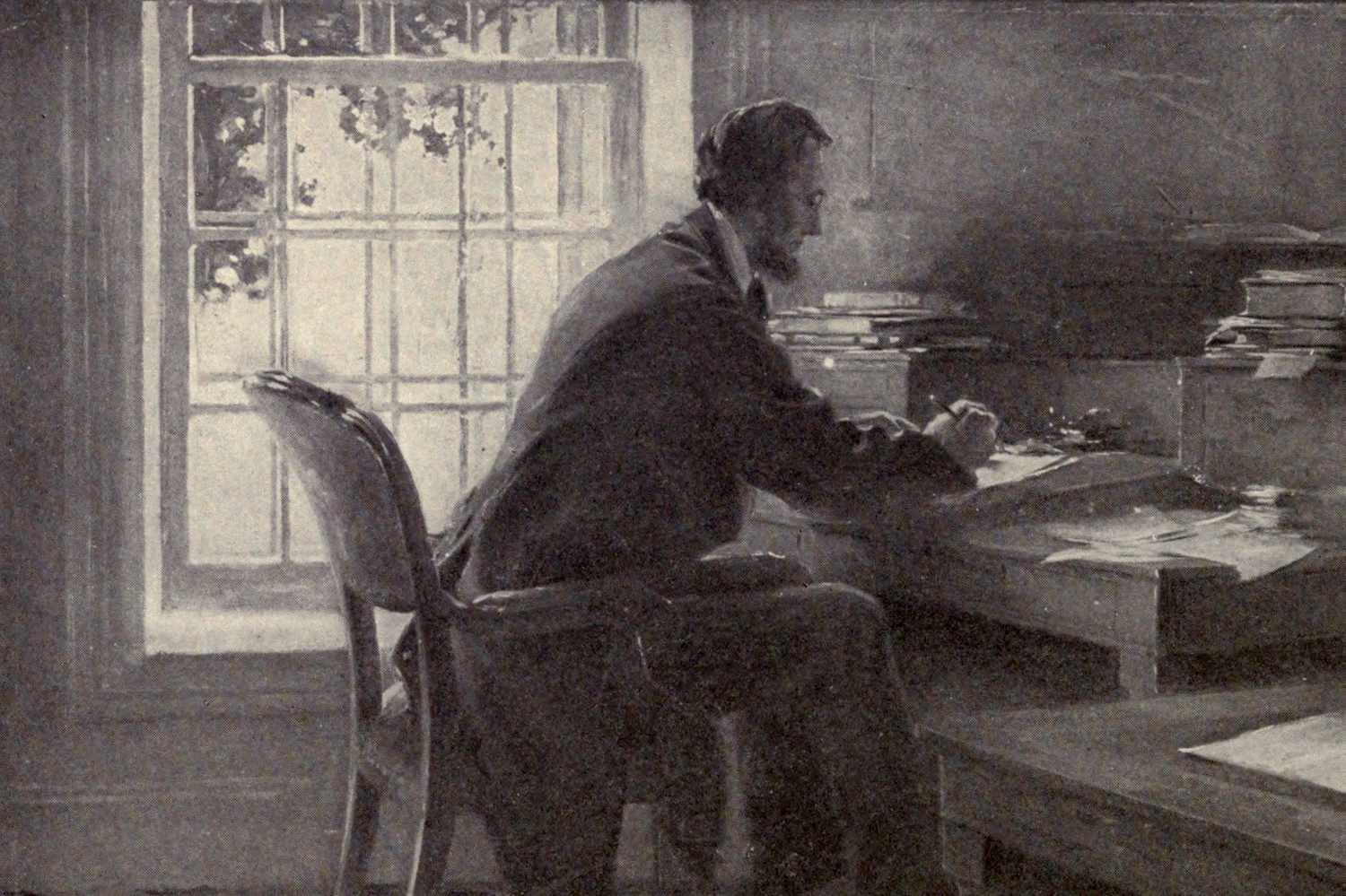
Laws are, properly speaking, only the conditions of civil association. The people, being subject to the laws, ought to be their author: the conditions of the society ought to be regulated solely by those who come together to form it. —Jean-Jacques Rousseau, The Social Contract, Book II, Chapter VI.
Man is the law. Man makes the law and so must always be at war with himself. The constraints of life are not merely personal but are also institutional. At every corner of life, one is met with decisions that make demands on a man’s moral faculties. We are constantly living according to some implicit rule. Nowhere is man free but at the altar of his own mind. Where the crowd goes, there go the rabble and the rude, the vicious and the evil, the stupid and the vain. One can never exhaust the supply of insults that deserve, at all times, to be tossed at the herd.
Humanity is a band of savages, and in that humanness came the need to establish law. Law and order—always in unison. There was, implicit from the start, the connection of rules with order. The “rules-based order”? Perhaps, but not as we understand it today.
If Giambattista Vico is to be trusted, the first lawmakers were the poets. The honor of engraving on tablets the customary habits of a society was given to those who were best able to place in words the real-life images found in the actions of man. Long before Vico, in his Poetics, Aristotle was the first to express in prose what the skill of a poet was: one who imitates nature in words—words given life by the meter and rhythm of the thing described. Skilled in the craft of wordsmithing, and with their words influencing the minds and attitudes of the people, it was almost a given that those who would come to regulate society were those who were most influential. As it also happened, the poets were the first of the priestly class—but more on this later.
When societies organized and grew to a certain level of sophistication, more laws were necessary, and so, more people who specialized in the crafting of laws. Laws by the time of the Roman Republic were no longer crafted by poets but by actual lawyers. Poets, having their sympathies more with the suffering than the powerful, were seen as a threat to the social order, and so were turned into playwrights, scribes, or priests—entertainers and propagandists—and so they have remained, more or less. A doubtful eye is always cast on poets for that very reason; a constant association with the powerful has led to them being tarnished in the eyes of the public, and I would say for good reason.
Poets have a duty to not only be truthful to themselves but to the morals which move them to write in the first place. A person who writes at the request of another is no true writer, and certainly not a poet. A poet must be the freest of all writers, for their subject matter requires one to look at reality as it really is, rather than as it ought to be. To say it another way: in the use of verbs, an image must be painted, and that image must correspond to reality rather than an ideal.
What makes a law authoritative isn’t the fact that it’s written down, but that people follow it instinctually. Laws are values codified, nothing more. If a society suddenly valued a thing and wanted protection against the abuse of it, it would be made into a law shortly thereafter in order to avoid conflict. In the very beginning, before man even developed poetic capacity, there was no law to speak of, but rather habits of character that were adaptive to the environment. When man moved beyond his primitive privation and found the “light of Prometheus,” so to speak, persuasion became an option rather than force to get another to do what you wanted. In that sense—and this is Nietzsche’s argument, though not given justice by me here—reason was an alternative kind of power: a power of intellect rather than physical strength, which still allowed for a drive to be accomplished, or at least advanced, in some way.
The legitimizing force of the law was no longer force alone, but rather socialization maintained through taboo and memory. The intellect was now “turned on” for man, and the poet suddenly found himself flush with power, using the elegance of his verse to convince or dissuade the actions of a whole tribe. With this came a new kind of power never before extant: social power. If a single man could command an entire society, that society effectively becomes an extension of his will. And with this extension of will came the vice of dominion: a sudden desire to conquer other people for no other reason than the leader can, now that they have their whole society at their behest. Though it should be said here that poets themselves were rarely of the bent to gain power through traditional (military) means; they preferred, rather, to gain influence amongst the populace through their poems, plays, hymns, maxims, and adages.
With reason came arguments rather than violence, and so it suddenly became a lot safer to express yourself—so long as what you said was generally agreed upon. And what was agreed upon by most was already considered the case in the eyes of the ruler. Even in the earliest forms of society, the values the populace generally adopted were of such a kind that they always agreed implicitly with the ruler. Mankind has seemingly never gone beyond the impulse to obey another rather than to obey the self. When reason was in the ascendant for man—which it has yet to free itself from—the organization of society suddenly became a lot easier.
Instead of tribes of no more than a hundred people constantly fighting out of instinct from the implicit differences in the drives of everyone, reason was handed over to the mind in order to make all of common understanding. All the power was still vested in a leader figure, but disputes were no longer handled—by man, that is—in the manner they still are in the African savanna today: through force. A tribe of chimpanzees today resembles primitive man closer than we moderns do, in all honesty.
The original tribal leaders were made so on account of their force and ability to command others. When man civilized a bit, however, reason was more often employed, and values (law) became legislated—that is, set down in writing and established by punishing those who went against the prescriptions. That’s the origin of memory, by the way: torture and misery inflicted upon those who went against the prescribed values, which over time fossilized into self-evident habits—wretched customs which would go on to influence culture and morality alike.
All early lawmakers were poets, but not all poets were lawmakers. For example, neither Homer nor Hesiod was a founder of an empire—one was a blind bard and the other was a simple farmer with a knack for verse. Another example that comes to mind is Aesop, a hunchback slave who still teaches children morality today through fables. Those who were lawmakers, however, were (almost always) simultaneously military commanders. Think of men like Solon or Lycurgus. And if not poets, ancient military commanders were still very much influenced by poets, priests, sibyls, soothsayers, and fortune tellers alike. Men back then may have had reason, but not entirely in the way we mean it today.
What legitimized a lawmaker, should they not be a poet (but military commanders), was their connection to the Gods. A genealogy, on that basis, was always constructed by priests or state-sponsored poets, who were always subordinate to the ruler for the sake of giving the populace a reason to affirm the laws laid down by the ruler. In this, we have reason being used as an alternative to draconian measures, which has always proved more successful all throughout history, as both Aristotle and Machiavelli show. There must always be a factor of legitimation in all forms of government; otherwise, an arbitrary ruler is seen, rightly, as a tyrant and is therefore quickly dethroned in either a revolution by the populace or in a military coup. As an example, it’s often said today that Virgil wrote The Aeneid as a way to legitimize the reign of Augustus by showing his lineage traces all the way back to Romulus, who himself is a descendant of Aeneas, who married Lavinia.
Once a ruler is established, has the laws behind him, and a populace that recognizes his authority, he’s more or less free to take his society wherever he wants—and this is the precise impulse which leads not only to culture but to war, and in some cases (like with Alexander the Great and Genghis Khan), both. By commanding the people and disciplining the army, both done through the use of persuasion, a ruler can endear the public to his ambitions and can make the army loyal to him.
For the public, the persuasion is couched in the language of protection, security, and defense; while for the army, they’re persuaded through the glory of victory, the allure of battle, the attainment of spoils, and the ability to defeat and subjugate another society at their whim. One need only read Grotius, specifically his On the Law of War and Peace, to see the veracity of all that has been said thus far.
And so you have it. Law, in its original conception, is established on consensus and maintained over time through the populace shaping their values around the laws themselves. As said earlier, laws are nothing more than values codified; and so, whatever is written down reveals more the spirit of the age rather than a universal truth of any kind. For example, and this may shock many, the first canon in the First Council of Nicaea was on the prohibition of castration—which really shows you how common it was during the early 4th century. Laws only ever reveal what a population values in that moment of time rather than anything else. This has always been the case.
Nietzsche was really the first person to make the connection between reason, values, and societal organization. The ultimate takeaway from Nietzsche’s genealogical method is that reason itself, as an activity, is the beginning of all modern values, going all the way back to Athens; and from that travesty was born modernity as we know it: the love child of decadent values, bad ideals, and sickening moral evaluations. After enough time of this degeneracy, laws themselves lose all meaning. By this point, the end of all law is no longer the prevention of crime—which was maintained through guilt and the threat of punishment—for a reevaluation of values has taken place that has rendered all former laws null and void. This marks the restart of moral evaluations and thus ushers in a new age for lawgivers to provide the people a new set of values to adopt—hopefully not in the same manner history has shown us they’re usually adopted.
Hence why Nietzsche called his Zarathustra the “fifth gospel.” Nietzsche knew before anyone else that things were going only in one direction—down!—and that when the collapse finally does come, it’s up to those future visionaries—those readers of Nietzsche, those free-spirits—to remake the world after the manner of Zarathustra: to give everyone life-affirming values; to make everyone cognizant of their own powers; to usher in an age of splendor, beauty, culture, strength, and lawfulness never before seen in history; and, finally, to make way for the Übermensch. That is the end of all law: the overthrow of it completely as a concept by men who no longer need laws, for they are the law—they are the representative men: they are the Übermensch!
Laws, the moment they became detached from the poet, became standardized in the form of codes and tables. We see this perhaps most famously in the Roman Lex Duodecim Tabularum (Twelve Tables). Though men like Moses and Muhammad claimed to receive commandments not to be broken from on high, we today can safely consider them nothing more than prophets who were really convincing to a foolish audience. History is not exactly short of charismatic men who’ve managed to build entire cult followings around them. In some cases, some of those men go on to also influence the course of history, and in turn get to turn their values into law, and thus make it a part of the culture itself, which is what makes those values life-denying in the first place—for they don’t allow the average folk, the non-intellectuals and anti-free-spirits, to think outside of that moral evaluation.
One cannot relegate themselves to this or that value unless the value itself is in accordance with themselves. Protagoras was ahead of his time when he said, “Man is the measure of all things.” It may have been better put, however, if he said man is the evaluator of all things. I know no more self-evident truth than that. That man evaluates.
That man is subjective in himself but objective to all those who are not himself is, to me, as foundational as the law of identity. A human being can never look past themselves. Man can only experience himself in the present as the present presents itself to them. There is no reason behind what we are, only that we are; and that we must make use of this consciousness—this glorious life, this powerful experience—in some way that is profitable to ourselves and, if we’re lucky, to another that we love.
I find in law nothing more than the insecurities of men. I find in every self-imposed rule only the prejudices of one who has only ever been a life-denier. Anyone who actually proclaims a law proclaims a hidden malcontent that they’re trying to cauterize before it turns into a pathology. These sickly people cannot deal with the fact of others acting contrary to what they value. They cannot withstand an encounter with weaker values; and so, instead of trying to overcome what is troubling to them, they want to ban it outright and wish all would act as they do. This is surely the weakest mentality possible for a person to hold. I am only strengthened in this opinion when I look at the example of Friedrich Nietzsche: the sickly man who overcame his sickness through force of will alone. Nietzsche said:
For what purpose humanity is there should not even concern us: why you are there, that you should ask yourself: and if you have no ready answer, then set for yourself goals, high and noble goals, and perish in pursuit of them! I know of no better life purpose than to perish in attempting the great and the impossible. —Unpublished Note.
And in this, I too find my purpose in life: to make strong and noble goals for myself, and in making them, find myself willing to die pursuing them; to set for myself that which is great and impossible, made by me and attempted by me, and in attempting it, thinking it possible.
My goal ultimately? To love her to whom I would give life itself to have! Oh, my dearest, dearest R—, how much you mean to me, how much you are to me, to me—my everything! My truest love. My immortal beloved.
Let passion of this kind reign for all time! All I know, I know because I have loved. My values are strong precisely because I based them all on love and nothing less. The strongest values are those made only in love. Love, dammit. Love, and you shall have no need for law at all—for your values will become the law; a thing impossible so long as you’re false to yourself. Let that be the only law: honesty. All else is vain commentary.