
Life and Death
34th installment to my philosophical system.

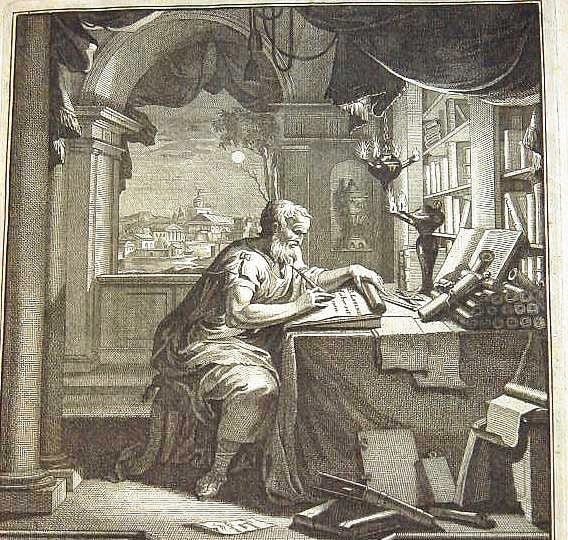
Nothing is presented to man with more certainty than his own life; and nothing in his life shows greater indication than his own eventual death.
Man is a mystery, a mystique, an utterly confused and absurd particular whose consciousness is a constant reminder of his own confusion.
Today, what constitutes the life of an individual is so mundane and boring it’s shocking to anyone with an eye for the lively why they persist in living. If the world isn’t already obvious—even to the most dense, thickheaded fools—then it assuredly will be when the last cubic meter of air has been expelled from their lungs, and a dark haziness begins to grow over their eyes, and they see the life of the world for what it truly is—that is, what it ultimately leads to—death.
Man thinks of himself in terms of the living. While he breathes, however, the shallowness of each breath becomes apparent to him with the passing of each day. The constant agitation which the body is convulsed in at every moment, though we be unaware of it mostly, is a cause for rumination in my book. What is this thing we call life? A greater presumption, I feel, could not be made when we are forced to answer the call of life for the sake of feeling a part of the living.
The agitation which we are constantly in is a direct byproduct of this very presumption:—we presume to live, though we die every second, and yet, either out of language or tradition, cowardice or custom, folly, vanity or obfuscation of our inner sufferings, we tell ourselves that we live, or rather, they live—those who are not us but are living together with us, though not alongside us in a direct way.
This confusion is the whole epitome of man, for after all, man has only ever been a miserable little pile of secrets. The world is seen only through man’s eyes, and so naturally it would be assumed that everything in it concerns him, and only him—but when viewed from a much broader perspective, a much more realistic perspective that is, he sees his own insignificance and rebels against it—against the idea that he only lives in order to die, and nothing ever-after more than just that sad reality. So be it, however: man looks everywhere but in himself to see the truth of that undeniable claim—nay, fact—and thus concerns himself in things which are only of this world.
Man, thinking only in a false dichotomy, believes that if he cannot have the truth, he must begrudgingly accept a lie, a Hinterwelt (Heaven, Jannah, Olam Ha-Ba—the World to Come) in order to feel at peace with his own lived reality here. It is either, man feels, that his earthly life is miserable—and so must be a lie—or only temporary and not really final—and so must be continued on in some way afterwards; there’s no in-between because he cannot accept contradiction, not realizing that if he accepts contradiction as necessary, and as something to overcome, he can push past this inculcated fear (which is really a false and stupid thing to be afraid of) and start living life as if life itself, and the world more generally which he inhabits, weren’t a barrier to him.
But let me speak of contradiction a bit more—for life and death necessitate a discourse equivalent to the universe in magnitude, but given the shortness of life and the limited attention of the reader, it is necessary to simplify the whole encyclopedia of man into a single phrase—just as Francis Bacon was wont to do. But I always held the contrary view: no matter how pithy and exquisite your maxim or adage on life was, man will always need more in order to deal with the constant flux of life (the ever-rattling contradictions which necessarily face him as he lives) in order to find peace and solace in his confusion. Thus, what is really needed is a kind of Bible, something so vast it could never be read over and over without new insights appearing here and there.
Sure, it can be argued a single quote contains an entire book of insight—and each time it is read a new book appears—but for the practical man, the man in a hurry, it is better he have in hand a book he will never read, in order to give the appearance of someone very busy and deep in esoteric things, when in truth he only holds the book up because it is big, and glancing at it gives him an imposing aspect, as someone greater than he really is.
If I were to hold myself to some restraint in thought, it would take a decade for me to write a single paragraph; so condensed would my thoughts be that even to myself they would appear absurd and confusing, just like my own life. I suppose it could be argued the whole of life should really be lived after the fashion it presents itself to one, but life would be very uninteresting if it were impossible to ruin it for yourself—to act rightly without worry, without having any thought of potential disaster or fear of loss.
I’ve come to accept the fact that no matter how much one knows, they could never know enough to not fear uncertainty in life; even if you lived with the same consistency and regularity of Immanuel Kant, your life would still be at the whims of chance and misfortune, for your life depends almost entirely on others, who have the thankless task of maintaining society by not going insane at the thought of existence—and who have the very real responsibility of keeping themselves alive by whatever means necessary. Whether they be a loafer or a workaholic, a man has got to eat and have a roof over his head.
The material conditions which Marx speaks of so elegantly and cogently bear very much on this reality: man cannot be a man if he lacks the means to maintain himself as a man—that is, the requisite conditions necessary for the epoch he is born into. It’s a point that has some inkling in Rousseau, and even goes as far back as Leibniz and Cardano, but which is really only a modern problem precisely because the consciousness of man is tied to his ability to recognize his own material needs, and his capacity to obtain them not out of the ground which he tills—like in the case of the European serfs during the Middle Ages, or African slaves during the Enlightenment period (what illumination it was)—but in his ability to perform some service, or repetitive task that really could be automated, in order to be paid in the form of wages in order to afford the same commodities he just had a hand in making.
Or, better yet, to pay a bank (a mawkish, avaricious middleman whose sole purpose is to lend out money—not his own—in order to receive payments in the form of interest, and in the process of doing so charging a service fee for no other reason than out of necessity, otherwise you would be barred from banking entirely) or landlord (whose sole purpose is to derive profit from a person already without any for the “privilege” of living on land which he has no claim to other than “owning” the residence it sits upon—the total Georgist victory could not come sooner) just to live under a roof. What a staggeringly complex situation we moderns find ourselves in; it isn’t even fair to call it “being stuck between a rock and a hard place,” but rather to call it “being stuck between an ultimatum and death”; for that’s ultimately what the current power structure is offering—either you play by the rules “fairly” (rules totally not stacked against anyone and without doubt capable of being overcome with enough hard work and perseverance and elbow grease and selling your every waking hour to some occupation, etc., etc.) or you die.
You see how this contradiction rears its ugly head into every aspect of life, because you necessarily have to engage with it in order to live. Being born in the world today feels like being stuck on a really bad roller coaster, and the only way off it is to endure it until it reaches the end; however, in this analogy, the end of life is death, and to live is really only to suffer through it—does one not see now why everything appears so hopeless and meaningless? Why this contradiction is nearly impossible for most to endure, and if they can, it is only because they have accustomed themselves to the dolor animi (mental pain) which they are faced with every second of existence.
On this very topic, no one even approaches a nihilist or existentialist when it comes to truly grappling with the core problem of existence; indeed, the problem of existence strictly falls within the domain of the religious, the spiritual, the existential, and the nihilistic—all meaning is bound to end in tears because tears are the only relief one can receive that is any use at all when confronted by the complete incomprehensibility of life itself. To be specific, I have, in no particular order, men and women like Augustine, Meister Eckhart, Montaigne, Madame Guyon, Shakespeare, Pascal, Vauvenargues, Chamfort, Jules Lequier, Kierkegaard, Nietzsche, Dostoevsky, Lev Shestov, and Camus as the greatest and most thorough communicators on existence there has ever been.
To live is the greatest of all contradictions, for it evades effortlessly all attempts to systematize it, or mathematize it, or, in a word, reduce it to the point of making it like a science—that is, to make it conformable to our hypotheses about it. A hypothesis is a type of subjective reasoning, in which the subject feels they have thought a good idea that may give insight into the nature of a thing’s mechanism: how a thing works, what a thing can do given the nature of it.
To ask for the nature of a thing is really to demand an impossibility, like asking why you exist: the concept of life already contains within it consciousness, that is, apperception—self-awareness of existence itself—and so has implicit within it the idea that it is already present and existing, not something that once was not existent and now suddenly is, but rather becomes itself through recognizing what it is, what its essence is as implied in its being as such.
It is a very difficult thing to even put into words precisely because words fail us when communicating what our minds have never been able to grasp; that is why when speaking of the ineffable, one must resort either to repetition or speaking in the negative—affirming what a thing is not rather than what a thing appears to be, for appearances are but representations, and thus in an absolute sense really nothing but abstractions born in the mind from experience.
But this contradiction, again, is omnipotent, for no conceivable conception can hope to apprehend it in its totality; when we speak of life, we really only refer to death, because death is a kind of absolute that has no referent in anything aside from the concept of nothingness, non-being, anti-life, without soul or, better put, without meaning for life, for it is the very negation of life. But how is one to speak of contradiction then? Let us examine this a bit closer now.
Every contradiction presents itself as something to be overcome rather than understood in a direct way; and, it just so happens that life and death are the greatest contradictions ever conceived by man. Not even the law of identity really does justice to true contradiction, because it only posits itself in relation to what it is not (as every colloquial understanding would bow to), but in doing this has no concept of what it is becoming, or what it may be in the future as it recognizes itself in-itself for-itself, but not for-an-other—here I mean in the Hegelian/paraconsistent sense.
This flaw of reasoning which has reigned since Aristotle—for he was the first in the Western tradition to really consider all things encyclopedically—has given us very good but now very restrictive, I dare say obsolete, modes of affirming and negating concepts, which has become so pervasive that nearly everybody who is educated today cannot think outside of dichotomies or simplifications or reductions or reifications (the treating of abstract concepts, models, or hypothetical constructs as concrete, physical, or real-world entities).
The only way to speak on life and death, and in that way bypassing their internal contradictions, is to treat them in a life or death manner—as a thing of utmost importance, a thing nearly beyond the pale—nay, is far and away beyond the pale, but which you must wrestle with fully and totally anyway in order to live. To even speak on these things requires an astonishing amount of courage, for very few are able to burrow deep into the recesses of their being, the abyss of their individuality, and come out sane or actually informed on anything. Usually it ends in madness if history is to judge—going insane or ending in despair are the two most common hallmarks of a mind stretched out on the rack of concepts far beyond what it can psychically go. It really requires a mind of immense fortitude to enter into itself without worrying about how ignorant you actually are about yourself.
I say all this from personal experience:—dear reader, take it from me, you do not, and will not, ever find yourself (who you are as an individual human being) in the study of history, literature, philosophy, or science: you’ll only come out like me, being really good at synthesizing vast swaths of information, facts, dates, figures, and technical jargon, but utterly lost as to how to use all of that to explain yourself to yourself. You can only explain yourself in terms of yourself, in terms of what you’ve been, what you are, and what you will be.
Everything is a becoming, not a static, rigid abstraction which can only be thought but never brought into reality. In order for anything to have any existential value, it must be lived out in the concrete, rather than lived in the abstract—as merely a thing which one can call to mind but which can never be acted out on, only acted in the mind, but not in the real world, where things come and go and move here and there and everywhere all without your slightest notice.
My philosophy is a philosophy of awakening. It is heavily influenced, indeed may honestly be called, a modern form of Transcendentalism. Action, like perception, is transcendental, and it is so because it unifies reason and feeling into one cohesive framework—where reason here is rationalism and feeling is empiricism. Everyone already familiar with Kant’s Copernican revolution (the synthetic a priori) will know that his transcendental deductions formed the whole basis of what became post-Kantian idealism, where the new paradigm was to find categories of the mind which could reconcile emotion with reason, sensation with material reality—what I would call today the war between positive thinkers and realist thinkers (realist not in the metaphysical sense, but in the pragmatic-practical sense). That is, on the one hand, thinkers driven primarily by positive affirmations, and on the other, thinkers solely focused on outcomes and results derived from logical procedures which were thought to work given their past performance.
The whole world is really divided between these two types of thinking, and yet, I know full well that everything I’ve just said is really a lie, because, if we are to speak in an absolute sense—which anti-realists in the practical sense of that term deny outright—we have only provided our prejudices regarding mankind, and how they think, and what they assume to be true based on their own subjective frameworks of veracity and conceivability. It is a lie if it is meant in an absolute sense, and it is merely an educated guess if it is meant in a pragmatic sense: in fact, that is all it can be, pragmatic:—pragmatism as the mode of reconciliation. The reconciliation of reason and feeling is only possible in a contradictory, non-dichotomous way; they must appear only in lived experience—everything else is folly. Life necessitates contradiction, and I mean that with the same authority reserved for atomic theory, evolutionary theory, and the germ theory of disease—nay more, going further back into intellectual history, with the same seriousness that geocentrism was once treated, or astrology, or Aristotelian metaphysics, perhaps Thomism even.
There is a famous quote by H. P. Lovecraft that speaks of the greatest fear in the world, and it goes as follows:
The most merciful thing in the world, I think, is the inability of the human mind to correlate all its contents. We live on a placid island of ignorance in the midst of black seas of infinity, and it was not meant that we should voyage far. The sciences, each straining in its own direction, have hitherto harmed us little; but some day the piecing together of dissociated knowledge will open up such terrifying vistas of reality, and of our frightful position therein, that we shall either go mad from the revelation or flee from the light into the peace and safety of a new dark age.
In enlightenment—there lies our fear. There is no end to our benightedness in the world; what we even dare to consider in it is something which, were we to venture deeper into it, would leave us with a strong sense of dread—an emptiness of unimaginable proportions, so vast, in fact, that we would conclude with the same certainty of our death, that no amount of prescience, or clairvoyance, would illuminate the dark undercroft which we are perpetually walking through in this world. The world is a constant night to man, in which all his concepts appear black, and thus give him the aspect of intelligence by merely labeling every object he comes in contact with as black, in the same way a logician labels all propositions as either analytic or synthetic. I find it all very boring, and not really enlightening on a personal (existential) level.
Life is, as an idea, so obvious and intuitive you would think no one would have to explain it; but the simplest things often hide the wildest paradoxes, or, in my experience, contain the most miraculous contradictions which even dialectics and pragmatics is incapable of overcoming—and yet it must be overcome, it must be, has to be, needs to be, for without that, there is no living, only thought, only Le Penseur, after the manner of Rodin.
To go back to Lovecraft, it is exactly in our inability to correlate all our contents that makes life comprehensible and livable, otherwise it would be impossible to even breathe within such an existence. Anyone stupid enough to presume that life has a single answer to it simply has not lived life, but only reflected on life; and those who take life only for what it is, and fail to see that there is more beyond it by merely looking within it, have only considered life practically, aesthetically—not ethically or existentially, religiously or spiritually.
How many times must it be repeated? To the point of dying of despair, I would suppose. It was Kierkegaard, after all, who was the first to identify despair as the only reasonable action to come to if the leap of faith was not taken with respect to life. What makes life existential is death, and everything else considered in it is bound to go unnoticed with each passing second. It is for that reason that it must be thought of dialectically—where the feelings and reasons of man are both given equal ground to graze in the walk of life. Life is death as it is lived through, and death is the end of life—forevermore.