
Logic
12th installment to my philosophical system.

Everyone today likes to think themselves in the good graces of logic, but only a cursory observation of their habits of thinking proves them completely otherwise—in fact, they shun logic. Never before in the history of the world has an “educated” populace proven itself so utterly foolish with regards to every kind of thinking: from mathematical, to analytical, to deductive, to inductive, to even plain “common sense,” or everyday reasoning. The whole of mankind seems utterly incapable of following even the most basic line of reasoning. People think it beyond them to try and grasp the world, and so they go through most of it utterly ignorant.
The general lack of appreciation that is commonplace for education is a very clear sign that whatever narrative they were told regarding education has fallen flat, and so, turned off by this betrayal, they rebel against all reason and logic as such, and find themselves in a manacle of ignorance from which they can never break out. This ignorance, in turn, perpetuates itself throughout the generations, until it becomes common among the collective, and thus is taken as the norm—as if that was the way things always were. Such misunderstanding and lack of avidity toward intellectual pursuits has turned logic into what it is today: a tool used by liars, lawyers, pundits, propagandists, sophists, swindlers, con artists, and rhetoricians for the sake of convincing other stupid people of their bare-faced lies.
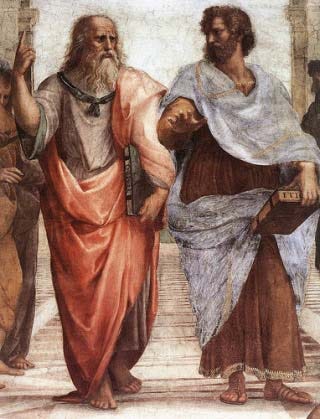
Logic was man’s greatest attempt to systematize the world, to place it under a single banner of understanding. Logic, in short, is nothing more than a system of reasoning about the world in a formalized manner. Born in the mind of Aristotle, its initial purpose was to turn thinking into a science. What Aristotle envisioned was a way for any statement about reality to be categorized under certain criteria from which its veracity (the truth of its conclusion) could be determined through an analysis of its premises. Prior to this, man had only arrived at logic through intuition, a feel for what was right in the course of reasoning; after Aristotle, however, every potential truth about the world could be formalized—or so everyone thought.
What most people think of when they hear the word logic today is what is known as term logic, formerly called Aristotelian logic; and this is a great tragedy, for it completely ignores every advancement made since Aristotle, and consigns logic to merely an analysis of premises within syllogistic form. It deliberately narrows the view by which people can comprehend the world, and makes it seem as if that were the only form of logic there was—completely ignoring all the various systems of logic that transcend the traditional method, and go well beyond the ordinary categories of soundness, validity, and contradiction.
While Aristotle is to be praised for his efforts—as is every other logician after him—he is not to be slavishly adhered to like some dogmatic gospel that proclaims total truth. What is great in man is not only that he is rational, but that he can overcome the rational; that he can move beyond himself, and adopt a form of thinking that conforms to his life alone. Logic reveals nothing to man that isn’t already obvious. All logic does is dress up a “truth” in formal garb to appear authoritative, like a Catholic priest putting on his gold and white robe with a symbol of the cross on it to prove to his congregation he’s a very pious and holy man whose word is to be taken seriously. Logic formalizes and finalizes claims about reality that can be put into syllogistic form; which is to say that every result in logic is merely an exercise in setting the right premises to a conclusion that experience has already validated. And thus, Schopenhauer rightly exposed the true nature of logic when he said,
Logic can never be of any practical use, but only of theoretical interest for philosophy... For it may be said of logic as of other sciences, that it does not show us how to think, but only how we have thought. — The World as Will and Representation, Volume 1, Book 1, Section 9.
Logic makes formal that which is already intuitive within the mind, for humans reason by nature and draw conclusions from experience in the concrete. Again, all logic does is take every concrete experience and generalize it into a system by which future experience can be similarly approached for the sake of making it appear reasonable. Logic has no practical use, only utility for philosophers and those wishing to appear smart. It is no wonder, then, why it is such a powerful tool—taking things in the general case, and revealing why they apply to all specific cases. If one is skilled in this art, they can reason their way out of anything, but they can also use it to make reasonable an avalanche of logical fallacies and cognitive biases which everyone is prone to, and none immune to absolutely. Such is why falsity is the rule of the day, because those with the biggest pockets, and access to the largest talent pools, can pick up any orator or philosophaster and have them make falsehood into truth.
Outrage, sensation, scandal, lies, falsehood, and other such claptrap are what run the world of media, and what gets passed off as news today; this is why every narrative in modernity is, in a very real sense, complete nonsense—because it’s already filtered through ten different biases before it’s placed before the public as official, and made to wreak havoc on every mind interested in the validity of it. “Show me facts! Show me facts!” they all cry, but where were these same yells when one grew bold enough to turn logic on itself, and questioned its own validity? Instantly do the placards come down, and every vanguard of reason is turned pale by the prospect, and shuffles back into the shadow of agnosticism. Such a state of things would make one question the intents of logic, and rightfully so. What use has logic ever had for man beyond being a tool used to justify what he already knows or believes to be the case?
I suppose this is where truth as a concept turns black, and decays before all as a shriveled and antiquated notion. Logic, for seemingly all of history, has been the single most powerful weapon for upholding truth; it has used its antiquity and noble tradition to stun all with a blow from its authoritative heel—so powerful, in fact, that to question it seems like the height of lunacy; but what genius fears being called insane, already having a bit of it in him? Logic reveals the general in the particular. From the specific case, we reason rightly and receive a self-justification for making our pontifications upon it as general, and thus “true.” But what does true mean in this context? True as an arrow flies? That external reality corresponds with our abstracted explanation of it? From my pragmatic lens, the question is meaningless. I presuppose that reality has no noumenal aspect to it, and I assume that from Occam’s razor, as well as from my own intuition regarding the world as it appears before me, and my temperament. In my view, anyone who claims to have access to the thing-in-itself, which supposedly lies beyond our perception of the world as such, is no different from Plato talking about Atlantis, or Aesop talking about frogs, birds, hares, or foxes—it’s a narrative you tell yourself for the sake of easing your mind when confronted by that which is incomprehensible.
Now, anyone skilled in logic, or philosophical debate in general, would probably retort with a valid parity of my presupposition: “If you assume reality to have no noumenal aspect, what’s stopping someone from claiming the opposite? If both are presupposed, and neither has evidence for or against one another, why not pick your poison subjectively?” And to this I would say, “Well done. You have rightly spotted precisely what I wanted you to: both are equally valid (or invalid, depending on how you look at it), and so, whichever one you pick is ultimately hopeless from a logical standpoint, but not without serious purpose from a pragmatic, or existential, standpoint.” Logic is, and always has been, the maidservant to truth; but truth—like every other abstraction which philosophers throughout the centuries have wrongly placed above themselves—has always been a lie from the start, and thus all collapses into a void of epistemic nihilism. And at once do I return to my earlier point.
Man today must have a pragmatic air about him in everything he does, and must treat logic like a teacher treats a slow student—with patience and sympathy, but not too much indulgence or cruelty. In order to surpass logic—to go beyond those feeble notions of soundness, validity, and contradiction—one must first get over the notion of truth. Truth is an interpretation, an evaluation, a feeling—in essence, a kind of subjectivity that makes the logical real, and all real logical. Real is that which appears before us in our perception. Logical is that which is abstracted from experience for the sake of making said perception comprehensible. Like overlapping circles, subjectivity contains both the subjective side of reality and the objective side of reality. (It should be noted, too, that by objective I do not mean the Platonic notion of mind-independent truth—but rather, in the Kantian sense, that which lies outside of the subject, an object for the subject, for experience itself.)
The instant truth becomes subjective, the dialectic takes over, and all former systems of logic—obsequious toward formality and definitions of little utility—become paraconsistent, that is, true in specific contexts, and allowed to be reasoned through without contradictions hindering the investigation; in fact, contradictions are necessary in order to bring about a higher synthesis. This is, in my view, the most powerful method of philosophizing ever devised by man. Not only is it the most general, but it has the most existential utility, and can make logic a tool for existence, rather than a stale form of analysis which only holds for a handful of cases, which are themselves extremely boring in theory and worthless in practice.
To overcome logic is to overcome truth, and to overcome truth is to become subjective in an absolute sense. Dialectical logic is the foundation of Hegel’s Wissenschaft der Logik (Science of Logic), and was the precise tool used by Kierkegaard in all his analyses of subjectivity—specifically in his category of the single individual and in his theory of stages; Nietzsche went even beyond this by questioning logic itself, and affirming no real “objective” system of epistemology, but rather employing his concept of perspectivism, which was arrived at independently by William James in his philosophy of pragmatism. Dialectics is the philosophical tool by which all contradictions may be wrestled with, and eventually overcome, though only after immense sacrifice and deliberation, from which you may still emerge unsure.
The nature of the method necessitates uncertainty, for in uncertainty lies the truest core of subjectivity, and in subjectivity lies every truth the human heart ever conceived. A true nihilist has never existed, in the same way a true relativist has never existed; every human that has ever lived has valued one thing over another, and in that sense became dialectical, for in order to choose one over the other requires a leap into that which no traditional approach to reason or logic could ever provide for. I sometimes wish I could even surpass my need to evaluate—to do without concepts and abstractions within reality—and simply live on brute instinct, like a tiger or antelope; but so long as I am condemned to be just a man, and not an Übermensch, I am forever chained to my desire to validate the world in my conceptions of it. Thus, man is forever to be like a child when confronted by the whole of his nature—a complete abyss which no genius throughout history, no matter how precocious or awe-inspiring, has ever been able to pierce through and reveal its hidden contents.
Such is why Nietzsche urgently warned any man attempting to comprehend life that, “Whoever fights monsters should see to it that in the process he does not become a monster. And when you look long into an abyss, the abyss also looks into you.” In my philosophy of subjectivity, looking into the abyss is the quintessence of upliftment—for one must first have a courage strong enough to even dare such a look, and thus must collect themselves for the prolonged staring contest that is to ensue from such a bold move: the boldest move in all of history! History is beholden to truth, for truth is merely the expression of that which is valued above all others, epistemologically at least. Mankind has received a very bad blow indeed from its obsession with logical proof, irrefutability, and absolute certainty in all things: as if the nature of man’s mind were like an automaton, a clock, a mechanism, a computer, and every other analogy that rationalists have hurled toward the character of mind within man, to make everything seem like a spring with infinite elasticity. Ludicrous!
And now, with all this said, the question ultimately becomes: how is this kind of thing to be taught to the masses? Is that even a worthwhile question, considering the state of things? Let’s see. What we have today in the world is an amalgamation of stupidity the likes of which have not been seen in millennia. It is almost impossible for me to wrap my head around the fact that people today are run through a system that purports to educate them, yet the majority leave as ignorant as they were when they entered; as if every concept enters one ear and leaves the other.
People today find it immensely difficult to abstract beyond their immediate circumstances; basic questions pose great challenges, and the obvious nature of a paradox, to them, seems like a thing worth reasoning through—not seeing the futility in it. Whence comes all this ignorance? It is all too clear: from their nature. Intellect, in the academic sense at least, is not something that is born in man. What school does is prepare a man’s mind through repetition, and force him to think in a certain way that is peculiar and not intuitive to his nature; education is forced on kids, and with that comes a lack of purpose behind education—nor do most have an innate desire to become learned; and so, as a result, kids resort to viewing their education through a strictly practical lens (a lens provided to them by society at large)—in terms of what it can do for their future prospects, what kind of livelihood it can provide them with, in what way it could further their material ends: this is where education goes to die.
Education today is rational and systematic, not dialectical or maieutic. What is lacking is subjectivity. As already stated, there is no truth—only that which is useful for the individual. What is called “true” or “correct” in the context of school is that which is already established by the curriculum, and which is tested on in exams. In a very real sense, education today is the exact opposite of what it should be: instead of teaching minds to think for themselves, and to be creative in their approaches to understanding the world, they are forced to memorize and retain large swaths of information which have no relevance to their lives and which fail to hold their interest—and so, we have a system that perpetuates, generation after generation, conformist and shallow-minded morons, all the while considering the greatest (the valedictorians and salutatorians) those with the strongest long-term memory. It’s not a surprise, then, to see what the average literacy rate is in America, to say nothing of our overall incompetence in mathematics.
Until we get past this notion of standardization and consistent examinations, we shall continue to fall precipitously on the world stage, until we find ourselves in an idiocracy far greater than the one we presently reside in—which is a thought that shakes me to the core (how can we fall further into stupidity?). We all need to reevaluate what truth really means for us, and start taking pragmatism and autodidactism with seriousness. Logic has kept us chained and repressed for long enough. It is time to break loose from every old conception, and start thinking for ourselves, subjectively; and start valuing those things which really matter, while fighting for the possibility of seeing them in our own lifetime!
Thinking intellectuals, UNITE!