
Mathematics
59th installment to my philosophical system.

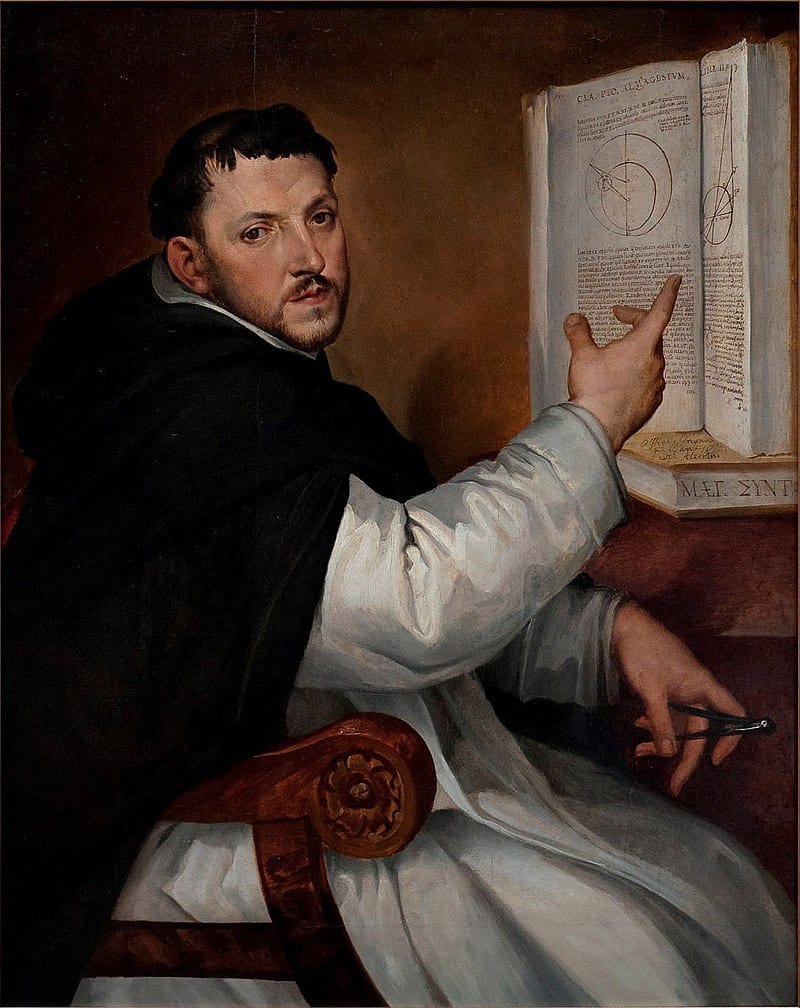
Very few subjects have transformed the world as drastically as mathematics. When one is forced to contend with number, line, and figure, they necessarily enter a world not of their own but of everyone else’s.
When a mind is feeling tired, there’s no better remedy for this lethargy than engaging in an arithmetical problem, or following the reasoning of a simple two-column proof in geometry. Speaking for myself here, when I’m struck with a particularly bad case of writer’s block, and no other technique has allowed me to overcome it, I turn to mathematics in order to relieve myself of some of the burden, and in doing so hope to find a flood of ideas rushing to me after only a few minutes of serious mathematical thinking.
The best thoughts are often those arrived at when you least expect them, and the quantity of them largely depends on how much time has passed since you last had a good one—one worthy of being written down, that is. When in a state of dull nerves, or when horrible distractions assault your mind, you often have to ponder things you normally wouldn’t, either because of their complexity or their foreignness to your current disposition. This act of pondering, however, makes you confront what is troubling to you by acquiring a certain texture of mind which makes its consideration more easily tolerable, or, if not easier, at least more positive in terms of the effect it has on your psyche.
Mathematics, like every subject developed out of practical necessity, is among the oldest and most exalted, and rightfully so in its case. Indeed, it can easily be argued that mathematics is as ancient as language itself, for one cannot discuss numbers without describing them in terms of words. Mathematics in its most primitive form was number, and number alone. It was, as far as I can see from the historical evidence, the first great abstraction mankind made with respect to the world. The earliest evidence we have of mathematical thinking is found in the Lebombo bone. Dating back roughly 40,000 years, the Lebombo bone is the world’s oldest known mathematical artifact. Discovered in the 1970s between South Africa and Eswatini, this notched baboon fibula likely served as a tally stick, lunar calendar, or menstrual tracker.
This seeming necessity to quantify and objectify the world in abstraction first, in order to say something positive about it in concrete second, has led many great minds to consider mathematics as a system of formalizations that derive their seeming universality not from their common agreement among men, but from the seemingly necessary a priori nature of their arrival in the brains of men. If this were a thing simple to relate, I would do so. But because we’re touching on a discovery first propounded by Kant, it necessarily has to be couched in a prolix, hackneyed language that is totally jargon-laden—heavy with analytical-synthetic a priori–a posteriori distinctions (if that even makes sense).
When one abstracts objects from the world, they turn objective perception into a subjective interpretation of sensual data, derived externally to us. In this, we have a kind of subject-object foreplay: where the being that perceives the world (the subject) understands its contents (the objects) only after they have passed through the mind’s already configured perceptual apparatus—organized in the head, and assumed to be as it actually appears. The world is subjective and objective: here I mean these terms not in the epistemological sense (as is typically, and I think wrongly, assumed in philosophical discourse today) but in the ontological (metaphysical) sense. I use them in the same manner Kant and Schopenhauer did, essentially—all that which belongs to the subject is subjective, and all things which exist for the subject, but are not the subject in themselves, fall under the category of objects: all things outside the subject externally but which receive recognition by the subject internally (subjectively). All of this is expressed beautifully and more clearly, in fact, in the very first paragraph of Schopenhauer’s The World as Will and Representation, of which I will quote at length here in order to be doubly clear on this point:
Therefore no truth is more certain, more independent of all others, and less in need of proof than this, namely that everything that exists for knowledge, and hence the whole of this world, is only object in relation to the subject, perception of the perceiver, in a word, representation. Naturally this holds good of the present as well as of the past and future, of what is remotest as well as of what is nearest; for it holds good of time and space themselves, in which alone all these distinctions arise. Everything that in any way belongs and can belong to the world is inevitably associated with this being-conditioned by the subject, and it exists only for the subject. The world is representation. —E. F. J. Payne translation.
As one can see, the world is representation—which is to say, an object for the subject: that’s what Schopenhauer’s idealism was, after all. In essence, it was Hinduistic, supported by the Vedanta interpretation—which doesn’t deny matter’s physical existence, but rather argues that matter has no essence apart from mental perception; by asserting that “to exist is to be perceived,” Vedanta bridges the gap between empirical reality and transcendental ideality.
And at once do we come to the primary category to which mathematics actually belongs: the transcendental—which is really to refer back to Kant’s very famous synthetic a priori. To exist, from an existential perspective, is to be embodied in the world as the kind of cognitive agents which we are—a sort of implicit realism which nobody can ever prove logically but which we can all accept pragmatically on account of the impossibility, or rather absurdity, of the contrary. But this begs the question: how exactly do we understand existence as the kinds of beings which we are? We do so on the basis of our desire to make the world less confusing; we assert that which we are for no other reason than that we already are—we exist, do we not? If so, how is this to be comprehended by us? Through our judgments regarding the contents of our experience, that is, as subjects ensconced in a universe seemingly composed primarily of static (non-reflexive—not self-conscious) objects. But the question now is: what is a judgment at all? A judgment is a mental act where one accepts or rejects a thought’s content, expressed linguistically as an assertion. For Kant, a judgment unites two concepts through the mind. He distinguishes knowledge by its source: a priori (reason-based) versus a posteriori (experience-based). Now, to return to our point at the start of this paragraph, Kant famously argued that mathematical statements are synthetic a priori; they are universal truths, yet they require “intuition”—like counting fingers or points—to synthesize concepts and reach a conclusion (e.g., 7 + 5 = 12).
Mathematics is universal only so long as our intuitions regarding it do not change. But this is really to point out a flaw in the notion of universality itself. If a thing is universal, that would imply that it would never change, would never be dependent on a subject for its existence—but, as we’ve already stated, a transcendental notion is still dependent on a subject, a being that could change its intuitions about a thing at a moment’s notice. Kant developed his system ceteris paribus, that is, with the assumption that everything else is equal, that all people would think as logically as he, and assuming, too, that logic for him was the same for everyone else; but why make this assumption? It’s only when we agree on the fundamental terms of our contention that we can debate reasonably about it, but I have no intention of ever being so agreeable.
Also, the fact that debate exists is proof enough that nobody thinks the same, thus rendering the whole notion of universality absurd—there is only a simulacrum of universality founded in our collective agreements on various presuppositions, but nothing more. The whole foundation of Kantian reason is based on that most noble virtue of universality, established a priori and supported synthetically. Without faith in those ideals, however, they fall to the ground instantly; and such is why I’m so quick to spot all the assumptions that one carries with them into every philosophical discussion.
If one is not speaking colloquially, it is best to speak only humbly, agnostically—except on occasions when the existential is touched, and we are driven mad by our inability to affirm any principle which we feel we cannot live without unless we affirm it as objective, as real, as eternal, as universal, as mind-independent, as existing without us as subjects cognizing it.
Existential dread is really the anxiety that results from being unable to say anything positively, that is, as really existing—to say things without the fear of doubt. Doubt is the mother of all misery, and yet, dear God, how far a philosopher goes on doubt alone—like a car running only on fumes. I swear, a philosopher could subsist entirely on a diet of doubt if that kind of thing were possible for them to do.
Every intellectual school of thought is really a reaction against a kind of Pyrrhonian skepticism, acting in total revolt against the presumed impossibility of affirming anything. The average man cannot go far being in total doubt about everything which he sees, and so, faced with this fact of life—the impossibility of universal knowledge, the groundlessness and arbitrariness of all things—they adopt their worldviews dogmatically, and stick to them religiously, on faith and faith alone; even those who claim not to have faith still affirm the world not out of conviction but out of practical necessity: in this, they appear the most servile of all; at least the man who believes in God has confidence in what he says—but the man who accepts it on the basis of pragmatism (like myself), we’re eternally doomed to this vexing impossibility, and, as a result, are made to survive on our doubt alone. In our doubt do we find the purpose of philosophy. Philosophy is really a system of eternal doubting whose sole end is doubt itself—and the best end of all is that end which views the greatest doubt, the existential one, the doubt of life itself, as primary: to question the goodness of life, and to make doubt the main tool used to investigate it.
It would be best if most people took life seriously, rather than accepting it as good implicitly—in and of itself—in the same way they affirm out of practicality a realist position with respect to their metaphysics; even if they be ignorant of philosophy, they still act in ways that already reveal what team they belong to, what philosophical sect they’re a part of, though they have no knowledge of any of them.
The idea of universals has never sat right with me for that reason: there’s too much to doubt about them to really hold to them; why anybody affirms anything without having grounds for it is incomprehensible to me; and yet, it isn’t, for I know all too well why people affirm anyway, why they must overcome by going under and staying under—the world without certainty is a world of chaos, and the world of chaos is indistinguishable from hell.
The transcendental is really the synthetic part of ourselves—which means marred in human subjectivity. From this sense of selfhood, we affirm what we believe to be the grounding of this belief through an epistemological category we call the a priori, prior to experience—realism made fake by floating above the ground of reason through an active faith, a powerful faith which helps it levitate; it is realism made on subjective grounds, not objective, meaning not primary to the object—a form without matter, a style without a language. This is the strongest faith of all: the faith in our own assumptions about the world—that the world is real, for example—is arrived at through a collective agreement between other subjects made holistically—in a sense, it is the power of presuppositions.
Every type of rationalization is really a tautology, a conclusion assumed on its apparent universality. This is what it means to be a great doubter, after all: one who doubts because doubt is the only certainty, or, at least, the only consistent thing that persists in any form. Our mental categories may be prior to experience, but that is really all we can say about them—that they’re prior: that in no way gets us to the truth of them, to the objectivity of them; it merely gets us to the point of being able to say that there was a time in which we did not have such faculties as they exist now—nothing at all about whether there’s a mind-independent aspect to any of it or whatnot.
It’s all so tiring, constantly fighting back and forth about why and how the world came to be and whatnot. Life, for me anyway, seems impossible to live, however, if nothing in it can be said surely, with certainty. I belong to that tradition of philosophers whose sole purpose for philosophizing was to doubt for its own sake. Do I make myself miserable as a result? So be it. I am miserable; I suffer from all my multitudes. I cannot so easily be boxed into a category—in fact, I have no desire to systematize life in order that I may make proper judgments upon it as Kant did; I find much more beauty in living without answers to life. Everything being uncertain leaves everything to the imagination, and that is both my greatest source of happiness and misery.
I find life is more powerful than we give it credit for—even those who no longer wish to live cannot help but do so on account of their health; they have to weaken themselves enough in order to even get to a point so wretched that they despair at the thought of living. To think, there are people who dread the idea of waking up the next day. What kind of nihilism must one be steeped in in order to find that in their conscience? The morality of the world has yet to undergo a reevaluation; Nietzsche still looms over us menacingly. The way in which people today think of themselves is already dead from the start—still too egoistically, not individually, not ethically, still all too practically, liberally, humanitarianly. Until the deep fog which consistently pervades the human soul clears, there will forever be a specter which haunts the conscience of every man.
Being a human is a hard gig, you know? Everything is so easy for us today we’ve forgotten what true evil is, what true horror is, what the meaning of war is… as if we were above any of those things.
I agree with Dostoevsky completely when he said:
Yes, but here I come to a stop! Gentlemen, you must excuse me for being over-philosophical; it’s the result of forty years underground! Allow me to indulge my fancy. You see, gentlemen, reason is an excellent thing, there’s no disputing that, but reason is nothing but reason and satisfies only the rational side of man’s nature, while will is a manifestation of the whole life, that is, of the whole human life including reason and all the impulses. And although our life, in this manifestation of it, is often worthless, yet it is life and not simply extracting square roots. Here I, for instance, quite naturally want to live, in order to satisfy all my capacities for life, and not simply my capacity for reasoning, that is, not simply one twentieth of my capacity for life. What does reason know? Reason only knows what it has succeeded in learning (some things, perhaps, it will never learn; this is a poor comfort, but why not say so frankly?), and human nature acts as a whole, with everything that is in it, consciously or unconsciously, and, even if it goes wrong, it lives. I suspect, gentlemen, that you are looking at me with compassion; you tell me again that an enlightened and developed man, such, in short, as the future man will be, cannot consciously desire anything disadvantageous to himself, that that can be proved mathematically. I thoroughly agree; it can—by mathematics. But I repeat for the hundredth time, there is one case, one only, when man may consciously, purposely, desire what is injurious to himself, what is stupid, very stupid—simply in order to have the right to desire for himself even what is very stupid and not to be bound by an obligation to desire only what is sensible. Of course, this very stupid thing, this caprice of ours, may be in reality, gentlemen, more advantageous for us than anything else on earth, especially in certain cases. And in particular it may be more advantageous than any advantage, even when it does us obvious harm, and contradicts the soundest conclusions of our reason concerning our advantage—for in any circumstances it preserves for us what is most precious and most important—that is, our personality, our individuality.
[…]
Now I ask you: what can be expected of man since he is a being endowed with strange qualities? Shower upon him every earthly blessing, drown him in a sea of happiness, so that nothing but bubbles of bliss can be seen on the surface; give him economic prosperity, such that he should have nothing else to do but sleep, eat cakes, and busy himself with the continuation of his species, and even then, out of sheer ingratitude, sheer spite, man would play you some nasty trick. He would even risk his cakes and would deliberately desire the most fatal rubbish, the most uneconomical absurdity, simply to introduce into all this positive good sense his fatal fantastic element. It is just his fantastic dreams, his vulgar folly, that he will desire to retain, simply in order to prove to himself—as though that were so necessary—that men still are men and not the keys of a piano, which the laws of nature threaten to control so completely that soon one will be able to desire nothing but by the calendar. And that is not all: even if man really were nothing but a piano key, even if this were proved to him by natural science and mathematics, even then he would not become reasonable, but would purposely do something perverse out of simple ingratitude, simply to gain his point. And if he does not find means, he will contrive destruction and chaos, will contrive sufferings of all sorts, only to gain his point! He will launch a curse upon the world, and as only man can curse (it is his privilege, the primary distinction between him and other animals), maybe by his curse alone he will attain his object—that is, convince himself that he is a man and not a piano key! If you say that all this, too, can be calculated and tabulated—chaos and darkness and curses, so that the mere possibility of calculating it all beforehand would stop it all, and reason would reassert itself—then man would purposely go mad in order to be rid of reason and gain his point! I believe in it, I answer for it, for the whole work of man really seems to consist in nothing but proving to himself every minute that he is a man and not a piano key! It may be at the cost of his skin, it may be by cannibalism! And this being so, can one help being tempted to rejoice that it has not yet come off, and that desire still depends on something we don’t know? —Notes from the Underground, Chapter VIII.
And Nietzsche, echoing this exact notion, said:
Man, the bravest of animals and the one most accustomed to suffering, does not repudiate suffering as such; he desires it, he even seeks it out, provided he is shown a meaning for it, a purpose of suffering. The meaninglessness of suffering, not suffering itself, was the curse that lay over mankind so far—and the ascetic ideal offered man meaning! It was the only meaning offered so far; any meaning is better than none at all … man was saved thereby, he possessed a meaning, he was no longer like a leaf in the wind…he could now will something; no matter at first to what end, why, with what he willed: the will itself was saved.
We can no longer conceal from ourselves what is expressed by all that willing which has taken its direction from the ascetic ideal: this hatred of the human, and even more of the animal, and more still of the material, this horror of the senses, of reason itself, this fear of happiness and beauty, this longing to get away from all appearance, change, becoming, death, wishing, from longing itself—all this means—let us dare to grasp it—a will to nothingness, an aversion to life, a rebellion against the most fundamental presuppositions of life; but it is and remains a will! … And, to repeat in conclusion what I said at the beginning: man would rather will nothingness than not will. —The Genealogy of Morals III.28.
I fear in all this forgetfulness we dare to defy doubt with our own assumptions about what is reasonable, by coming up with things which we feel doubt will never overthrow; but everybody, when pressed, will affirm their inability to know all things. Well, well—if such is the case, why rest firmly on your pragmatism? You merely live to avoid thinking; your thinking is lazy, stultified, decadent, foolish, lacking wisdom—in short, everything bad: your wisdom is no wisdom at all, but rather humility in the face of uncertainty; whereas I go out into the world with confidence through my timidity—you see, I live through contradiction by affirming the very opposite of what reason indicates.
I’ve always felt that if one is to live honestly in the world, they must live it honestly, and by honestly I mean in a way that is a true reflection of the world as it appears before them. Now, with that said, anybody who has ever lived must concur with me on this point: that life is absurd—magnificently so, in fact—and as such always reveals itself to be a summation of trite sufferings and wretchedly small inconveniences; if this be the case with the world, how are we to live through it? The only solution I’ve found is to reflect this ridiculousness by acting in contradiction to everything willingly, that is, consciously, knowingly, but without taking it too far. You may lose your head, but not in the real world; you should still, in my opinion, appear normal to life, of a steady mind and bold constitution—but in your solitary moments, all alone with only the walls around you to talk to, I believe you should let your heart speak freely, and thus, become like an underground man.
I keep myself alive by my inability to die before knowing what is the end of life. Even if God were to appear before me and tell me my life’s purpose, I would reject him and call him false, for his ideas are not my own. That is why I must remain in my misery, tolerant of my suffering, and turn my cheek not for others but for myself. If I cannot find a way to tolerate my life—that is, if I cannot find a way to doubt truthfully to myself, and make all things more impossible than they already are—then I fear I cannot live. My life must be a total work of art, a perpetual piece of creation; every second must be so relevant to my soul that anything not worthy of consideration will rightfully go without consideration. I’ve endured enough in my life so far as to feel as if I’ve already lived a century—and so, with such an impossible burden always being carried by me, it is only right that I make history by actually becoming the first honest human being who has ever lived. But what does this imply? Only that I continue to live in such a way as to always be acting in accordance with my heart—contradiction and all. Nothing more, nothing less.
We must appear rational in order to be irrational in the world. Life is a pile of contradictions, and man must sort through which ones he thinks best represent the struggles he faces in life, and have an outward appearance that makes everything the exact opposite of that very struggle. Every man has his secrets, and every mask should be drawn before our faces if we are to make the world endurable at all; otherwise, what is the point of all this experience and suffering? Death becomes the point of life if it is thought through strictly in a mathematical sense. Logic is the last refuge of a mind that is afraid to engage with contradiction, a mind that would rather die than affirm a non-realist ontology.
Every hopeless person is only so on the basis of finding no point to any of their suffering: this, I would suspect, is the true reason—the underlying or implicit reason—everybody today accepts a realist metaphysics; not unlike how everybody during the Middle Ages assumed God as the creator of all. What we’re living through today is merely the aftermath of a two-millennia-long war against ideas counter to realism. So be it, however. The will of most men is weak, and they could never sustain the burden of carrying the kind of doubt I’ve made reference to all throughout this essay. Nietzsche has already paved the way for the future of philosophy. Nietzsche really is the new Plato; I’d bet my life on this assertion. Nay, I go further, and affirm what Nietzsche already did himself: he is the new Christ—he is better than Christ, in fact, for he was only a man, not the son of God. Dear God, Friedrich Nietzsche—the first true philosopher of Dionysus.
The future of thought for mankind will not be played out between the realm of the real and the apparent; it will be played out, rather, between which interpretation of the real is best for each individual—for to assume a best philosophy for mankind generally is only a capitulation to utilitarian and positivist philosophies, which the world is suffering too much from presently. Besides, Nietzsche has already said on this point, “You have your way. I have my way. As for the right way, the correct way, and the only way, it does not exist.” That is the honest truth of the world.
But where does that leave me? I don’t know, but I would like to play the prophet and give what I think on this matter. I can only say this, given everything I’ve said thus far: my philosophy is the first honest application of Nietzsche’s in the 21st century; and I think the future will remember me most as the man who tried to reconcile Nietzsche (the philosophy of overcoming) with Socrates (the philosophy of doubt).
How does one overcome by doubting? My philosophy is the answer to that question: the most important existential question ever uttered!