
Mechanism
33rd installment to my philosophical system.

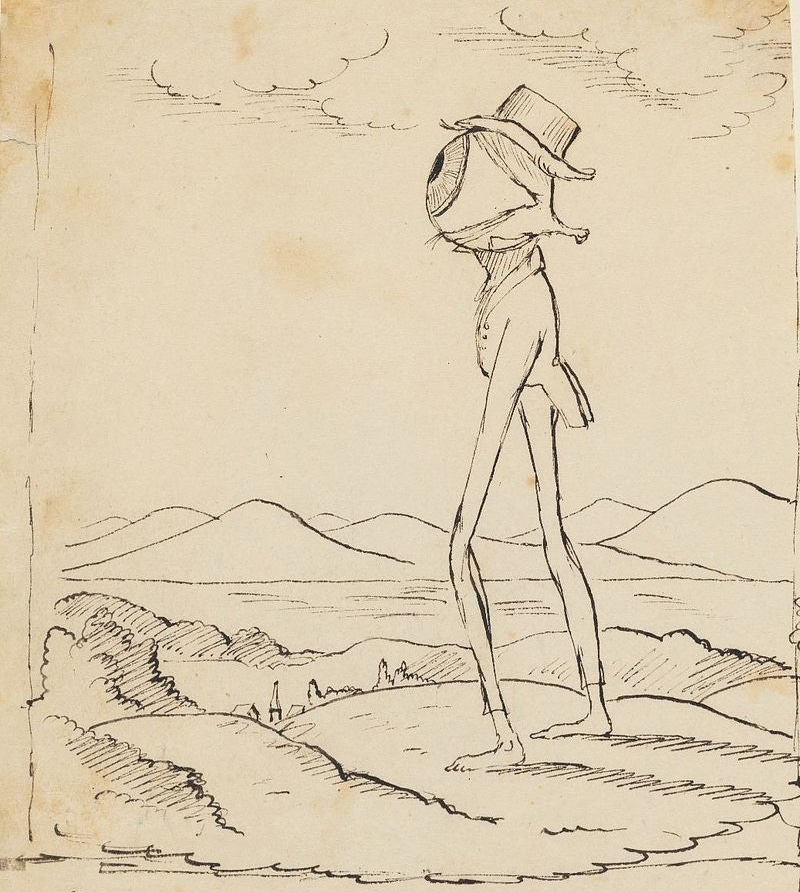
Having spent the greater part of my life living like some automaton, it was only a matter of time before I would fall into the rapacious hands of mechanism. Mechanism is, quite literally, the standard of the day. I know nobody living, no matter their age—even if they predate the First World War—who doesn’t inhabit some aspect of character that is mechanistic.
Man is a mechanism, or at least, that is how the mechanics and reductionists—those sturdy mechanical fellows who strongly adhere to Hobbes, Descartes, and Gassendi—would like us all to believe. Man is a machine whose wind-up is not coins but atoms. If only it were possible to see how the internal mechanism worked—then we would be able to reduce all things to their simplest primitives, their universal, ontological axioms, from which every dispute in the world could be solved through calculation and reason alone; alas, reasonable methodologies reveal the common flaws present in every mechanical philosophy: the complete avoidance of the subject—the turning of everything into an object to be studied, to understand through mechanical principles; of bodies extended in space, whose motion (due to gravity) follows some rectilinear path from which a man well-read in the Principia Mathematica could deduce the destination of it via some “natural laws.”
Mechanism proclaims to be the only true philosophy—or, at least it did when it was the dominant mode of conceptualization in intellectual circles. Men, naturally, wished to deal with nature, and so they approach nature with the same assurance as they approach themselves in the mirror. This approach, however, like all things, changed depending on the time period.
For most of history, man and nature were viewed as one; every so-called “first principle” was really a deduction made about the nature of an object’s essence as it appears in its being: singular and universal, the one and the many, a plurality and a unity, a totality and a particular—all this spoken of in the language of essence, being, matter, form, entity, mutability, immutability, subsistence, extension, solidity, quality, quantity, relation, modality, spiritualization, hylomorphism, etc., etc., etc. Nothing works out right the first time usually. Experience is a better bearer of truth than any hypothesis drawn from reason over actual sense. And hence came the mechanistic philosophy.
This mechanical approach to thought is typically associated with the Enlightenment—the age where men finally lifted themselves up from the dogmatic modes of intellectualizing (hiding behind God and tradition) and leaped headfirst into depths of thought, freedom, and individuality so strong we collectively as a species have never recovered from it. This kind of thinking was, in a word, reducible. The mechanical contraptions of clockmakers were all the rage then, and many intellectuals, seeking to reduce man to a bundle of cogs in a machine in order to understand him, thought the clock was the best analogy one can find in the whole kingdom of man’s creation.
I cannot blame them; in fact, I cannot blame any man for finding it nearly impossible to break from the prejudices of his age in order to aspire to new heights of thought which only his descendants will appreciate. I, for one, have always aspired to the motto of the Enlightenment—Sapere aude (“Dare to know”)—but at the same time, I also aspire to a kind of realism that would ruffle the feathers of my more logic-oriented positivists, those who derive their philosophy from axioms and empirical premises. Realism in what sense, though? Is it not the case that reducing reality to its constituent parts reveals only what is real, rather than what lies in abstraction? No. For the simple fact that life is too multifaceted and too complicated to be reduced to its singularities for the sake of revealing its whole totality.
I do not only dare to know, but I dare to believe. What every philosopher has gotten wrong since Francis Bacon, really, is to treat belief and knowledge as separate entities—as things which are fundamentally opposed to each other—rather than treating them for what they really are: two sides of the same coin, two approaches born from the same action—observation. In truth, they’re really two types of intuition to view the world from: one is “rational” while the other is “irrational” or “sentimental.” You see, even in describing them, you cannot help but fall into that false dichotomy which time and prejudice has placed upon them.
To dare to know and believe is to reconcile a man-made contradiction; like I said, for most of history there was no distinction between subject and object, because it was always viewed as comprising a whole which was not seen as distinct but only different in form. This has led many to assert that the true start of modern philosophy, in the Western tradition at least, was with William of Ockham: for he was responsible for nominalism, as distinct from realism, which claimed that universals (abstract concepts like redness or humanity) were only mental abstractions—nomina, or names—which we rational creatures assign to various objects as they appear in our perception of them. This new framework was what gave Roger Bacon the courage to break with the Aristotelian tradition and posit new methods of inquiry which allowed him to more fruitfully plunge into the depths of nature, in order to extract whatever secrets lay hidden in her.
I myself am a nominalist, and feel I could never again be reconciled to realism for the simple fact that there is a kernel of Kantian idealism within me which I cannot break from, because I feel it is the only empirical basis on which to ground everything else, even though it be without ultimate grounds itself. I believe there are objects which exist in the world absent from our perceptions of them—and this I deduce from the fact that I am myself (in the most abstract sense) a product of objects (my parents) coming together and moving about in order to create me, which I was not cognizant of or perceptive to—but I do not treat these objects as being universal, that is, as existing independently of the mind as real features of the world; I view them as abstractions born in the mind from our perceptions of them, but which were prior to the senses perceiving them. That is why I said Kantian idealism specifically, for what I did to reach this conclusion was employ a kind of transcendental deduction which reveals itself in both aspects of perception—subject and object, empirical and rational, to know and to believe.
To be transcendental is to bridge the purposefully made gap between mechanism and irrationalism. This, no doubt, explains my obsession with Emerson’s Transcendentalism and Coleridge’s Romanticism; there is an obvious connection between the two approaches to reality which, to separate them, is to lose the human in the mechanism, and vice versa, to lose the mind in the clouds of sensation and feeling. I like Transcendentalism and would still call myself a transcendentalist if it wasn’t so misused and abused as a label by those who reject rational thought completely.
Transcendentalism is really a kind of pragmatism: it is pragmatism made romantic, made one with nature, in-tuned with the human soul, the single individual, the identity of the subject, the I of the world, who looks out upon the horizon and sees every divinity contained within a single glance. The transparent eyeball Emerson spoke of in his 1836 essay Nature is really the subject, the single individual, made one with the objects of nature around him; it is not to lose yourself in nature, but to rationally come to understand that you are a part of nature, bred of nature, and shall die in nature. Reason is but one type of knowing, as is feeling; but when the two overlap and combine to resemble the whole human being, rest assured, that there is where the truth rests.
It is the height of madness to even suppose that reason and feeling are really different. Reason is a kind of feeling; it is an intuition of thinking, an ethics of reality, that transposes itself from the mind into lived reality. Those who separate them for the sake of efficiency when investigating nature remove themselves from nature, when, again, they are part and parcel of nature—the heavenly particles which fall upon you in the act of sensation are what make you alive, aroused, surprised, and amazed at the magnificence of the world, that you breathe and exert yourself amidst all this beauty. You fight against this urge which is your right to act upon—for what?
The world is yours and mine and everybody’s; there is enough of nature to go around, and there is more than enough of mankind to enjoy in it. What shocks me most is that not enough people realize this about the world, or that they don’t see this great capacity in them to move beyond mere reason, mere practicality, mere worldly responsibilities, and can come to see life, and enjoy it, in a way completely devoid of all earthly anxiety.
The truest freedom is that achieved in self-awareness—something which can never be had if you restrict yourself to thinking through the paradigms of others, systems of thought not your own. My calling, and thus my reason for writing this philosophy, was to find my own way, to create my own path, and in so doing—through my words and ideas—come to inspire the same in others; for this world as it is now, dead and abstracted from abstractions atop abstractions which bear no resemblance to lived realities, must be changed and transformed in order to represent humanity in a manner that is true to itself.
Mankind is not that old in comparison with the Earth, and shouldn’t this fact cause great commotions in the mind, and make every living person desire to see this planet more resplendent and positive? A man cannot live fully if he cannot create for himself his own system of understanding. The first part in liberating your mind from the tyranny of practicality and mechanism is to free yourself from all the false ideas which the world seeks to make epidemic: ideas precisely like mechanism, egoism, capitalism, reductionism, hedonism, and efficiency at the expense of the self. There is no justification for any of these ideals aside from naturalistic fallacies and argumentum ad consequentiam (argument from consequences).
Mechanism is man’s mind made robotic, singular, absolute in a false sense; these conceptions have morality completely stripped from them, and in doing so are made to resemble rational schemas which have the same rapidity and consistency of a clacking mill—lots of noise but very little sense. The sense is drained out of them because they are not made to be conveyed to another subject, but rather to be explained as an object to another unthinking object—as if man was merely an object, which is precisely what these mechanistic dilettantes want us to believe about ourselves.
Man today is so rational he believes he can gain insight about himself by studying other anthropoids (monkeys and gorillas specifically) rather than looking at the mirror, or to the book of life, or in the books of other people who knew and saw and experienced a thing or two in this world. Shakespeare, Montaigne, and La Rochefoucauld have already given the template of man and expressed it, perhaps, far greater than anyone today can hope to emulate. They are the real masters of life because they lived life and weren’t afraid of the consequences that stemmed from their ignorance of it. You can either come to know yourself through your actions, or in the actions of others.
For myself, my life is one prolonged ambition, one delayed action after the next; so afraid was I of existence that—like Pascal—I thought it best to eviscerate the desire to live by mechanistically examining what the component parts of existence were, in order that after finally becoming acquainted with every nut and bolt, I could take to action like a real human being. If only I could live without evaluating, without thinking rationally, like a beast—then, my only thought would be of the present and on my subsistence, and nothing else. It is an animal’s life only because it doesn’t use reason to appreciate the grandeur and beauty of it; but the same thought process that leads one to fall in love with Romanticism is the same one that makes them turn on life itself and end up becoming like a clock or windup-doll, following the intuition of reason alone, forgetting themselves as subjects. They are the same, only one is practical without being rational (the beast) while the other is rational without being practical (the man enslaved to reason).
There’s a famous anecdote from Samuel Johnson on the topic of drinking in which he was once asked by a lady friend of his why men find great pleasure in getting drunk and, in so doing, make beasts of themselves; Johnson, without a moment’s hesitation, replied, “I wonder, Madam, that you have not penetration to see the strong inducement to this excess; for he who makes a beast of himself gets rid of the pain of being a man.” I like to think the mechanists and lovers of reason today fall under the same kind of excess: they forget the pain of being a man by reducing all his complexities to a single cause (as if that would make him feel better)—and reduce every external event which has the fortune or misfortune to be felt by him into a kind of homogeneous regularity of indifference, in which each event can be viewed stoically, in order not to shake the foundations of his tranquility. Ah! What a way to live; I know it all too well, for I keep this same approach up today… to my detriment.
Every idea is really a moral one, because it is imbued with the subjective stance of the individual thinking it. Just as it is absurd to make reason the end of all thinking, it is absurd to assume that the subjective sphere of life is subordinate to the objective sphere; what is engagement with life without subjective feeling? Nothing but the false cogitations of a pseudointellectual who believes all of life is really no different from a clock, or better yet, a universal blueprint which reveals the momenta of all particles in the universe. These mechanical philosophers must have a thing for false thought experiments, for they prop up their whole worldview on nonsense like Descartes’ evil demon, Laplace’s demon, Maxwell’s demon, Schrödinger’s cat, or Gödel’s incompleteness theorems (not a thought experiment, but used just as maliciously).
These lovers of cogs and mechanical apparatuses must have a thing for embarrassment—they receive secondhand embarrassment from themselves, truly. All their talk about reason and reduction, but what have they actually gained from any of that aside from pompous phrases and the crazy conviction, which they’ve convinced themselves of, that only “objective” claims about reality have any meaningful content—whatever can be empirically shown is really all that matters. I have no interest in people who presume to know God’s final truth when they can’t even account for themselves as individuals. If you were to ask them, “What is it to be a man?” they would reply with evolutionary biology or creationism, and yet, whichever one you hold as “more correct” does not advance you one step further in the direction of knowing yourself.
Every claim about the self is really an ethical one, because the individual is the one who makes the claim; in that sense, we can never not be ethical in our considerations about the world—we are condemned to live so long as we breathe, and each hollow breath only brings us closer to death. With death as the ultimate end of things, the one end we can be sure of, it behooves each individual to discover for themselves what they are.
The beingness of things is not to be found in reductionism, encyclopedism, or any other system of thought that removes the subject of experience for the sake of simplifying the real complexity which lies behind life. To live life is to act. One must act. One must look beyond the mere appearance of things and get to the true core of their individuality. Life is a storm, a journey without guides, rules, or end—until the very end, that is—and so makes itself out to be a monster which the sleep of reason helps produce. The cunning of reason is yet another lie told for the sake of the “truth.” Man does not have truth, and thus comes every intellectual idea ever.
If truth were an independent aspect of reality which the metaphysical realist would like us to believe, I would venture to say, like Kant, that we cannot know it: and no amount of citing ancient authorities or holy books, religious dogmas or scientific evidence, personal appeal or threat of violence, will ever make reality suddenly become what we think it to be. We are a part of reality, not above it; and in our vain stretches to reach out to what lies beyond, we find only what we already are: nature, naked and pure, not reducible to anything but what it already is itself—a brute fact without cause, without necessity, without reason.
It is not such a bad thing, I suppose, to accept what we feel in spite of our inability to comprehend it: for so long, I rallied against this notion because I thought the human mind was, in fact, capable of obtaining “the truth” of things, but now I realize how far off I was from the true path and how much more difficult I made existence because of my faith in reason. It seems the only way to become reasonable is to forgo reason itself and live life subjectively, not enslaved to reason but pragmatically in tandem with it.
Mechanism has only ever tried to explain man in terms of what he is not: things which comprise him and which he experiences, but which were not him ultimately. There is no “ultimately” to man, but there is a pragmatic acceptance of what man feels himself to be. This may be completely without grounds outside of a self-assertion (where all philosophy finds itself eventually), but it is the best man can do in a world in which objectivity is only a caprice born in the mind, not a real aspect of reality—in the same way man himself is not a real aspect of reality from the perspective of everyone not themselves, only an experience within the mind of some other, another subject, equally great and powerful, but still just that: an experience within the grand play of another person’s life. Mechanism could never be the answer, for it could never account for that subjectivity—the most powerful thing in all the world, and the only true solution to life.