
Mind
47th installment to my philosophical system.

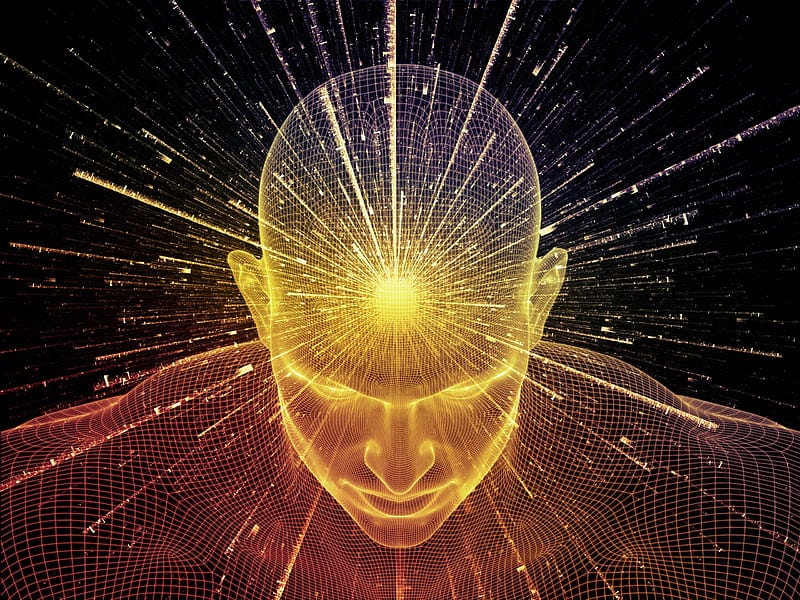
Men go out of their minds whenever they try to explain it, or justify it; as far as I can see, the mind is only mysterious because we assume it to be. Isn’t it an astonishing fact that the brain named itself, and that everything which we say in the world is really a reflection of our notions of things as we received them when very young? If Plato is right and all learning is but past memory recalled, then everything in the world would already seem intuitive to our minds:—this not being the case, however, we can interpret Plato to really be referring to the innate capacity within man to learn or recall, and this he labels knowledge.
On that view it seems almost Kantian, and in many ways it is—but the mind, being the seed of all our experience and personality when viewed from this Kantian-Platonic lens, would really lend itself well to the view that the mind is nothing but the thing that does the “thinging” (“thinging” here being the process that gives rise to intelligibility); the object from which our subject arises in the world, in much the same way condensation appears on a mirror from steam.
From this subject comes all our objects, and from all our objects comes this whole reality; the state of mind which we have when perceiving the world largely affects how we see things in it, and if it were not for our ability to cut our losses and shuffle off this mortal coil, it would be the most ridiculous subjectivity that ever existed.
No one is more shocked by existence than I. My mind works very hard in convincing me that what I see is the true realm, but at the same time, it works hard to disavow this all too common notion by bringing up arguments, levied on behalf of my desires and impulses, that contend exactly for the contrary; my mind is split between affirming existence completely and rejecting it absolutely: there is a desire within me to save the world, and an equally strong desire to say it is all an illusion. I am torn between phenomenon and noumenon; my mind gives me pause—or perhaps I give pause to it—and in this stillness, I see the world as an object of my perception, while also thinking a Ding an sich (thing-in-itself) is still very much behind it.
I don’t think I’ve rid myself yet of the need to know what lies behind reality; there is a sense in me that wants to believe that if reality simply is, then nothing worthwhile can ever be brought forth from it—because it would all be done without totality (without total comprehension of its apperceptive character), and so would really be undertaken without completeness and wholeness. This aspect very much frightens me, for if one cannot know the reason why, then the whole notion of “knowing” or “affirming” seems somewhat hollow. There’s a very obvious dialectical tension here, which Hegel tried to resolve by making the Ding an sich a process of consciousness becoming self-conscious—a realization of itself in the movement of spirit throughout history—and while I think it a good answer, it still seems shallow, without depth, without the gravity I once thought it had.
I don’t think dialectic itself provides a solution to Die Hinterwelt des Dings an sich (the behind-world of the thing-in-itself). I think, rather, the dialectic is only a method for dealing with the contradictions implicit within the dichotomy of the world of perception and abstraction; in the two negating each other, you have a confluence of appearance with reality, and, mistaking one for the other, you find yourself unable to make heads or tails of which one is the true one. Perhaps to speak of them as true isn’t even correct:—indeed, when you do, you commit a very clear category mistake, for to ground metaphysics in epistemology is to build a foundation on sand.
This is where the desire to comprehend all of reality arises in the first place: the mind feels capable of conceiving reality as a thing capable of being known in its totality (objectively), but every epistemic criterion for reality has counterexamples to it that reveal the impossibility of grounding it on any foundational framework. This is where the contradictions within all things come to roost, and where the philosopher is made to feel homeless; not having a coherent worldview of his own to rest under, he wanders his solitary way into the shadow of uncertainty, and affirms along with Socrates the truth that he knows nothing—the only thing he feels certain of.
All worldviews are predicated on the notion that there is a single correct view at all. In fact, all “debates” are predicated on this notion, because each side assumes the arguments they levy against each other act as bulwarks against the claim’s veracity; debates don’t ask what the truth is, they argue for what the interpretation of truth should be:—it’s really a war of perspectives more than anything else, and this war is only fought on the belief that truth is power and that man’s mind is capable of comprehending it. This is why I’m tired of modernity’s cant: the slyness of everything, the obvious falsity of everything labeled as truth—all nonsense fought to the death over, for what?
I’ve given up on humanity to a large degree for this very reason; in our present age, we still have yet to overcome the need for truth as an objective thing—until we feel in command of the whole universe, I fear we will never bypass our desire to be factual regarding claims that are themselves grounded in values. To desire “truth” (in the objective, mind-independent sense) is a value, in the same way Pyrrhonian skeptics deny the possibility of such a truth outright; or, better yet, in the same way pragmatists value truth as the cash-value of an idea—the tangible effects the belief in that claim would have on our lives.
You see, dear reader, why I’m always unable to overcome all this? I’m in hell for it, and I shall remain in hell for it; for, like Faust, I cannot live until I’ve become master of myself, and all reality after it. The fear of myself is the beginning of knowledge.
I spoke earlier about truth being this interplay between phenomenal and noumenal reality, and about how the noumenal reality is what philosophers are really after, and also about how the unknowability of this noumenal reality is what gives rise to the dialectic as a method, and hence every dogma and intellectual sophistry. But why truth? Because the object of philosophy has seemingly always been an incessant drive to find the unchangeable and ever permanent, all the while deriding those ideas which claim that truth is now and then otherwise (dialectical). Schopenhauer epitomizes this dogma better than perhaps anybody else, saying:
All who set up such constructions of the course of the world, or, as they call it, of history, have not grasped the principal truth of all philosophy, that that which is is at all times the same, that all becoming and arising are only apparent, that the Ideas alone are permanent, that time is ideal. —The World as Will and Representation.
But I think Friedrich Nietzsche dispenses with this dogma with the same facility Schopenhauer spewed it out, saying:
Dividing the world into a ‘true’ and an ‘apparent’ world... is merely a move inspired by decadence—a symptom of declining life... The fact that the artist prizes appearance over reality is no objection to this proposition. For ‘appearance’ here means reality once again, but in the form of a selection, an emphasis, a correction. —Twilight of the Idols.
The will desires, the mind interprets, the person acts, the world is changed. Nietzsche is absolutely right, and Schopenhauer (in this respect) is absolutely wrong. To think the world as a thing conformable to your notions of it is to assume that you can really grasp the truth of it. Nietzsche says the ‘apparent’ world is the true world, and nothing besides; and I would agree with him.
I no longer want to be shackled by dogmatists who treat the world as something true—as something only to be followed so long as it’s reasonable and corresponds with the facts. Facts are precisely the thing you are in absence of, for every fact you claim as true is really without ground, and not worth engaging with on an epistemic level, only on a pragmatic one. Those who treat their interpretations as truths are always in the wrong regarding the notion of truth, for they believe truth is something static and eternal; and though I don’t know that with absolute certainty, I tried to argue that I don’t think that notion is coherent in the first place. Certainty is a false notion anyway; the human mind can barely comprehend itself and the world at large, let alone argue that it has a way by which to arrive at incontestable truths in the world. Utter nonsense.
You may very well call me a dogmatist in reverse. You may say, “What makes you affirm the opposite of Schopenhauer?” I will reply, “Experience. Experience has shown me that nothing in the world resembles the Platonic truth everyone speaks of: a justified, true belief; or a correspondence of reality—better put, a correspondence of idea (concept or label) with action (experience). I see none of it, and though it may not pass as the most serious argument—nay, it isn’t an argument at all—for those who divide the world between true and false only, at least it’s honest and from the heart, subjective and thoroughly my own.”
That is my truth: the subjectivity of myself—that which allows me to affirm life, and stave off decadence; that which allows me to remain powerful for myself, in order that I may continue to exist in the world, and better understand it as I get along in it. The only reason I write at all is to make the dialectic tangible—if it is not before me, then I cannot understand its motion, and thus cannot predict its trajectory through the space of ideas.
Oh, how I hate those who live in order to accumulate facts and data, in order that they may justify to themselves totally despicable things; how I hate those who justify their misery with their ignorance; how I hate those who live egoistically and selfishly, only concerned with how well-off they are compared with their neighbor; how I hate those who argue for the powerful instead of the weak; and most of all, how I hate those who feel they cannot live life because they do not dare to do anything in it, not out of ignorance but out of deference to the “truth”.
There are things which the mind is simply not able to comprehend. The mind, after all, is what gives rise to all this talk of truth and knowledge and objectivity in the first place. I want to affirm life in spite of all its contradictions and inconsistencies. The world is not some static substance, but an ever-evolving, chaotic jumble of aspects, wills, and personalities; every action speaks its own truth, and each will which wins out is what ultimately goes on to predominate, until a new one comes along and overthrows what formerly ruled the heart—such is life, an ever-boiling cauldron of passions and vexations, agitated by boredom, lust, and the flames of passion.
All this is incredible when you think about it. This very presence of self, what we call ourself—again, our own self, what we are: existing beings, conscious creatures, inconsistent entities striving for order amidst the chaos of living; survival alone is a creative enough act—how anyone finds the courage to maintain themselves in this world will never cease to amaze me.
People come in and out of this world quite regularly, but I doubt any of them live, or have lived, existentially, ethically, productively—that is, busied themselves with the meaning of life: not tossing it aside by asserting it has none, or retreating into a vague agnosticism in order to continue on in their lackadaisical way.
My problem, I think, is that my mind wants truth, but my heart wants compassion. I want to both affirm something absolutely as final, while also being able to say that this “final” thing will change with time; it is a contradiction I’m afraid I’ll never be able to overcome even with the dialectic. This damn contradiction is what prevents me from living “normally”, if that word even has meaning in this context. I’m so estranged from life that living seems like a performance; it’s not that I’m not socialized, but rather that I would prefer not to socialize.
Being an introvert comes with many benefits, the greatest one being the ability to talk to yourself honestly, without worrying about what others would think; but the greatest downside is that it puts you at a fundamental disadvantage in the real world, the world where you have to put your trust in other people in order to get anything done—you rely on the “expertise” of others in order to ensure whatever need you must satisfy is done so properly—it is an alienating, transactional world, which is systematized and ordered to the point of making introversion seem like the only rational response to it; the clamor of daily life is deafening, and very little human emotion shines through in any of it.
Real misanthropes are not found in solitude, but in the world; since it is experience of life, and not philosophy, which produces real hatred of mankind. —Giacomo Leopardi, Pensieri.
Life is such a dread when it cannot be lived fully; it is even more so when you desire it fully. Nothing ever comes to us as we expect—in fact, it comes when we least expect—and so, every day is really an opportunity for the world to show us how meaningless our dread really is in the face of it. Either way, nothing matters, so why bother at all with worrying about it? That is absurdism in its totality: it is to live on in order to see how time will play out and have its way with you, to see what lies beyond the horizon, though you already see the rising sun.
You see, an introvert lives solitarily, is judged in solitude, and above all judges himself in solitude. This is not good; it’s not healthy. If he is normally constituted, a time comes when he needs the human face, the warmth of a community. This “warmth of community”, this “human face” I so desire, is precisely the thing I feel most at times when my despondent nature cannot uplift itself from its own self-induced pessimism. A life primarily composed of sadness is self-made; it must never be forgotten that man, more often than not, lets his situation get the best of him, when in reality, the only thing that should be on his mind is why he even considers life the way he does—why he thinks those things about himself, when he is so much more than them.
A man can always become happy in life, provided he’s willing to make the effort to find what is happy within him, and if not from within himself, then from the world around him. I know from my own life, there were many times when my world felt as if it was collapsing before my eyes, and, being unable to find anything within to uplift me, I found great respite in long walks alongside the marsh behind my house, near a little stream that is enclosed within a light brush of trees, where all the leaves float like petals in a moving river.
Everything becomes more beautiful when you’re sad, and this is because your mind dramatizes your situation and turns your plight into an act of heroism; since suffering is so common, but personally so hurtful, it makes you feel greater than you are, in order that you might remember this sadness with more fondness than it deserves—and such is why every melancholic with an artistic bent does their greatest creating during moments of complete sadness; they’re able to feel themselves so much more in pain than in happiness, and so wrestle with this tension until the rope gives way and they produce something immortal.
So much said, yet I feel I can never say enough. My mind is never satisfied with all my life thus far: it wants me to produce more, to be more honest and loving, more creative and relatable, more caring and compassionate; the world seems too small for a mind who yearns for the infinite. Again, I for one find it incredible that a man such as me would even puzzle himself with the whole of humanity; life would be so much easier for me were I to adopt the custom of my father and say when faced with everything, “intellect over emotion,” or equally as often, “face your fears.”
But I am not of such a sturdy constitution—nor am I the type of fool to assume myself strong enough to will that kind of attitude into existence, as if life were merely an act of will. While I affirm Nietzsche’s will to power as a very compelling explanation of action in the world, I find my heart very much unable to follow through with its demands; my will is too strong for this world, and such is why I can never act within it, lest my actions inadvertently make me become something important. I am but a man wishing each second to be worthy of his own powers. To borrow a favorite phrase from my God-brother:
Non sono né un santo né un eroe. Solo un uomo con un cuore. E questo, mi rende uno sciocco. (I am neither a saint nor a hero. Just a man with a heart. And that makes me a fool.)
How right my cousin always is, for it is the heart which overrides the mind and turns a man into a fool. The mind, after all, is only the relic of an organ whose purpose is meant to suppress the heart, but more often than not falls victim to it. Poor mind. Poor heart. Poor everything.