
My World At Present
perhaps its enough to simply forget

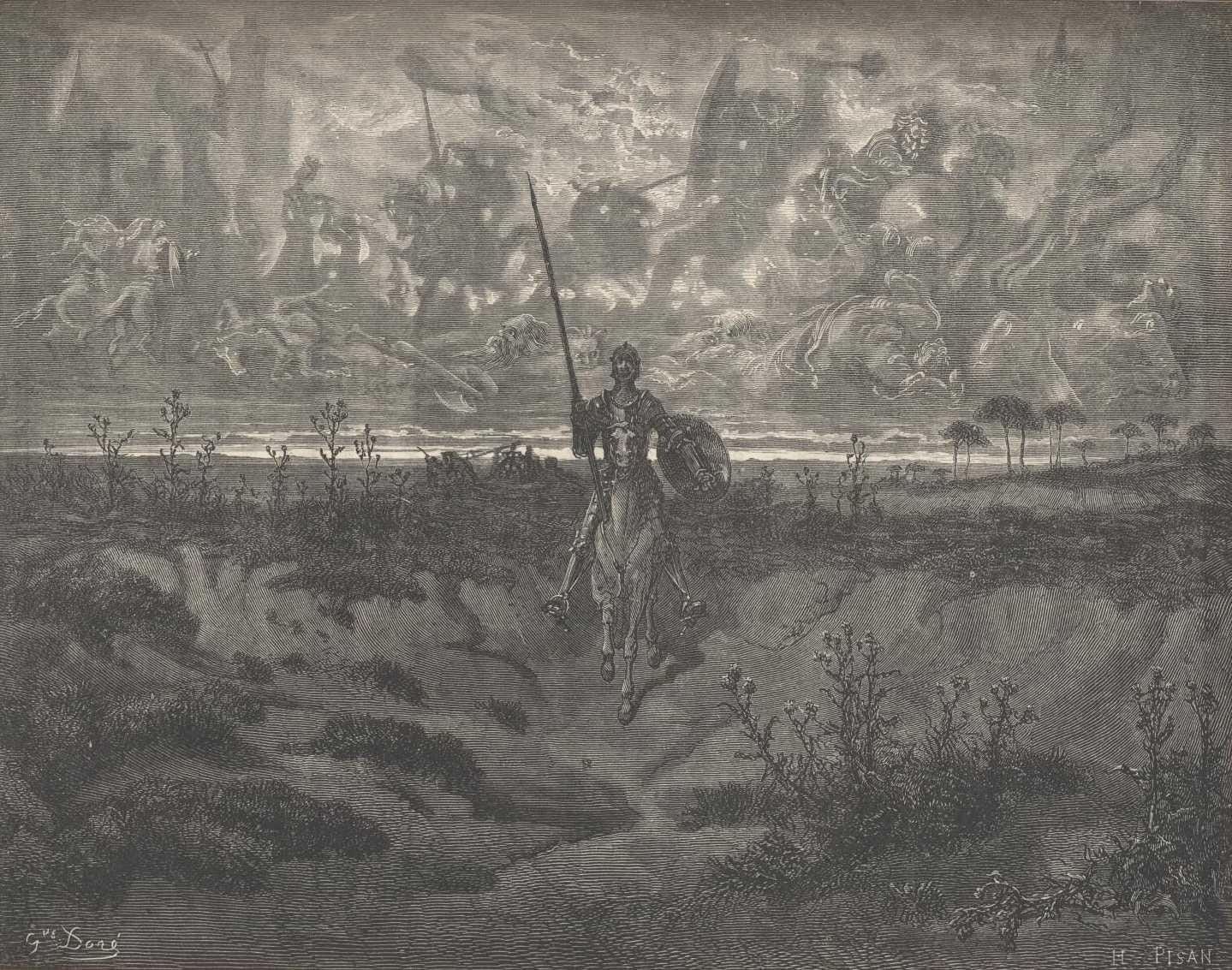
This world gives me no respite, no repose—not even a wink of sleep or continuous rest. The whole monotony of it, the same faces and boring occurrences, are enough to make me weep. At moments like this, I don’t even derive joy from the clouds; and this is a most vicious turn of fate, for a feeling soul, a poetic man such as myself, can only find solace in the higher things. When the poet loses his desire to sing the praises of Earth, run—run as far as you can and do not look back for anything. The abyss—the emptiness and glorious nothingness of it—follows like a shadow and is faster than you can move your feet. There is no joy to be found in the dark embrace of this reality. In fact, I would consider it a fortune for those who are so easily swayed by the confusions of meaning we call consumerism. At least their meaning is solid, grounded, sensual. I only have my thoughts. I act in the world, but it all feels staged, as in a great play put on for all the world to merely laugh at my follies and cry at my victories.
Hardly do I find enjoyment anymore in moments like this. Why persist? Why even bother at this point? It is happiness enough, I find, to vent such rage to the page, and snatch back whatever moments of clarity I had in the process of it. I lose myself when I write. Right now, as I think the next word, I lose myself completely. I become absorbed, and all fades around me like water on fresh paint. The grass has its beautiful crunch with each step in the dryness of the summer. The sun is totalizing and unrelenting and fantastic. The power of it makes me wonder. I am amazed, and I walk on the ground but feel as if I am flying. Such a joy it is to write.
A person who is not a writer cannot understand how much one forgets while they think upon their thoughts. The world could continue to annihilation for all I care. Right now, I am forming my own world, my own peace—a world from which nothing could be taken, and in which I am master of all. The beauty of a tree, of butterflies, and of little toads hopping along the muddy soil to reach a pond full of tadpoles—the contemplation of this—is authentic, real, felt, and deeply cherished by me. I wish the world could see itself as it really is. The whole superfluous nature of everything—even our own thoughts and desires—are like a noxious gas that is slowly suffocating us to death. Everyone thinks their individuality is enough for them, and them alone, forgetting the whole organism they belong to called society; to say nothing of history (that is to say, the past), the present conditions of the world, the future they create for themselves—of everything that pertains to us, which we do not think of.
There is, in our age, a loss of connection, of sense, of mutual understanding between people and the world about them. It seems to me the only things people of today bond over are either their suffering or their love for knickknacks. It is a world without hope, without culture, and a woeful understanding of where we once were—what it is we once had—and all the good that came with a collective understanding of what we wanted to see, is dead.
One can dwell on a single idea for only so long before it becomes stale or repetitive. Singular ideas are the essence of a thinker, but multiple ideas—indeed, every conceivable idea—are only worthy of a writer or contemplator. Those who write by feeling are supreme. How much does one, in reading them, get the sense of the whole world as seen from one perspective? It is only in perspective that ideas derive their power. An idea without a person to reflect upon it is but an apparition. Values without actions are just platitudes—ideas gone bald and without purpose. It makes little sense to lament over what cannot be thought of in the present.
I can say with certainty that people in the future—if we have one, that is—will look back on our century as a barbarous one, in which man was put against man by men who ruled over them with the threat of denying them labor for their subsistence. A contemplator, an honest writer, a social critic, a philosopher, a thinker, a poet—an existential man who reflects only upon existence, a man who seeks the life-view, as Kierkegaard sought—in what ways are we all the same? Only in that the core project of ours is to provide a way of thinking, a mode of life, in which one could cope with the anxieties of existence. To be existential is to be willing to forgo the comforts of the world for the sake of preserving your own mind. That’s my interpretation anyway.
My biggest intellectual influences were Emerson, Nietzsche, Goethe, Shakespeare, Schopenhauer, and Kierkegaard; and so, I have always had my mind bent toward the contemplative realities, for my nature was always more introverted and thinking-oriented than impulsive or action-focused. Thoughts without action are meaningless—but is not thought a kind of action? I fear the intellectual is forever to be doomed by this paradox: to confuse mere thinking with the only conceivable action, as if it were the sole solution to all problems; to abstract the whole of reality so much that it loses its correspondence with the wider world—the world of subjects and objects, of conscious entities and signified things. Lapse too much into thought, and you’ll be mistaken for either a prophet or a madman.
Anyone can come up with witty aphorisms and call it a day in the realm of thought, but I am not such a person. Once, I thought wisdom was only possible when one had achieved a synthesis of everything possible to know—I now know I was wrong. There is no synthesis, because one can never know everything; and even if there is a finite amount of information in the universe, it certainly wouldn’t be conceivable for creatures such as us. This unknowing is the spring from which existentialism crawled. It is in the full embrace of the unknown that one can find the courage to take a leap of faith.
I don’t interpret Kierkegaard’s leap in the traditional Christian context; I much prefer to view it through the lens of a human being who isn’t saddled with all the dogmatic presuppositions that come with being called a Christian. I much prefer to live a life free from any associations. In fact, the goal of it may be to simply disassociate from everything we have come to grow familiar with. The world laughs at our attempts to categorize it, and all our miseries stem from the attempt—and are only amplified when we think we have come close to understanding it.
To use the Leibnizian term, the best of all possible worlds is the one in which we do nothing but contemplate and accept ourselves for what we have become from such a sacrifice. This, I would say, is the core doctrine of every great thinker. Every scholar, intellectual, genius, writer, poet—have all understood the capacity to connect with thoughts alone, etched in a language they adopted out of habit, and put to paper, parchment, or scroll in an effort to communicate a sentiment or thought they had and considered worthy of it.
Every day becomes a little more, or a little less, tolerable depending on which side of the bed you wake up that morning. Some days, I find myself unable to do anything at all, and the slightest labor requires a Herculean effort; other days, I’m as near to Ozymandias—king of kings—as one could be, and feel capable of any thought. No provocation disturbs me, and the wind moves serenely past me. All is wonderful when the world corresponds to your mood—a misery when not.
To protect yourself from any diminution of joyous energy, it is necessary to follow a path carved by you alone. The dregs of today find themselves at odds with their own soul. They sell themselves to someone else and feel trapped by the system. The undoing is our system, but the rebellious fire within them is nonexistent.
I have always thought it necessary to first follow the heart rather than the money. Money is a commodity that is the abstract of all potential actions—with it, nearly anything could be done; without it, practically nothing. But here lies the mistake everyone makes: to confuse the limitation of will (the restraint on the desires) with the impossibility of achieving happiness at all.
More is capable, I have found, when one gives up more and more. All desires in life are but redundancies that have no place in us. They have no meaning; they are without purpose, and should be treated as nonexistent. Self-resignation from the world is the best possibility I have found, for life moves along gently enough, and with enough consistency, when there are no more barriers one needs to cross in order to achieve what they will.
Nietzsche was wrong in labeling asceticism as a will against life. One’s will to power may, in fact, be achieved only in the renunciation of life. It was on the basis of Nietzsche’s own evaluation that all which limits the capacity for action was to be disregarded—why? Because Nietzsche himself was a fragile man with a weak constitution?
Every philosopher is a hypocrite. We all hold positions that we don’t actually act upon, and if we do, we find it tragic—as with Chamfort—or suicidal—as with Mainländer. To hold yourself to your thoughts forever, with unrelenting consistency, is to refrain from being able to adopt any new ideas. One cannot expect to be free under such a constraint. Where will new ideas come from in such a world? They wouldn’t. You would be left with nothing but a hodgepodge of old ideas that help no one.
It is impossible to get at the heart of any idea, even those that are written in aphoristic form, in the moment of their conception. The time between first receiving the idea and putting it to paper leads to innumerable corruptions and impurities of its honesty. To wait and mull over something allows you to put more words to it, but not necessarily with more clarity.
It helps to first think about what it is you wish to say, and follow up on that not long after. What good is forming your ideas later rather than now? You shall not recall what first generated the idea, and so, you must necessarily lose the sentiment that is connected with it. True poetic writing comes in that brief period in which you first receive inspiration—not later, when it has already been intermixed with various other sensations and ideas, most of which share no relation to the initial one.
Look around you and see exactly who it is you decide to surround yourself with. That tells the whole story of your being, more or less. Man is more wretch than honest gentleman. In what age has scandal actually been abhorred? The present time rather encourages it—a kind of debasing individuality in which your ability to act as an agent is championed above all else, even in violation of norms or proper conduct.
If one is to be shamelessly for themselves, then do it in such a way that limits its vicious influence. People become emboldened at the sight of someone who is in full command of their powers. Leave it to them to judge for themselves, and leave it for the wise to pass judgment.
The opinions of the average man may as well go unsaid, or unthought, for so often is it devoid of any sense or meaning. Contradictions are good, and best when they are the result of someone who is actively engaging with their views and stances. But most misunderstand it as simply being mistaken, and thus prefer to remain obstinately captured by their own opinions, forgetting the necessity of change.
Best is the person who says something one day and changes it the very next day. You are one person one day, another the next. Your life should reflect how you most wish to live—not to be seen or admired, but honestly, in the struggle of all the thoughts that come with it. Such is why the basis of truth is dependent on falsity. Mankind would lapse into a horrid relativism if we could not distinguish between reality and fantasy.
Hegel made the heart of his logic dependent on contradiction, of continuous progression towards the absolute. It would only make sense for modern man to make this the core of his searching. Every anticipated action creates its own uncertainty in the mind, and at once is man undone by his own disorganization.
The world is a mess, and this is reflected by the state of the common man’s constitution. So many hunched over a phone or book of some kind, willingly forgetting the mere action of presence, of existence, of gazing upon something and having it be remembered in the mind rather than in video. It would be best if all could forget modernity for a few seconds each day, and return to our origins for a second—to do things our ancestors thought mundane and all-too-common.
Where are the writers of today anyway? Has anyone seen them? From my vantage point, atop the highest peak on Mount Parnassus, all are either navel-gazing or lusting after something “beyond the mere present.” I’m so checked out of the modern world, I find it almost unbearable to listen to people describe themselves. One hasn’t the capacity to extrapolate upon mere sensation. Most have forgotten what it even means to feel.
The Romantic age is beyond dead. It has become like a god today—transcended and placed upon a pedestal for all to gaze at in admiration, with open mouth and tearful eyes, rather than with revulsion. So much forced sentimentality. Everyone trying to outdo each other in a fictitious game of honesty, of moral grandstanding and wretched pomposity.
I see the game these people play—the personas they artfully craft and try to pass off as their real selves. We have forgotten the meaning of that term. It is etymologically corrupted, used and abused for far too long, especially by the cretins we have walking about today. O, where has the time gone?
Every self-reflecting person would, I hope, agree that all is not for the best, but rather for the few. The constant pressure placed upon the minds of everyone has restricted their access to themselves. Every writer today has their own genre and niche to fill—I get that—but all become tainted by their false need to capitulate to their audience. I would go as far as saying we even feel beholden to ourselves.
The essence of all writing is exactly the opposite of this commonly held sentiment. It is in the mediation between experience and contemplation that one can feel a sense of understanding between themselves and the world they inhabit.
When I was struggling to find myself as a writer, I had, like a child, adopted many aspects of life and mistook that as being my identity. It helps to place yourself in the mind of another, in a different point of view toward life, to better understand the kinds of thoughts that are conceivable—it was the essence of Shakespeare’s greatness to write dialogue for both king and peasant, soldier and notary, scholar and layman.
I myself hate adopting the point of view of another when that view is exactly at odds with my nature, but that is precisely what is the glory of life. The inhalation and exhalation of civilization is dependent on mankind doing things foolishly, wickedly, gently, positively, happily, merrily, sadly, joylessly, even hatefully and saintly.
Today, this kind of thinking is a bit absurd because, unlike in the past, we are actually capable of ending ourselves—not through the natural progression of the universe, but from our own folly. And so, while man and woman alike represent themselves gloriously, the world passes along without the slightest notice. We rebel against this, feeling the need to be seen by all, for what we have done and may promise to do—but all is folly alike. Man must be content with a certain kind of anonymity.
I always considered my solitary nature my greatest boon. Like Thoreau, I am seeking a kind of individuality that is not only admirable but loved by all. The lack of something’s popularity is both good and bad. One feels a bit privileged when their interests aren’t commonly considered or cared for. Once it becomes mainstream, every nuance you thought only you had quickly becomes discovered by others, and the gleam is lost at once; to say nothing of the rapid monetization and commodification that inevitably follows every trend, as if it were gold or oil. It’s disgusting!
What does a man have to do today anyway? What does he bother himself with? What are the modern man’s everyday thoughts? I would assume they are the same ones the ancient Greeks and Romans had, only altered slightly by our current technologies and modes of communication—but the base instincts are the same. I’m currently of the opinion that man today will be like man tomorrow, only a bit more knowledgeable and hopefully more honest—but that’s asking a bit too much, I believe.
To stare at a book is to mistake the word count for the author’s actual productivity. How long does it actually take to write out a truth that is eternal, and worth reading for all time? I’m uncertain that all we do is to last at all. Consider the fame of any writer, and realize that they are as much unread today as they were in their own lifetime. What will become of Cioran in 100 years, let alone me, who is barely read at all—despite my belief of being the greatest English writer in the 21st century.
This is not verbosity or hyperbole; this is truth spoken in the same manner Nietzsche did when he was writing Ecce Homo! His chapter titles were of the like: Why I Am So Wise? Why I Am So Clever? Why I Write Such Good Books? Why I Am a Destiny? What a man! Should we not all strive for such a thing? I certainly do.
That is my destiny—and that is my end for this rant.