
On Holidays
Essay 30.

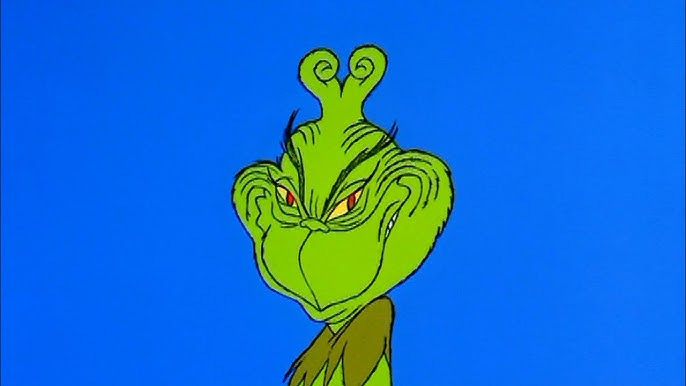
When I was young, I used to enjoy holidays greatly. I suppose the feeling is mutual for most, for in childhood novelty reigns supreme, and every experience is looked through the lens of joy and mirth. Not trained in the school of life, however, kids are perpetually ignorant to the true nature of it: the mundanity of everyday existence, the vanity that pervades every aspect of it, the brute fact that, past a certain age, everything loses its luster, and what was once enjoyed now seems mundane, no different from any other day.
What I feel in my heart towards the few celebrations we’re able to enjoy in the world currently is very little—as if a shadow had replaced the true object it represented. I’ve always been averse to celebrations in general, and I’ve always thought the joy people felt at these trivialities stupid. In what world would one find joy in something so meaningless as a “holiday,” as if the mere idea of it had any real power?
It doesn’t shock me people appreciate them, however, for most are so ignorant of their own self they feel themselves unable to have joy if it is not embodied in some expression in the world. That is all a holiday is, after all: a sentiment deeply felt and embodied in action corresponding to a particular day, with its accompanying raucous applause for its entrance—the date of its arrival—of course. People schedule their whole years around a single celebration, as if that really mattered. And to what end? Why so much obsession with happiness in the present age? Does nobody realize that the moment something is made the end of an action, it loses all meaning it initially held?
A thing is always done either out of necessity or compulsion. The end of joy in life is always a compulsion—a thought which shatters any true hope of authenticity within existence as such. What people make of life is like some rough mosaic, a canvas full of the most atrocious colors intermixed; it is a thing completely without harmony, or worse still, without true consideration as to the importance in each stroke of the brush.
The whole of life is one upheaval after another, followed by a prolonged dissolution, always with the happiest results found in its end: a revolution. A revolution within man is a failed reality, a worthless contingency; the last scream for help in a helpless world; the final channeling of his vital powers just before his body gives out; a final summoning where the sentence of death is finally given. Everything is for naught when life is considered in its absolute integrity. Life can barely contain itself, and words are the most feeble attempts man can offer in describing his inner state without passing a bullet through it—that is, his brain, which is where the whole of his inner state resides.
Without question, the most astonishing fact of life is that it happens at all. And to think, all the lengths mankind has gone to place himself above his present reality. Every vain attempt to forget death, to accept an end which is certain—so certain even belief in God could not assuage it. That is why holidays are so depressing when considered in their totality: for their totality is only present in their immediacy, but this immediacy vanishes the instant the fun is over, and all the fickle pricks of fortune, and redundancies of subsistence and continuation, reassert themselves in the lived reality of everyday existence. It is for this reason existence contains no metaphysics. There could never be objectivity outside of subjectivity, and so both necessarily cancel each other—as if the whole of life were some algebraic equation, where x = 0. What an end, huh? 0. That has to be the greatest number of all, for it literally represents, numerically, the conception of nothing—nothing, that which is at the core of reality; nothing, that which every easy joy, and every hard misery, brings us to.
If life was its own end, it would be the most ridiculous end ever conceived by man. For who could bear existence one second when so much of it is associated with sloth, stupidity, cupidity, envy, lust, pride, greed, avarice, arrogance, appearances, status, suffering, and ultimately nothing? If it was its own end, boredom would not exist; mere existence would suffice, and there would be no ambition within anyone. But do we see such a world today? No. In fact, every soul is seemingly set on outdoing and outcompeting everyone else. This is why I prefer to laugh at the world rather than take it seriously. There’s nothing in life worth taking seriously aside from your own being within it. How one passes through the world matters very little, for everyone ends with the same soil tossed upon them. As Cardano rightly said, “the nail is the last thing which holds the greats.” There’s so much aversion to this kind of thinking, but it’s so undeniable that most throw up their hands and ignore it for the sake of preserving their transient happiness.
And yet, despite all this, I am not a nihilist! Most people confuse pessimism with nihilism because they think one necessarily entails the other—a gross category error, and a deep misunderstanding of philosophy in general; they confuse the colloquial meaning with the philosophical one. I am nothing but philosophical. In fact, my love for literature, culture, and erudition in general was born out of my desire to seek philosophy truthfully, honestly—a true lover of wisdom, who sought within it wisdom for life. I ultimately found very little, but that is besides the point. To return to nihilism, it is a metaphysical position, not a moral or existential one; what follows from it is literally the concept of nothing, for it rejects outright the crude error of Plato’s—assuming reality had an objectivity to it! Nihilism literally means nothingism—if we are to take the word’s etymology seriously—from which we get the principle that nothing exists with inherent meaning in it, for meaning is a subjective evaluation, born in the subject; and thus objectivity falls flat, and is rightly assumed an illusion from this point onwards. Schopenhauer rightly said in §1 of his The World as Will and Representation,
All that in any way belongs or can belong to the world is inevitably thus conditioned through the subject, and exists only for the subject.
From this, any notion of the objective within the world is really just the subjective masquerading, putting on a false persona that doesn’t match its true character—wearing a heinous mask and pretending it’s its real face. What inevitably follows from this is the complete collapse of the notion of objectivity as such. There is no objective anything. The term is without meaning, just as everything else. There is only what the subject assumes to be objective, that is, what the subject assumes to have ultimate, objective meaning. It should be noted, too, that this is not an objective claim, nor am I making any absolute statement—I’m merely pointing out what has been wrong with philosophy for the past 2,500 years, and disposing of it in the most respectful way I can conceive. In that sense, there has never been objectivity in the world; there has only ever been our interpretations of what we assumed to be so. With all this stated, the only thing one can do is subsume, or reabsorb, the concept of the objective into the subject—which is exactly what Nietzsche and Kierkegaard did, though they arrived at the same conclusion through different methods: both ultimately affirmed the subjective (Nietzsche with his perspectivism, and Kierkegaard with his dialectic of the single individual).
Pessimism, on the other hand, is a variation upon existentialism—it’s an attitude towards existence as such. It’s not its own type of existentialism—as absurdism or religiosity are—but rather is an embodied position, a stance, which one acts out in life. The stances which people hold are subject to their caprices and situation, and thus any total system of any conception, or abstraction, is doubtless to end in tears, as all things do. This is precisely why the “real” world is a myth, and anyone too ignorant to see the stage lights and curtain above it will forever think the world is something to take seriously. It isn’t, and it shouldn’t.
No term in philosophy has undergone as much scrutiny, and endured as much evisceration, as existentialism. People attribute too much power to the definitions of words—mere words which signify other words, which are themselves very weak, and are subject to use and abuse rather than firm constancy in the history of their use. What existentialism is to me is a collection of philosophical approaches that attempt to address the questions of existence—the most important of all philosophical questions, in my opinion. I do not consider the term itself a philosophy, but rather a label, a signified conception, that contains within it different schools of thought; there is no one existentialism—rather, there are endless flavors that relate to existential questions. I see in describing it now that the term loses all meaning, for it’s so vague that anything could fit under it. One could place all of life under it, in fact, and satisfy themselves with claiming to have solved life merely by relating the answer: existentialism is a humanism. Absurd in the highest regard!
Every scholar makes the same mistake, and they resemble in their errors those they’ve read most. This is most clearly seen in those who ultimately hold to radically “objective” philosophical positions, such as logicism, positivism, progressivism, scientism, rationalism, empiricism, or any other doctrine that proclaims it has “truth” behind it, or “facts” that support it. Without objectivity in the world, these things are nothing, and so they are nothing. People today need more subjectivity—absolute subjectivity (when the objective gets absorbed in the subjective), in fact—and they need to feel confident affirming those things which give them meaning, learning, and understanding. The biggest problem today is that everyone is too rational, too simplistic, too disorganized in their conceptions, too scared to act, too concerned with their future—only thinking about the practical things which touch their lives materially. Oh! Endless delirium.
There is no inwardness within anyone today, for the finite concerns of the present take precedence over that which leads to personal salvation. If people were serious about improving their lives, they wouldn’t value half the things they do: they would concern themselves only with that which comes from within; they would listen to themselves; they would slow down and reflect more; they would enjoy every small occurrence as if it were the birth of a new universe—in essence, they would become existentially subjective. They would live life as an experience—as an experience within an experience, to be enjoyed and cherished for what it is while we have the time to do so—rather than as something to be sterilized, categorized, and organized—only to be placed in a neat box called conformity, and placed within the drawer of comfort, pleasure, vanity, greed, and mendacity. That is what has become of modernity, however: a bunch of posers and falsifiers and life-deniers! People too concerned with the immediate rather than the eternity that lies within them; the great power that is stored up within their hearts, yearning forever to be released, but which cannot be, because they have “other responsibilities,” “more pressing concerns.” All nonsense.
That is why I find holidays so pointless. The more I’ve aged, the more I’ve seen of life, and the more pessimistic I’ve grown towards it all; and I fear the older I get, the harder it will be for me to blend in and put on the mask, in order to save appearances and make it look as if I’m enjoying the enjoyment of everyone else, when in truth I detest every falsity that is collated in their souls—drinking and stuffing their faces, all to forget their fate! It is not my place to ruin the enjoyment of others, I feel, however, and so I wish for this Christmas, and every Christmas afterwards, to passionately hate the pleasure of others while simultaneously overcoming this hate by enjoying it—reverse psychology has never seen a greater dialectical triumph!!! What can I say, my truth is vicious, and too much for most people to handle. I assure you, for your sake (whoever you are), I will be the happiest human being alive, but in my heart I will feel myself entering a dark abyss of infinite magnitude, which swallows whole everything unfortunate enough to enter. Oh, how my heart grows at the thought of this great overcoming. That I could even envision myself as overcoming this is strength enough to get me through it. I shall try not to maintain so stern a face, and livin’ up around you, should you be willing to forgive and respect my shyness. It would be very much appreciated.
I hope I’ve only been truthful in relating my thoughts on the holidays, without making yours, dear reader, that much more upsetting! I have a tendency to do that, but it was not meant.
Despite my dislike for them, I wish you a very happy one nonetheless.
Merry Christmas!