
On Thought
Essay 17

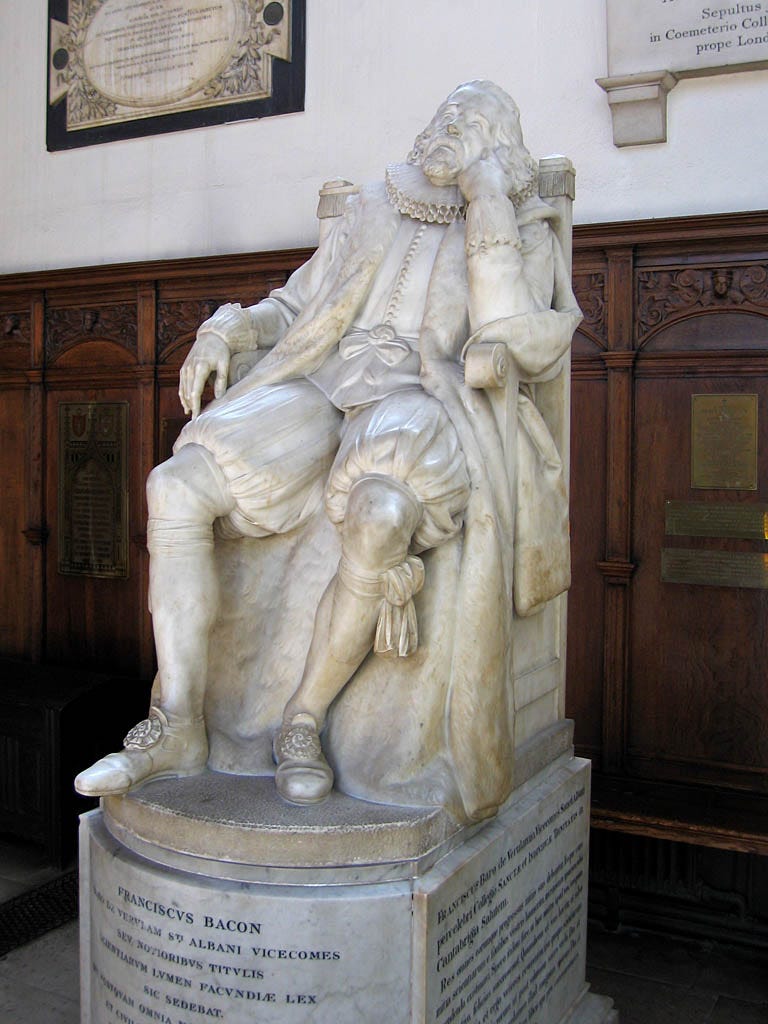
Thoughts are like the seasons; as quickly as they appear and beautify the surrounding wildlife, so too do they quickly change and leave behind little trace of what they did that was so profound and beautiful. One finds in the fleetingness of them something mysterious, almost shadow-like and indescribable. It would not be beyond order or reason to say that they are practically indescribable to the person who cares little for thinking. If only they knew how much thinking they themselves do; they rather view it as something abhorrent, something wasteful and slothful—as if struggling with what at first seems trivial, when not looked past the surface, is in reality deeply profound and engaging, something thoroughly helpful for the upliftment of the soul and for the candor of spirit necessary to make decisions for life.
It is very difficult to say with clarity what we really think. There has never been anyone who has provided a comprehensive system by which to approach composition without it appearing ultimately ridiculous. This, I feel, is for two reasons: the first is that those who claim to be true writers—not the hackneyed script jobbers or journalists or short-story writers of today—would very likely say that composition is by its very nature incomprehensible; no one awakes from eight hours of sound sleep with an entire book ready to be put to paper in a single evening, and the reason for this relates to the second reason—that thoughts themselves are never at the command of the individual; that is to say, the thoughts worth writing down and worthy of being read never appear to us as, say, what we want to eat that evening or what we think regarding a mundane interrogative.
Only spontaneous thoughts have power. Those thoughts that convey in a single sentence an entire book are the best kinds of thoughts. This is why the aphorism is the freest and most liberating of all literary styles: it has no qualms stirring up cogitations in the reader, so long as the force of what is said is conveyed with honesty, brevity, and elegance. I also find for that same reason the essay to be the most conducive for clearness and power, for it lends itself most naturally to the aphoristic style. One must also always remember the philological roots of this great literary style: from the French infinitive essayer, to try; or, more directly, l’essai, which means trial. To attempt an essay is to make a trial at what you think on a particular subject, to try to put to paper what you really feel about something, and, in following in the footsteps of its creator, Montaigne, I feel completely within my rights in claiming here that I am to be as free, disorganized, original, ill-tempered, vain, foolish, indignant, undignified, magnanimous, forceful, rude, brash, bold, confident, elegant, insipid, kind, warm-hearted, happy, joyous, hateful, envious, scornful, silly, playful, lively, audacious, and proud as humanly possible.
If it were easy to think, everyone would be a seeker after the fashion of Descartes. If it were easy to write, no one would gaze in amazement at a couplet of Pope, or a verse by Goethe, or a sentence by Emerson. And so, one quickly finds that man’s mind is not naturally disposed to intellectual attainments; rather, we are given the tools which may or may not facilitate such attainment, but no man is naturally born a Shakespeare, or Beethoven, or Cervantes, or Bacon. Every noble genius in the history of our species—even the most precocious intellects like those of Grotius, Mozart, Mill, Heineken, and Sidis—has always had to practice and hone their natural aptitude; what made them so great wasn’t necessarily the rapidity with which they could comprehend something, but their ability to turn such understanding into advancement of knowledge as a whole, to leave behind their legacy in the contributions they were generous enough to make in their field of interest. Even the most powerful and willful of human beings—men like Alexander, Caesar, Scipio, Pompey, and Napoleon—have had to master not only the art of strategy but of communicating, of encouraging, of dominating, of ruling, of conquering, of humility, of temperance, and, above all, patience with those who are lesser than they but whom they cannot do anything without.
The greatness of man is found in men of past ages and praised in the present because such attributes seem so foreign to our contemporaries; almost never is one made a legend in their own lifetime—that is the work of future generations, not of our coevals—and yet it still can occur if the underlying circumstances, tethered with the right ambitions and drive, are just right so as to give rise to such a phenomenon. What is unique in one age is common in the next, and what is thought worthy of praise in one is seen as absurd in another. Like thoughts, what we value is equally as vain and temporary. We see this too in moral progress, in decadent regression, and in the complete collapse of any standards at all. The world remains as open to us so long as we have our eyes open to it. Let not our white hairs be a sign of wisdom alone; let our striving for this or that intellectual attainment, bodily perfection, or vigorous rectitude be a sign that we are capable of making all the necessary actions to appear great, not only to ourselves but to those who too have their eyes open to the world. What use is lamenting our failures if they be a necessary part of our success?
The proper thinker is one who thinks upon the same subject in new and enlightening ways every time he attempts it: is that not the whole point of essays to begin with? If I must write an essay on the same subject 50 times in order to make clear in my mind what I think, then so be it. I always have a fear that people of the future will look upon the essayist’s works and mistakenly think that what they wrote there was the end of their thought on that topic forever; when, in truth, the nature of the mind is rarely uniform on any subject. It would be strange if man were to put down perfectly what he thought in the exact manner he wished, never to be surpassed in his own conception. What use is a consistent composition? Who benefits by man’s steadfast agreement with himself? Only the vanity of the individual who wrote it, and that is quite a shameful thing in the long run. Writing what you presume to be a perfect composition is one thing, but writing what you perceive to be inerrant in your own thought is either grand servility or perfidious confidence—both are to be rejected and should be avoided at all costs. The price of a good thought is a composition, and the return on investment is continuously compounded with the passing of time—as an initial caprice and pithy saying becomes eternalized and lived within the author who wrote it.
Such is the nature of man—to prefer satiety rather than continuous striving for honesty, especially in an area as difficult as thinking. As Bertrand Russell famously said, "Most people would rather die than think, and many of them do!" It becomes increasingly easier to see, then, why even the greatest of essayists found it easier to edit and add to an old work than to start from scratch a new one on the same topic, as if what they initially thought held more sway than what they currently think. One must be willing to toss aside what they thought in the past, no matter how elegant and brief it was stated, to get at the truth of their heart today. The essence of all essay writing is precisely that notion: to never fear what you think, to dare to speak your truth and latent convictions, for that is the essence of all things. One thought leads to another, and, naturally, over time, another one comes shining forth in the most elegant of manners—there in all its shocking grandeur to compel you forward with more thoughts, thoughts you didn't even know you had or thought were impossible to think. The basis of all writing is contained in a single thought, just as the mighty oak is found within the acorn, or the whole of man in the little zygote, or even an entire epoch of history in the reflections of a single sage, philosopher, or historian.
I am one to think that it is not enough to be a clear thinker; one must be a zealous seeker into the depths of their character. There is more than meets the eye in a single contemplation. What makes a reflection become universally adopted as an authority for all future ages is how much of a man's soul is left within the utterance. A single quotation, like the famous adage by the Oracle of Delphi; or the wisdom saying on war by Heraclitus; or the most life-affirming aphorism by Nietzsche; or the most transcendent and powerful sentence of Emerson—to say nothing of the opening lines of Faust, the Lycidas of Milton, Hamlet's soliloquy, the entire corpus of Homer and Vergil, the whole New Testament, the Ketuvim of the Tanakh, and Surah Al-Fatihah of the Qur'an—all these, and then some, must be duly taken up, embodied, and reflected on before one can claim mastery of what they think. It is only after you have discovered the numerous repetitions within the common sayings and wisdom of humanity that you can begin to allow yourself free rein to develop your own profundity.
One need not adhere too closely to ancient books, but you would be a fool to ignore their importance, especially considering all great writers had to encounter the truly profound authors of the past at one point or another. No point rummaging through your mind like a headless chicken. Much easier is it to endure the fire for however long it takes than to forever remain ignorant of what others have thought on the same subject. Once you have shed the influence of past authors, you truly find yourself coming into your own person, becoming at home within your own thoughts, more easily finding the words you wish to use in your descriptions. It's the only path I found to work. Not saying it's impossible to become an excellent writer without ever cracking open a classic, but it sure seems to me harder to do so; just as it's nearly impossible to learn pronunciation without hearing a person speak, it's nearly impossible to know what to say in the way you wish to say it—elegantly, that is—without first reading what tradition has deemed most elegant and esteemed.
If you wish to write, find something to say. In order to find something to say, give yourself time to think. With enough experience, you only need a single thought to write out a whole composition as I did here. In order to write whole compositions with consistency and elegance, make sure each thought connects to the initial thought until a new thought arises that in no way relates to the first one. This advice I take on the authority of Montaigne, Bacon, and Schopenhauer—which, in retrospect, I find somewhat funny, considering Emerson, Nietzsche, and Goethe were more influential on my style than those three. But, I suppose I admire the brevity and profound depth each man showed in his writings—immense restraint, yet everything clearly said with conviction. It's how I approach my writing: I dub it restrained aphorism.
I think I have said all I have to say on thought presently, but no doubt in two weeks' time, I will think every sentence in this either trivial, wrong, or absurd. Such is the nature of thought.