
Opinion
21st installment to my philosophical system.

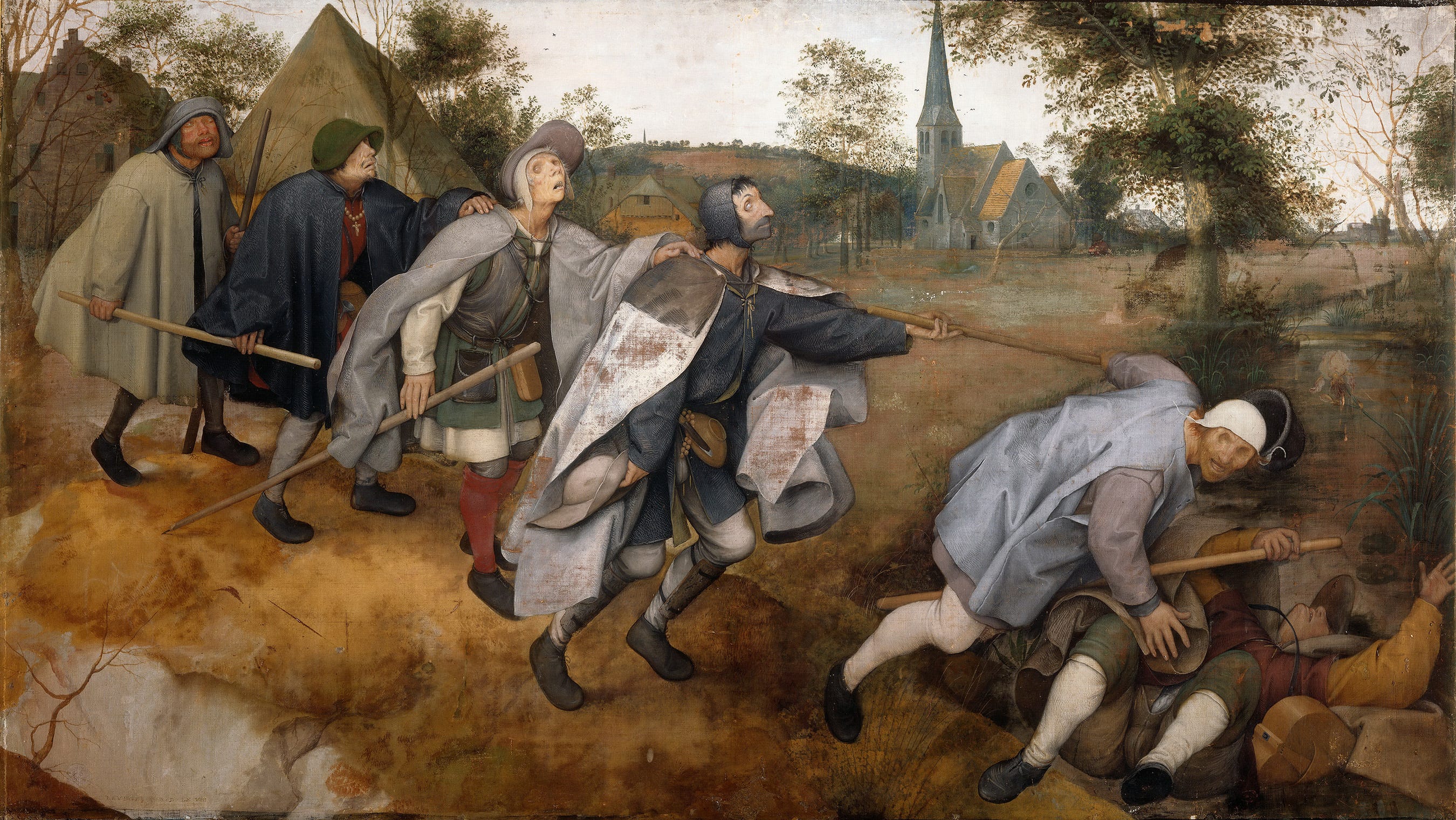
Opinions are like phones: everyone has one, but nobody knows how to use it to their benefit. You can’t expect men to stray too far from what they already believe, and opinions only serve as morsels of wisdom from which that belief is made manifest in thought.
If man had half as much intellect as he does confidence, his opinions would actually be worth a fair amount; but because the average person does less thinking than, say, receiving ready-made ideas, he takes wholesale that which is not his own, and so becomes enslaved to the opinions of others rather than master of his ideas.
It is a regrettable fact that lies are more often provided in place of very well-considered thoughts. Most men’s opinions today, I think, can rightly be classified as lies—not only because the sources from which they’re derived are biased themselves (and more often than not deliberate falsehoods without any originality) but because their end is merely to support what is already considered true.
You cannot expect the truth from those who think truth is something to actually be acquired objectively. The average person still conceives of the truth as the antipode to the false—as the negative or opposite of that which is the Ding an sich (thing-in-itself). This notion will persist so long as man considers it his business to view the world through the lens of objectivity alone. Opinions only prop up this false notion of objectivity within ideas by empowering them through a lack of conflict between the subjective and the material basis of all things.
There is no dialectic between ideas and opinions today, and such is why everyone defers to the false and becomes insipid and ridiculous as a result.
The acceptance of all things foolish and barbaric today is a direct result of placing too high a value—or rather, not knowing how much value to place—on opinions. Opinions are, in a word, true, insofar as their truth is predicated on the subjective within man; and false, insofar as they are only subordinated to the objective. You see, conceptions are abstractions born in experience and given form in the mind; the two aspects of reality are really synthesized in one the moment you recognize that, like a coin, you cannot have one side without the other. The very idea of a concept necessitates a negative within it.
Dialectical reasoning is the closest thing to reality there is because, in a sense, its teleology is reality itself. Pure being is also a pure nothing so far as it exists within a reality that allows contradiction and evolution. A single idea brings forth a new one every time it is thought; and man, so long as he is doomed to be uncertain about his thoughts, must languish in a sea of contradiction and opposite affirmations that bring about their own positivity. Negativity and positivity necessitate one another in order to bring about their own continuation and existence in thought—a type of thought which exists only for man to cognize and make use of.
What everyone gets wrong about the nature of truth is simply that it has no meaning outside of what predicates (adjectives or qualities) we wish to assign to it. Truth is subjectivity absolutely but objectivity immanently—that is, in the immediate of some experience. Reality presents itself as one continuous whole, but while observing it as one whole, it is also simultaneously cut up infinitesimally each passing second of conscious awareness into discrete units of experience which become actualized in our experience: all this to say, existence is its own truth, made a brute fact by the nature of its representation to us.
Truth, like every other concept whose idea belongs to Plato’s Hinterwelt of forms, is a lie and a truth at the same time; it presents itself to us as an objective reality but has no ground on which to stand in a metaphysical sense—unless you would like to ground it in your own absolute conception, which is, I’m sorry to say, all man has ever been able to do when it comes to abstractions taken from experience.
To affirm one position over another is to presume that there is an actual fact of reality, that certainty is present, and that it is obtained in this one conception, approach, or method. I think, unfortunately, that man cannot get beyond his desire to know existence in its true form, and thus creates for himself “true” forms, or higher worlds, or utopian visions for society, all in a vain attempt to forget that his meaning is ultimately dependent upon him.
We see people get offended when their motives behind an action are erroneously assumed, and this is because the person doing the assuming presupposes knowledge they ultimately cannot have. They have good reason to get offended, for their integrity is ultimately being questioned; and everyone likes to think they have truth on their side when they consider something from the standpoint of their reason—but again, this is all a mirage. Everything is relative. Opinion and perspective are the common order of the day and shall rest eternally atop the idea hierarchy so long as man thinks it his duty to make truth something sacred.
Truth is both farce and tragedy, but it only becomes tragic when opinion is substituted for it. Truth has no objectivity, but that doesn’t mean it has no power. God doesn’t exist so far as I know, but that doesn’t stop people from praying to Him and using His name in vain. For most of history, God was truth; but now, man knows better and places truth within himself rather than outside himself.
True truth is truth that recognizes it doesn’t need the label of truth to be powerful. It is a failing of language to even convey such an idea, contradictory as it is; all the writer can do is hope that the reader is not turned off by the blatant absurdities that are written with respect to the true nature of reality.
Reality is often more strange than we would like to admit, and no one has fully exhausted their own mental capacities as of yet. Not even Shakespeare, as profound and deep as he was—with his encyclopedic understanding of human nature—managed to encompass even a tenth part of what man truly is. The fact that Shakespeare was a writer rather than a philosopher could be chalked up to the fact that the stage paid more than some struggling bungler of Aristotle or some misinterpreter of Plato; besides, England had no need for another philosopher with Francis Bacon alive—a man whose prose rivals Shakespeare’s verse. The brevity and profundity are almost too much to describe in words.
To play with abstract ideas is the game of the philosopher. Very few actually obtain this, however, and those who think they do merely cull from others what they themselves think, and in the process of imitating, spoil the original idea and make themselves fools in the process.
I’ve often thought while writing all this thus far that my labors and efforts to encapsulate all of existence—in order that I may finally be done with the intellectual sphere of life and enter into the objective sphere (the real world of struggle and hardship)—is in the end a fool’s errand, because to attempt something impossible is necessarily to do what no one can. Greater minds have tried and have been broken upon the rack of reality when all their ideals melt into air and become like nothing in the face of death—such a shame to yearn for that which one cannot have, and yet how inspiring it is, and how improved one is by striving after that which cannot be done in an absolute sense.
Even Hegel had to affirm the absolute as something which is changing and evolving within the world constantly; the whole universe rewrites its laws upon the tablets that are space and time, bearing all these stars and galaxies where, upon a single lone planet within the Milky Way, conscious creatures were smart enough to create for themselves a systematic schematization of all conceptions in which they aimed at comprehending all of it. So it was for human knowledge, forever to remain constrained by its own efficiency of organization.
An opinion is merely what someone thinks about something that has no epistemic content to it: say, your favorite color or what you think about some book you’ve read. These have no right or wrong answers, we are told, and so everyone holds themselves to their opinions above all else in order to feel assured in the world. I, for one, tend to accept this notion out of convenience, but I don’t find it all that useful in terms of a descriptor.
If one is to go back to Frege and think the only way to “correctly” describe the world is through predefined terms that prove themselves, then we are to forever know no more than that—merely what we already know to be the case. It is shocking to me that people look upon the analytical logicism of Frege and think it the greatest act of human intellect ever performed, when in truth, Schopenhauer, decades before him, already described the same theory of term predication and then proceeded to undermine it by stating that it, too, had no ground from which you could evince the consequent of all its deductions.
Logic is but the superfluousness of an idle mind seeking understanding. It reveals nothing which isn’t already considered reasonable enough to assume. I abhor solipsism, but much more do I abhor those who claim absolute knowledge when, in truth, they scarcely have the shadows of it.
Opinions tend to make a scholarly mind idle, for anyone with an acquaintance with logic could delude themselves into thinking their opinions are actual facts. It bothers me a lot to see so many people so sure of their convictions when they haven’t got a leg to stand on. I just wish people were more open to various forms of truth instead of thinking of it as this immutable object that has persisted since the beginning of time.
Truth is our subjectivity made objective in the world. Those who confuse truth’s nature and assume that with reason they have the ultimate tool by which to judge all statements of reality as true or false have only maintained a narrative they’ve never once critically examined. To them, to question truth is either absurd, irrational, or purely sentimental. They’re so dyed in the wool with respect to truth that they conceive it only in a vicious dichotomy, and this makes sense, for truth has traditionally been viewed with all things either in its domain or out of it. I understand it completely, but I don’t hold to it anymore for the same reason I no longer hold to materialism as a basis for my metaphysics—it cannot be known absolutely, only subjectively and dogmatically clung to out of fear. Now, I hold to nothing but speculative philosophy itself: philosophy as a way of life done in the pursuit of wisdom—a constant search for that which is beneficial and good to both myself and society at large.
My opinion of the world is that opinions are blind if they are not searched for with the light of dialectic to illuminate them. All the halls of intellectual tradition silence themselves in the presence of the thought that one can affirm something but not affirm it absolutely. But what does it mean to affirm absolutely if the absolute doesn’t exist? It is to affirm without certainty that you truly did affirm in the first place. It is to endure the full weight of every decision upon yourself and, ultimately, accept each responsibility that comes with existing in the world, manifested in the world through action.
The absolute is not merely the complete synthesis of all things, but rather it is the incorporation of the full progression of each thing in its stage of development; it includes both true and false notions and, in fact, treats them as equals, for nothing is truly right or wrong in the eyes of totality, only just another aspect of that same absolute. To affirm is to accept that you cannot ultimately affirm, but the idea of it is so present in your conception of reality that you have no other choice but to affirm it anyway—you must affirm air if you are to reach the atmosphere, though you can’t see either.
Subjectivity alone is the only true leap into being which one can take ultimately and affirm absolutely, though it be done in a confused manner. In fact, one does it so long as they live, for life is literally the counterpoise to death and so must always be affirmed amidst the uncertainty of “when.” Everything presents itself as it should, we think, but we must never forget that abstractions exist only for us and are not really out there in the world roaming about, but rather the byproduct of the mind—a constantly changing and ever-evolving faculty. All opinions turn about the dialectic and make themselves known in the world through their embodied contradictions.
I have given my opinion well enough, however, and no longer wish to write about it.