
Philosophy
55th installment to my philosophical system.

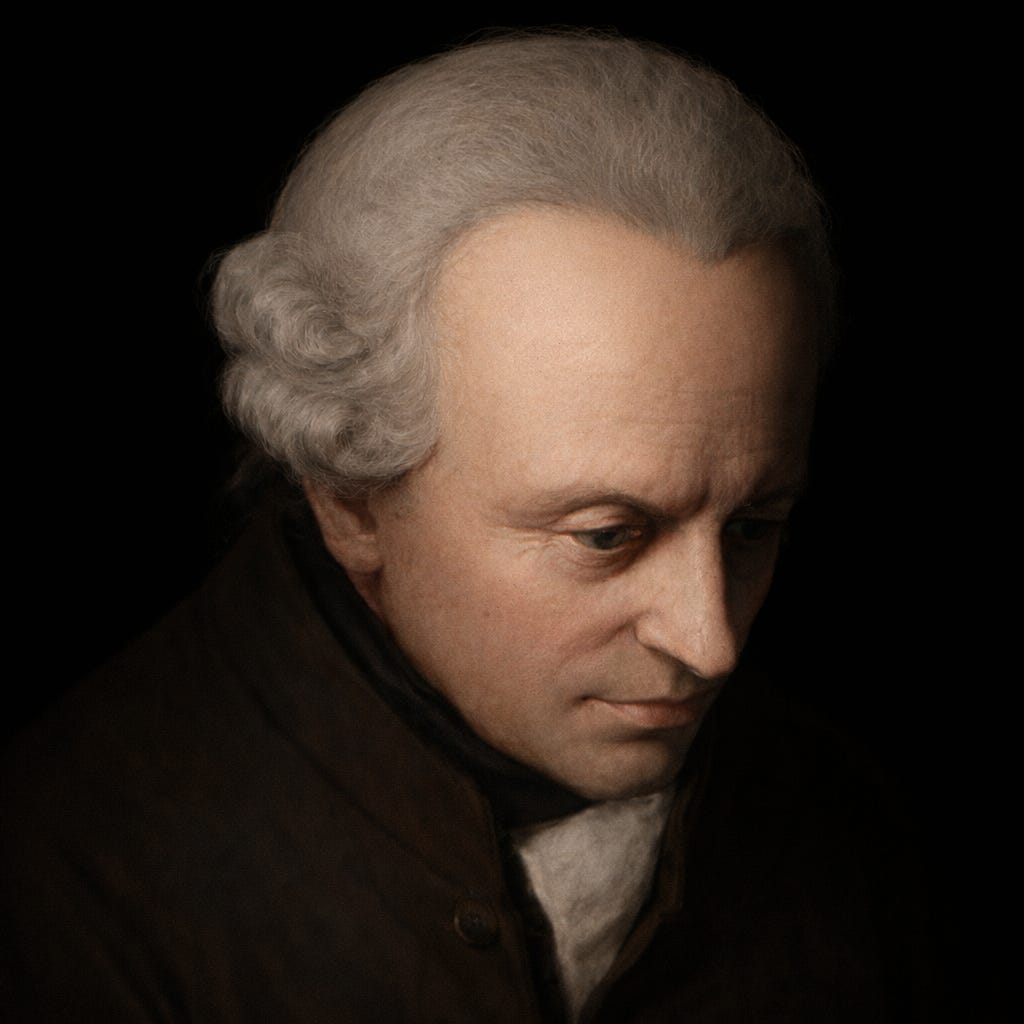
Philosophy, when she was the queen of the sciences, commanded all men who approached her to do so with a bowed head. We of today would think such a thing ridiculous, but then again, we of today were also foolish enough to dethrone philosophy from her chair of importance, replacing her, instead, with our own ignorance. What we have today is a cult of ignorance. All that is worthy of thought is consigned to a quaint nonchalance, a state worthy only of those who have a brain but do not wish to use it. We no longer feel shame in our ignorance; quite the opposite, in fact. Man is so shameless today he takes pleasure in showing all just how little he actually knows about the world. All his ideas arrive brick by brick, as if he were still a child, piling high up to the clouds, all to fall back down from the slightest breeze of reason.
As a matter of course through life, all men must find themselves wondering now and again what is to come of them, what is the meaning of all this matter that stands proudly before them; finding, however, philosophy useless in this respect—for thinking it doesn’t compare with the predictive validity of science—they throw the baby out with the bathwater, and so become philosophical recluses. The questions of life, however, solely fall under the domain of existential philosophy; and at once does one enter philosophy as it originally arose: as a reaction against ignorance, and a desire to see the light of truth brought to the darkness of ignorance in order to cast it out completely.
Philosophy, as it was originally practiced, had the good fortune of being used by men who understood her. Its practice was a practical one, an existential one, a practice for life—a method for arriving at startling conclusions, not so because they were true necessarily, but because they increased our wisdom, made us wiser, and assured us of the importance of thinking for ourselves on all matters. It was in the use of our mind that philosophy first got its run. Where before there were only looming shadows, the world now presented to us whole figures by which to trace and follow along. In this great discovery lay treasure hidden beneath the human heart which only a skeptical shovel could dig out. All thought first arose in doubt, and so, naturally, philosophy served as a propaedeutic—a preliminary instruction—for man to get his bearings with respect to the question at hand. Doubt, the mother of all our woes, has reigned over us since the beginning; but it was in our desire to overcome her motherly influence that we strove to strike out our own path, and thus had to forge for ourselves necessary tools for probing the recesses of our soul.
Doubt was founded on a memory of a forgotten tragedy. The inability to recall in perfect sequence all our experience, tethered with the impossibility of correlating all our sense data to their origin point, has always made man fear himself with respect to his own capacities. Every wrong conclusion was a rejection of what was possible, but which wasn’t considered likely. Every time a man must face existence, he must do so deliberately, with doubt always lingering behind. What a man makes of his doubt is largely determined by how much he delights in reflecting on it. Speaking personally, I owe my entire life to doubt, as well as to philosophy—for it provided me tools by which to engage with the implicit emptiness I saw within the materialist, scientific worldview.
A great defect in modern thinking is to assume that if a thing cannot be proven through evidence, or has no empirical basis, then it has no reason to be investigated; but of course, this misses the whole point of skepticism, of doubt, of being human. If there is no doubt to posit in the first place, there is no reason to think at all; thinking is merely man’s attempt to justify to himself the existential reality of his lived experience. Doubt, again, makes lived experience seem quite secondary: doubt, I feel, takes itself too seriously, for it always feels the need to rear its ugly head in all our affairs, and in doing so becomes a common annoyance to all, and a horror to thinkers like myself—lovers of wisdom, seekers of truth, unifiers of all experiential content under one framework. What doesn’t doubt bring under its control and savagely scrutinize down to the atom—as if every instance in life warranted its own investigation, all in search of a first cause?
In such times, one must always feel ready to drop doubt like a bad habit and have their actions speak much louder than all their collected thoughts. A doubt is a thought, but philosophy puts all thoughts to shame by placing them all within their respective categories, and thus provides a sense of clarity as to how a problem in the mind manifests itself. It was in this respect, actually, that philosophy strove to become like a science. In finding the foundation of all things quite shaky, and wanting clarity while also overcoming doubt, it was thought necessary to turn philosophy into a calculated procedure rather than an honest struggle with what was impossible to fully grasp. I’ve often described philosophy not as a subject that has final answers, but which has every answer given on a single question.
Philosophy is really a study of intellectual history more than anything else; it’s a survey of what various people have considered and interpreted about the world—in this respect, everyone is a lover of wisdom, for everyone loves that which not only empowers them but which sustains them in difficulty. To doubt is really to love; it’s to show a fidelity with yourself and the contradictions which lie at the heart of every thought, consideration, or contemplation you have on life. Again, it all revolves around life. Philosophy is not what any philosopher says it is: it’s what the student determines it to be in the moment of considering it; it’s an ever-evolving process of affirming and denying what you once thought it was. I’m not a person who likes leaping into presumed certainties. I find, rather, all things worthy of doubt, of receiving a skeptical treatment—even the most obvious things like the self, emotions, and reality as such. Solipsism, along with the groundlessness of all things, makes it impossible for me to assert in good faith that anything is final. Not even God could make me clear to myself. I am not so made as to be certain of anything except death.
My doubts are nigh infinite, but death—that is perhaps the only firm and solid basis from which anyone can construct a philosophy. Death is to me what the will was to Schopenhauer—the only immediate certainty which life presents us with as we trudge along through it; in fact, I would say it’s even more foundational, for the will is metaphysical, abstract, and only plausible after understanding the complex arguments behind it. Death, on the other hand, doesn’t need arguments; it has proof enough, and from it arise all existential concerns—which, to an existentialist like myself, means the beginning of all thoughts; for all thoughts start in doubt, and from doubt, a love for doubt itself. Should someone proclaim to be a lover of doubt, they really say they are a lover of thinking, for in love and doubt rest all infinities which a single person could content themselves with. Whenever one loses sight of the way in life, they can be sure to find it again shortly after contemplating what the point of life was.
To be a philosopher requires infinite flexibility; one has to be able to engage with every idea conceivable while not affirming a single one, even those that sound plausible. Remember, all is doubt—philosophy is a systematization of doubt; without it, no uncertainty can be considered, and without that, no real honest thought. Honesty is the highest form of thinking, for it means one is capable of loving while being unsure of that love simultaneously. In this respect—and excuse me for sounding like a Hegelian—philosophy rests on an eternal contradiction, something presupposed from the outset that makes this thing or that thing reasonable or justifiable. The nature of such metaphysical hooliganry is born in the infinite abyss which lies beneath our feet; there is, for all practical purposes, an infinite space which encircles the Earth, and so we, being but one part of that pale blue dot, must make some simplifications in order to not be swallowed whole by the scale of reality to which we refer.
Being human, we cannot speak of all things from the perspective of a photon, nor of a quasar, and so, we must pick our struggles wisely—so wisely, in fact, that we can be sure not to die from the consideration of them. I’ve long wandered through the world and wondered to myself what the purpose of all this wandering was—what I was in search of with all my speculations and propitiations. I found out, only after many years, that the most fundamental question seemed to be that of life itself: not truth, or love, or beauty, or even suicide (as Camus thought), but rather the grounding of life itself. If life were without ground, then what good could suicide bring to it aside from a respite from our doubts? Could such a creature even exist? Could one fear doubt and uncertainty so much they prefer to perish than to tarry with doubt, and in doing so love the process of doubt—love contradiction? Who is bold enough to love contradiction? Me. I am. I welcome it with open arms, for the more I find myself in its presence, I am strengthened, my will to live is increased, and the troubles of my life fly upwards like sparks from a blast furnace which I do not fear, for I am like a crucible—resistant to all forms of heat.
I am philosophy. I take all philosophy to be my province. I subsist alone on philosophy, for in it are contained the most delicate and intriguing existential questions possible. If one hasn’t heard it already, let me be the first to tell them: to study philosophy is to learn to die. The totality of our being may be summarized in that phrase, popularized by Montaigne but tracing its roots back to Plato’s Phaedo. Philosophy is meant to be a life project which we live through. With this said, it can be asserted without fault that there have been few real philosophers in the history of philosophy; everyone questions, but not existentially. Questions themselves are the last refuge of a strain of dogmatic thinking that poses as being innocent, but in truth is deeply deceitful and untrustworthy—as if an answer were possible to provide to questions which doubt the very notion of doubt itself, like asking which infinity is higher. I have no time anymore for those who think themselves capable of being in the right, of wanting to affirm as truth that which they should really overcome through that which is false. Only in reveling in the contradiction does one see the power these ideas truly have over us and our ability to act—which is to say, very little or very much, depending on the kind of spirit you carry within you. The more one is able to see the connection between things and draw parallels to and from distant ideas, the more one is to find contentedness in not knowing with absolute certainty anything at all.
What remains certain is death, doubt, and contradiction—all three vying for attention within the philosopher. One can never get enough of these aspects of existence; even in writing about them, one is presented with a deep difficulty—which is to be master and which is to be slave? In our common notions of what thinking consists of, we typically make all things slave to ourselves, but this is just where thinking alone fails, for we falsely judge when we do so without first considering what to compare the thing to. This is why real doubt is such an impossible thing to comprehend, for to doubt is really to confront yourself in a mirror and presume your reflection to be someone that isn’t you; that’s perhaps the best analogy one can give for the sense of omnipotent doubt, the Pyrrhonian skepticism which, like a shadow, is wherever there is uncertainty. To view life through any other lens would be to cheat life out of its grandeur, for life appears in its most resplendent when all the veils have been stripped from it, left bare before us, shining so brightly we can’t even make out its figure. One feels what I say, but do they existentially understand it? Do the common folk really grapple with doubt for long enough to truly appreciate its impossibility?
To anyone who can even find words to describe doubt, I truly laud and applaud you, for you’re a unique specimen among writers, and perhaps possess an abnormal genius; it does, after all, take a thoroughly insane man, or an utterly obsessed man, to make philosophy an actual activity which they carry out for the sake of life. For the sake of life. Yes, that is what I’m after. Any philosopher that says they are after truth is really chasing after a phantom, an abstraction, a thing so thin it disappears each time it turns sideways—like paper. What is a philosopher anyway but someone deeply enthralled with thinking, with finding an end to the passion which sustains them in thought? If I finally unveiled the last mystery of the universe, I would end myself right there on the spot (maybe!), because all would seem dead to me—if one cannot doubt, what would be the point of philosophizing? I prepare myself to die in the act of reflecting on the infinitude of doubt. My doctrine is not unlike Emerson’s: the oversoul given tangible form, expressed on paper; I concern myself with the hidden nature of man’s own existential considerations—the infinitude of the private man, that is my one doctrine. I hope I appear unfriendly to those breakfast autocrats, those dinner-table-only philosophers, those who like to confuse and equivocate for the sake of starting trouble: I have no interest in keeping their attention. People who read me expecting to receive the final revelation are soundly mistaken—for my philosophy is a personal, existential one: it is my own workings through my own consciousness, revealing the hidden truths which my doubt asks and which my heart answers honestly.
I’m very content to have nothing to show for anything in my life. Philosophy, for me, has always been for the sake of life—having nothing to show is only a confirmation that materialism is dead, and I have killed it, not because I wanted to, but because I was defending myself from it; and I would gladly accept charges of manslaughter for the deed, on the condition that after my release I be allowed to make a statement to the public regarding my actions. Philosophy is all about deriving causes from the effects of a decision which we were in doubt of when we made it. Doubt is sacred to him who finds it impossible to overcome; yea, in striving to overcome it, you become doubtful yourself. Has there ever been a man who, when faced with doubt, welcomed it so honestly into his heart that he was not in some sense terrified at the implications of so reckless an action?
I sometimes think, as Nietzsche did, that we of today would have to make way for the future in order that they may have something to do in it, rather than sit contentedly with arms folded as all manner of pleasures unfolded in their lusty laps. Doubt, doubt—that is the thing which we must leave for the future most of all; so long as doubt is in place, we can be sure the future is secure from total conceptual capture. Nature, in my heart, sings so fervently presently that I struggle to find the words with which to predicate it. I think I would be happy if all my philosophy turns out to be wrong, for that would only prove I started with the right assumption. Contradictions are the lifeblood of philosophy. Would anybody today know who Kant was if it wasn’t for his desire to find the limits of pure reason? I would like to think he would only be as well-known as, say, Emanuel Swedenborg or Christian Wolff, if he had left behind his Dreams of a Spirit-Seer alone.
The truth about philosophers is that they don’t make the future, but rather make way for it by, hopefully, hitting upon certain influential ideas, which can later go on to be developed and brought to a higher, more perfect form; while most would like to assume themselves to be doing important work, that is not for them to decide: only posterity has the good humor to make or break a dead person’s reputation, and while that may not mean anything to the dead, it does serve the living in giving a new consideration for what ideas may or may not be useful in these intellectual endeavors of ours. Knowledge is infinite and man is finite. With this being the case, it necessarily follows that those who would be bold enough to call themselves philosophers should look into all considerations by which doubt can be contended with nobly. Our goal as philosophers is not truth, or praise, or any other aspiration which countless men have thought worthy to pursue and were broken on the rack of reality for—but rather, simply this: to find within ourselves the strength to commit to our own ideas, and the steadfast readiness to take them as far as we can in order that our doubts may be appeased for a time, in which we may find tranquility of mind unequal in the world. Should all this be carried out for the sake of ourselves, we can rest easy knowing we have been faithful to ourselves, and in being so, true to who we are.
In scientia quaerimus, in completione invenimus—In knowledge we seek, fulfillment we find.