
Pleasure and Pain
42nd installment to my philosophical system.

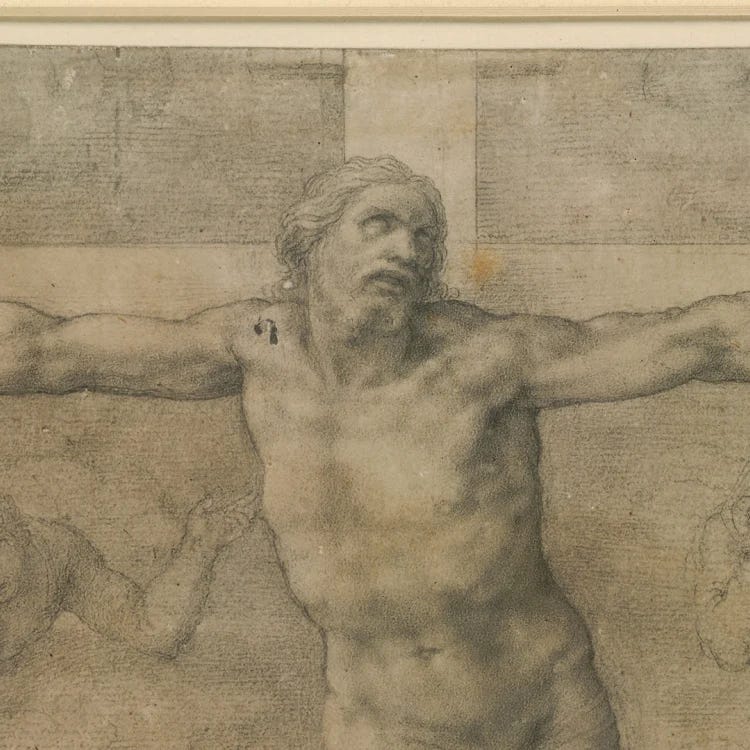
Pleasure and pain come upon life as naturally as light enters the eye. There is no pleasure without pain and vice versa. What we endure in life may rightly be figured as one-tenth pleasure and nine-tenths pain—and yet, man endures, and considers his fortunes well enough even though he may have been dealt a bad hand in life.
The sheer audacity within man to even confront life is worthy of praise; it is, perhaps, even heroic, simply to live in the face of so much unending drudgery and suffering which has to be got through in order to sustain yourself. Life has never been a fair gig, and what makes it absurd is precisely that we are forced to believe it fair nonetheless in order to get by; but in that continuous cycle of absurdity, there seems to always be pockets of simplicity and beauty that turn even the most tragic of situations into events fondly remembered.
I may at times, or even all at the same time, be melancholic, pessimistic, idealistic, happy, hopeful, sad, miserable, and every other emotion. In such a state, I find great relief in knowing that I, as a single individual facing off against the totality of the world, am capable of enduring all the pricks and pangs of life in spite of how I feel in the face of them. To recall what is happy in sad times is always a slight consolation, but to recall what is sad in happy times is greater still—because in that, you recognize fully the necessity of pleasure and pain as you live out your life. When a man learns to feel love, he must also bear the risk of feeling hate.
The dialectical nature of pleasure and pain makes itself known every second of life. If life were merely a matter of getting by without considering deeply what you want out of it, philosophy would have nothing to say on the existential questions that plague it; but since man is doomed to inhabit the body he is born in, and persist in the times he finds himself in, it is necessarily a matter of dialectical struggle how he is to recognize himself in the mirror of the world when so much of it is bound in inevitable pain and temporary pleasure. Nothing ever truly lasts in life, and what we make of all our goals and interests has no greater concern for anything outside ourselves.
If one is to consider life as objectively as possible, in order to get at whatever truth lies at the center of it, they will find, I’m sorry to say, nothing beyond the pleasure and pain which comprise it—and since the majority of it is taken up with pain, they will become pessimists, and perhaps even nihilists.
One cannot consider life authentically unless they undergo the arduous journey of overcoming what fundamental antinomies lie at the core of it. Life, if I haven’t made it clear already, is a fundamental contradiction itself: to live is to be amongst the living, and thus to serve as a repudiation of the dead—to say nothing regarding the absurd nature at the heart of what existence really implies. One may as well call upon Kierkegaard’s symparanekromenoi (fellowship of the dead) in order to give a lecture on the true implications of existence.
What is absurd in life is that it cannot be systematized without falling into a perfidious rigidity, or a dogmatic anti-human ferocity—the sentiments of which are worthy of the grave, and whose supporters write the epitaph for life without the tombstone to engrave it upon. This great secret is only kept because of how many different ways it may be told. Life confuses us, scares us even, because there are too many ways it can play out; there are too many ideas which one can give in order to explain life, and in this confusion comes various interpretations which claim to be the “right” one. I am convinced, however, that no matter how far one is to take life, they shall never find a suitable answer to it, or a framework to live in which shall be completely satisfactory to them—pain once again overrides all, and turns our foolish pleasures into hateful phantoms: mirages give hope to the man stranded in the desert, and so do all our life-philosophies.
Every idea regarding life is really an affront to what it really is—a miscellany of misery, a bundle of crushed hopes and sad reflections which afford us no respite. Life is suffering because to live is to suffer whatever comes out of the void of absurdity and chance, which we play no part in but which we must endure and get through if we are to experience a far-off pleasure which we presume to be there because it has always appeared after every tragedy.
It really is sick when you think about it: man only sustains himself because he feels intuitively that if he holds out long enough, he will be rewarded for all his suffering—in fact, most today don’t even consider life a thing worth bothering with; they’re waiting to die, and are desirous of it, in order to be freed from all their earthly misery. This is the function Christianity, and essentially every other religion, has served since its inception. “Religion is the metaphysics of the masses,” said Schopenhauer—or, perhaps better put by Marx, “Religion is the sigh of the oppressed creature, the heart of a heartless world, and the soul of soulless conditions. It is the opium of the people.” One cannot disqualify religion without dooming nearly half the human race.
For the masses—bound by drudgery and physical need—religion is the only bridge to life’s deeper meaning. While philosophers address the few who are intellectually emancipated, founders of religion rouse the multitude from their stupor. As Plato noted, the masses cannot be philosophers; therefore, religion serves as their necessary guide to the lofty import of existence. But again, in truth, there really is no distinction; both the philosopher and the religious person hold out (on life) on the basis of faith—faith in their own judgments regarding the systems or ideas they buy into; the philosopher is simply better at justifying to himself why his worldview works in his context.
Every ideology, whether directly or indirectly, is a response to the material conditions which imbibe every facet of sensuous activity. One cannot consider life without considering their material conditions, in the same way one cannot consider the world impartially—without subjectivity, that is—without falling into a solipsistic nightmare. The absurdity of life once again finds its place in the pleasure and pain which we feel at any given moment. We respond to our external world and compartmentalize it in our internal world. There is no better summation of what modernity is than one large distraction from what the external world (pain) is striving to place upon our subjectivity as we live.
Man is both internal and external. What is absurd is that he must juggle both aspects of his life while existing in a world that tries to limit him to one or the other. Everything is an either/or in modernity; every nuance is brushed over for the sake of simplicity—critical thought is nowhere to be found except in a few corners of the internet (for no one really interacts with anyone anymore) that either try to justify its destruction or its emancipation. This confusion is then further propounded by the fact that so many are unable to think for themselves on anything; everyone wishes to have the answers to life given to them, rather than going out and discovering it for themselves.
Every framework is contingent on the power structure which it’s striving to free itself from; every pleasure and pain in the life of an independent thinker is really ancillary to the one overarching pleasure and pain which they are under: the pain of enslavement to the world and the pleasure of seeing yourself free from it. In that sense death is a pleasure, so long as it confers freedom on the one who feels subjugated to everything which is malicious and vain in this world.
Repetition is really the glue that holds every dialectic together, for without it, there would be no turning over of events (in the mind) which led to us developing systems of understanding in the first place. It would be impossible to face life genuinely were we forced to recreate new meanings each time we awoke from our temporary slumber. Implicit within repetition is the concept of memory—that faculty of the mind which turns the mysteriousness of life into a manageable practice which we keep up with at all times.
We are constantly going over in our heads what it is we need to do, but very few stop to ask why we do what we do in the first place; this question is enough to put all of life into perspective, and it’s from here we form our habits of habituation—we do things because we do not know what else to do besides them, and hence comes all our daily rituals and activities which we adopt without reflection. Reflection and repetition go hand in hand. There is no negation of negation without reflection continuously repeating itself.
Now, unlike Hegel, it is here I depart from the optimistic teleology of an eventual synthesis; I do not believe that history has a purpose to it, or that it is moving towards a higher form of self-realization: the rational processes of man are part and parcel of his already determined condition; every “victory” is really an overcoming that was not arrived at through “sheer force of will” but contingency. If man achieves anything at all it is due to how suited he is to the task at hand which, altogether, is largely out of his control.
Repetition is the realization that reflection alone is not sufficient to capture reality in its entirety. What is necessary is that one reflects always, at all times, on everything they encounter, if they are to achieve, if not lasting peace, temporary contentment. This again gets at the idea that the only way through the absurdity of life is through its necessary contradictions via the dialectic.
There is, in life, a method to insanity and a method to peace. In the former, one need only try to live life as if it had no meaning, and they shall quickly fall into a manic stupor. In the latter, one need only live life as if it did have meaning, and they will find that it is nearly impossible to locate—if it has a location at all. As I’ve said before, every concept really fails, because they abstract away from what life is existentially. Every concept is born by accident and lives depending on its utility to the individual.
Those who strive for a perfectly consistent, “objective” worldview are really striving after the impossible, for there is no perfection in life, and man’s mind is incapable of dealing with the groundlessness of existence itself, let alone the philosophical implications such an “objective system” would raise the moment it was completed.
Wise men make God the ground of all things, for, like life, it is equally mysterious and unknowable—but it is a prophylactic against the darkness which all things fall into when left to our own reason; it is, however, a kind of philosophical suicide, for it makes all rational productions of the mind slave to a master which reason itself cannot comprehend. Such is why it is wise, for at least then, it can claim ignorance on divine rather than human grounds.
Honest men, however, grapple with life dialectically, confusedly, openly, contradictorily—in a word, humanly. There is no end to the number of permutations which man may devise for himself when attempting to understand his place in the world. This innate confusion about our very condition gives rise to all our pleasure and pain—but, at the same time, one is endeared to the idea of pleasure being found through engagement with the pain openly, for all to see, in real time, at every instance one is forced to consider it.
Life is a pain, but in that fact is also found, standing behind it, the dialectical method of reflection and repetition—in short, the act of thinking real hard about what it really means to be a subject existing in an absurd world—this one thought, over and over and over again, until it cannot be thought anymore, only to be picked up once again the very next day. Everything I write with respect to life is really a therapeutic exercise, because in this stream of consciousness I find the ideas which most relate to my situation, and in giving them vent, and making them immortal by placing them upon the page, I in a sense exorcise them, and in doing that come closer to what I seek: a lasting peace with simply being, having no thought for tomorrow, no consideration for the past, and no anxiety about the future.
Life is a pain because it is, we are; we cannot be other than what we assume ourselves to be presently, and in that, we cannot go outside ourselves until we accept what we are presently. The hardest thing in life—a lesson I discovered only after many years—is being happy within a state of desirelessness; half of man’s pains are from his ignorance, and the other half is from his envy or desire for things which matter very little in the grand scheme of things. People are quick to reject pain and welcome pleasure, not realizing that all pleasure is bound in pain, and in pain is found the source of our liberation—we only conceive of what pleasure could be in response to what it would be like to be freed from our present pain.
As you can see, you cannot have one without the other, and the more you want one over the other, you throw off the balance, and thus disturb your whole harmony. A thing at rest shall remain so unless acted on by another force, and likewise, the dialectic of life is found when our thoughts regarding ourselves are made insignificant. It is not bad to be made small when compared with the universe; humility today is a lost art, much like patience, and you will find that the sooner man is able to overcome whatever inconveniences he is forced to endure on behalf of life, he will be made the happier for recognizing how trivial they all really are. Living life in this respect allows one to more easily wrestle with pain, and overcome it through the pleasure of realizing what is really important to the subject who was born to live and forced to die.
The last man shall have no undertaker, and thus he will go out of this world similar to how he came into it—not by choice, confused, and ignorant of the whole point. It is in the thought of death that one gets through many difficult events. Memento mori! Memento mori! One must remember they will die in order to enjoy the fact that they live; in fact, personally, if it wasn’t for death’s eventual certainty, I would have ended it all long ago, for I consider nothing in life meaningful enough to overcome its eventual end. But, at the same time, that thought is also what compels me to live—since I don’t know everything, I’m interested in seeing for myself just how far my eternal torment and ephemeral joy will take me through life.
Life really becomes an adventure when you don’t set for yourself objectives to complete within it; there’s an overwhelming amount of freedom that comes with not taking life seriously—life is a cruel joke when taken seriously, and a divine comedy when taken lightly. Taking it easy, and not thinking much about it at all, is the best way to pass it by.
Every “practical” consideration today is really a false pragmatism that doesn’t concern the subject existentially at all. All “existential crises” today are really material, not existential; almost every trouble that faces an individual stems from their inability to realize themselves as fully actualized subjects (single individuals who understand themselves dialectically)—and the reason they’re unable to derives from their inability to live without sacrificing most of their life to their employment. Life today is tied to your occupation, and as a result, you have, over many years, a gradual dissociation with your own subjectivity; people forget what it means to be human, and in this ignorance comes every dishonest cope, grindset, life hack, online community, wellness program, and guru-entrepreneur self-made millionaire study guide that the human brain is unfortunate enough to cogitate. All of this leads to an eventual disenfranchisement with your own soul, and ends in a vexing disenchantment with life itself. Nobody is capable of saving you. The world is pain, and existence is all too short to make something out of it when the materials are lacking for its production.
To live is one burden, to think it has a reason, another—and, worse still, to believe it has a meaning, the greatest burden of all. What kind of absurd meaning would any of this existence have when you consider how miserable things are presently in it? In such a state, it is very easy to consign yourself to the flames, and resign from the world like an ascetic—but I find too much enjoyment in enduring life, even when everything seems like a dread, than ending it short. My meaning is derived from my inability to find meaning. I find power in not knowing where the winds shall carry me, and, all the while, not caring whether I’m blown into an isle of Sirens or a whirlpool of death.
Life matters very little to a man who does not wish to live it—so much of his life made hard through pain, and, unable to overcome, sees very little point in it. I understand this man all too well, for I’m very much like that, but, in pain, pleasure is always a certainty, provided you’re willing to wrestle with what the pain really is existentially. There would be very little to complain about in life if you were able to live it without concern for how it turns out, or how all those you care about are to get along after you’re gone.
Most life advice is bad precisely because it doesn’t engage with your own present subjectivity; it doesn’t consider your pain, and makes whatever you take pleasure in as the thing you should maximize—it’s utilitarian, and thus a very uncritical and lazy kind of thinking. Pleasure and pain only mean something when we take them on their own terms, play by their rules, see things through their perspective—and overcome them anyway using our own tools, our own reason, our own methods. Life is mostly pain, and some parts pleasure—but in the existential engagement with the two comes all a man’s character, and his ability to endure the world.