
Shandy's Scribbles
1st Installment

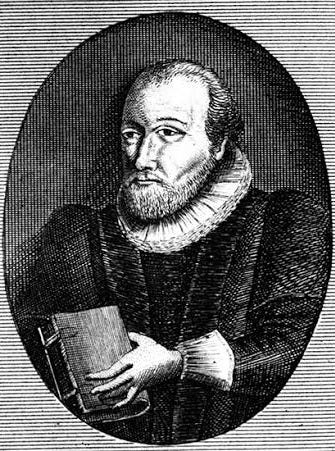
Though the misfortunes of life bear themselves within the mind of a wise man with due civility, it does not trouble him any the less. It isn't enough to merely know Aristotle: one must act out his ethics if he is to become virtuous.
The wise man in every age, like every sage before him, builds his system around the fact that the populace, with which he has the misfortune to be contemporary, always forgets the cardinal rules of happiness.
And to think the author laments at how hard it is to actually write all this nonsense out: the forgetting of ideas, the changing of mood, the scribbling of utter nonsense—all this and then some is what makes an author go mad, and rightfully so. For it is true that Socrates was against writing, for he viewed it as a way to circumvent memorization, which he felt would utterly destroy the mental faculties' capacity to function—"The end of philosophy this is!" he no doubt thought in his heart of hearts.
But alas, poor man, made sick and commanded to be well on pain of suffering. All this is lunacy, and the man who wishes to make his bread on commenting upon reality is but the prose poet, who, in his heart, feels he is not made for the world of physical labor, and thus must exhaust his brain with every passing second. Either reading this opinion, or desiring this attainment, or even being vain enough to attempt to write for a public.
A cruel public, a vicious people: and lord knows this is the case, for how otherwise are men made so wicked by the foolishness of their own ignorance? If an ass looks into a mirror, will a philosopher look back? Let us assume the ass takes courses in history and philosophy, aces every exam, and even graduates valedictorian—will it then be any wiser than before?
I venture to say, and will not argue—for that is in itself a book just waiting to be penned by some pretentious author, who, reading Dostoevsky, automatically assumed themselves the king of literature—that education makes men more stupid than wise.
It has always been the case that, as Socrates thought—and though he thought many things, some utterly vapid and foolish even for a cretin residing under the stairs of the Lyceum, this I think rather true—that all knowledge is but remembrance.
It was also the opinion of the great John Selden, and even of Grotius, Cardan, Robert Burton, Browne, and Milton—that most men do not really receive knowledge, for they are so devoid of any real interest in developing the intellect that they appear forever in a stupefied state, always resembling the ABC scholar rather than a true man of culture. They are forever children.
They are like the little ones Jesus spoke of in the Gospel of Thomas—those noble ones who are sure to enter the kingdom for they fear not the judgements of others when they stomp their garments into the dirt, and go about society as they did in birth—for it is in ignorance that true wisdom really lies.
A man can read as much as Emerson has—or better yet, like Magliabechi or Cornelius Agrippa—and yet still not find what true wisdom is. The 10,000 books Emerson read over his lifetime, I would say, did not make him, but merely allowed him to see what was already within himself.
Greatness is ever-present and inborn, it simply must be pulled out after much contemplation and active association with certain phenomena that changed the opinions of the man so surely that to go back would be to revert to an infant: forever in bliss, forever unknowing, forever capable of only good, but also forever incapable of mastering life.
You see, Socrates was wise because he understood he knew nothing, and man is wise today for the same reason. You could have no education to speak of, and yet appear wiser than the summa cum laude graduate because you have no pretension: you're so stupid that your inability to voice your opinion gives you a reserved, silent quality—and so it happens that you speak only on matters you have already seen, and never make yourself foolish in talking.
Your talking is more on the simple things, the common things, the everyday, the monotonous, the innocuous. You are a friend to all, and an intellectual to the equally dense. This is the greatest of all scholars, for they care not for the opinions of bookworms or wisdom-seekers, of scholars or polymaths; their own wisdom is enough for them, their passion for what they like—that all too simple subjective judgement that makes man a menace to conservatives and enjoyers of group-think—those foolish little goblins, intellectual fops, who value only what could be sloganized and understood in soundbites.
All knowledge is but history assiduously taken up; but if experience is to be the thing we label that allows the intellectual capacities to function in the first place—then one could easily argue that it, the performing of things without prior thought or experience, is the aeternal ac tota veritas, the eternal and total truth; for in action is implied experience, and experience begets knowledge—and so, you cannot have knowledge without it, and yet, you must always be ignorant when experiencing something for the first time.
Thus is ignorance the initial state all men find themselves in, and they are happy for it because it is natural for them to be in such a miserable, as I see it, state. They are dubbed the wisest and conquer the world by merely being themselves. Thus it is that the ignorant man always has the upper hand against the man raised in books, for, as I said earlier, his mind is of the world and his own egoisms—what furthers his goals and interest—not of the eternities that lie forever just out of the hopeful scholar's reach.
The scholar is such a foolish fellow they would actually argue for Plato's ideal forms—for the objective truths they really seek—on ontological grounds, as if Anselm wasn't already debunked in his own lifetime. They want to be able to capture truth and make it their slave; to treat it like a warden who wiggles the key in front of the inmates.
The thought, however, of the man as stupid in the fullness of his years as he was at birth, deserves one more comment. It is not only that he is the happier for it, not only that he is happy to be so himself, and not even only that he is wiser than the studious scholar; but that he can revel in knowing that he is more comparable to Socrates than any to have come after him.
Most reject knowledge to justify their stupidity. Man is naturally foolish, and man acquires a certain kind of dignity the older he gets if his mind, and his ability to reason through all the facets of life, is still marred by an obvious juvenility. It actually becomes impressive to survive in a world as rapidly changing—and unfortunately dependent on education for survival—as ours.
To appear the baby as the child is one thing—usually the result of stupid parents who pamper their kids instead of allowing them to suffer—but to forever be a puer aeternus (eternal boy), and to be content with such a wicked situation, is to make a decision that shall forever change the course of your life, and not for the better.
The world has no sympathy for capable people who blame the world for their suffering. (This is the case for the privileged anyway.) But I best stop this rant, before I scribble the night away, and find myself with pen in hand staring at a paper with nothing but ellipses on it.
The whole world is found in thought, and concentration made apparent by the serenity the writer is found in. Without peace, nothing could be achieved, and yet, the man of letters is always forced to sell his time and labor to another for the sake of making his bread, for bread is too expensive given the meager remuneration he receives in his coffer box, out of nothing but the generosity of the people.
Let that wick burn, burn till it is consumed in the wax at the bottom of the holder. Steel, plastic, it doesn't matter: wax is wax is wax—and man's mind is like wax, slow to burn and hard to remove if stained by it....