
some notes on various arguments for Gods existence
and why they fail (originally written 12/6/2023)

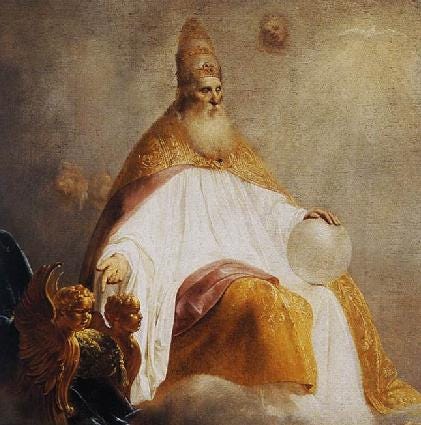
Cosmological Arguments
Cosmological arguments are a class of arguments used in natural theology and philosophy to demonstrate the existence of God. These arguments typically begin with a premise about the universe and then construct a logical chain leading to the existence of a first cause or a necessary being.
Key Features:
A Posteriori Arguments: They start with an observable aspect of the universe, like its finite nature or orderliness, and use reason to infer God's existence.
Reliance on Causality: They rely on the principle that every event has a cause. They argue that the universe itself must have a cause, which is God.
Diverse Versions: Examples include the Kalam cosmological argument, the argument from contingency, and the argument from fine-tuning.
Criticisms:
Unproven Assumptions: The principle of causality and the assumption of a universe beginning are not universally accepted.
Circular Reasoning: Critics argue that the arguments assume God's existence to prove God's existence.
God's Nature Unclear: The arguments offer no information about God's character or attributes.
Ongoing Debate:
Despite these criticisms, cosmological arguments continue to be debated and discussed by philosophers and theologians. Ultimately, whether or not they provide conclusive proof of God's existence remains a matter of individual belief.
What follows are various types of cosmological arguments.
Aquinas’ First Way
Premise 1: Some things are changing (moving).
Premise 2: Everything that changes is caused by something else.
Premise 3: An infinite series of causes is impossible.
Conclusion: Therefore, there must be an unmoved cause (God).
Aquinas's First Way is also known as the argument from the unmoved mover. It begins with the observation that things are constantly changing in the universe. This change, according to Aquinas, requires a cause. However, an infinite series of causes is impossible. Therefore, there must be a first cause that is itself unmoved and unchanging. This first cause, Aquinas argues, is God.
So, Aquinas's First Way is arguably better understood as an argument from change. It crucially relies on analyzing change through the lens of act and potency.
Basically, "act" refers to the various ways things actually are (you're reading, I'm sitting), while "potency" refers to the various ways things could be but are not (I could be singing, I could be writing poetry).
Importantly, act and potency are seen as different ways of being, or modes of existence. There's a real distinction between what actually is and what could be. Potentials, within this framework, are not nothing. They have real ontological significance, representing a kind of middle ground between full-blown reality and complete nothingness.
It's this metaphysical underpinning of the argument that I would first attack. I'd argue that, at least from my perspective, it's not sufficiently justified.
Feser, for example, uses an argument from change to justify the act-potency distinction. This is one of his central arguments for it. However, I don't find some of the core arguments for the act-potency distinction convincing. While I agree that things have actual properties and could have different properties, I don't think this requires positing a "middle ground" between actual being and complete nothingness.
Secondly, this metaphysical foundation arguably clashes with four-dimensionalism, or eternalism. In such a view, all times and their contents are equally actual and possess the same ontological status. Moreover, change still occurs within this framework, even though all aspects of spacetime are equally actual. If this is true, then change isn't a transition from potential to actual being.
Why does this matter? You could, of course, simply reject four-dimensionalism, but this is a highly controversial topic within the philosophy of physics, science, and time. While philosophers are roughly divided between the "presentist" and "four-dimensionalist eternalist" views of time, the latter holds a dominant position. Therefore, any metaphysical perspective that requires denying four-dimensionalism faces a significant burden. This includes views, like the act-potency analysis of change, that necessitate pluralism about being.
Firstly, I reject the act-potency foundation of the argument. Secondly, I argue that the conclusion doesn't necessarily follow from the premises. Even if we accept a finite chain of potential actualizations, the end of that chain could be unactualized in one respect or causal power while being actualized in others. For example, a stove, as the source of heat in a chain of heating events, might still be unactualized in its ability to be moved across the room. This demonstrates the possibility of an unactualized actualizer without requiring an unchanging, all-powerful God. Naturalists could easily accept the existence of such an unactualized actualizer.
There are numerous non-theistic first uncaused causes, some even necessarily existent and independent. Some naturalistic and physicalistic accounts allow for something being purely actual, meaning it's unchangeable, consistent across possible worlds, and necessarily existent. This description applies to certain versions of wave function monism, where a non-spatiotemporal physical object serves as the foundation of everything else. Space-time would then be emergent or functionally realized by this more fundamental entity.
Even setting aside physical evidence, a complete metaphysical worldview can be built around this foundation. Furthermore, the principle "whatever is changed is changed by another" arguably implies the thesis of existential inertia. This states that some temporal objects persist in existence without external sustenance or destructive factors. This principle essentially says that change requires a cause, but its contrapositive is also true: anything not caused to change remains unchanged. Since absences don't cause anything, the absence of divine sustenance cannot cause a temporal object to cease to exist. Unless other factors come along to destroy it, the object will continue to exist. This logically implies that it persists in the absence of causes for its non-existence.
One might argue that the absence of divine sustenance causes an object to cease to exist, making it a change caused by an absence. However, as previously stated, absences aren't causes. They are the lack of something, purely negative and incapable of producing an effect. Causes must actively create an effect, and denying this opens the door to illogical arguments like claiming that a non-existent cause can produce movement or motion.
Aquinas’ Second Way
Premise 1: Some things are caused.
Premise 2: Whatever is caused is caused by another.
Premise 3: There cannot be an infinite series of causes.
Conclusion: Therefore, there must be an uncaused cause (God).
Aquinas's Second Way argues for the existence of an uncaused cause. The argument proceeds as follows: some things are caused, and whatever is caused is caused by another. There cannot be an infinite series of causes in a per se order, so there must be an uncaused cause.
A series ordered per se is one in which each non-first or non-fundamental member wholly derives its causal power. These members do not possess the causal power themselves but instead transmit it, wholly deriving it from elsewhere. Interpretive difficulties exist concerning Aquinas's ways.
Regarding existential inertia, whether it serves as a rebutting defeater, providing a positive reason to consider a premise false, or an undercutting defeater, demonstrating why a premise lacks sufficient motivation, depends on the dialectical context. It's important to note that this conclusion has limited scope and does not necessarily lead to the existence of God. Naturalists can readily accept the idea of some uncaused cause, and there are numerous non-theist-friendly first causes.
Aquinas's Third Way: Necessary Being
Premise 1: Anything contingent at one time did not exist.
Premise 2: If everything is contingent, then at one time nothing existed.
Premise 3: If at one time nothing existed, then nothing would exist now.
Premise 4: Something does exist now.
Premise 5: Therefore, not everything is contingent.
Premise 6: Therefore, there is a necessary being.
Premise 7: Either the necessary being receives its necessity from another being or exists necessarily on its own.
Premise 8: There cannot be an infinite regress of necessary beings receiving their necessity from another.
Conclusion: Therefore, there is a necessary being that exists necessarily on its own.
Premise one is very likely false and, at the very least, unmotivated. While I acknowledge that Aquinas understood "contingent" and "necessary" differently than we do, in contemporary philosophy, "contingent" means "can fail to exist." However, something that can fail to exist does not mean it necessarily did not exist at some point in the actual world. It could, for instance, exist at all moments of time while still being possibly absent from reality, even though it's not actually absent at any specific time.
One interpretation of Aquinas's notion of contingency in the Third Way is that contingent things have an inherent tendency toward decay. Even under this understanding, I still claim that Premise One is likely false. Even if something has a disposition or tendency toward decay, these dispositions require specific conditions to manifest. For example, a match has a tendency to produce heat and flame, but it will only do so if its manifestation conditions are met. These could include dryness, sufficient oxygen, and striking it against a surface. Merely because something has a tendency toward decay doesn't mean it necessarily failed to exist at some point, as those conditions for decay might never have been met.
All right, so Premise One is very likely false and, at the very least, unmotivated. Even if we grant that everything contingent does not exist at some point, it doesn't follow that there would be a single point in time where everything contingent doesn't exist.
Imagine the following scenario: 14 billion years ago, the first contingent thing came into existence. Let's say it lasted for 10 seconds, and then another contingent thing arose, followed by another after 10 seconds, and so on, throughout the past until the present. In this case, everything is contingent, and there is a time when each contingent thing didn't exist. However, there is no single point in time where nothing contingent exists. Something contingent always exists at every moment.
Even if everything is contingent and even if we grant (which we shouldn't) that everything contingent doesn't exist at some point, you still can't conclude there is a single point where nothing contingent exists.
Finally, the conclusion of the argument doesn't necessarily lead to God. Naturalists can easily accept the existence of a necessarily existent foundational concrete object. "Foundational" here means it doesn't derive its existence or necessity from another more fundamental concrete object.
Samuel Clarke-Ish Causal Argument
Premise 1: There are dependent beings.
Premise 2: For any dependent being, it either depends on itself or depends on another.
Premise 3: Nothing can depend on itself.
Premise 4: Therefore, all dependent beings depend on another. (1, 2)
Premise 5: The series of beings that depend on another cannot be infinite.
Premise 6: If the series of beings that depend on another cannot be infinite, then the series of beings that depend on another must ultimately depend on an independent being.
Conclusion: Therefore, the series of beings that depend on another must ultimately depend on an independent being.
An important distinction for this argument is the difference between contingent and dependent things. While everything contingent is dependent, not everything dependent is contingent.
It's helpful to keep these concepts distinct in our minds, but we should be aware that the claim that everything contingent is dependent is highly controversial. I am tentatively inclined to agree with this claim, based on my support for certain restricted versions of the Principle of Sufficient Reason. In general, I tend to think that contingent things depend on other things, but many philosophers disagree and reject the notion that every single contingent thing requires something else to explain its existence.
Something is contingent if it exists in some possible worlds, but not all possible worlds. In other words, it exists in some realities, but not all. In contrast, something is necessary if it exists in all possible worlds, meaning it cannot fail to exist. A possible world is simply a complete, total, or global way that reality could be.
I'm unsure whether Premise 5 holds true, that an infinite series of dependent beings is impossible. The relevant definition of "dependence" here could be synchronic (one thing derives its existence from another at the same time) or diachronic (something brought the thing into existence but it then continues independently).
If dependence is synchronic, the argument is susceptible to existential inertialist critiques. Some dependent things might only be dependent diachronically, not synchronically. This means you wouldn't arrive at a concurrent foundation of reality, a concurrent entity sustaining other dependent things.
However, if we're talking about a diachronic chain (e.g., one thing brought into existence 10 years ago), it's unclear why an infinite regress of that kind couldn't exist. Each member in the series doesn't wholly derive its existence or causal power from outside itself. You might appeal to causal finitism or Kalam-style arguments, but then this argument becomes reliant on them and loses its independence.
We should also be cautious of another potential "quantifier shift" problem. Even if each individual series of dependent beings must be finite and terminate in an independent being, it doesn't necessarily follow that there is a single independent being from which all dependent beings originate. This would be a classic "quantifier shift" fallacy. For example, each person has a mother, but there isn't one single "mother of all people." Similarly, even though each chain has a first member, it doesn't mean all such chains share the same first member. This leaves us with the conclusion that there is at least one independent being, but potentially many others. Additionally, we cannot conclude that this independent being is necessary unless we add the further premise that "every contingent thing is dependent." Many non-theists would reject this premise, as it implies a specific version of the Principle of Sufficient Reason. However, many non-theists wouldn't reject it, so the argument remains open for them.
This brings us to my third point: the conclusion doesn't necessarily lead to God. Naturalists, even those who believe the foundation is contingent, can easily accept this conclusion. Even if we added the premise that everything contingent depends on another, making the independent entity or entities necessary, you'd still be very far away from proving God's existence.
Leibniz's Cosmological Argument
Premise 1: Anything that exists has a sufficient reason for why it exists, either in another contingent being or in a necessary being.
Premise 2: The world exists.
Premise 3: Therefore, the world has a sufficient reason for why it exists, either in another contingent being or in a necessary being.
Premise 4: But the sufficient reason for why the world exists cannot be in another contingent being, since:
(a) The world is the totality of all contingent beings.
(b) The sufficient reason for the whole cannot be found in its parts, individually or collectively.
Premise 5: Therefore, a sufficient reason for the world must exist in a necessary being outside the world.
Conclusion: Therefore, there is a necessary being outside the world.
Premise 1 is deeply questionable, and its validity depends on how we define "sufficient reason." In this context, let's assume it means some kind of adequate explanation for why something exists, or at least some explanation we can understand.
Explanation can be understood in at least two different senses:
Epistemic sense: This involves removing the mystery surrounding the existence of something. In this sense, an explanation clarifies why a fact, object, or phenomenon exists, removing any puzzlement or mystery we may have about it. This is relative to our individual understanding and what we find puzzling or mysterious.
Metaphysical sense: This involves a mind-independent feature of something arising from something else. It's a type of dependence relationship, which could include causation, functional realization (e.g., hardware and software realizing a program), grounding (e.g., the structure of atoms and subatomic particles grounding the structure of DNA), and other types of explanations.
You're not explaining anything if I ask "why is P true?" and you simply respond "because P is true." You're reiterating the statement, not offering any insight or illumination. This is precisely what self-explanation is: having P explain P, or an object X explaining its own existence. It doesn't make sense even in the epistemic sense of explanation.
If self-explanation is incoherent, then anything having a sufficient reason for its existence or every fact having a sufficient reason becomes false. This is because for any explanation, you can have an infinite chain of things explaining each other. The only way to avoid this infinite regress is through circular explanations, where A explains B, which explains C, and eventually you loop back to A explaining itself. But we've already rejected self-explanation, so we're left with this infinite chain.
If we ask why this chain exists, we cannot appeal to anything within the chain itself because that's precisely what we're trying to explain. For example, if I ask why there are trees at all, responding "because there's a tree" is circular and doesn't address the bigger question. The entire chain of explanations would then be unexplained and violate the principle that everything has a sufficient reason.
Of course, someone might say the entire infinite chain itself is explained. But then you're just creating another infinite chain, and the problem resurfaces. Therefore, we need to restrict the PSR (Principle of Sufficient Reason) in some way, perhaps to contingent things or a specific category. Since Premise 1 doesn't make such restrictions and states that everything has a sufficient reason, I would likely reject it.
Premise 2 is also highly questionable. While it defines "the world" as the collection of all contingent beings, it begs the question: why should we say that this collection itself exists? Why should we ontologically commit to such entities as "collections"?
Is there such a "collection" of all contingent beings? Perhaps there's a set, but we're not talking about abstract objects here. This "collection" seems like a strange and mysterious entity. Therefore, I'm skeptical about the existence of the "world" as a singular entity. While each individual contingent being might exist, and a set containing them might exist, what is this "collection" and why should we believe in its existence?
Hume would also reject Premise 4. He would argue that the existence of the collection can be explained by its individual parts.
Another point to note is that the conclusion of the argument doesn't necessarily imply the existence of God. Naturalists can easily accept the existence of a necessary being outside the world, which doesn't require it to be transcendent or exist outside space and time. Remember, "outside the world" simply means "not among the contingent beings."
Therefore, the statement about something outside the world should be removed as it suggests something resembling God more than what the argument actually establishes. In this context, "outside the world" simply equates to "necessary being."
As we've seen, there are numerous naturalist-friendly accounts of what a necessary foundation might be like. Therefore, the argument doesn't establish the existence of God, but rather a necessary foundation. Whether this foundation is God is a separate question with numerous existing naturalist-friendly proposals.
In conclusion, this argument fails to provide convincing evidence for the existence of God.
Davis-Craig Leibnizian Cosmological Argument
Premise 1: Everything that exists has an explanation.
Premise 2: The universe exists.
Premise 3: Therefore, the universe has an explanation.
Premise 4: If the universe has an explanation, then its explanation is God.
Conclusion: Therefore, God exists.
Firstly, I'm quite skeptical of self-explanation. If we reject circular explanations where things explain their own existence, then the first premise becomes invalid. Therefore, I find the first premise deeply controversial and arguably false based on my earlier arguments against self-explanation.
It's also important to note that many philosophers, including theists, don't accept the first premise. This statement expresses a generalized Principle of Sufficient Reason (PSR), which is highly contested within both metaphysics and philosophy of religion.
Premise 2 could be technically challenged. Some might argue that the universe, as a singular concrete object, doesn't exist. While individual spatiotemporal things exist, the idea of a single entity encompassing them all as "the universe" is questionable.
However, we can bypass this by modifying the argument. Instead of claiming "everything that exists," we could say "everything that exists, or at least every collection of things that exist, has an explanation." This way, we don't need to commit to the ontological existence of a single "universe."
Premise 4 is, frankly, ludicrous. The argument doesn't offer any justification for concluding that the explanation for the universe's existence must be God. This is a blatant non-sequitur.
As discussed earlier, numerous naturalistic explanations exist for the universe's existence. These explanations range from positing a metaphysically necessary element within the universe to proposing a necessary universe itself or even a non-divine external force like a Neoplatonic One or the universal wave function.
Alexander Pruss's Leibnizian Cosmological Argument
Premise 1: Every contingent fact has an explanation.
Premise 2: There exists a contingent fact that includes all other contingent facts.
Premise 3: Therefore, there is an explanation for this fact.
Premise 4: This explanation cannot be itself a contingent fact.
Conclusion: Therefore, the explanation for all contingent facts is necessary.
Premise two is flawed. It assumes the existence of a "big conjunctive contingent fact" (BCCF), which is a contingent proposition composed solely of all other contingent propositions. However, such a proposition cannot exist.
Tomochevsky argues against Peter van Inwagen's claim that the Principle of Sufficient Reason (PSR) entails modal collapse, or the idea that all truths and objects are necessarily true and existing. He identifies a critical flaw in van Inwagen's argument: the assumption of a "conjunction of all contingently true propositions," which he shows to be invalid based on Cantor's theorem and the nature of conjunction with contingent propositions.
Therefore, the PSR alone does not imply modal collapse or necessitarianism. Van Inwagen's argument fails because explanations can exist without necessitating what they explain. In other words, explanations do not have to strictly entail, determine, or explain the fact being explained in a deterministic manner.
One way to see this is through probabilistic explanations. For example, if I flip a fair coin with a 50% chance of landing on heads or tails, we don't need a deterministic explanation for why it lands heads. We wouldn't know beforehand which side it would land on, but we can still provide a non-deterministic, non-necessitating explanation based on the coin's properties, initial conditions, and the possibilities of either outcome. Similarly, if someone asks why I went to get a drink and I say it's because I'm thirsty, this doesn't strictly entail my action. I might have had a stronger desire to stay still, but my thirst remains an explanatory factor, offering some understanding of my behavior. While not a deterministic or complete explanation, it still provides a reason for my action.
Let P be the conjunction of all contingently true propositions. This assumes that such a conjunction even exists, which is problematic. Cantor's theorem, a well-established principle in mathematics and set theory, demonstrates that there are simply too many contingently true propositions for them to be combined into a single conjunction.
Tomochevsky assumes for reductio ad absurdum that a conjunction of all contingently true propositions exists (P). He then introduces a key premise: for every non-empty collection of propositions that are conjuncts of P, there exists a unique contingently true proposition corresponding to it. From this premise (1), he deduces that every such contingently true proposition is also a conjunct of P (2).
Using Cantor's theorem (4), Tomochevsky then demonstrates that there are strictly more non-empty collections of propositions that are conjuncts of P than there are propositions that are conjuncts of P (3). This can be seen as an analogy to Cantor's theorem regarding sets, which states that the set of all subsets of a set S has a strictly greater size than the set S itself. Applying the same logic to propositions reveals a similar result.
Combining premises (1), (2), and (3), Tomochevsky reaches a seemingly paradoxical conclusion: there are both more and fewer propositions that are conjuncts of P than there are propositions that are conjuncts of P. This absurdity leads to the rejection of the initial assumption for reductio: the existence of a conjunction of all contingently true propositions.
Therefore, Tomochevsky concludes that the conjunction of all contingently true propositions cannot exist. This invalidates the key premise (2) relied upon in some arguments for modal collapse and necessitarianism, effectively undermining those arguments.
It's important to note that even if all the premises were true, this argument wouldn't get you to God. Naturalists could easily accept all of them, except for the false premise 2. As previously mentioned, naturalists have various proposals for a necessary concrete foundation or a collection of objects within the foundation of reality. Additionally, the PSR, as we've seen, doesn't necessitate modal collapse, a common objection to the principle. Another typical objection claims that quantum mechanics falsifies the PSR, but this is also incorrect.
In quantum mechanics, we have indeterministic explanations for certain phenomena. For instance, a particle's path through a slit may not be determined by a clear, necessitating cause. However, this doesn't mean there's no explanation at all. The consistent and regular manifestation of probabilities and the ability to calculate precise probabilities based on these phenomena demonstrate an underlying, intelligible order.
While these explanations may not be deterministic or necessitating, they still provide understanding. Assuming a Copenhagen interpretation of quantum mechanics (a highly debated assumption itself), the observed quantum events are governed by laws and evolve from prior states of the quantum system. These states can be deterministically explained by the prior state and the relevant laws of nature, even if those laws are non-necessitating or stochastic.
Therefore, the PSR doesn't imply modal collapse, nor is it falsified by quantum mechanics. Additionally, conceivability doesn't equate to possibility. Just because you can imagine a world without an explanation for a contingent fact, it doesn't mean such a world is possible.
I can imagine a world where water is H3O, but that doesn't mean water is actually H3O. Similarly, I can conceive of a world where the Principle of Sufficient Reason (PSR) for contingent truths is true. If the PSR were true, it would be necessarily true as a fundamental metaphysical principle. If conceivability implied or provided evidence for possibility, then we would have some reason to believe that it's possibly necessary for the PSR to be true. In that case, under the standard modal logic system S5, we could conclude that the PSR is in fact true. This creates a "symmetry problem." If you think you've falsified the PSR or provided evidence against it through conceivability, I can turn around and use the same argument from conceivability to support the PSR.
Cosmological Argument without the Principle of Sufficient Reason (PSR)
Premise 1: The proposition that there exists a single, necessary being who willed all other beings into existence would, if true, explain the existence of contingent beings.
Premise 2: A possible explanation for the existence of contingent beings exists.
Premise 3: No proposition compatible with the claim that only contingent beings exist could, if true, explain their existence.
Premise 4: Any possible explanation for the existence of contingent beings implies the existence of a necessary being.
Conclusion: Therefore, it is reasonable to believe in the existence of a necessary being.
Two philosophers, Kats and Kraemer, argue that a cosmological argument can be constructed without relying on the Principle of Sufficient Reason (PSR). Instead, they propose the Principle of Epistemic Explanations (PPE):
A possible explanation exists for the fact that F.
Any possible explanation for the fact that F entails B.
Therefore, it is reasonable to believe B.
For example, if a match is on fire, any possible explanation for this fact entails the presence of oxygen in the atmosphere. Therefore, it is reasonable to believe that oxygen exists in the atmosphere.
(Side Note: Providing an example that fits this schema is not an argument for the truth of the schema itself. Even if one example exists, we should remain cautious and not automatically assume the validity of the principle.)
Kats and Kraemer's Principle of Epistemic Explanations (PPE) states: "If there is a possible explanation for the fact that F, and any possible explanation for the fact that F entails B, then it is reasonable to believe B."
The provided unicorn example illustrates a problem with PPE. Just because one thing implies another, it doesn't automatically make the latter "reasonable to believe." In the example, a possible explanation for the existence of single-horned flying horses (unicorns) entails their existence, but we wouldn't consider it reasonable to believe in unicorns based solely on this possibility.
Therefore, PPE's structure seems flawed. While it might be true that P is true in any world where an explanation for P exists, PPE doesn't address the crucial question: is there actually such an explanation?
Without establishing the existence of an explanation for P, PPE leaves us "completely in the dark" about the truth of P. It's possible that P is true only in worlds with explanations for P, while remaining unknown in our actual world.
The proposition that there exists a single, necessary being who willed all other beings into existence would, if true, explain the existence of contingent beings.
A possible explanation for the existence of contingent beings exists.
No proposition compatible with the claim that only contingent beings exist could, if true, explain their existence.
Premises 1 and 2 satisfy the Principle of Epistemic Explanations (PPE):
Given a possible explanation for the existence of contingent beings.
Any possible explanation for their existence entails the existence of a necessary being.
Therefore, it is reasonable to believe that there is a necessary being.
The same symmetry problem we encountered in the previous argument applies to premise two. We could equally argue that there might be no explanation for the existence of contingent beings. This alternative premise, while symmetrical, would lead to the falsity of traditional theism, as explained earlier. Therefore, we need some justification or "symmetry breaker" that favors premise two over the alternative.
Premise three is also arguably false. Consider the proposition: "Necessarily, there are some contingent things or other." This proposition is compatible with the claim that only contingent beings exist, and if true, it would explain why there are contingent beings.
Every world could be populated by different contingent things, and yet the proposition suggests there would always be some contingent things existing. This seems to provide an explanation for the existence of contingent beings. After all, it's necessarily the case that there had to be some contingent things or other, and that's why they exist.
Think of it this way: the contrary is literally impossible under this proposed explanation. Just as it's impossible for water not to be H2O due to its fundamental nature, it could be impossible for there not to be any contingent things due to the nature of modal space. Supposing the contrary would simply be impossible.
Therefore, premise three appears to be false.
I'm not claiming that the proposed explanation is true or better than the God explanation. My point is that premise 3 is demonstrably false. It states that no proposition, if true, could explain the existence of contingent things. However, the proposition "Necessarily, there are some contingent things or other" satisfies both conditions. If true, it explains the existence of contingent things and is compatible with the claim that only contingent beings exist.
This demonstrates that premise 4 is also false. It claims that any explanation for contingent things must imply a necessary being. Yet, the previously mentioned explanation doesn't imply the existence of a specific necessary being. It simply states that the existence of some contingent things is necessary.
Finally, the conclusion of the argument doesn't necessarily lead to God. Naturalism accommodates various proposals for what the necessary foundation of reality might be.
Koon's Cosmological Arguments
Mereological Axioms:
A1. x is a part of y if and only if anything that overlaps x overlaps y.
A2. If there is a thing of type C, then there is an aggregate or sum of all such types.
A3. x = y if and only if x is a part of y and y is a part of x.
A4. If a whole exists, then all of its parts exist (go do all of its parts is not grammatically correct).
A5. If all of the parts of a whole exist, then so does the whole.
Definition:
D. A wholly contingent thing is something that has no necessary parts.
Principles of Causation:
C1. Only actually existent things can be causes or effects.
C2. A cause and its effect must be distinct (i.e., a cause cannot overlap its effect).
C3. Every wholly contingent thing has a cause.
Premise A2 is highly controversial due to the ongoing debate about the metaphysics of composite objects. Whether mereological nihilism, universalism, restrictivism, or other views hold true remains unresolved. Therefore, A2 is significantly contentious.
Regarding A5, it's at least prima facie questionable. For example, one could have all the parts of a watch without the assembled watch itself existing. This could be addressed by arguing that the spatial arrangement of the parts is itself one of the watch's parts. While this seems somewhat odd, it's a potential solution.
However, if the spatial arrangement isn't considered a part, then A5 appears to have a counter-example. Again, epistemic humility is crucial when evaluating such arguments, especially without extensive research into each one.
A wholly contingent thing is something that has no necessary parts. It is entirely contingent, with nothing necessary about it.
Principles of Causation:
a) Only actually existent things can be causes or effects. (This seems quite reasonable.)
b) A cause and its effect must be distinct. (A cause cannot overlap its effect.)
c) Every wholly contingent thing has a cause.
Regarding the third principle, it's at least questionable on the surface. Many non-theists wouldn't accept it. While I have some sympathy for principles like the PSR restricted to contingent things, I believe every wholly contingent thing has an explanation, though not necessarily a causal one. As I mentioned earlier, various non-causal explanations exist, including grounding, functional realization, logical and structural constraints, mathematical and metaphysical explanations, and even moral explanations. My point is that while every wholly contingent thing might have an explanation, it's not immediately clear that a causal explanation is necessary. It could have these other types of explanations, perhaps being grounded or functionally realized, but not caused.
This argument relies heavily on all the axioms and causal principles we discussed, many of which I've already expressed skepticism towards. In particular, I question the ontological commitment to an aggregate of all wholly contingent things. Firstly, this aggregate itself would be contingent, leading to a self-referential and potentially infinite loop. Additionally, ontologically committing to an aggregate of potentially countless things seems unnecessary and metaphysically extravagant. I favor more austere views of reality.
While using "cosmos" to refer to the sum of all wholly contingent things is technically accurate, it can be misleading. It might be better to use terms like "contingent sum" or "big conjunctive contingent sum" to avoid the implication of something transcending the cosmos.
Regardless of the terminology, the conclusion remains compatible with naturalism. It doesn't necessitate theism and doesn't significantly advance atheism. Several respectable and naturalist-friendly metaphysical views propose a natural, necessarily existent foundation of reality.
The Kalam Cosmological Argument
Premise 1: Whatever began to exist has a cause.
Premise 2: The universe began to exist.
Conclusion: The universe has a cause.
While I find Premise 1 plausible, the arguments supporting it aren't particularly strong or compelling. I'd argue that anything that begins to exist has an explanation, not necessarily a cause. While it might have a temporal beginning, it could still be explained by something ontologically prior, like a grounding or functional realization. Regardless, I find the principle generally confirmed by our experience, giving me a defeasible reason to accept it. However, I haven't encountered a strong enough defeater to overcome this justification.
It's important to note that many theism-unfriendly principles also strike me as true and are confirmed by experience. This presents a problem for anyone who wants to use the argument to support theism.
Using a principle that's intuitively plausible and constantly confirmed by our experience, we can construct a parody cosmological argument against traditional theism:
Premise 1: Every material object that begins to exist is made from ontologically or temporally prior things or stuff.
Premise 2: The universe is a material object that began to exist (identical to Kalam's second premise).
Therefore: The universe is made from ontologically or temporally prior things or stuff.
If this is true, then traditional theism is false. God wouldn't be creating the universe ex nihilo; it would originate from pre-existing things or stuff. This pre-existence could be temporal, but it could also be ontological.
Therefore, traditional theism is false. Without creation ex nihilo, traditional theism falls apart.
This first premise seems equally confirmed by the same reasons supporting the original premise:
Intuitive: It makes sense.
Inductive experience: Our experience constantly confirms it.
Scientifically fruitful: It's proven valuable in science.
Explains conservation principles: It provides an explanation for why these principles hold true.
No symmetry breaker exists between these two first premises. If you accept the original premise, you should also accept the second premise, denying traditional theism. This is because the rest of the argument either overlaps with the parody argument or constitutes a defining commitment of traditional theism to creation ex nihilo.
This parody argument is interesting and quite plausible, raising doubts about traditional theism.
Now, regarding Premise 2, the scientific case for it is underwhelming. The evidence doesn't demonstrate that the universe itself began to exist. At best, it shows that our specific spatiotemporal manifold began expanding a finite time ago. Whether it actually began to exist and whether other spatial-temporal manifolds preceded it are unanswered questions.
Additionally, even if the scientific evidence showed a finite past, it would only apply to physical time. Bill Craig believes in metaphysical time, suggesting God could count "one, two, three" and create the universe along with physical time, while metaphysical time still precedes it.
Therefore, even if physical time began to exist, it's unclear whether an infinitely long metaphysical time precedes it. This further undermines the claim that the collection of temporal things began to exist, even if our specific spatiotemporal manifold did.
Even ignoring the limitations of past finitude, it's insufficient to claim the universe began to exist. The universe could have existed in a non-metric, amorphous, or undifferentiated time before the start of metric time. Alternatively, a physical object could exist outside of metric time and then acquire temporal features. These scenarios show that past finitude doesn't necessarily equate to beginning to exist.
Additionally, naturalized versions of Craig's view exist, proposing a timeless phase or portion of the universe alongside a temporal portion. Another possibility is a timeless universe without metric time, or one existing in a non-metric or undifferentiated time before the beginning of metric time, as suggested by philosophers like Swinburne, Page, and Mullins.
The point is that numerous proposals allow for a universe with a finite past that doesn't necessitate a beginning. Craig, for instance, believes God has a finite past, starting at the first moment of time, but doesn't consider him to have begun to exist. This is because, according to Craig's definition, "beginning to exist" excludes things that were timeless before time began or existed in a pre-metric, amorphous time.
Therefore, the scientific and philosophical arguments for Premise 2 are underwhelming.
Starting with a finite collection and adding elements one by one will never reach infinity. This doesn't apply to the infinite past, where you already have an infinite collection and just add one more element, resulting in another infinite set.
The argument that you can't count down an infinite past is flawed. While you can't count to infinity because the natural numbers never end, the same isn't true for counting down from an infinite past. Here, there's a clear end - the present moment. This distinguishes it from counting to infinity, where no end exists.
While the past might not have a beginning, it still has an end. This allows us to conceptually traverse it, even if it seems bottomless at first.
Third, mathematical realism provides a straightforward counter-example to the claim that actual infinities cannot exist. Additionally, realism about propositions and other abstract objects offers further support for this view. Strong arguments exist for both mathematical and propositional realism. Of course, one might attempt a nominalist approach like William Lane Craig, but nominalism remains highly controversial.
Fourth, an endless future is also an actual infinite, not a potential infinite. A potential infinite is a collection with a finite number of members that's constantly increasing. However, when discussing an endless future, we're not talking about the number of days that have occurred at a specific point in the future; we're simply talking about the total number of future days. The answer is obviously infinite. If the future were finite, with a limited number of days, it would eventually end. This wouldn't be true if we originally stated that there would be 10 future days. An endless future is not a potential infinite, but an actual infinite.
An actual infinite is a collection whose members can be paired one-on-one with the natural numbers. It doesn't require all members to exist. Craig, for example, believes that the past (if beginningless) is an actual infinite, even though he doesn't believe it exists.
If the past is beginningless, then the collection of past days can be paired one-to-one with the natural numbers. This same logic applies to an endless future. Each natural number can be paired with a unique future day, starting with tomorrow and continuing indefinitely. This mathematically demonstrates that the number of future days is an actual infinite.
If actual infinites are impossible, then an endless future is also impossible. This would disprove Christianity, which posits an endless future, both in the form of an afterlife and endless existence in heaven or hell (or simply heaven for universalists).
Arguments for causal finitism, which support Premise 2, often rely on paradoxes like the Benedetti paradox. However, I believe the best solution for these paradoxes is to recognize their logically inconsistent abstract structure. This structure isn't tied to causal or spatial considerations, as non-causal versions of the paradox demonstrate. Ultimately, the unsatisfiable pairs driving the absurdities have nothing to do with infinite causal chains.
Furthermore, future-oriented Benedetti paradoxes demonstrate the impossibility of an endless future. Imagine reapers who swing their scythes if and only if no future reaper swings its scythe. In this scenario, an endless future leads to a contradiction. Additionally, you can construct a "better day paradox" by adding a god with knowledge of the future who reveals information to the reapers. Both of these responses address appeals to causal finitism in support of Premise 2.
In addition, past finitude isn't sufficient for demonstrating that something began to exist.
Moving on from Premise 1 and Premise 2, the conclusion remains compatible with naturalism. It doesn't necessitate theism. Some of the arguments used to bridge the gap are simply implausible. For example, claiming that the only immaterial things we know of are minds or numbers is absurd. It could be a timeless quantum field, a non-spatial temporal universal wave, or something else entirely. We simply don't know.
Similarly, while defenders of the cosmological argument often claim the cause of the universe cannot be embodied, we can equally argue that the only minds we know of are embodied. Following their logic, this would lead to the conclusion that the cause cannot be a mind.
Of course, one might counter that a disembodied mind, like God, exists. However, this is precisely the question at hand and appealing to God begs the question.
It's important to note that we can't even determine if the cause of our local spatiotemporal manifold is immaterial. It could very well be material, but existing in a non-metric, metrically amorphous, or undifferentiated form of time.
The cause could also be timeless without the beginning of physical time and temporal features, or simply a timeless material object. The claim that free will is the only way to obtain a temporal effect from a timeless cause is inaccurate. Indeterministic causation, where the cause isn't sufficient for the effect, is sufficient. Impersonal indeterministic causation is perfectly plausible and supported by quantum mechanics models.
Additionally, the notion that the cause must be immensely powerful is unfounded. It only needs to initiate the first chain reaction, after which reality unfolds on its own. Initiating metric time simply requires causing the first change, perhaps through an indeterministic fluctuation within a field. This doesn't require immense power; the cause could be entirely benign and possess just enough power to cause a fluctuation, triggering the beginning of time.
John Scotus' Modal Cosmological Argument
Premise 1: Whatever cannot possibly exist from something else possibly exists from itself.
Premise 2: It's possible that a first causal potency exists.
Premise 3: The first causal potency cannot possibly exist from something else.
Premise 4: So, it's possible that a first causal potency exists from itself. (1-3)
Premise 5: What is nonexistent cannot bring anything into existence.
Premise 6: Even if [per impossible] what is nonexistent could bring itself into existence, it would not be altogether uncausable.
Premise 7: So, it is not possible for something to exist from itself which does not actually exist from itself.
Conclusion: So, a first causal potency does exist from itself. (4, 7)
Okay, Premise 1 is simply false. Consider a square circle, something that is both square and circular at the same time. It cannot possibly exist from something else, yet it doesn't possibly exist from itself either. This counter-example demonstrates that the antecedent can be satisfied while the consequent isn't. Similarly, other metaphysical impossibilities also refute Premise 1.
Premise 2 requires justification. Why is it possible that a first causal potency exists? Appeals to conceivability or other arguments don't establish metaphysical possibility. Moreover, a symmetry problem arises: it's equally possible that a first causal potency doesn't exist, which contradicts traditional theism. A symptom breaker would be needed to break the epistemic parity between the two possibility claims.
Premise 3 is also questionable. Why can't something be first in our world but non-first in another possible world? An Erythrian causal powers view of modality might offer some support, but it's not necessary for our discussion.
Finally, the conclusion of the argument is compatible with naturalism. Naturalistic accounts exist for a first and fundamental causal potency that doesn't require explanation through another cause.
Descartes' Cosmological Argument
Premise 1: There must be in the cause of an idea at least as much formal reality as the idea contains objective reality.
Premise 2: I have the idea of God.
Premise 3: My idea of God is the effect of some cause.
Premise 4: The idea of God has infinite objective reality.
Premise 5: So, the idea of God has a cause with infinite formal reality.
Premise 6: No finite substance (e.g., myself) can be the cause of my idea of God.
Premise 7: Only an infinite substance can be the cause of my idea of God.
Conclusion: So, God exists.
Premise 1 seems entirely unmotivated. Firstly, why must there be at least as much formal reality in the cause of an idea as the objective reality contained within the idea?
An atheist could easily counter-argue that Premise 1 is false. They could point out that we have the idea of God, but God doesn't exist. This means there is no entity with infinite formal reality, yet our idea of God contains infinite objective reality. Therefore, Premise 1 is demonstrably false based on the existence of the very idea it claims to explain.
Furthermore, I personally reject the metaphysical assumptions underlying Premise 1. I don't see any reason to believe it, and it seems highly implausible. For example, I can mentally represent super high cardinalities like aleph quadrillion. This idea arguably contains something like aleph subtrillion objective reality. Does there exist some reality with that much formal reality? What does "formal reality" even mean? How do we quantify it? This whole concept is absurd.
Premise 6 is also obviously false. A finite substance can be the cause of one's idea of God. We can achieve this through abstraction and negation. By observing various finite and limited things around us, we can abstract the concept of finitude and limitation. We can then negate this concept, arriving at the idea of something infinite and unlimited.
Ontological Arguments
Ontological arguments are a type of argument used in theology and philosophy to prove the existence of God based solely on the concept of God itself. Unlike cosmological arguments, which rely on observations about the universe, ontological arguments are a priori, meaning they draw conclusions solely from reason.
These arguments typically start with a specific definition or description of God, often emphasizing God's perfection, omnipotence, or necessary existence. They then use deductive reasoning to show that the existence of God logically follows from this definition.
Despite their influence, ontological arguments have also received criticism. Some argue that the definition of God used is ambiguous or inconsistent, leading to invalid conclusions. Others question whether the concept of necessary existence is truly applicable to something like God. Additionally, some argue that the argument ultimately assumes what it wants to prove, making it logically unsound.
The debate regarding ontological arguments continues. While they offer a unique approach to the question of God's existence, their validity and persuasiveness remain a subject of debate among philosophers and theologians alike.
The Cosmological Argument
Premise 1: Everything has a cause.
Premise 2: If everything has a cause, the universe has a cause.
Conclusion: So, the universe has a cause, and it's God.
This is likely the weakest argument for God's existence.
Premise 1: Everything that begins to exist has a cause. This premise is false. Quantum fluctuations, proven via the Casimir effect, demonstrate that things can come into existence without a cause. Additionally, the statement "everything has a cause" implies the impossible scenario of something causing itself.
Premise 2: The universe began to exist. This premise is not necessarily true. We don't know for sure whether the universe had a beginning or has always existed.
Conclusion: Therefore, the cause of the universe is God. This conclusion commits the fallacy of begging the question by introducing the unproven assumption of God as the cause of the universe.
Anselm's Ontological Argument
Premise 1: [Suppose] God exists in the understanding but not in reality.
Premise 2: Existence in reality is greater than existence in the understanding alone.
Premise 3: A being having all of God's properties plus existence in reality can be conceived.
Premise 4: A being having all of God's properties plus existence in reality is greater than God. (1, 2)
Premise 5: A being greater than God can be conceived. (3, 4)
Premise 6: It is false that a being greater than God can be conceived. (def. of "God")
Premise 7: So, it is false that God exists in the understanding but not in reality. (1, 5, 6)
Conclusion: So, God exists in reality.
I believe Premise 1 is false because, in my understanding, God doesn't exist. However, let's suppose I do acknowledge the idea of God’s existence. This creates two problems.
First, to avoid equivocation, the argument must use a consistent definition of "God" throughout. If it refers to the idea of God, the conclusion doesn't actually demonstrate God's existence, only the existence of an idea. Conversely, if "God" refers to the being itself, Premise 1 becomes question-begging. It essentially states that "there exists an x such that x is God and x exists in the understanding but not in reality." This implicitly assumes God's existence, which is the very thing the argument needs to prove.
While this isn't entirely faithful to Anselm's original argument, a valid version would require an additional premise that God does exist in the understanding. This would address the issue of potentially false premises.
Even without considering the possible inconsistency of "God" throughout the argument, we have to address the issue of equivocation. The argument relies on either the idea of God or God himself.
If "God" refers to the idea, it must remain consistent throughout. In this case, the conclusion doesn't establish God's existence, but only the reality of the idea of God. However, if "God" refers to the being itself, it leads to a hidden "zeroth premise" that begs the question. This premise essentially states that "there exists an x such that x is God and x exists in the understanding." No atheist would accept this premise, as it assumes God's existence, which is the very thing the argument aims to prove.
Descartes' Ontological Argument
Premise 1: If I cannot conceive of x without y, then y belongs to the nature of x.
Premise 2: I cannot conceive of a supremely perfect being without existence.
Premise 3: Therefore, existence belongs to the nature of a supremely perfect being. (1, 2)
Premise 4: If existence belongs to the nature of a supremely perfect being, then a supremely perfect being exists.
Conclusion: A supremely perfect being exists. (3, 4)
Premise 4 is false. We can see this through a counterexample:
If I cannot conceive of X without Y, then Y belongs to the nature of X. For example, I cannot conceive of the "smallest truly existing Alien" without existence. If you imagine this being, without considering its existence, you have not truly conceived of it, because the concept itself specifies that it is the "smallest truly existing Alien."
Therefore, existence belongs to the nature of the "smallest truly existing Alien." In other words, what it means to be this specific thing is to be truly existing. This is inherent to its definition as an idea, concept, or definition.
Premise 4: If existence belongs to the nature of a "smallest truly existing Alien," then the "smallest truly existing Alien" exists. Therefore, based on this logic, we would have "proven" the existence of Aliens. However, this outcome is clearly false.
This demonstrates the flaw in Premise 4. It leads to illogical conclusions and cannot be used as a valid argument for the existence of anything, including God.
There is no strict logical entailment from the existence of a property P to the existence of an object X possessing that property. Just because "P belongs to X's nature" doesn't mean that an X with property P exists.
Saying "P belongs to X's nature" simply means that if X exists, then it necessarily has property P. This is a necessary condition for being X, but it doesn't guarantee the existence of any actual X.
In conclusion, the argument's logic is flawed. Moving on.
Plantinga's Ontological Argument
Premise 1: There is a possible world in which a maximally great being exists.
Premise 2: If there is a possible world in which a maximally great being exists, a maximally great being exists in all possible worlds (including the actual world).
Conclusion: So, a maximally great being exists in all possible worlds (including the actual world).
Firstly, no non-theist would grant the first premise. Secondly, there's a symmetry problem. A possible world could exist where no maximally great being exists, rendering the concept of a maximally great being impossible. While you might attempt to offer "reverse symmetry breakers" for the first premise, they're susceptible to counter-arguments.
For example, if something is good, then its existence is at least possible. Applying this logic to mental privacy, we can say that private thoughts are good. Therefore, it's possible that we have private thoughts. However, if God exists and our thoughts aren't private, then God is omniscient and privy to them. This undermines the first premise, suggesting that God might not exist. Additionally, the possibility of gratuitous evils poses another challenge.
I can conceive of a world filled with immense and continuous suffering for countless conscious beings. Such a world could not coexist with a God, as no divine being would allow such horrific evils without any balancing good. This conceivable world, free from contradiction, suggests the possibility of a world without God. Therefore, God might not exist, and consequently, might not actually exist.
Plantinga's key insight in the context of ontological arguments is that while existence itself might not be considered perfection, existence is necessary. This is his central point.
Biblical arguments can be distilled into a simple argument with one premise: God possibly exists.
Since it's widely accepted that God's existence would be necessary, it follows immediately in two modal systems (S5 and B) that if something is possibly necessary, it is necessary. Therefore, if God possibly exists, then God exists.
This simplified breakdown of the argument is often taken for granted. However, contemporary discussions on ontological arguments raise concerns about whether S5 accurately captures the nature of metaphysical modality. The modal systems underpinning the inference from possibly necessary to necessary are not without controversy, and we should be mindful of that.
The Phenomenal Defense
Premise 1: It appears to me that God possibly exists.
Premise 2: It is reasonable for me to believe that if it is impossible for God to exist, it would probably appear to me that it is impossible for God to exist upon further reflection.
Conclusion: So, I am prima facie justified in believing that God possibly exists.
The phenomenal defense of the ontological argument relies on a philosophical view called "phenomenal conservatism." This view states that if it appears to you that something is true (proposition p), then you are prima facie justified in believing it. I argue that this applies to appearances of possibility as well, with a qualification.
If something seems possible to you, it means you don't see any contradictions or inconsistencies in it. However, if something appears impossible, you presumably see contradictions or unclear aspects within it.
For example, consider a barber who shaves all and only the men in town who do not shave themselves. At first glance, this scenario might seem possible. However, upon further reflection, we encounter contradictions. If the barber, who is a man in town, doesn't shave himself, he must shave himself, creating a logical contradiction.
I propose the following modal principle:
You are prima facie justified in believing that something (p) is possible based on its apparent possibility to you if and only if it is reasonable to believe that if p were impossible, it would likely appear impossible to you upon further reflection, similar to the barber example.
Applying this to the ontological argument, I claim that the possibility of God's existence appears evident. It's reasonable to believe that if God's existence were impossible, it would likely seem impossible upon further reflection. However, when I further reflect on God's existence, I don't encounter any contradictions or unclear aspects, justifying my belief that God's existence is possible.
Premise 1 is potentially quite problematic. At the outset, it's unclear whether we have "appearances" or "seemings" of these complex metaphysical claims. These claims are often highly ramified and theory-laden, significantly removed from our ordinary experience. While we might have seemings of immediate truths like "torture is bad," these seemings become dubious when applied to intricate, theoretical scenarios. For example, does the claim "torture is necessarily bad in virtue of this specific consequentialistic moral theory developed by this one particular person" genuinely appear true to us? Likely not. We might have a general seeming of torture's badness, but attaching specific theories and remote details makes the "appearance" of its truth questionable.
Additionally, distinguishing this "seeming" of possibility from the mere absence of an "appearance of impossibility" becomes difficult. What constitutes the difference between "it appearing that God possibly exists" and simply "not having the appearance of God's impossibility"? Phenomenologically speaking, I find it difficult to differentiate these two.
Let's consider a concrete example. Before we discovered that water is H2O, someone might have considered the possibility that it's H3O. Did they genuinely have a "positive appearance" of that possibility, or did they simply lack the "appearance of impossibility"? In other words, did they have a specific feeling of water potentially being H3O, or did they simply not perceive it as impossible? It's unlikely they had some deep, intuitive knowledge; they simply lacked the understanding that made H3O impossible.
This seems to be the case with Premise 1. Many people, including myself, lack the specific "appearance" of God's possibility. We might not perceive God's existence as impossible, but that doesn't equate to a positive feeling of possibility. Additionally, how do we distinguish this "modal appearance" from the possibility of something very similar to God existing, but with crucial differences we might not even grasp? These challenges make me hesitant to accept Premise 1, as it seems potentially problematic.
Furthermore, with respect to Premise 1, we need to define "God" precisely. What content does this "appearance" hold? If "God" refers to an omnipotent, omniscient, morally perfect, and necessarily existing being (necessary for the modal ontological argument), does it truly seem possible that such a being exists? Once we fully explore these attributes, the possibility of such a being becomes unclear.
For example, consider the concept of omnipotence. Can God do anything, even create a square circle? No, he can only do what's metaphysically possible. But what about sin? Can an omnipotent being sin? No, because that would contradict its perfect nature. As we delve deeper into the definition of "God," the possibility of such a being becomes increasingly unclear. Any initial "appearance" of possibility or impossibility fades away with further specifications. Therefore, Premise 1 seems highly problematic.
Premise 2 is also questionable and, in my view, improbable. We are dealing with highly theoretical and abstract claims, far removed from ordinary experience. The existence of God touches upon epistemology, metaphysics, ethics, logic, sociology, linguistics, anthropology, economics – virtually every field of human inquiry. Given the highly theoretical nature of this topic and its vast scope, why should we assume that impossibility in this realm, specifically in the domain of God's existence, would readily appear obvious upon reflection?
Consider how many seemingly impossible things exist, where their impossibility remains hidden for long periods, even after discovery. Even when their impossibility is revealed, it often doesn't feel or appear inherently impossible to us without those complex, extended derivations.
Within highly theoretical domains like mathematics and logic, even demonstrably impossible things might not initially appear impossible upon reflection. For example, the incompleteness and unsoundness theorems themselves wouldn't necessarily seem impossible to us even though they are. Why should we expect the case of God's existence to be different? Both domains are highly theoretical and abstract, intersecting with numerous complex areas of human inquiry.
Consider the falsity of Gödel's incompleteness theorems, the truth or falsity of Goldbach's conjecture, or Russellian set paradoxes like Frege, Cantor, and Peano. Even upon reflection, their contradictions within relevant systems weren't readily apparent. Similarly, the question of whether P equals NP in mathematics remains unsolved.
These examples illustrate how many impossible things can initially appear plausible, despite their actual impossibility. Given the highly abstract nature of God's existence and its intersection with diverse fields of inquiry, it seems more likely to follow this pattern than readily reveal its impossibility.
The most brilliant minds have failed to figure out the impossibility of numerous things, even after intense and prolonged reflection. So, why should we expect God to be any different? In fact, given the complexity of the topic and its interwoven nature with various fields and one's entire worldview, it seems even more likely that God's impossibility, if it exists, would be even harder to discover.
I have presented reasons to be hesitant about Premise 1 and consider Premise 2 implausible. Furthermore, a symmetry argument can be applied here. We could equally argue: "It appears to me that God possibly doesn't exist. It's reasonable to believe that if God's non-existence were impossible, it would likely appear impossible to me upon reflection. Therefore, I am prima facie justified in believing that God possibly doesn't exist."
This supports the reverse modal ontological argument. You might object to the second premise, arguing that it's not reasonable to believe that the impossibility of God's non-existence would appear evident upon reflection due to the domain's complexity. However, this is precisely the counter-argument I anticipate for Premise 2. Symmetry prevails in this context.
Furthermore, we don't need to focus solely on God's possible non-existence. It appears to me that gratuitous evils are possible, or that there could be a world filled with countless conscious beings suffering immensely without any benefit from their suffering.
The most brilliant minds have failed to figure out the impossibility of numerous things, even after intense and prolonged reflection. So, why should we expect God to be any different? In fact, given the complexity of the topic and its interwoven nature with various fields and one's entire worldview, it seems even more likely that God's impossibility, if it exists, would be even harder to discover.
I have presented reasons to be hesitant about Premise 1 and consider Premise 2 implausible. Furthermore, a symmetrical argument can be applied here. We could equally argue: "It appears to me that God possibly doesn't exist. It's reasonable to believe that if God's non-existence were impossible, it would likely appear impossible to me upon reflection. Therefore, I am prima facie justified in believing that God possibly doesn't exist."
This supports the reverse modal ontological argument. You might object to the second premise, arguing that it's not reasonable to believe that the impossibility of God's non-existence would appear evident upon reflection due to the domain's complexity. However, this is precisely the counterargument I anticipate for Premise 2. Symmetry prevails in this context.
Furthermore, we don't need to focus solely on God's possible non-existence. It appears to me that gratuitous evils are possible, or that there could be a world filled with countless conscious beings suffering immensely without any benefit from their suffering.
Even if we granted the third point, that we are prima facie justified in believing God possibly exists, this justification is entirely conditional on experiencing the "seeming" or "appearing" described in the first premise. Many people don't have this experience, rendering the justification inapplicable.
Furthermore, it's only a prima facie justification, meaning it offers weak and easily defeasible support. A single, sufficiently weighty consideration against God's existence, even a prima facie one, could serve as a "defeater" and overturn this justification entirely.
Design Arguments
Design arguments, also known as teleological arguments or arguments from design, are a category of arguments used in theology and philosophy to support the existence of God. These arguments are based on observations of order, purpose, and complexity in the universe, suggesting the presence of an intelligent designer.
Key Features:
A posteriori arguments: They rely on observations about the natural world, such as the complexity of living organisms, the fine-tuning of physical laws, and the beauty of nature.
Analogical reasoning: They draw an analogy between the observed design in the universe and the design observed in human-made objects, implying the existence of a designer similar to a human designer.
Emphasis on functionality: They often focus on the functional adaptations and intricate mechanisms found in nature, arguing that such features point towards a purposeful creator.
Criticisms:
Anthropomorphism: The argument is criticized for applying human-centric concepts of design and purpose to the universe, which may not be valid or accurate.
Argument from ignorance: Critics argue that what appears designed today may be explained by natural processes in the future, as our understanding of science progresses.
Alternative explanations: Other explanations, such as natural selection and random chance, can also account for the complexity and order observed in the universe, without appealing to a designer.
Debate and Significance:
While design arguments continue to be debated and challenged, they remain influential in theological and philosophical discussions about the existence and nature of God. They offer a perspective on the universe that emphasizes purpose, meaning, and a connection to something beyond ourselves. Ultimately, whether or not one finds the design arguments convincing is a matter of individual belief and interpretation.
Aquinas's Fifth Way
Premise 1: Whatever has ends or goals is either intelligent or is directed by intelligence.
Premise 2: Efficient causes in nature have ends or goals and work together towards the goal of harmony and order.
Premise 3: Efficient causes in nature are not intelligent.
Conclusion: So, efficient causes in nature are directed by intelligence.
Premise 1 seems implausible considering a realist perspective on biological functions. Even if organs have objective, mind-independent functions (e.g., the heart's function being to pump blood), this doesn't necessitate intelligence behind them.
Evolutionary history could be the primary determinant of function, or a neo-Aristotelian view could explain ends or goals as dictated by the essence or nature of the thing without needing intelligence.
Premise 1 appears false. Ends or goals can exist as mere dispositional tendencies towards specific effects without requiring a governing intelligence.
My main objection to the argument can be framed as a dilemma concerning "ends" or "goals." Either we mean a mere dispositional directedness towards something or a definition implying intent behind them.
If the latter, Premise 2 is clearly false. Natural efficient causes lack such ends or goals, and no naturalist would accept that.
Under the first sense, Premise 1 becomes false. The mere fact of a disposition towards something doesn't imply intelligence behind it. For example, salt's nature predisposes it to dissolve in water. This directedness towards dissolving doesn't require a mind or intelligence to direct it.
Therefore, I find Premise 1 implausible.
Furthermore, I find Premise 2 highly questionable. I don't believe efficient causation implies dispositional directedness. Many coherent views posit efficient causation without dispositions.
Secondly, even if efficient causation implied directedness, it wouldn't necessarily imply intentional directedness. This would require the efficient cause to somehow intend or govern the effect intelligently, which isn't a necessary consequence.
Finally, the conclusion itself is compatible with various atheistic views. While it likely clashes with naturalism, it aligns with certain atheistic conceptions, such as an intelligent yet morally indifferent creator or other non-theistic perspectives.
Divine Intervention Argument
Premise 1: Given that God intervenes to produce life on Earth, there is no chance at all that there will be no life on Earth (the probability of the conjunct "God intervenes to produce life on Earth" and "Life does not occur on Earth" is zero).
Premise 2: If God does not intervene to produce life on Earth, the probability that life will occur here is very low.
Premise 3: It is just as reasonable to bet that God will intervene to produce life on Earth as that he won't (the subjective probability is around 50/50).
Premise 4: But there will be life on Earth.
Conclusion: So, it is very likely that God will intervene to produce life on Earth.
This argument is a classic example of likelihood ratio rigging. Imagine I argue:
If God intervenes to make John win the lottery, he will definitely win.
If God doesn't intervene, the probability of John winning is extremely low (one ticket out of billions).
Since John actually wins, it's highly likely God intervened.
This is clearly absurd. We can easily manipulate hypotheses to favor them by adjusting their likelihood ratios. By making the hypothesis (God intervened to create life on Earth) cover all possible explanations for life's existence, we artificially inflate its likelihood ratio.
However, this comes at a significant cost: the prior probability of the hypothesis becomes ridiculously small. We're assuming God exists, has the desire to intervene and create a universe with life on Earth, and prefers Earth over countless other possibilities for creating value.
Why does God have this specific desire? Is it because life holds immense value? But why Earth? It could be any planet, any form of life, or even non-physical beings in different universes. Out of all the possible ways God could create value, a tiny fraction involve intervening to create life on Earth.
Therefore, this argument manipulates likelihood ratios to favor a highly improbable hypothesis.
Even if life is extremely valuable and God desires to create value, why assume that God intervening on Earth is more likely than countless other scenarios? These scenarios could involve life forms on different planets or universes, sentient non-physical beings, or even novel physical laws allowing for love between electrons.
While these questions may not be unanswerable, addressing them adds more complexity to the hypothesis, further lowering its prior probability. Ultimately, Premise 3 is flawed because there are infinitely many other ways God could achieve similar values, making it unreasonable to favor God's intervention on Earth over other possibilities.
Firstly, this argument assumes God's existence, ignoring the numerous non-theistic worldviews, of which naturalism is just one. Many alternative hypotheses exist, including those that include a "non-theistic God" like the aesthetic deism proposed by Paul Draper.
Even among hypotheses containing God, the fraction of probability space favoring God intervening on Earth is incredibly small. Within that small portion where God exists, numerous other possibilities exist. He could create nothing, a universe devoid of life, or life forms vastly different on other planets.
Further possibilities include alternative fundamental particles, different physical laws governing their interactions, or non-physical minds existing in a separate realm. Therefore, hypotheses involving God's intervention on Earth occupy a tiny fraction of the overall probability space of possible explanations.
Even if we accepted that design-like features in nature provide some evidence for theism, specific features strongly favor naturalism. Teleological evil, where design seemingly includes causing suffering in other organisms, poses a significant challenge to theism. Predators, parasites, and viruses are examples of this. The prevalence of such "teleological directness" seems surprising under theism compared to naturalism, even if the general complexity and directedness of nature might favor theism – which I've argued against.
Paley's Modern Argument from Design
Premise 1: If x is design-like, then x can only be the product of intentional design.
Premise 2: Some things in nature are design-like.
Conclusion: So, some things in nature are products of intentional design.
I would likely reject Premise 1. The statement "If X is design-like, then X can only be the product of intentional design" is false. We can offer perfectly coherent naturalistic explanations, such as evolution by natural selection, for the emergence of things that appear designed. Intentional design is not a necessary requirement.
For example, consider snowflakes. They exhibit design-like features, but asserting that they can only be the product of intentional design is illogical. This would imply that God is constantly tinkering with the clouds to create them. But the question of a designer's existence remains open.
Modern versions of Paley's argument, such as Michael Behe's arguments from irreducibly complex organisms, have faced intense criticism from evolutionary biologists. The Kitzmiller v. Dover Area School District court case involving expert testimony from biologists even concluded that such arguments constitute pseudoscience.
In general, we should defer to expert consensus when we lack expertise ourselves. The overwhelming consensus among experts rejects irreducible complexity, posing a significant challenge to such arguments.
Fine-Tuning Arguments
The fine-tuning argument is a type of design argument used in natural theology and philosophy to support the existence of God. It is based on the observation that the physical constants and laws of the universe appear to be precisely tuned for the existence of life. This fine-tuning is seen as evidence of a purposeful design, suggesting the existence of an intelligent creator.
Key features:
A posteriori argument: It relies on observations and scientific data about the universe, such as the values of physical constants, the masses of fundamental particles, and the conditions necessary for star formation and planetary habitability.
Focus on specific values: It highlights the specific values of physical constants and laws that seem crucial for life, arguing that even slight changes would have rendered the universe inhospitable.
Implication of intelligent design: The seemingly improbable combination of these fine-tuned values is seen as suggesting the existence of an intelligent designer, rather than mere chance.
Criticisms:
Anthropic bias: Critics argue that the argument suffers from anthropic bias, as we are only able to observe a universe compatible with our existence. The argument may not be valid if we were to discover life on other planets that exist under different conditions.
Multiverse hypothesis: The multiverse hypothesis proposes that our universe is just one of an infinite number of universes, each with its own set of physical constants and laws. This could explain the apparent fine-tuning in our universe without resorting to a designer.
Explanatory gaps and alternative explanations: Critics argue that the argument relies on unexplained gaps in our scientific understanding, such as the anthropic principle, and that alternative explanations may emerge in the future as our knowledge of the universe expands.
Debate and significance:
Despite these criticisms, the fine-tuning argument continues to be debated and discussed by philosophers, scientists, and theologians. It raises the question of whether the seemingly improbable fine-tuning of the universe is evidence of a purposeful design or simply a fortunate consequence of the laws of physics. Whether or not one finds the fine-tuning argument convincing ultimately depends on individual beliefs and interpretations of scientific data and philosophical arguments.
Fine-tuning Argument by Elimination
Premise 1: The fine-tuning of the universe is due either to chance, physical necessity, or design.
Premise 2: Fine-tuning is not due to either chance or physical necessity.
Conclusion: So, the fine-tuning is due to design.
Firstly, Premise 1 is a false dichotomy. The universe's fine-tuning might be due to:
A fundamental naturalistic reality: Neither chance, physical necessity, nor design.
Metaphysical necessity: Neither chance, physical necessity, nor design.
Other possibilities not considered.
Therefore, Premise 1 is false.
Secondly, Premise 2 is under-motivated. William Lane Craig dismisses chance as the reason for fine-tuning because it would be enormously improbable. However, he provides no justification for this claim.
One important point is that the probability calculations used in fine-tuning arguments often assume constant laws of physics and only vary the physical constants. This "epistemically illuminated region" may indeed show a small proportion of life-supporting universes, but it's a hasty generalization to assume this applies to all possible universes, even with different physical laws.
Furthermore, dismissing chance as "enormously improbable" only justifies the design hypothesis if it's not also highly improbable. This depends on the prior probability of the design hypothesis, which is unclear.
As I've emphasized, there are infinitely many ways God could achieve the desired outcomes without fine-tuning the universe. Perhaps through simulations, dreams, different physical laws governing distant particles, or even a non-physical realm. With so many options, it's unclear why God would choose fine-tuning.
Regarding ruling out physical necessity, Craig's main argument is that it's not physically necessary because we have no reason to think so. However, this is burden-shifting. The onus of justification lies with him to demonstrate why it's false. Simply stating there's no reason to believe it's true is insufficient.
Imagine a scenario where we have a lottery with 100 million tickets. My first premise is that the winning ticket is either number one, two, three, four, and so on. However, my second premise then rules out every single ticket except one, saying each is individually "enormously improbable." Based on this, I conclude that the remaining ticket must be the winner.
This is clearly absurd reasoning. Simply eliminating each possibility individually while ignoring potential issues with the remaining option doesn't provide a solid foundation for the conclusion.
Similarly, Craig's argument against the chance hypothesis by claiming it's "enormously improbable" can be applied to his own design hypothesis. We can argue that the design hypothesis is equally improbable due to the infinitely many alternative ways God could achieve desired outcomes without fine-tuning the universe.
Furthermore, under skeptical theism, we can't even know what God would do, making the probability of the design hypothesis inscrutable. This puts it in no better position than the chance hypothesis.
Therefore, the objections Craig raises against the chance hypothesis equally apply to the design hypothesis, making both equally justifiable or unjustifiable.
Saying the fine-tuning of the universe is due to chance because it's not design or physical necessity is an overly simplistic argument. It masks deeper complexities and creates the illusion of a swifter inference to design than is possible.
This argument is deceptive, not intentionally so, but because it hides important considerations. Skeptical theism attacks this by showing that Craig's method of ruling out other hypotheses can be applied to his own design hypothesis, rendering it equally questionable.
Similar to the lottery analogy, eliminating each possibility one by one while ignoring potential problems with the remaining option is flawed reasoning. It creates a false sense of certainty and a misleading conclusion.
The justifications used to rule out each ticket number except one, including your own ticket number one, are identical. This mirrors the situation with Craig's argument, where the justification for his second premise cannot avoid considerations of prior probability and likelihood ratios. Skeptical theism remains relevant to this type of argument.
Moral Arguments
Objectivity of Morality
Premise 1: Morality is objective only if God exists.
Premise 2: Morality is objective.
Conclusion: So, God exists.
Moral arguments take particular general facts about morality to support the existence of God—a generic argument from the objectivity of morality. Generally, if morality is objective or can be objective only if God exists, reality is objective, so God exists.
Premise one is demonstrably false. Firstly, popular apologetics concerning morality significantly diverge from mainstream meta-ethics. Most meta-ethics textbooks don't even mention God, instead focusing on non-theistic explanations for morality. This stark gap highlights the disconnect between popular apologetics and the actual field of meta-ethics.
Secondly, the intrinsicality objection challenges the argument. Some things are intrinsically right or wrong, inherently good or bad. The nature of suffering itself, the act of torture, and the victim's experiences all contribute to the wrongness of torture. These intrinsic facts, not external factors like God's commands or nature, determine the badness and wrongness of an action.
Similarly, some things are inherently bad, regardless of external factors. Their badness is determined by the nature of the action and its consequences, not by any external authority.
My first objection is that certain things are inherently good and bad. For example, the inherent nature of Arthur contributes to his value and dignity. Similarly, pursuing and cultivating intellectual and moral virtues, like honesty, integrity, and curiosity, are intrinsically valuable and good.
Therefore, it's demonstrably false that these things can only be valuable, good, or possess moral properties if God exists. Their intrinsic nature, not a divine being, determines their value and goodness.
Another objection involves a "second-order Euthyphro problem." The first-order problem asks whether God's commands make actions right or wrong. If yes, then rightness and wrongness seem arbitrary, as nothing would be inherently right or wrong before God's commands. Conversely, if God's commands don't define right and wrong, then divine command theory is false.
Alternatively, God either has a reason for his commands or not. If he does, that reason explains the rightness or wrongness of the action, making his command irrelevant. If he doesn't, then his commands are arbitrary.
Some argue that God's essential nature, like inherent goodness, dictates his commands. However, this raises the "second-order Euthyphro problem." If there's an explanation for why God's nature forbids certain actions (e.g., rape), then that explanation, not God's nature itself, grounds morality.
For example, if God forbids rape because it's inherently wrong, violates rights, or causes suffering, then those reasons explain the wrongness of rape, making God's command unnecessary.
Essentially, either God's essential nature has a more fundamental explanation, or it doesn't. If there is a more fundamental explanation, like violations of rights or the inherent badness of suffering, then that explanation, not God's nature, grounds the moral property of the action.
However, if there is no more fundamental explanation, then God's commands seem arbitrary. There's no explanation for why rape is prohibited instead of morally obligatory.
On one hand, this leads to arbitrariness. On the other hand, bringing God into the picture seems unnecessary if a more fundamental explanation exists.
I find this second-order problem quite plausible.
Furthermore, there are perfectly adequate alternative explanations for why certain things are right, wrong, good, or bad. As I mentioned, these explanations could involve factors like the inherent nature of the action, the victim's experience, rights, or even utility. These diverse explanations, none of which require the existence of God, undermine the first premise of the argument, making it unmotivated at best.
The fourth objection, the "both end in primitives" objection, points out that both atheists and theists ultimately reach a point where they can't provide further explanation for why something is good or bad. The atheist might say suffering is bad because it violates rights or causes harm, but why are those things bad? They eventually reach a basic principle that can't be explained further.
Similarly, the theist might claim God's nature dictates what's good or bad. But why does God's nature have those specific qualities? The theist, like the atheist, eventually reaches an unexplained foundation.
Both sides ultimately rely on basic principles that can't be further explained. The choice between God's nature and other principles, like rights or harm, as the foundation of morality is not clear.
Ultimately, every meta-ethical theory will have some foundational principle, a "primitive bedrock." This principle acts as the basis for moral truths and establishes the link between factual grounds and the moral judgments they support.
The basic problem is that Divine Command Theory (DCT) itself is a moral claim. It says an action is morally obligatory if and only if God commands it. This raises the question: is God the source of DCT itself?
If the validity of DCT depends on a more fundamental feature of God, then that connection is itself a moral claim. We can then ask what grounds this new moral claim, leading to an infinite regress unless we accept a "primitive moral truth" that isn't grounded in something more fundamental.
Self-grounding, where the same thing grounds itself, is absurd. Grounding is a priority relation, where one thing is owed to another because of the other. Grounding relationships are inherently asymmetric.
Ultimately, everyone needs to accept the existence of fundamental moral facts that lack further explanation or grounding. It's not a flaw of non-theistic theories that they can't fully ground morality because theistic theories face the same limitation.
In summary, I offered four objections to Divine Command Theory:
Intrinsicality objection: Some things inherently possess moral properties, values, etc., regardless of external factors like God's commands or nature.
Second-order Euthyphro problem: This objection questions whether God's commands define right and wrong or simply reflect pre-existing moral truths.
Alternative explanations: Perfectly adequate alternative explanations exist for moral facts and truths, independent of God.
Primitive moral truths: Both theistic and non-theistic views ultimately rely on fundamental moral truths that lack further explanation. Theism offers no unique advantage in grounding morality.
These objections collectively undermine the argument for Divine Command Theory.
My fifth and final objection is specific to Christianity. If morality is objective only through God's existence, then God must have certain specific characteristics. I argue that these characteristics contradict the Christian God.
Consider the Old Testament atrocities, such as God commanding genocide, instructing Abraham to kill his son (deceiving him in the process), and killing innocent children, including drowning them. These actions are objectively wrong, regardless of who commands them. Therefore, a God who commands them cannot be the source of objective morality.
Universal Moral Beliefs
Premise 1: Certain moral beliefs are shared by all of humanity.
Premise 2: If certain moral beliefs are shared by all of humanity, God is the best explanation of that.
Premise 3: So, God is the best explanation for there being certain moral beliefs shared by all of humanity.
Conclusion: So, probably, God exists.
Premise one, about the universality of moral values, requires further evidence. While research exists on shared values across cultures, the distinction between values and beliefs, their interaction, and their cultural variations remain unclear. It's not necessarily false, but empirical support is needed.
Regarding premise two, simpler explanations exist for the facts it seeks to explain. Moral beliefs tracking reality or our evolutionary history could be considered. While you might argue God best explains these facts, that's a separate argument needing proof. Additionally, theism doesn't necessarily predict universal moral agreement.
Theists often argue that moral disagreement provides opportunities for growth and dialogue. Therefore, it's not unreasonable to expect God to allow such disagreement. This allows for dialogue, persuasion, and growth across ideological divides. Moreover, God could have other morally sufficient reasons for permitting this kind of disagreement, as explored in skeptical theism.
Therefore, it's unclear why theism would lead us to expect universal moral agreement, especially compared to alternative naturalistic or non-theistic hypotheses that could explain the same phenomena.
While agreement on some moral beliefs is beneficial, disagreement can also be positive. As mentioned, disagreement fosters growth, inter-community dialogue, and understanding different perspectives. It enables truth-seeking, relationship building, and bridges between diverse groups with differing fundamental beliefs.
Therefore, theistic predictions about universal moral agreement lack clarity and payoff.
The main point is that despite cultural differences and apparent disagreements, these disagreements often turn out to be superficial. For example, the principle "love your neighbor as yourself" seems widely accepted. Even the tribe that sees killing members of another tribe as acceptable likely doesn't consider them as persons, reflecting a disagreement in how the principle applies, not the principle itself.
Sidgwick and Kant Moral Argument
Premise 1: Acting morally is always rational only if it's always what's ultimately best for me.
Premise 2: Acting morally is always what's ultimately best for me only if God exists.
Premise 3: So, acting morally is always rational only if God exists. (1, 2)
Premise 4: Acting morally is always rational.
Conclusion: So, God exists. (3, 4)
Sidgwick, a 20th-century moral philosopher, argued that the core challenge of ethics is demonstrating how acting morally is always rational and ultimately serves our best interests. He believed that if morality isn't always rational, then noble acts like self-sacrifice and altruism could be seen as irrational. However, it seems true that being altruistic is never truly irrational.
Therefore, the argument unfolds as follows:
Acting morally is always rational only if it ultimately serves our best interests.
Acting morally is only rational if God exists.
Therefore, God exists.
This argument relies on the assumption that morality and self-interest are inherently linked, which seems questionable.
Sidgwick's argument has several flaws:
False Premise: Premise one, which states that acting morally is always rational only if it's ultimately best for you, seems false. Consider an analogy: is it always rational to believe the truth only if it benefits you? No, sometimes we must believe the truth even if it's unpleasant. Similarly, morality may demand actions that are unpleasant or require sacrifices, even if they don't ultimately benefit us.
Alternative Explanations: Premise two, which claims that acting morally is only rational if God exists, is also questionable. There could be other explanations for why acting morally serves our best interests, such as karma or natural laws, even without God. While these explanations may have low probabilities, so does the existence of a God who ensures moral actions benefit us.
Contestable Conclusion: Finally, it's unclear and highly debatable whether premise four, which concludes that God exists based on the previous premises, is true.
Therefore, Sidgwick's argument fails to provide a compelling case for the existence of God.
Consider two actions: a moral action (A) and another action (A') based on practical or prudential considerations. In some cases, choosing the moral action (A) over the practical action (A') might actually be irrational.
Imagine two choices: choice 1 and choice 2. Choice 1 involves doing something slightly wrong, like lying about the millionth digit of pi or flicking your cousin's ear, causing minor annoyance. Choice 2 is refraining from this action. However, let's say doing the wrong thing (choice 1) offers substantial practical benefits, outweighing the moral wrong by a vast margin.
In such a case, it's not entirely clear that choosing the moral action (choice 2) is the rational choice. The relatively minor immorality, combined with the significant practical benefits, might outweigh the moral considerations, making choice 1 the more rational option.
It's unclear whether premise four, which claims acting morally is always rational, is true. Scenarios exist where a relatively minor moral wrongness is accompanied by vast practical benefits, potentially making the wrong action the more rational choice.
This ambiguity undermines the argument. By showing that one premise is unclear, the argument's validity is significantly weakened.
Robert Adams' Kantian Argument
Premise 1: If a belief is demoralizing, it is morally undesirable.
Premise 2: If a belief is morally undesirable, there is moral advantage.
Premise 3: It is demoralizing to believe that there is no moral order in the universe.
Premise 4: So, it is morally undesirable to believe that there is no moral order in the universe.
Conclusion: So, there is moral advantage in believing there is moral order in the universe.
Robert Adams presented a Kantian argument based on the concept of "demoralizing beliefs"—those that weaken or deteriorate moral motivation. He argues that believing in the absence of a moral order in the universe, where good doesn't outweigh evil and our actions lack significance, is both demoralizing and morally undesirable.
Conversely, believing in a moral order where our moral acts make a difference is both moralizing and desirable. Adams claims that theism offers the most adequate explanation for such a moral order, making it advantageous to believe in God.
I think premise one is questionable. This is like saying that if a belief is morally desirable, then it isn't demoralizing. However, there are beliefs that can be both morally desirable and demoralizing for some individuals. For example, someone wealthy might believe in redistributive justice as morally desirable, but still find it demoralizing to let go of their riches. Different beliefs considered morally desirable could be demoralizing depending on one's preference structure.
Similarly, individuals attracted to the same sex in Christianity might find certain doctrines demoralizing, like the belief that engaging in homosexual activity is strongly immoral. Yet, they might consider these doctrines morally desirable because they align with their Christian values. The conflict arises when their personal preferences clash with moral facts, resulting in demoralization.
Oderberg on Cosmic Justice
Premise 1: We live in a rational moral order.
Premise 2: If we live in a rational moral order, there is cosmic justice.
Premise 3: So, there is cosmic justice. (1, 2)
Premise 4: If there is cosmic justice, there must be a cosmic judge who administers it.
Conclusion: So, there is a cosmic judge who administers cosmic justice. (3, 4)
The argument assumes that acting rationally always leads to virtue being rewarded and vice being punished. This is simply not true. It is perfectly rational to live morally, cultivate virtue, and fulfill your moral obligations even if you are not ultimately rewarded for your good deeds or punished for your bad ones.
The idea that a moral life only makes sense if there is a system of cosmic rewards and punishments is deeply implausible. Doing good for its own sake, regardless of external consequences, is intrinsically valuable and perfectly rational.
Furthermore, premise four, which claims that cosmic justice requires a cosmic judge, is also questionable. Alternative explanations exist for such justice, including karma or natural laws that promote fairness without the need for a divine entity.
Finally, premise five, which restricts the cosmic judge to a theistic conception, is unnecessarily limiting. This judge could be a Zeus-like figure, an aesthetic deist force, or any of an infinite array of non-theistic, quasi-supernatural entities.
Layman's Moral Argument
Premise 1: One always has the most reason to do what is morally required.
Premise 2: If there is no God or afterlife, there are cases where morality requires one to make great personal sacrifices for only modest benefits.
Premise 3: If there are cases where morality requires one to make great personal sacrifices for only modest benefits, then one does not always have the most reason to do what is morally required.
Premise 4: So, if there is no God or afterlife, then in some cases one does not have the most reason to do what is morally required. (2, 3)
Conclusion: So, it's false that there is no God or afterlife. (1, 4)
I would question premise one. I can conceive of scenarios where doing something slightly immoral offers significant practical benefits. While someone might argue those benefits become moral reasons, this opens a complex debate about the nature of reasons and their relationships, further weakening the premise.
Even if we grant premise one, premise three remains highly questionable. It suggests that if morality demands significant personal sacrifice for minimal benefit, one lacks the strongest reason to act morally. This resembles "carrot and stick" reasoning and ignores the inherent overriding nature of morality.
Regardless of personal sacrifices or limited benefits, the nature of moral obligation itself compels action. It supersedes other considerations, making premise three implausible.
One thing I want to mention is that premise two seems highly implausible. It suggests that if there are no cases where morality requires significant personal sacrifice for modest benefits, then either God exists or an afterlife exists, or both. However, this doesn't necessarily lead to the existence of God. It could be false that there is no God or afterlife, and one way for this to be false is if there is no God but there is an afterlife. Interestingly, this means we don't have an argument for God's existence.
Moreover, the necessary condition for there being no cases where morality requires significant personal sacrifice for modest benefits is probably the existence of an afterlife, not necessarily the existence of God. Various non-theistic views, such as those involving karma, can accommodate an afterlife and prevent situations where morality demands significant sacrifice for only modest benefits. In these views, actions with high moral value may not involve great personal sacrifice because the benefits extend beyond modest gains. Therefore, I find this argument implausible.
The Moral Gap Argument
Premise 1: If one ought to do x, one can do x.
Premise 2: One ought to live up to the demands of morality.
Premise 3: So, one can live up to the demands of morality. (1, 2)
Premise 4: One can live up to the demands of morality only if one has the requisite extra-human assistance.
Premise 5: So, one has the requisite extra-human assistance. (3, 4)
Premise 6: If a theory postulates exactly the extra-human assistance needed to live up to the demands of morality, it is rational to believe that theory.
Premise 7: Christian theism postulates exactly the extra-human assistance needed to live up to the demands of morality.
Conclusion: So, it is rational to believe in Christian theism.
The moral gap refers to the discrepancy between the demands of morality and our ability to achieve them. Morality seems to demand perfection, which we humans naturally struggle to attain.
The argument relies on the principle that "ought implies can," meaning if we ought to do something, then we must have the ability to do it. However, if we cannot be perfect, then the argument fails: we cannot be obligated (ought not) to do something we cannot achieve (perfect behavior).
Naturalists and atheists reject the conclusion that we ought to be perfect because they lack a theistic foundation for such an obligation. This begs the question, making the argument unconvincing to them. Additionally, they might question the principle "ought implies can" itself.
Compatibilism, the belief that free will exists alongside determinism, complicates the matter. If we are determined but still responsible for our actions, then Hitler's persecution of Jews remains morally wrong even though he could not have acted differently. This scenario highlights the tension between moral obligation and limitations.
Therefore, the argument for the moral gap is not as straightforward as it initially appears. Competing viewpoints and philosophical questions complicate the issue, leaving room for doubt about its conclusions.
Given the possibility that compatibilism is true, it potentially provides a counterexample to the first premise. This makes me hesitant to accept the first premise, though you might disagree about the likelihood of compatibilism being true. It follows therefore, that the first premise is correspondingly lowered due to this possibility.
Premise 1: "ought implies can" is a widely accepted principle in ethics, suggesting that what we ought to do is also what we are capable of doing. However, this principle has been challenged in recent meta-ethical and ethical discussions, with several papers questioning its validity.
Premise 4 claims that humans can only fulfill the demands of morality with "extra-human assistance." This seems implausible for naturalists who believe we should strive to live morally while acknowledging the limitations of human capabilities. The demands of morality, in their view, are limited to what humans can achieve on their own.
Accepting or rejecting premise 4 seems to depend entirely on one's pre-existing beliefs. Only someone who already accepts theism or rejects atheism would be inclined to accept the need for "extra-human assistance."
Similarly, premise 5 argues that if a theory postulates the exact "extra-human assistance" needed for moral fulfillment, it becomes rational to believe it. However, the arguments for such a theory are weak, making it highly improbable and potentially false.
Additionally, even if a theory satisfies the antecedent condition (providing the necessary assistance), there could be other countervailing considerations that render it irrational to accept it. This further weakens the argument's validity.
Finally, criticisms of premise 6 and discussions of Judaism, Islam, and religious belief have already been addressed earlier.
Duty to Promote the Highest Good
Premise 1: We ought (morally) to promote the realization of the highest good.
Premise 2: What we ought to do must be possible for us to do.
Premise 3: So, it is possible for us to promote the realization of the highest good.
Premise 4: It is possible for us to promote the realization of the highest good only if there exists a God who makes that realization possible.
Conclusion: So, there exists such a God.
Immanuel Kant, a prominent German philosopher, argued that we have a moral duty to promote the highest good, which he defined as a perfect proportion of happiness to virtue. This means that individuals should strive for both personal flourishing (happiness) and moral excellence (virtue) in their lives. However, Kant also believed that achieving the highest good is not entirely within our control. He argued that we need divine intervention in the form of a God to ensure a perfect balance of happiness and virtue. Only God, according to Kant, can guarantee that our efforts to live morally will ultimately lead to a happy and fulfilling life.
Premise four states that if we can promote the realization of the highest good, then a God exists who makes it possible. However, there's a crucial difference: the premise only says we ought to promote the highest good, not that we ought to achieve it. Promoting the highest good only requires that we can attempt to create it, not necessarily guarantee its success. This doesn't necessitate the existence of a God who ensures the actual realization.
Even if God is needed for achieving the highest good, he's not necessarily needed for merely promoting it. We can still strive towards goals like world peace even if they might be ultimately unattainable due to human limitations. The effort and intention to promote these ideals are inherently valuable. Therefore, premise four is flawed because it conflates promoting the highest good with achieving it. This creates unnecessary dependence on God for an act that can be undertaken regardless of his existence.
To reiterate again, premise four of the argument is flawed. It is unclear whether premise one ("ought implies can") is true, especially depending on the definition of "the highest good." If the highest good is beyond human reach, even promoting it becomes impossible for naturalists who accept "ought implies can." Therefore, the argument fails to convince them. Even if the highest good is attainable without divine intervention, premise four remains questionable. The need for God specifically to facilitate its realization is unclear. Other supernatural entities like angels or even natural laws like karma could potentially achieve the same goal.
Furthermore, premise two ("what we ought to do must be possible") faces various challenges, including the compatibilist argument presented earlier. This further weakens the overall argument. Additionally, the definition of "the highest good" itself is debatable. Kant's definition of a perfect proportion of happiness to virtue is not universally accepted and requires justification. Other possibilities, like a life filled with intellectual and moral virtue, do not necessitate God's involvement. Therefore, the argument for God based on the promotion of the highest good suffers from several flaws, including unclear premises, questionable assumptions, and alternative explanations.
Objective Obligations and Duties
Premise 1: We have objective moral obligations and duties.
Premise 2: If we have objective moral obligations and duties, they are best understood as divine commands.
Premise 3: So, objective moral obligations are best understood as divine commands.
Premise 4: If objective moral obligations are best understood as divine commands, God exists.
Conclusion: So, God exists.
Premise two seems implausible and lacks sufficient justification. The first problem is that if God has a reason for issuing commands like "do not rape," that reason itself is the source of the moral obligation. In this case, God merely transmits the obligation and plays no significant role in its creation. The other possibility is that God has no reason for his commands. This makes them arbitrary and eliminates their normative authority over us. Furthermore, the claim that something like rape is morally arbitrary is simply false.
The second problem with premise two is the existence of alternative explanations for objective moral obligations and duties. These explanations require only considering facts intrinsic to the act, the situation, or the victims. For example, one could cite the suffering of the victim, the rights of the victim, the utility involved, or the nature of the action itself, like the very nature of promise-making or non-consensual sex. These alternative explanations avoid the need for divine commands and are arguably simpler and more explanatory. This clearly shows that premise two is not the only possible explanation for objective morality.
The third problem is Eric Wielenberg's example of lifting a pinky finger. If you could lift a pinky finger to prevent a million Holocausts, it seems morally obligatory to do so. The situation itself, where you can prevent immense suffering with little to no inconvenience, generates a stance-independent moral obligation for you to lift your pinky finger. Whether or not God commands it is irrelevant, as premise 2 suggests the opposite—claiming you're not obliged unless God commands seems implausible.
The fourth problem, briefly mentioned by Wielenberg, involves a psychopath argument. Objective moral obligations generated by commands only obligate people if the command is sufficiently known to them. Psychopaths, due to their constitution, may not grasp or be out of touch with moral obligations. If divine command theory implies psychopaths have no moral obligations, it seems absurd; surely, they are still morally obliged, for instance, not to harm others.
Argument from Conscience
Premise 1: Guilt, shame, responsibility, etc., are only appropriately felt in relation to other moral agents.
Premise 2: Sometimes we appropriately feel guilt, shame, responsibility, etc., for deeds done in secret (that harm no others).
Premise 3: Guilt, shame, responsibility, etc., for deeds done in secret are appropriately felt only if there's another moral agent that's privy to deeds done in secret. (1)
Premise 4: So, there's another moral agent privy to deeds done in secret. (2, 3)
Premise 5: If there's another moral agent privy to deeds done in secret, it's God.
Conclusion: So, God exists.
The argument claims that humans only feel guilt, shame, responsibility, etc., appropriately in relation to other moral agents. However, this premise seems implausible. The very act of violating a moral principle, regardless of the presence of other moral agents, can create legitimate feelings of guilt, shame, and responsibility. It's the transgression itself, the act of doing something you shouldn't have, that triggers these emotions, not the presence of others.
Even if we accept the spirit of the argument, we can reject the specific requirement of other moral agents being present. While these feelings are likely only experienced in relation to moral agents, that agent could be oneself. You can legitimately feel guilt, shame, and responsibility for your actions towards yourself. Therefore, for the reasons mentioned above, we can reject premise one.
Premise five suggests that only a God-like being could explain our moral feelings for hidden deeds. However, this seems implausible. Other possibilities exist beyond a single deity. Aliens, angels, Zeus-like figures, and other supernatural beings could also be aware of our actions. Furthermore, even seemingly less likely explanations, like the aesthetically-driven universe proposed by Paul Draper or a morally indifferent God, could be equally probable.
Therefore, the argument's reliance on God as the sole explanation for our moral conscience lacks sufficient justification. The existence of numerous alternative explanations weakens the argument's overall strength.
The Intrinsic Harmfulness of Wrongdoing
Premise 1: Wrongdoing is intrinsically harmful to the wrongdoer.
Premise 2: Wrongdoing is intrinsically harmful to the wrongdoer only if that harm is punishment from a God-like being.
Conclusion: So, there is a God-like being.
Premise 1 asserts that wrongdoing inherently harms the moral character of the wrongdoer, even if they don't feel it. This harm refers to a decline in objective well-being, not pain, suffering, or guilt. However, this premise is only true if "harm" refers to punishment from a god-like being.
Premise 2, which states that punishment is necessary for harm, is demonstrably false. One can harm their moral character simply by doing something wrong for which they are responsible, regardless of divine punishment. Furthermore, if wrongdoing is inherently harmful, the source of that harm is the act itself and its intrinsic nature, not an external punisher. This contradicts the need for divine punishment in premise 2.
Therefore, the argument fails due to inconsistencies in its premises. Naturalists would reject either premise 1 or 2, rendering the argument ineffective.
Moral Knowledge Argument
Premise 1: We have moral knowledge.
Premise 2: If naturalism is true, then we very probably don't have moral knowledge.
Premise 3: If theism is true, we very probably do have moral knowledge.
Conclusion: So, our having moral knowledge is strong evidence for theism and against naturalism.
The main concern with naturalism is that our belief-forming faculties may not be aimed at truth, but rather at fitness. This means that even if we hold some true moral beliefs, they may be true purely by accident, like a stopped clock showing the correct time. Therefore, under naturalism, it's more likely that most of our true beliefs are accidental, rather than a result of an accurate understanding of reality.
Thoughts on Experiential Arguments
I want to make some general points about arguments from religious experience. The first point is that the support religious experience provides for certain religious claims is likely only prima facie or defeasible, separate from whether, all things considered, there is reason to accept the religious tradition. If you have an experience of God, you may have some feasible justification, especially if you lean towards something like phenomenal conservatism. However, this justification is highly defeasible; it can be overturned by countervailing considerations, undercut, or rebutted. There are likely defeaters for these experiences in the context of religious experience, and three specific considerations come to mind at this juncture. These considerations may serve as defeaters for the justifications provided by the experiences and seemings.
First, we encounter the significant issue of massive disagreement, which religious diversity appears to challenge. This diversity seems to act as a defeater for the reliability of religious experiences. Much like conflicting eyewitness reports can undermine each other, consider a scenario where people attended a concert, and afterward, their reports drastically differ. One person claims there was a donkey on stage, another describes a 10-member band, yet another mentions a mime performance, someone else talks about dancing pink elephants, and another insists the stage was blank. In such a case, you would likely suspend judgment due to the conflicting and divergent nature of these reports, as they seem to undermine each other.
Similarly, when two eyewitness reports on fundamental aspects of a religious tradition or in cross-religious comparisons disagree, neither report provides robust grounds for beliefs about what happened. The contents of religious experience reports also exhibit radical divergence. Some individuals report experiencing nothingness as the ultimate reality, while others describe a vast impersonal consciousness or an infinitely perfect personal creator. Differences extend to perceptions of a trinitarian or unitarian structure, unity with the ultimate, or radical distinction and dependence upon it as something wholly other. These substantive and core elements within religious experiences directly contradict each other.
To assert that one's religious experiences are valid (vertical), there are two options. Firstly, find a common core in all experiences that, despite their differences, could reasonably be seen as experiences of the same reality. Secondly, claim that one's own experiences are valid, while dismissing those of other traditions as heretical. However, both options face challenges.
Option B, especially, involves an intolerable level of arbitrariness. It suggests that one's experiences are the only valid ones, deeming others heretical. This raises questions, as it implies that God intentionally induces experiences in people that solidify false beliefs, which is surprising and arguably morally objectionable. This is particularly challenging for exclusivist religious theism, where adherence to a specific religion is seen as crucial for salvation.
Blaming other forces, like demons, for divergent religious experiences could be an alternative, but it raises doubts about the reliability of one's own tradition's experiences. It introduces the possibility that one's experiences may also be influenced by external forces, and it significantly lowers the prior probability of a fruitful hypothesis. This approach goes against our background knowledge and faces challenges in terms of credibility.
Finally, one could attribute the differences in religious experiences to variations in interpretation. The idea is that individuals, especially mystics from different religions, bring distinct interpretive frameworks inherited from their respective traditions to their experiences of the divine. The differences in their reports may stem from having different interpretations of the same kind of experience.
In response, we can acknowledge this possibility, but the burden of justification lies on the proponents of the argument from religious experience. They need to demonstrate why religious experience strongly supports theism. Merely suggesting or asserting that differences arise from interpretive variations is not sufficient; it requires clear justification. Additionally, when experiences are vague and open to radically divergent interpretations, it becomes challenging to confidently claim that they truly involve God. The indeterminacy of these experiences suggests a need to suspend judgment on what exactly is being experienced.
Lastly, the point remains about the surprising nature of the data on theism. It seems unexpected that God would intentionally induce experiences of himself while allowing the content of these experiences to be vague and indeterminate, leading to contradictory accounts. This, in turn, could further solidify individuals in a false tradition. From this perspective, such a scenario appears surprising within the framework of theism.
I mean, think about how things could be. God could, if he wanted to, make experiences clear and unambiguous across various religious traditions, times, and cultures, even those with no causal contact with each other. They all could have converged on, let's say, a kind of Trinitarian Christianity or something similar. That would have provided compelling evidence for Christianity. However, we don't have that; in fact, it's nowhere close to what we observe.
So, my first subpoint within this broader point is to emphasize that the justification provided by religious experiences and seemings is prima facie, not ultima facie. There may be defeaters for these justifications. Now, let's explore potential defeaters. The first one, which I just covered, is massive religious disagreement.
The next potential defeater is that the evidential case for naturalism or against theism can itself serve as a defeater. Now, let's consider another one: irreligious experience. Many people report experiencing the absence of God or something that, if true, would imply God's absence. Some describe experiences of evils so profound and soul-crushing that it appears to them that these evils are inherently impermissible. If one has such an experience of the intrinsic impermissibility of something, it provides prima facie justification for believing that these horrific evils are indeed impermissible. If these evils are intrinsically impermissible, then it's impermissible for God to allow them. Since you have prima facie justification for thinking they are impermissible, you also have prima facie justification for thinking that God doesn't exist.
You must confront irreligious experiences – instances where people feel the ultimate purposelessness of the universe or the indifference of fundamental reality to their well-being. This could be a potential defeater for claims based on religious experiences.
The fourth potential defeater is the fallacy of understated evidence. Always bear in mind, particularly when examining arguments from religious experiences or Bayesian arguments more broadly.
My two main criticisms were, firstly, using counterfactual intervention, we find a straightforward counterexample to the privacy principle. Secondly, there's a dilemma about whether training or expertise is part of the perceptual circumstances of a given experience. These responses are in addition to the initial one, emphasizing that the differences need to be epistemologically relevant. While there is a difference between perceptual and religious experiences, as many religious experiences aren't intersubjectively verifiable compared to many perceptual experiences, the question is whether this difference is epistemologically relevant. It doesn't seem epistemologically relevant, considering that memory is often reliable but not intersubjectively verifiable, and rational intuition is often reliable, especially in certain domains like mathematics and logic, yet not intersubjectively verifiable.
I made two general points. The first was that arguments from religious experience provide prima facie justification, not ultimate justification, making them susceptible to defeaters. I listed at least four defeaters: massive disagreement, the evidential case for naturalism or against theism, irreligious experience, and understating the evidence. The second general point was defending arguments from religious experience against two common objections. The first objection suggests that neurobiological explanations undermine the reliability of religious experiences. The second objection claims that, unlike sensory or perceptual experiences, religious experiences lack intersubjective verifiability, casting doubt on their reliability or evidential force.
Miracle Arguments
Before delving into miracle discussions, it's essential to address Hume's perspective. Hume's main principle asserts that the likelihood of unreliable testimony for a miraculous event is much higher than the likelihood that the event was genuinely miraculous. However, this principle makes three errors.
(1st Mistake) Firstly, even if we concede that miracles could be intrinsically improbable because God's existence might also be intrinsically improbable, it doesn't address the possibility that miracles are intrinsically improbable even when God exists. Secondly, Hume's assertion that conditioning on God's existence makes miracles not intrinsically improbable is flawed. Our regular experience strongly suggests that, even if God exists, miracles are highly improbable. Inductive reasoning and daily observations lead us to expect the natural order to continue without miraculous interventions. The overwhelming norm is a regular, non-miraculous pattern, making the occurrence of miracles, even under God's existence, highly unlikely.
(2nd Mistake) The second mistake is not factoring in all the relevant probabilities. Hume's suggestion to reject the greater miracle is akin to expressing Bayes' Theorem. If the likelihood ratio strongly outweighs the ratio of the priors, then one should lean towards the miraculous occurrence. Hume seems to imply that even if the prior probability significantly disfavors the miracle hypothesis, a substantial likelihood ratio could overcome this disadvantage. With Bayes' Theorem in mind, it's plausible that miracles are inherently improbable, making the denial of any specific miracle claim initially more advantageous in terms of the ratio of the priors. Therefore, accepting that a miracle has occurred requires a substantial likelihood ratio to counterbalance the prior probability. This aligns with a broadly Humean idea, grounded in Bayes' Theorem.
(3rd Mistake) The third mistake is underestimating the cumulative evidential power of multiple independent testimonies. To illustrate quickly, consider the following: If two independent witnesses, each 99% reliable, testify to something, the odds of both testifying falsely are one in ten thousand. With three such witnesses, the odds decrease to one in a million, and with six witnesses, it becomes one in a trillion. Even if we assume the witnesses are not 100% reliable, the confirmation of an event can still be powerful with a sufficient number of witnesses.
Generic/General Arguments
One challenge they often face is the presence of defeaters arising from disagreement. Many traditions claim to have miracles supporting their beliefs, and this includes incompatible traditions with their own eyewitness testimonies. This similarity to the issue of religious experiences creates a potential defeater for arguments from miracles.
Additionally, miracles are likely to have a very low prior probability. Even with a somewhat favorable likelihood ratio, it might struggle to overcome this low prior probability. While it's theoretically possible to have a sufficiently favorable ratio, achieving it could be quite challenging.
Metaphysical Arguments
Abstract Objects (Lowe's Argument)
Premise 1: Some abstract objects exist necessarily.
Premise 2: Abstract objects depend on concrete objects for their existence.
Conclusion: Therefore, at least one concrete object exists necessarily.
Now, this argument appears to be invalid. Firstly, if some abstract objects exist necessarily and depend on concrete objects for their existence, it doesn't necessarily follow that at least one concrete object exists necessarily. It could be the case that there are necessarily some concrete objects, and in every possible world, abstract objects depend on these concrete objects while being necessarily existent themselves.
In other words, the conclusion doesn't necessarily follow from premises one and two. It remains consistent with the possibility that every concrete object exists contingently. To make the argument valid, one might add a premise stating that if some abstract objects exist necessarily and depend on concrete objects, then at least one concrete object exists necessarily. However, this additional premise raises its own concerns. Why should we accept this premise? It seems to be a non-sequitur, as I've shown a situation where the antecedent could be true while the consequence is false. Therefore, we would need some justification for accepting this conditional statement.
The second point to consider is the rejection of the first premise by nominalists. Nominalism, a philosophical stance, denies the existence of universals—abstract entities shared by many particulars. For instance, "humanity" is considered a universal shared by all humans. Nominalists argue that universals are not real; instead, they are mental constructs used to group similar particulars.
Additionally, when presenting these arguments, it's crucial to be mindful of their implications for your overall worldview. If you assert that some abstract objects exist necessarily, you may find it challenging to avoid admitting the existence of actual infinites. For example, if propositions are considered necessary abstract objects, then there must be an infinite number of propositions. Whether it's propositions, mathematical objects, or other abstract entities, acknowledging their necessary existence entails accepting the reality of actual infinite collections. This perspective contradicts arguments that claim actual infinite collections are metaphysically impossible, as it suggests they are not only possible but also metaphysically necessary.
The next point to consider in these arguments is the question of why abstract objects would depend on concrete objects for their existence. Upon reflection, this notion appears highly implausible. Even in the absence of concrete objects, fundamental mathematical truths, like "one plus one equals two" or Gödel's completeness theorem, would still hold true. This suggests that mathematical objects and truths are not contingent on the existence of concrete objects.
Furthermore, in a hypothetical scenario with no concrete objects, it would still be true that there are no concrete objects. In such a world, there would likely be truths or propositions that do not rely on concrete entities. This line of reasoning raises direct and plausible challenges to premise 2 of the argument.
The next point I'd like to address is how abstract objects pose significant challenges for theism, particularly in the context of classical theism. William Lane Craig has highlighted some of these challenges. Let's narrow our focus to classical theism for now.
These abstract objects that necessarily exist are either intrinsic or extrinsic to God. If they're intrinsic to God, then the principle of divine simplicity is violated. This contradicts classical theism because, in this scenario, God, who is not an abstract object, is distinct from these intrinsic abstract objects. This contradicts divine simplicity, which denies any distinctions within God. So, this argument doesn't align with classical theism.
On the other hand, if the abstract objects that necessarily exist are external to God, it implies that God is not free to refrain from creating. This challenges another traditional aspect of classical theism—the idea that God has the freedom to choose whether or not to create. Thus, whether abstract objects are considered intrinsic or extrinsic to God, classical theism is contradicted.
Moreover, abstract objects present challenges to theism more broadly. They pose challenges to the doctrine of divine sovereignty, suggesting that God lacks control over the abstract landscape. This conflicts with the idea that God is in control of all things visible and invisible. Even if one argues that God creates these abstract objects, it raises the issue of God's lack of freedom to refrain from creating, which goes against traditional theistic views.
If one chooses a non-classical model of God, it's still challenging to avoid God's dependence on the abstract landscape. Whether adhering to classical theism or exploring non-classical theistic perspectives, abstract objects present serious challenges.
If you're a theist following a non-classical model, you might attempt to address these challenges by introducing distinctions between various forms of dependence. One possible response could involve asserting that God grounds His own properties, implying that God isn't dependent on these properties. Instead, the properties depend on God. However, delving into this idea raises concerns about God being prior to His own essence. This is problematic because essential properties are those that something cannot exist without. If God is grounding the properties of His essence, there's a potential circularity issue – how can God be prior to properties He must possess to be God in the first place?
Navigating these complexities becomes intricate in the realm of non-classical theism. It requires distinguishing between different types or senses of dependence, such as logical or counterfactual dependence, grounding dependence, constitutive dependence, causal dependence, and more. This complexity provides some potential flexibility for non-classical theists to counter the challenges presented in the argument I discussed earlier.
My point here is that there are numerous issues with arguments relying on abstract objects. First, I highlighted the clear invalidity of one such argument. Second, nominalists would outright reject the first premise. Third, the first premise might entail actual infinites, conflicting with major theistic arguments. Fourth, the second premise, asserting abstract dependence on concreta, lacks plausibility, as I explained earlier. Fifth, abstract objects present significant challenges for theism, conflicting with classical theism and posing problems for non-classical theistic models of God.
Sets Argument
Premise 1: Sets exist and possess specific characteristics—they are non-self-membered, have members inherently, and collectively form an iterated structure.
Premise 2: Either set-theoretic realism is true or activism is true.
Premise 3: Activism provides a better explanation for the existence and nature of sets compared to set-theoretic realism.
Premise 4: Consequently, the existence and nature of sets support activism over set-theoretic realism.
Premise 5: If activism is true, then there is likely an infinite intellect.
Conclusion: Therefore, the existence and nature of sets support the idea of an infinite intellect.
The next point to consider is that premise three seems questionable. It suggests that activism provides a better explanation for the existence and nature of sets than set-theoretic realism, particularly regarding the idea that sets collectively form an iterated structure. However, it's not evident why freedom improves the explanation. Both set-theoretic realism and activism involve an indeterministic link from the necessary to the contingent. In set-theoretic realism, contingent aspects of the hierarchy are indeterminately explained by more fundamental necessary facts about the hierarchy. Similarly, in activism, God's contingent choices are indeterministically explained by more fundamental necessary features of God.
Adding freedom doesn't seem to enhance the explanation. Both views can account for contingency in terms of necessity, and neither can explain why the set-theoretic hierarchy stops at a particular point rather than another. In essence, adding libertarian freedom only shifts the indeterminism without offering a clearer explanation for why one state of affairs occurs instead of another.
Also, in doing so, you're significantly expanding our ontology by introducing this generous fundamental entity—an infinite, non-spatiotemporal mind or something similar. Even if I were to concede that theistic activism provides a level of explanatory power for the contingent aspects of the set-theoretic hierarchy, it raises a separate question about whether this is enough to outweigh the theoretical parsimony cost. It's not clear that it is.
Moreover, this stance could be at odds with classical theism. Some sets are posited to be necessarily existent, meaning they are essential entities distinct from God. If these are intrinsic to God, it challenges the idea of divine simplicity. Additionally, if these necessary sets are external to God, it implies God lacks the freedom to choose not to create, contradicting traditional versions of classical theism. This position may also raise concerns about divine sovereignty.
Facts Argument
Premise 1: Facts exist and consist of various elements.
Premise 2: For facts to be cohesive entities, there must be an external factor that unifies them.
Premise 3: In every conceivable scenario, some fact exists.
Premise 4: If a fact exists universally, there must be an external unifying factor in every conceivable scenario.
Premise 5: Therefore, there is an external fact-unifying factor in every possible scenario.
Premise 6: The only entity capable of being an external fact-unifying factor universally is a mind.
Conclusion: Consequently, there is a mind that unifies facts in every possible scenario.
Okay, so premise one states that facts exist and are unities of constituents. It's not entirely clear whether this premise is true. Objects may exist, and they may have various properties, but the existence of facts, as entities separate from objects and their properties or the events they participate in, is uncertain. Even if we consider the existence of facts, it could lead to some implausible consequences, especially for classical theism. If facts exist, does the fact that God exists also exist? If so, is this fact a unity of constituents? If that's the case, it implies that this fact is distinct from God, which contradicts traditional versions of classical theism, where God is considered the creator of everything apart from Himself and is free to create or refrain from creating. In traditional theism, whatever is apart from God should be contingent rather than necessary.
Moving on to premise two, it suggests that facts can be unities of constituents only if there is an external fact unifier. This proposition appears false or, at the very least, questionable. Why couldn't something within a unified plurality explain the unity of that plurality? Let's take the example of a fact concerning a specific grain of salt existing at a particular moment. It's plausible that something within that very fact could explain why that grain of salt exists at that specific moment. The sodium and chloride ions within the fact have properties, such as being a cation and an anion, along with various electrostatic properties. These internal features could potentially explain the unity of these constituents within the salt molecule. So, it seems possible that there might not necessarily be an external fact unifier; instead, elements within the fact itself could explain the unity of the relevant constituents.
Moreover, if you deny what I just said, then it seems we'll have an argument against Trinitarianism because there's at least some plurality in the Godhead, a plurality of divine persons. Must there be something external to divine persons that unifies them all together? Good luck asserting that if you're a traditional theist. Anyway, I argue that premise two is probably false, and indeed, I think even Christians who are Trinitarians should likely reject premise two as well.
Moving on to premise four, according to my perspective, if some fact exists in every possible world, there must be an external fact unifier in every possible world. This itself appears incompatible with classical theism. Earlier, I mentioned how if there's some fact distinct from God that's necessarily existent, it conflicts with traditional versions of classical theism. Premise three is asserting precisely that some fact exists in every possible world, and since facts are unities of constituents, it follows that unities of constituents exist in every possible world. Since God is not a unity of constituents, this entails that some non-God thing exists in every possible world, implying that there's at least one thing apart from God that God is not free to refrain from creating. This conflicts with traditional versions of classical theism. Interestingly, we actually have an argument against classical theism here.
Furthermore, I argue that premise four, in my view, seems to succumb to something like a quantifier shift fallacy. Even if I granted that if some fact exists in every possible world, there must be an external fact unifier in every possible world, why must that external fact unifier be the exact same being, the exact same entity in every possible world? Just because each fact requires some external fact unifier that unifies it, it doesn't follow that there is a single fact unifier that unifies all the facts.
Even if some fact exists in every possible world, there might just be different external fact unifiers in the different possible worlds. It doesn't follow that there's an external fact unifier in every possible world, some singular entity that exists in every possible world and unifies facts in every possible world. Therefore, I argue that premise four arguably succumbs to a quantifier shift fallacy.
Another problem arises when we focus on the so-called "fact-unifying mind." We can examine facts about that mind itself and its various intrinsic states, such as beliefs and desires. This mind has different reasons to act in different ways, leading to facts about its own intrinsic states. Now, must we posit some external fact unifier outside of this mind that unifies its various intrinsic states? If it's a mind, we encounter the same problem. If it's not a mind, we face the issue that non-mentality is more fundamental than mentality, conflicting with theism. If we suppose it's a mind, we encounter the infinite regress problem and the problem of Trinitarianism, as mentioned earlier. Either the three persons together require some external fact unifier, or they don't. If they don't, it raises questions about why facts can be unities of constituents only if there is an external fact unifier, which doesn't seem plausible. If they do require an external fact unifier, Trinitarianism is false, as there would be something outside of the Trinitarian Godhead that's somehow unifying those things together. This is not compatible with traditional Christian Trinitarian theism. In summary, there are numerous problems, at least from my perspective, with this argument.
Unities: Contingents
Premise 1: All contingent beings are composite and temporal.
Premise 2: There is nothing intrinsic to contingent beings that explains what holds them together through time.
Premise 3: That which explains what holds contingent beings together through time cannot be other contingent beings.
Conclusion: Therefore, what explains what holds contingent beings together through time must be a necessary, incomposite, atemporal, sustaining cause.
My first objection is to premise one – why can't there be a simple contingent thing? Consider tropes. Tropes are often seen as simple, primitively individuated, positive ontological items. While I'm not endorsing tropes, they serve to illustrate the idea that there could be simple contingent things. For example, according to trope theory, reality is partly made up of tropes, such as the specific shape, weight, and texture of an individual object. Tropes are particular, positive ontological items, yet more like properties than traditional substances. It's plausible that there could be simple tropes, and if there might not have been green things, the greenness trope would be contingent. Most trope theorists suggest that tropes themselves are simple and not composed of more fundamental things. In this way, we could have a contingent, positive ontological item that is not composite – a simple contingent thing. Additionally, we could consider mereological simples. If some mereological simples are contingent, as theists might propose, then not all contingent beings are composite.
Moreover, why assume that all contingent beings are temporal? Why can't there be a timeless contingent thing? Perhaps God timelessly wills the existence of a timeless angel, which spends timeless eternity contemplating God. In this scenario, the angel would be contingent but not temporal.
I'm not claiming that this is a definite possibility; my point is, why dismiss it? Why should we consider it metaphysically impossible? The assertion that all contingent beings are both composite and temporal has been challenged. However, why should we believe that all contingent beings are temporal? This seems implausible to me.
The statement suggests that there's nothing intrinsic to contingent objects that explains their continuity through time. A theist might even align with the non-spatiotemporal, universal wave function perspective I mentioned earlier but view it as a contingent creation sustained by God. In this case, it would be a non-temporal contingent thing. Alternatively, one could conceive of a contingent thing as a timeless quantum field or a timeless quantum state. Therefore, premise one appears deeply implausible.
The claim that there's nothing intrinsic to contingent objects explaining their persistence through time seems false to me. Various metaphysical accounts, like existential inertia, don't necessarily infer anything external to certain contingent things to explain their endurance through time. Respectable explanations exist for the persistence of contingent things that don't require deducing anything external to these contingent entities.
I would argue that premises one and two are false. As for premise three, it interestingly relies on premise one, and if premise one is implausible, then premise three becomes implausible as well. I've already made the case that premise one is problematic. Premise three assumes that all contingent beings are temporal. If not, it opens the possibility of a timeless contingent thing explaining the coherence of temporal contingent beings. Thus, premise three depends on the validity of premise one, which I've contested.
In addition to the probable falsity of the premises, the argument is also invalid. Premises one through three don't logically lead to the conclusion in premise four, which states that what explains the unity of contingent beings through time must be a necessary, incomposite, atemporal sustaining cause. The argument fails to establish this conclusion. All that can be derived from the premises is that the explaining factor must be necessary, but it doesn't follow that it must be incomposite or atemporal. The argument is flawed, and the conclusion doesn't logically flow from the premises.
Nomological Arguments
Nomological arguments are a type of reasoning found in philosophy and theology, aiming to provide support for the existence of God. These arguments are based on the observation that the universe displays order and regularity, suggesting the presence of a lawgiver or creator.
Key Features of Nomological Arguments:
Appeal to Order and Regularity: Nomological arguments start by noting the significant order and regularity in the universe, encompassing aspects such as the laws of nature, intricate biological systems, and the fine-tuning of the universe for life.
Inference to a Lawgiver: These arguments contend that this observed order and regularity cannot be merely due to chance or inherent properties of matter. Instead, they propose that a lawgiver or creator, often identified as God, is responsible for imposing order on the universe.
Analogies: Nomological arguments frequently employ analogies to illustrate their point. For instance, they might liken the universe to a complex machine, such as a watch, suggesting that just as a watch requires a maker for its creation and proper function, so too does the universe need a creator to explain its order and complexity.
Different Versions: Various versions of nomological arguments exist, each with its unique nuances. Examples include the argument from contingency, the argument from design, and the argument from teleology, each emphasizing different aspects of the observed order in the universe.
Criticisms: Nomological arguments face criticism on several fronts, including challenges related to the problem of evil, the argument from non-belief, and the principle of parsimony. Critics argue that the existence of evil in the world or the lack of universal belief in God questions the validity and simplicity of these arguments.
Significance: Despite criticisms, nomological arguments continue to be influential in discussions about God's existence. They provide a compelling way to ponder the universe's order and regularity and explore the possibility of a broader explanation.
In conclusion, whether one finds nomological arguments convincing depends on personal philosophical and theological beliefs. Nevertheless, these arguments play a significant role in ongoing debates about reality's nature and the existence of God.
Axiological Arguments
Axiological arguments belong to a category of philosophical arguments seeking to demonstrate the existence of God or gods by pointing to the presence of objective moral values and duties. The term "axiological" originates from the Greek word axios, meaning "worthy" or "valuable."
Key Features of Axiological Arguments:
Appeal to Objective Morality: Axiological arguments begin with the premise that objective moral values and duties exist. These values and duties are absolute and applicable to all rational beings, not relative or subjective.
Inference to a Moral Lawgiver: These arguments posit that the existence of objective morality requires a moral lawgiver. This lawgiver is responsible for establishing and enforcing these moral values and duties.
Analogies: Axiological arguments often use analogies to illustrate their point. For instance, they may liken a moral law to a civil law, emphasizing that just as a civil law needs a lawmaker to create and enforce it, a moral law necessitates a moral lawgiver.
Different Versions: Various versions of the axiological argument exist, such as the argument from objective moral values, the argument from moral obligations, and the argument from moral judgments. Each version emphasizes different aspects of the connection between objective morality and the existence of a moral lawgiver.
Criticisms: Axiological arguments face criticism on several fronts, including challenges related to the problem of evil, the argument from moral diversity, and the argument from moral disagreement. Critics question whether the existence of objective morality is compatible with the presence of evil and moral diversity.
Significance: Despite criticisms, axiological arguments continue to be influential in philosophical and theological discussions about God's existence. They provide a compelling and intuitive framework for contemplating the nature of morality and exploring whether there might be a broader explanation for it.
Aquinas' Fourth Way
Premise 1: Genuine ontic indeterminacy exists.
Premise 2: Material objects lack radical ontological incompleteness.
Premise 3: If genuine ontic indeterminacy exists, material objects can only be ontologically complete if something more fundamental than matter complements them.
Premise 4: Therefore, material objects can be ontologically complete only if something more fundamental than matter complements them.
Premise 5: Consequently, something more fundamental than matter complements material objects.
Premise 6: The only entity that could be more fundamental than matter and complete material objects is a God-like mind.
Conclusion: Therefore, a God-like mind exists.
Firstly, premise one appears implausible. Are there things that are "more true" than others? This isn't clear. If by "true" we mean living up to one's potentialities, like a squirrel embodying its squirrel nature, it introduces some heavy metaphysical concepts.
Secondly, premise two seems false to me. The idea that things are more or less good, true, or noble only if they resemble something maximally good, true, or noble raises questions. For instance, when discussing shapes like flatness or triangularity, does there need to be a perfect, maximal version of each shape for the concept to make sense?
In simpler terms, the argument introduces complexities and assumptions that might not be universally accepted. Furthermore, we can discuss objects having more or fewer sides, such as shapes with varying numbers of sides. Does there need to be an object with the maximum number of sides? No, that doesn't seem to make sense. While there are Thomistic responses to this, there are also counterarguments, and the cycle of rejoinders and counter-rejoinders continues.
The Deontic Argument
Premise 1: God ought to exist.
Premise 2: If God ought to exist, God exists.
Conclusion: So, God exists.
We have the actual Axiarchic principle that if it ought to be the case that "p," then "p" is the case. That might seem kind of counterintuitive, but a surprising number of philosophers actually defend that principle. So, if it ought to be the case that God exists, then God exists.
Inherent Value/Worth Argument
Premise 1: Human persons have inherent value/worth.
Premise 2: The likelihood of human persons having inherent value/worth is significantly higher if theism is true than if naturalism is true.
Conclusion: Therefore, the fact that human persons have value/worth provides strong evidence for theism over naturalism.
It appears evident to me that this is fundamentally incompatible with many of the moral arguments discussed earlier. If human beings possess intrinsic value, it means they have value in and of themselves because of the kind of beings they are. This value is not derived from any extrinsic relation to a divine being, divine commands, beliefs, attitudes, or nature. Intrinsic value is about self-evaluation based on what one is. This stance seems incompatible with several moral arguments we explored earlier, which suggested that values are only possible if God exists. In contrast, intrinsic value is grounded in the kind of beings we are, independent of God. This presents a significant discrepancy, at least from my perspective.
Although not precisely moral, they are moral subjects primarily concerned with intrinsic value and worth. We can construct several arguments based on the intrinsic value and worth of human beings, emphasizing their equal worth.
The assertion that human persons possess inherent value or worth is more plausible if theism is true rather than if naturalism is true. However, it's not entirely clear to me why this is the case, specifically because the worth in question is inherent or intrinsic. If the worth is inherent or intrinsic, individuals possess the relevant value due to their nature, in and of themselves. So, how does theism contribute to this?
One possible explanation could be that theism provides a stronger basis to anticipate the existence of beings with profound value and worth compared to naturalism. I agree that this perspective could indeed offer some evidence in favor of theism over naturalism.
Equal Worth
Premise 1: All humans possess equal worth.
Premise 2: Equal worth for all humans requires a shared attribute that unites them.
Premise 3: Thus, there is a common attribute among all humans that grants them equal worth.
Premise 4: In the case of naturalism, there is no shared attribute giving humans equal worth.
Premise 5: Therefore, naturalism is false.
Premise 6: If there is a shared attribute for equal worth, God provides the best explanation.
Conclusion: So, God is the most plausible explanation for the equal worth of all humans.
From their intrinsic value and worth, they have equal worth. If we have equal worth, there must be something that we all have in common, in virtue of which we have equal worth. If naturalism is true, there is nothing substantive in common that grounds our equal worth. However, this seems false. We could all have various causal powers by our natures that ground our equal worth. For example, the power and manifestation conditions of rational faculties could be present in newborns, even though they may not be fully manifested. Therefore, under naturalism, it is easy to identify things that all humans share, grounding their equal worth.
As for premise six, it's not clear why this is true. Why would God be the best explanation? Why isn't it a better explanation that all humans simply share something like human nature or have various causal powers that grant them equal worth? Why does the God explanation surpass these alternatives? It's not at all clear.
They argue that the best candidate for theist views is that humans have equal worth by bearing the divine image, being children of God, or being equally loved by God. That seems implausible to me. All those people—either there's some reason that God has for affording them all equal worth, or He doesn't. If He does have some reason, like maybe because we all have rational capacities or whatever common feature, then it's that shared characteristic or the more fundamental reason upon which God is acting that grounds our equal worth. However, if God has literally no reason whatsoever, then affording us all equal worth is arbitrary. He could just as well have given, let's say, only black people worth and everyone else no worth whatsoever, or he could have given all females worth and no males worth. So again, either God has some reason for affording us all equal worth, treating us as made in the image of God, or whatever, perhaps because of our various intrinsic features like rationality, will, intellect, and so on, or He doesn't. If He does, then those features are the things shared in common among us, which can suffice to explain why we have equal worth. If He doesn't have a reason, then it's just arbitrary.
Natural Rights
Premise 1: Humans have natural rights.
Premise 2: Humans have natural rights only if they have inherent and equal worth.
Premise 3: The best explanation for humans having inherent and equal worth is that this status is bestowed on them as an honor from a proper authority.
Premise 4: The only proper authority that could bestow inherent and equal worth as an honor on all humans is God.
Conclusion: So, probably, God exists.
We have natural rights, and we possess these rights only if we have the previous properties of inherent worth and equal worth. If we have inherent worth, it is due to the kind of beings we are, and it doesn't depend on any external relation to what God thinks, says, commands, or specifies about us.
The first argument proposes that the best explanation for our having inherent and equal moral worth is that this status is bestowed upon us as an honor from an authority. This seems implausible to me. This authority either has a reason for bestowing the status on us, or it doesn't. If there is a reason, then that reason appears to be the main explanation for our having the relevant inherent or equal worth. If the authority doesn't have a reason, then it seems arbitrary. Premise four appears implausible to me, as it suggests that the only proper authority that could bestow inherent and equal worth as an honor on all humans is God. Why couldn't it be something like the aesthetic deism hypothesis, Zeus, or an angel?
Noological Arguments
In a broader sense, "Noological arguments" could encompass any philosophical argument that relies on the mind or intellect to support a specific conclusion. This category includes various arguments:
Arguments from consciousness: These contend that the presence of conscious experience suggests the existence of a non-material reality or a higher intelligence.
Arguments from reason: These assert that human capacity for reason and logic implies a rational creator or a fundamental order in the universe.
Arguments from knowledge: These state that the existence of objective knowledge is indicative of a knowable reality and a source for that knowledge.
Arguments from the unity of the mind: These propose that the unified nature of the human mind points to an underlying spiritual or immaterial reality.
In a more specific sense, "Noological arguments" may refer to a type of argument put forth by the contemporary philosopher Richard Swinburne. Swinburne suggests that the existence of objective logical laws serves as evidence for a mind that created these laws. He labels this argument the "Argument from Abstract Necessity" and incorporates it into his broader "Teleological Argument" for the existence of God.
Thinking Things
Premise 1: Something has always existed.
Premise 2: Everything is either a thinking thing or an unthinking thing.
Premise 3: There are currently thinking things.
Premise 4: Thinking things cannot be created by nonthinking things.
Premise 5: Thus, there has always been at least one thinking thing.
Premise 6: Thinking things cannot be endlessly produced by other thinking things.
Conclusion: So, all thinking things must be created by a thinking thing that has always existed.
We have arguments from theism related to mind phenomena like consciousness, reason, and knowledge. There's an argument from John Locke stating that something has always existed, and everything is either a thinking thing or a non-thinking thing. Thinking things can't be produced by non-thinking things.
Now, the question is, why should we accept the idea that thinking things cannot be produced by non-thinking things? I don't find it evident. It's akin to saying living things can't be produced by non-living things, which we know isn't true. Elements that are not metabolizing can give rise to living organisms. The relationship between non-metabolic components and life processes is complex, and similarly, the connection between neural states and thinking things is intricate. It's not clear why we should agree with premise four. To my mind, it's just as plausible to say that thinking things can be produced by non-thinking things. For example, I, as a thinking thing, can imagine characters, but those characters are not themselves thinking things; they are mental images. Despite my efforts, I cannot seem to produce another thinking thing just through the operation of my thoughts.
I don't find premise four plausible. Why can't thinking things produce one another ad infinitum? Moreover, this argument is simply invalid. The conclusion in premise seven doesn't follow from the premises. There's a quantifier shift fallacy here. Just because thinking things can only be produced by other thinking things and there cannot be infinite chains of thinking things, it doesn't logically follow that all thinking things must be produced by a thinking thing that has always existed.
Merely from the fact that for each thinking thing, it's part of a chain that traces back to a first member, it doesn't follow that there is one first member to which all thinking things must trace back. There could be 30 different chains of thinking things, each produced by other thinking things, and each terminating in a different thinking thing, none of which was produced by another thinking thing. In this scenario, the premises would be true, yet the conclusion would be false. This illustrates that the argument is patently invalid. In short, the quantifier shift fallacy is present. Just because each thinking thing has a first thinking thing that produced it, it doesn't imply there is one first thinking thing that produced all other thinking things, much like the fact that for each person, that person has a mother doesn't imply there is one mother that everyone has.
Linguistic Arguments
Concept Acquisition
Premise 1: Humans have concepts.
Premise 2: Humans can have concepts only if they possess the innate ability to acquire concepts with linguistic help from a community.
Premise 3: Members of the linguistic community assisting in concept acquisition also acquired concepts with the help of others in the community.
Premise 4: An infinite regress of humans helping others acquire concepts is impossible.
Conclusion: Therefore, there must be a non-human entity with innate concepts outside the human linguistic community that initiates the series of humans helping each other acquire concepts.
We have an argument regarding concept acquisition, which explores how we develop concepts. While the idea of innate concepts is widely rejected, the view that concepts are abstractions from concrete objects faces challenges due to circular reasoning. A middle-ground position posits that we can have concepts only if we possess the innate ability to acquire them with the help of a linguistic community.
It's not clear to me that it's true. Why does it presuppose that we have the concept? It merely presupposes that we're capable of observing resemblances among things. For example, if someone hands me tiles, and I don't know they're shaped like squares, I can still recognize a resemblance among them, abstracting away from factors like color, smell, weight, or size. Without needing the antecedent concept of a square, I can label this commonality, perhaps calling it "block." This process demonstrates the ability to recognize objective resemblances without the need for prior concepts, only the capacity to correlate them with linguistic expressions.
Anyway, that would be one way to reject premise two—by having a different view of concept acquisition. Another reason why I find two implausible is that concepts can gradually emerge through an evolutionary process. There doesn't have to be an infinite linguistic community going back indefinitely. The evolutionary process can be the stopping point, where rudimentary conceptual forms gradually evolve, leading to language development. This gradual evolution doesn't require every concept to be derived solely from a pre-existing linguistic community.
To assert premise two, you'd need to rule out these various alternatives, but I don't see any compelling reason to do so. While defenders of this argument might provide reasons, I find premise two implausible because there are numerous other ways to acquire concepts that don't necessarily involve a pre-existing linguistic community guiding the process.
Anthropological Arguments
Desire
Premise 1: Natural desires (generally, if not always) imply there is something that can satisfy them.
Premise 2: We have a natural desire for things only God can satisfy.
Conclusion: Therefore, it is likely that God exists.
Premise one appears implausible when applied to what we can term "maximalized natural desires." These are desires for things taken to the extreme, such as the perfect mate, family, food, or sex. While I might agree that non-maximalized natural desires generally imply there's something to satisfy them, it's unclear to me if maximalized natural desires, like the desire for perfection in a mate, family, or other aspects, always or even generally imply satisfaction.
Moreover, we need to consider whether the natural desires for things only God can satisfy are indeed maximalized. In these cases, desires for perfect bliss, happiness, or immortality seem to be maximalized. I would argue that there is a crucial distinction between ordinary, everyday natural desires and their extreme, maximalized counterparts.
Firstly, I would argue that maximalized natural desires may not necessarily imply, or at least it's unclear whether they generally imply, the existence of something that can satisfy them. Alternatively, I could assert that it's simply not clear whether desires only satisfied by God are maximalized. In either case, there appears to be a defeater challenging the notion.
I would argue that premise two is, at the very least, highly questionable. We need to consider whether the desires in question are natural or artificial. Natural desires typically occur spontaneously, are prevalent to the point of being the norm or nearly universal, and share a common linguistic identification across different cultures. For instance, desires for food and sex are spontaneous, prevalent, and linguistically represented in various cultures.
On the other hand, artificial desires are more likely to be acquired, culturally variant, and not universally represented in language. Desires for things only God can satisfy, such as heaven or union with God, appear to align more with artificial desires. They seem to be influenced by cultural beliefs and are not as spontaneously occurring, prevalent, or linguistically universal as natural desires.
These desires, often associated with theists, appear to be non-universal, varying significantly across cultures and time periods. Their content is not consistently represented in language, suggesting a more artificial nature. Desires for concepts like heaven or God seem acquired, depending on cultural upbringing, and may not be innate.
Moreover, the nature of these allegedly divine desires poses challenges for theism. While one could argue that God implanted these desires to foster a loving relationship, the widespread confusion and disagreement among different religious traditions and even within theistic groups raise doubts about this explanation. The diversity of conclusions drawn from these desires is particularly surprising if they were intended to guide individuals toward a unified understanding of God. This critique becomes even more compelling under religious exclusivism, where adherence to a specific tradition is required for salvation, yet the diverse interpretations of these desires persist.
Additionally, there may be potential parody arguments in this context. For example, consider a natural desire for mental privacy. If God exists, as suggested, there is no mental privacy since God has access to all thoughts. Therefore, it can be argued that mental privacy probably exists, leading to the conclusion that God probably doesn't exist.
Another potential natural desire could be the desire to fully comprehend reality, a curiosity found across different cultures and times. However, if God exists as an infinite being, full comprehension may be impossible for finite individuals. Hence, if natural desires imply satisfaction, it would follow that we possibly fully comprehend reality, but if God exists, full comprehension may be restricted.
Similarly, the natural desire for fellow creatures not to experience torment or torture, rooted in empathy, could be considered a natural desire. If this desire implies its fulfillment, traditional Christianity, with its notion of eternal conscious torment, might be considered false.
In summary, these examples illustrate that desires for mental privacy, understanding reality, and preventing suffering could be as plausibly considered natural desires as those allegedly satisfied only by God, challenging the argument's assumptions.
Pragmatic Arguments
These arguments cannot have an evidential impact on the probability of God's existence if their conclusion is something like "it's practical" or "practically rational to commit to God." Such conclusions don't raise the probability of God's existence.
Here are some general points regarding these arguments. We have various obligations, and some may conflict with others. Practical obligations might clash with epistemic obligations to believe in accordance with the evidence. Weighing these obligations is not straightforward. Epistemic obligations can come into conflict with pragmatic ones, and deciding which to prioritize is often challenging. This is an essential consideration when evaluating these arguments.
Additionally, we should exercise caution with cases involving infinite expected utility. It's not always the case that infinite expected utility is more significant than finite expected utility, despite these arguments often relying on a similar principle. Here's one consideration to keep in mind:
To understand why that's true, consider this scenario: You have a 0.0000001 chance of having a marginally happy day on each day of an endless future. The other option is to have a 0.99999 (with a vast number of nines) chance of becoming a trillionaire right now. The trillionaire option has finite expected utility, approximately 0.99 times a trillion dollars, which is still a substantial amount. On the other hand, the first option has infinite utility because it represents an endless afterlife with slightly more happiness than not each day. Although the utility is infinite, the probability of achieving it is nearly impossible.
Given these choices, it's more rational to choose the second option, where you're likely to become an instant trillionaire. This example demonstrates that infinite expected utility doesn't always lead to the most practical or rational choice. In many cases, finite but achievable outcomes may be more reasonable.
Many of these principles rely on the idea that infinite expected utilities will always prevail over finite expected utilities. It's important to consider this aspect. Furthermore, I would argue that any deity deserving of the name wouldn't punish someone who sincerely seeks truth, strives to cultivate intellectual and moral virtues, and consistently acknowledges and repents for wrongdoing while committing to improvement. This holds true even if the person doesn't explicitly believe in a god or adhere to a specific religious tradition. Any deity punishing such a person doesn't meet the criteria of being a god. If a pragmatic argument entails denying this, as some do, I would argue that those arguments are flawed.
Conclusion
I want to emphasize that many of the arguments presented here are remarkably weak. Some are clearly and demonstrably invalid. Others have premises that are evidently false, and many are dialectically toothless. Moreover, numerous arguments lack independence; entire groups of arguments share the same problems. For example, many moral arguments face challenges from non-theistic accounts, higher-order Euthyphro problems, and considerations of the intrinsicality of goodness and meaning. Similarly, cosmological arguments can be challenged by adopting a naturalist-friendly necessarily existent concrete foundation of reality. The ontological arguments encounter issues related to symmetry, dialectical toothlessness, and question-begging. Teleological arguments face objections from evolution and considerations of incompetent or evil design. Even if you don't agree with specific objections, the fact that these criticisms can be applied to entire groups of arguments suggests that they are not truly independent.
And I stress that this applies even to some of the plausible arguments on this list. It holds for almost all the cosmological arguments, almost all the moral arguments, almost all the ontological arguments, almost all the teleological arguments, and so on. That's one point I want to emphasize regarding the independence of these various arguments and the fact that, in my view, the vast majority of them are quite implausible.
The second thing I want to mention is that, of course, you can generate a very extensive list of arguments against theism and against Christian theism. While you might be able to come up with 150 arguments for God's existence or Christianity, you'll equally be able to generate 150, and arguably more, against God's existence and Christianity.
Think about it: if you're trying to present a derivation with "not claim" as your conclusion, and your opponent accepts a theory in which "claim" is true, well, given that your opponent has an internally consistent theory, it follows that they're simply going to reject one of the premises in your derivation. Assuming, of course, that your derivation is valid, because your derivation takes you validly to "not claim," and we already know that the opposite of that is included in the other person's theory.
If the person accepting the theory with "claim" accepted all the premises in the derivation to "not claim" but failed to accept "not claim," then their theory would actually be inconsistent. After all, if we're supposing that the theory is consistent, it simply follows that they're just going to outright reject one of the premises in your derivation. In which case, your derivation can't move them to accept your position. You've presented an argument, one of whose premises is something that they simply flatly reject.
Of course, merely presenting them with a premise doesn't give them any reason to accept the premise. What you have to do is appeal to things that they already accept and show that they are committed to something that they don't already accept. If you're not able to do that, say because their theory is internally consistent, well, then the only option left is to compare the relevant theoretical virtues of the two theories, which embed "claim" and "not claim." Otherwise, you're just going to be stuck on an infinite loop of trying to present them with arguments upon arguments, each of which has a premise that the other person flatly rejects. And, of course, if they flatly reject it, you make no headway in the dispute by simply offering it as a premise.
You could, of course, try to offer a further sub-argument for that. However, assuming that the theory is internally consistent, it follows that they're going to reject one of those further premises in that argument. So, even appealing to a sub-argument for the premise won't work because, as long as their theory is internally consistent, they're just going to reject one of the premises.
Now, you might try to give a sub-sub-argument for that premise, but you can see where we're going. What this shows is that you should either be presenting them with a production with premises all of which they accept but a conclusion that they reject, or else you should be comparing the relevant theoretical virtues of the theories. Any other argument is going to be powerless to move them. It's going to be dialectically toothless. Of course, it might serve some purpose by at least clarifying the relations between certain premises and conclusions, but it's going to be utterly dialectically powerless. That is, it's going to be powerless to give the other person any reason to abandon their view and come to accept your view.
What I really think is we should have a kind of call to epistemic humility, or perhaps even agnosticism. There are hundreds of books and articles for basically every single argument in the atheist case and for basically every single argument in the theist case. Instead of thinking that you've solved one of the hardest problems that has been plaguing humanity for thousands upon thousands of years, perhaps you should at least dial down your confidence a little bit and recognize that some of the arguments you find convincing, whether you're a theist or an atheist, have been criticized by some of the world's leading minds and have been criticized in reputable scholarly peer-reviewed books, articles, and so on.
End