
Soul
48th installment to my philosophical system.

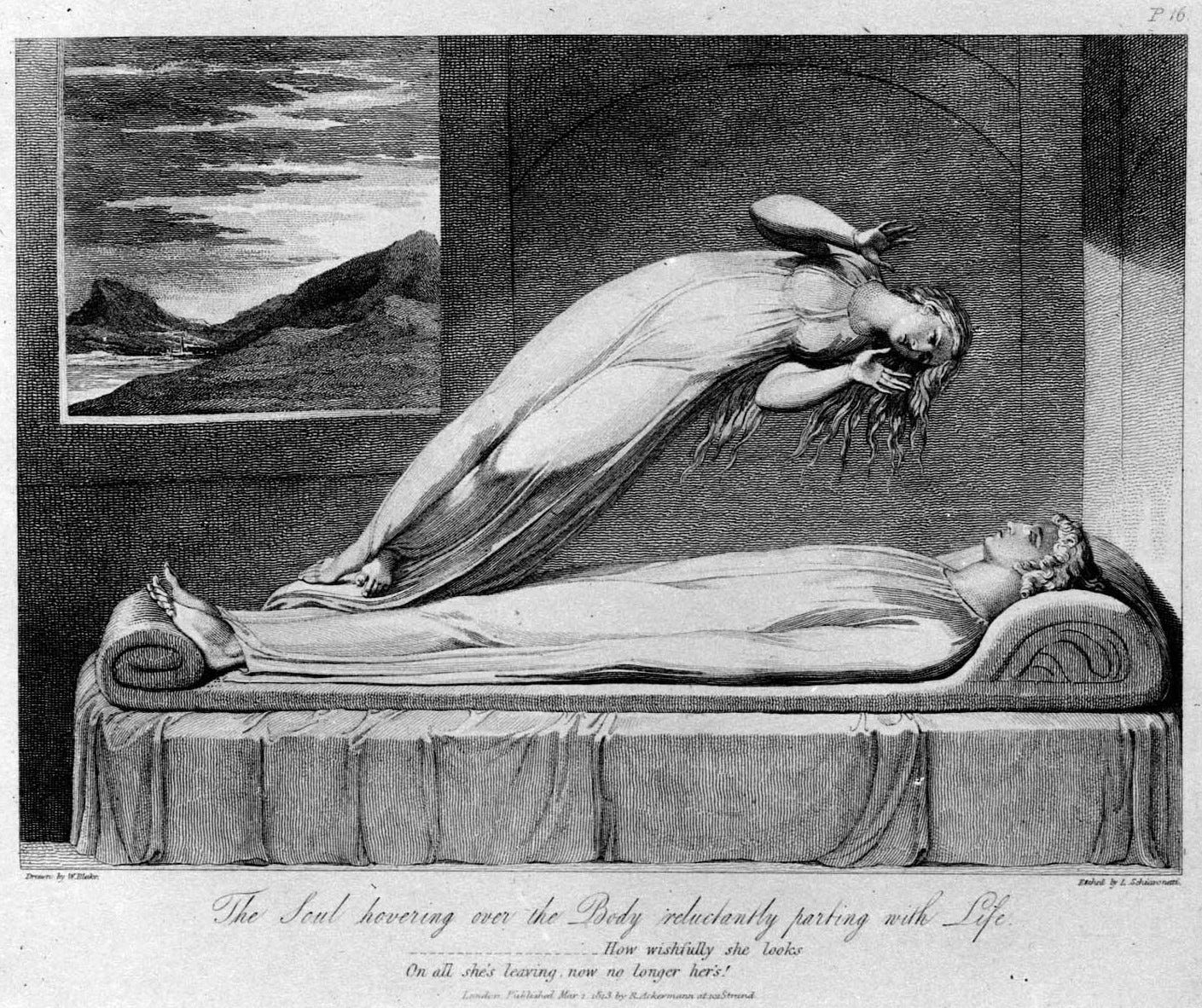
My mind is in a daze, and all my powers leave me when I attempt to describe the overwhelming sensation I feel at the thought of the soul. The topic speaks its own importance; interesting for its variety of interpretations, and touching on so many particulars, it really could’ve fallen anywhere within my system. I placed it under aesthetics, however, because I feel it’s where it shines best.
The aesthetic nature of the soul is one which no mind can fathom, but which the heart appropriates for its connection with it. Heart, mind, and soul are often found together for that reason: they all touch on the same fundamental nature, but do so in their own unique way.
The soul finds itself serving as a sort of vessel. Wherever it is, I am. It is one with me and I am one with it. I feel it in my bones. I feel the whole force of it—the power, the immensity, the otherworldliness of it. Though many would claim the soul does not exist, these people do not view life imaginatively; they hold themselves to a restrictive empiricism, in which they cannot entertain the possibilities of things unless the things indicate a possibility of existing in the real world.
Abstractions are derided, and nothing is dealt with seriously, because, to them, serious means real—everything that cannot be seen or deductively proven is automatically false; and so, you will find these people unable to intellectually fathom why one would believe in the soul, as if the soul were merely a matter of belief.
Reductionists always have to drive the passion out of everything. Nothing is sacred because understanding (to them) is meant only to serve, not to uplift life or inspire hope within the hearts of man. The only functions thinking can possibly have are the problems one is able to solve as a result of it; thinking for its own sake—speculative philosophy, in short—is not considered at all by these reductionists, for it too readily draws connections between things without first establishing a connection between them causally—again, as if the whole point of thinking were merely rational or logical—to “unravel” the mystery by coming up with new ways of reformulating the question.
It is all done in an effort, as they say, to make the problem more precise—and here by “precise” they mean so simplified and reduced it bears no resemblance to the original problem at all. That kind of approach may work in mathematics or physics, where the simplified problem may still lead to insights as to how to approach the original, but in philosophy, literature, or life in general, the method of analysis alone is insufficient; indeed, the problems in life or philosophy, more often than not, cannot be reduced at all—they must be solved directly as they are presented to you. This is where speculative philosophy must come into play.
If we look back at the history of philosophy, we will find that the first approach used was intuitive and speculative; philosophers did not consider the problem from a standpoint biased against explanations that were not empirical. Everything was up for grabs in terms of what could be believed. There was no notion of a “right answer” or a “final conclusion” regarding any phenomenon which the mind was put to solve; whatever conclusion man came to, so long as it accounted for what he was investigating, was considered the “correct” one, and in that way allowed for a multiplicity of answers for potentially the same thing.
We today, with our science and certain conclusions, would scoff at such a notion, for how could any consensus arise regarding what was “true” of the matter? But, see here, how decadent we’ve all become—so accustomed to “the truth” that anything that does not purport to be so is considered crazy. The notion is so obscure to us today that we cannot even begin to fathom a world in which one view—one “truth”—isn’t predominant. Our own thinking is shunned, and we are made on pain of mockery to adopt what has already been established in order to move along in life without difficulty—and that is exactly the problem. We can no longer think for ourselves, which really means we can no longer think existentially. Questions today are unable to be approached subjectively (individually); rather, they are made subject to the scientific method, and so are unable to be wrestled with in their truest reality.
Existential questions are not considered at all, really, because they offer no obvious solution when viewed through the lens of science—which is the method so commonly adopted today it’s considered a priori, as if it were self-evident that it’s obviously the best approach to address every issue; such is why philosophy has been routed from its lofty throne of superiority, and now made to grovel before the feet of science. But, and this should come as no surprise, this has led to innumerable issues with respect to how we as human beings are meant to interpret life, and how—for ourselves—we are to approach it in a manner that is thoroughly our own. Let us go a little further into this.
Once the speculative atom has been torn from the molecular germ of independent thinking, all that remains is a type of fideism with respect to inductive reasoning; observations take the reins, and the subject becomes a nothing, an indistinguishable unit, the same everywhere, and unlikely to change in order to get along in this false reality.
It would seem like nothing is worth saving in this reality; there are very few redemptive qualities in our approach to the real questions that matter—the existential questions which we ask ourselves when nothing in life seems to go our way, when every inconvenience, annoyance, issue, financial struggle, personal problem, or mental anguish falls upon us, and leaves us very little in the way of overcoming them. In such a situation, the soul is oppressed on all sides, and nothing seems to abate its overwhelming power, its tremendous ability to bring you true pain and great suffering. This here is where the scientific method falls flat, for nothing in it allows for someone to face the dialectic honestly.
In a sense, what I’m saying is that the answer to the soul—and every other question that can be interpreted existentially—will not be found in science, will not be found in reducing the problem to the simplest primitives, in completely ignoring your own individuality, and taking for granted the very life you live presently; none of this will be of use to one who strives to find an answer, but already knows there is no final solution to their problem.
But this raises the question: if the problem has no final answer—in the same manner 2+2=4—then how could we ever approach answering it? To that, I would say that one must answer it spiritually, religiously, mystically, ethically, emotionally, artistically, dialectically, humanly—in short, one must approach it speculatively: speculative problems require speculative solutions—dialectical solutions, as offered up by Hegel in his The Phenomenology of Spirit. It is in the course of our life that we come, slowly, to understand our place in it; and it always happens that what is largely responsible for throwing us off this serene course is our reactions to the demands made on us from the external world.
Again, here, regarding these questions, there is no final answer, no possible reduction or simplification which science or logic can provide us; in such a case, we must strike out our own path, using our own understanding, and build for ourselves a system that corresponds with our very humanity, and which brings about the same in others. But how is one supposed to bring this about, especially considering how ingrained the scientific approach to all things is—to say nothing of the current zeitgeist of defeatism, doomerism, pessimism, nihilism, and the all-around passive acceptance of abhorrent things? My solution is the pragmatic dialectic, a specific approach to dialectics that tries to reconcile the irreconcilable by making the process itself the solution, rather than the conclusion (end) of its progress.
There is no end to the complexity and variability of life, and with no end to how many ways a problem may arise—and with the potential number of paths generated by every decision being nearly infinite—it behooves one to take a more holistic approach to life—an approach that sees everything as interconnected, and which allows one to draw on whatever is in their experience in order to overcome the problem they presently face.
One must, in my view, see the beauty of the whole forest before they can appreciate the beauty of a single tree; in this respect, one must do likewise with life, for, considering how multifaceted everything is, and how the flux of time and the movement of the universe continue on indefinitely—in doing so, resembling the very existential problems we face in the world—it is necessary to view problems as not having one solution (as one would look only at a single tree while ignoring the beauty of every other one in the forest) but as a continuum of solutions (which in my analogy here represent the whole forest—the magnitude of the trees representing the variety of approaches one can take with respect to their existential problem).
Everything is existential except when it is viewed scientifically, and in so doing has subjectivity totally ostracized from the investigation; this is why science treats ethics as its own subject, completely detached from it (often falling under the title “Philosophy of Science,” where the ethical questions are treated) rather than being integrated into it from the very start. If this is the case before us, we must not reject science outright merely for being anti-existential (the results from it are too useful to dismiss it flippantly like that), but rather approach it as we would a violent beast that has been sedated—with care but seriousness—in order to ensure we do not find ourselves in its clutches.
To summarize, if everything is existential, then dialectics has to be permitted into our analysis at all times—without it, there would be no genuineness in any of our struggles, and we would be without a foundation by which to deal with any problem we face, be it trivial or grand. But the question now is, what is this speculative approach to existential problems? Taking account of everything already said, please consider the following explanation of it (as couched in Hegelian language).
Consider a world that is not a collection of static, dead objects, but a single, colossal process—a mind that must shatter itself into a billion disparate fragments just to discover what it is made of. This is the story of the universe as a “becoming” rather than a “being,” an agonizing and magnificent unfolding of Geist, or Spirit. This Spirit is the collective life force that flows through every individual thought, every cultural shift, and every historical upheaval. Yet, it begins its journey in total ignorance, like a person waking up in a pitch-black room who knows they exist but has no idea what they are. To resolve this, Spirit projects itself outward, creating the material world and the individual souls within it as mirrors. You are one of those mirrors—a localized point of consciousness where the universe has finally opened its eyes to gaze back at itself.
This Spirit does not grow through peaceful meditation or quiet reflection; it grows through the violence of friction. This is the Dialectic, the fundamental rhythm of existence. Every time you hold a certainty—an abstraction—reality inevitably presents you with its brutal, contradictory opposite—the negative. This collision is not an error or a tragedy, but a metaphysical necessity. The tension between what you believe and what the world imposes creates a spark that consumes both old forms, leaving behind a synthesis: a higher, more complex understanding that preserves the truth of the struggle while discarding the limitations of the past. We are quite literally forged in the fire of our own contradictions; the universe “thinks” by clashing against itself through the medium of our lives.
This journey constitutes the Development of Consciousness, a climb from the mud of simple sensory experience toward the heights of self-awareness. It begins in the raw, animal sensation of the “here” and the “now,” but the mind cannot remain in such a cramped space. It is driven by an internal hunger to understand its own boundaries, moving from mere sensing to Self-Consciousness, where it encounters other minds and enters into a struggle for recognition. It climbs from the personal to the social, and from the social to the cultural, constantly shedding its old, smaller selves like a snake shedding skin that no longer fits the expanding reality of its soul.
The climax of this long, exhausting ascent is Absolute Knowledge. This is the moment the “back-world” of hidden truths and mysterious “things-in-themselves” finally disappears. The mind stops looking at the stars as distant, indifferent lights and stops looking at history as a series of accidents or cruelties. It realizes that the stars, the history, and the person observing them are all one single, interconnected Spirit. Absolute Knowledge is the state where the subject—the “I”—and the object—the “World”—are no longer strangers. You look into the abyss of reality and realize you are looking into a mirror. The universe has finally finished its long, agonizing thought, and the answer is the profound, existential homecoming of recognizing that you are the architect of the very space you inhabit.
We are that soul that strives to find ourselves amidst the bustle of existence—where every random occurrence has no reason aside from its own cause to serve as the justification for it. In such a state, without grounding, and having few avenues by which to alternatively go down, one is made face-to-face with life, and, shortly afterwards, challenged to a duel by it. What to do? Science, as already expressed, will be of no use to us; and we ourselves are so very small when the whole human race is considered—what are we to a star, a solar system, or a whole galaxy then? It borders on the absurd to assume we have a solution to whatever mild inconvenience we are faced with in life.
All our problems are really trivial when considered from a larger perspective—but in this larger perspective are a variety of ways which we can existentially approach everything, and from which we can face our contradictions without fear. All problems are contradictions because they contradict our notion of continuity; that is, they contradict what we expected to be the case. The world changes, and so too must we with respect to it: always looking, always searching, always seeking, always ready.
We must feel ourselves at one with what we are. The soul calls us forth, and we are made to stand before it in atonement for acting so dishonestly against it. We are so untrue to ourselves when we do not allow ourselves time to process reality, and ready ourselves for the laborious journey when we awake from sleep.
The soul is that aspect of ourselves which we feel intuitively, but which we cannot comprehend fully. The soul knows all, but we are ignorant of all. In our ignorance, however, there is a kind of childlike vivacity which enables us to endure the most debilitating experiences ever. Our life is our journey, and our soul is our guide, in the same way Virgil was the guide of Dante through hell; in this, we are like all other people who have ever lived—confused, worried, and uncertain—but, with good conscience, made to fall into a kind of happy receptivity with life, so long as what we’re receptive to is in harmony with our soul.
The soul is the metaphysical grounding of existential existence. It communicates with us, just like our conscience, but on a higher level, in an upper realm, where the spirits and energies of all other things swirl around and come together into a single unity; a balance is achieved, and what we once sought for is no more, for we find everything in this one substance of total being. This total being is the dialectic, is change, is flux, is transitoriness, is, in a word, becoming. What we become is what the soul—our metaphysical aspect—senses within itself, and which expresses itself outwardly in the world.
When we act in the world in accordance with our soul, our mind comprehends the connection that is made between our actions and our intentions, and as a result gives us an overwhelming sense of contentment, tranquility, and peace; in such a state, we no longer feel stuck, but are free to feel and enjoy and become a part of this grand narrative of Earth. We all are a part of this great accident. Mankind is like the vapor which rises from a puddle in the sun; we are accidents, but we are great accidents, self-aware accidents, powerful accidents—to our knowledge, the only accident conscious of itself. This self-consciousness is the beginning of all existentialism, and thus the only true philosophy the world can possibly know.