
Søren Kierkegaard as Existential Philosopher
A Summary of the Core Aspects of His Philosophy

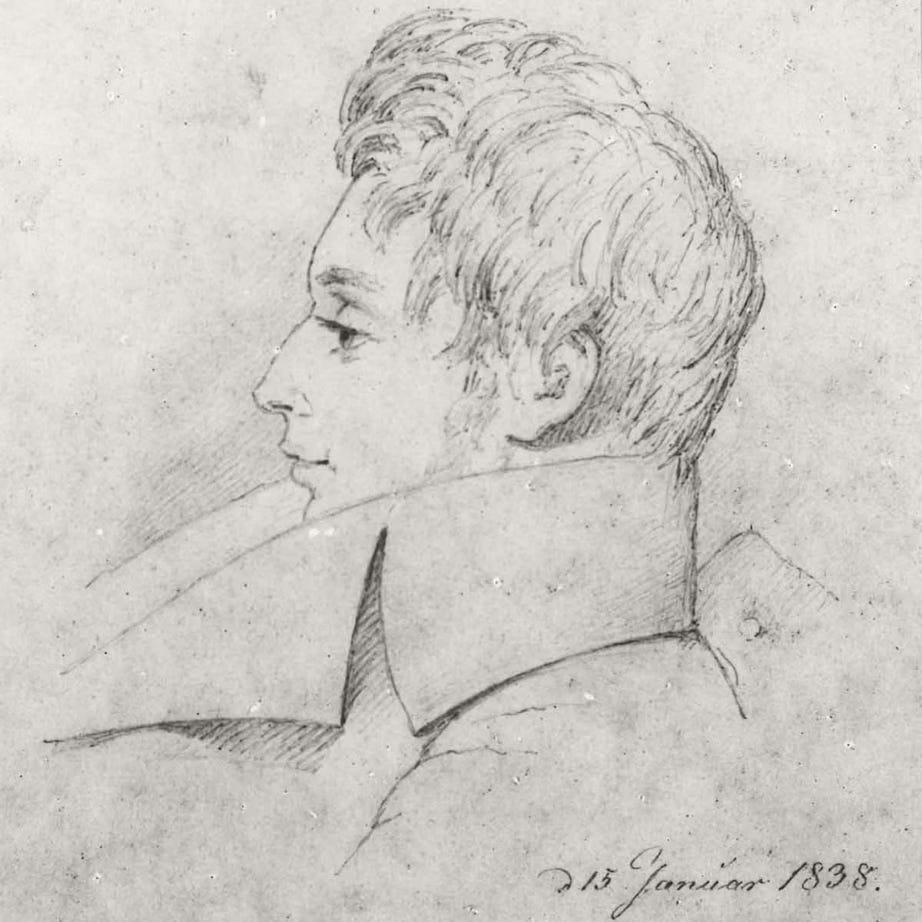
Does Kierkegaard Matter
Yes! Perhaps more than any other philosopher from the 19th century.
Søren Kierkegaard matters because he stands at a decisive turning point in modern thought. He is not merely an influence on later philosophers and theologians, but a figure who helped redirect the trajectory of European intellectual history itself. Through his work, the confidence of Enlightenment reason and German idealism begins to fracture, giving way to the existential concerns that dominate the twentieth century and continue to shape our own age.
Historically, Kierkegaard is often described as the father of modern existentialism. Thinkers as diverse as Heidegger, Sartre, Buber, Marcel, Tillich, and Barth all bear the imprint of his thought. In theology, especially within the German-speaking world, his influence is foundational. Few nineteenth-century figures—Hegel included—can rival his impact on the philosophical and theological imagination of the following century. Yet Kierkegaard is frequently reduced to a mere precursor, valued for whom he inspired rather than for the originality of his own vision. This does him a serious injustice.
Kierkegaard’s deeper importance lies in his role as a mediator between eras. He marks the passage from the Enlightenment and German idealism to the existential and nihilistic currents of late nineteenth- and twentieth-century Europe. To understand how Western thought moved from Kant and the philosophes to Sartre, modern theology, and even modern art, one must pass through Kierkegaard. He exposes the internal limits of idealism from within, transforming it rather than simply rejecting it.
Yet Kierkegaard’s relevance cannot be captured by historical influence alone. He described himself, and is rightly remembered, as the “Poet of Existence.” He rejected the emerging model of philosophy as a detached, academic system and mounted a sustained critique of Hegel’s attempt to render reality fully intelligible through reason. This opposition was not superficial. Kierkegaard was deeply indebted to Hegelian thought, but precisely because he understood its power, he also perceived its danger: the temptation to dissolve the living individual into an abstract system.
For this reason, Kierkegaard has often been labeled an irrationalist or an enemy of reason. This interpretation is misleading. His real target is not reason as such, but the elevation of reason—especially in its scientific and systematic forms—into a totalizing authority. By the nineteenth century, science had begun to assume the cultural role once occupied by religion, particularly among educated elites. Kierkegaard regarded this development as profoundly destructive, not because science is false, but because it threatens to erase what cannot be quantified: the inward life of the individual.
Kierkegaard’s critique anticipates a problem that has only intensified since his time—the tendency of scientific and philosophical systems to explain humanity in ways that exclude the human being as a responsible, existing self. He feared that in seeking a complete, objective account of human life, modern thought would eliminate precisely what makes human existence meaningful. In this sense, his critique of science is a defense of human dignity. Kierkegaard is, at his core, a radical humanist.
Existence, for Kierkegaard, names what resists abstraction. It refers to the concrete, lived reality of a single individual who must choose, suffer, hope, and take responsibility without guarantees. His philosophy insists that meaning cannot be outsourced to systems, institutions, or historical processes. Each human being must confront existence personally. This concern places him among the earliest and most penetrating critics of the totalizing impulses of modern reason—impulses that have justified some of the most devastating political and technological catastrophes of the past century.
Born in 1813, Søren Kierkegaard belongs chronologically to the early nineteenth century, yet his true intellectual heirs emerged decades later. The generation born in the 1870s and 1880s—especially within the German-speaking world, and to a lesser extent France—became the first to grasp the depth of his thought. From this generation arose figures such as Heidegger, Sartre, Barth, and Tillich, all of whom stand in profound, if sometimes unacknowledged, debt to Kierkegaard. Through them, he casts the long shadow under which much of twentieth-century intellectual history unfolds.
To understand the twentieth century—its crises of meaning, its struggles with faith and reason, its transformation of science, society, and the individual—one must understand Kierkegaard. Questions that defined the modern age and erupted catastrophically in the twentieth century were already diagnosed in his work with uncanny precision.
Yet Kierkegaard’s ultimate significance is not historical but existential. Readers repeatedly testify that he speaks to regions of human life for which ordinary philosophical language proves inadequate. He articulates inner tensions—confusion, despair, longing, guilt, responsibility—that many recognize only when they encounter them reflected in his writing. This is why Kierkegaard called for a poet rather than a system-builder: someone capable of giving voice to the inner life before it is flattened into abstraction.
Grasping the core of Kierkegaard’s authorship provides more than insight into nineteenth-century philosophy. It offers a vantage point from which twentieth-century thought becomes intelligible in a way few other figures allow. More importantly, his work addresses the individual reader directly. Kierkegaard’s reflections on selfhood, anxiety, responsibility, and inwardness are not merely theoretical; they are transformative. His insights into human nature remain unmatched in their depth and precision.
At the heart of Kierkegaard’s project lies a diagnosis of the spiritual crisis of modern humanity. He regarded modernity as an “Age of Reflection”: an era marked by unprecedented self-awareness, confidence, and abstraction, yet simultaneously paralyzed by indecision and loss of inward commitment. Modernity defines itself by its sense of being “now,” severed from the past, convinced of its superiority precisely because of its historical position. Kierkegaard recognized this posture as a form of spiritual arrogance masking profound disorientation.
His work correlates the most intimate human questions—What is the meaning of my life? Why does evil exist? Why am I opaque to myself?—with a penetrating analysis of the historical conditions that produce these anxieties. Few philosophers have united personal inwardness and social diagnosis with such force.
Kierkegaard’s literary brilliance is inseparable from this achievement. Celebrated as one of the greatest figures in Danish literature, his aesthetic mastery is not ornamental but essential. It allows him to reach dimensions of existence that systematic philosophy rarely touches. Where thinkers such as Hegel offer monumental intellectual structures, Kierkegaard addresses the reader at the level of lived experience. For him, philosophy that fails to confront the individual as an existing self is already deficient.
In this sense, Kierkegaard anticipates themes later associated with the “death of God” and the collapse of metaphysical certainties. Long before Nietzsche, he confronted the erosion of religious meaning and the consequences of a culture that substitutes abstraction, systems, and progress for inward responsibility. Nietzsche did not directly engage Kierkegaard, yet nearly every problem Nietzsche wrestles with—nihilism, meaning, selfhood, authority—had already been explored by Kierkegaard, often with greater existential seriousness. Together, Kierkegaard and Nietzsche form the twin pillars of modern thought; understanding them is tantamount to understanding the twentieth century itself.
But beneath all historical influence lies his most unsettling question, one that no system can answer for us: Who do you think you are—and do you believe that it matters? Kierkegaard’s philosophy turns on the identity-forming power of self-consciousness. Existence is not something one merely has; it is something one must become. This insight—later adapted and diluted by figures such as Heidegger—originates in Kierkegaard’s insistence that the self is constituted through responsibility, choice, and inward commitment.
Ironically, Kierkegaard is among the most influential yet least directly engaged thinkers of the twentieth century. The era prided itself on originality, yet much of its thought represents a delayed and evasive response to crises Kierkegaard had already confronted. Chief among these was the paradoxical moment when science achieved unprecedented success while reason itself lost its philosophical foundations.
As scientific specialization advanced with extraordinary efficiency, confidence in reason as a grounding principle eroded. Science rose to cultural supremacy precisely as its own justification became philosophically unstable. This conjunction—the triumph of science and the collapse of reason—constitutes one of the deepest crises of modernity. Kierkegaard recognized it early and understood its existential cost.
The crisis Kierkegaard confronts did not originate with him. It was already implicit in Kant’s late eighteenth-century attempt to secure reason’s authority, an effort that culminated in German Idealism at the dawn of the nineteenth century. At its core lies the deepest existential rupture of modernity: humanity has dismantled its traditional gods, elevated science to the status of a functional replacement, and then—honestly and irrevocably—recognized that science cannot bear this burden. This recognition is not a critique of science itself. Science falters only when it claims an authority it cannot philosophically justify.
What Kierkegaard perceived earlier and more deeply than most was the true foundation of this crisis: the modern discovery that the human being participates in the formation of the self. The nineteenth century gave rise to the idea that individuals are, in a meaningful sense, authors of their own existence. Kierkegaard captured this insight with the image of the “Poet of Existence,” a phrase often misunderstood as merely aesthetic or lyrical. Its meaning is far more precise and far more radical.
Kierkegaard understood poiesis in its original sense: not ornamentation, but making. In classical Greek, the word for poetry and the word for creation are identical. In the Greek translation of Genesis, the divine act of creation is described using the same term that later names poetic composition. Creation, whether divine or human, is an act of bringing form into being. The Romantic tradition grasped this intuitively, and Kierkegaard developed it philosophically: human beings do not invent themselves arbitrarily, but they participate in shaping who they become.
The modern error lies in radicalizing this insight beyond its limits. Twentieth- and twenty-first-century existentialism often assumes that identity is infinitely malleable, that the self is wholly self-constructed. Yet lived experience contradicts this. We discover ourselves as both active and constrained, free and conditioned. Heidegger’s philosophy is structured around this tension, though the insight itself is inherited—most clearly—from Kierkegaard.
Kierkegaard’s distinctive achievement is his sustained engagement with paradox. Human existence, he insists, cannot be reduced to either freedom or determination. Who we believe ourselves to be profoundly shapes who we are, yet belief alone does not exhaust identity. In The Sickness Unto Death, Kierkegaard defines the self as a relation suspended between opposing poles: freedom and necessity, eternity and temporality, possibility and limitation. Human life unfolds within these tensions, not beyond them.
This paradox generates both modern confidence and modern anxiety. On one hand, we experience the intoxicating sense that we can become anything. On the other, we confront the unsettling suspicion that much of what we are was never chosen at all. Contemporary culture tends to absolutize one side of this tension. Some traditions elevate self-creation into a doctrine of unlimited autonomy; others emphasize constraint, determination, and givenness. These positions rarely communicate, because each grasps only half of the truth.
Kierkegaard refuses this division. Rather than resolving the paradox, he makes it the foundation of his philosophy. This refusal explains both the power and the uniqueness of his work. Kierkegaard does not present a system; he creates philosophy as literature. His indirect authorship, multiple voices, and pseudonymous texts are not stylistic flourishes but formal expressions of his central insight: existence cannot be captured by a single, authoritative perspective. In the modern philosophical tradition, only Plato stands beside him in this regard.
The form of Kierkegaard’s writing is inseparable from his understanding of the self. Just as human beings fashion themselves from material they neither choose nor fully understand, so Kierkegaard fashions thought through narrative, irony, and indirection. His literary genius is therefore not accidental; it is the philosophical method demanded by his subject matter.
For anyone concerned with science and its limits, with freedom and determinism, with existentialism, theology, or the fate of meaning after the collapse of traditional metaphysics, Kierkegaard remains indispensable. He speaks to the condition of being human after the gods have died, after science has triumphed, and after it has become clear that progress alone cannot tell us who we are. His enduring relevance lies in this: he confronts the paradox of human existence without dissolving it—and teaches us how to live within it.
Kierkegaard as Poet of Existence
The idea of genius is not timeless but historical. In antiquity, the term referred not to individual brilliance but to a guiding spirit—genius loci, the spirit of a place—believed to shape one’s relation to the world. This older conception treated genius as something external and ambient, woven into the structure of reality itself.
The modern understanding of genius emerged much later, most decisively during the Romantic period, especially among early German Romantics contemporary with Kierkegaard. It is this modern conception that continues to shape our imagination today. Genius, in this sense, does not merely signify exceptional skill. It names the capacity to accomplish with apparent ease what others could not even conceive as possible. What is difficult for a genius, on this view, lies entirely beyond the horizon of thought for most people.
Contemporary discomfort with genius often arises from egalitarian concerns. Genius appears to violate ideals of equality by dramatizing the uneven distribution of human capacities. Yet this discomfort is frequently inconsistent. We celebrate extraordinary excellence in athletes, artists, performers, and leaders precisely because of their exceptional abilities. The unease, then, is not with excellence as such, but with the implication that reality itself is fundamentally unequal.
This is not a moral failure but a structural feature of existence. Human capacities are unevenly distributed, and genius represents an extreme expression of this fact. If this troubles us, the objection is not properly directed at individuals but at the nature of the world itself. Political theories—liberal, socialist, or communist—have historically struggled to account for this disparity without either denying it or attempting to neutralize it.
There remains, however, a serious egalitarian concern worth taking seriously: an exclusive focus on genius may distort our attention. Because genius cannot be imitated or universally attained, it risks becoming irrelevant to ordinary life, encouraging neglect of the many in favor of the few. This concern is reasonable. Yet it misunderstands why thinkers like Kierkegaard matter.
We attend to figures of genius not because they are models to be copied, but because their exceptional capacities disclose dimensions of human nature otherwise difficult to perceive. Genius functions diagnostically. Whether for good or ill, it magnifies latent possibilities within humanity itself. Even destructive forms of genius—particularly political or charismatic genius—reveal something essential about collective psychology, receptivity, and power.
In this respect, genius is often less a matter of domination than of receptivity. Certain figures possess an extraordinary capacity to absorb, reflect, and channel the energies of others. This is evident in political leadership, artistic creation, and cultural influence. Such individuals do not impose meaning so much as concentrate and articulate what already exists in diffuse form within a community.
This emphasis on receptivity aligns closely with the Romantic conception of genius and with Kierkegaard’s intellectual milieu. Historically, this conception subtly inverted traditional associations of genius with mastery and control. Instead, genius came to be understood as openness, sensitivity, and responsiveness—traits long coded as “feminine” within Western thought. The modern artist, accordingly, emerged as a figure that destabilizes rigid categories, blending activity and passivity, assertion and receptivity.
This helps explain why modern genius is frequently associated with androgyny, ambiguity, and heightened sensitivity. Exceptional creators often register aspects of experience that others filter out—desires, anxieties, contradictions, and impulses that most people suppress in order to function. Genius does not merely express these elements; it assimilates them, giving them form without neutralizing their tension.
In this sense, genius is not primarily about superiority. It is about exposure. It involves a heightened vulnerability to reality and an unusual capacity to transform that vulnerability into insight, expression, or influence. This is why attention to genius, far from undermining egalitarian concern, can deepen our understanding of what it means to be human at all.
The form of genius most relevant to Søren Kierkegaard is not brilliance of intellect or ease of creation, but an exceptional capacity for suffering. Kierkegaard’s genius lies in his ability to endure, receive, and articulate suffering with unparalleled depth and lucidity. His thought does not emerge from mastery over experience, but from sustained exposure to it.
This conception of genius becomes intelligible when placed within a long-standing tension in Western philosophy: the opposition between activity and receptivity, particularly as it concerns the intellect. Is understanding fundamentally active, imposing form upon the world, or fundamentally receptive, shaped by what it undergoes? This question runs from Aristotle’s debates over the passive intellect, through medieval Islamic and Christian philosophy, and into German idealism. Kierkegaard inherits this problem and radicalizes it.
The same tension appears in theology under the names of grace and election. Is the world fair? Are gifts deserved? And if not, how is human inequality to be understood without either resentment or denial? Kierkegaard accepts the world’s unfairness without attempting to neutralize it through abstraction or moralization. Instead, he interprets it existentially: what matters is not the distribution of gifts, but the individual’s relation to what has been given.
Genius, in this sense, is not domination but receptivity. It is the capacity to receive the deepest currents of one’s time, culture, and species without defense or evasion. From this perspective, suffering is not merely pain but exposure. To suffer is to undergo, to remain open to what is, even when what is overwhelms. Kierkegaard’s distinctive power lies in his refusal to shield himself from the full weight of human existence—its anxiety, guilt, despair, and finitude—while insisting that these experiences are philosophically meaningful.
This understanding situates Kierkegaard within the extraordinary intellectual climate of the nineteenth century, a period marked by an unprecedented concentration of individual genius. Goethe, Hegel, Schelling, Hölderlin, Beethoven, and others were either contemporaries or immediate predecessors. Yet what distinguishes this period is not merely the number of great figures, but a new philosophical recognition of genius itself as historically decisive.
German idealism represents the first philosophical movement to consciously acknowledge the formative role of exceptional individuals in the development of humanity. This insight has largely been abandoned, not refuted, in modern thought—partly because it clashes with egalitarian sensibilities and provokes discomfort with inequality. Yet German idealism treated genius not as aristocratic privilege, but as a responsibility to give form to universal human possibilities.
Figures like Hegel, Schelling, and Hölderlin exemplify this moment. Their shared education and intellectual intensity were animated by a unifying ideal: the task of becoming fully human. Genius, in this context, was understood as creative contribution—bringing something into existence that did not previously exist. This conception is deeply indebted to Plato, particularly to Diotima’s teaching in the Symposium, where human beings are described as fundamentally driven by the desire to “give birth,” whether biologically, artistically, or spiritually.
Kierkegaard stands squarely within this tradition. As the “Poet of Existence,” he practices philosophy as a form of creation rather than system-building. His method is maieutic—midwifery rather than construction—aimed at bringing into articulation what already struggles to be born within the individual. His genius, therefore, is inseparable from suffering: not suffering as spectacle, but suffering as the price of remaining radically open to truth.
In this way, Kierkegaard transforms genius from an attribute of superiority into a mode of vulnerability. He reveals that the deepest philosophical insight arises not from transcendence of human limits, but from dwelling within them without illusion.
Genius, properly understood, does not exist to humiliate ordinary life. It serves instead as a reminder of what remains possible for the human species as a whole. What an individual genius achieves discloses a horizon of human potential that transcends any single life. Even when achievement is singular, its meaning is collective: it reveals what humanity, under certain conditions, can become.
Human fulfillment, however, does not arise from individuals isolated from communities, nor from collectives that erase individuality. The ideal is genuine community: self-conscious individuals who participate freely and responsibly in a shared project, creating together what none could achieve alone. Such communities are rare, because human life is distorted. Kierkegaard names this distortion sin or fallenness, but the philosophical point does not depend on religious assent. All major philosophical traditions presuppose that the world is not as it should be. Philosophy, at its deepest level, is therefore concerned with restoration—what classical thought called soteria, salvation.
When philosophy loses this existential orientation, it degenerates into technical discourse. Severed from the question of how a human life ought to be lived, it becomes an occupation rather than a vocation. For Plato, Socrates, and Kierkegaard alike, philosophy is inseparable from risk, inwardness, and transformation.
Genius reminds us of the extremes of human possibility. Contemporary culture is already fascinated by extremes, but almost exclusively by negative ones: violence, pathology, and what Kierkegaard called the “demonic.” Modern art and entertainment dwell obsessively on human destructiveness, confirming Kierkegaard’s insight that Romanticism contains both a revelatory and a corrupting impulse. The demonic fascination with death and transgression reflects not depth, but spiritual imbalance.
Our discomfort with genius is often framed as moral concern for equality, but it is frequently animated by resentment. True egalitarianism aims to protect equal human dignity, not to diminish excellence. Justice does not require flattening the world. Human beings naturally admire extraordinary achievement—especially in art—because great artists disclose new worlds of meaning and remind us of our own latent capacities.
Against this background, Søren Kierkegaard’s genius becomes intelligible. His distinction does not lie in ease of production or intellectual dominance, but in an unparalleled capacity to suffer. Existence itself—shaped by the pressures of modernity—penetrated him with unusual intensity. Eternity and infinity, realities most modern people have learned to suppress or forget, were for Kierkegaard living forces. They animated his thought, but they also wounded him. Without this suffering, his work would not exist.
This is not to romanticize misery or claim that greatness requires a tragic life. Romanticism exaggerated the image of the suffering genius, and there are clear counterexamples. Yet suffering remains central to Kierkegaard’s case because creation presupposes reception. One can give only what one has undergone. The artist or thinker who reaches deeply into experience—who does not shield himself from anxiety, despair, or contradiction—acquires the ability to articulate truths that endure beyond his moment.
In this sense, suffering is not merely pain; it is exposure. It is the willingness to remain open to what overwhelms. There is such a thing as being skilled in suffering—not in seeking it, but in receiving it without denial and transforming it into insight. Those who suffer superficially produce superficial work. Those who endure at depth speak across time.
For Kierkegaard, being human is not a static condition but a task. One can fail at it—not through moral wrongdoing alone, but by never truly becoming a self. Most people, in his view, never begin this task. They drift, defined by external roles and collective abstractions, never confronting the inward demand to exist authentically.
Two dimensions of existence were central to Kierkegaard’s suffering and have largely vanished from modern consciousness: eternity and infinity. Eternity does not merely signify religious belief; it names humanity’s capacity to orient life toward what transcends immediacy. When this dimension is denied, the psychic energy it once organized does not disappear—it reemerges in distorted forms, often destructively.
Infinity, by contrast, names indeterminacy: the absence of clear limits. From the Greek apeiron to the modern subject, infinity has shifted from a metaphysical danger to an existential condition. Kierkegaard understood the modern self as torn between infinite possibility and finite necessity, a tension that produces anxiety but also freedom. His genius lay in inhabiting this tension without resolving it prematurely.
Human beings are drawn, especially in moments of cultural uncertainty, to large interpretive stories about who we are and where we are going. Intellectual curiosity today is inseparable from the desire for comprehensive narratives of humanity. Søren Kierkegaard, though rarely acknowledged as such in contemporary scholarship, stands at the origin of one of the most profound frameworks for understanding the emergence of the modern world and its relation to Christianity, philosophy, and antiquity. At the heart of this framework lies a rare and decisive coordination of two concepts: eternity and infinity.
Human existence, for Kierkegaard, is defined by an open-ended energy that exceeds any finite origin or conclusion. This energy passes through human life from beyond determination and returns beyond it again. Analogous descriptions appear across philosophical traditions—from Christian theology to the Tao Te Ching—all attempting to name a force that animates reality without being reducible to it. Kierkegaard did not merely theorize this dimension of existence; he lived under its pressure. His genius consists in his extraordinary receptivity to this tension and his willingness to endure it without evasion.
This receptivity took shape within a cultural moment uniquely suited to such a task. Nineteenth-century Europe represented an unparalleled convergence of philosophy, music, literature, and historical consciousness. Kierkegaard absorbed this world fully, yet refused to synthesize it into a single, authoritative voice. Instead, he discovered that genuine philosophical communication could not be direct.
This insight culminated in his most distinctive innovation: pseudonymous authorship. Kierkegaard wrote under multiple names, each representing a fully developed perspective on existence. These were not masks for hidden doctrines, but distinct characters with internally coherent worldviews. To understand Kierkegaard at all requires taking these pseudonyms seriously, yet they are often flattened or ignored—a critical interpretive error.
The necessity of pseudonymity follows from Kierkegaard’s psychological insight into human existence. Human life cannot be captured from a single standpoint. To speak meaningfully about existence requires inhabiting multiple perspectives from within. Kierkegaard recognized that truth, when it concerns how one lives, cannot simply be stated; it must be enacted. His solution was not abstraction, but dramatic embodiment.
In this respect, Kierkegaard’s genius resembles that of a great actor. Like exceptional performers, he possessed an uncanny capacity to enter other modes of being without remainder. This ability requires deep inward openness: one must recognize within oneself the possibility of becoming many kinds of persons, including deeply flawed ones. Kierkegaard’s suffering sharpened this capacity rather than narrowing it.
Combined with formidable intellectual rigor, this psychological range allowed Kierkegaard to perceive and articulate the plural dimensions of modern life—ethical, aesthetic, religious, cultural, and existential. His entire authorship can be understood as a sustained effort to give voice to these differences without prematurely resolving them.
What distinguishes Kierkegaard decisively is not merely his insight into difference, but the manner in which he communicates it. He does not theorize difference abstractly or ornament it with technical vocabulary. He dramatizes it. His philosophy is lived, literary, ironic, and psychologically exacting. It educates by engaging the reader’s imagination and inward life, not by imposing conclusions.
In doing so, Kierkegaard achieved a synthesis that had eluded his predecessors. He combined the analytical depth and rigor of German Idealism with the experiential immediacy and poetic intensity of early Romanticism. What emerges is what Romantic thinkers such as Novalis had only envisioned: a “systemless system.”
A systemless system is philosophically rigorous without being totalizing, systematic without suppressing individuality. It is intellectually demanding yet aesthetically compelling. One can be instructed by it without knowing philosophy, and transformed by it without accepting its premises. In Kierkegaard’s hands, philosophy becomes once again what it was at its origin: a practice aimed not at knowledge alone, but at the formation of the self.
Kierkegaard and Existentialism
Kierkegaard’s authorship presents exceptional challenges to interpretation. His works are frequently read as if they expressed his own views directly, yet he explicitly rejected identification with his pseudonymous texts. To read Fear and Trembling, for example, as “Kierkegaard’s position” is to misunderstand the very form of his philosophy. Serious engagement with Kierkegaard therefore requires sustained attention to the pseudonyms—not as literary ornament, but as philosophically decisive. This problem was addressed earlier through the lens of Kierkegaard’s genius; it now returns from a different angle.
To illuminate it further, it is useful to move forward historically and approach Kierkegaard through the category of existentialism, before working backward again to his own context. This temporal leap is intentional.
The central claim is straightforward: existentialism is the most illuminating framework for appreciating Kierkegaard’s impact on twentieth-century philosophy and culture, yet it is simultaneously an impoverished pathway for understanding Kierkegaard himself. Existentialism reveals Kierkegaard’s immense influence, but also exposes the limitations of the intellectual culture that inherited him.
Put differently, Kierkegaard appears indispensable when viewed through existentialism, but existentialism as it developed—both philosophically and culturally—fails to provide the conceptual depth required to grasp him adequately. By understanding this tension, one begins to see why Kierkegaard demands a broader historical and philosophical framework than existentialism alone can offer.
Existentialism itself is not a doctrine with a single founder or manifesto. It is partly a scholarly construction and partly a self-recognition within philosophy. By the 1920s in Germany, a constellation of thinkers—including Karl Jaspers and Martin Heidegger—had made existence (Existenz, Sein, Dasein) the explicit center of philosophical reflection. At that point, philosophy became aware of itself as oriented toward existence as such. This self-conscious turn marks the historical emergence of existentialism as a recognizable movement.
Later figures—most notably Jean-Paul Sartre—gave existentialism its public and canonical form, especially through Existentialism Is a Humanism. Debates about who “belongs” to existentialism—particularly Heidegger’s resistance to the label—do not negate the fact that existential concerns had become philosophically dominant by the early twentieth century. Existentialism, in this sense, has shaped intellectual life for roughly a century.
Yet a further claim must be added: contemporary culture remains intellectually saturated with existentialist assumptions, while having lost existentialism’s lived vitality. We continue to speak the language of existence, freedom, and authenticity, but largely without the depth, seriousness, or transformative force that once animated those ideas.
This matters because existentialism confronts the most basic philosophical question directly: what does it mean to exist? Against the persistent myth that philosophy belongs only to academic specialists, existentialism insists that philosophy is inseparable from human life itself. When philosophy becomes hostile to lived meaning—when it withdraws into professional insulation—it ceases to fulfill its own purpose.
The historical failure of academic philosophy to sustain this existential dimension has led many to reject philosophy altogether, often with good reason. But this rejection confuses institutional distortion with philosophy itself. Genuine philosophy, from Socrates onward, is concerned with how human beings live, understand themselves, and relate to one another. It belongs not to a profession, but to what has been called the Republic of Letters: a transnational, transhistorical community committed to understanding through reason, imagination, and dialogue rather than force.
Existentialism has often served as an entry point into this deeper philosophical inheritance. For many readers, early encounters with thinkers such as Sartre, Kierkegaard, or Pascal are transformative precisely because they recover philosophy as a personal and existential matter. These works do not merely communicate ideas; they awaken a recognition that philosophy is already implicit in the experience of being human.
This recognition marks the first answer to the question, What is existentialism? It is not simply a movement or a theory. It is the reawakening of philosophy to existence itself—and it is precisely this awakening that Kierkegaard made possible, even as existentialism later failed to fully understand the source from which it arose.
Existentialism, understood in its proper historical and cultural context, marks a return of philosophy to its ancient origins. This claim is not intended as a technical definition of the movement, but as a more fundamental orientation. Existentialism cannot be grasped primarily as a system of concepts, because it represents a decisive shift away from philosophy as the manipulation of ideas and toward philosophy as an engagement with lived human existence.
In antiquity, philosophy was far closer to what we would now describe as religion or spiritual practice than to what we call formal education. The ancient schools—Plato’s Academy, Aristotle’s Lyceum, the Stoics, the Epicureans—were not merely sites of instruction. They functioned as integrated forms of life: intellectual communities, ethical training grounds, spiritual disciplines, and social institutions at once. Philosophy was not something one studied; it was something one practiced.
Existentialism begins to recover this orientation. It does so by redirecting philosophy toward the concrete problems and crises of human life as they are actually experienced. In this sense, existentialism represents an early and incomplete attempt to restore philosophy’s ancient vocation: to serve as a living response to the trials, anxieties, and possibilities of existence in a specific historical moment.
This recovery becomes especially visible when existentialism is contrasted with the dominant academic philosophy that preceded it. In late nineteenth- and early twentieth-century Germany, the most rigorous philosophical movement was Neokantianism. Neokantianism addressed questions of genuine importance—particularly the epistemological status of the natural sciences in relation to history and culture—but it did so at a level of abstraction largely inaccessible to the public and disconnected from existential concern. Existentialism arises, in part, as a reaction against this distance.
Where Neokantianism asked how knowledge is possible, existentialism asks: What does it mean to exist? What ought I to do with my life? In raising these questions, existentialism inevitably takes on a spiritual—though not necessarily religious—character. It speaks directly to human meaning, freedom, responsibility, and finitude. In doing so, it reclaims philosophy’s role as a response to the present rather than a retreat from it.
This return to philosophy as a way of life also initiates a gradual separation between philosophy and its exclusive identification with the university. Existentialism occupies an unstable position between academic rigor and cultural relevance. It remains intellectually demanding, yet it refuses confinement within professional norms. Its major figures write not only technical works but novels, plays, essays, and lectures aimed at the public. Jean-Paul Sartre is emblematic of this dual role, and in this respect he stands in a lineage that leads directly back to Kierkegaard.
As a result, existentialism becomes a form of popular philosophy—not in the sense of simplification, but in the sense of accessibility. It addresses readers who may have no academic training yet recognize themselves in its questions. This accessibility has often provoked disdain from parts of the academic philosophical establishment, where obscurity is sometimes mistaken for seriousness. Yet this tension is not accidental: it reflects existentialism’s refusal to sever philosophy from human life.
In this way, existentialism reintroduces philosophy to culture as something alive—something capable of shaping self-understanding, art, ethics, and public discourse. Like genuine art, philosophy in this sense remains permanently contemporary. Its relevance does not expire, because the conditions it addresses—freedom, suffering, responsibility, meaning—do not expire. Plato remains philosophically present not because of historical reverence, but because his questions are still unanswered.
The enduring importance of existentialism—and the reason it leads us directly back to Søren Kierkegaard—can be stated simply: existentialism draws attention to the inescapable fact that human beings bear responsibility for the meaning and value of their own lives. This is not merely a philosophical doctrine held by a particular school. It is a cultural assumption so deeply internalized that it now operates almost invisibly.
This claim is often misunderstood as a controversial “position,” one that religious or conservative thinkers might reject. Yet it is better understood as a shared condition of modern life rather than a debatable thesis. Contemporary culture already presupposes that meaning is not guaranteed by tradition, authority, or inheritance, but must be actively realized by the individual. Kierkegaard’s work is among the earliest and most penetrating recognitions of this condition.
To accept this responsibility means acknowledging that no external structure—history, religion, family, culture, or social group—can finally determine the meaning of one’s existence. These forces shape us profoundly, but they do not absolve us of the task of becoming a self. Meaning, if it is to exist at all, must be chosen, affirmed, and lived. This is the existential insight at the heart of modern culture, and it is now embedded even in legal and political reasoning, as seen for example in the U.S. Supreme Court’s articulation of personal identity and self-definition in Obergefell v. Hodges (2015).
For this reason, we already inhabit an existentialist world. Kierkegaard matters because he did not merely anticipate this condition; he analyzed its consequences with unparalleled depth. Yet this leads to the second, more difficult part of the argument: our culture has inherited existentialism in a radically impoverished form.
Kierkegaard was among the first thinkers to make existence—becoming, inwardness, lived reality—the central category of philosophy. After him, this focus becomes dominant in twentieth-century thought, most notably in Heidegger and Sartre. However, what Kierkegaard introduced as one element within an extraordinarily rich philosophical project was later isolated and treated as sufficient on its own. This isolation, I suggest, is a fundamental error.
Much of twentieth-century existential philosophy, precisely because it narrows itself to existence alone, becomes philosophically incomplete and ethically unstable. In Heidegger’s case, this narrowing contributes directly to grave moral and political failures. These failures are not accidental; they arise from detaching the concept of existence from the broader intellectual, ethical, historical, and religious framework in which Kierkegaard originally situated it.
Modern culture repeats this error. We affirm that we create meaning, yet we have abandoned many of the intellectual, emotional, cultural, and spiritual resources required to sustain that responsibility. As a result, existential freedom becomes anxiety, fragmentation, or nihilism rather than transformation. This is not a failure of existentialism’s central insight; it is a failure of its inheritance.
Kierkegaard himself was not opposed to rigor, truth, or science. On the contrary, his project is deeply systematic and, in the nineteenth-century sense, profoundly scientific. He belongs to the tradition of German Idealism in his ambition to integrate psychology, theology, history, literature, art, and the natural sciences into a unified account of the human being. What appears unscientific about his work—its accessibility, literary brilliance, and indirect style—is in fact the result of a more exacting philosophical discipline.
Central to this discipline is Kierkegaard’s theory of indirect communication. He held that truths concerning existence cannot be transmitted directly, as propositions, but must be encountered, appropriated, and lived. Philosophy, therefore, must speak in multiple voices, forms, and registers, allowing different readers to enter at different points while being drawn toward the same underlying insight. This is why his authorship is pseudonymous, literary, and deliberately non-systematic in appearance.
Kierkegaard’s genius lies precisely here: in constructing a philosophy rigorous enough to integrate all dimensions of human existence, yet subtle enough to respect the inwardness of the individual. Recovering this richness—whether or not one accepts his theological commitments—offers a model for responding creatively and responsibly to the crises of the present. It shows that the task is not to abandon existentialism, but to deepen it by reconnecting it to the full philosophical world from which it emerged.
Kierkegaard and the Irony of Existence
What concerns us today is a figure who may be described, without exaggeration, as the first literary–philosophical icon of modern European culture. Nearly two centuries ago, Søren Kierkegaard established a model of the intellectual that has since become familiar: the writer who unites philosophy, literature, psychology, and cultural critique into a single voice—yet who remains marginal, misunderstood, and commercially unsuccessful in his own lifetime. Unlike later figures such as T. S. Eliot or Ezra Pound, Kierkegaard did not enjoy public acclaim. His books sold poorly, were published at his own expense, and earned him no recognition as a cultural authority while he lived. And yet it is precisely this marginality that makes him the prototype for the modern intellectual sensibility.
Kierkegaard created the template for a role that later generations would inherit: the thinker who stands ahead of his time, articulating tensions his culture cannot yet recognize. His work speaks directly to this paradox. He was not a public figure in the modern sense, yet his authorship anticipates the very form of cultural authority that would later define modernism.
The purpose of this writing, therefore, is twofold. First, it aims to show that existentialism and modernism are historically and spiritually intertwined. Second, it advances a more controversial claim: Kierkegaard reveals what modernism could have become—but did not. What we now call modernism, I will argue, represents a narrowed, incomplete response to forces that Kierkegaard grasped in a far more integrated way.
This requires a deliberate movement back and forth between the nineteenth and twentieth centuries. One of the central theses guiding my writings is that twentieth-century thought cannot be understood apart from its nineteenth-century origins—and especially not apart from the ways it simplifies, flattens, or rejects those origins. The nineteenth century wrestled with ideas that were philosophically and spiritually dangerous. The twentieth century often inherited their conclusions while abandoning their depth.
At the center of this story stands irony, which I will argue forms the spiritual foundation of modernism. Existentialism and modernism emerge as opposing responses to the same unresolved forces—forces neither tradition was able fully to articulate or harmonize. As a result, individuals in the twentieth century often expressed only fragments of these tensions: some through aesthetic experience (music, color, form), others through language, theory, or philosophy. These partial expressions reflect both personal limitation and historical circumstance. Our individual sensibilities become indicators of the material and spiritual conditions in which we live.
The origins of this condition lie in Romanticism. Romanticism introduced the modern concept of genius, a notion our culture now attempts to democratize—often by emptying it of its original meaning. This is not because the Romantics lacked faith in human potential; figures such as Emerson and Thoreau arguably believed in it more deeply than many contemporary thinkers. Rather, the contemporary impulse to “democratize genius” often serves to dismantle the concept altogether. Irony, by contrast, is far more difficult to grasp, less easily personalized, and far more destabilizing.
Kierkegaard stands at a decisive historical threshold. Born in the early nineteenth century, he inherited the late Romantic movement at its point of exhaustion and transformation. The first generation of Romantics—Wordsworth, Coleridge, Hölderlin—had already produced their defining works. Kierkegaard came of age as Romanticism was giving birth to something new. Like Hans Christian Andersen, his contemporary, he stands both within Romanticism and beyond it.
Crucially, Kierkegaard’s project was never merely philosophical or religious in the narrow modern sense. It was total. In this respect, he resembles figures such as Richard Wagner, whose idea of the Gesamtkunstwerk—the total work of art—sought to unite music, drama, myth, and philosophy into a single form. While Kierkegaard worked in prose rather than opera, his ambition was comparable: to integrate literature, philosophy, psychology, theology, and cultural critique into a unified authorship.
Richard Wagner occupies a position of extraordinary importance for understanding the German cultural imagination, yet his significance is often underestimated—particularly by those attempting to grasp Germany’s broader intellectual and spiritual influence. German culture has long been characterized by inwardness: a seriousness, depth, and introspective gravity that stands in contrast to the more outwardly expressive traditions of Latin Europe. Whereas French, Italian, or Spanish cultures have historically emphasized visible beauty—style, form, bodily presentation—the German spirit has been stereotyped as austere, even plain, concealing its profundity beneath an unadorned surface. Nietzsche himself drew attention to this contrast in his early reflections on German culture.
Wagner intuited something decisive about this inwardness. By the late nineteenth century, he recognized that a work of art—particularly in music and opera—could no longer be confined to sound alone. Art, he believed, must shape the entire environment in which it appears: space, color, architecture, atmosphere, and sensory experience. This vision, again, culminated in the idea of the Gesamtkunstwerk, the “total work of art,” in which all dimensions of perception are integrated into a single, overwhelming experience. Bayreuth, where Wagner staged his works, was therefore not merely a performance venue but a site of cultural pilgrimage—an attempt to create a space in which art temporarily reorganized the world.
The idea of the total work of art can be interpreted in two ways. From one perspective, it anticipates a dangerous aesthetic totalitarianism, in which art seeks to control every dimension of experience. From another, more sympathetic view, it represents a distorted but sincere attempt to fulfill a central aspiration of German Romanticism and German Idealism: the reunification of human experience into a higher unity.
This aspiration is articulated with remarkable clarity in the Oldest Systematic Program of German Idealism (c. 1800), attributed variously to Hölderlin, Schelling, or Hegel. The text argues that philosophy, art, and science must be reunited, and that poetry—not merely as verse, but as a unifying principle—must become the medium through which the world is grasped as a whole. This vision consciously returns to ancient metaphysical and cosmological themes, in which the cosmos itself is understood as possessing an intrinsic artistic form.
It is within this intellectual atmosphere that Kierkegaard must be situated. His engagement with literature and irony is inseparable from the Romantic generation’s confrontation with antiquity and its longing for a lost unity of experience. The Romantics perceived modern life as fragmented and spiritually diminished, and they sought—through art, philosophy, and myth—to integrate ancient insight with modern crisis, producing a higher synthesis capable of restoring human significance.
Historically, Kierkegaard stands at a precise moment within this movement. As Wagner was coming into prominence, Kierkegaard was writing his major works. He inherited Romanticism at its point of transformation and exhaustion, and his project—unlike Wagner’s—was carried out primarily in language rather than performance. Yet his ambition was no less total.
This context helps explain why Kierkegaard’s early academic work, The Concept of Irony, is far more than a conventional dissertation. It crosses a boundary that had rarely been crossed before: it unites rigorous scholarly analysis with a work of genuine literary power. In doing so, Kierkegaard anticipates a defining feature of modernism itself.
Modernist literature—whether in Eliot, Woolf, Proust, or others—is marked by intense self-reflexivity. Consciousness turns back upon itself; the world is presented not as an objective given but as filtered through the interior life of a particular mind. This is the foundation of techniques such as stream of consciousness, in which the flow of subjective experience becomes the organizing principle of form. The reader is never allowed to forget that what is being encountered is the world as lived, thought, and felt by someone.
Irony plays a crucial role here. In modernist poetry, especially in Eliot, irony becomes a structural principle—a way of holding contradictions in tension without resolving them. It is an expression of divided consciousness. Kierkegaard’s genius lies in recognizing irony not merely as a literary device, but as an existential condition: a symptom of modern self-awareness itself.
For this reason, The Concept of Irony is not simply an academic text of historical interest. It is one of the most consequential works in European literary and philosophical history precisely because it inhabits multiple registers at once. Its very form embodies irony: it is simultaneously scholarly and creative, analytical and performative, detached and deeply personal. Kierkegaard does not merely analyze irony—he enacts it.
To reiterate, Kierkegaard’s The Concept of Irony must first be understood within its precise historical and intellectual inheritance. He is working directly out of the Romantic tradition, which treated irony as a central philosophical and aesthetic problem. Thinkers such as Friedrich Schlegel had already offered sophisticated analyses of irony, and Kierkegaard explicitly engages these figures—his immediate intellectual predecessors—alongside major contemporaries such as Hegel. This situates the dissertation firmly within the most advanced scholarly debates of its time. In this sense, it is unmistakably a work of serious academic scholarship, reflecting exactly what a brilliant doctoral student at the University of Copenhagen would have been expected to study: poetry, art, philosophy, and the relationship between life and thought.
Yet the dissertation also marks something far more consequential. It represents Kierkegaard’s first decisive recognition that contradiction—and the human capacity to live within it—would be the organizing problem of his entire intellectual life. Irony, understood not merely as a literary technique but as an existential structure, becomes the conceptual entry point for everything that follows. If one fails to grasp the foundational role this engagement with irony plays in Kierkegaard’s early thinking, it becomes extremely difficult to understand the later pseudonymous works, which presuppose this groundwork rather than restating it.
For this reason, although the pseudonymous writings are better known and more immediately engaging, beginning with the dissertation is philosophically illuminating—even if it is not necessary for every reader. Kierkegaard’s treatment of irony is itself structurally ironic: it dissolves the boundary between academic analysis and literary creation. This boundary-crossing is precisely what later comes to define modernism.
A helpful comparison can be made with Hermann Hesse’s The Glass Bead Game, a late modernist masterpiece that deliberately adopts the form of scholarly biography. Hesse frames the novel through an extended academic introduction, transforming the conventions of scholarship into a literary medium. This strategy—deeply German in spirit—reflects a modernist willingness to fuse intellectual rigor with imaginative form. Kierkegaard, however, anticipates this development by nearly a century. His dissertation is not a novel disguised as scholarship, but something more original: a genuinely rigorous academic work that simultaneously functions as literature.
This is the first and most obvious irony of the text’s form. Kierkegaard erases any stable distinction between scientific contribution to knowledge and literary expression. On one level, the dissertation is an exhaustive historical study of irony, ranging from Greek tragedy to modern European literature. Anyone interested in the intellectual history of irony could read it for that purpose alone. But that is not why it continues to be read. It endures because its author is a literary genius, and the work bears the unmistakable imprint of a mind that would soon transform modern thought.
There is a second, more subtle irony embedded in the dissertation’s linguistic form. Kierkegaard wrote The Concept of Irony at a moment when Latin was still the normative language of European scholarship. Indeed, his dissertation was only the second ever submitted to the University of Copenhagen in Danish rather than Latin. This decision was deliberate. Kierkegaard was a superb Latinist, fully capable of writing in the traditional scholarly language, yet he chose his native tongue because he understood that certain questions—particularly those concerning existence, irony, and inwardness—could not be adequately addressed except in the living language of a people.
This choice places Kierkegaard within a long tradition reaching back to Dante, who defended the philosophical and poetic legitimacy of the vernacular against Latin. Remarkably, the same question—when thought must abandon the learned language in order to speak truthfully—remained alive four centuries later. Kierkegaard’s dissertation thus embodies another layer of irony: the most refined academic genre is used to advance a work that is simultaneously a foundational text of Danish literature.
In this sense, The Concept of Irony functions much like the “masterpiece” of a medieval guild: the work that marks the transition from apprenticeship to independent mastery. Kierkegaard fulfilled every formal requirement of scholarly legitimacy, yet in doing so he produced something that exceeds the genre entirely. The dissertation can be read with equal legitimacy as philosophy, literary criticism, intellectual history, or a great essay on irony itself.
Irony first appears at the level of form itself: as a deliberate fusion of academic scholarship and literature. This formal hybridity is not incidental; it establishes a conscious model in which one mode of thought is inhabited by the spirit of another. Scientific or scholarly forms are animated by literary sensibility, while literary expression increasingly adopts the rigor and posture of science. What later modernism treats as experimental innovation is, in fact, already present in early nineteenth-century Romanticism and in the emergence of the modern European university. Kierkegaard stands at this origin point.
The deepest layer of irony, however, lies not in form but in content. Kierkegaard’s work unfolds under the intellectual influence of Hegel, particularly Hegel’s understanding of irony as a motor of world-historical transformation. In Hegelian philosophy, history is not merely a sequence of events but a totality that demands interpretation. Once the world is grasped as a historical whole, it becomes impossible to retreat into purely local or technical explanations. Even to deny coherence or purpose to history is itself a world-historical claim.
This insight reshaped modern thought. Political theory, cultural analysis, and historical interpretation all operate—whether explicitly or not—within world-historical frameworks. The enduring relevance of this approach can be seen in later thinkers who insist that ideas, rather than material forces alone, shape the trajectory of civilizations. Once such a horizon exists, it cannot be escaped; it structures understanding even for those who reject it.
Kierkegaard’s engagement with irony must therefore be understood as an engagement with Hegel’s philosophy of history. Irony, for Hegel, functions as a disruptive force that exposes contradictions within a given cultural order and drives historical transformation. His paradigmatic example is Socrates. Socratic irony introduces a contradiction between the Greek ethical ideal and a deeper conception of human inwardness. History, in Hegel’s view, advances through attempts to resolve such contradictions.
Kierkegaard inherits this framework, even as he later distances himself from it. He would eventually describe his early work as overly Hegelian, acknowledging the extent to which his thinking had been shaped by Hegel’s intellectual “empire.” Yet this early dependence is precisely what makes the work decisive. By focusing on Socratic irony, Kierkegaard discovers a figure whose role in history mirrors his own emerging task: to inhabit contradiction rather than resolve it.
From this engagement emerges the Kierkegaard of the pseudonymous authorship. Irony becomes not merely a concept to be analyzed but a mode of existence and a literary strategy. Through irony, Kierkegaard learns that individuals and cultures are defined by contradictions that cannot be eliminated without distortion. Understanding these contradictions—rather than overcoming them through system or synthesis—is what enables genuine spiritual and intellectual responsibility.
The enduring significance of The Concept of Irony lies here. In a work that is at once scholarly and literary, derivative yet original, Kierkegaard arrives at a foundational insight: only by grasping the contradictions that constitute both the self and its historical moment can one discover one’s true place within them.
Kierkegaard’s Theory of Stages
The Aesthetic Stage
Any serious attempt to present Kierkegaard’s theory must begin with an acknowledgment of its resistance to simplification. Its full significance cannot be adequately conveyed in a brief exposition. Recognizing this limitation is not an evasion of responsibility but an essential part of doing justice to the idea itself. What follows, then, is an effort to present what can be shown, while remaining honest about what cannot.
The theory of stages is of exceptional importance. It constitutes, I would argue, one of the most significant contributions to psychology, philosophy, and cultural analysis of the past two centuries. This is a strong claim, but it rests on a clear rationale: Kierkegaard does not merely anticipate modern psychological insight—he develops a form of psychodynamic analysis whose scope is virtually unlimited. His work extends beyond psychology in the narrow sense and functions as a penetrating critique of ideology and conceptual systems as such.
Unlike later figures such as Freud, Kierkegaard is acutely attentive to the problem of self-reference. Freud offers a powerful explanatory framework for human behavior, yet he does not subject his own theoretical commitments to the same analytic scrutiny he applies to others. Those who accept psychoanalysis are assumed to do so because it is objectively correct, while dissent is explained through psychoanalytic categories themselves. The theory does not adequately account for the psychological conditions under which its own authority becomes persuasive.
This limitation is not unique to psychoanalysis. It recurs in Marxism, in German Idealism, and in contemporary psychological science when it presents itself as a neutral, purely scientific account of the human being. Such systems often fail to recognize themselves as existentially situated—that is, as expressions of particular forms of life. When a conceptual framework cannot recognize its own origin in the lived perspective of those who affirm it, it becomes ideological in a precise sense: it explains everything except itself.
At the heart of Kierkegaard’s philosophy is an analysis of this failure. He identifies a fundamental form of contradiction that arises when a concept logically includes the individual who employs it, yet that individual exempts themselves from its implications. This is not merely a logical inconsistency but an existential one. The category applies universally, yet the person who uses it denies its relevance to their own existence. Kierkegaard understands that such contradictions inevitably distort insight and self-understanding.
The theory of stages addresses this problem by offering a dialectical account of how perspectives emerge from concrete forms of life. It describes the dynamic relationship between ideas and lived existence, showing how different ways of organizing desire, value, and meaning give rise to distinct worldviews. Importantly, Kierkegaard argues that there are only a limited number of fundamental structures through which human existence can be organized.
One such structure is a life oriented toward immediate pleasure and sensation. In this mode of existence, activity is organized around the pursuit of intense bodily experience—pleasure, excitement, stimulation. Desire is the governing principle, and meaning is derived from the immediacy of lived experience. This is not merely a collection of behaviors but a coherent way of life, animated by a specific conception of fulfillment.
Another form of life is organized around social recognition, stability, and status. Here, pleasure is neither denied nor central. Instead, the individual seeks honor, respectability, material comfort, and a coherent public identity. This mode of existence is disciplined, future-oriented, and structured by social norms. From the standpoint of the first life, it may appear dull or constrained; from the standpoint of the second, the first may appear immature or chaotic.
Each form of life generates its own values, judgments, and standards of meaning. What is exciting or admirable from one perspective may appear trivial or misguided from another. Kierkegaard’s insight is that these perspectives are not merely opinions but expressions of underlying existential commitments. To understand them requires grasping the organizing principle that gives each life its coherence.
Alongside the lives oriented toward desire and sensation, and toward honor and social respectability, there is a third fundamental way of life. This perspective regards both of the former as inadequate—each, in its own way, failing to grasp something essential about what it means to be human. While this third orientation takes many forms, it is unified by its critical distance from the material and social frameworks that organize the first two.
This third way of life is most accurately described as religious or spiritual, not because it is necessarily pious, but because it introduces the possibility of radical detachment. It allows for a decisive break from prevailing norms of pleasure, status, and recognition. Historically, this stance has not been limited to traditional faith. In the nineteenth century, for example, committed atheists often occupied this “religious” position in an existential sense, insofar as their convictions rendered them socially unacceptable, professionally marginalized, and personally isolated. What defines this perspective is not belief or disbelief, but the willingness to sacrifice worldly forms of meaning in the name of a deeper truth.
Taken schematically, these three orientations can be described as follows: the first roots the individual in bodily desire and immediate experience; the second situates the individual within social order, honor, and stability; the third introduces a standpoint from which both of these are judged, challenged, or even rejected. Each represents a coherent way of organizing existence, not merely a set of preferences.
Although this framework anticipates Kierkegaard’s theory of stages, it did not originate with him. It belongs to a much older philosophical tradition, most clearly articulated in Plato, and arguably traceable to earlier thinkers such as Pythagoras. When Platonism is understood not merely as metaphysics but as a psychodynamic system, it yields an intuitive recognition of these three fundamental ways of life. Anyone who has truly grasped Plato’s existential concerns encounters this structure, just as anyone trained in modern psychology necessarily understands the basic contours of contemporary therapeutic approaches, whether or not they practice them.
Kierkegaard’s originality lies not in inventing this framework, but in transforming it. His theory of stages belongs to the long tradition in which philosophy functions as a form of therapy. All therapeutic systems, however scientific they claim to be, rest on philosophical assumptions about the nature of the self, meaning, and truth. Attempts to deny this—especially when psychology presents itself as purely scientific—tend toward dogmatism. Freud’s insistence on the strictly scientific status of psychoanalysis, for instance, contributed to the quasi-religious dynamics of the Freudian movement, a danger that Carl Jung openly acknowledged when he warned Freud that they were, in effect, founding a new religion.
This recurring transformation—philosophy becoming psychology, psychology becoming religion—is not accidental. It reflects a deeper human need for systems that not only explain behavior but provide meaning. Kierkegaard stands squarely within this tradition, deeply shaped by Christianity as a philosophical and existential framework rather than merely a doctrine.
For Kierkegaard, the central problem of human existence is whether an individual can understand their own life as meaningful within the totality of ideas, institutions, and beliefs they inherit. If a person cannot explain to themselves why their own life exists, then something essential is missing. This conviction is captured with exceptional clarity in a journal entry from 1835, often referred to as the Gilleleje entry, in which Kierkegaard writes that what truly matters is finding a truth that is “truth for me”—an idea worth living and dying for—rather than mastering objective systems of thought that never touch one’s own existence.
Kierkegaard’s lifelong project was the attempted reconciliation of intellectual rigor and existential meaning. He did not reject science or objective truth, but he insisted that such truths are ultimately empty if they do not implicate the individual who holds them. Knowledge that leaves the knower unchanged is, in the deepest sense, incomplete. Without self-knowledge, Kierkegaard argues, no knowledge is fully real.
To clarify Kierkegaard’s theory of stages, it is helpful to begin with three fundamental organizing categories. The aesthetic stage corresponds to particularity, the ethical stage to universality, and the religious stage—for present purposes understood primarily as what Kierkegaard later calls Religiousness—to individuality. Kierkegaard’s fundamental claim is that the task of human existence is the realization of one’s individual meaning. Categories, no matter how abstract or objective they appear, always play a decisive role in shaping subjective life.
The aesthetic stage is introduced most fully in Either/Or, Volume I, written under the pseudonym “A.” The longest and most famous text within this volume, The Seducer’s Diary, is often misunderstood as merely scandalous. In fact, seduction functions for Kierkegaard as a central image of existence itself. Without understanding seduction, one cannot understand philosophy. This insight has deep Platonic roots: philosophy must attract, engage, and draw the individual in. A thinker who cannot awaken personal interest fails existentially, regardless of the technical brilliance of their ideas.
At the aesthetic stage, the individual seeks possibility—novelty, stimulation, and new experience. This orientation toward possibility explains why boredom is a defining mood of aesthetic existence. Kierkegaard is among the most subtle analysts of boredom in the history of philosophy. Boredom arises when desire remains active, but the world no longer offers anything that appears capable of satisfying it. The bored individual does not lack desire; rather, desire has become detached from the given reality.
Boredom reveals a subjectivity structured around possibility. When existence is valued primarily for what it might offer next, the present becomes empty the moment it ceases to surprise. This is why boredom appears trivial only on the surface. Philosophically, it discloses a deep relationship between desire and the anticipation of novelty.
This helps explain why the aesthetic stage is correlated with particularity. The aesthetic individual relates to the world through isolated, concrete details—stimuli, sensations, distractions. What matters is not coherence or meaning, but interest. Even minor disturbances can become sources of fascination simply because they introduce variation. By contrast, ethical existence tends to suppress such distractions in favor of continuity and responsibility. A fully developed human life does not eliminate the aesthetic dimension, but integrates it; the stages are not moral labels but dynamic structures of subjectivity.
From this perspective, impulsive or seemingly random actions are not truly random. As Freud correctly insisted, human behavior is meaningful even when its meaning is opaque to consciousness. Actions that appear arbitrary often serve the unconscious purpose of alleviating boredom or reintroducing stimulation. The difficulty lies not in the absence of reasons, but in our resistance to recognizing them.
Here Kierkegaard exposes a fundamental limitation of purely objective science. Any system that fails to reflect on how its concepts shape the experience of those who use them will inevitably misunderstand itself. Scientific categories do not merely describe human beings; they reorganize desire, self-understanding, and purpose.
The aesthetic individual experiences the world as intrinsically uninteresting and therefore searches for interesting things. In contemporary culture, this orientation dominates marketing, consumerism, and lifestyle branding. Travel, novelty, and constant stimulation often function not as genuine engagement with the world, but as attempts to compensate for an inability to find meaning where one already is.
At its most developed, the aesthetic stage culminates in seduction. The most compelling novelty available is not an object or a place, but another person. Here, other human beings are treated as occasions for experience rather than as subjects in their own right. Yet even this eventually succumbs to repetition. Novelty must be continually intensified to stave off boredom, generating a pattern the aesthetic individual rarely perceives while fully immersed in it.
This pattern can only be interrupted through repentance, a concept Kierkegaard understands existentially rather than morally. Repentance (metanoia) is a transformation of perception—a reckoning with the past that allows the individual to become present to themselves. Without this capacity, the self remains fragmented and unfree. True freedom requires the ability to confront one’s own patterns and to change at the level of meaning itself.
Kierkegaard understands metanoia—a fundamental transformation of perception—as essential to movement between the stages of existence. The stages are not abandoned mechanically; they are transcended only through an inward change that allows one to see one’s own way of life truthfully.
Within the aesthetic stage, a distinctive dynamic unfolds. The individual’s familiar environment gradually loses its capacity to interest them. Nature no longer appears meaningful in itself; attention shifts increasingly toward other people. This shift reaches its clearest expression in Kierkegaard’s figure of the Seducer, most famously portrayed in The Seducer’s Diary.
The Seducer exemplifies the aesthetic consciousness at its most refined. He does not merely seek pleasure; he seeks novelty, and novelty is most powerfully found in other human beings. The seduced person, however, interprets the relationship through an ethical lens—anticipating commitment, meaning, and a shared future. The Seducer is fully aware of this perspective and exploits it. What attracts him is precisely the other person’s belief in love and significance. He desires the experience of intimacy while rejecting the meaning the other attributes to it.
This requires irony. The Seducer must appear sincere while remaining inwardly detached. He performs commitment without intending it, sustaining interest by inhabiting a role he does not believe in. Seduction, in this sense, is fundamentally amoral: it instrumentalizes another person’s deepest desires for one’s own stimulation. Once the desired experience has been extracted, the other person becomes uninteresting. Boredom returns, and the cycle begins again.
This pattern inevitably leads to inner conflict. The aesthetic individual cannot fully escape the awareness that they are causing harm. To continue living this way, they must dull their sensitivity—to others and to themselves. As feeling is numbed, pleasure must become more intense, more immediate, and more extreme to be felt at all. Desire escalates; satisfaction diminishes. What was once pleasurable becomes nauseating.
From this process emerges contempt—a hardened emotional stance toward others, the world, and eventually oneself. Contempt is not strength; it is the residue of desire that has learned to protect itself by refusing vulnerability. At this point, boredom becomes total: the past, the present, and the future all appear empty. Possibility, once equated with freedom, collapses into meaninglessness.
This is why the aesthetic stage tends toward nihilism. The aesthetic individual comes to despise the world, not recognizing that this disgust is a projection of their own condition. Their despair does not arise from external injustice, but from the truth of their own way of life. When pleasure repeatedly yields pain, and meaning is systematically avoided, despair becomes unavoidable.
Literature captures this state with precision. Daisy Buchanan’s cynicism in the opening of The Great Gatsby—a young woman convinced she has already seen everything—embodies aesthetic despair perfectly. The aesthetic individual feels prematurely exhausted, world-weary without having truly lived.
At this point, a decisive moment arises. When one becomes conscious that their pursuit of pleasure produces suffering, a choice emerges—between continuing toward self-nullification or undergoing transformation. If one chooses life, pleasure itself must be rethought, no longer severed from commitment, meaning, and responsibility. That rethinking marks the beginning of transition beyond the aesthetic stage.
The decisive moment occurs when one resolves to change—when one begins to see differently and becomes willing to reorient one’s life. For Kierkegaard, the will is essential to any genuine entrance into human existence. The aesthetic stage functions as a threshold: it lies between mere living and the conscious realization of what one is. Without passing through it—without recognizing oneself as aesthetic—one cannot enter the fullness of life.
For this reason, the aesthetic stage is not something to flee from. Its value lies precisely in being understood. Kierkegaard offers a framework that reveals recurring patterns of existence—patterns that appear in different individuals, cultures, and historical moments. This psychological power explains why his thought illuminates literature, music, and art so profoundly. In this sense, Kierkegaard may be regarded as one of the greatest novelists of human life, despite never writing a conventional novel: his insight lies in portraying entire ways of being.
The aesthetic stage terminates in despair and nihilism. From there, two outcomes are possible: self-destruction or transformation. Transformation becomes possible when one confronts the emptiness at the center of aesthetic life and recognizes that this despair is not accidental but expressive of one’s own self. If despair belongs to who one is, then it also reveals where change must occur.
Here, despair contains an unexpected promise. If one is responsible for oneself and one’s life is miserable, that fact is not a condemnation but an opportunity. It means that life can be otherwise. Hope becomes possible precisely because one’s suffering is not imposed from without but arises from one’s own mode of existence. What matters is discovering how to live differently.
Kierkegaard saw modern European culture as tending inevitably toward nihilism, not because wealth or opportunity are evils, but because they create ideal conditions for aesthetic existence. The modern state, economy, and market culture normalize a life oriented toward novelty, pleasure, and possibility. In the contemporary capitalist and globalized West, aesthetic existence has largely become the default form of life.
The stages of existence therefore function on multiple levels: they describe individual psychological types, collective social patterns, and spiritual orientations. This layered structure is foundational to Kierkegaard’s project and explains why his work resists reduction to a simple theory.
Kierkegaard is not offering a doctrine to be memorized. His aim is not conceptual mastery but self-recognition. If his ideas yield even a small increase in insight into one’s own life or into the world one inhabits, they have accomplished their purpose. Their deeper significance lies in cultivating compassion for oneself, which arises only through genuine self-understanding.
Compassion opens a space in which one can recognize that no single emotion, situation, or failure exhausts who one is. When one trusts that there are intelligible reasons for one’s experience of the world, new possibilities for life emerge. For Kierkegaard, authentic life does not truly begin until one moves beyond the aesthetic stage into a deeper form of existence in which one recognizes oneself as a free individual.
The aesthetic individual values freedom, but misunderstands it. Freedom is conceived merely as the absence of constraint. Commitment is therefore experienced as a threat: marriage, responsibility, and permanence appear as closures of possibility. This fear is not trivial—it reflects a genuine anxiety about losing openness—but it also reveals a deeper confusion between freedom and non-commitment.
If freedom and commitment are experienced as fundamentally opposed, Kierkegaard helps explain why. The aesthetic stage is defined by this tension. It provides both a lens for understanding one’s current orientation toward life and a space in which the necessity of change can become intelligible. From this tension, the aesthetic stage develops dialectically into the ethical stage—a movement that marks the next transformation of human existence.
The Ethical Stage
First, most human beings do not inhabit the ethical stage of existence. Kierkegaard even leaves open whether the ethical stage has ever characterized the majority of humanity. What he clearly believed, however, was that nineteenth-century European culture marked the cultural ascendancy of the aesthetic stage. This does not mean the aesthetic is historically unique to modernity—Kierkegaard also locates it in Greek antiquity—but modern social conditions powerfully normalize it.
Second, the ethical stage is not something one simply “finds oneself” within. Unlike the aesthetic stage, which one falls into passively, the ethical stage must be achieved. It is entered through decision and sustained through the active exercise of will. One binds oneself into the ethical. For this reason, the ethical stage represents an existential accomplishment rather than a natural condition.
Third, and most critically for interpretation: without understanding the ethical stage—and how it is viewed by Kierkegaard’s pseudonymous authors—one will systematically misread his writings. Many of his most famous texts presuppose the ethical standpoint, even when they appear to transcend or critique it. Religiousness A, for example, is inseparable from the prior achievement of ethical existence, and Religiousness B can only be understood in relation to it.
This third claim is decisive. Kierkegaard’s pseudonymous authorship cannot be interpreted apart from the theory of stages. A canonical example of misunderstanding is Fear and Trembling. The text is routinely read in isolation, despite being unintelligible without a grasp of the ethical stage. Teaching or interpreting Fear and Trembling without this background is akin to teaching algebra to students who have never learned arithmetic: any apparent understanding will be illusory, however sophisticated it appears.
This error is not merely pedagogical but hermeneutical. Kierkegaard explicitly rejects interpretations that ignore the staged structure of existence. His pseudonymous works must be read as a developing sequence, ideally in chronological order, because the stages are not static doctrines but lived perspectives that unfold over time. Kierkegaard’s authorship is internally developmental, and the theory of stages provides its organizing logic.
The difficulty is compounded by modern academic assumptions about interpretation. Contemporary readers often rely on a narrow notion of “esoteric writing,” typically derived from Straussian hermeneutics. Kierkegaard operates within a far more complex, fundamentally Platonic conception of authorship. For him, writing itself is indirect and necessarily deceptive—not because it hides secret doctrines, but because truth about existence cannot be directly transmitted. It must be appropriated.
Kierkegaard’s own account of this method appears in The Point of View for My Work as an Author, where he famously describes his strategy as “deceiving into the truth.” This is not rhetorical flourish but a precise description of indirect communication: the author constructs perspectives that the reader must inhabit in order to understand. Meaning is not delivered; it is enacted.
Seen in this light, Fear and Trembling is not addressed to the aesthetic individual at all. It presupposes the ethical standpoint and examines its limits when confronted with the religious. The text explores how the ethical appears both from within itself and from the perspective of religious crisis. Without this framework, the book is inevitably misunderstood.
This brings us back to the second claim: the ethical stage is achieved through decision. The aesthetic stage is characterized by the experience of crisis; the ethical stage by the response to it. Where the aesthetic individual suffers contradiction passively, the ethical individual takes responsibility for existence through commitment.
Conceptually, the ethical stage is aligned with the universal—that which is communicable, shared, and binding. Kierkegaard’s stages can be mapped through a set of structural correspondences:
The aesthetic stage correlates with particularity
The ethical stage correlates with universality
The religious stage correlates with eternity, through which true individuality is constituted
Temporally, the aesthetic stage refuses both time and eternity, living instead in immediacy. The ethical stage inhabits time through commitment and continuity. The religious stage relates the individual to eternity.
At the deepest level—what might be called the grammar of existence—the ethical stage cannot simply occur. It must be chosen. Kierkegaard constructs his pseudonymous narrators so that readers first inhabit these existential grammars and only later come to conceptual clarity. Understanding follows lived perspective, not the reverse.
From the standpoint of the aesthetic stage, Abraham is fundamentally unintelligible. The aesthetic individual will naturally judge Abraham as monstrously immoral—a reaction that is understandable when confronted with a narrative involving child sacrifice. Yet this judgment functions less as a moral evaluation than as a dismissal. The aesthetic individual does not genuinely inhabit morality at all. Their own life is not governed by universal norms, sustained commitments, or binding obligations. Consequently, when they invoke the language of morality, they do so superficially, borrowing ethical vocabulary without bearing its existential weight.
Thus, when the aesthetic reader dismisses the Binding of Isaac as immoral, what is really being expressed is disengagement: the text is rejected as meaningless, offensive, or as evidence that morality or religion itself is incoherent. Fear and Trembling is therefore not written for the aesthetic stage, and understanding the dialectical progression of Kierkegaard’s pseudonymous authorship makes this unavoidable.
The pseudonym Johannes de Silentio—“John of Silence”—writes from a perspective that seeks to comprehend religion through the figure of Abraham. Crucially, this attempt proceeds from within the horizon of the ethical, as that horizon was articulated by German Idealism, and especially by Hegel. For Kierkegaard, the ethical stage is deeply entangled with Hegel’s concept of Sittlichkeit: ethical life as embodied in the customs, norms, and self-understanding of a people.
Sittlichkeit does not refer merely to abstract moral rules but to the lived integration of norms, practices, institutions, and self-conception. Historically, law emerges from custom rather than standing apart from it. Only with the development of written legal traditions does a sharp distinction arise between law and custom, a distinction largely absent from ancient Mediterranean and Near Eastern societies. Hegel’s ethical thought reflects this complexity, and Kierkegaard’s engagement with the ethical stage cannot be understood apart from it.
Fear and Trembling must therefore be read as a meditation on the religious from a broadly Hegelian ethical standpoint. It is as if a reflective ethical consciousness—shaped by German Idealism—confronts the Abrahamic narrative and finds itself undone by it. This is precisely what gives the text its extraordinary tension and depth. Kierkegaard himself recognized its significance, famously remarking that the work alone would secure his immortality. Its enduring influence is evident in the fact that even rigorous biblical scholars continue to engage seriously with Kierkegaard’s interpretation of the Binding of Isaac.
This brings us back to the three foundational claims about the ethical stage. First, most people do not inhabit it. Second, it is not a natural condition but an achievement, arising from a decisive exercise of freedom. Third, without understanding the ethical stage—and the perspectives of the pseudonymous authors in relation to it—Kierkegaard’s authorship will inevitably be misinterpreted.
Fear and Trembling exemplifies this point. The work explores the relationship between the religious stage and the ethical standpoint attempting to comprehend it. It is not an exposition of religious faith as such, but a profound examination of how religious existence appears when viewed from within ethical universality. Johannes de Silentio is not Kierkegaard, and Kierkegaard explicitly insisted that the pseudonyms not be attributed to him. To collapse the distinction between author and pseudonym is to violate both Kierkegaard’s stated intent and the structure of his indirect communication.
Responsible interpretation therefore requires humility and historical discipline. One may legitimately articulate what a text means personally, but this must be distinguished from claims about what the author was doing or saying within a specific philosophical and historical context. Without this distinction, interpretation collapses into projection, and texts become instruments for contemporary agendas rather than objects of understanding.
What, then, is the role of decision in all of this? Fear and Trembling provides the clearest point of entry. The crisis at the heart of that text is a crisis of will—specifically, the will of Abraham. This alone signals that we are operating beyond the aesthetic sphere. Kierkegaard’s presentation of the Binding of Isaac revolves around multiple retellings of a single existential crisis: God’s command concerning Abraham’s beloved son. What is at stake is not feeling, inclination, or calculation, but willing.
The centrality of the will first emerges explicitly in the pseudonymous authorship with the sustained articulation of the ethical stage, presented by Judge Wilhelm in Part II of Either/Or. There, ethical life is depicted through the concrete image of marriage—a deliberate contrast to the aesthetic image of seduction. Each stage relates to the erotic differently. The aesthetic treats it as seduction: episodic, manipulative, and oriented toward immediacy. The ethical treats it through marriage: a form in which desire is not extinguished but ordered, stabilized, and made productive rather than destructive.
Marriage, in Kierkegaard’s philosophical sense, is not merely a social institution but the concrete embodiment of ethical universality. Judge Wilhelm’s letters defend marriage as a way of life precisely because it exemplifies what the ethical stage is: a freely chosen, binding commitment that gives shape to existence over time. The ethical is therefore inseparable from universality—not as abstraction, but as lived normativity.
This universality is elective. One must choose it. Marriage, in this sense, cannot be inherited or stumbled into; it requires a decision. This conception is radically modern. Historically, marriage functioned primarily as an arrangement between households, deeply entangled with property relations and, in many cultures, with systems of legal ownership. The idea of marriage as an elective union grounded in mutual recognition and love emerges relatively late, finding its first full literary expression in modern European culture.
For Kierkegaard, this elective universality is philosophically decisive. To choose marriage is to bind oneself, freely and irrevocably, to a concrete meaning of one’s existence. It is to constitute oneself through a vow that extends across the whole of one’s life. In this way, the ethical stage offers the first genuine glimpse of the eternal—not yet in the religious sense, but as permanence, continuity, and obligation within time.
This leads directly to the second major claim: the ethical stage must be chosen. One cannot simply “find oneself” within it. The aesthetic stage is where one happens to be; the ethical stage is where one binds oneself to be. The model for this binding is marriage, understood as a reciprocal decision between free persons who recognize one another as such.
From here, the first claim follows naturally: most people never enter the ethical stage. Kierkegaard’s reasoning is straightforward. Most people are not yet selves. As The Sickness Unto Death explains, there are forms of existence that do not even rise to the level of genuine despair, because despair presupposes a self—and many have not yet become one. The aesthetic mode of life is precisely this condition: a way of living that has not yet undertaken the project of selfhood.
For Kierkegaard, deeply influenced by German Idealism, ethical existence is inseparable from the will. A person’s ethical status is determined not by temperament, habit, or social conditioning, but by how they exercise their freedom. This view—shaped by Kant, Augustine, and post-Kantian idealism—holds that ethical life begins only where willing begins.
The reason most people are not in the ethical stage is therefore not mysterious. Most people have never consciously chosen a binding way of life. They have not committed themselves, through decision, to a form of existence that defines who they are. This is not a moral condemnation but an existential diagnosis.
Understanding this is the key to understanding Kierkegaard. The ethical stage marks the beginning of the self as a project. Prior to it, one may have experiences, preferences, even values—but not a self in the full sense. Contemporary language about “self-creation” gestures vaguely toward this insight, but the philosophical concept is far more demanding. Selfhood is not expressive freedom or stylistic invention; it is the outcome of decision, commitment, and responsibility over time.
The aesthetic stage is where one begins—perhaps inevitably. It is preserved, in its healthy elements, within ethical life. But from the standpoint of selfhood, a person who has never asked what kind of life they are willing to bind themselves to has not yet begun the task of becoming a self. The ethical stage is the true beginning of that task.
The Religious Stage
This subject is the most demanding of all: the religious stage. It is difficult not because it is obscure in a technical sense, but because it resists comprehension in principle. My aim here is therefore not to explain the religious stage directly, but to explain why it cannot be fully understood—and why that limitation is itself essential to its meaning. This writing serves as a transition: a conclusion to the first arc of what has come thus far and the threshold of the next. At this boundary, the most honest approach is to clarify what remains opaque, and why it must remain so.
To do this, we must first distinguish between what we do not understand and what we cannot understand. That distinction is not merely epistemic; it is existential. Making sense of it requires a framework I will call existential ontology.
Ontology, in its most basic sense, concerns being—specifically, existing things. The term derives from the Ancient Greek τὸ ὄν (to on), meaning “that which is,” and logos, meaning an account or rational structure. Ontology is therefore an inquiry into what it means for something to exist. I am not drawing a sharp boundary here between ontology and metaphysics; rather, I am emphasizing a particular focus within metaphysical reflection: attention to beings precisely insofar as they exist.
This matters because there is a tension, deeply embedded in human experience, between thinghood and existence. Existing things are philosophically unstable objects: to exist is not the same as merely to be a thing. This instability is central to Kierkegaard’s thought. Although existential ontology is often associated with Heidegger, Kierkegaard’s treatment is both earlier and, in my view, more illuminating, rooted in medieval metaphysics and developed through lived experience rather than abstract system-building.
Consider a basic question: are you an existing thing? The aesthetic and ethical stages answer this question differently. There is a perspective—one many people inhabit—according to which the world appears as a collection of things, and the self appears as a detached observer standing over against them. In this stance, existence is reduced to a mode, not a parity: the self is not experienced as standing on equal ontological footing with what it observes.
This distinction is subtle but decisive. A process—running, for example—is not a thing but an ongoing actuality. Philosophical traditions from Plato onward have treated such grammatical and conceptual distinctions as essential to understanding existence itself. When human beings experience themselves primarily as observers of things, they implicitly generate a contrast between themselves as “existents” and the world as “objects.”
Yet this distinction immediately collapses under pressure. We know, intuitively and socially, that persons are not things. And yet we constantly treat persons as things. Cultural “cachet,” social capital, prestige, desirability—these are all modes of thinghood applied to people. Philosophers, artists, and intellectual movements acquire a kind of object-status, circulating as commodities within cultural economies. This is not incidental; it is structurally revealing.
Consumer capitalism, from the standpoint of existential ontology, can be described succinctly: it is a mode of human existence oriented toward things without understanding what things are. This orientation is not merely economic; it is metaphysical and psychological. To analyze it adequately requires the convergence of ontology, sociology, psychology, and lived experience. Existential ontology is precisely the point at which these domains become inseparable.
This convergence is nowhere clearer than in the figure of the Seducer. Seduction requires the reduction of a person to a category, and a category is a thing. The pleasure of seduction arises from the contradiction between existence and thinghood: the seduced person must be experienced as an existing individual, yet treated as an object. Comparison, classification, conquest—these belong to thinghood, not personhood.
When erotic desire becomes oriented toward things rather than persons, it necessarily involves power and domination. This is why cultures struggle to address sexual wrongdoing coherently: the logic that underlies such acts is not exceptional but pervasive. It arises wherever sexuality is detached from recognition of the other as an irreducible existent.
To desire a person while ignoring their uniqueness requires an act of abstraction: not meeting their gaze, not considering their future, not acknowledging their interiority. The aesthetic stage is marked by precisely this abstraction. The Seducer focuses on qualities that can be isolated, enjoyed, and possessed—beauty, status, novelty—while suppressing the reality of the person as a self.
And yet, paradoxically, the aesthetic individual longs to be unique. This desire—to be extraordinary—is explicit and conscious. Judge Wilhelm identifies it as a defining feature of the aesthetic stage, and it is precisely this longing that prepares the transition toward the religious.
Here, finally, we can state the crucial claim. A person who understands reality exclusively in terms of things can never understand their own existence. Existence is not a thing, and it cannot be grasped as one. The religious stage begins where this realization becomes unavoidable—not as a theory, but as an existential rupture.
This is why the religious cannot be fully explained. It is not merely unknown; it is structurally inaccessible to a standpoint that treats being as thinghood. What we cannot understand is disclosed only when the limits of understanding itself are encountered. That encounter is the threshold of the religious.
The issue at stake here is closely connected to a problem long misunderstood in the history of philosophy: nominalism. Nominalism is often caricatured as a denial of universals, but at its core it represents an attempt to do justice to individuality—to account for the reality of the individual without dissolving it into abstractions. Plato himself is deeply concerned with this problem. Contrary to common misunderstanding, the theory of Forms is not a doctrine of flattening sameness; it is an account of how genuine individuality emerges through participation in what is common. Commonality is real, and it is precisely through immersion in it that individuality becomes intelligible.
This structure mirrors Kierkegaard’s theory of stages. The aesthetic individual experiences themselves as distinct from the surrounding world, yet relates to that world primarily by turning it into a collection of things. To live among things requires treating them as things. What the aesthetic standpoint fails to grasp is that one cannot isolate the effects of one’s actions on oneself from their effects on the surrounding world. The way one treats others inevitably rebounds upon the self.
The aesthetic individual believes it is possible to treat others as objects while exempting oneself from objectification. This is an existential contradiction. To reduce others to things is simultaneously to reduce oneself to a thing. Identity then becomes contingent, dependent on comparison, recognition, and fluctuating external responses. Because one never fully knows how one is seen, the aesthetic life is permeated by anxiety, emptiness, and displacement. The desire to be distinctive—to stand out among things—is understandable, but it remains trapped within the logic that produced the anxiety in the first place.
What is missing is the question of existence itself. The aesthetic individual does not ask what it means to exist, either for themselves or for others. Existence is flattened into appearance, and reality into utility.
The ethical standpoint marks a decisive break. In Either/Or, Judge Wilhelm describes this transition as the birth of freedom. Crucially, what follows is not an external judgment on the ethical life, but the ethical standpoint’s own self-understanding. From this perspective, maturity consists in embracing the ethical life, which means embracing universality. Universality here does not mean abstraction, but recognition of existence as real and binding.
For Kierkegaard, duty and existence are inseparable. Existence is not merely a concept, but insofar as it can be spoken of conceptually, it names the claim that reality itself makes upon the individual. One does not become a self—or a free person—without acknowledging that claim. Freedom arises when one recognizes that the existence of others places an obligation upon oneself, because one cannot ultimately separate how one treats others from how one treats oneself.
This recognition manifests ethically as universality: the demand to treat others as beings whose existence has the same legitimacy as one’s own. To deny this—to degrade, exploit, or instrumentalize others—is to communicate that their existence has no right to be. This experience of existential nullification is not accidental; it is the psychological mechanism of oppression itself. Systemic domination functions by inducing the belief that one’s existence matters only insofar as it serves another’s needs.
The aesthetic standpoint does not register this claim of existence. It does not perceive the independent reality of others as binding. This insight aligns Kierkegaard with a broader post-Kantian tradition, especially Fichte, for whom ethical life begins in a summons—an address that calls freedom into responsibility. To become ethical is to respond to that summons by accepting duty toward reality itself, and toward freedom as such.
From the aesthetic perspective, this ethical life appears boring. What is genuinely existing is misrecognized as empty, while what is merely fashionable or spectacular is treated as significant. The aesthetic eye overlooks quiet reality and gravitates toward surfaces, novelty, and distinction. In attempting to hoard existence as if it were a personal achievement imposed upon a world of things, the aesthetic individual instead transforms their own existence into something opaque and uncontrollable.
This failure sets the stage for the religious. Kierkegaard distinguishes religiousness A and B from within the religious sphere, but those distinctions cannot be meaningfully addressed until the ethical has been traversed. What matters here is the transition itself.
When something is not seen for what it is, there are only two possible explanations. Either it could have been seen but was not, or it could not have been seen at all. In the first case, the explanation lies in internal resistance and can only be grasped retrospectively. In the second, the explanation lies in incapacity, which again can only be recognized historically, through reflection on one’s past understanding. Both cases reveal how difficult it is to interpret one’s own history accurately.
The aesthetic individual avoids this task entirely. They continually alter external circumstances in the hope of changing internal experience, failing to see that the impulse toward change originates within. Change itself is not the problem; the refusal to confront the inner source of restlessness is. This inability to reckon with one’s past marks the limit of the aesthetic and the threshold of both the ethical and the religious.
Collapsed to its core, the distinction is simple: either one exists or one does not. The aesthetic individual believes existence requires extraordinariness and seeks it by overcoming the world rather than understanding their experience of it. This path inevitably leads to despair—a fact powerfully depicted in the first volume of Either/Or.
The ethical life, by contrast, is structured by duty, and duty by freedom. Freedom is the acceptance of existence as a claim upon oneself. Without that acceptance, existence collapses into spectacle. Much of what passes today for renewed religiosity—stylized piety, symbolic excess, aestheticized tradition—is best understood as an aesthetic phenomenon rather than a religious one. It reflects fascination with religious forms without submission to the existential demand they embody.
Judge Wilhelm’s reflections on the monastic life provide a decisive ethical critique of the desire to be “extraordinary.” From the standpoint of the ethical stage, he argues that the medieval mistake was not the choice of the monastery itself, but the illusion attached to it. The monastery was understood as a shortcut to extraordinariness: by withdrawing from ordinary life, one imagined oneself elevated above ordinary humanity. This illusion made the monastic vocation attractive precisely because it promised distinction at low cost.
Wilhelm does not reject withdrawal or solitude as such. On the contrary, he insists that such a choice can be beautiful—if it is honest. The error lies in believing that withdrawal from ordinary life confers superiority. Had those who entered monasteries truly loved being human, had they fully embraced the depth, beauty, and burden of ordinary human existence, they might still have chosen solitude. But they would not have deceived themselves into thinking they had become extraordinary—except perhaps in the sense of having acknowledged their own imperfection.
From this critique Wilhelm offers a striking definition: the genuinely extraordinary person is the genuinely ordinary person. This claim is unintelligible from the aesthetic standpoint, which equates value with distinction, excitement, and visibility. The desire to be extraordinary is a defining feature of aesthetic life. The ethical perspective reverses this valuation: what is truly extraordinary is fidelity to ordinary human existence—commitment, responsibility, and continuity.
This reversal explains the structure of Either/Or. The first volume does not aim at coherence; it is intentionally fragmentary and seductive. Its meaning becomes clear only from the standpoint of the second volume. Read in isolation, the aesthetic writings confuse rather than illuminate. Their purpose is fulfilled only when the ethical perspective reveals what the aesthetic life cannot see about itself.
The ethical stage demands submission to conditions that appear tedious, restrictive, or even absurd to the aesthetic individual. Lifelong commitment, especially as exemplified in marriage, cannot be understood from the outside. It only becomes intelligible through participation. From the aesthetic viewpoint, such commitments look like self-imposed diminishment; from the ethical viewpoint, they are the condition of freedom.
This distinction also clarifies a widespread misunderstanding of capitalism. Capitalism is not materialism. It is, rather, an immaterial system organized around invisible values—status, recognition, presence, symbolic power. Consumption under capitalism is not primarily about physical goods, but about existential validation. One consumes signs of existence: visibility, importance, belonging. The anxiety that drives this consumption is not material but existential—the fear of not existing in a world saturated with things.
The ethical life breaks with this logic by accepting what Judge Wilhelm calls the “burden” of existence: the recognition of what one owes. Freedom begins, ethically, when one acknowledges obligation—not as external constraint, but as the claim that existing reality places upon the self. This acceptance liberates the individual from the compulsive need to prove existence through distinction.
Yet the ethical stage encounters a decisive crisis: the problem of wrongdoing. The ethical individual cares about goodness. Evil is not merely unfortunate or inconvenient; it is guilt-inducing and shameful. An ethical person cannot dismiss wrongdoing as a stylistic choice or ironic posture. This seriousness about goodness creates a dilemma the ethical life cannot resolve on its own: what is to be done with guilt?
This unresolved tension leads to the conclusion of Either/Or. Judge Wilhelm’s final discourse takes the form of a sermon, signaling a transition beyond the ethical. Its title states the decisive claim: in relation to God, we are always in the wrong. This is the point at which the ethical stage reaches its limit. The ethical framework can name wrongdoing, but it cannot redeem it. Here German Idealism falters, and here Kierkegaard departs from it.
This moment marks the threshold of the religious stage. The ethical life culminates not in self-justification, but in the recognition of its own insufficiency. The desire to be extraordinary has been dismantled; ordinary human fidelity has been affirmed; freedom has been grounded in duty. Yet guilt remains. The transition to the religious begins precisely at this point—where ethical seriousness confronts its inability to reconcile itself with the absolute.
German Idealism ultimately fails to confront the problem of evil. My own interpretation of its history—one I use consistently in writing—is that it represents the most ambitious and significant failed attempt in philosophy to come to terms with evil as a concrete reality of existence. This is not to deny its brilliance or importance, but to identify its decisive limit.
That limit generates a rupture within the tradition itself. While Kant already opens the problem, it is Schelling—above all in the Freedom Essay—who gives it decisive form. From Schelling onward, the question of evil re-emerges with increasing urgency, shaping Kierkegaard’s authorship and extending through later figures such as Schopenhauer and Heidegger. When evil is not internalized within the ethical framework, the ethical itself can become, paradoxically and unintentionally, a major source of evil.
This is the dilemma at which Either/Or concludes. From the ethical standpoint, goodness is rightly affirmed. Judge Wilhelm is an intellectually serious and compelling figure: rational, perceptive, humorous, and fundamentally decent. One need not agree with him on every point to recognize the strength of his position. He makes goodness intelligible and attractive.
Yet a decisive question remains: how can this valorization of goodness be reconciled with the pervasive reality of evil? How can one affirm ethical goodness while remaining confronted by misogyny, injustice, cruelty, and systemic harm? What, finally, does “the good” mean if it appears compatible with so much evil? This question is neither trivial nor cynical. It is unavoidable once one takes goodness seriously.
Evil presses upon existence; it gnaws at it. There is a deep connection between existing and evil—not an identity, as certain gnostic traditions mistakenly suggest, but an inescapable entanglement. To become human is, in part, to become aware of evil. This awareness intensifies precisely as one strives to become good.
In Kierkegaard’s authorship, the ethical stage breaks down at a single decisive concept: repentance. Kierkegaard, a rigorous scholar of Greek, draws on metanoia—a radical transformation of mind and being. He diagnoses modernity as having largely destroyed this concept and the reality it names. Without repentance, ethical seriousness collapses into either self-justification or despair.
The transition to the religious stage arises from this failure. Repentance presupposes an absolute standard in relation to which one stands in error. That dilemma does not exist for the aesthetic individual, who does not care about becoming good. It arises only when a person genuinely commits to goodness and discovers that ethical effort alone cannot resolve the weight of evil—especially one’s own moral guilt.
Thus, in Kierkegaard’s structure, the religious stage is generated by the problem of evil. It concerns existence overcoming its enslavement to misunderstood realities through freedom, only to confront a deeper question: how is a free human being to live in the face of radical moral evil—both in the world and in oneself? What is to be done with past wrongdoing?
To dismiss that question is simply to remain within the aesthetic stage. Kierkegaard does not compel anyone to move beyond it. But what is ultimately at stake in the religious stage is the possibility of an existence capable of confronting evil without denial or evasion. Only the religious can do this. The ethical, for all its seriousness and dignity, ultimately cannot.
How to Become an Individual
What does it mean to be a human being? We rarely pause to ask this question. We tend to live as though being human were a fixed condition—like a window installed once and for all. If someone asks how the window is, we glance at it, see that the glass is intact, and conclude that everything is fine. A window is a thing. And when something is treated as a thing, it is not understood as developing, vulnerable, or in need of care.
But when we ask how a living being is doing—how a child is, or a pet—we must check. We cannot assume. A living being is not a static object but a dynamic, ongoing reality that changes over time. It requires attention, care, and responsibility. Kierkegaard’s conception of the human being is grounded in this distinction. For him, the human self is not a thing but a living process, and in this sense his view represents one of the most radically humanistic philosophies of the nineteenth century.
Kierkegaard is best understood as a radical humanist, a characterization widely recognized by scholars. At the center of his thought stands what he himself called his most important idea: the single individual. To grasp the significance of this concept, however, we must understand something about the modern age that Kierkegaard sought to diagnose.
Kierkegaard described modernity as an age of disintegration. One of modernity’s most persistent myths is that it is fundamentally individualistic. This claim is often repeated by critics of modern society—especially by authoritarian or post-liberal movements on both the right and the left—which argue that modern liberalism has eroded community, tradition, and moral order by elevating the individual above all else.
Yet this critique rests on a superficial understanding of modernity. It is true that modern societies assert individual rights and freedoms in unprecedented ways. But it is not true that modernity produces genuine individuality. On the contrary, modern societies have developed historically unparalleled capacities for mass conformity, social control, and behavioral standardization. Through bureaucratic institutions, media systems, and technological infrastructures, modern states shape beliefs, desires, emotions, and values with a degree of efficiency unknown in earlier forms of political organization.
The French Revolution provides a revealing case. Although it articulated a doctrine of universal human rights, it did not protect individuals—most notably the aristocracy—from collective violence that violated the rule of law. To this day, French republicanism embodies a conception of human rights that prioritizes a universalized model of the citizen closely aligned with the state. This is evident in France’s doctrine of laïcité, which restricts certain forms of religious expression in public institutions. From an American perspective, this appears as repression of individual freedom; from the French perspective, it is a defense of universal human equality. Neither view is reducible to simple individualism.
These differences reflect deeper religious and philosophical inheritances. American political culture is strongly shaped by Protestantism, with its emphasis on personal conscience and individual responsibility. Continental European political culture, especially in France, bears the long imprint of Catholic thought, which has historically been more sympathetic to hierarchical and institutional authority. The contemporary post-liberal critique of liberalism largely inherits this Catholic critique of Protestant individualism. In this context, “liberalism” often functions as a proxy for Protestantism itself.
Kierkegaard stands firmly within this Protestant lineage. His insistence on the absolute importance of the single individual places him in direct opposition to all systems—political, social, or philosophical—that subordinate the person to abstract collectives. Yet this does not make him a naïve defender of modern “individualism.”
Indeed, Kierkegaard exposes the paradox at the heart of modern individualism: most people want to be individuals because they are told they should. The pursuit of uniqueness becomes a form of mass conformity, as individuals shape themselves according to norms produced by consumer culture, elite institutions, and media imagery. What presents itself as self-expression often amounts to obedience to externally imposed ideals.
In this sense, much of what passes for individualism is simply conformity under a different name. Critics of individualism are not wrong to notice this phenomenon—but they are mistaken to attribute it to the priority of the individual as such. Kierkegaard’s concept of the single individual is not a social slogan or a cultural style. It names an existential task: the responsibility of becoming a self through inwardness, decision, and ethical seriousness.
Modernity, far from guaranteeing this task, often undermines it. The single individual is not the product of mass society but its greatest challenge.
If a doctrine that calls itself “individualism” culminates in mass conformity, then the problem does not lie with individuality as such, but with the poverty of the concept meant to describe it. Kierkegaard stands as the most uncompromising defender of the human being’s right—and obligation—to encounter their own inner depth. What he offers, above all, is depth: depth of inwardness, responsibility, and selfhood. It is precisely this depth that he connects to the category of the single individual, and precisely this depth whose absence he relentlessly criticizes in modern “systems.”
The paradox of modernity, in Kierkegaard’s view, is that its disintegration arises from the attempt to impose a single, allegedly rational model of human existence upon entire populations. Since the Enlightenment, science—understood vaguely and dangerously broadly—has been invoked to justify philosophical, political, and economic systems that claim to know the best way for human beings to live. Marxism represents the clearest example: a doctrine emerging in the age of so-called hyper-individualism that produced some of the most extreme forms of mass conformity and totalitarian control in history. Fascism, while similarly conformist, typically draws more explicitly on inherited ethnic, cultural, and national traditions. In both cases, individuality is sacrificed to abstraction.
This tendency reflects a deeper human temptation. Being an individual is difficult. Individuality is often misunderstood, especially by the aesthetic perspective, as merely standing out—looking different, feeling distinct. Yet this desire is not trivial: human beings want to matter. They want their existence to count.
Kierkegaard presses this insight to its most radical implication. Ask yourself whether the state in which you live would expend immense resources to protect your individual life—your singular existence—if doing so brought no obvious benefit to the majority. If you believe the answer is yes, that belief is a rare privilege. Most political systems, implicitly or explicitly, operate on utilitarian assumptions. From that standpoint, the idea that one unique life could justify enormous sacrifice is almost unintelligible.
Against this logic, Kierkegaard insists that the human being is a reality without precedent. Each person is unique, even while sharing features common to the species. Famously, he defines the self as a synthesis of the finite and the infinite, the temporal and the eternal, the necessary and the free. Conformist thinking collapses this synthesis by reducing the person to what is finite, historical, and conditioned. “Human nature” then becomes an excuse for coercion: deviation from the norm is treated as a threat, even when no harm is done.
From the standpoint of group identity or orthodoxy, sacrificing individuals to preserve the collective often appears rational, even inevitable. History provides countless examples. Yet Kierkegaard recognizes, as Hegel did, that this tension is dialectical rather than static. Socrates exemplifies this conflict in classical Athens. By questioning inherited values, he challenged the unreflective consensus of the polis. When brought to trial, the democratic majority condemned him to death. Socrates accepted this fate as fidelity to a divine vocation, declaring that he could not abandon philosophy without betraying his calling. His individuality—sealed by his death—has shaped more than two millennia of intellectual history.
For Kierkegaard, only two figures fully embody the category of the single individual: Socrates and Christ. This conviction shapes his critique of his own age. As a nineteenth-century European, he lived in a society saturated with Christian language and institutions. Yet he believed that Christendom—the vast cultural and political structure built around Christianity—had become the greatest threat to genuine Christian existence. In Christendom, Christianity demands little from individuals. Church membership becomes customary, belief optional, commitment negligible.
The Enlightenment challenged Christendom but did not abolish conformity. It merely replaced one orthodoxy with another. Wherever an orthodoxy emerges, an institutional world forms that no longer requires personal inwardness. Kierkegaard’s opposition to the Danish state church belongs to this tradition of radical critique. His aim was not rebellion for its own sake, but the recovery of authentic individuality.
This project remains relevant regardless of one’s personal beliefs. Christianity—and the broader Abrahamic traditions of Judaism and Islam—have profoundly shaped modern political, moral, and social life. To ignore this influence is not neutrality but ignorance. Kierkegaard’s task can therefore be expressed in secular terms: the recovery of individual truth from its dissolution into group identity.
As he writes in The Point of View for My Work as an Author, the single individual is the decisive category through which the age and the human race must pass. His authorship seeks to awaken awareness at this narrow passage.
The urgency of this task lies in the fact that modernity does not, in any deep sense, cultivate individuality. Real individuality is not a social label, a lifestyle, or a demographic category. It cannot be grasped abstractly. It must be lived. You cannot know yourself by observing others, by consuming media, or by mastering all available knowledge. Even if you read every book ever written, you would still not know yourself unless you confronted your own existence inwardly.
Knowledge of the world is indispensable. But without inwardness, it never becomes self-knowledge. The single individual is not discovered through information, but through responsibility for one’s own life.
The idea of the single individual begins with a decisive reorientation of what it means to be human. Humanity is not a fixed condition, like an object placed in the world—a window, a chair, a table. It is a task. It is a calling and a demand. Only when one accepts this does one begin to experience what Kierkegaard names existence: the awareness that one is summoned as an individual.
To encounter oneself as existing is to discover an unsettling truth—namely, that one’s life possesses an incalculable value. Kierkegaard suggests that we are, in fact, frightened by how valuable we are. This fear becomes visible when we ask a simple question: would the state in which you live truly sacrifice itself for you alone, as a single individual? Not for a group, not for a category, not for a symbol—but for you.
Here Kierkegaard draws deeply from the teachings attributed to Jesus of Nazareth, understood historically as a Jewish rabbi rather than as an institutional abstraction. In one of the most striking parables, Jesus describes a shepherd who leaves ninety-nine sheep to search for the one that is lost. The scandal of the story is not merely emotional but metaphysical: the shepherd expends his full energy for a single, errant individual. Even when the loss is the sheep’s own fault, the shepherd’s duty is not judgment but care.
This image expresses a radical claim about value. The worth of the individual is not conditional upon usefulness, conformity, or innocence. In the Platonic and Socratic tradition, philosophy itself is defined as the care of the soul—and each person is responsible for the care of their own. Yet it is tempting to believe that this care can be outsourced to society: that one becomes oneself simply by conforming, or alternatively, by rebelling. But rebellion defined entirely in opposition to social norms remains dependent on those norms. It is still externally determined.
One cannot escape this dialectic merely by inversion. We are unavoidably shaped by our environments, by our upbringing, and by a natural desire for safety—hence for conformity. This tendency becomes corrupt when it replaces inward responsibility. Standing out aesthetically—through style, provocation, or fashionable transgression—may signal difference, but it does not constitute individuality. Such gestures belong to what Kierkegaard calls the aesthetic sphere: the belief that inwardness must always be externally legible.
Against this, Kierkegaard insists that what ultimately defines us is not commensurable with outward appearance. The aesthetic error lies in assuming that inward difference requires visible deviation. Hegel, in a related but distinct move, defines evil as the particular asserting itself against the universal. For Hegel, deviation from the ethical order exhausts the concept of sin. Kierkegaard rejects this reduction. In Fear and Trembling, his insistence on an “absolute relation to the absolute” names precisely what exceeds the group, the ethical totality, and the system.
The decisive question, then, is whether anything stands higher than group identity—nation, family, class, gender, or historical location. Is there a claim upon the individual that transcends these affiliations without negating them? Kierkegaard answers unequivocally: yes. This is the ground of human dignity.
What Kierkegaard calls Christianity is not primarily a social order or orthodoxy, but a paradoxical vision of value. The divine, in this vision, relinquishes every mark of power and enters existence in concealment—incognito, humiliated, exposed. A king becomes a beggar; perfection descends into vulnerability. This movement is undertaken not for humanity in the abstract, but for the single individual. Kierkegaard repeatedly insists that his authorship is addressed personally: “I am writing for you.”
The awakening Kierkegaard seeks depends upon the recovery of depth. In a culture organized by conformity, life becomes shallow, and conflict inevitably intensifies. Differences that matter are reduced to visible markers—political factions, cultural symbols, ideological labels—over which people fight precisely because nothing deeper is at stake. Shallow worlds generate loud antagonisms.
This is why Kierkegaard’s critique of modern philosophy is not a rejection of intelligence but of superficiality. Philosophy, if it is worthy of the name, aims at wisdom—and wisdom requires patience, humility, and reverence for tradition. Tradition cannot be obeyed blindly, but it cannot be dismissed without folly. Human beings learn to become human by engaging what earlier cultures discovered about living well, and by discerning what remains true within those inheritances.
Kierkegaard’s most penetrating critique is directed at the identification of rationality with system, and of system with totality. While German Idealism achieves extraordinary insight—especially in Hegel—it ultimately dissolves individuality into structure. Kierkegaard is, paradoxically, among the most systematic thinkers of the nineteenth century, yet his systematicity is itself a critique of “the system.” Coherence, consistency, and depth do not require the annihilation of the individual.
In Hegel’s system, one may find reconciliation, beauty, and intelligibility—but not oneself as a singular existing person. The individual either appears as a moment of error or is absorbed into the unfolding of Spirit. One comes to see oneself as a finite expression of a vast historical process, meaningful yet replaceable. When one dies, the system continues. The individual is complete—and extinguished.
Kierkegaard writes against this final quieting. He writes to awaken the individual to a value that no system can contain.
From a Kierkegaardian perspective, the decisive limitation of Hegel’s philosophy is its denial of genuine transcendence. In Hegel’s system, the individual achieves fulfillment only as a finite moment within an all-encompassing rational totality. Whatever infinity or eternity the human being possesses belongs not to the person as such, but to the species—to humanity as a function of the self-unfolding of Absolute Spirit. The individual, taken in isolation, does not endure.
This vision is extraordinarily compelling. It is beautiful, internally coherent, and intellectually powerful. Kierkegaard himself understood Hegel with great precision and respected him deeply, just as many serious readers continue to do. Yet for Kierkegaard, Hegelianism transforms Christianity into a mere phase of a philosophical system. What Christianity claims as a scandal—that God would sacrifice the whole for the sake of the single individual—appears, from within the system, as irrational or even morally perverse.
It is therefore no accident that Hegelian philosophy, once secularized, gives rise to Marxism. Although Marx articulates ethical ideals that appear humane and attractive, the structure of Marxism remains thoroughly Hegelian and rationalistic. As a system, it does not safeguard individuality. Rationalistic totalities—however benevolent their intentions—inevitably subordinate persons to abstractions. In doing so, they erode what they claim to liberate.
This tendency is already visible in the Enlightenment’s elevation of “reason,” understood not as wisdom, but as conscious mastery, articulation, and control. Those who speak most fluently and command the most technical power are taken to be the deepest and most intelligent. This assumption is plainly false. Articulacy and dominance are not measures of inward depth.
A striking contrast appears in classical Daoist philosophy. The Dao De Jing insists that genuine knowing does not announce itself: “Those who know do not speak; those who speak do not know.” This is not a decorative paradox but a metaphysical claim. The Dao’s image of goodness is water—beneficent, yielding, non-contentious. Water nourishes all things while seeking the lowest places. It does not impose itself. It does not dominate. Its power lies in depth rather than display.
In one of its most profound formulations, the Dao De Jing associates goodness with depth of mind. Just as land is good by its placement, the mind is good by its depth. This insight exposes a fundamental weakness in societies that privilege externally expressed rationality—power, efficiency, technological control. Such societies may generate remarkable technical achievements, but they do not cultivate existential depth.
This is not a denial of intelligence or achievement. Technological innovation requires extraordinary skill, discipline, and creativity. But technical brilliance does not, by itself, produce profound human beings. Systems of reason, even at their most impressive, do not awaken individuals to their own intrinsic worth or unique calling.
The philosophical question that matters, then, is not whether a system is deep in the abstract, but whether it enables a person to encounter themselves as irreplaceable. Can philosophy lead an individual to a deeper awareness of their own dignity, responsibility, and vocation? Can it open a relation to eternity?
For Kierkegaard, the depth of the individual arises precisely here. The human being is not merely temporal. Each person stands in relation to eternity—not as an object of knowledge, but as a mystery. There is something essential to the self that radically exceeds comprehension and description. Augustine expressed this with enduring clarity when he prayed that God was “more inward to me than I am to myself.” This inwardness is not visible, systematic, or rational in the external sense. It is concealed depth.
In this tradition, what is called divine is not outward power or conceptual totality, but hidden value. The eternal is encountered inwardly, as that which binds the individual to an order of reality beyond time while remaining intimate to the self.
Kierkegaard believed that the modern age—an age of reflection, conformity, and misplaced scientism—posed a grave threat to this truth. Under the banner of rationality, individuality is dissolved; under the cult of the individual, actual individuals are destroyed. Everything genuinely human must pass through the single individual, or it is lost.
Thus the seemingly radical claim emerges: history itself waits upon the individual. Not as a heroic figure, but as a responsible self who dares to confront the question of existence. To ask what it means to be human is already to recognize that being human is a task—something one becomes.
Hegel famously described being as becoming, and in this sense Kierkegaard remains within the orbit of German Idealism. But he represents its alternative trajectory: one that leads not to system, but to existence. Becoming is not the subsumption of the individual into Spirit, but the realization of what only this individual can bring into reality.
At the heart of Kierkegaard’s thought lies a claim of staggering magnitude: within each person is something so precious that a reality transcending space and time would enter history, conceal its glory, and take the form of weakness for its sake. Divinity, in this view, reveals itself not through dominance or clarity, but through hidden love.
This love finds its ethical expression in the command to love one’s neighbor as oneself—a command drawn directly from the Jewish Torah and reaffirmed in Christianity. But this raises a deeper question: what is it that one loves when one truly loves oneself?
Kierkegaard’s answer is that the self is a project. To love oneself rightly is to take responsibility for becoming oneself. This emphasis profoundly influenced later existential thought, even where it was betrayed. Heidegger, despite borrowing the language of authenticity and individuality, ultimately subordinated the individual to collective destiny. His philosophy illustrates how easily the rhetoric of uniqueness can mask the oldest forms of authoritarianism.
Kierkegaard stands opposed to this betrayal. His thought insists that individuality is not a slogan, not a performance, and not a function of power. It is an inward task, grounded in depth, responsibility, and a hidden relation to eternity.
The philosophical project of Søren Kierkegaard—often channeled through his spirited pseudonym Johannes Climacus—begins with a singular, counter-intuitive provocation: to make existence more difficult. In an age where the “modern secular world” (or its predecessor, “Christendom”) seeks to smooth the jagged edges of life through convenience and passive identity, Kierkegaard suggests that our primary task is to reclaim the arduous burden of the single individual. To be human, in his view, is not a status inherited by birth or geography; it is a profound and terrifying achievement of the spirit.
One of the most striking critiques Kierkegaard leveled against the systematic philosophy of his time—specifically the Hegelian drive toward “totality”—is captured in the image of the architect. He describes a man who spends his entire life building a magnificent, towering edifice of thought, a “system” that explains every facet of reality. Yet, once the palace is complete, the architect chooses to live in a wretched little shack right next door.
This metaphor exposes the tragic gap between abstract speculation and lived existence. A system may be intellectually complete, but if it does not account for the one who builds it, it is a hollow monument. Kierkegaard argues that the internal must find a harmonious relationship with the external; otherwise, we are merely “system-builders” who remain strangers to our own souls.
Kierkegaard illustrates the danger of passive identity through a humorous anecdote of a Danish man who, despite his doubts, is convinced of his Christianity simply because he was born in Denmark and possesses a map to prove it. For Kierkegaard, this is the ultimate deception. Whether we speak of “Christianity” or “Humanity,” we often mistake our presence in a group for the fulfillment of our potential.
We are born “human animals,” but we only become “human beings” when we listen to the depths of what is true and wise. This requires a submission to what he calls the dialectic of existence—a conversational movement of the self through various stages of growth.
To emphasize the immense value of this individual journey, Kierkegaard’s thought intersects with other great masters of the soul, such as C.S. Lewis and Ralph Waldo Emerson. Lewis famously noted that if we truly glimpsed the eternal potential of our neighbors, we would be tempted to either recoil in horror from a demon or bow down in worship before a god. Emerson, similarly, believed that a true human would have the strength to reconstitute the entire world from within their own will.
Both insights point toward the Kierkegaardian truth: the “depths” of a person are not defined by historical location or social identity. These external forces shape us, but they cannot reach the seat of our freedom. It is in these depths that we find a dignity and glory that transcend our contingent failures.
The ultimate goal of Kierkegaard’s system is to awaken the individual to their status as an “eternal source of value.” He offers a haunting warning that has echoed through the tragedies of the 20th century:
“Where eternity is eliminated, the individual is eventually exterminated.”
When we view ourselves merely as time-bound creatures of history or pawns of consumer capitalism, we lose the spark of transcendence that makes us unique. To “become human” is to recognize that mystery within—the “rumor” of something eternal entering into time. It is a project of reclaiming our own mind and voice before the world can drown them out in the noise of the collective.
Ultimately, Kierkegaard invites us to abandon the safety of the herd and the comfort of the “shack” to inhabit the magnificent architecture of our own becoming. It is a difficult path, but it is the only way to reach the light and the truth of what we are.
Insightful. You articulate Kierkegaard's pivotal role in shifting thought so well. It makes you think about how those cracks in Enlightenment reason still echoe in our attempts to model human experience, even with modern AI. His focus on the individual feels more relevant then ever.