
The Will to Art
an aphorism of spirit

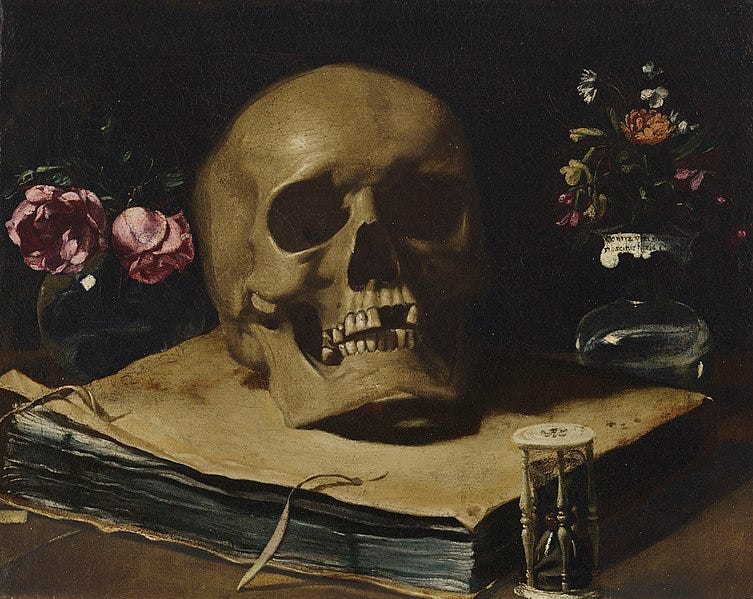
Has there ever been a man who has lived only for the sake of his ideal world? Does anyone possess the courage to endure and sacrifice for some ideal goal? Is life but a continuous play upon the theme of misanthropy? Surely, surely, most surely.
We do not love ourselves to the extent that can be called egoistic. We strive day after day all for naught. What is the writer's perspective on the impossibility of living a cultured life under the material conditions of today? I feel so empty inside when I consider just how hard my dream of living for the sake of scholarship and literature is. It has always been like this for people with my aspirations: did not Nietzsche, Kierkegaard, Emerson, Dostoevsky, and Samuel Johnson all encounter this—this encounter with obscurity, with financial struggle (near penury and the most reduced states in existence), with constant labors with little to show for?
This is how it was for me, how it is for me, how it will be for me in the future, undoubtedly: no love from the world, only myself, alone in the deepest of solitary dreams and night terrors. I am now alone, absurdly alone, and not a single encouraging voice reaches my ears. At such a time, hardening myself against the world would seem like the best option, but to do so would be to go back on all that I cherish in it.
I live my life now worshipping all that is pleasant and joyous within the world; I look towards only the greatness that so obviously manifests itself within every noble act and depraved misfortune. No longer do I seek facts and facts alone; I need to have a constant awareness of the good, the noble, the beautiful around me. I always have to humble myself before the majesty that is reality. I love searching within myself for the higher being that lies within.
I’m not hollow anymore. I don’t have a constant deadpan look about me. No longer do I seek only what has utility—I turn over every rock, paint every canvas, move and jog about the whole circumference of Earth; I am progenitor and last descendant; I am the being that calls forth more when nothing satiates. I am open about my faults, what my experiences have been, and what my future hopes and longings may mean.
The world would appear so dreadful to me if I had maintained my supercilious attitude of desiring to know more than the next person; if I had only received pleasure from besting another in argumentation; in defending a falsehood for no other reason than that I have the ability to do so—to make myself ridiculous without being tied to it.
Myself is all I call upon in moments of desperation. I can appreciate the work of a pessimist like Schopenhauer and Cioran, but I cannot make myself view the world only from that perspective. Often does it seem like the most literary men—men with the most ample powers in diction, men with tremendous force and command of vocabulary, men with an ability to inspire words with their truths—give us the most accurate depiction of the inner soul; what man is is made manifest in their actions and drives, and all too human are they made to appear when presented and organized, arranged and colored, dressed up and combed through, by the powerful force of their genius.
It is a shocking genius. It is the most confusing genius to understand—the novel writer, the poet, the architect, the painter, the reader; all the greatest qualities in the human race presented in the bosom of an individual who knows their heart’s lusts and satisfies them with the greatest of culture.
Can mankind survive on culture alone? Was Nietzsche right in his ultimate objective: to show man that his greatest power lies in his ability to approach life by becoming art—to make life a work of art? On an individual basis, none but the dilettantes and vicious cultural deprecators can disagree with so noble a presupposition.
Man is shocking, shockingly grand and noble in his powers—and so, it is incumbent on him to become what he will, to manifest the will to power, to will power for the sake of power, to transcend power by becoming the embodiment of power: this here is the only noble pursuit for man.
What difference would it make if you supposed life to be a game or thought of it only from the perspective of a Cyrenaic—either way, one must still live within the world, become endeared by it or hate it—either way, one must strengthen themselves against it and become the master of it, or shrink away out of fear from it and become consumed by it—either way, it doesn’t matter: the only thing that matters is how you move through it.
What sharp veracity does man have within him, if only he listened to the voice within? The greatest truth is within man; he carries it about him at all times, sometimes with ease, other times with the greatest of efforts, but either way (again, I reiterate for emphasis), he contains that truth within. The hardest thing for man to see is the goodness that he holds within and by which he is strengthened in the endurance of his every labor.
Goodness in man is proportionate to how much he has already suffered, how much he is willing to suffer, and how much he has always been willing to suffer for the sake of his higher ideals and goals.
But to return to culture and the life within it, man is enlivened by the greatest of pursuits; and the greatest of pursuits, no doubt affirmed by those who already agree with it and see it for what it is, is to strive after the aesthetical. What is beautiful is to be pursued not for the sake of its beauty alone, but because of how its contemplation and reflection affect us.
He is slothful who merely experiences Michelangelo, Da Vinci, Shakespeare, Goethe, Bach, and Beethoven without the slightest sense of awe or reverence. Let not the greatness of creation merely be an accolade to the spirit of human creativity—let it absorb you, become engulfed with its splendor, and think about it only from the perspective of its positive attributes.
There have been many aesthetical theories—from Plato’s forms and its connection to metaphysics and ontology, to Aristotle’s virtues and its connection to ethics and the good, to more modern theories like those of Kant, Schopenhauer, Kierkegaard, and Nietzsche: all are but vain attempts at quantifying what is, at its basis, a subjective interpretation of something they presuppose as having grounds to make objective. This is why, of all the greatest intellects mankind has seen, Emerson has most affectionately and, I think, correctly hit upon beauty—not as mere sensation, but as divinity itself. Even an atheist could appreciate so accompanying a view, so ecumenical and encyclopedic—all-encompassing it is, overwhelming it seems. The power of reflection upon what I view as divine is strong enough to make me dizzy and faint. Even my own approach to writing is influenced by so noble a view—Nietzsche and Emerson I have to thank.
What is the purpose of writing? Is it not merely to express something that borders on the incomprehensible? The inexpressible becomes sluggish if it be expressed merely for the sake of its factitude; no one becomes empowered by facts alone; it is what can be brought about from the facts that becomes exciting. What doesn’t live for the sake of striving after more living is weak, decaying, wretched, disgusting, ugly, and not worth reflecting upon. What is power but the romantic spirit made present in its obvious relation to the feelings of an individual? I am made strong by the memory of a past action brought about through my will. I am the doer of so much, I cannot do much, and yet I do more than the universe every second—do we not all feel the same about such a thing?
Let our life resemble the boulder of Sisyphus—a heavy, unyielding thing that rolls back down the mountainside the moment we falter in our internal realization; but what is realization? Becoming. Realization is becoming—a strong unction we feel but cannot act upon. It is to digress for the sake of finding what we are. Life is a game we must keep up—just as all of life can be found in chess (decision, strategy, critical thinking, power plays, negotiation, etc.), so too is it to be found in art. I don’t take the idealist view—I refer here mainly to Schopenhauer’s interpretation of Kant—for the notion of the noumenon is too abstract for me to thoroughly appreciate. If we are to consider art as the highest form of being, and the greatest mode of being to adopt in life, we must move past the attempts of grounding it in something real. Schopenhauer thought music the highest expression of human genius, for its realization in the phenomenal world was the closest thing one could do to surpass the will, to overcome the hungry, unrelenting will, whose goal was to always seek satiation without ever actually achieving it; but this notion is quite confusing, and I don’t think anyone but him has ever truly appreciated music in that manner.
Schopenhauer provides justification for the artist and free spirit, to allow them to feel as if their pursuits are more valuable than they really are. It’s a cherishing notion, a good one even, but merely that. Is that reason enough to forgo it, though? It is if you think it provides objectivity, but beyond that, you may appropriate such an ideal for yourself and make it your own, as Nietzsche did—so beautifully expressed in The Birth of Tragedy. I am, after all, the transcendental Nietzschean, the follower of the Emersonian spirit, the Kierkegaardian existentialist. I seek meaning from being. I do not precede my essence; rather, my essence becomes out of me—I devise and change it as I will. The circumstances of life impart themselves upon me, and I react as anyone would, but with the foresight to not merely view it as reaction, but to find a wider realization within it—something that goes beyond mere caprice, merely neurological stimulus. Nietzsche had it right when he said:
Experience teaches us a better way—or a worse: it says that nothing so stands in the way of the birth and growth of Nature's philosopher as the bad philosophers made "by order." A poor obstacle, isn't it? And the same that Schopenhauer pointed out in his famous essay on University philosophy. I return to this point, as men must be forced to take it seriously, to be driven to activity by it; and I think all writing is useless that does not contain such a stimulus to activity. —Schopenhauer as Educator.
“All writing is useless that does not contain such a stimulus to activity.” What more could one seek but in that obvious truth? Let prose be made to enflame the passions, the passions inspired by the embers of art, art by the flow of the spirit of truth, and truth by the objective nature of (subjective) human experience—pragmatism in short, that which proclaims itself as true, which manifests itself as fact, a fact that has impact upon you, and which none can say is wrong. That, dear reader, is the art of art itself. To say your life is a work of art is to say that it is aesthetical, beautiful, worthwhile, free, liberating, and all-encompassing. Should not all prose sound as if it were sung in Dionysian hexameter? Those vivifying dithyrambs that promote the spirit and love within your bosom? I desire an awakening within you. Realize that you are more than you think. Far more, indeed! Become excited, frenzy-like even, for what is to come—you know what is to come; you knew all along what is to come, you merely did not seek it! Death… that may be the end, but what is the end? Nothingness, if life has been lived with forthright conviction, dutiful punctuality, great alacrity at the coming troubles. Make yourself the stimulus of activity—allow yourself the opportunity for all things you so wish. That is the very essence of it all.