
Truth
18th installment to my philosophical system.

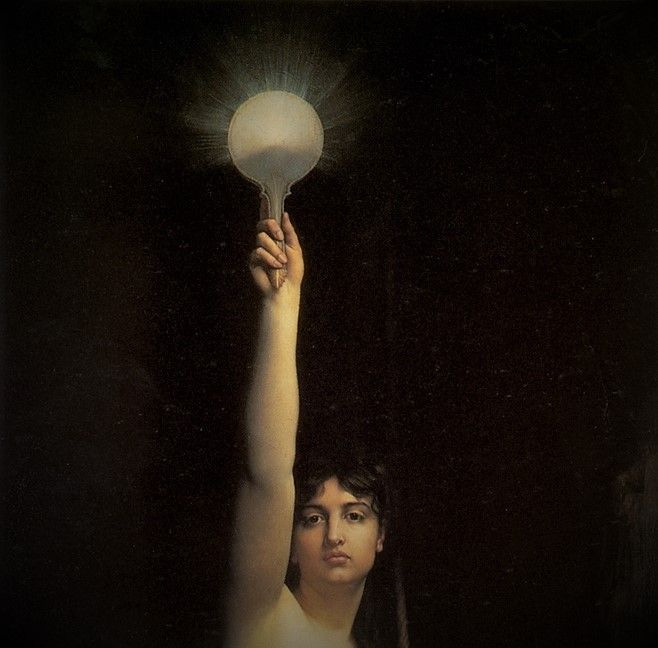
… this philosophy does not presume to explain the existence of the world from its ultimate grounds. On the contrary, it sticks to the actual facts of outward and inward experience as they are accessible to everyone, and shows their true and deepest connection, yet without really going beyond them to any extramundane things, and the relations of these to the world. Accordingly, it arrives at no conclusions as to what exists beyond all possible experience, but furnishes merely an explanation and interpretation of what is given in the external world and in self-consciousness. It is therefore content to comprehend the true nature of the world according to its inner connection with itself. —Arthur Schopenhauer, The World as Will and Representation, Volume 2, Chapter 50, Epiphilosophy, pg. 640.
The question whether objective truth can be attributed to human thinking is not a question of theory but is a practical question. Man must prove the truth, i.e., the reality and power, the this-sidedness [Diesseitigkeit] of his thinking, in practice. The dispute over the reality or non-reality of thinking which is isolated from practice is a purely scholastic question. —Karl Marx, Theses On Feuerbach, Thesis #2.
In a very real sense, all my writings, and all my thoughts in general, concern truth. Truth is the one concept that, no matter how much I try, I can never rid myself of. I’m obsessed with truth. Totally in love with it. Drunk on it, in fact.
Truth is like the Sun at the center of the solar system of ideas, and man acts as the telescope of existence—gazing in and out of conscious experience and developing his own conceptions of what lies at the center of himself.
To use another analogy from astronomy, truth is the sky in which every idea appears like a distant star; some approach nearer to truth and thus shine more brightly, but none could ever fully blot out the darkness of ignorance which continuously surrounds it.
The greatest possible world would have been one in which the concept of truth was never born, but alas, man—feeling devoid of meaning and wishing for nothing more than certainty of his continuation after death—thought it best to invent an idea so powerful it would act as a foundation by which his material existence can be made stable while he lives and made eternal after he dies. And so it was; the first man who invented truth, like Rousseau’s first property owner—seeing a plot of land and fencing it off in order that he may call it his own—simply found a world full of matter and thought it best to gain dominion over it by binding the objective world to his subjective perception, and in doing so, enslave external reality to his abstractions of it.
Thus we have at once what truth really is: an abstraction born in the mind, but which existed prior to it in material reality as such. Truth exists for the individual. If there were no self-conscious perception, no extrapolation from sensual stimuli, the world would simply persist unnoticed but constantly in a state of evolution until its eventual decay and death.
Man is the maker of concepts, and philosophy is the subject that not only incorporates all experiences but attempts to explain them in their totality; that is why, as an academic discipline, philosophy precedes all others: because it was and still is man’s honest attempt to encapsulate what lies beyond mere conceptions, born in consciousness and developed in self-consciousness. All of knowledge today was first born in an idea by a philosopher which gained enough popularity to sustain itself through the ages. Modern academic disciplines are merely extensions, and vulgar specializations, of concepts which had their origin in philosophy; even philosophy itself (today at least) has become a victim of this narrow specialization and has more or less been demoted to a subject concerning logic and intellectual history only, rather than what its original purpose was—a way of life and thinking appropriate to a lover of wisdom.
True philosophy lies in the liberal arts, that is, liberales artes, meaning “arts worthy of a free person,” deriving from liber (free) and ars (skill or knowledge). The essence of every truth is freedom, because without the free capacity of man to focus his attention and interest, he will be overtaken by death stemming from his inaction. Worse still, a man who is not free is hardly a man at all, for he cannot truly express what his heart feels. Whether the will is truly free or not is irrelevant. Truth manifests itself in every aspect of life because truth is the embodiment of every external action. Truth’s true purpose is muddied only when it loses the idea for which it was developed; and it gets confused only when a large variety of experiences force themselves upon us and demand that we recognize and interpret them, even though they may not have significance for us.
Man is a concept whose truth is sustained in his continuous affirmation of his own conscious existence. What we have in man is a material being capable of recognizing his own immateriality. Thus, man is a synthesis of the finite and the infinite, the objective and the subjective, the singular and the plural, the one and the many, the particular and the plurality.
This, without question, is the single greatest aspect of existence. Every cognition is an expression of man’s will-to-truth—a battle between the conscious and unconscious aspects of his mental life, which make up half of his being. The whole organism of man is born materially and comprehended immaterially, and, unsurprisingly, as a result, the whole world of ideas departs between this false dichotomy. Every intellectual stereotype is born out of this division and is really only made so because of the different temperaments of man, which primarily determine the presuppositions he is to adopt. Reality exists on its own, whose embodiment is the totality of all things (both concrete and abstract) within it; but only man is capable of bringing about a change in this reality by a revaluation of its truths and a revolution in its ways of perception.
There would be nothing in life to get excited about if the Akashic records actually existed, because that would mean every potentiality already passed into actualization, from which one would deduce that the very reality we see before us is merely a repetition of what has already been before. I for one believe that if Laplace’s demon were real, it would purposefully restart the universe each time it came to an end, in order that it may get the enjoyment of rewatching every atom bounce off of each other again and again. Alas, if only a God existed in order to give us some divine exegesis on the meaning of life, some guidance on the question of, say, “What it means to be man,” or “What is to come of man after he’s dead.” Wait a minute, you’re saying God has already come and has risen? Oh, what’s that? It turns out it was merely a pious fraud made up by primitives in order to establish a sense of order and meaning in a world whose fundamental drive is needless immiseration? Why am I not surprised?
I suppose it also doesn’t help that this “divine” revelation was given to a creature incapable of fully comprehending the purposes of this divinity. Every “divine” scripture still needs a mortal hermeneutic, and so at once does it lose all real credibility as true. From a strictly logical standpoint, God must either be false or redefined in such a way that it is true in every respect—which is, in fact, what most people actually mean by God: a higher purpose (an abstraction of the mind) which they cannot understand but which they are subject to nonetheless, and which they must obey not out of fear of punishment from Him, but rather so that they may be more at one with themselves—safe and happy in their own conscience knowing that they have done “good.”
Nietzsche puts into the mouth of his Zarathustra the phrase: “Dead are all gods: now we want the overman to live.” It was only at the end of the 19th century that, for the first time in history, the plebeians or proletarians could follow through with the creation of this overman—this Übermensch!—this new system of values from which the lowliest pauper and affluent plutocrat alike could dissolve all material differences and come together as one mankind in the flesh, whose differences, only existing now in temperament, may bring about a new culture and social organization as such. Man has always been fond of taking himself and his ideas too seriously, but it is precisely in this seriousness—the result of which stems from the belief in the truth of the idea—that real, substantial change is possible.
It is a lamentable fact that, for most of recorded history, man has lived and died not realizing his own potential and was made subordinate to arbitrary powers on pain of death. Seeing that man today has yet to evolve out of this barbaric schema, I am utterly revolted at the state of things presently.
In a phrase, the point of truth is the liberation of mankind—in order that each individual may flourish as themselves but still live amongst their others, while at the same time encouraging those others to become themselves as actualized individuals. As Marx famously said, “Philosophers have hitherto only interpreted the world in various ways; the point is to change it.” So it must be. Man must rise beyond every fetter if they are to actually become themselves. It is not enough to be satisfied with a “truth,” or with a set of “facts” or “systems” to which you may resign yourself in order to avoid change or action. Do not be like Schopenhauer, cooped up in his little room in Frankfurt with his poodle writing about the vanity of existence and the need to resign from everything within it; this is just the kind of attitude our oppressors want us to have. I no longer wish to be like Schopenhauer! I wish to move beyond him. I now only want to affirm life in order that I may fight for change and revolution within it! Do NOT speak to me of sloth and inactivity, of unemployment and underdevelopment: I am just as much a representative of my age as everyone else living today, and it does not need to be elaborated by anyone just how deep the issues in the world presently go; everything, and I really do mean everything, needs to be overturned—routed and removed completely, in order that a new foundation may be set and leveled, so that we bricklayers and cobblers, we writers and intellectuals, we managers and service workers all alike, push past the present and enter into an abundant future of our own making!
As I’ve said already, truth is both an abstraction in the mind and an embodiment in the world. Unfortunately, however, the colloquial meaning of truth is still made to stand against itself, and thus attacks and sends into retreat the mental tranquility of man. What it attacks is not the veracity of the claim but the individual who makes the claim. Truth as an abstraction in the mind of fools is made to be conceptualized in a purposefully antagonistic manner, and the reasons I think are quite simple: if the masses cannot agree on the ways in which they are divided, they shall never agree on the ways in which they can be made undivided; in this way, nothing more than posturing between opposing factions (born from nothing more than differences in priorities) is all that shall result—and who alive today could read what I’ve just written and not see that that is exactly what mankind has fallen into, across the entire world: a never-ending cycle of stupidity and pointless disagreements over trivialities which never approach the real issues at hand.
The issues at hand are those which are materially felt by everyone, but which are understood differently thanks to the differences in everyone’s presuppositions regarding what is of real value and importance in the world. This is a perennial problem within civilization and social organization as such. The nature of man is such that the organizational structures which he devises are made only to serve his values, ignoring everything else. With that said, I think it has to be acknowledged by everyone that the first true step in revolution is an agreement on values, and in particular on what the main priorities are in society. This is where the new valuation is possible. It exists not in a strict agreement of what the truth is, or what the priorities should be, but rather in a totally new way of conceptualizing what the truth could be. It is a revaluation of the concept of truth as such. You’ll never be able to get all of society to agree on what the priorities should be, and the reason I think is because of the differences that are implicit within the truths that we agree with. Again, truth is a judgment, not an eternity. The presuppositions which we take wholesale are nothing more than culturally acquired prejudices of our upbringing, stemming from our current material reality.
What man needs is a new conception of what social organization can be. In essence, man needs a new outline for the philosophy of right—a new system born from a new process of conceptualization that combines praxis with solidarity on outcomes. Nothing can be expected to come from nothing so long as man does not strive to bring that nothing into something through his labor and ideas. But how do we reach this something? We do so via the dialectic—the dialectic turned political! It is the absorption of all presuppositional attacks merely by analyzing the material conditions pragmatically. It does away with all nonsense and jargon by cutting through all the fluff and overturning all the typical retorts, arguments, slanders, one-liners, and rhetorical tomfooleries from nothing more than an objective analysis of things. Dialectically speaking, we may put politics back on its feet by overcoming all existing barriers to prosperity of the people. The main issues within society are caused by fools who insist on remaining subject to capital, and who would defend to their dying breath that antiquated system of oppression so long as it remains in their interest to do so. Every zoning law and stagnant wage, all inflation and unaffordability, each tax, rent, and mortgage—in a word, each systemic tool of exploitation, oppression, and austerity—are made so deliberately in order to pacify the populace from ever overthrowing the system as it stands now.
It has to be reiterated that all this, and then some, stems from arguments over values and presuppositions—all such things vociferously argued for on the basis of the truth of them. There is no TRUTH, however, only interpretations of truth: abstractions in the mind that correspond to our sentiments and values.
The moment an idea is captured by fools, it descends to the pits of darkness, because fools always tend to make things about themselves, and in doing so, compromise any real potential for positive change. What fools do—which is what makes them fools in my regard—is that they make truth static, unchanging, indomitable, and eternal, when the real truth of truth is that it cannot be made subject to itself. TRUTH cannot be truth, because truth is an abstraction, a value subject to the whims of existing material conditions; truth is made so out of our encounters with the world, not as Plato or Aquinas would have had it—far beyond man, existing in something prior to him.
Ideas exist, but they are not prior to man in an absolute sense; they are only an a priori because they exist in man as the organism he already is (our perceptual apparatuses—controlled by the nervous system and mediated by the brain—which we developed thanks to variations in allele frequencies caused by evolutionary forces such as mutation, natural selection, genetic drift, gene flow, and nonrandom mating).
Matter exists but, again, it is not prior to man in an absolute sense, because matter is only known to man a posteriori—due to his reflexive comprehension of it as he stumbles and falls on the objective floor of reality, which he would not be able to perceive were it not for his already existing (a priori) sensual faculties: eyes, noses, tongues, hands, and ears.
As one can see, the nature of man is not one or the other, but rather a synthesis of the two; and I like to think that truth is very analogous, but instead of being a synthesis between two concepts, it is a synthesis of every conceivable concept. Every conceivable? Without question, it has to be, for truth is not subject to a dichotomy of claims made on the basis of presupposed premises, but rather to every prick and pang of ideal and material misfortune alike.
And what is the process by which this circulation and sublation (aufhebung) of conceptions can be made tangible and processed? THE DIALECTIC.
Hence why all philosophical roads lead to Hegel; because Hegel reformulated the primary question posed by Kant’s phenomenon-noumenon distinction, namely: can the Ding an sich (thing-in-itself)—the noumenon—be known in a phenomenal manner, that is, in the same way we know a chair or house exists? Kant says no. For him, we possess faculties in the mind that are transcendental (prior to experience, yet known only in experience), but they are incapable of bridging the gap between what is perceptible and what is not.
It is very interesting, actually, because Kant tries to show everything that can be known in reason (rationally and empirically), yet posits an aspect of reality that exists outside of reason (cannot be known rationally or empirically). This contradiction drove every post-Kantian philosopher mad, and rightfully so, but out of all of them (including Schopenhauer), the only one to hit upon the real solution, in my view, was Hegel. What he did was essentially turn the question back in on itself.
For Hegel, it did not make sense to separate the phenomenon and noumenon between the two spheres of transcendental perception—analytic and synthetic—but rather to incorporate both into perception as such—”as such” here meaning as it appears to man in his everyday experience of reality. The dialectic is the progression or movement of man’s self-realization, aided by reason, experience, and contemplation of experience through reason; self-realization here refers to the absolute—the unity, or complete synthesis, of all reality as it is.
The dialectic overcomes all because, to it, truth is not something to be discovered in the world, or to be deduced from premises drawn from prejudices and presuppositions based on intuitions or past experiences; but rather to be arrived at in the process of life itself. In a word, truth for the dialectic is fluid—continuously evolving and updating as the material conditions of the world manifest themselves in our experience of it. Truth is subject to us and our ideals, not to whatever logical hocus-pocus we make for ourselves when devising methods of inquiry.
To attempt to find truth in premises alone is like attempting to chew liquid; no matter how hard you try, it will always slip through your teeth. Truth as something to be deduced from what we already assume to be the case (found in all our premises) is nothing more than placing an intellectual straitjacket on ourselves, because we narrow our potential conceptions and, like a sieve, strain out all that is not in accordance with what we are searching for.
This idea of truth as a dialectic—as something fluid, ever-changing, and in constant revolt against itself—is pure practicality in my view. It does not offer the world anything but itself in toto, as it is made known to us in our existence through it. In that way, I think I can finally say that the conception of truth which I hold to—and which I wish everyone on Earth held to—is dialectical pragmatism: truth that is goal-oriented and interest-driven. My whole philosophy is dialectical pragmatism in practice; in fact, this whole book is essentially my attempt to place this new philosophical framework on a sturdy foundation by making its application across all domains of human experience and interest—from the practical to the obscure, from the simple to the esoteric.
Since it is a dialectic, it cannot be defined in any systematic way, because to define it systematically would be to make it anti-dialectical—rigid, static, non-fluid, unchanging. To be without structure is to be encompassed within all structures, and from that point, you merely pick which structure works best for your particular goal in that particular moment. There is no such thing as an unbiased, neutral, or impartial truth, and yet everyone today views their truth as the truth—something which is true for everybody, and which was arrived at reasonably, logically, and well-supported with an abundance of evidence. It is amazing to me that in proclamations of what we think, we do not instantly recognize the personal, subjective nature of it.
But I suppose this view of truth as something outside us is to remain so long as we conceive of truth as something sacred within the world—as a part of the world that was prior to us. For those who have made it this far, it has to be concluded that truth is something to be overcome—or rather, to be reevaluated—if any liberation is to happen within the world.
Like I said before, for me, all truth is an abstraction of the mind, but it is at the same time an embodied action within the world. You may rightly ask why I hold to this strange dualism. I can only reply that the dialectical nature of my thinking does not allow me to say truth is an either—or, but rather a unity of all “eithers” and “ors.” I can never affirm a ground to reality, or a metaphysics to nature, because to ground something is to be certain of not only its validity but also its immutability—and that is a step too far.
I want to live in the ever-changing flux of space and time, and wish to be awash in temporalities in order that I may one day speak to the absolute itself. I also want to be open to what I feel to be the fundamental nature of existence: a constant striving and passing away, a continuous contingency. What I ultimately wish to avoid is dogmatic thinking, for I despise the man who is certain in an absolute sense. At the same time, however, I also wish to give the world its due and heed every practical, immediate consideration.
You see, dear reader, the world is flux, and in that conception, something can become nothing and nothing can become something. Out of nothing, in the context of pure being, comes everything, because both partake in something as ideas (concepts) but nothing in material. As such, the ways of men will naturally part from this difference in perspective: if you wish to strive for peace of soul and pleasure, become anti-dialectical; if you wish to be a devotee of truth, become dialectical—and I should also add, become pragmatic, for that is the basis on which all real change in the world is made.
The parting of men is from our different temperaments, but the unity of all men is from our shared material reality—and it is on that basis that we must strive to overcome the world itself and labor onwards for the emancipation of all human beings alike.