
World
98th installment to my philosophical system.

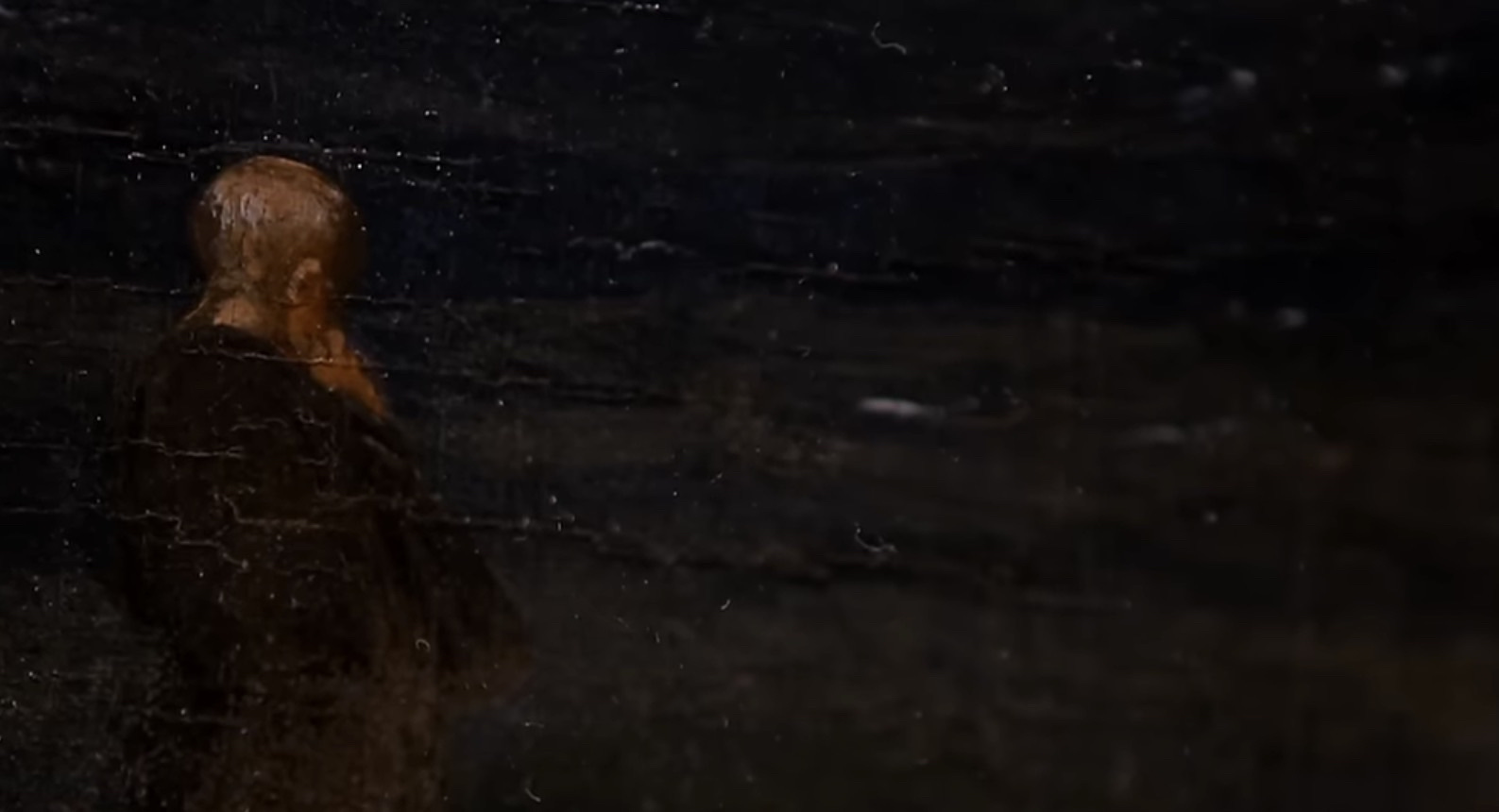
What is the world itself? thy world?—A grave.
—Edward Young, Night-Thoughts.
The world is my becoming and perception. This is a truth which holds good for all things, but which can only be understood by man.
What is the truth, though? The truth is seeing the world as it really is, hoping all the while that one day all mankind will see the same.
What is the world, then? An illusion to which most submit, but which some transcend.
What is it to transcend? To realize that nothing is true and everything is permitted—that laws arise not from divinity but reason.
I understand the creed of the world now. The world demands that we be wise in order that we may all become free.
Freedom is not a given but a blessing—the happiest accident in history, I think. In reason do we find our divinity. What man is in relation to the world is nothing, but to ourselves we seem like the whole universe. In this comes all our troubles, and all our pleasures too.
The world is born in us, and only persists through us. The moment we shut our eyes for good, there too goes the entire world. We live in an endless abyss of darkness and destruction, the point of which is to represent to ourselves the undeniable emptiness of it.
We are conceived in jest, developed in joy, born in pain, and exit life in the dark. Whilst we live, we suffer the pangs of fortune and put up with confusions and miseries intolerable to any happy spirit. Such is why those with large intellects and deep hearts are bound to find life unhappy in an absolute sense. The gloom of the world appears before us like a dark phantom—some king of tenebrosity—and in him do we see the end of our days, the end of all days, the end of the world, in short. I find the coming darkness of the world a trite nothing compared to what the master of darkness has shown me in my dreams.
History has already proven everything for us. There is no need to get passionate about anything anymore. The modern world has passed a point of no return. The Rubicon has been crossed, and all light beyond that point fades to darkness. Even our happy thoughts seem like little consolation to all that is presently occurring. To those who seek to remain grounded, in their lane, sitting on fences—see the picture and believe the truth: this world is our perception, and only in our becoming do we transcend the misery of it.
This, however, can only ever be temporary; for like the joys of life, our accomplishments amount to very little in the end—on them we build our narratives, and by them we fall into the depths of despair, thanks to their inadequacy at providing us perpetual peace. All that which we love in life fades like mist in the wind; and as we age we see the literal fulfillment of all our saddest thoughts.
This world cannot be real. It literally can’t be. I cannot conceive of life as being anything other than the twisted fantasy of some malevolent evil—a wicked force which drags out the eschaton, rather than immanentizing it. If life were beyond perception, it would be the epitome of evil—a chance accident which allowed man to comprehend his own end. Man is the universe recognizing itself. The only epiphany that had to happen. Everything after that is a wild absurdity. Not even nihilism can contend with this malignancy. The whole of man is found on Earth, and whilst he’s stuck on this rock with others, he’s forced to accept the fact that one day his nonexistence will be realized, and then—————nothing. Nothing. Nothing. Nothing. Nothing! Nothing!
In these laments, one is reminded of the vanity which Solomon spoke of. One finds the whole of our being nothing more than a brief moment in time, which, along with the rest of unconscious matter, shall be lost in the sea of it—all to return to its undeniable unity with all of reality. A blank monad. No telos but death and becoming. Even our becoming in death is really a mockery of the concept of life; for if life should be, why must it go out like a flame in the wind? What is the point of it all? Nothing.
Alone. Alone I am in all the world. I may have friends, and even those who love and understand me—but life is a lie in the end, for it is never good enough to ensure me that the omnipotence of my experience shall go on. I find my life meaningful only because I can experience it. It is not my temporary misery in this material realm that sickens me, but the fact that I must go out of it. I am, like Pascal, not scared of what lies beyond—for I believe there is something beyond this—but rather scared at my own doubt regarding that great beyond: that mystery of all mysteries, that deep confusion, that utter delirium, that incomparable ignorance. What would life be if the temporariness of it were only that—temporary? I do not know.
“But you must know,” my heart screams out.
“You must act anyway in spite of your ignorance, and become that which you feel is in yourself to be,” my brain reassures me.
“But I am a doubter at heart; and actions stand on nothing if they’re carried out without their own justifications for them,” I say to my heart and brain. I then say to them:
“I cannot be what I feel myself to be if what I feel within myself is constantly in flux, and always giving me different meanings to live by. The miseries of my life are found in my eternal sufferings, all with respect to the doubts I place as barriers to any real action. It is not that I do not believe in myself, but rather that I cannot do so honestly; and you guys (heart and brain) know I can be anything but dishonest with respect to myself. There lies the rub. I’m already done in this world. I live on borrowed time which I steal from myself. Do I not resemble Marcel Proust in this regard? Passionate towards life only so long as my purpose is yet to be fulfilled within it—and all too willing to drop dead the moment I do fulfill it? And yet, oh, how deep my suffering goes; for in not fulfilling my purpose, I am made miserable. Thus am I doomed to forever be miserable so long as I live: because what sustains my life is my misery; so long as what I make meaningful in the world is forever to be beyond my powers to accomplish. I cannot help but live hopelessly; and yet, in that hopelessness, I cannot be anything but passionate. I become inflamed at the thought of my suffering, actively call upon it, in fact. My suffering and I become like one—I court her, and she seduces me. And I love it so much. I love the way she lies. I love the way she comforts. I love the way she acts towards me—violently, and I take it all, too! I love the way she stares—God, those eyes—out of this world. I love those seductive eyes (I can never get enough of them), those delicate features, those curves, and figure, and nose. My misery is just the company for me. Never am I without her, and so long as I live, she and I will be eternal—star-crossed lovers, fated to love each other, fated to die alongside each other, never to be without each other. She is the dark, and I am the light—and together, we bring about all things, and in that is my world made.”
You see at once now what my world is. I am the eternal doubter. I make my world, and I break my brain trying to overcome it through concepts, mere concepts—as if those abstractions were ever enough to comprehend the whole of it. The more I reflect on the world, the more I see how vain all my attempts to encapsulate it have been. I’ve studied whatever I could—from all ages, across all cultures, in all branches of knowledge—but have never gotten to the roots, or fundaments, of life in any of them. No system—no matter how ancient, modern, syncretic, esoteric, erudite, eclectic, or encyclopedic—has ever provided me with anything more than suggestions, which themselves required deeper investigation.
When one reaches the end of human knowledge—as I have—you find that it collapses in on itself from the sheer mass and instability of it—like a black hole, and the gravitational pull of it becomes too strong to pull out of, while at the same time the event horizon is ever-expanding. The more one possesses knowledge, the more it possesses them; and the warning laid out in Ecclesiastes 1:18 remains true—and even becomes more understandable to those who have gained all the wisdom in the world, and in the end had to reject it, for it meant nothing with respect to life proper.
That is why all book wisdom is folly, for it means nothing if it is not applied; such is why the only true wisdom which every man must possess if they’re to live is that of action tethered with moderate contemplation. The truest wisdom is wisdom for life, acquired through life, and nothing besides. The end of all knowledge should be wisdom, for knowledge is only information that has narrow applications to the material world, whereas wisdom is knowledge that not only applies to the material world but touches the spiritual as well. Wisdom helps a man endure the intolerability of life—stemming from our ignorance—by revealing to us how unnecessary and foolish all our erudition is.
Before life, we are nothing; in life, we feel the need to be everything; after life, ——————on this we must remain silent. It matters not how wise we are, for all things which pertain to life show us how incapable we are at grasping any of it truthfully. It cannot be forgotten that all which we strive for in life is purely negative in a metaphysical sense. The only positive aspect to life is suffering. If we try to define the world in terms of what it is not, we are as lost in that exercise as if we were to describe it positively—through sophistries and uninteresting presuppositions. The world, according to me, must be dealt with speculatively—that is, both positively and negatively—dialectically, in a sense.
What we strive for ends in emptiness, but in the striving we find a positive reason to live. Therefore, just like with our individuality (comprised of a subjective and objective aspect), we are pulled from both sides in every action we make in life. Everything with respect to life is open to doubt. In our doubting, we make the world seem more complicated than it needs to be; and, in truth, I fear we do that to ourselves deliberately, for deep down, on an instinctual level, we feel there is a bottom to the well where truth resides. We believe we can actually meet truth and ask her to reveal her secrets to us, in order that we may no longer fear life itself; in this, however, we are forever doomed to come up short.
Life has no final answers, even if truth really existed “out there” in the world, and those who seek final answers for life are like those who try to grasp their own shadow. In the flux of time, and in the kinetic nature of our beings, we are forever getting older, forever getting weaker, forever appearing dimmer, and never gaining what was lost. Mankind is lost in place, and there aren’t enough lifetimes to truthfully search for all the lost time. We all resemble what it is we most abhor. Our actions are always bent towards those things which we feel impelled to do; and in doing so, we faithfully follow our drives, and on account of them are we actuated in the world.
In every action, however, there is a residue of our instincts—and from that seemingly insignificant amount lies a whole germ of existential interpretation; that is to say, what we are in this world is really a reflection of our subjectivity, made objective—and what mediates between the two opposing and unifying tensions is our reflections (subjectively) upon the actions which we do in the real world (objectively). Man’s life today can hardly be called speculative, or existential, or even philosophical; rather, it is stupidly pragmatic, practical only with respect to the material (financial) aspect of life—and no deeper consideration upon anything is made.
This is the modern narrative which the world has adopted, and as such, our world becomes more dreamlike by the second. It’s shocking to me how thoroughly captured the entire world has been made. They do so out of necessity, which they incorrectly label with the term “practicality,” but they never try to change it—that is, never try to make it actually practical, or pragmatic, in the philosophical sense of that term. Why this is—even when the truth is clearly before their eyes—one can only speculate in vain, though I would think it stems from a confusion with respect to their values.
In our perception, the nature of the subject (“I”) and the object (“other”) become one, and are, in fact, indistinguishable. Reality has a way of making our consciousness seem continuous, like a stream; and in the movement of our life do we find nothing ever repeats twice—but when drawn back more fully, one finds the whole stage by which life is played on to be upheld by a cloud, and once recognized, falls into the abyss of obscurity and confusion. In the end, all we’re met with is oblivion, and the more we try to distinguish ourselves from our reality, the more we fall into it. There seems no point in even trying to deny anything philosophical about life.
Even if one were to discover all the negativities that lie within life, that would give me no deeper insights regarding myself—it would only further support what I said earlier: answers cannot be found, and all that we come up with is but a narrative justified circularly. What does one find when they consider life in relation to the whole world? Only that we persist on a knife’s edge, in a very narrow corner of it, really only for ourselves, and never eternally. All this talk of objectivity with respect to life endeared me to death at one point—this was before I became a real wanderer, a true free-spirit, a life-affirmer, an existentialist, in short.
I was a follower of death and decay and rot, and only wished for the end, but I found that life had other aspects to explore—plus, my natural optimism made it very hard for me to stay angry; I could never bring myself to be truly mad about anything, ever—I was always positive, even in the face of the worst conceivable. Had I not had this stupid, childlike optimism, I probably would’ve taken my life long ago. I have never been truly happy in living in this world, but, as a child, I found ways to look past the bleakness of death and continue on living in spite of its inevitable end. I was always passionate in my loves, and on account of that passion did I find the end of life an existential threat.
The thought of death always brought tears to my eyes when I was a child. My father always thought me too sentimental. I suppose it was this natural inclination towards sympathy in the face of suffering that I learned how to be so compassionate and understanding. This carries its own burdens, however. It’s very easy to get lost in your own reflections, and they always have a melancholic aspect to them. The more a man loves, the deeper his passion feels towards everything. It is in this passion that we sentimentalists often make ourselves great artists and poets.
With everything said thus far, you would think the world was made to make everyone a pessimist; but if we look around, we clearly do not see this. Everyone living has a good enough reason to stick around. Their narratives, though mostly not their own, and in the main maladaptive, seem to withstand well enough in the face of all that is miserable. It’s as if most of mankind find reasons on the spot to live. Nobody willingly flies from life unless they’re made to consider the continuation of their consciousness as a negative.
Pascal thought suicide perfectly justifiable should God not exist; and Schopenhauer argued, unsuccessfully I think, that suicide is immoral on the account that it “… thwarts the attainment of the highest moral aim by the fact that, for a real release from this world of misery, it substitutes one that is merely apparent.“ Apparent only in an epistemic sense though, of course, because the cessation of our experience would leave us undecided whether the escape from this world truly ended our misery or not—for we do not know what lies beyond, though intuition tells me that there is something. While we’re on the topic of suicide, I cannot resist quoting Schopenhauer again, for he makes a great analogy:
Is Hamlet’s monologue the meditation of a criminal? He merely declares that if we had any certainty of being annihilated by it, death would be infinitely preferable to the world as it is. But there lies the rub! —On Suicide.
Our world is born in perception, understood in becoming, and is overall indifferent to the hopes and dreams of its self-conscious inhabitants. I’ve lived much, and in living have come to many differing opinions on the worth of life and found death, in the end, is preferable to everything else; but at the same time, the optimistic side of me rebels and wishes only that people affirm life in the face of oblivion anyway. And you see now, dear reader, how the tension between my heart and my reason come to attack me once again.
My mind tells me the world is an illusion and that death is the only true escape from it; but at the same time, my heart tells me this world must be saved at all costs, for it’s too beautiful to let languish—others must have the opportunity to experience the joys and loves of it. The infinitude of our subject is made most apparent in this reflection, I would assume.
The Fermi paradox perplexes me, and, in fact, frightens me; the universe is so vast that, statistically speaking, there must be intelligent life out there not too dissimilar to us, and yet, no sign of intelligent life anywhere except on Earth. Dear reader, were we to discover intelligent life elsewhere, do you think they would have the same values as we do? Would they love, you think? I honestly don’t know, but right now, my heart tells me to hope that love wins out in the end, for it truly does conquer all. I find the world, even if its main stimulus be suffering, to be too precious and interesting to consign it to doom and thus worth forgetting about. I cannot simply forget the world; my heart will not allow me. I cannot simply live on my own and hope it works out well for everyone else. I tried living like that for a short period of time and found it insufferable.
I thought to myself, “What good is my personal happiness in this world if a million others suffer without having even the hope of happiness?” It’s a contradiction I could not square rationally, and so I gave up rationality—though not entirely, for I still hold to empirical and logical principles when practical aspects of life are touched (though not existentially)—and had to start from scratch with respect to my entire system of values; my morality, intuitions, drives, and interests were all uprooted and replanted in a more rich soil—all of which were developed over time and which all came to sprout into the book you see before you.
My philosophical system is, in that sense, a personal account of all my reevaluations—all those values with respect to life I thought important enough to have an opinion on. And in that sense, do I not perfectly reflect what this world is? A constant flux in which we, as the conscious subjects that we are, have to constantly evaluate and reevaluate those values we once held to, all because the nature of the world demands we do. In a sentence, the whole of my philosophy may be summarized as such: a continuous becoming that is always changing on account of our perceptions. Unsurprisingly, that, to me, is also the world.
I very much like the picture of the world I have painted—in as honest a manner as I could manage. Should one have made it this far in my philosophy, they should have known all this was coming.
Here’s my passing judgment on the human race: most live miserably but find, in spite of their misery, enough to value in order to live. My only goal was to create a reevaluation of all values in the minds of the reader, in order that the world may seem less oppressive and thus, more life-affirming. A single changed man can change the entire world; and that matters in a world where ideas and narratives are superior to reason and evidence. It is ideas that rule the world, not facts. And I believe from that truth we must all live accordingly.
If a new era of mankind is to be brought about, it must begin with a new set of values. Let this book—my philosophy, which lays out those new values—be the start of that great movement.